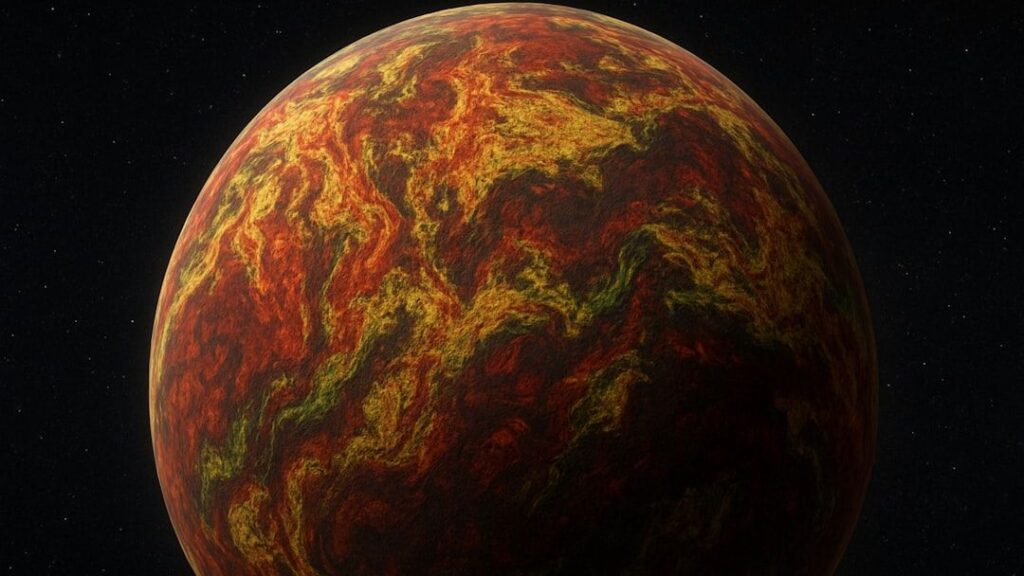
You know that feeling when you realize your own origins were far more violent than you ever imagined? Earth has a similar story. Our home planet wasn’t always the lush, life sustaining sphere orbiting peacefully through space. Billions of years ago, this world was a churning nightmare, an almost unrecognizable hellscape where molten rock dominated the surface and cosmic impacts reshaped entire landscapes in seconds.
The transformation from that chaotic inferno to the gentle blue marble we know today is one of the most fascinating chapters in planetary science. Let’s dive into those ancient, apocalyptic conditions that literally forged the ground beneath your feet.
A Fiery Birth from Cosmic Chaos
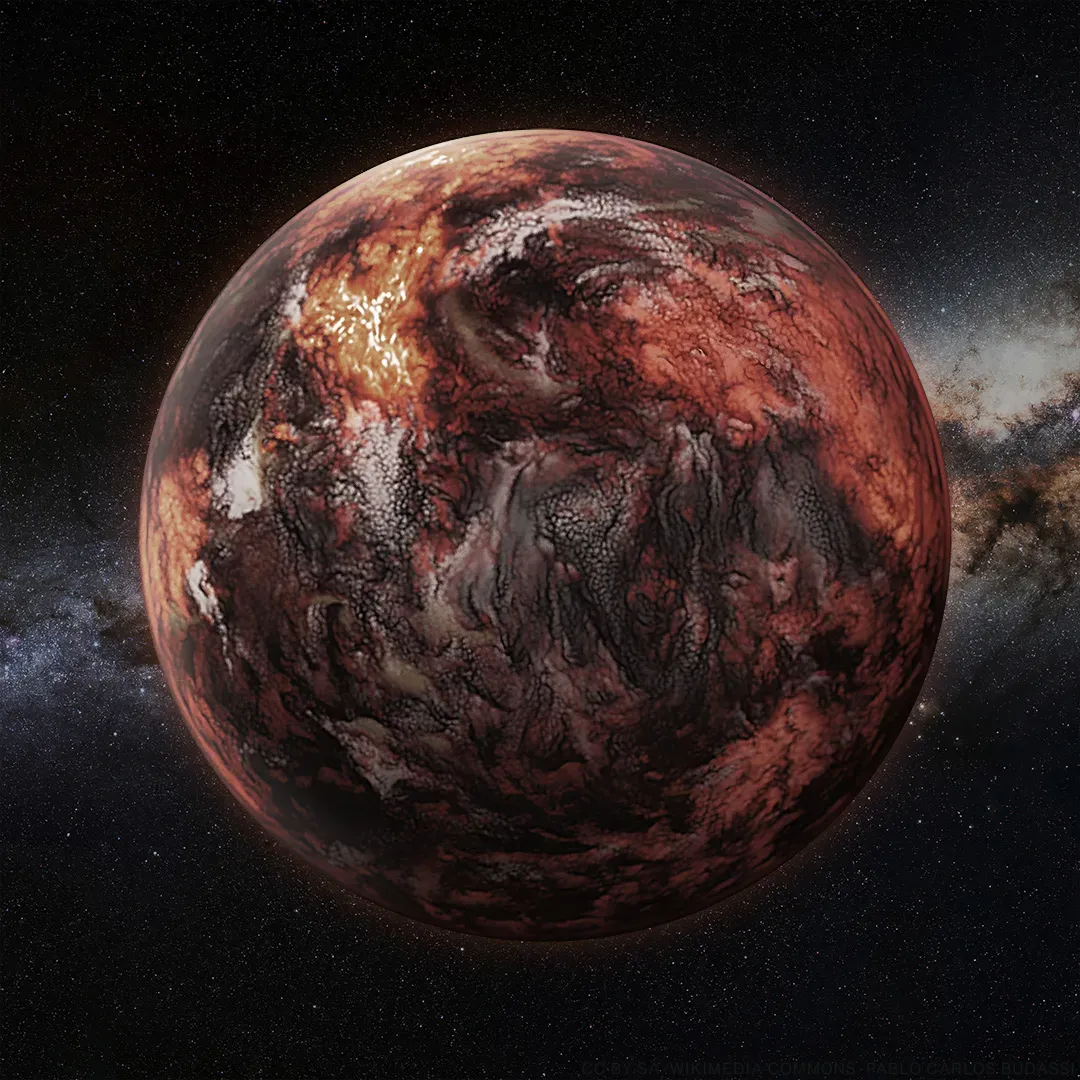
Earth formed around 4.54 billion years ago, emerging from a swirling cloud of dust and gas orbiting our infant Sun. Picture countless chunks of rock and metal careening through space, colliding and sticking together like some cosmic snowball fight. Gravity caused small bodies of rock and metal orbiting the proto-Sun to smash together to create larger bodies, and over time, the planetoids got larger and larger until they became planets. Each impact released tremendous energy, heating the growing planet from within.
Three main heat sources turned early Earth into a molten furnace. Gravitational contraction made the planet grow larger and more massive, and as Earth’s internal pressure grew, its temperature also rose. Radioactive decay releases heat, and early in the planet’s history there were many radioactive elements with short half lives that released enormous amounts of heat. Think about that for a second: Earth was literally cooking itself from the inside out while simultaneously being pummeled from the outside.
Ancient impact craters found on the Moon and inner planets indicate that asteroid impacts were common, and Earth was struck so much in its first 500 million years that the heat was intense.
The Hellish Hadean Eon
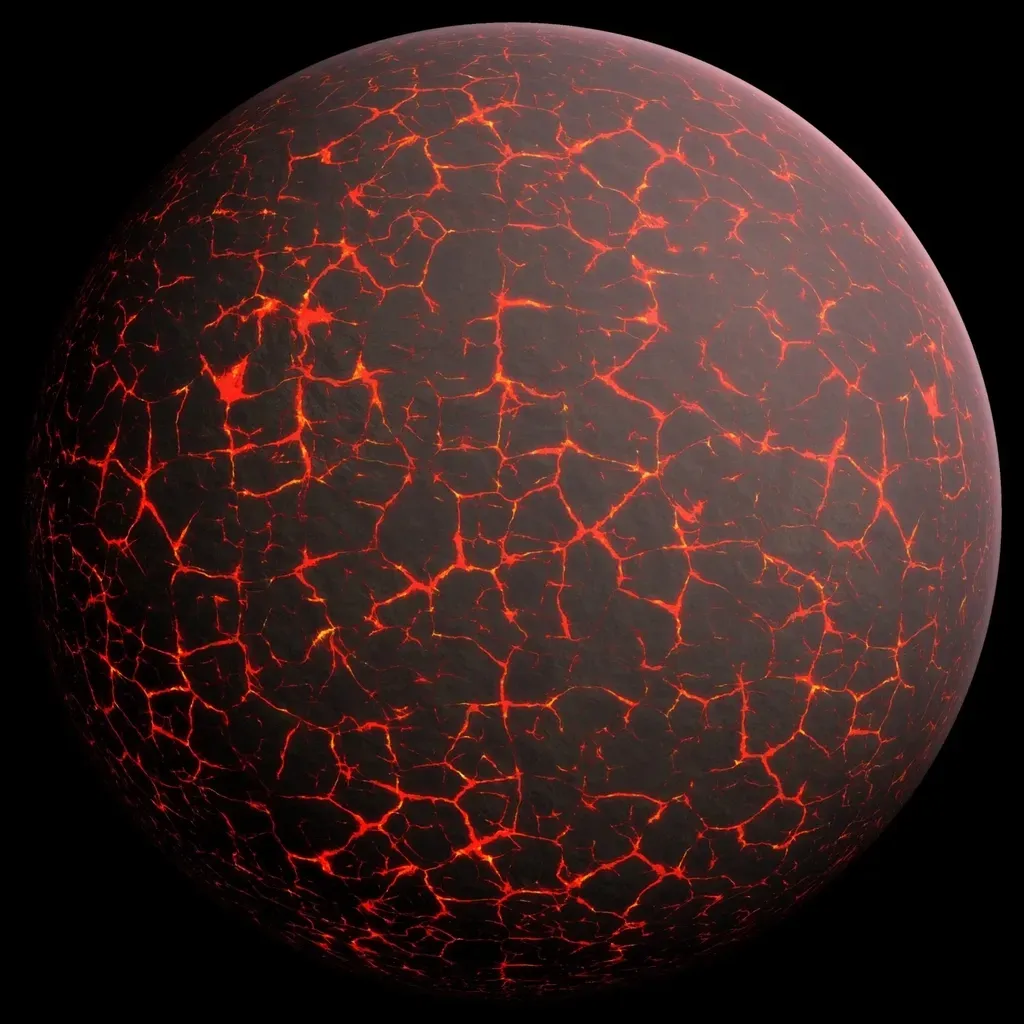
The eon’s name “Hadean” comes from Hades, the Greek god of the underworld, referring to the hellish conditions then prevailing on early Earth: the planet had just been formed from recent accretion, and its surface is thought to have been molten lava. That name isn’t hyperbole. Our 4.54-billion-year-old planet probably experienced its hottest temperatures in its earliest days when it was still colliding with other rocky debris, and the heat of these collisions would have kept Earth molten with top-of-the-atmosphere temperatures upward of 3,600 degrees Fahrenheit.
Imagine a world where solid ground was a rarity, where vast oceans of magma stretched to the horizon. About 4.5 billion years ago the entire planet was molten, an endless sea of magma. The landscape would have glowed red and orange with heat, constantly churned by convection currents beneath the surface.
Earth’s surface was buried over and over again by large volumes of molten rock, enough to cover the surface of the Earth several times, which helps explain why so few rocks survive from the Hadean. This time represents Earth’s earliest history during which the planet was characterized by a partially molten surface, volcanism, and asteroid impacts. Yet remarkably, recent research suggests this hellish period might not have been completely devoid of calmer moments, with possible liquid water existing in brief intervals between major bombardments.
The Collision That Created the Moon
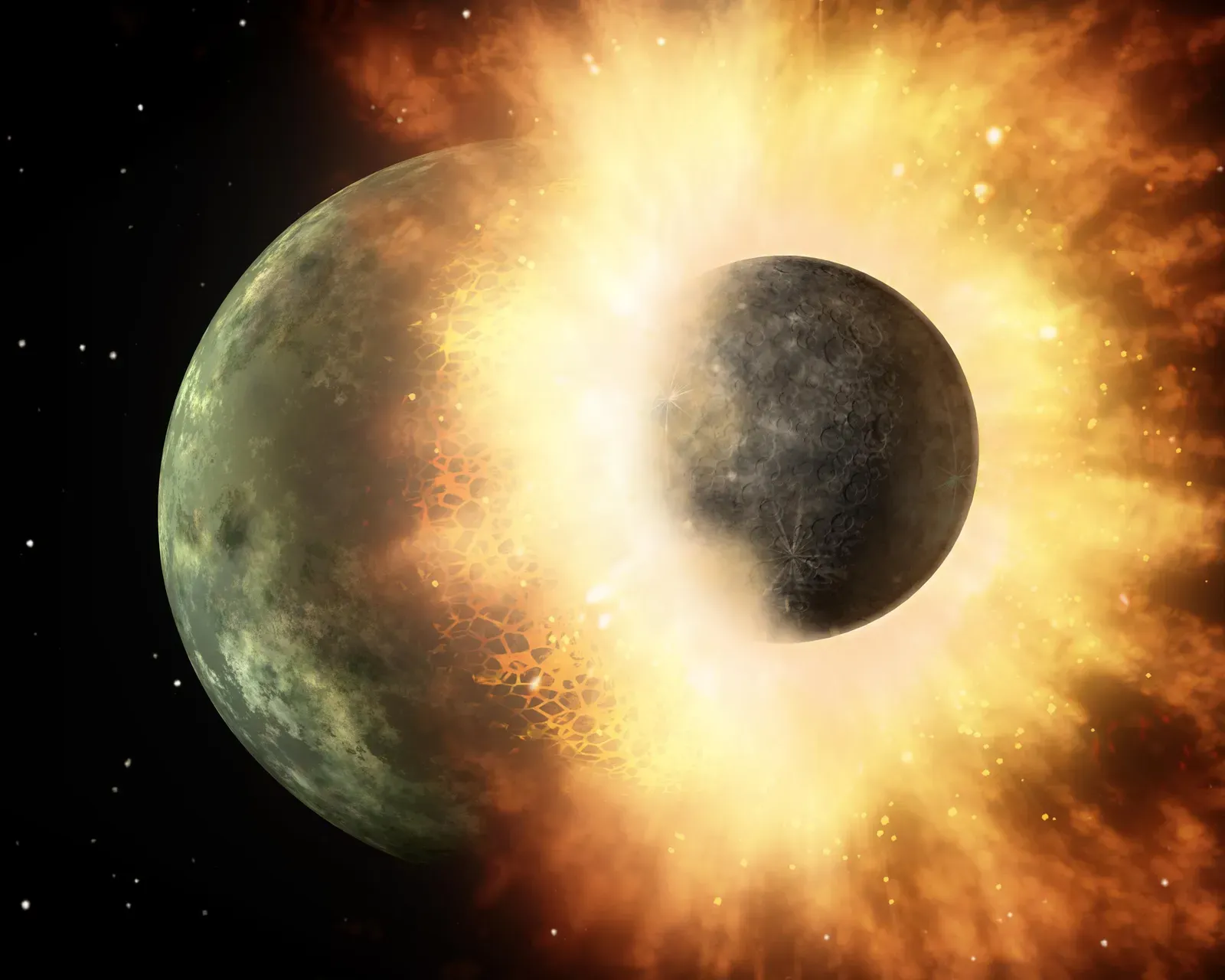
Here’s where things get truly dramatic. During the time known as the Hadean, Earth’s collisions with other large planetesimals in our young solar system included a Mars-sized one whose impact with Earth likely created the Moon and would have melted and vaporized most rock at the surface. Scientists call this hypothetical impactor Theia, after the Greek titan who gave birth to the Moon goddess.
Following the collision that spawned the Moon, the planet was estimated to have been around 2,300 Kelvin or 3,680 degrees Fahrenheit. Think about what that means. The entire planet’s surface was hot enough to melt iron. Theia and a substantial fraction of the Earth’s mantle was vaporized, and the matter that remained in orbit around the Earth coalesced to form the Moon while the rest rained back down to the surface of the Earth.
This wasn’t just any impact. During this massive collision, nearly all of Earth and Theia melted and reformed as one body and a small part of the new mass spun off to become the Moon. The violence of this event essentially reset Earth’s geological clock, creating a brand new beginning from utter devastation.
Planetary Layering Through Catastrophe
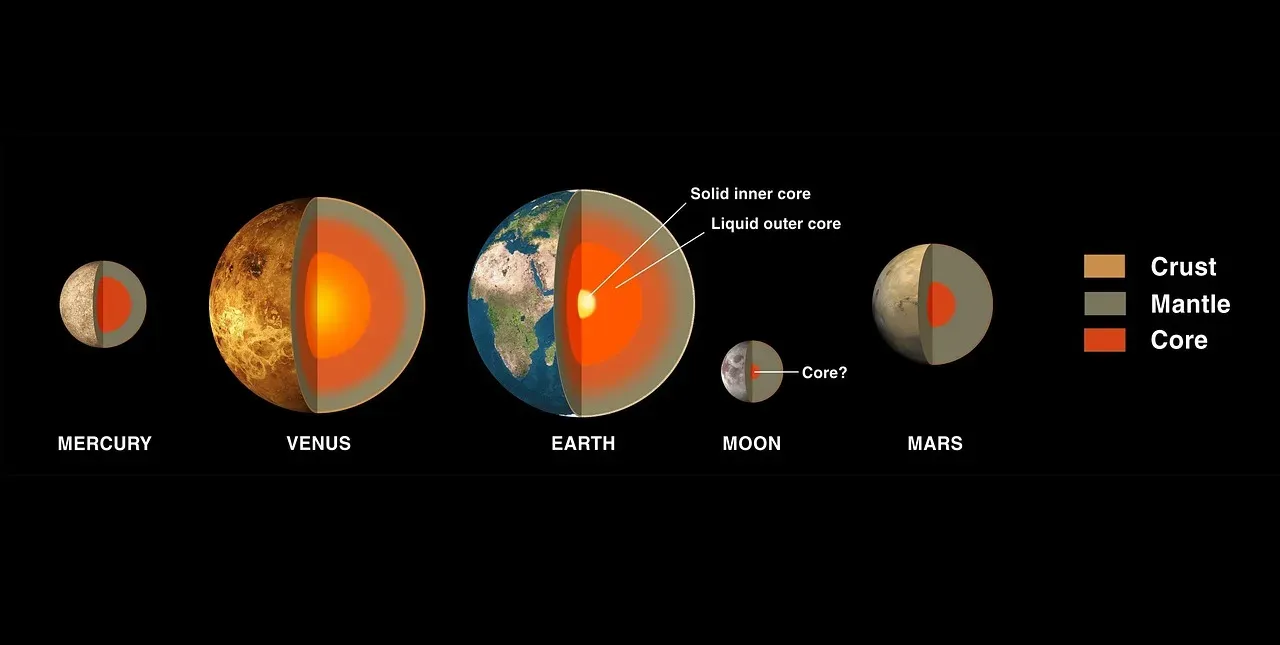
Something remarkable happened during all this chaos: Earth organized itself. A combination of gravitational heating, heating from impacts of planetesimals, and radioactive heating from isotopes found in silicates and metals caused the material of Proto-Earth to melt. The heaviest materials, mostly metals especially iron and nickel, sank to the interior to form the core while the silicates floated on top to form the mantle.
This process, called planetary differentiation, wasn’t gentle. Dense metallic iron literally sank through thousands of kilometers of molten rock under its own weight. Giant collisions between embryos deposited heat deep inside the growing planets and therefore maximized the overall temperature rise experienced by the Earth during formation.
The formation of Earth’s core had another crucial consequence. With a metallic core, Earth now had a magnetosphere. This invisible shield would prove essential for protecting the atmosphere and eventually life itself from destructive solar radiation, though its exact formation mechanism during Earth’s earliest days remains debated among scientists.
Earth’s Toxic First Atmosphere
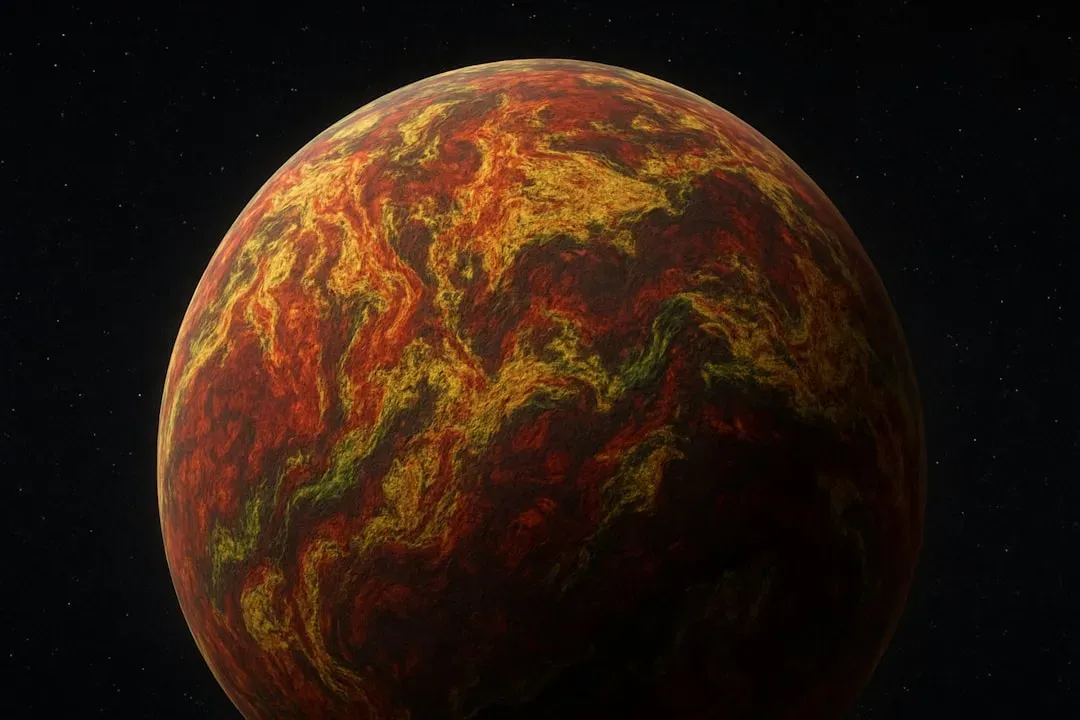
Let’s be real: you wouldn’t want to breathe Earth’s early air. This atmosphere was composed of carbon dioxide and water, with nitrogen in its elemental form rather than the toxic gas ammonia. Earth’s early atmosphere resembled that found on Venus today with 97% carbon dioxide, 3% nitrogen, and some water vapor.
High heat in Earth’s early days meant there were constant volcanic eruptions which released gases from the mantle into the atmosphere, and just as today, volcanic outgassing was a source of water vapor, carbon dioxide, small amounts of nitrogen, and other gases. An atmosphere formed mainly from gases spewed from volcanoes including hydrogen sulfide, methane, and ten to 200 times as much carbon dioxide as today’s atmosphere.
Picture a thick, choking blanket of carbon dioxide creating an intense greenhouse effect. Considerable carbon dioxide, roughly 100 bars, likely remained in the atmosphere at this stage, enough to maintain a surface temperature of around 500 K above a liquid water ocean. That’s roughly 440 degrees Fahrenheit, hot enough to boil away hopes of any early swimming pools!
The Emergence of Liquid Water
Against all odds, water found a way. A magma ocean and steam atmosphere possibly with silica vapour existed briefly in this period, but terrestrial surface waters were below the critical point within 100 million years after Earth’s formation. The key word here is “briefly,” in geological terms, which honestly still meant millions upon millions of years.
Liquid water oceans existed despite the high surface temperature because at an atmospheric pressure of 27 atmospheres water remains liquid, and the most likely source of the water in the Hadean ocean was outgassing from the Earth’s mantle. This might seem impossible, but remember that pressure and temperature work together to determine whether water exists as solid, liquid, or gas.
Generally speaking, there may have been something on the order of 20 or 30 impactors larger than 200 km across during the 500 million years of the Hadean, so the time between such impactors was relatively long, and any water vaporized near these impacts would rain down again. Between the catastrophes, there could have been quiet, tranquil times with liquid water on the surface. Honestly, that’s both terrifying and strangely hopeful.
From Hell to Habitable: The Long Road Forward
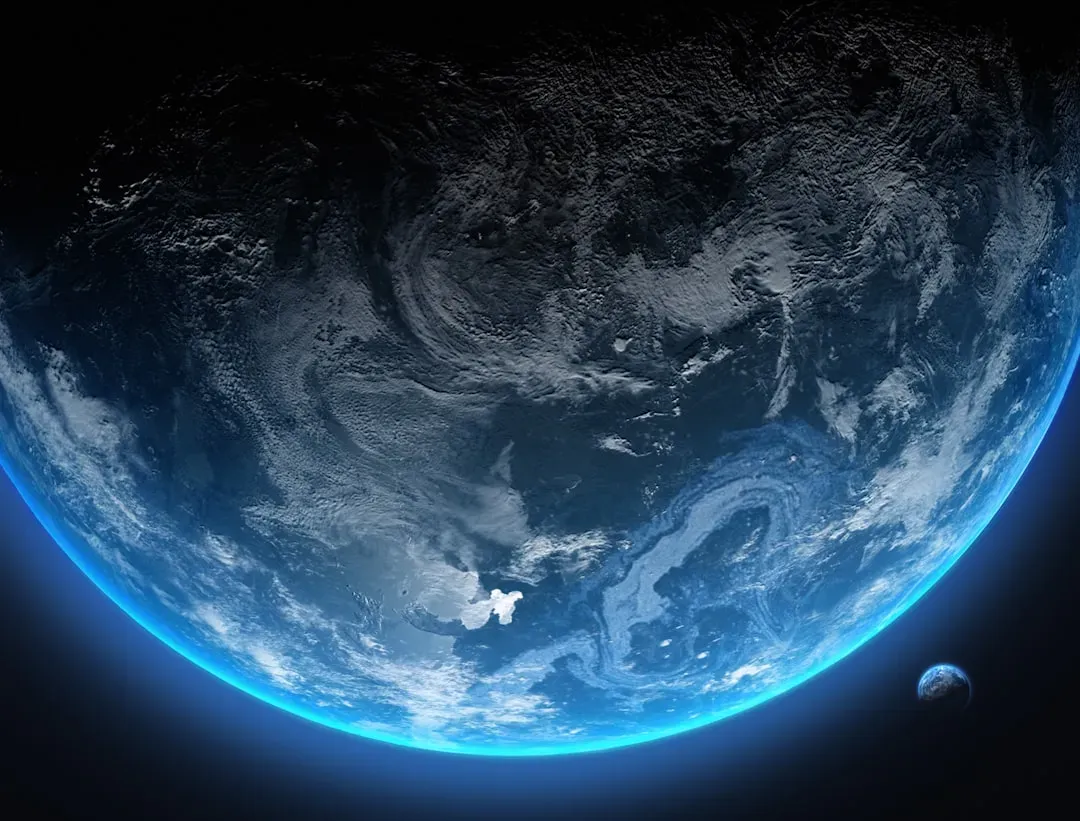
The Earth began hot after the moon-forming impact and cooled to the point where liquid water was present in roughly 10 million years. Let that sink in: ten million years sounds like forever to us, but for a planet, that’s remarkably fast cooling. In the absence of an optically significant atmosphere, direct radiation of molten rock to space would rapidly cool the Earth’s interior, and an effective radiating temperature of 1,500 K implies a surface heat flow that would remove all remaining available heat in about 400 years.
The journey from molten chaos to habitable planet required the gradual removal of that oppressive carbon dioxide atmosphere. Eventually Earth cooled further and the water vapor condensed to form the oceans, which absorbed carbon dioxide, some of which was incorporated into oceanic crust and subducted into the upper mantle, and the loss of atmospheric carbon dioxide reduced greenhouse warming which made the planet hospitable to early life.
Earth’s story is fundamentally one of transformation through catastrophe. The extreme conditions that characterized our planet’s birth, the unimaginable temperatures, the violent collisions, the toxic atmosphere, weren’t obstacles to life. They were necessary steps in creating a world where life could eventually flourish. What do you think about the fact that every atom in your body was forged in conditions that would instantly vaporize you today? Tell us in the comments.