You probably think of the Tyrannosaurus rex or Velociraptor when you imagine prehistoric predators. Those creatures were undeniably formidable, yet they were latecomers to Earth’s predator scene. Long before the first dinosaur took a breath, our planet hosted a lineup of hunters so bizarre and deadly that they make T. rex look almost ordinary. These were the original masters of death, animals that defined what it meant to be an apex predator.
Think about it this way: dinosaurs only ruled for roughly 165 million years, which sounds impressive until you realize that life had already been evolving for over three billion years before they arrived. During that vast stretch of deep time, evolution ran wild with experimentation, crafting predators with armored heads that could bite through steel, saber teeth that appeared hundreds of millions of years before the famous saber-toothed cats, and body plans so alien they seem pulled from science fiction. What emerges from the fossil record is a humbling reminder that nature’s creativity far exceeds our wildest imagination.
Anomalocaris: The First Apex Predator on Earth
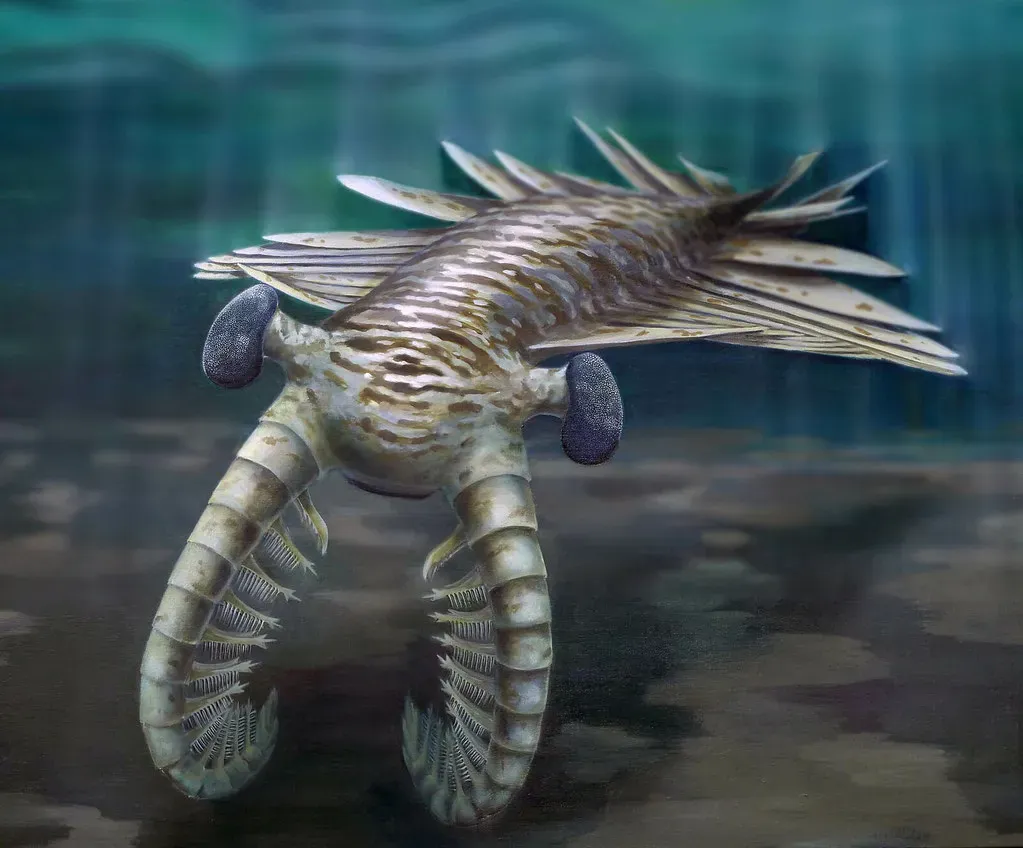
Anomalocaris was the great white shark of its day, cruising the shallow Cambrian seas in search of prey 500 million years ago. This soft-bodied predator looked nothing like anything alive in 2026, with a body plan so strange that scientists initially mistook its fossilized parts for three separate animals. Picture a creature roughly the length of a modern human with grasping frontal appendages, compound eyes, and a circular mouth ringed with razor-sharp plates.
It could grow to the length of a modern human, was fast, had good eyesight and possessed a large circular mouth made from razor-sharp plates. As the first top apex predator, Anomalocaris may have been responsible for an early evolutionary arms race, forcing other animals to develop hard shells for protection. Here’s the thing: before this creature appeared, the oceans were essentially a buffet of soft-bodied organisms with no real defenses. Anomalocaris changed everything. Its presence forced prey species to innovate or perish, setting off an evolutionary arms race that would shape life for eons to come.
Dunkleosteus: The Armored Nightmare of the Devonian Seas
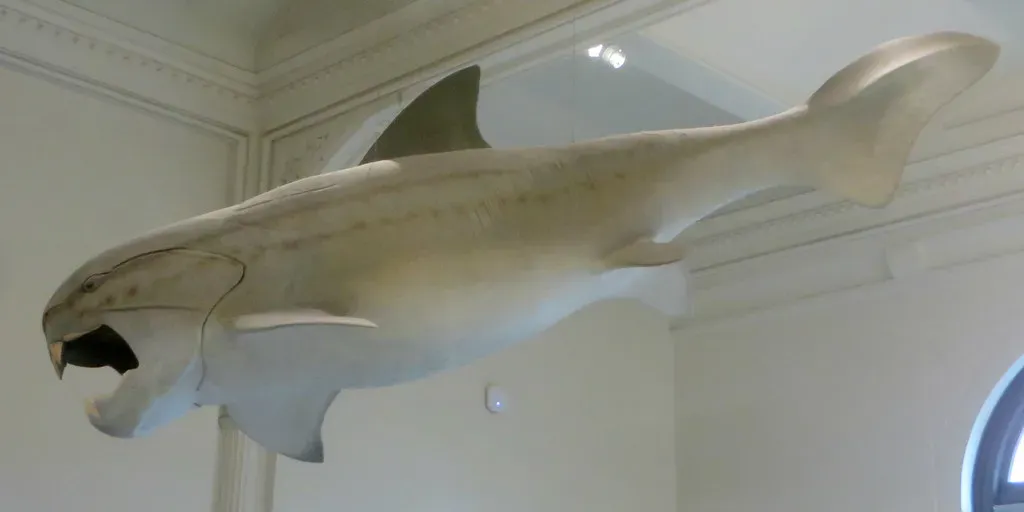
For nearly 30 million years it ruled the northern hemisphere’s oceans with an iron first – or rather, an iron bite. Dunkleosteus, affectionately known as “The Dunk,” was approximately four meters long and belongs to an extinct group of armored fish called placoderms. Yet don’t let that relatively modest size fool you into thinking it was anything less than terrifying.
At the very tip of its bony fangs, it’s estimated that Dunkleosteus may have been able to bite down at a force of 80,000 psi – enough to crush some of the strongest steel. Instead of teeth, this predator evolved self-sharpening bony blades that functioned like guillotines. This is lightning fast; in fact, it’s fast enough to create a small vacuum just in front of Dunkleosteus’ mouth. Imagine being a fish in the Devonian period, minding your own business, when suddenly the water around you starts pulling you toward certain death. That’s how Dunkleosteus hunted – combining suction feeding with bone-crushing jaws to make it nearly unstoppable.
Gorgonopsids: The Original Saber-Toothed Killers
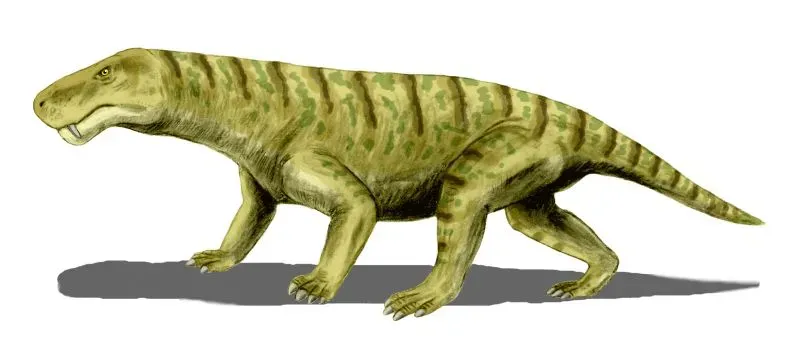
Before dinosaurs emerged, Gorgonops was the top predator of the Late Permian period. These carnivorous therapsids, distantly related to mammals, looked like a cross between a reptile and a big cat. Let’s be real – when you hear “saber-toothed predator,” your mind probably jumps to the Ice Age mammal Smilodon. However, nature invented this deadly design much earlier.
Gorgonopsia (from the Greek Gorgon, a mythological beast, and óps ‘aspect’) is an extinct clade of sabre-toothed therapsids from the Middle to the Upper Permian, roughly between 270 and 252 million years ago. They are characterised by a long and narrow skull, as well as elongated upper and sometimes lower canine teeth and incisors which were likely used as slashing and stabbing weapons. These proto-mammals prowled the supercontinent Pangaea during a time when the world was dominated by desert-like conditions. Some species grew no larger than a dog, while others rivaled bears in size.
Inostrancevia: The Tiger-Sized Terror
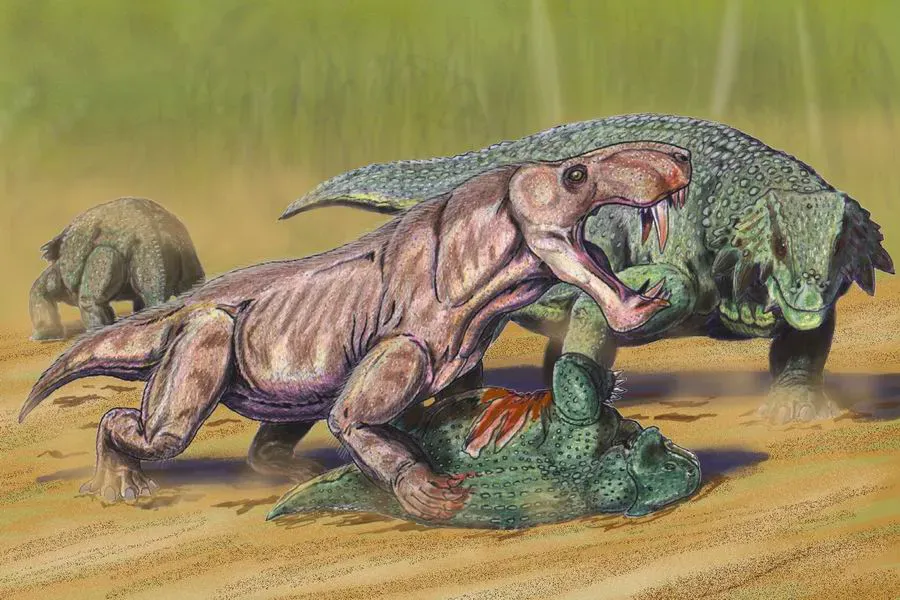
Inostrancevia was a tiger-sized, saber-toothed gorgonopsian that lived on the supercontinent Pangea during the Permian period, approximately 252 million years ago. Among the gorgonopsids, Inostrancevia stands out as potentially the largest and most fearsome. Possessing a skull measuring approximately 40 to 60 cm (16 to 24 in) long depending on the species, all for a body length reaching 3 to 3.5 m (9.8 to 11.5 ft), Inostrancevia is the largest known gorgonopsian, being rivaled in size only by the genus Rubidgea.
What makes Inostrancevia particularly fascinating is its migratory behavior during Earth’s greatest extinction event. The new fossil discovery in South Africa suggests that Inostrancevia migrated 11,300 km (7,000 miles) across Pangea, filling a gap in a faraway ecosystem that had lost its top predators, before going extinct itself. It also has very advanced dentition, possessing large canines, the longest of which can reach 15 cm (5.9 in) and which may have been used to shear the skin of prey. Picture a predator so desperate to survive that it traveled the equivalent distance from New York to Buenos Aires on foot, only to ultimately succumb to environmental catastrophe anyway.
Dimetrodon: The Sail-Backed Predator That Wasn’t a Dinosaur
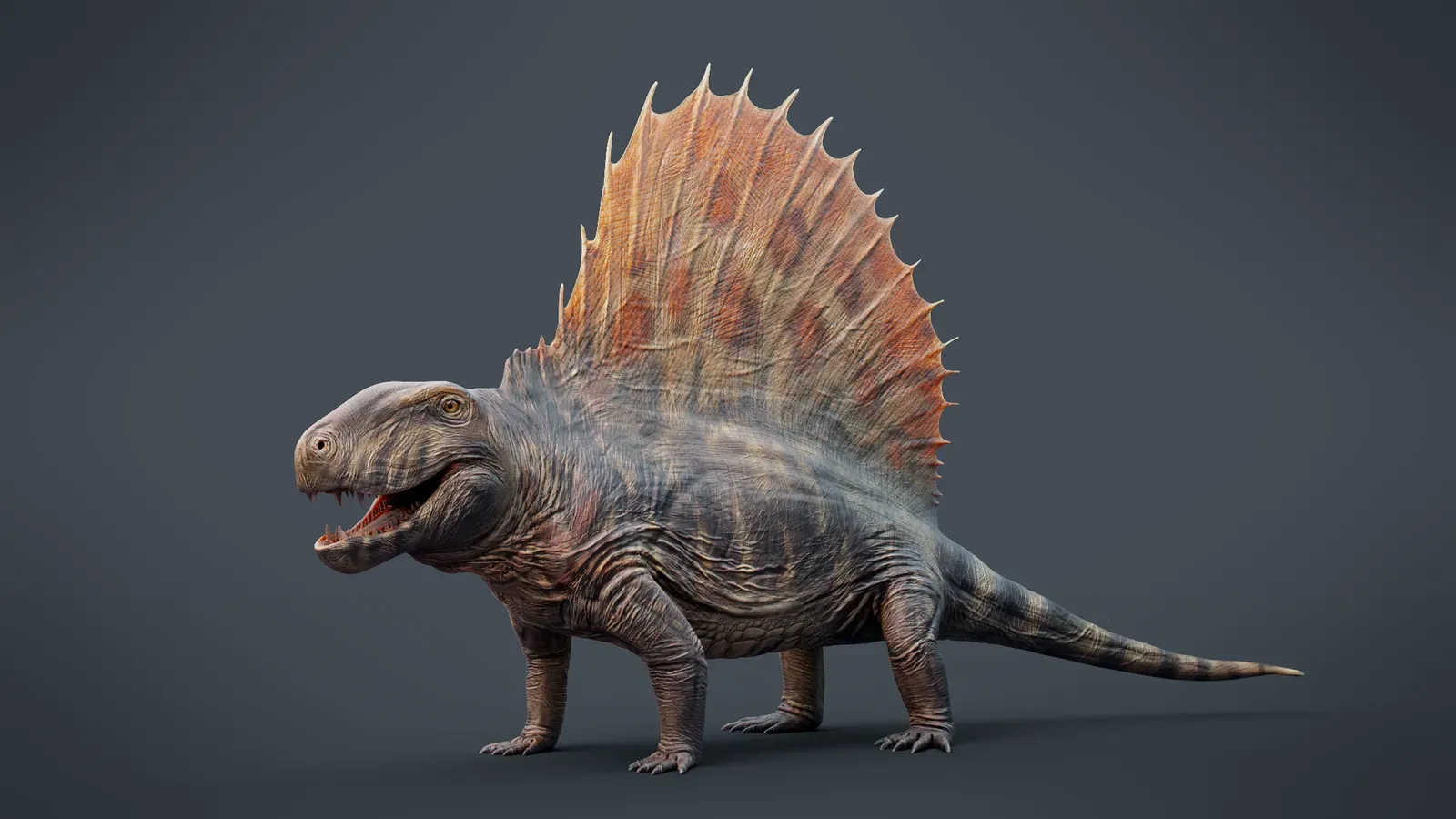
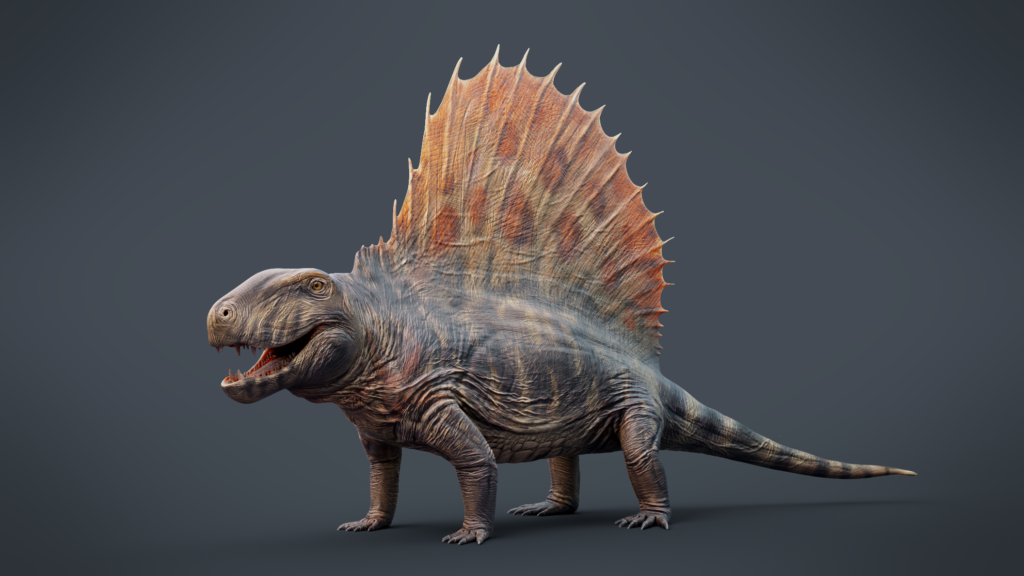
Despite often being mistaken for a dinosaur, Dimetrodon was actually a synapsid, more closely related to mammals than reptiles. It was one of the top predators of the Permian period, long before the first dinosaurs evolved. Honestly, it’s hard to say for sure what that massive sail on its back actually did, though scientists have proposed everything from temperature regulation to mating displays.
Standing at the top of the food chain during the Early Permian, Dimetrodon exemplifies how drastically different ancient predators could be. It had differentiated teeth – unusual for reptiles but common in mammals – which allowed it to process different types of prey more efficiently. This creature dominated its environment for millions of years before eventually giving way to more advanced predators. The distinctive sail might have made it look impressive, but beneath that showy exterior was a ruthlessly efficient killing machine perfectly adapted to its world.
Erythrosuchids: The Red Crocodiles of the Post-Apocalyptic Triassic
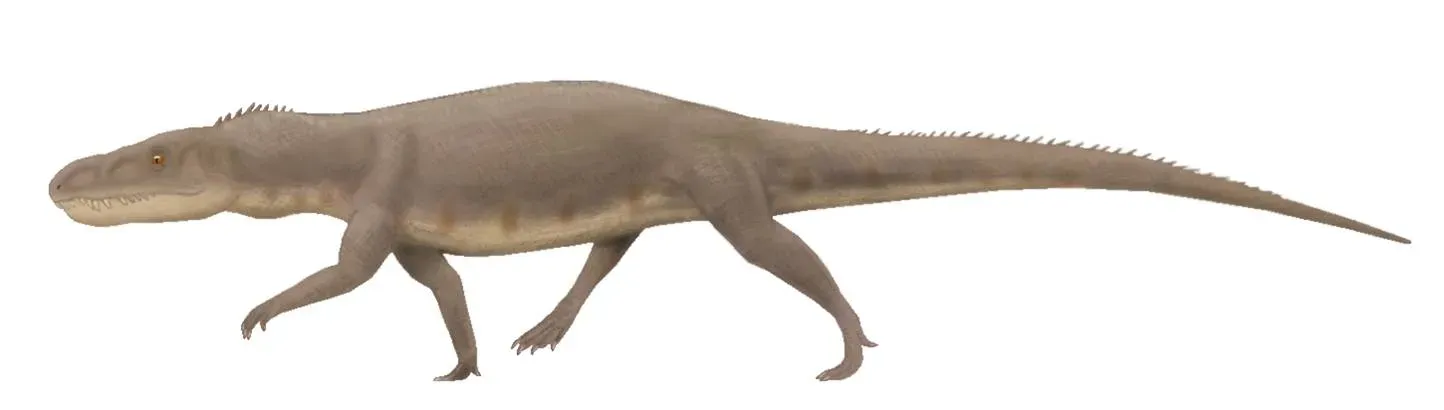
Erythrosuchids, meaning “red crocodiles” were predatory creatures that lived just after the Permo-Triassic mass extinction 252 million years ago – the worst mass extinction event in Earth’s history. These hypercarnivores emerged during a time when life was desperately trying to reboot after losing roughly ninety percent of all species.
They could reach up to 16 feet in length and are believed to have been apex predators. What’s remarkable about erythrosuchids is their proportionally massive heads – a characteristic shared by many early Triassic predators. The first dinosaurs would not walk Earth for another four million years after this period ended. These creatures occupied the apex predator niche before dinosaurs even existed, demonstrating that evolution rapidly fills vacant ecological roles after mass extinctions. Their oversized skulls suggest they were capable of taking down large prey, a necessary adaptation in a world where food was scarce and competition fierce.
Pterygotus: The Six-Foot Sea Scorpion
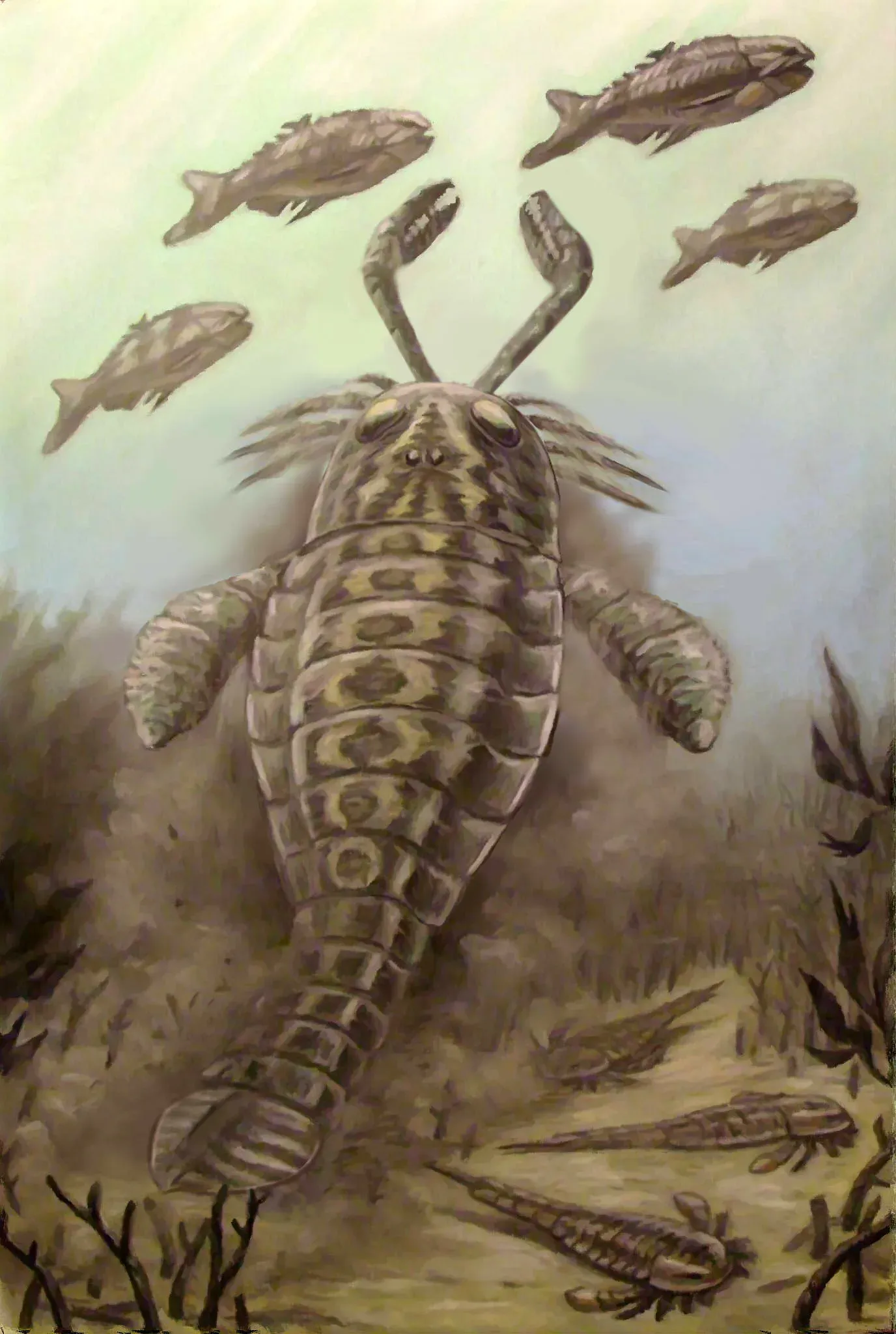
The Pterygotus was a giant sea scorpion that reached over six feet in length. Now imagine encountering a scorpion as tall as an average human while swimming in ancient seas. The giant sea scorpion was an enormous predatory aquatic arthropod. This ancient scorpion reached almost six feet, the size of a modern human, and lived on Earth’s oceans, hunting other creatures, like fish.
Instead of a stinger, it had behemoth claws and would wait in ambush for its prey using its visual acuity. Then, it would grasp and puncture them with its pincer-like appendages. Pterygotus belonged to a group called eurypterids, which were among the major swimming predators of their era. These arthropods represent one of nature’s many experiments with gigantism in the ancient oceans, thriving during a time when atmospheric oxygen levels were higher than today. Their extinction left a void that would eventually be filled by fish and other marine predators.
Tiktaalik: The Fishapod Predator
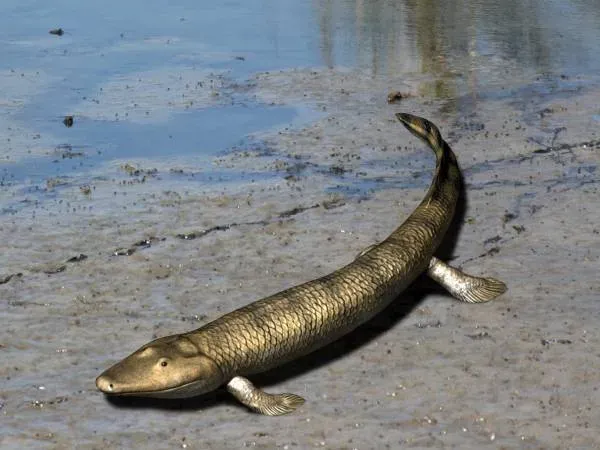
This huge size, combined with large jaws full of needle-like teeth, a mobile neck and eyes on the top of its head, suggests it was a predator specially adapted for hunting fish in the shallows. Tiktaalik represents a pivotal moment in evolutionary history – the transition from water to land. Yet this three-meter creature wasn’t just a biological curiosity; it was a formidable predator in its own right.
It was, by definition, a fish, but sporting primitive, air-breathing lungs (as well as gills) and four fleshy appendages that resembled limbs, it was well on its way to becoming a fully fledged, terrestrial tetrapod. Found in Arctic Canada, Tiktaalik patrolled the murky shallows of ancient river systems roughly 375 million years ago. Its robust fins could support its weight outside water, while its mobile neck allowed it to turn its head – an ability most fish lack. Think of it as nature’s prototype for land-dwelling predators, a creature literally caught between two worlds.
Scutosaurus: The Armored Herbivore Prey
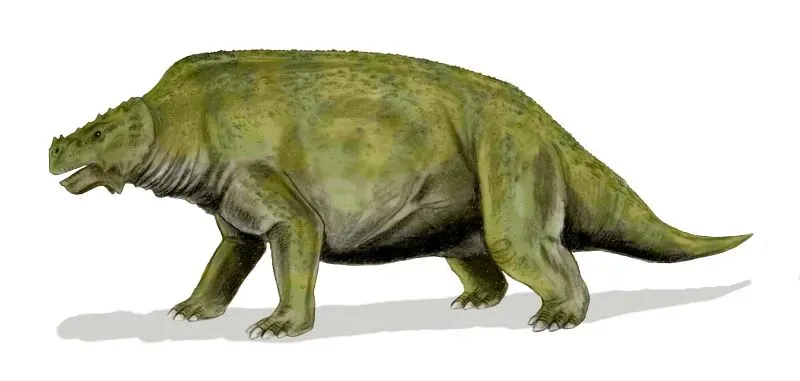
Wait – Scutosaurus was a herbivore, not a predator, you might be thinking. You’re absolutely right, yet understanding prehistoric predators requires understanding their prey. It was among the largest reptiles during the Permian Era, featuring a 20-inch spiked skull and an armor-plated body that could grow over ten feet. This shield lizard roamed the late Permian landscape as living proof of the predator-prey evolutionary arms race.
This terrestrial creature was hulking and intimidating, but research suggests it was a slow, heavy-footed herbivore that would have walked miles through its desert habitat looking for vegetation. Its meandering ways made it vulnerable to predators, like the Gorgonopsids. The very existence of such heavily armored herbivores tells you everything you need to know about how dangerous the predators of that era were. You don’t evolve armor plating several inches thick unless something truly terrifying is trying to eat you.
Nautiloids: The Shelled Assassins of the Ordovician
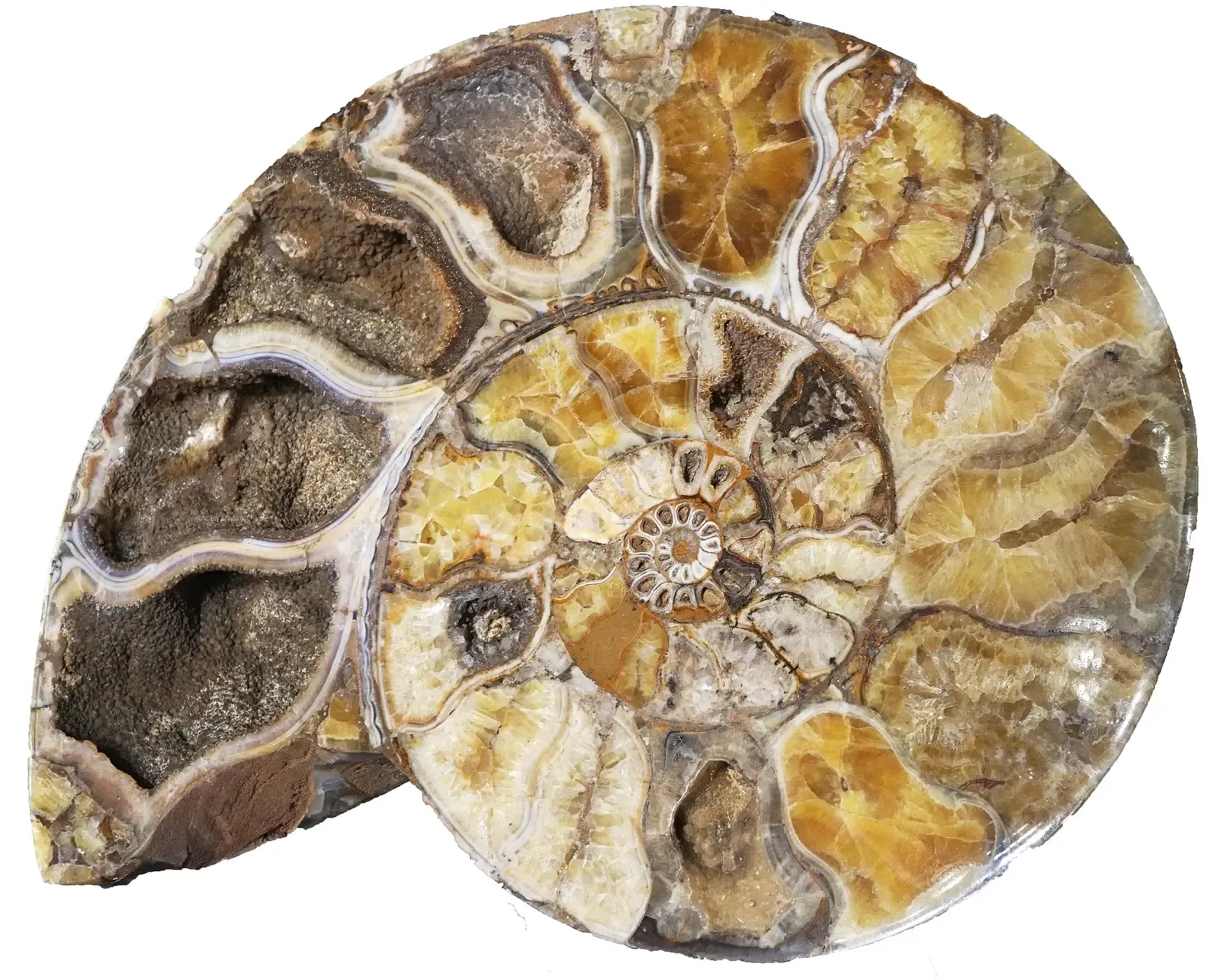
These nautiloids have toppled the arthropods as the top carnivores. During the Ordovician period, roughly 450 million years ago, a revolution occurred in Earth’s oceans. The top predators weren’t fearsome fish or massive arthropods – they were shelled cephalopods related to modern chambered nautilus.
Trilobites were scavengers of the seafloor while straight-shelled nautiloids (which grew up to two meters in length) became the top predators. These weren’t the coiled nautiluses you might picture. Many had straight or gently curved shells, some resembling floating battleships that could reach lengths of over six feet. There is now more oxygen in the Ordovician, and a new scourge of a predator has appeared in the seas. Their success marked a fundamental shift in ocean ecosystems, demonstrating that intelligent predators with advanced eyes and grasping tentacles could dominate environments previously ruled by arthropods.
The Great Dying and the Reset Button
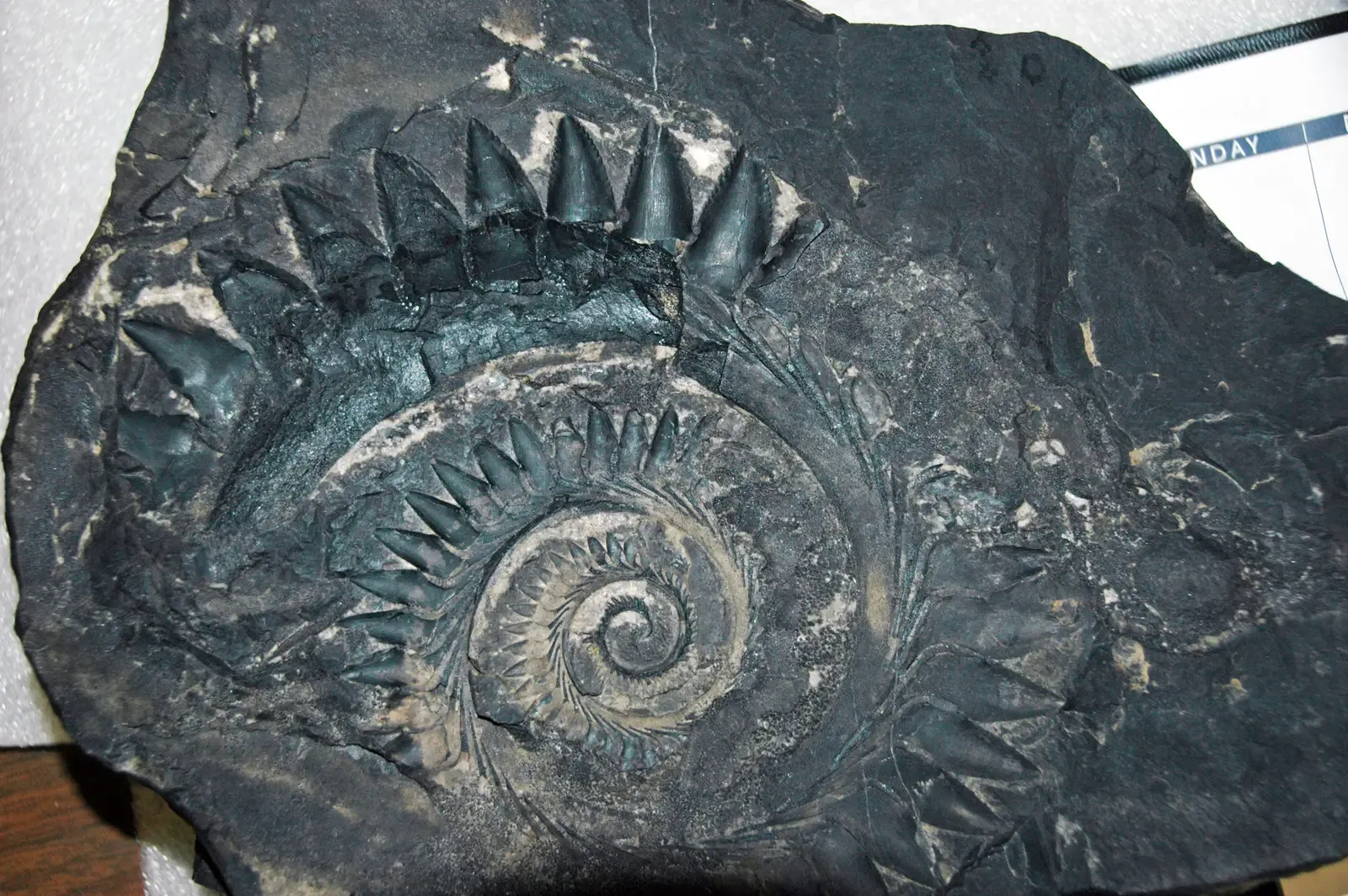
Two hundred and fifty-two million years ago, Earth experienced a mass extinction so devastating that it’s become known as “the Great Dying.” Massive volcanic eruptions triggered catastrophic climate change, killing off nine out of every ten species and eventually setting the stage for the dinosaurs. But the Great Dying was a long goodbye– the extinction event took place over the course of up to a million years at the end of the Permian period.
The Permian-Triassic extinction event reshaped life on Earth more dramatically than any other mass extinction. Most gorgonopsians became extinct during a phase of the Permian–Triassic extinction event taking place at the very end of the Permian, in which major volcanic activity (which would produce the Siberian Traps) and resultant massive spike in greenhouse gases caused rapid aridification due to temperature spike, acid rain, frequent wildfires, and potential breakdown of the ozone layer. The predators described in this article – from Inostrancevia to Dunkleosteus – all eventually vanished, making room for new lineages to evolve. We have shown that the shift in which groups of animals occupied apex predator roles occurred four times over less than two million years around the Permian-Triassic mass extinction, which is unprecedented in the history of life on land. This underlines how extreme this crisis was, with even fundamental roles in ecosystems in extreme flux.
The dinosaurs would inherit this remade world, yet they too would eventually face extinction. Life’s great lesson is that no matter how perfectly adapted, how powerful, or how dominant a predator becomes, it remains vulnerable to planetary-scale changes. These ancient terrors remind us that Earth has hosted countless rulers across deep time, each thinking themselves permanent, each eventually making room for something new.
Did you expect these creatures to be so alien and terrifying? What do you think was the most formidable predator before the dinosaurs?