There is something almost surreal about studying the social lives of creatures that vanished roughly 66 million years ago. No video footage, no behavioral observations, no field notes from naturalists watching a Triceratops herd move across a floodplain. What scientists have instead are bones, footprints, eggs, and razor-thin slices of fossilized tissue examined under microscopes. It sounds impossibly limited, yet the discoveries being made are nothing short of breathtaking.
The science of piecing together dinosaur social behavior is one of the most creative and intellectually demanding frontiers in modern paleontology. You might assume it’s all guesswork, but the tools and techniques researchers use today paint a picture that is surprisingly vivid. Let’s dive in.
Reading the Story Written in Fossil Trackways
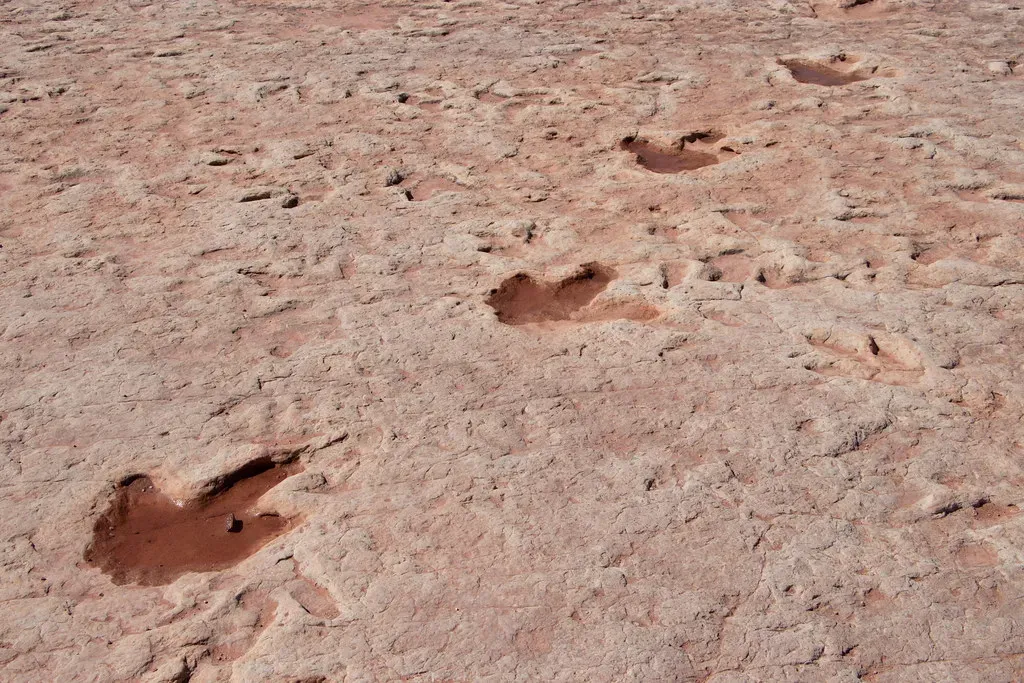
When you think about how to catch a glimpse of dinosaur social life, footprints might not be the first thing that comes to mind. Yet they are arguably the most direct window into behavior that paleontology has to offer. Unlike body fossils that preserve actual remains, trace fossils record the activities and behaviors of dinosaurs during their lifetimes. Tracks essentially freeze a moment of movement in time.
Dinosaur track sites are known in many places around the world. Lots of useful information can be gained from them, including speed and gait. Some of them have enough tracks to represent multiple individuals and even multiple species. When this happens, paleontologists can infer social behaviors that would never be preserved otherwise. Think of it like reading a conversation through body language rather than words.
Footprints uncovered in the Canadian province of Alberta could be evidence that some dinosaurs moved in herds comprising multiple different species. Many of the newly described footprints were made by ceratopsians, the group of horned dinosaurs that includes Triceratops. The 13 ceratopsian tracks are thought to belong to at least five individuals walking together across the landscape during the Cretaceous Period 70 million years ago. Another set of footprints walking among the herd is thought to belong to an ankylosaurid.
Researchers were also surprised to find the tracks of two large tyrannosaurs walking side-by-side and perpendicular to the herd, raising the prospect that multispecies herding may have been a defence strategy against common apex predators. The implications are staggering. Herbivores of different species possibly traveled together for protection, just like wildebeest and zebras share the African savanna today.
Mass Death Sites and What They Reveal About Group Living
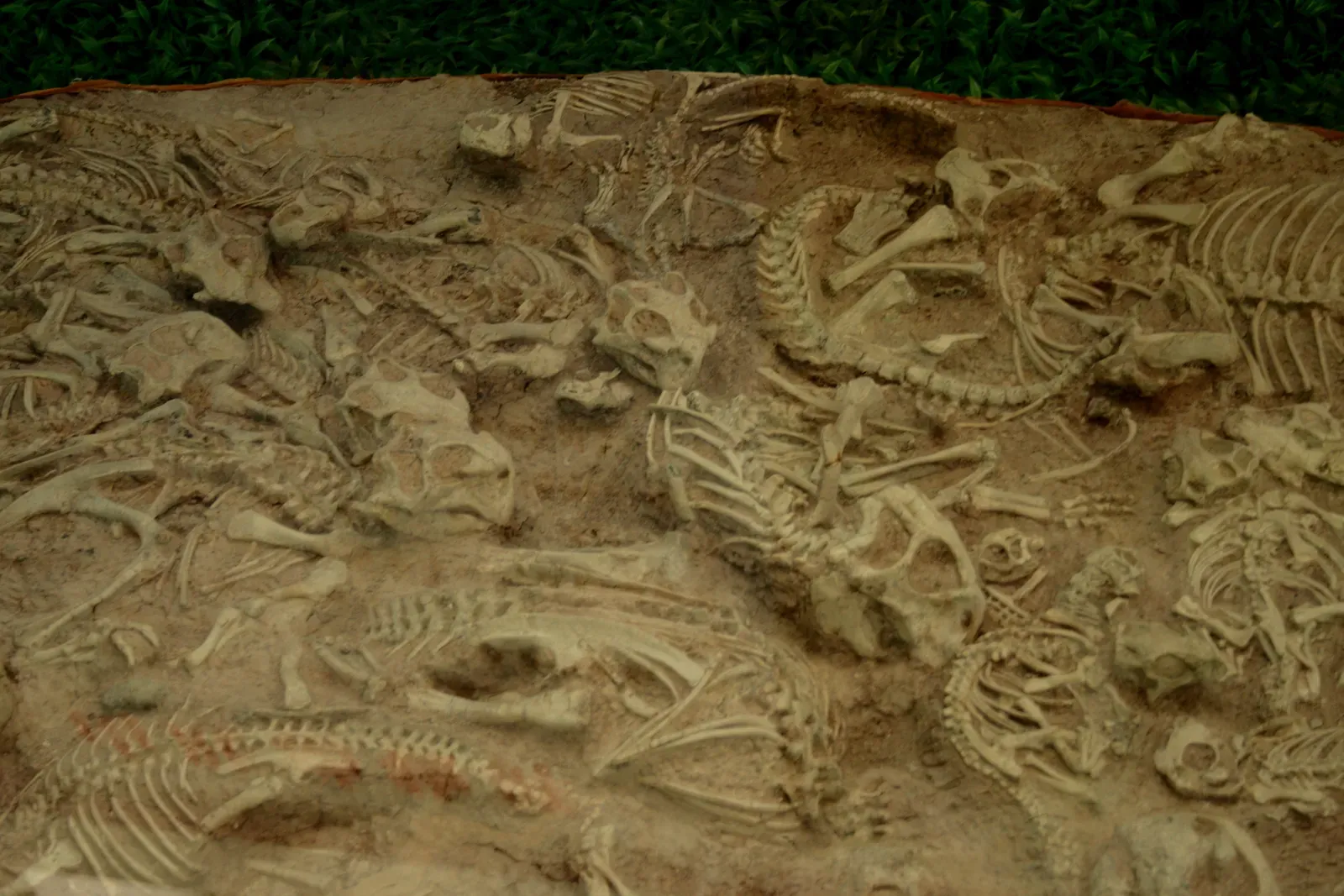
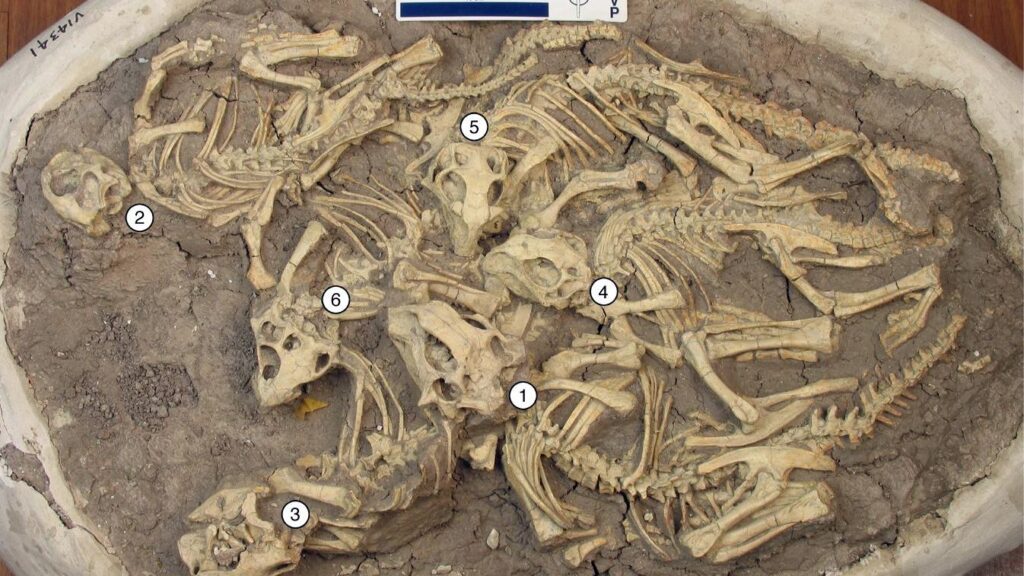
Here’s the thing about mass burial sites: they are rare, dramatic, and extraordinarily informative. When multiple individuals of the same species are found fossilized together, paleontologists can infer potential social behaviors. These mass death assemblages sometimes represent natural disasters that captured dinosaur social groups in their final moments. The most compelling evidence comes from monospecific bone beds containing different growth stages, suggesting family groups or herds with complex social structures.
The first potential evidence of herding behavior was the 1878 discovery of 31 Iguanodon dinosaurs which were then thought to have perished together in Bernissart, Belgium, after they fell into a deep, flooded sinkhole and drowned. That single site changed how the scientific world thought about dinosaur sociality. Bonebeds of hundreds of hadrosaurs and ceratopsians also indicate that some dinosaurs traveled in large herds. It is hard evidence that group living was not rare but rather a defining feature of many species.
The Pioneering Power of Nesting Sites
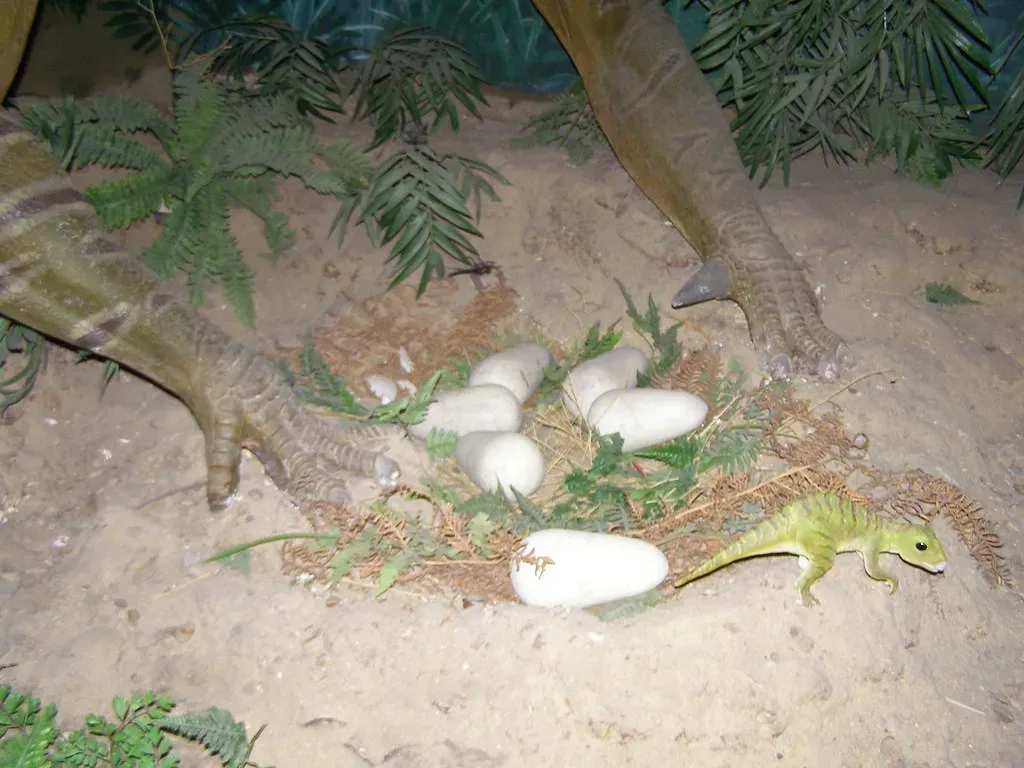
Few discoveries in paleontology have shifted our understanding of dinosaurs as dramatically as ancient nesting colonies. You see, for a long time people assumed dinosaurs were cold, reptilian loners with zero parenting instincts. Then came Montana. Based on all gathered evidence, Horner and Makela determined they had found the nest of a Maiasaura, whose babies had to be taken care of and fed while in the nest. This was the first ever evidence for parental care in dinosaurs.
Maiasaura lived in herds and raised its young in nesting colonies. The nests in the colonies were packed closely together, like those of modern seabirds, with the gap between the nests being around 7 metres; less than the length of the adult animal. The nests were made of earth and contained 30 to 40 eggs laid in a circular or spiral pattern. That spacing detail is extraordinary. When animals crowd their nests that close together, it is a deliberate social choice, not coincidence.
Fossilized nests showed hatchlings that were so undeveloped they could not even walk, so the parents must have brought food for them to the nest. This single observation rewrote the dominant narrative about dinosaur behavior. The site showed that the dinosaurs lived in colonies and cared for their babies after hatching, and this nest site evidence has helped establish that not all dinosaurs were isolated or cold-blooded.
Bonebeds and the Earliest Evidence of Herding
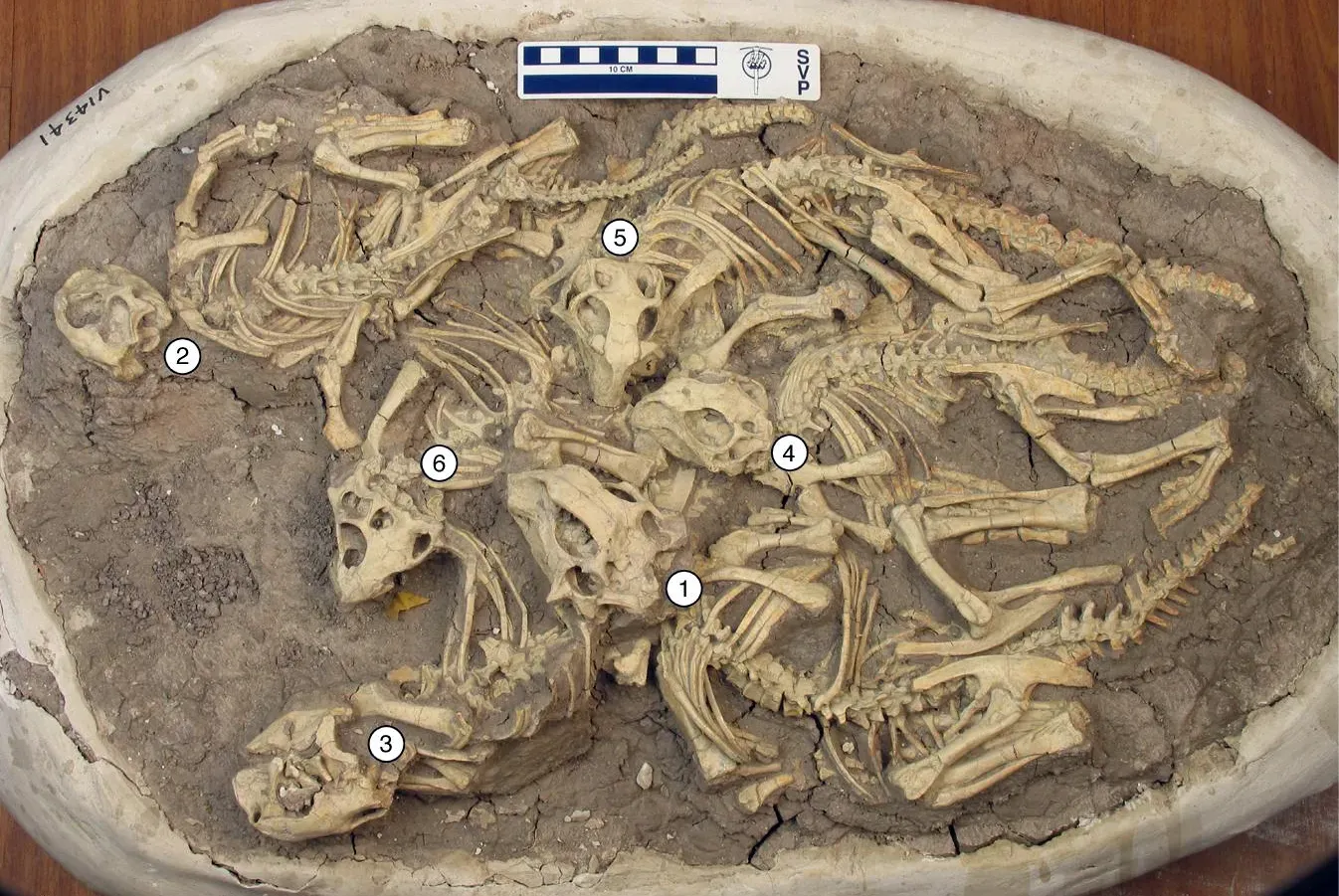
I think one of the most exciting developments in recent dinosaur paleontology has been pushing back the timeline of complex social behavior. Scientists long assumed herding was a later evolutionary development, something that emerged in the Cretaceous. Then a remarkable site in Argentina changed the game entirely. Researchers from MIT, Argentina, and South Africa detailed their discovery of an exceptionally preserved group of early dinosaurs that shows signs of complex herd behavior as early as 193 million years ago, which is 40 million years earlier than other records of dinosaur herding.
The remains include more than a hundred new Mussaurus eggs and 69 new skeletal fossils, and some appear in clusters of dinosaurs that are the same size and roughly the same age. The study team interprets this clustering as evidence that Mussaurus moved in age-segregated herds, with animals of similar sizes and ages moving together within the group. If so, the discovery gives paleontologists the oldest evidence ever found of this kind of herd behavior within dinosaurs. Age-segregated herds. Sound familiar? That is exactly what you see in elephants and bison today.
These new discoveries indicate the presence of social cohesion throughout life and age-segregation within a herd structure, in addition to colonial nesting behaviour. Herding behavior could have protected the tiny hatchlings from predation until they grew up. Living in herds might have allowed this species to collectively find more food to fuel their large bodies. Social living, it seems, was an ancient survival strategy, not a modern invention.
Comparing Living Relatives: Birds, Crocodilians, and the Behavioral Blueprint
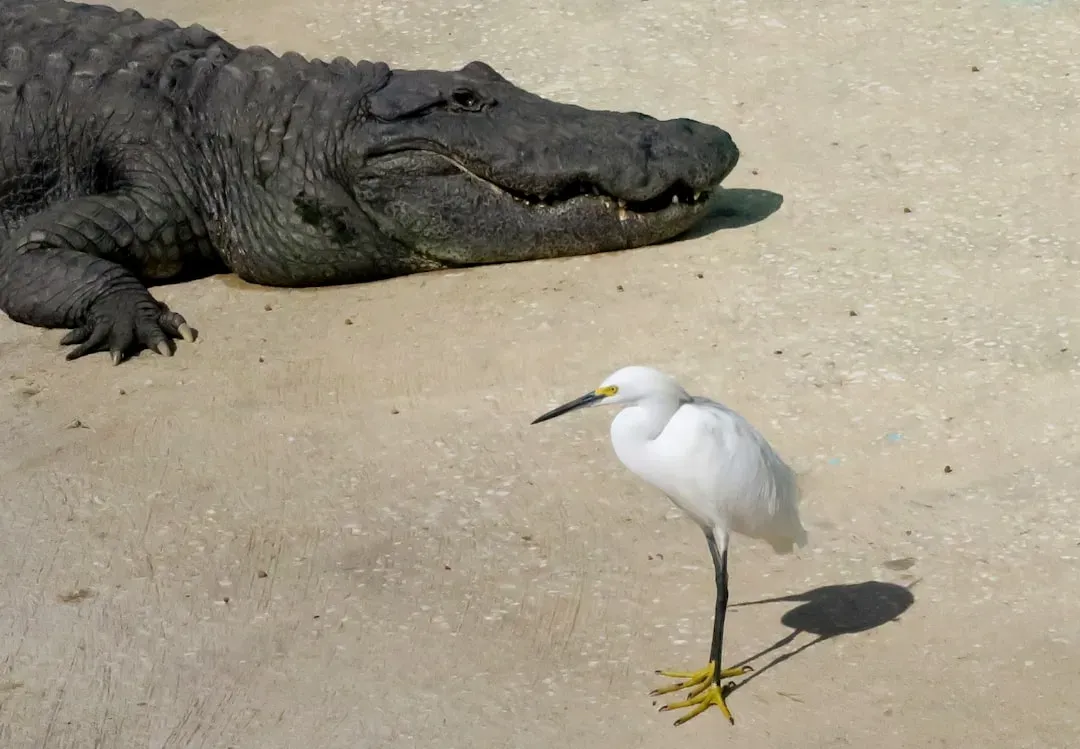
Honestly, one of the most underappreciated tools in paleontology is the living world itself. Dinosaurs did not disappear entirely. Birds are their direct descendants, and crocodilians are their closest living non-avian relatives. There is general agreement that some behaviors which are common in crocodiles and birds, dinosaurs’ closest living relatives, were also common among dinosaurs. This approach gives paleontologists a biological framework to test their hypotheses against reality.
Paleontologists need to focus on the nearest living relatives of dinosaurs, such as birds and crocodylians, and the nearest analogs of large species like elephants and lions, but there are big patterns of behavior and ecology that transcend these comparisons as well as unique and odd creatures that can provide useful insights. It is a bit like reconstructing how a person communicated by studying their closest living family members. You would get a pretty good starting point, even without a recording. Interpreting behavior from fossils remains challenging due to the limitations of fossil evidence and the risk of misapplying modern animal behavior to dinosaurs. The caution is just as important as the comparison itself.
Bone Histology: Reading Life Histories Inside the Fossil
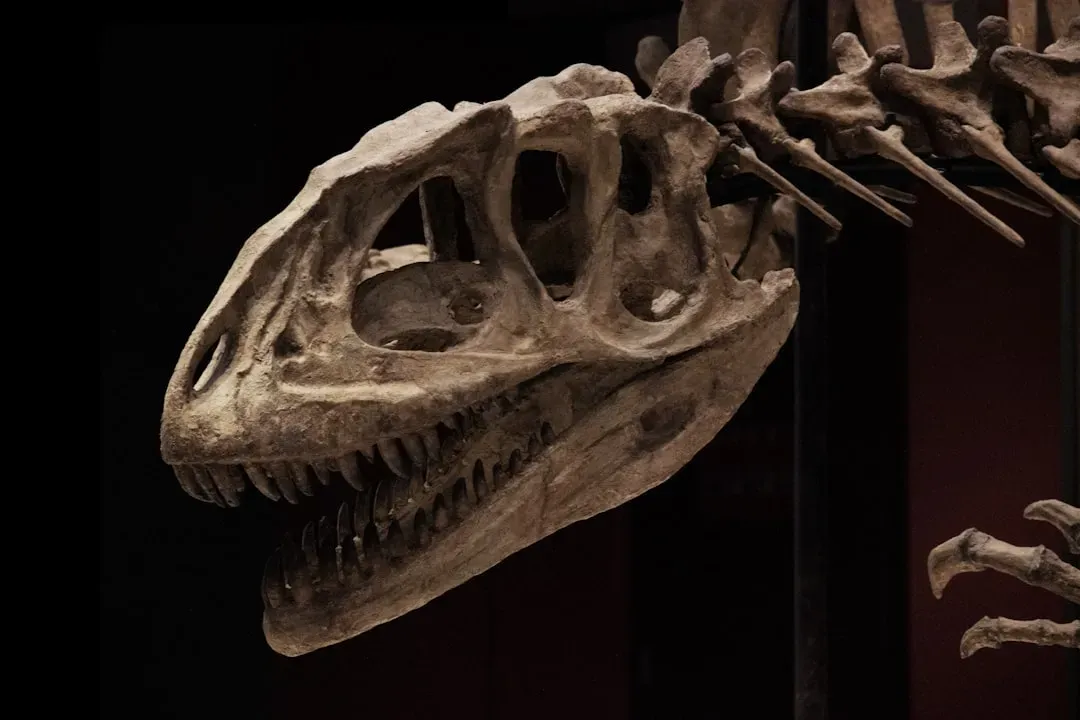
Slice a dinosaur bone thin enough to see through, put it under a microscope, and you will find rings, patterns, and structures that tell a surprisingly detailed story about how that animal lived, grew, and aged. New data on dinosaur longevity garnered from bone microstructure, otherwise known as osteohistology, are making it possible to assess basic life-history parameters of the dinosaurs such as growth rates and timing of developmental events.
Analyses of these data in an evolutionary context are enabling the identification of developmental patterns that lead to size changes within the Dinosauria. Furthermore, this rich new database is providing inroads for studying individual and population biology. All in all, paleohistological research is proving to be the most promising avenue towards gaining a comprehensive understanding of dinosaur biology. Understanding when dinosaurs reached maturity, how fast they grew, and how long they lived helps researchers figure out whether a fossil site contains juveniles, adults, or a mix of both, which is crucial for interpreting social structure.
The Museum of the Rockies is the location of one of the few paleohistology laboratories in the world. Research there is focused on the study of the microscopic structure of fossil specimens, which allows for a more in-depth exploration into dinosaur growth, physiology, and behavior. These labs are where ancient bones whisper their secrets, one thin slice at a time.
Computer Simulations and Biomechanical Modeling
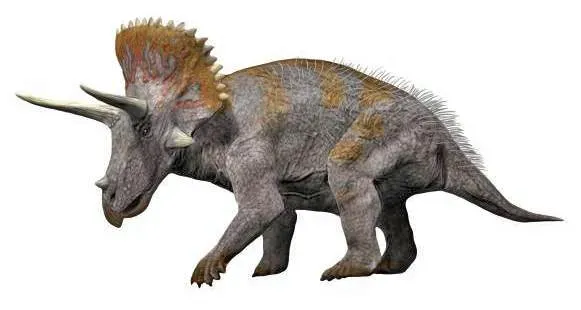
Here is where paleontology starts feeling a little like science fiction. Modern computational tools allow researchers to build three-dimensional models of dinosaur skeletons and simulate how those animals actually moved, which in turn reveals a great deal about how they might have interacted socially. Modern computational methods allow paleontologists to simulate how dinosaur bodies functioned, providing clues about their behavior. Using 3D models based on fossil remains, scientists can calculate muscle attachment points, joint mobility, center of gravity, and potential speed and agility. These biomechanical studies help determine whether a dinosaur was built for pursuit predation, ambush hunting, or herbivorous browsing.
It is hard to say for sure how well these models capture every nuance of behavior, but they bring a level of precision that was simply impossible just a few decades ago. Analysis of Tyrannosaurus rex’s biomechanics has sparked debate about whether it was primarily a hunter or scavenger, with studies suggesting its massive body would have limited its running speed to approximately 12 to 17 miles per hour, slower than many potential prey animals. Whether you are a pack hunter or a lone ambush predator makes an enormous difference to your social structure. These models help narrow down the possibilities in ways that bones alone never could.
Feather Color Analysis and Visual Communication
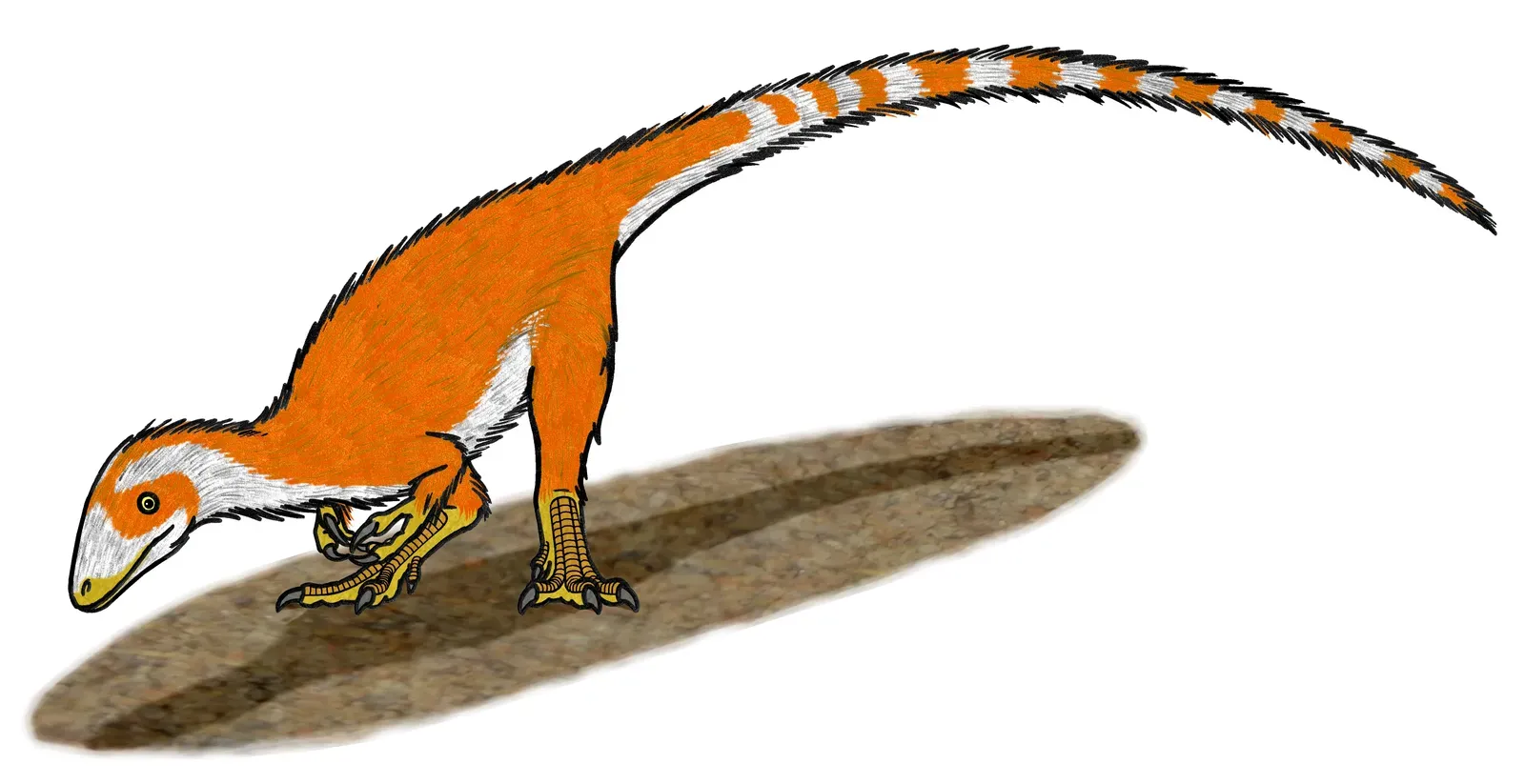
You might wonder what feather color has to do with social life. Actually, it has everything to do with it. Color is communication. Among living birds, plumage signals species identity, mate quality, social rank, and readiness to breed. Paleontologists are advancing the study of dinosaur behavior by utilizing new techniques such as electron microscopy to determine the colors and patterns of feathered dinosaurs. This can provide insights into their camouflage, mating, and environmental adaptations.
Paleontologists have recently pieced together the colors and patterns of some feathered dinosaurs, using electron microscopes to see tiny preserved structures that used to contain the pigments of the animals in life. That is remarkable. These structures, called melanosomes, survive inside fossilized feathers and tell scientists whether a dinosaur was a deep brown, a reddish chestnut, or something more vivid. Studying more specimens of the same species could reveal if males and females were the same colors or if they differed, and if these feathers underwent seasonal changes or varied with the environment. If males were brightly colored, that signals mate competition and complex reproductive social dynamics. If both sexes matched, it might suggest both parents participated in raising young. Color, it turns out, is biography.
Conclusion: The Social Lives of Giants Are No Longer Silent
What is genuinely thrilling about all of this is how rapidly the field is advancing. A generation ago, questions about dinosaur social life were largely considered unanswerable. Today, through trackways, bonebeds, nesting colonies, bone microstructure, computational modeling, and microscopic feather analysis, scientists are building a picture of ancient social worlds with remarkable clarity.
With the discovery of new specimens and the development of new and cutting-edge techniques, paleontologists are making major advances in reconstructing how dinosaurs lived and acted. These creatures herded, nested communally, cared for their young, possibly traveled in mixed-species groups, and communicated through color. They were not the isolated, brutish monsters of old Hollywood imagination.
The deeper you look, the more these animals reveal themselves to be complex, socially aware creatures navigating a world just as demanding as our own. Every fossil is a frozen moment of a life once fully lived. And the question that keeps scientists going is a simple one: what else are those ancient bones still waiting to tell us?