You don’t need a PhD, a research grant, or a team of field scientists to change what we know about prehistoric life. Sometimes, all it takes is a curious eye, a lucky walk along a beach, or a new piece of property with an unexpected surprise hiding in the ground. The world of paleontology has been turned upside down, more than once, by ordinary people who simply paid attention to the world beneath their feet.
It sounds almost too good to be true. A retired physicist, a four-year-old girl, a quarry worker on a Japanese island. These are not the names you’d expect to find in scientific journals. Yet here we are. Let’s dive in.
The Four-Year-Old Who Stunned the Paleontology World
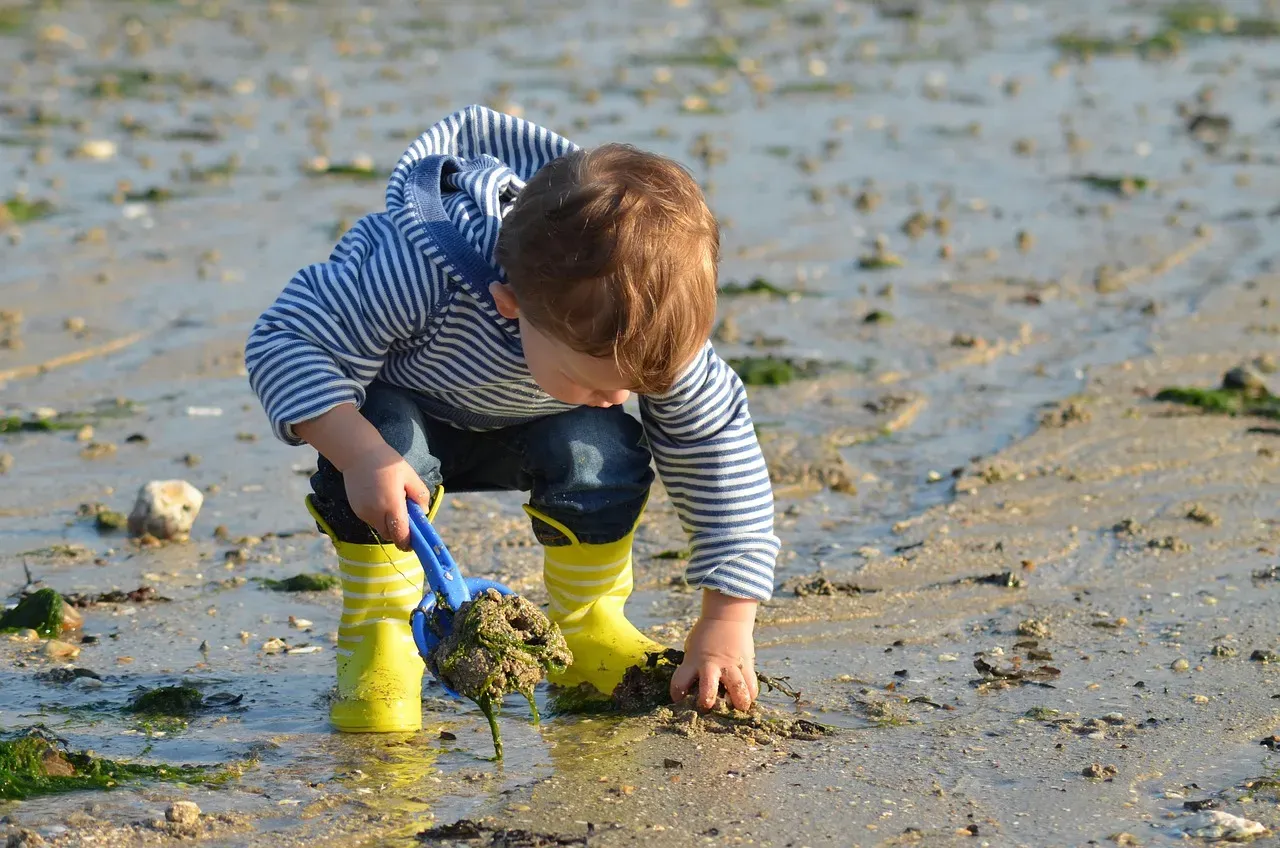
Picture this: you’re a preschooler on a beach walk in Wales, more focused on splashing in puddles than studying rocks, and you casually point at a boulder and say, “Daddy, look.” That is essentially how one of the most important dinosaur footprint discoveries in British history happened. Four-year-old Lily Wilder, walking along a beach in Wales with her father and their pet dog, spotted an extremely well-preserved dinosaur footprint that excited paleontologists worldwide, found near Bendricks Bay in south Wales and thought to have been left 220 million years ago.
The National Museum of Wales Palaeontology curator Cindy Howells was notified of the find and described it as the best specimen ever found on that beach. The fossil she found is a type of footprint called Evazoum, made around 220 million years ago by a currently unknown herbivorous dinosaur, and is one of the best-preserved examples of its type from anywhere in the UK. Honestly, that detail alone is staggering. The best in the whole country, found by a child who hadn’t even started school yet.
Dinosaurs had evolved only about 10 million years before this mysterious three-toed creature walked the landscape, so its print is a tantalizing clue into early dinosaur history, according to National Museum Wales. The fossil was extracted and taken to National Museum Cardiff, where it will be protected for future generations to enjoy and for scientists to study. The lesson here is almost poetic: the most experienced eyes in the field had walked these shores for decades, yet it took a small girl with fresh, unfiltered curiosity to spot what everyone else had missed.
The Nuclear Physicist Who Found a New Species in His Own Backyard
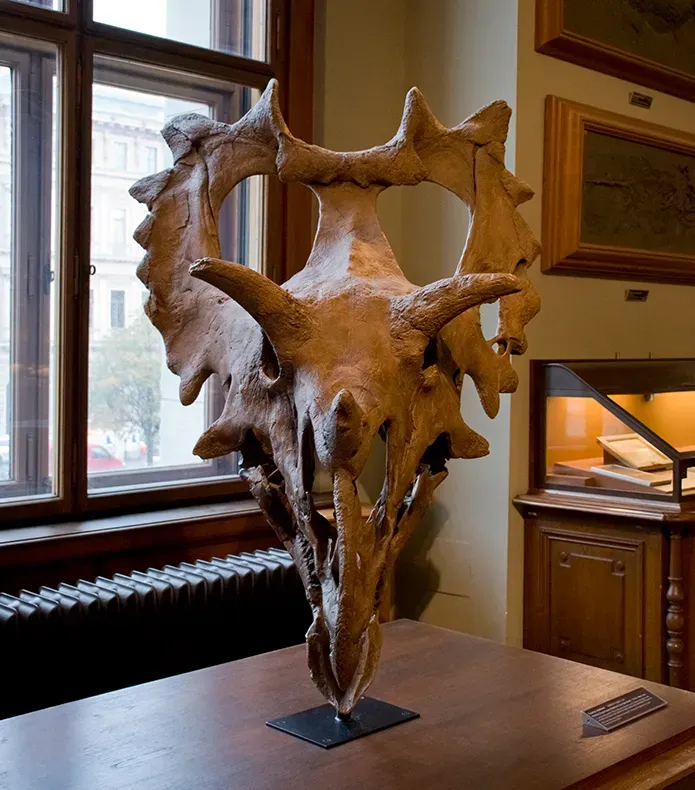
Here’s a story that genuinely reads like something out of a film. When nuclear physicist Bill Shipp bought a rural property in Montana, he went exploring and found a fossil of a new species of horned dinosaur sticking out of the ground on his land. Think about that for a second. The man bought land, went for a walk, and accidentally rewrote dinosaur science. That’s not just luck. That’s the universe having a sense of humor.
In 2005, retired nuclear physicist Bill Shipp hired an amateur paleontologist to show him the ins and outs of fossil hunting and conducted his first search on a ranch he had recently acquired near the Upper Missouri River Breaks National Monument, where he stumbled upon a leg bone of a dinosaur dubbed “Judith” after the Judith River rock formation where it was found. His luck did not end with the discovery, because as it turned out, the leg bone he unearthed was found to be a representative of a previously unknown dinosaur that lived 76 million years ago. The new dinosaur was eventually named Spiclypeus shipporum in his honor. It’s one thing to buy land. It’s another thing entirely to buy land that has been holding a 76-million-year-old secret for you.
Researchers noted that the individual dinosaur was at least 10 years old when it died, and the discovered leg bone showed signs of infection that left it hobbling, making it vulnerable to large predatory dinosaurs living during that time. This discovery didn’t just give science a new species. It gave us a surprisingly personal window into the life, struggles, and ultimate fate of one particular animal. That kind of emotional connection to an ancient creature is rare, and it came directly from one person’s curiosity about their own property.
A Japanese Quarry Worker Rewrites Hadrosaur Migration History
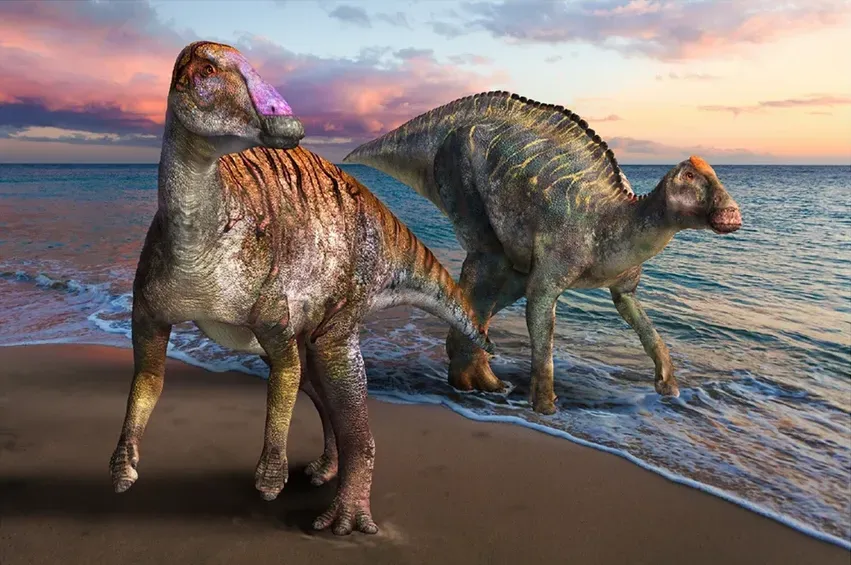
Most people walk through a cement quarry and see, well, rocks. Amateur fossil hunter Shingo Kishimoto saw something else entirely. The partial specimen of Yamatosaurus was discovered in 2004 by an amateur fossil hunter in an approximately 71 to 72 million-year-old layer of sediment in a cement quarry on Japan’s Awaji Island, and the preserved lower jaw, teeth, neck vertebrae, shoulder bone, and tail vertebra were found by Shingo Kishimoto and given to Japan’s Museum of Nature and Human Activities in the Hyogo Prefecture, where they were stored until studied by a research team.
An international team of paleontologists identified a new genus and species of hadrosaur, or duck-billed dinosaur, Yamatosaurus izanagii, on one of Japan’s southern islands, and the fossilized discovery yielded new information about hadrosaur migration, suggesting that the herbivores migrated from Asia to North America instead of vice versa, while also illustrating an evolutionary step as the giant creatures evolved from walking upright to walking on all fours. That last point is genuinely jaw-dropping. Science had assumed hadrosaurs traveled one direction across the ancient Bering land bridge. This single find from a quarry in Japan flipped that assumption on its head.
The Yamatosaurus’ dental structure distinguishes it from known hadrosaurs, and unlike other hadrosaurs, the new dinosaur has just one functional tooth in several battery positions and no branched ridges on the chewing surfaces, suggesting that it evolved to devour different types of vegetation than other hadrosaurs. As researcher Yoshitsugu Kobayashi noted, Japan is mostly covered with vegetation with few outcrops for fossil hunting, making the help of amateur fossil hunters very important. It’s a reminder that science is genuinely a team sport, and the team is bigger than most people think.
Marie Woods and the Footprint That Revealed a Hidden Dinosaur Behavior
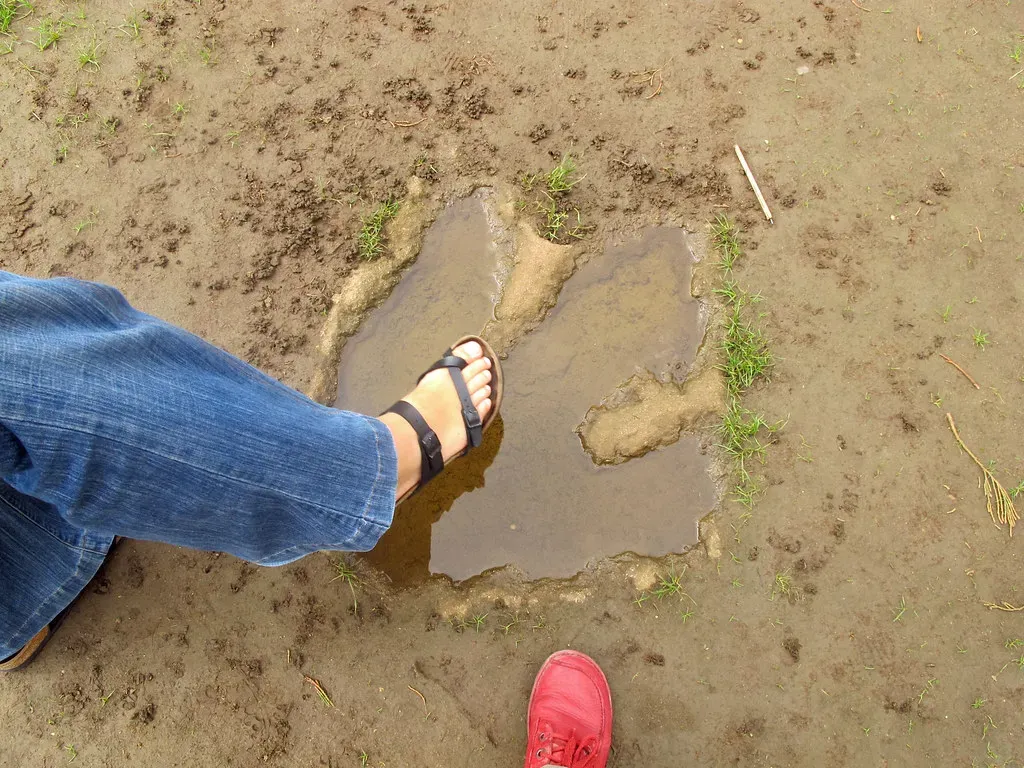
You might expect that after two centuries of systematic fossil hunting along the British coastline, there would be very little left to surprise anyone. You would be wrong. Across the Atlantic, Marie Woods made one of those new discoveries when she found a fossilized dinosaur footprint along the Yorkshire coast. What followed was not just a great find. It was a behavioral revelation that scientists had never witnessed before in the fossil record.
What researchers say is quite significant about this particular print is the fact that it is the only one of its kind in the world that shows the behavior of a dinosaur of this kind actually taking a rest. Let that sink in for a moment. Dinosaurs resting. We now have direct, physical evidence of a theropod pausing, settling down, and taking a break. It sounds almost mundane, but in paleontology terms, it is extraordinary. To protect the footprint from the elements, fossil collectors carefully removed it from the rocky cliff, and that’s when they realized another fossil hunter, Rob Taylor, had spotted the same print, just not fully exposed, a few months earlier, with Woods and Taylor ultimately sharing in the historic find.
I think what makes this story so compelling is that Woods didn’t set out as a trained scientist with a checklist. She was simply paying attention and present enough to notice something that professionals had walked past. Time and erosion have left fossils behind for paleontologists and amateur fossil hunters to discover, and even after 200 years of Western culture collecting fossils from long-covered cliffs, there is still much more to know about the diversity of organisms that lived during ancient epochs. Every rocky coastline is, in a sense, still an open book.
The Isle of Wight and the Retired Doctor Who Named Three New Species
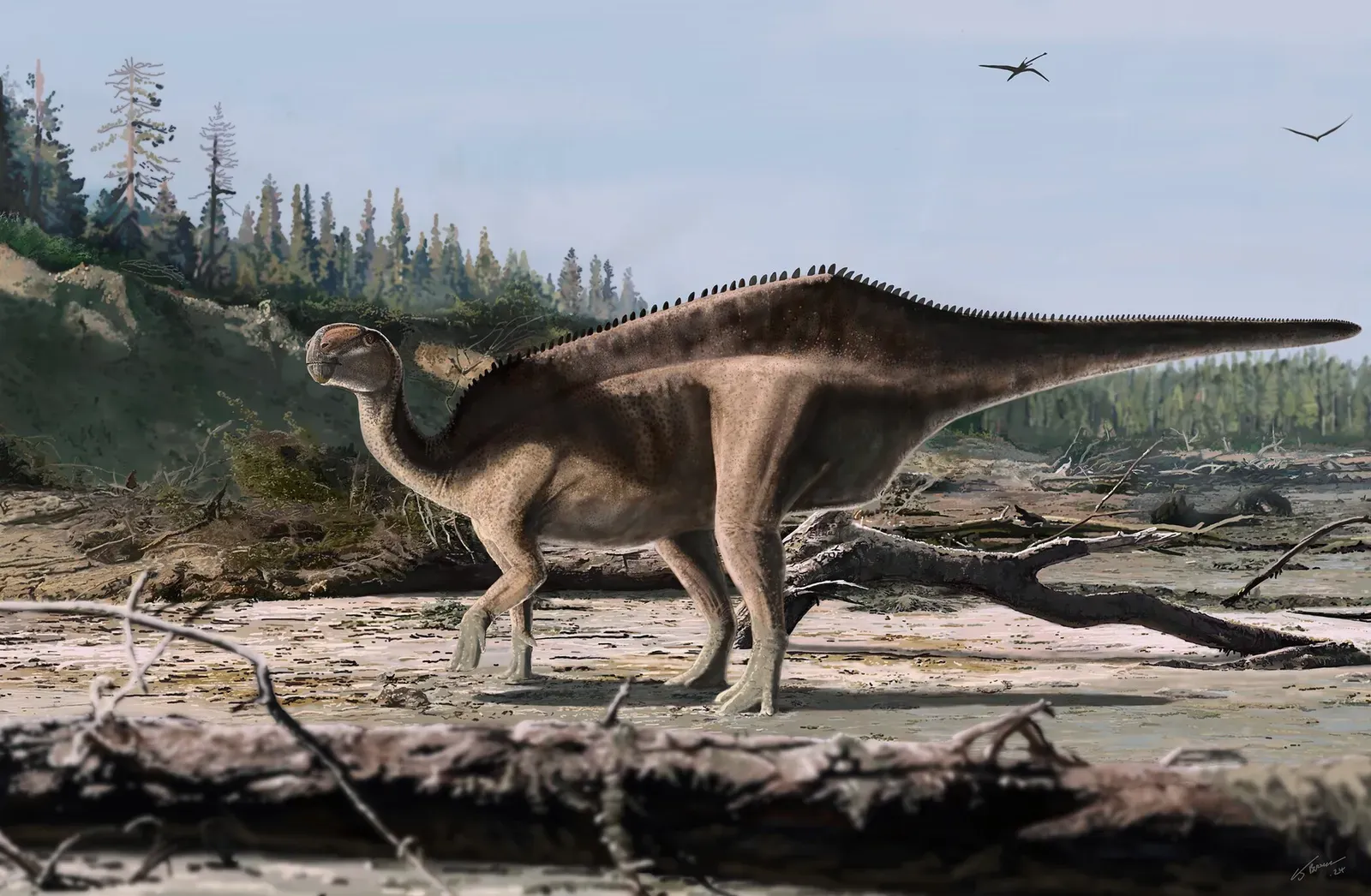
There is something almost rebellious about a retired doctor spending his post-career years dismantling what paleontologists thought they knew about a well-studied island. The Isle of Wight has been famous for dinosaur fossils for nearly two centuries. Professionals have combed its eroding cliffs for generations. Yet a man who spent most of his life in medicine managed to find not one, not two, but three entirely new dinosaur species there.
Dinosaur fossils have been common discoveries in the rapidly eroding Cretaceous Period-aged cliffs of the Isle of Wight off the south coast of England for nearly two centuries, yet there is still much to learn, and Jeremy Lockwood, a retired doctor turned dinosaur expert, has since 2021 named three new species of large ornithopods, one of the most common groups of plant-eating dinosaurs. These new species are closely related to Iguanodon, a four-legged ornithopod from Belgium with a very distinctive thumb spike, and Lockwood’s latest discovery, the six-metre-long Istiorachis, is another herbivorous ornithopod with a striking sail-like structure running along its back, which may have been a display structure used to attract mates and to deter predators by making this 128-million-year-old animal look bigger.
Think of it like this: imagine a forest that generations of botanists have catalogued for 200 years, and then a retired nurse strolls in and discovers three trees no one has ever classified. That is essentially what happened here. The discovery of new fossils and the development of new techniques to study them have enabled scientists to delve into the fascinating lives of these ancient reptiles like never before, and some of these discoveries have been so significant that they drastically changed how we look at dinosaurs. Lockwood’s story is proof that expertise is not always a matter of formal credentials. Sometimes, it is a matter of relentless, passionate observation.
Conclusion: The Next Big Discovery Could Be Yours
If there is one thread connecting all five of these extraordinary stories, it is this: the Earth is still full of secrets, and you do not need a university badge to uncover one of them. A four-year-old found a nationally significant footprint on a family walk. A retired physicist stumbled onto a new species on his own ranch. A quarry worker in Japan overturned decades of scientific assumptions about dinosaur migration. The pattern is clear, and it is genuinely inspiring.
Paleontology has always benefited from curious people who simply look more closely at the world around them. Planet Earth is at least four-and-a-half billion years old, with its past inhabitants ranging from ferocious sea monsters and giant winged beasts to early species of apes and humans, and in recent times, remarkable discoveries have cropped up all over the world, expanding our knowledge of what once roamed the land, circled the skies, and ruled the oceans. The fossil record is vast, and the ground beneath your feet may be hiding something that rewrites the textbooks.
The next time you walk along a beach, a riverbank, or even across a farm field, take a moment to look down. History has shown, repeatedly, that the greatest finds don’t always come from the most expected places. They come from the people who notice. Would you have spotted what Lily Wilder saw that morning in Wales?