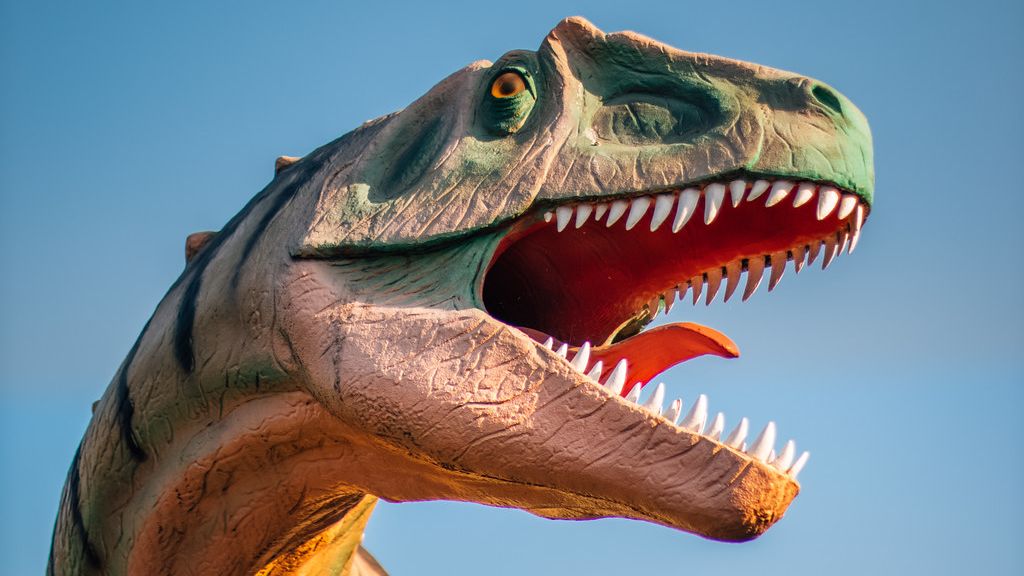
When you think about dinosaur hunters, your mind probably jumps straight to a T. rex thundering across an open plain. Jaws snapping. Ground shaking. That iconic image. But here’s the thing – the world of dinosaur predation was far stranger, more sophisticated, and genuinely more surprising than Hollywood has ever dared to show you.
Not all meat-eating dinosaurs used the same tricks to bring down their prey. While they may look similar – big skulls, sharp teeth, and a terrifying presence – their bite strategies were very different. Some hunted in darkness. Some fished like herons. Some glided through forest canopies after birds. The real prehistoric world reads less like a monster movie and more like a nature documentary you never knew existed. Let’s dive in.
1. Spinosaurus: The Shoreline Stalker
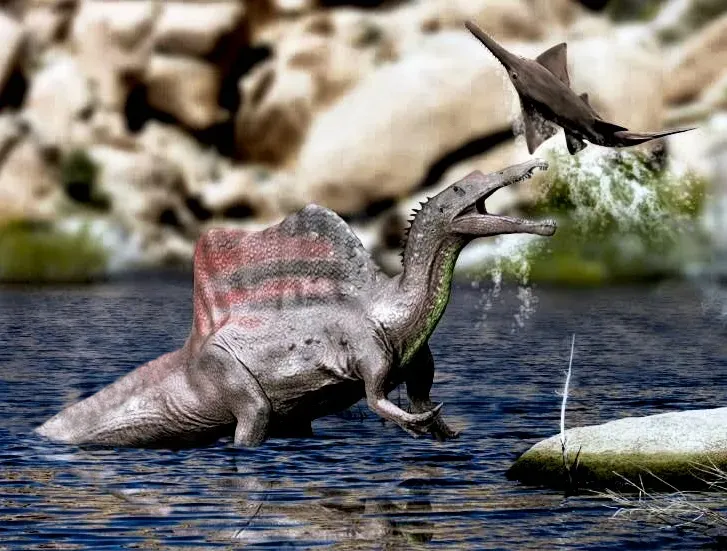
Spinosaurus might be the most bizarrely specialized hunter on this entire list. Its long, narrow snout and retracted nostrils suggest it spent much of its time in or near water. Its body also supported this role: a long, possibly paddle-shaped tail, short hind limbs, and a sail-like structure on its back – features that point to a diet focused on aquatic prey. It likely snatched up massive fish and other water-dwelling animals, using its jaws more like a fishing spear than a typical predator’s bite.
A new analysis published in the journal Palaeontologia Electronica suggests the enormous dinosaur hunted from the shoreline and shallows, like a heron, picking off unsuspecting prey. Think about that for a moment – the largest predatory dinosaur that ever lived was essentially doing what a wading bird does on a riverbank. According to researchers, Spinosaurus dinosaurs were similar to crocodiles – capable but not great swimmers, with a proportionally shorter tail than crocodiles that likely inhibited their swimming prowess. It’s a humbling and fascinating image for such a colossal creature.
2. Giganotosaurus: The Flesh-Slasher
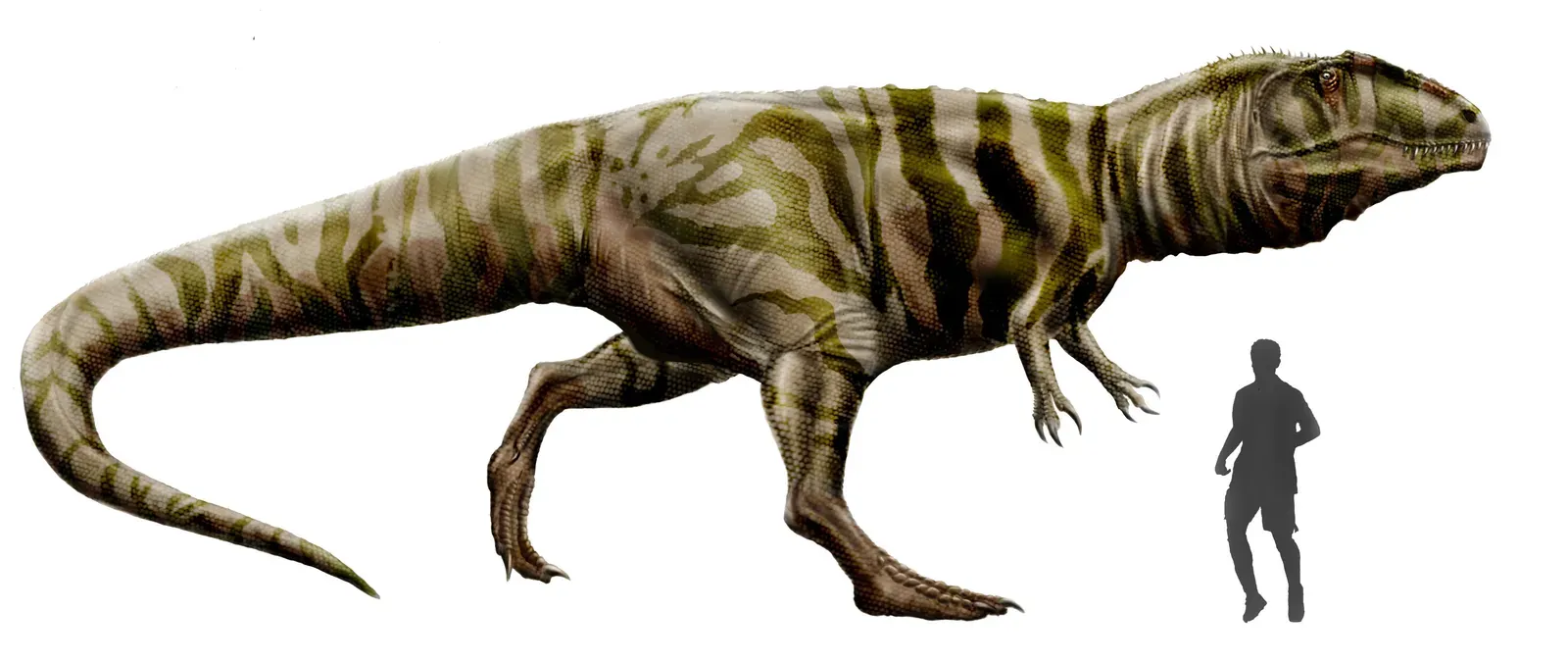
Researchers found that Giganotosaurus had an elongated skull lined with blade-like teeth designed more for slicing than smashing. Instead of crushing bone, it likely hunted by tearing large chunks of flesh from its prey. Imagine it less like a lion delivering a suffocating bite, and more like a shark – repeatedly slashing until blood loss did the work for it. That is a genuinely unsettling strategy when you picture it in action.
Giganotosaurus lived in what is now South America during the mid-Cretaceous period. It was one of the largest carnivorous dinosaurs ever discovered, possibly even rivaling T. rex in size. Some scientists believe it may have hunted large sauropods, possibly even in coordinated groups – though that part is still debated. Some theropods like Giganotosaurus possibly attacked with a “bite and slice” technique rather than going for an outright kill, which may have helped them prey on large sauropods. Coordinated slashing attacks on animals the size of school buses – that’s an ecosystem you genuinely would not want to visit.
3. Velociraptor: The Feathered Ambush Artist
Although it stood only about 0.5 m at the hip and was only about 1.5 to 2.1 m in length, Velociraptor made up for its lack in size through its speed and agility. With its scientific name translating to “swift thief,” it was one of the fastest dinosaurs to ever roam planet Earth, equipped with a long tail to maintain balance and large sickle-shaped claws to slice and puncture prey. Forget the Jurassic Park version – the real Velociraptor was turkey-sized and covered in feathers.
Evidence suggests that Velociraptor’s plumage likely facilitated camouflage and enhanced aerodynamic control, improving its stealth and maneuverability during high-speed chases. Additionally, feathers might have contributed to stability during incline running, further supporting its adaptability in diverse environments. Velociraptor’s hunting strategies, characterized by agility and precision, were complemented by its feathered anatomy, which may have also played a role in pack hunting and social interactions. Honestly, a feathered ambush predator using its plumage as active camouflage is more remarkable than any movie monster could ever be.
4. Troodon: The Night Hunter
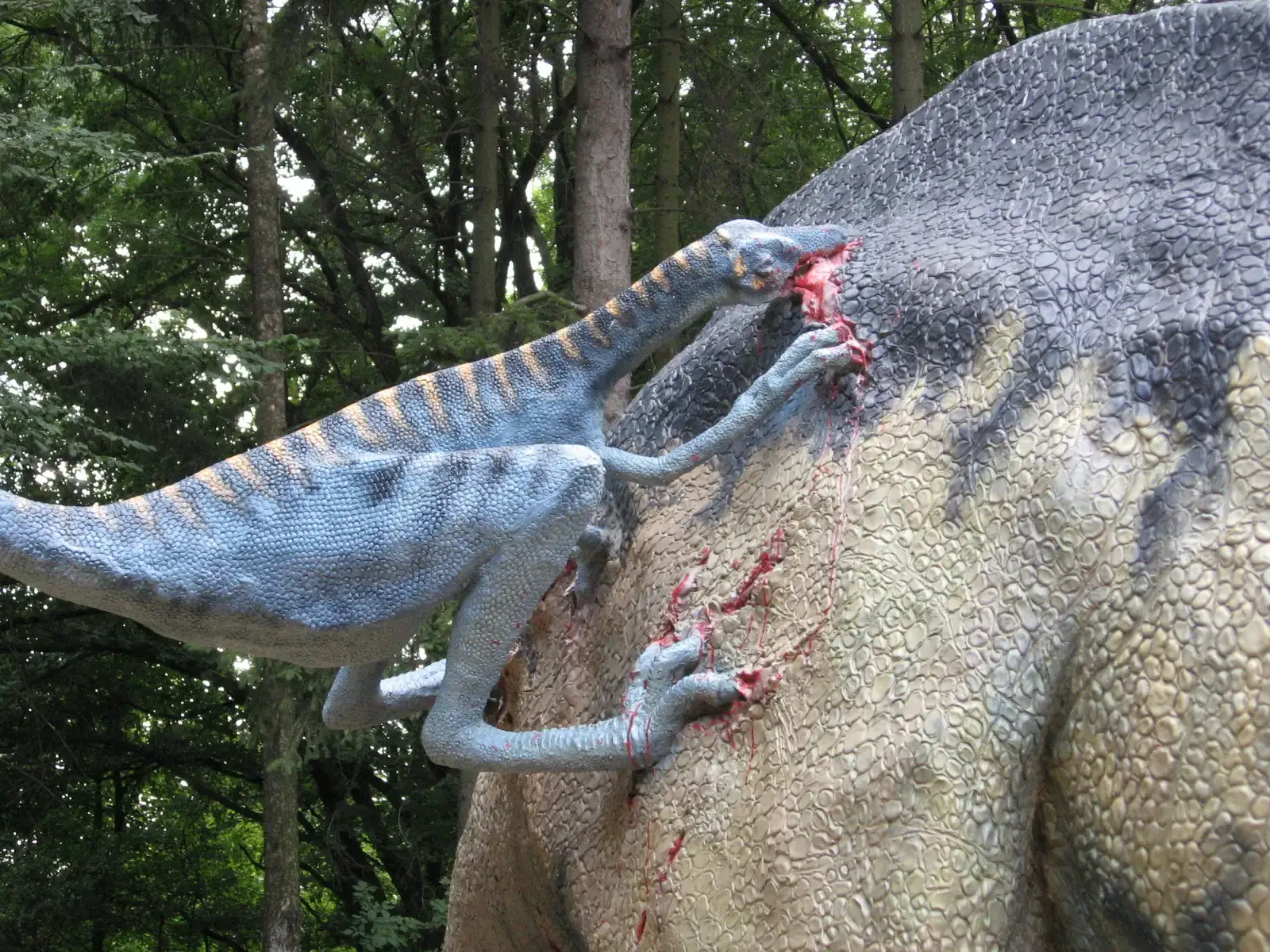
Recent research has revealed that some dinosaur predators were active during nighttime hours, taking advantage of the cover of darkness to hunt prey that was more vulnerable after sunset. Troodon, with its unusually large eyes and excellent night vision, appears to have been primarily a nocturnal hunter. You could almost think of it as the owl of the dinosaur world – silent, sharp-eyed, and terrifyingly patient.
Troodontids had unusually large brains among dinosaurs, comparable to those of living flightless birds. Their eyes were also large and pointed forward, indicating good binocular vision. The ears of troodontids were also unusual among theropods, having enlarged middle ear cavities indicating acute hearing ability. The placement of this cavity near the eardrum may have aided in the detection of low-frequency sounds. In some troodontids, ears were even asymmetrical, with one ear placed higher on the skull than the other – a feature shared only with some owls. This specialization may indicate that troodontids hunted in a manner similar to owls, using their hearing to locate small prey. It’s hard to say for sure whether Troodon hunted primarily at night, but the anatomical evidence makes a compelling case.
5. Microraptor: The Four-Winged Tree Hunter
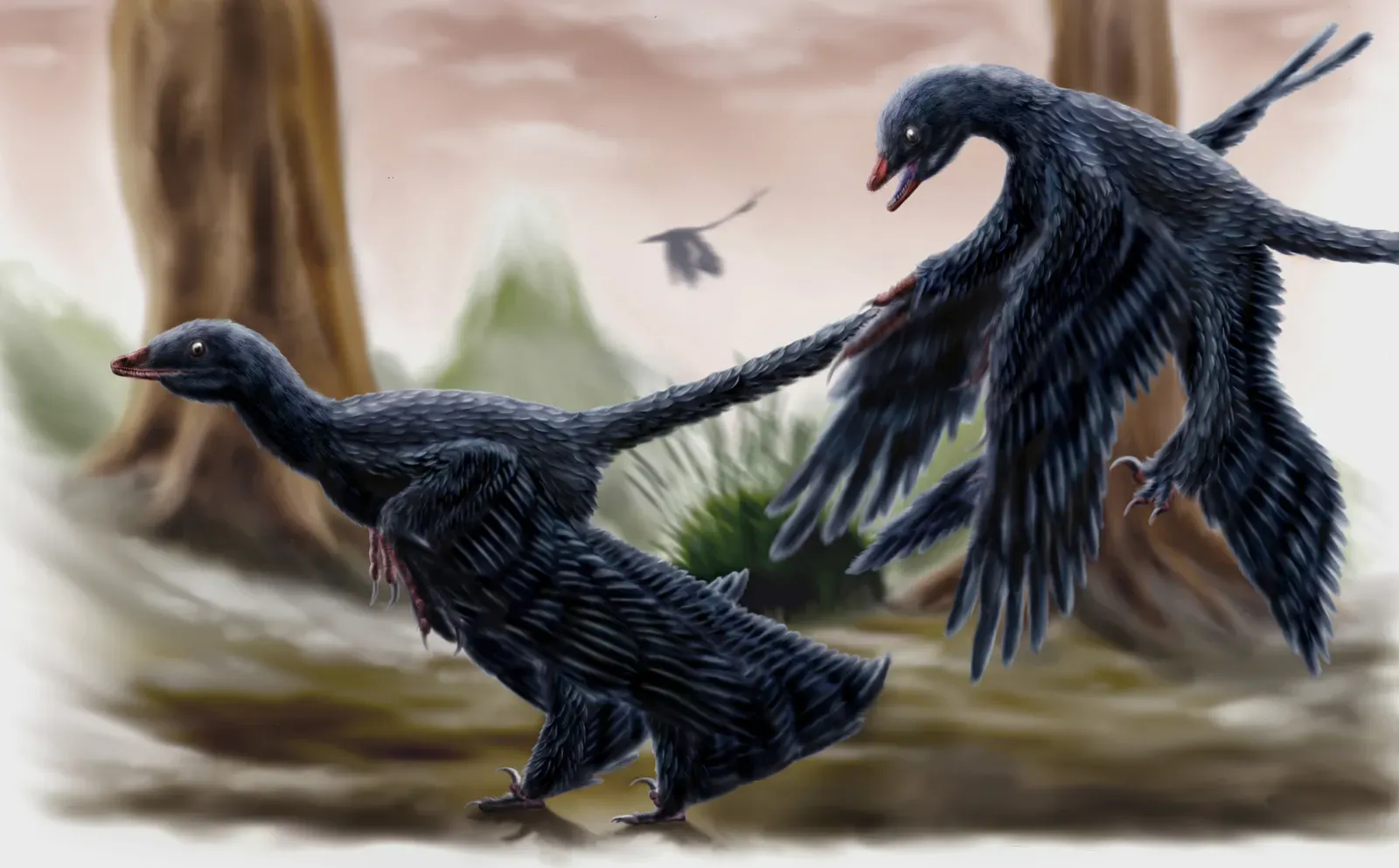
The discovery that many theropod dinosaurs possessed feathers revolutionized our understanding of dinosaur hunting strategies. Predators like Microraptor didn’t just hunt on the ground – they took to the trees and skies, opening up entirely new hunting opportunities that had never existed before. This crow-sized raptor was covered in black iridescent feathers and had long flight feathers on both its arms and legs, making it a four-winged dinosaur. The long feathers on the tail could also generate lift. Although it had a plethora of wings, it was not a graceful flyer – more like a fat chicken – but the claws on its arms were specialized for climbing, suggesting it may have lived in the forest canopy flying from tree to tree.
Here’s where it gets genuinely wild. A unique specimen of Microraptor gui from the Early Cretaceous Jehol biota in China was found with the remains of an adult enantiornithine bird preserved in its abdomen, most likely not scavenged but captured and consumed by the dinosaur. This provides direct evidence for the dietary preferences of Microraptor and a non-avian dinosaur feeding on a bird. Because Jehol enantiornithines were distinctly arboreal, this fossil suggests that Microraptor hunted in trees, supporting inferences that this species was also an arborealist. A dinosaur hunting birds in the treetops – that is something truly extraordinary.
6. Deinonychus: The Pack Exhaustion Predator
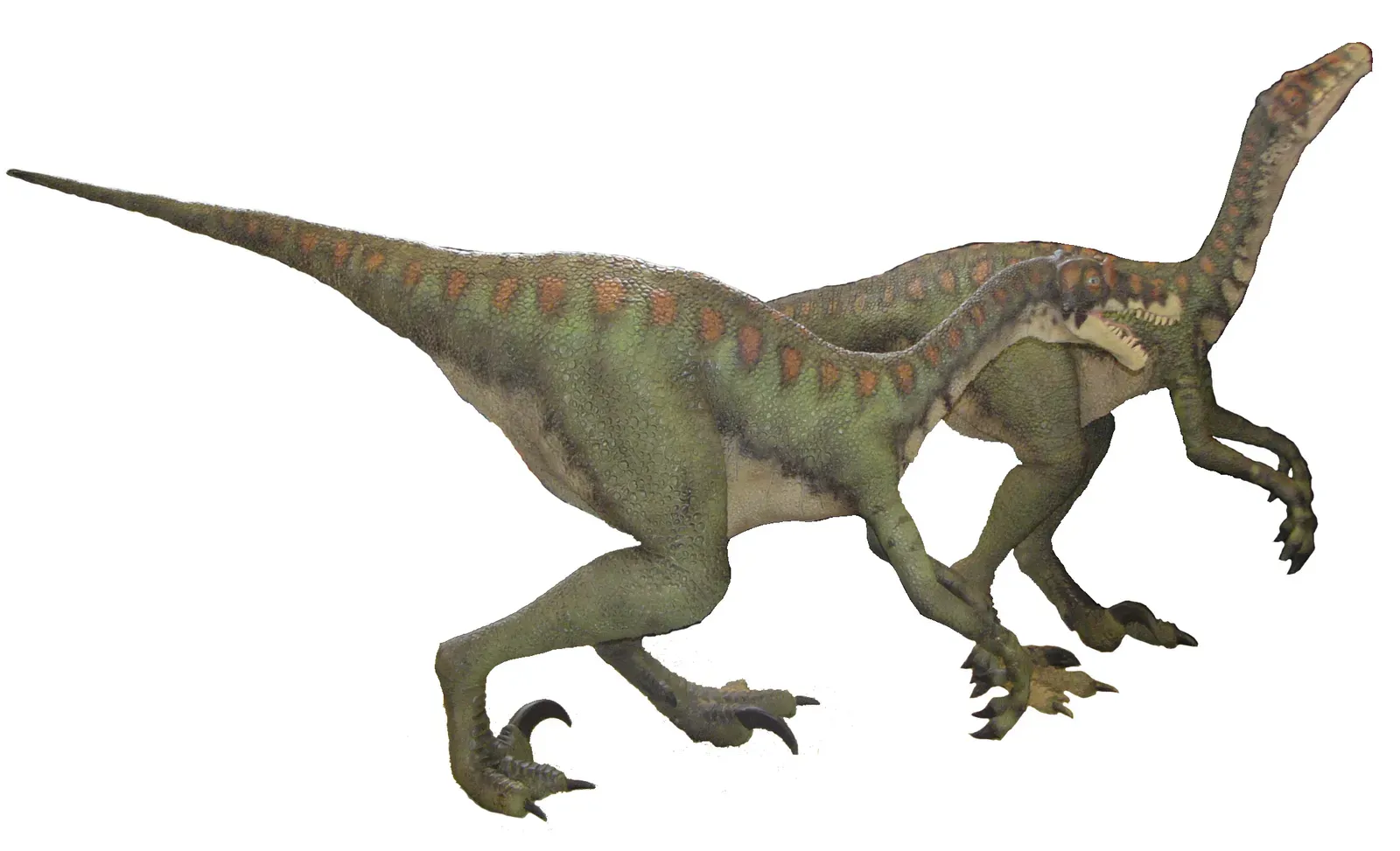
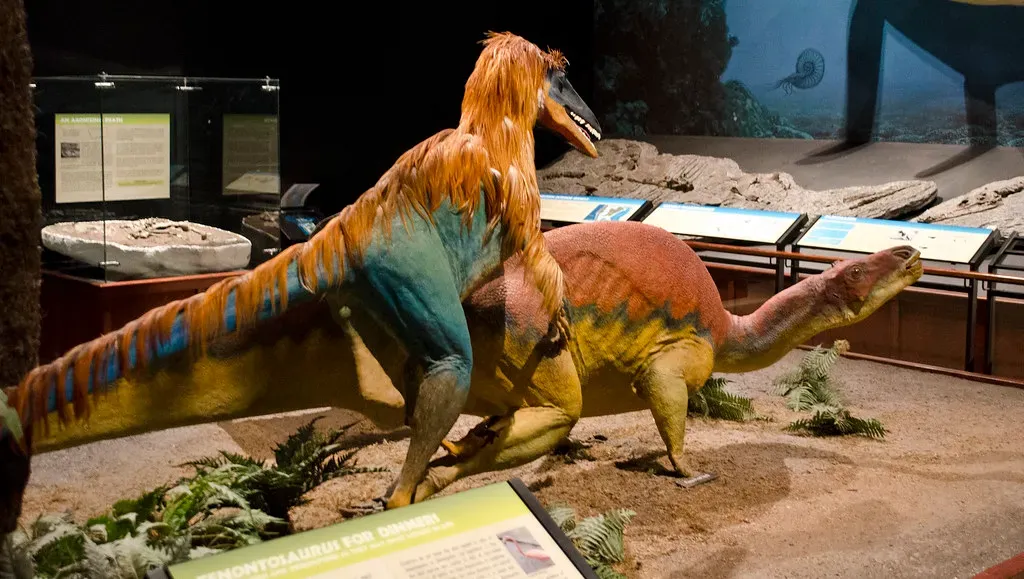
Deinonychus showed perhaps the clearest evidence of ambush predation among dinosaurs. These mid-sized theropods possessed a suite of adaptations perfectly suited for surprise attacks. Their infamous sickle-shaped claws on each hind foot could deliver devastating strikes, while their long arms with three-fingered hands were ideal for grasping prey. Studies of their leg muscles and joints suggest they were capable of explosive acceleration from a stationary position.
Fossil evidence indicates dromaeosaurids had large brains relative to their body size, suggesting advanced hunting intelligence that would benefit ambush tactics. Their relatively small size compared to many prey animals would have made stealth hunting necessary for survival. The discovery of multiple Deinonychus specimens associated with Tenontosaurus fossils suggests they may have hunted in coordinated packs, potentially using ambush strategies similar to modern wolves. Paleontologist John H. Ostrom uncovered the fossils of Deinonychus in Montana in the early 1960s, naming it in 1969, with “Deinonychus” meaning “terrible claw,” reflecting its unique hunting adaptation. Few names in paleontology have been more perfectly earned.
7. Baryonyx: The Crocodile-Mimic Fisher
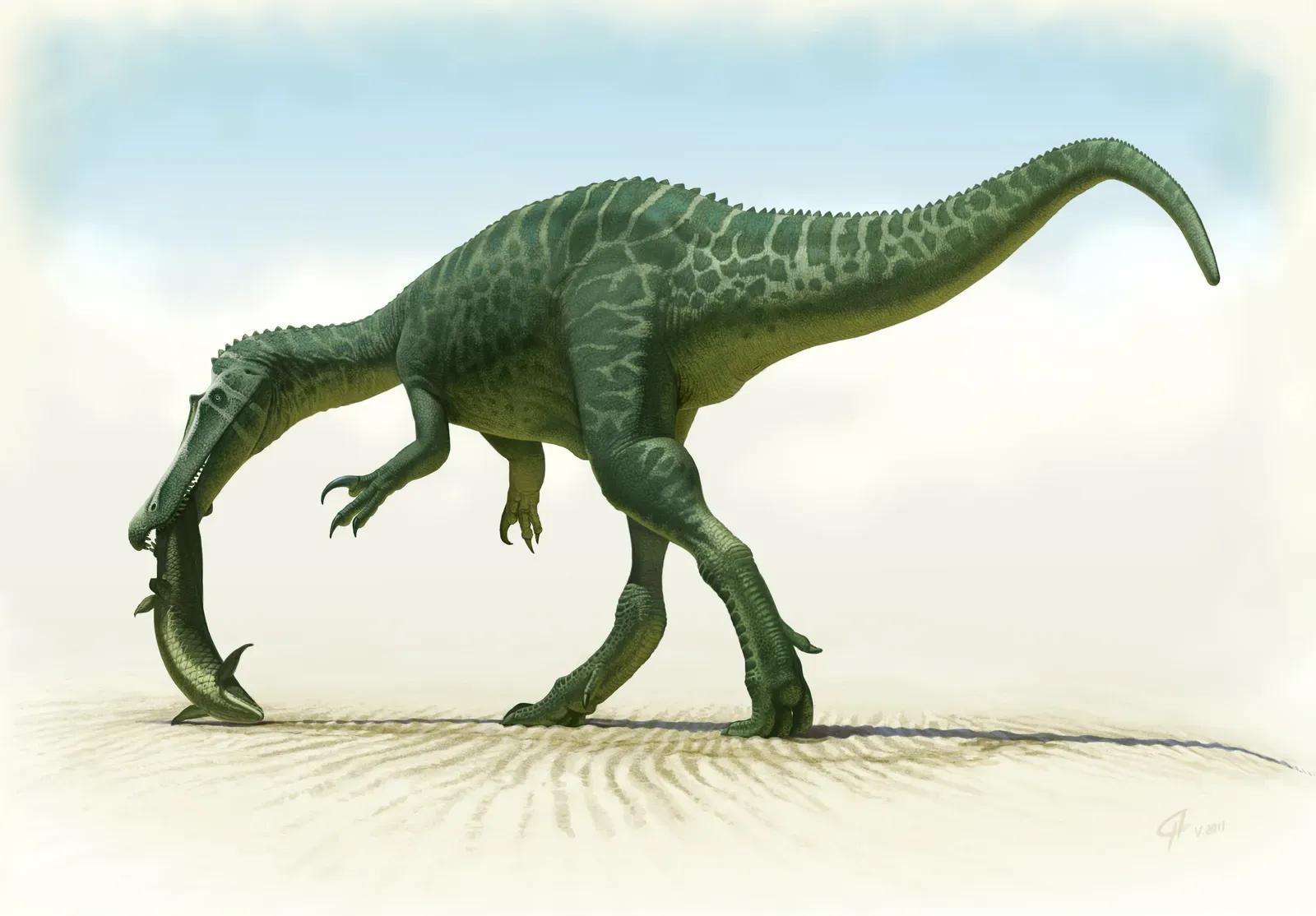
Baryonyx features a crocodile-like head, long arms, and heavy claws, enhancing its hunting capabilities in both water and on land. Picture encountering this striking mid-sized theropod that once roamed the wetlands of the Early Cretaceous period. This fascinating dinosaur is well-adapted for a semi-aquatic lifestyle, displaying unique adaptations that shaped its behavior and hunting methods. In many ways, Baryonyx looked like evolution tried to build a dinosaur and a crocodile at the same time.
Detailed analysis of its cranial morphology reveals a suite of adaptations, including robust forelimbs with a large, sickle-shaped claw ideal for catching slippery prey. Isotopic analysis of oxygen in Baryonyx indicates a significant reliance on fish and other similar organisms. Baryonyx may also have been an active predator of larger prey and a scavenger, since its stomach contents also contained bones of a juvenile iguanodontid. The creature would have caught and processed its prey primarily with its forelimbs and large claws. Versatility was clearly its greatest weapon.
8. Carnotaurus: The Hatchet-Headed Striker
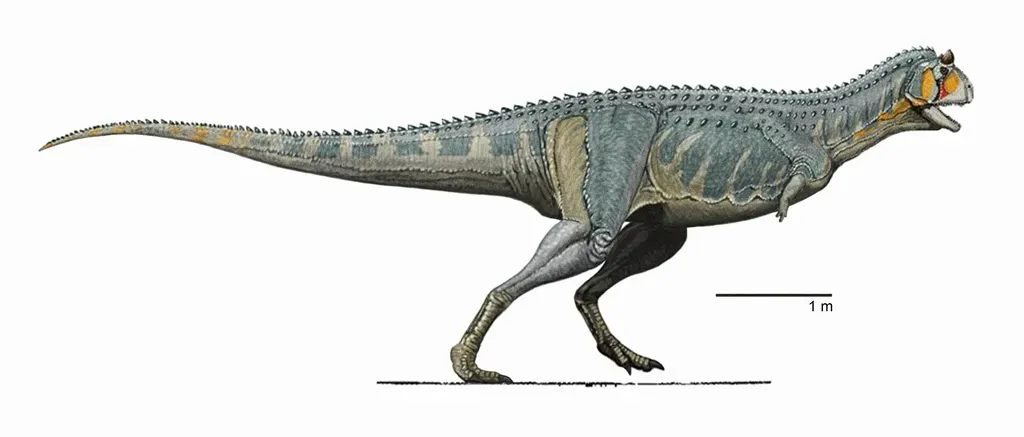
Carnotaurus was a large abelisaur theropod, a group noted for having short but tall skulls, and arms that are even more vestigial than those of the tyrannosaurs. One popular idea about predators like Carnotaurus is that they used their narrow skulls like hatchets, relying upon the momentum of their head movements to drive their teeth through their prey rather than the bite muscles. It’s a hunting strategy more like a battering ram than a traditional predator – using the entire head as the primary weapon. Few dinosaurs had an approach quite this unusual.
The skulls of abelisaurs were also well suited to the job of holding onto prey, and if Carnotaurus managed to clamp its jaws around the neck of a prey animal, it may have been able to choke it with its jaws. So you get two strategies in one: a powerful initial hatchet strike followed by a strangling grip. Biomechanical beam models compared to those of extant varanids suggest that abelisaurids like Carnotaurus shared the mandibular properties of the Komodo dragon, indicating they were probably large-prey hunters delivering slashing bites. Two terrifying techniques combined into one extraordinarily weird predator.
9. Caudipteryx: The Flush-and-Pursue Insect Hunter
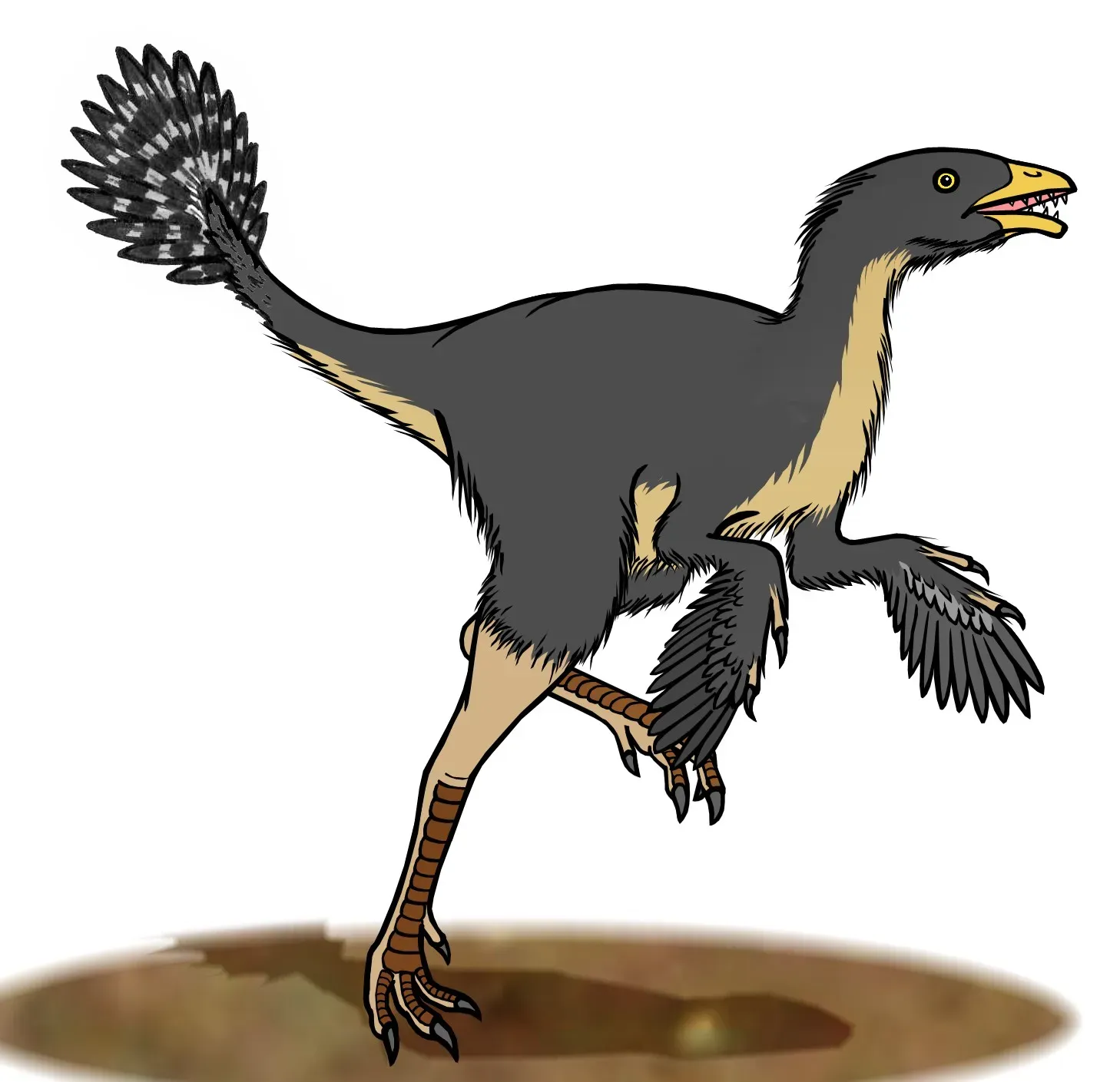
Some birds employ a “flush-pursue” foraging strategy, using wings and tail displays to visually flush out hiding prey and then pursue the flushed prey. The hypothesis suggests that small dinosaurs like Caudipteryx with proto-wings used a similar strategy. Think of it like a prehistoric beater flushing game out of the undergrowth – only the beater and the hunter were the same animal, using its own feathered limbs as tools of deception.
Some of these dinosaurs had feathers on their tails and small wing-like feathers on their forelimbs. These small wing-like structures called proto-wings are composed of special feathers known as pennaceous feathers – the stiff feathers found in the wings and tails of birds. The ancient form of these feathers first emerged in dinosaurs during the Jurassic Period, and these dinosaurs called Pennaraptorans had proto-wings made of pennaceous feathers. However, it has been established that these proto-wings were too small for powered flight. They weren’t flying, in other words – they were performing a kind of theatrical hunt using visual displays as weapons. That is genuinely one of the more creative solutions evolution has ever produced.
10. Alioramus: The Lightweight Speed Predator
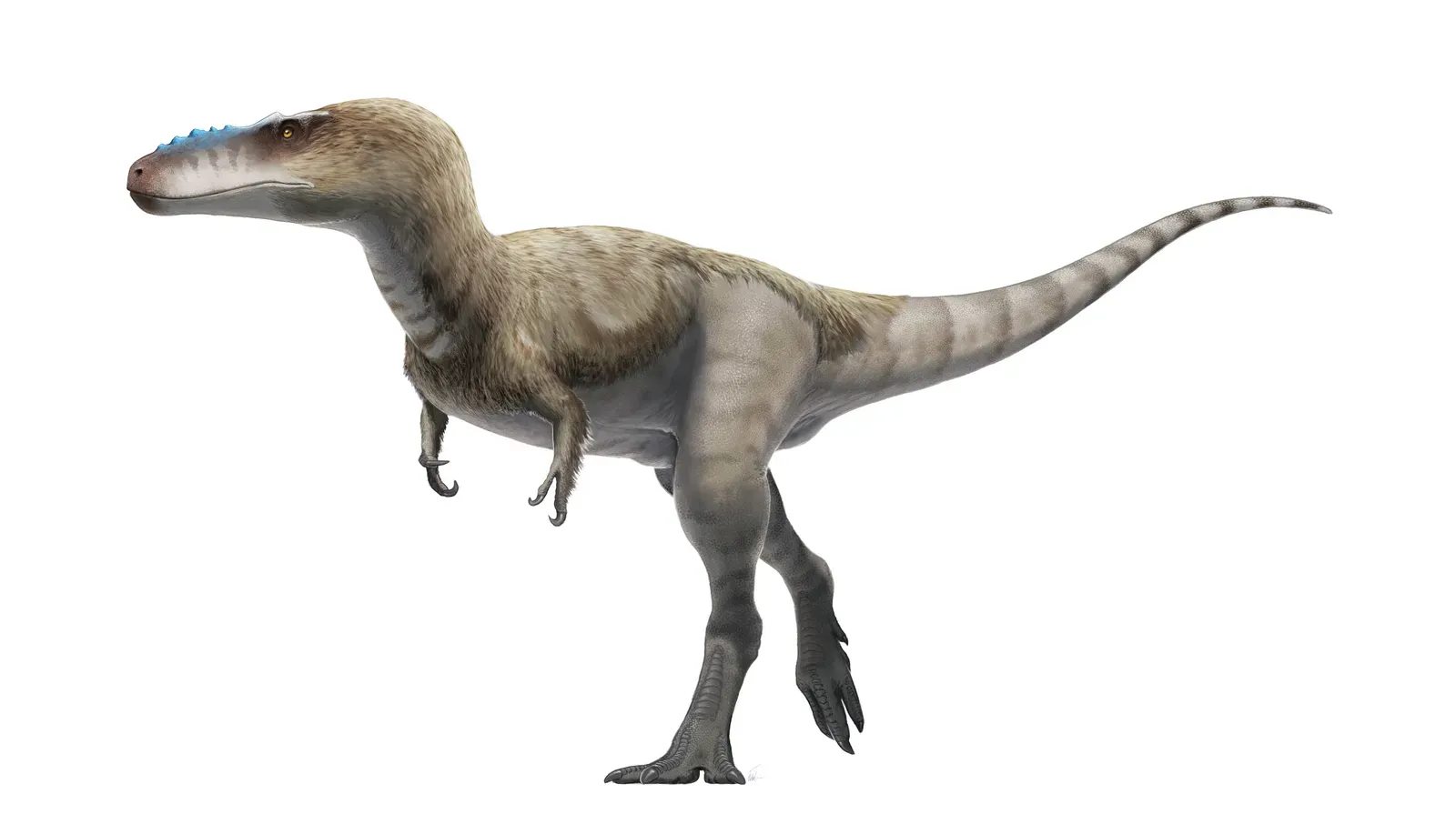
While tyrannosaurids generally have robust strong skulls, massive jaws, and heavy chunky bodies that helped deal with impacts from struggling prey and provided enough power to crush bone, the tyrannosaur Alioramus altai from Mongolia had a body unlike other members of the family. It had a long thin head, weak jaw, and slender lightweight body – features far more suitable for hunting smaller prey and using speed instead of brute strength. This is basically the difference between a sumo wrestler and a marathon runner operating in the same family.
Albertosaurus, like Alioramus, would have a weaker jaw strength compared to that of T. rex. Albertosaurus typically relied on its speed and teeth designed to slice through flesh, meaning that jaw strength would not be a major factor in a successful hunt. Alioramus took this concept even further. Where T. rex needed the whole skull as a sledgehammer, Alioramus needed only precision and pace. This diversity makes sense considering that these predators lived in different eras and environments, hunting various kinds of prey. Each dinosaur evolved to fit its unique surroundings – and their skulls still reveal that story. Alioramus is proof that even within the same family, evolution never stopped experimenting.
Conclusion: Predators Beyond Your Imagination
When you start peeling back the layers of what we actually know about dinosaur hunting strategies, what you find is far more creative, varied, and fascinating than any blockbuster movie has ever captured. You have a giant wading at a riverbank like an oversized heron. A turkey-sized feathered assassin using camouflage to stalk prey in the dark. A four-winged glider hunting birds in forest canopies. And a horn-headed sprinter that used speed where its cousins used brute force.
The real lesson here is that evolution rarely settles for one solution when a dozen will do. Every niche, every environment, every prey type produced a different predator with a different set of tools. Paleontological evidence increasingly suggests that many dinosaur species employed sophisticated hunting strategies, including ambush predation. From specialized physical adaptations to environmental considerations, the fossil record reveals that some dinosaurs were indeed stealthy hunters, relying on surprise rather than pursuit. The more science uncovers, the weirder and more wonderful the picture becomes.
So the next time someone tells you they know exactly how dinosaurs hunted, you might want to ask them – which one? What do you think is the most surprising hunting strategy on this list? Drop your thoughts in the comments.