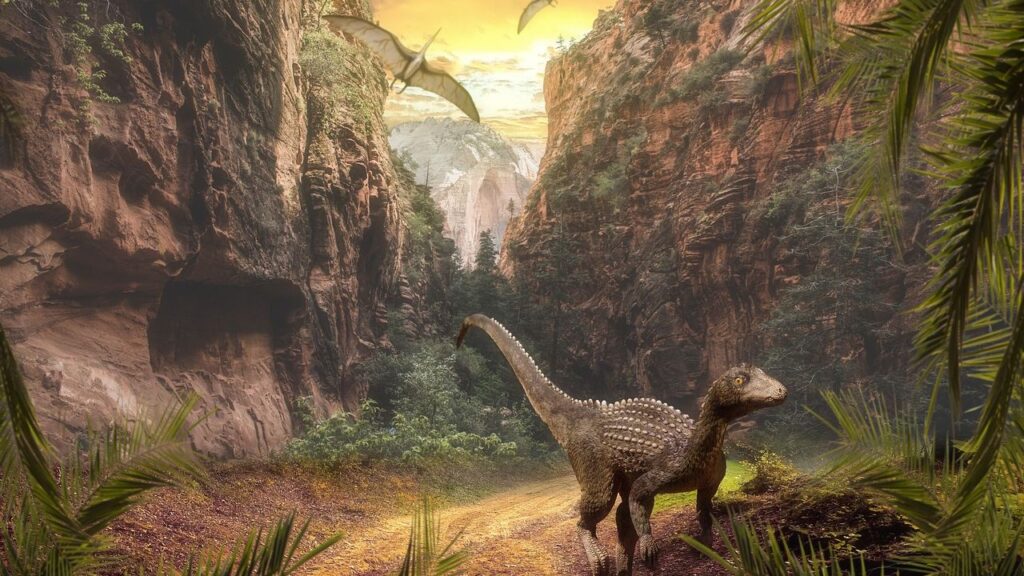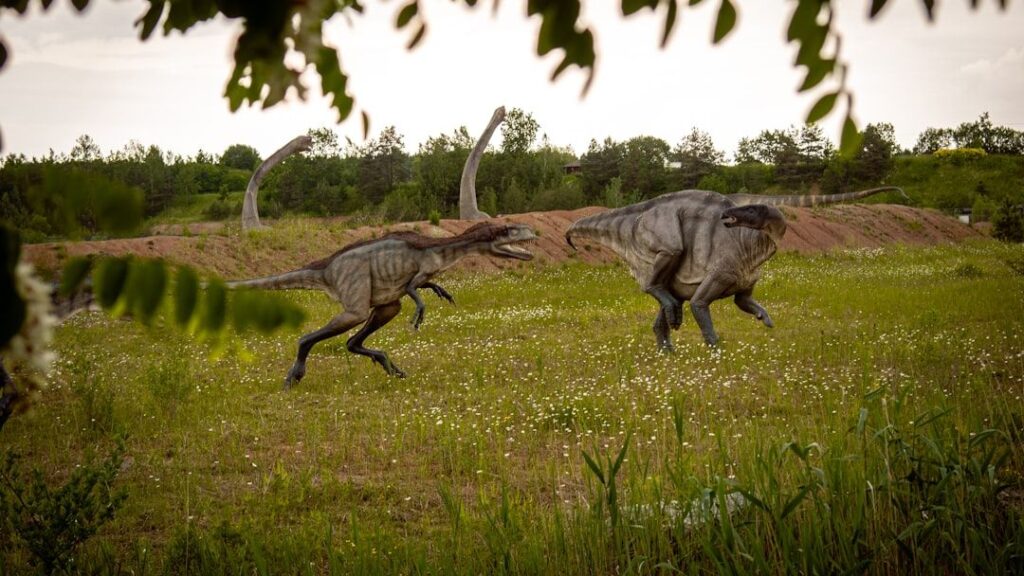
Imagine a world where the ground shakes beneath the feet of creatures so enormous they make today’s largest elephants look like household pets. A world where the skies are ruled not by eagles or falcons, but by leathery flying reptiles the size of small planes. That world was real. It existed. It lasted for millions of years. And it was called the Jurassic.
The Jurassic is a geologic period that took place about 201.3 million years to 145 million years ago, constituting the middle part of the Mesozoic Era. It is, honestly, one of the most dramatic chapters in the entire history of life on Earth. What happened during those roughly 56 million years was nothing short of breathtaking. So let’s dive in.
A World Reshaped: The End-Triassic Extinction Set the Stage
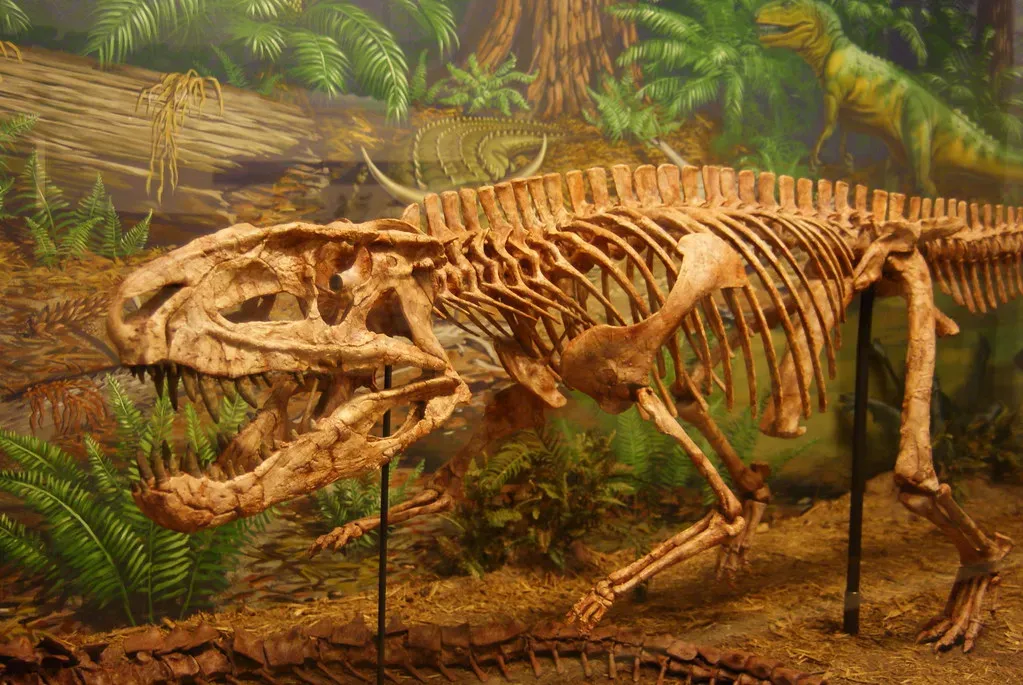
You might find it surprising that one of the greatest life explosions in Earth’s history was born from catastrophe. The end of the Triassic Period, 201.4 million years ago, is marked by one of our planet’s top five major mass extinction events. What caused it isn’t entirely clear, though massive volcanic activity could be to blame. It’s possible that the release of huge amounts of sulfur dioxide and carbon dioxide significantly disrupted Earth’s climate. Up to roughly four-fifths of all species died out as a result.
Dinosaurs diversified greatly after the extinction at the end of the Triassic removed most of their competition. Think of it like a massive restaurant suddenly emptying out. All those tables, all that food, suddenly available to whoever showed up next. The dinosaurs showed up. And they were hungry. The dry climate of the Triassic was replaced by a warm, moist subtropical climate that brought forth an explosion of new life forms. The world was once again ripe for the opportunists, such as the utterly remarkable dinosaurs. They became so diverse and well-adapted that they occupied all ecological niches on land.
The Breakup of Pangaea: How Geography Fueled Evolution
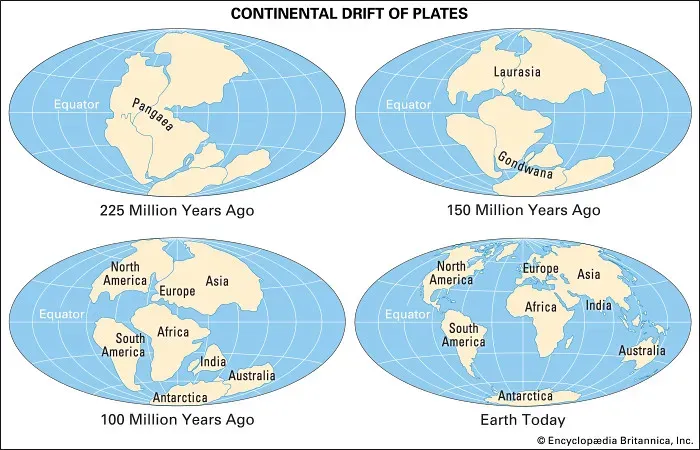
The Jurassic was a time of significant global change in continental configurations, oceanographic patterns, and biological systems. During this period the supercontinent Pangea split apart, allowing for the eventual development of what are now the central Atlantic Ocean and the Gulf of Mexico. Heightened plate tectonic movement led to significant volcanic activity, mountain-building events, and attachment of islands onto continents.
Here’s the thing about land masses splitting apart: it’s not just geography. It’s evolution in action. Laurasia, the northern hemisphere, broke up into North America and Eurasia. Gondwana, the southern half, began to break up by the Middle Jurassic. The eastern portion, including Antarctica, Madagascar, India, and Australia, split from the western half of Africa and South America. New oceans flooded the spaces in between. Mountains rose on the seafloor, pushing sea levels higher and onto the continents. All this water gave the previously hot and dry climate a humid and drippy subtropical feel. Separated populations evolved independently, producing a staggering variety of species. Geography was basically evolution’s greatest catalyst.
A Greenhouse Planet: The Climate That Made Giants Possible
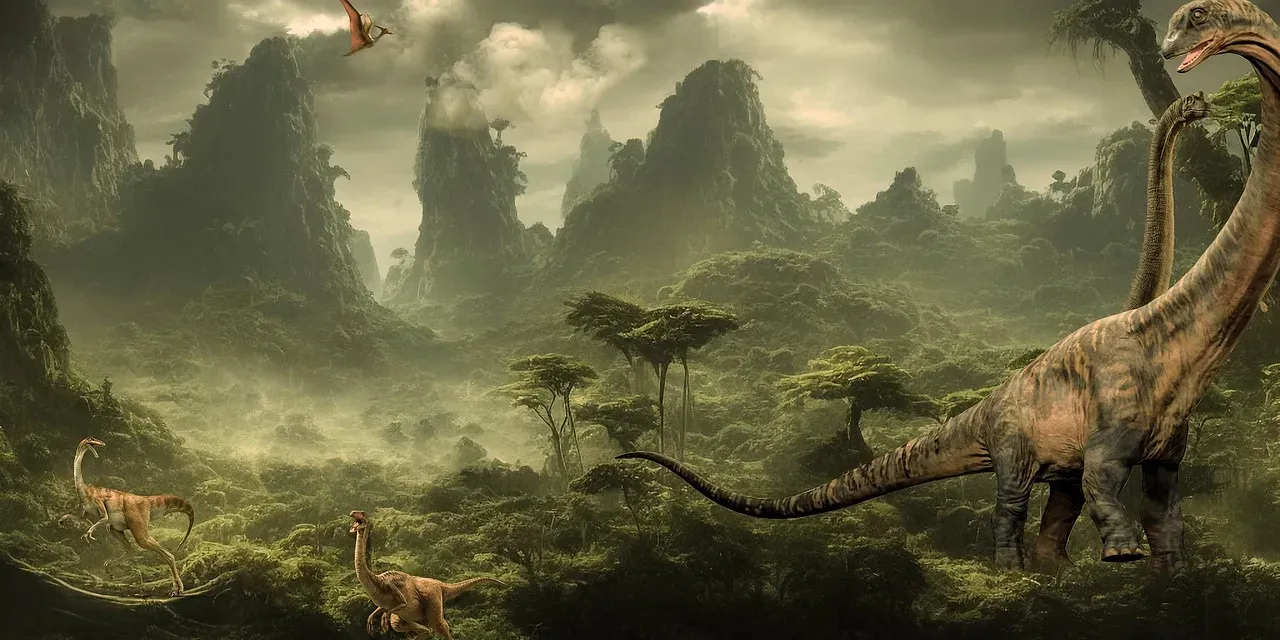
The climate of the Jurassic was generally warmer than that of the present, by around 5 to 10 degrees Celsius, with atmospheric carbon dioxide likely about four times higher. Intermittent cold snap intervals are known to have occurred during this time period, however, interrupting the otherwise warm greenhouse climate. No polar ice caps existed. Forests pushed all the way toward the poles. It was, in a word, lush.
The heyday of dinosaurs, the Jurassic Era saw Earth’s climate change from hot and dry to humid and subtropical. The Jurassic period was characterized by a warm, wet climate that gave rise to lush vegetation and abundant life. Warm temperatures and high humidity translated into towering vegetation and plentiful food. When food is everywhere, creatures can afford to get big. Very, very big. The Jurassic climate, I think, was quite literally the engine behind some of the largest animals ever to walk this planet.
The Sauropods: When Dinosaurs Became Giants
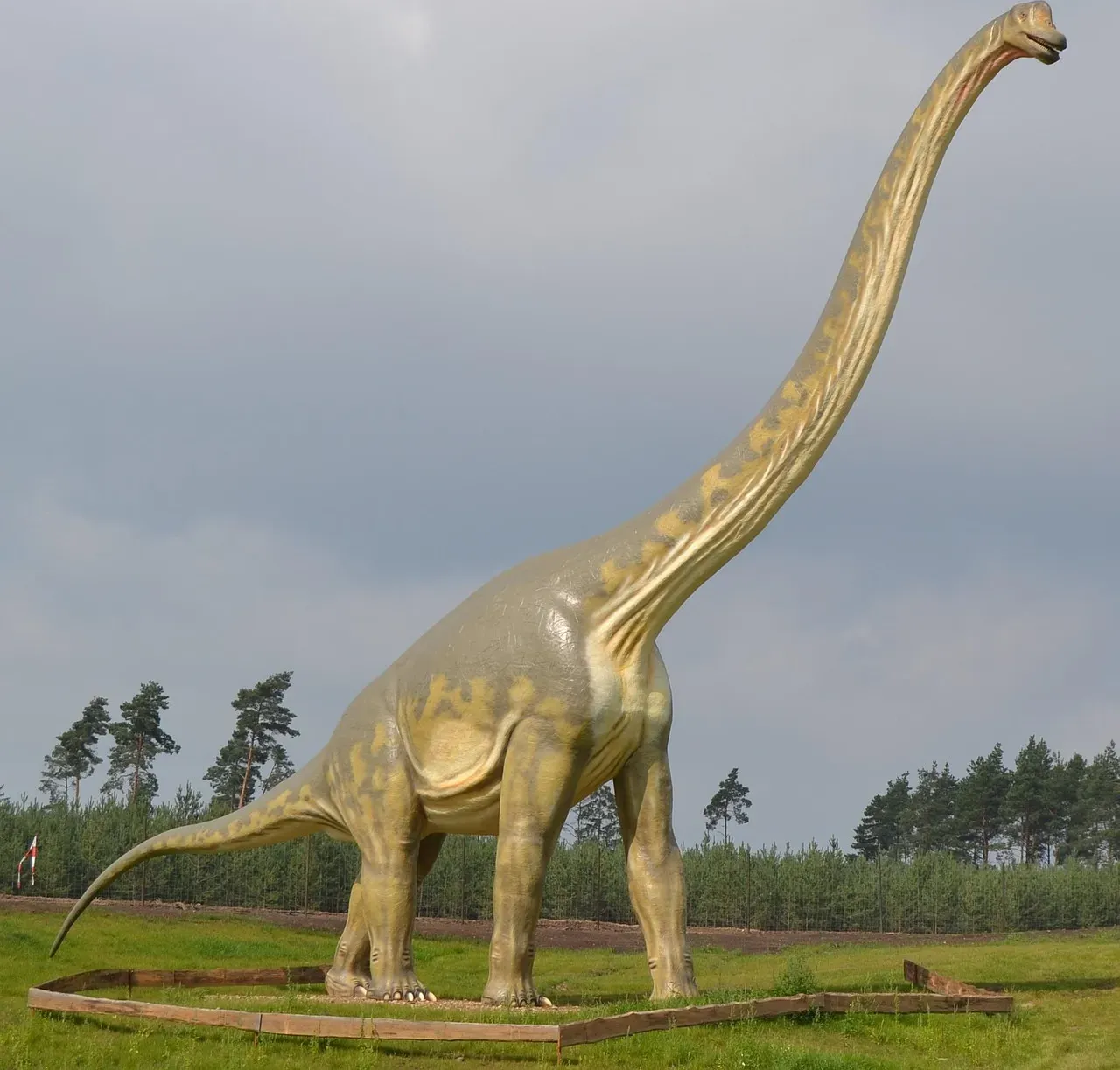
Sauropods, the lizard-hipped dinosaurs, were herbivorous quadrupeds with long necks balanced by heavy tails. Many, such as Brachiosaurus, were huge. Some genera obtained lengths greater than 100 feet and weights over 100 tons, making them the largest land animals ever to walk the earth. That is not a typo. One hundred tons. For comparison, a modern African elephant tips the scales at roughly six tons. We’re talking a completely different scale of existence.
The plant-eating sauropod Brachiosaurus stood up to 52 feet tall, stretched some 85 feet long, and weighed more than 80 tons. Diplodocus, another sauropod, was 90 feet long. The Morrison Formation is known worldwide for its fossils of dinosaurs, from predators such as Allosaurus and Ceratosaurus, to enormous sauropods such as Apatosaurus, Brachiosaurus, Brontosaurus, Camarasaurus, and Diplodocus, to the bipedal herbivore Camptosaurus and plated Stegosaurus. These were not just big animals. They were living skyscrapers.
Predators and Prey: The Arms Race That Drove Diversification
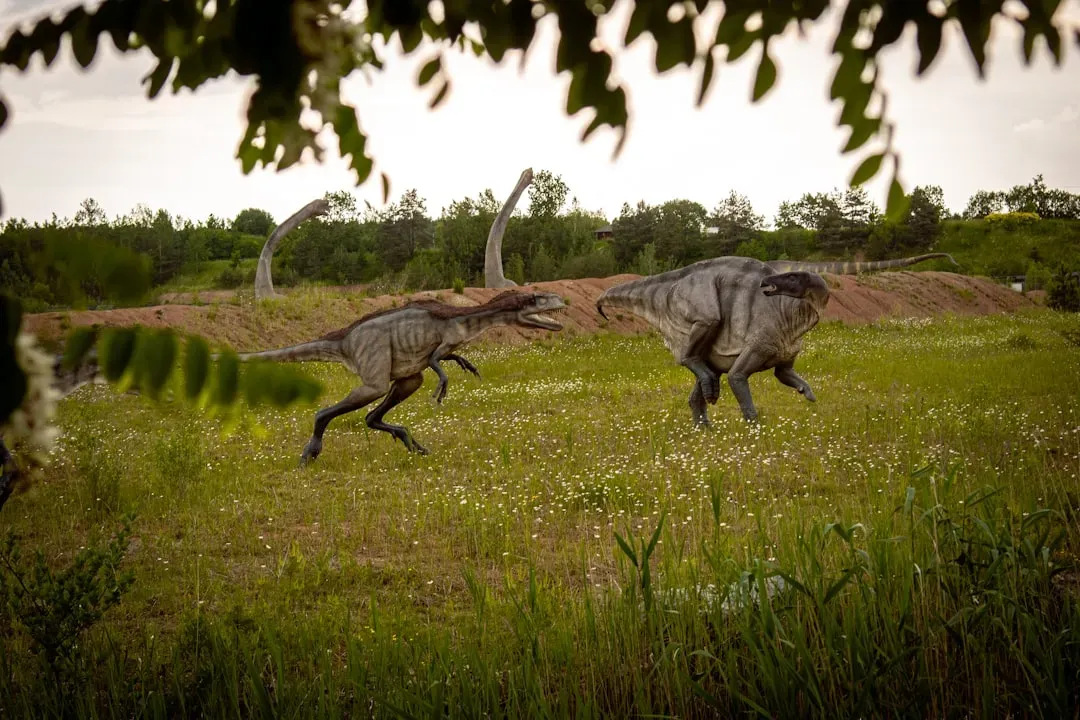
Predatory dinosaurs of the Jurassic included fearsome carnosaurs such as Allosaurus, small and fast coelurosaurs, and ceratosaurs such as Dilophosaurus. Every predator shaped the prey around it, and every prey animal shaped the predator that hunted it. That relentless push and pull is what scientists call an evolutionary arms race. It’s a system that never stops producing new adaptations.
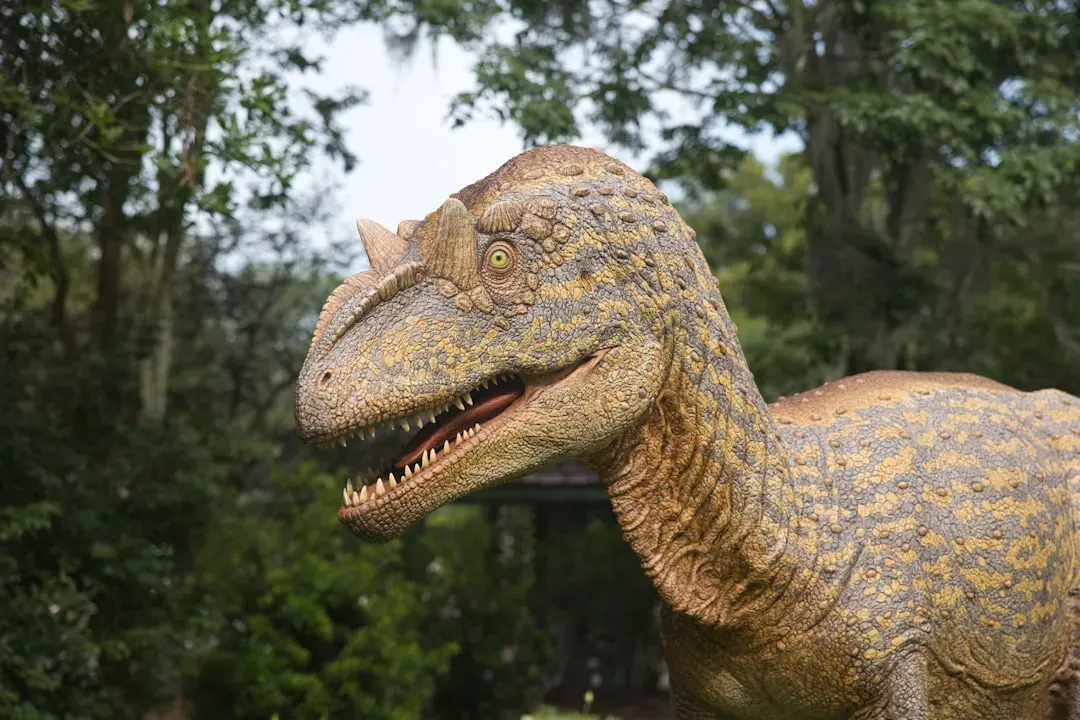
These dinosaurs’ sheer size may have deterred attack from Allosaurus, a bulky, meat-eating dinosaur that walked on two powerful legs. Yet Allosaurus and other fleet-footed carnivores, such as the coelurosaurs, must have had occasional success. Allosaurus was a fearsome predator of North America and parts of Europe. With its serrated teeth, massive jaws, curved claws, and powerful leg muscles, it could grab and kill almost anything. There’s something thrilling about imagining that ancient chase happening across a subtropical floodplain 150 million years ago.
The First Birds Take Flight: A Feathered Revolution Begins
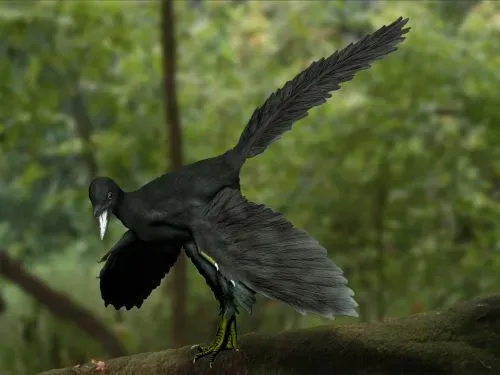
The earliest known bird, Archaeopteryx, took to the skies in the late Jurassic, most likely evolved from an early coelurosaurian dinosaur. Archaeopteryx had to compete for airspace with pterosaurs, flying reptiles that had been buzzing the skies since the late Triassic period. Let that sink in for a moment. Every bird you’ve ever seen, from a sparrow to an albatross, traces its lineage back to a feathered creature that first flapped its wings during the Jurassic.
The well-substantiated scientific idea of bird evolution from dinosaurs was born with the discovery of a 150-million-year-old Late Jurassic fossil bird, Archaeopteryx, which was first described by Richard Owen in 1863. The fossil has the skull, teeth, and bony tail of a reptile, yet includes a fine-boned skeleton and delicate impressions of feathers, clearly a bird. Theropod dinosaurs, which gave rise to birds, continued to evolve in parallel, and both groups were covered in colorful feathers. Colorful, feathered dinosaurs roaming a tropical world. Honestly, that image is far more spectacular than anything Hollywood has ever put on screen.
Life in the Jurassic Seas: A World of Ocean Monsters
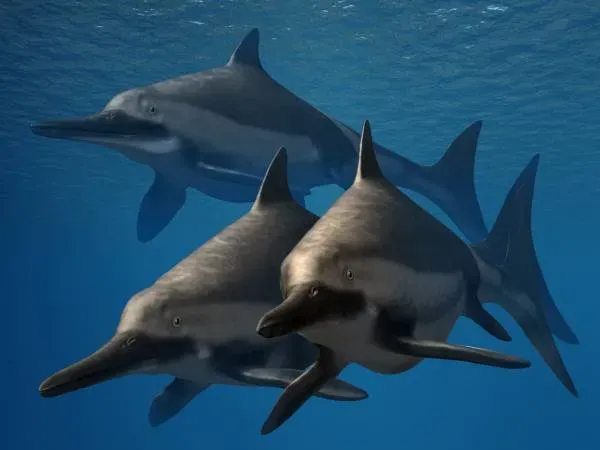
In the seas, the fishlike ichthyosaurs were at their height, sharing the oceans with the plesiosaurs, giant marine crocodiles, and modern-looking sharks and rays. Also prominent in the seas were cephalopods, relatives of the squids, nautilus, and octopi of today. Jurassic cephalopods included the ammonites, with their coiled external shells, and the belemnites, close relatives of modern squid but with heavy, calcified, bullet-shaped, partially internal shells.
Life was especially diverse in the oceans, with thriving reef ecosystems, shallow-water invertebrate communities, and large swimming predators, including reptiles and squidlike animals. Modern sharks and rays first appeared and diversified during the period, while the first known crown-group teleost fish, the dominant group of modern fish, appeared near the end of the period. In other words, when you look at a shark today, you are looking at something whose lineage was shaped during the Jurassic. The seas of that era were teeming, layered, and every bit as diverse as the land above.
The Morrison Formation: Earth’s Greatest Dinosaur Graveyard
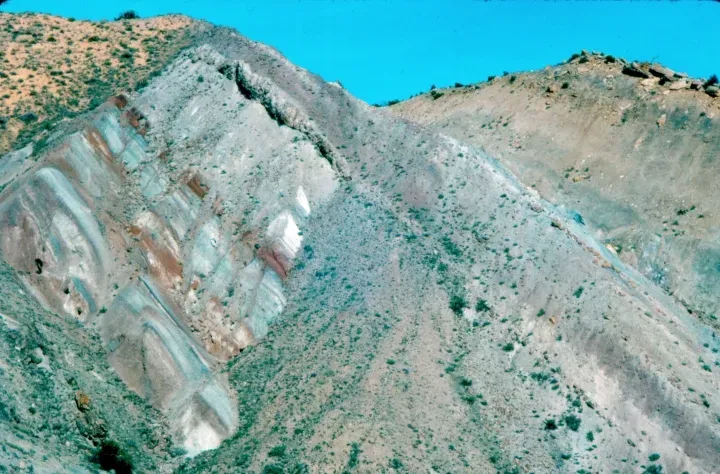
By the Late Jurassic, conditions were right to preserve large numbers of dinosaur fossils in a rock unit called the Morrison Formation. Many of the most famous dinosaurs of North America are from the Morrison Formation, such as Allosaurus, Apatosaurus, Brontosaurus, Diplodocus, and Stegosaurus. The Morrison Formation stretches across the American West like a buried treasure chest, and paleontologists have been cracking it open for over a century.
The Morrison Formation of the United States and the Solnhofen Limestone of Germany, both famous for their exceptionally well-preserved fossils, are geologic features that were formed during Jurassic times. Of all dinosaur genera known, about roughly more than a quarter are from the Jurassic, and only a small fraction are from the Triassic. Every shovel of earth in these formations could potentially unlock a species never before known to science. It is a gift that keeps giving, even today in 2026, with new discoveries still emerging from these ancient sediment layers every few years.
Conclusion: The Jurassic Legacy Still Lives Among Us
The Jurassic Period was not just a chapter in Earth’s history. It was the defining turning point that shaped nearly everything that came after it. From the birds outside your window, to the sharks in the ocean, to the oil fueling modern civilization, the fingerprints of the Jurassic are everywhere. The wet and warm climate of the Jurassic in many places encouraged the growth of lush vegetation along with the proliferation and diversification of fauna. Oceans teemed with life, forests flourished, and dinosaurs became the dominant forms of backboned animal life on land.
Dinosaurs experienced a major increase in diversity and abundance during the Early Jurassic in the aftermath of the end-Triassic extinction, becoming the dominant vertebrates in terrestrial ecosystems. It is a story of resilience, reinvention, and raw biological creativity on a scale that is hard to fully comprehend. Overall, the Jurassic gives us a particularly well-preserved fossil record of prehistoric life, which included theropod dinosaurs that scientists believe evolved to become birds. Every time you hear a bird sing in the morning, you are, in the most literal sense imaginable, hearing an echo of the Jurassic. What do you think about that? Drop your thoughts in the comments below.