Imagine walking through a world where the sky is filled with flying reptiles the size of a bus, the ocean floor is crawling with five-eyed creatures sporting vacuum-hose noses, and the land is ruled by giant armored fish with bites stronger than a T-Rex. That world was real. It just existed a very long time ago. Prehistory wasn’t just the era of dinosaurs you learned about in school. It was far stranger, far wilder, and honestly, far more mind-bending than any science fiction writer could dream up.
You might think you know the prehistoric world. You’ve seen Jurassic Park, you’ve caught a documentary or two. But the creatures hiding in Earth’s deep past go so far beyond velociraptors and T-Rexes that they almost feel fictional. Buckle up, because what follows will completely reshape the way you picture life on this planet.
Opabinia: The Five-Eyed Ocean Nightmare with a Vacuum for a Mouth
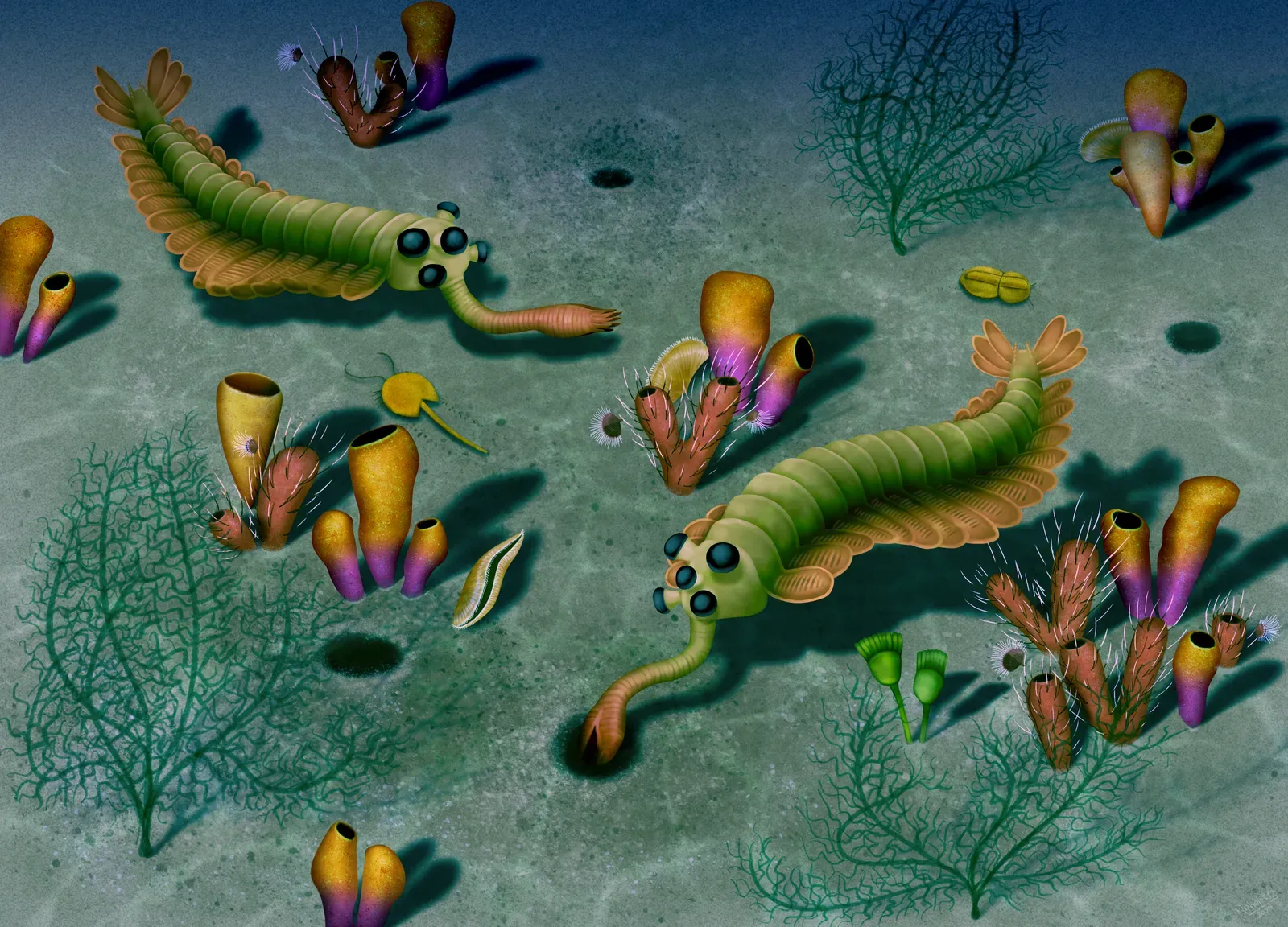
Picture this: you’re a paleontologist in the 1970s. You’re presenting a newly reconstructed fossil to a room full of fellow scientists. You show your illustration, and the entire audience bursts out laughing. That’s exactly what happened when Opabinia was first revealed to the scientific community. Opabinia was so strange, in fact, that the first scientific presentation of its appearance was met with laughs. And honestly, can you blame them?
This species, known to live on the seafloor, had a soft body that was about seven centimeters long. It had a head with five eyes and a mouth underneath that was backwards. The backwards mouth is said to coincide with the fact that the creature had a proboscis, which was more than likely used to pass food to the mouth. Think of it like an elephant’s trunk, except attached to the face of something that looks like it came from another planet entirely. Beyond its five eyes, it also had 30 flippers. Thirty. Flippers. On a creature barely the size of your thumb. The sheer audacity of prehistoric evolution is truly something else.
Helicoprion: The Shark That Carried a Circular Saw in Its Mouth
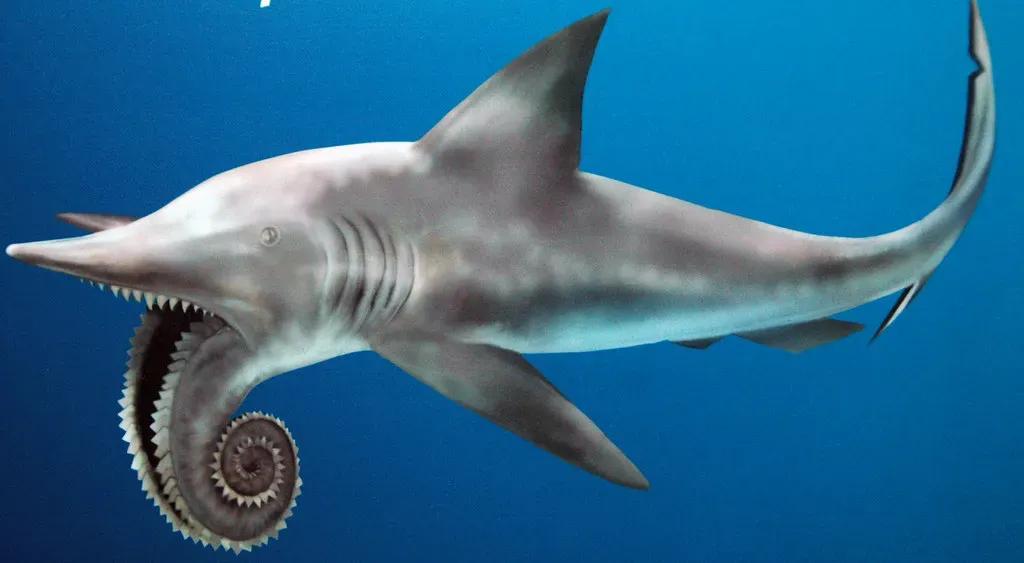
Here’s the thing about ancient sharks: they were already terrifying enough as it is. So the fact that one species decided to evolve a spinning circular saw mechanism inside its jaw feels like overkill in the most spectacular way imaginable. Helicoprion was an ancient shark-like fish with a modified jaw: its lower palate was a circular saw of teeth which could tear flesh from bone, grinding the flesh against its top teeth. Scientists have debated for over a century exactly how this horrifying arrangement worked.
These “toothwhorls” adorned the shark-like Helicoprion as a serrated jaw used for snagging prey. Initial sketches had the mouth whorls unraveled, leaving one of the most unique depictions of a prehistoric creature ever rendered. It is now thought that the spiral jaw faced inward, and the rotating teeth acted as a circular saw for grinding up food, though this still remains a topic of debate. Honestly, it’s hard to say for sure which interpretation is more unsettling. Either way, you’d be glad there was no ocean visit scheduled for the Carboniferous period.
Dunkleosteus: The Armored Bone-Jawed Beast That Had No Teeth
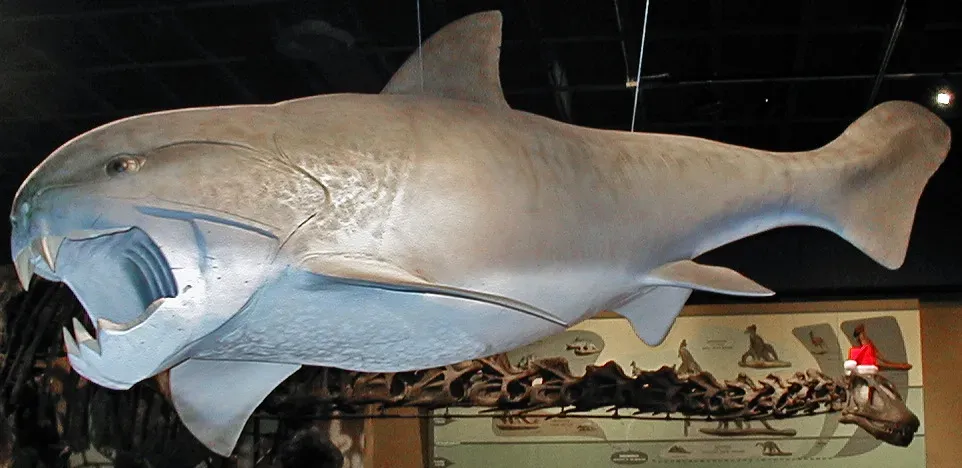
Imagine a great white shark with a staple remover for a mouth and you have some idea of what Dunkleosteus looked like. During its heyday, about 420 million years ago, this armored fish was among the biggest and fiercest meat-eaters in the seas. Instead of chomping with teeth, like sharks, this predator sliced through other armored fish with immense jaws made of sharpened bony plates. No teeth. Just razor-sharp bone. That’s somehow worse.
It was about 33 feet long and weighed almost 4 tons. The creature is considered to be hypercarnivorous as well as an apex predator. This means that the Dunkleosteus wasn’t prey to any other type of animal, and mainly consumed meat as its diet. Though a meat eater, the creature didn’t have teeth, instead its mouth held two pairs of gnathal plates, which formed a beak-like structure. Using these plates, it is said that the Dunkleosteus had a bite similar to one of a crocodile, or even a T-Rex, able to place roughly 8,000 pounds per square inch of pressure on a victim. A prehistoric fish that weighed as much as an elephant and bit harder than a T-Rex. Let that sink in.
Megatherium: The Ground Sloth That Was as Tall as a House

You probably think of sloths as those adorably slow, tree-hugging creatures that take three days to scratch themselves. Now imagine one the size of an elephant, standing upright and staring you right in the face. That was Megatherium, a creature so large it almost defies belief. It was actually a giant ground sloth related to modern sloths. An inhabitant of South America during the Quaternary period, an adult standing on its hind legs could reach a height of 20 feet. Twenty feet tall. That’s roughly the height of a two-story building.
What makes Megatherium even more fascinating is how its physical structure suggests it could have been a surprisingly versatile forager. Its enormous curved claws, which would make a grizzly bear feel inadequate, were likely used to drag entire tree branches toward its mouth. Some researchers have even suggested it may have been an opportunistic meat-eater, supplementing its plant diet when the opportunity arose. After the emergence of the first true animals around 700 million years ago, evolution ran amok, creating countless bizarre groups, and Megatherium is perhaps the most striking example of just how far size could go in the mammal world.
Quetzalcoatlus: The Flying Reptile Bigger Than a Giraffe
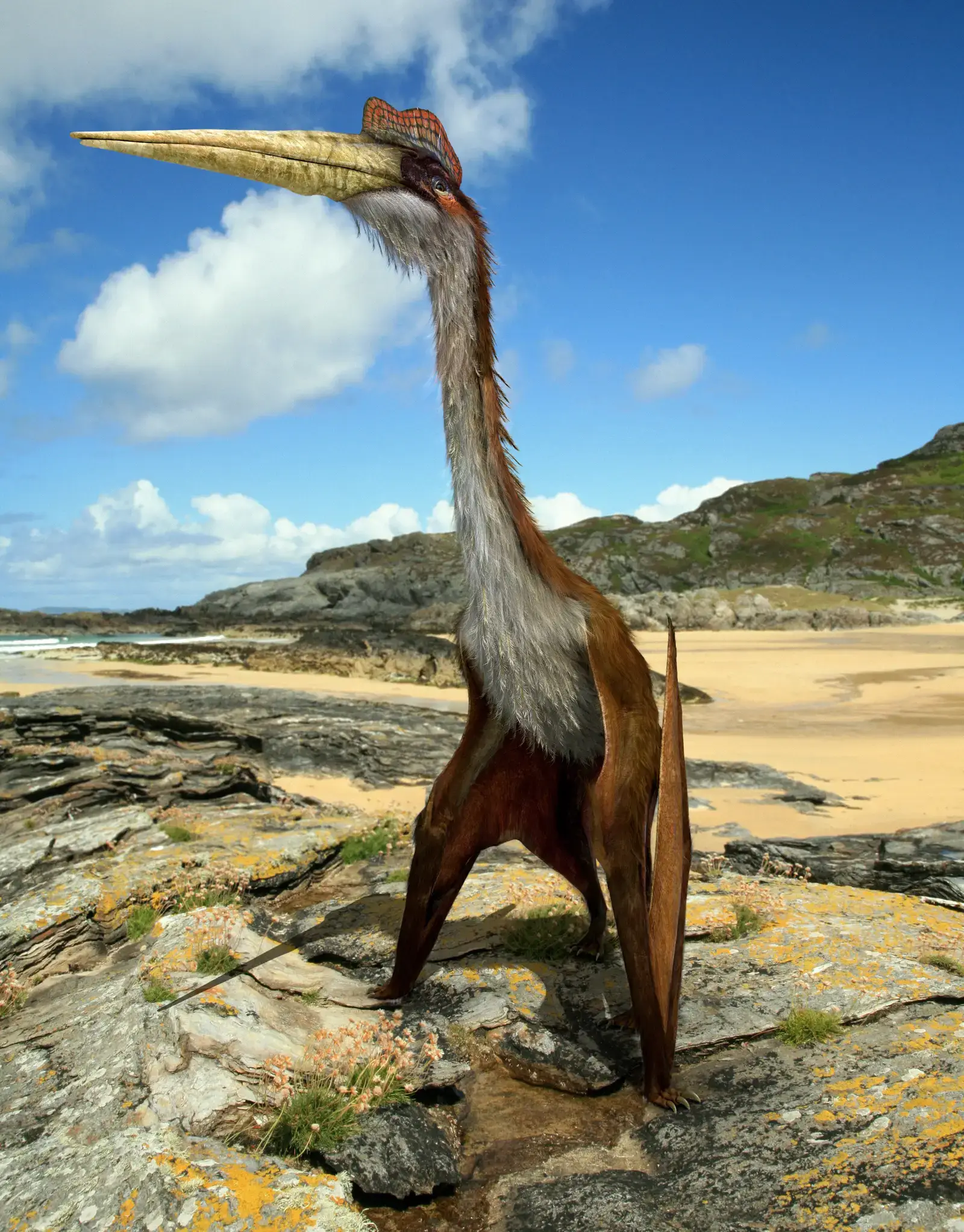
Imagine a pelican wearing a helmet. Okay, now imagine that pelican as tall as a giraffe and with a wingspan of a greyhound bus. That gives you an idea of Quetzalcoatlus. This pterosaur lived about 70 million years ago and ruled the sky, the land, or anywhere it pleased. Comparable in body size with a T-Rex, Quetzalcoatlus is one of the largest flying reptiles ever discovered, and could have feasted on prey bigger than humans. The thought of something that large actually becoming airborne is almost physically uncomfortable to imagine.
Complete with giant eye sockets, a cranial crest, an eight-foot needle-sharp beak, and limbs as well equipped for running as they were for flying, this dinosaur was a mashup of the most terrifying aspects of prehistoric life. The biggest pterosaur to ever take to the skies supposedly did not have any feathers. Though it had a wingspan that exceeded 30 feet, it took off using both its hind and front legs and flew without flapping its wings. A massive, featherless, giraffe-tall flying reptile with a spear for a face. Let’s be real, that is the stuff of nightmares.
Estemmenosuchus: The Horn-Crowned Mammal Ancestor That Defied All Logic
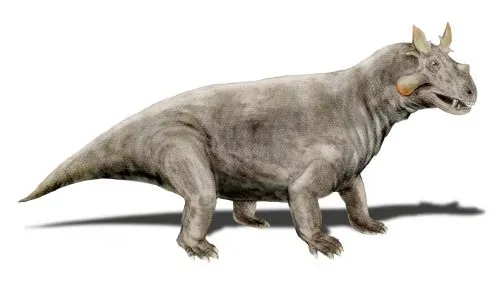
Estemmenosuchus was a large therapsid that lived about 267 million years ago. If you don’t know what a therapsid is, it’s a group of animals that eventually evolved into mammals. Although the term is not used anymore, they were once called “mammal-like reptiles.” Therapsids could look pretty funky at times. Estemmenosuchus is a good example of that. Its name literally means “crowned crocodile.” Estemmenosuchus’s face was rimmed with a bizarre collection of horn-like protrusions. Think of a hippo crossed with a rhino, covered in bony horns sprouting from every angle of its head, and you’re getting close.
Translated from Greek to mean “crowned crocodile, Estemmenosuchus is quite a strange-looking prehistoric creature. Though it looked like a hippo-rhino mix, this creature had distinctive knob-like horns on the sides of its head and, in some species, on the top and on the jawbone. Thankfully, it was primarily a herbivore. The irony of such a ferociously-decorated head belonging to a creature that mainly ate plants is just beautiful. Nature was absolutely showing off with this one, and we are here for it.
Pterodaustro: The Flamingo-Jawed Pterosaur with Thousands of Bristle Teeth
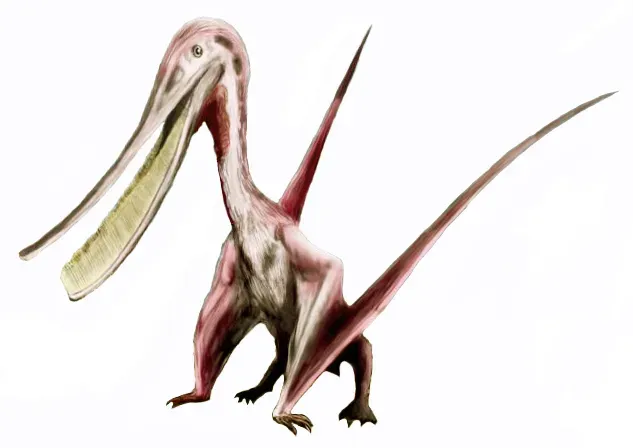
Pterodaustro was a medium-sized pterosaur that lived 105 million years ago. Its signature adaptation was filter-feeding teeth, which made it perfect for water. Though practical, its mouth looked alien, as it consisted of thousands of bristle-like teeth jutting out of a disturbingly thin beak. Like the baleen of a whale, these teeth helped Pterodaustro filter water for prey, sucking up small organisms and spitting out the rest. You could describe it as a flying flamingo sieve, and that description still wouldn’t fully do justice to how alien it looked.
This pterosaur had an unusual set of teeth, similar to the baleen of some whales. It almost certainly used these teeth to eat small, aquatic organisms, similar to the way a flamingo eats brine shrimp. Since flamingos get their pinkish hue from their diet, Pterodaustro might have been pinkish too. I think that last detail is genuinely one of the most remarkable things in all of paleontology. A pink, filter-feeding flying reptile from the Cretaceous period. Nobody could have predicted that one.
Archaeotherium: The “Hell Pig” That Hunted Prehistoric Rhinos
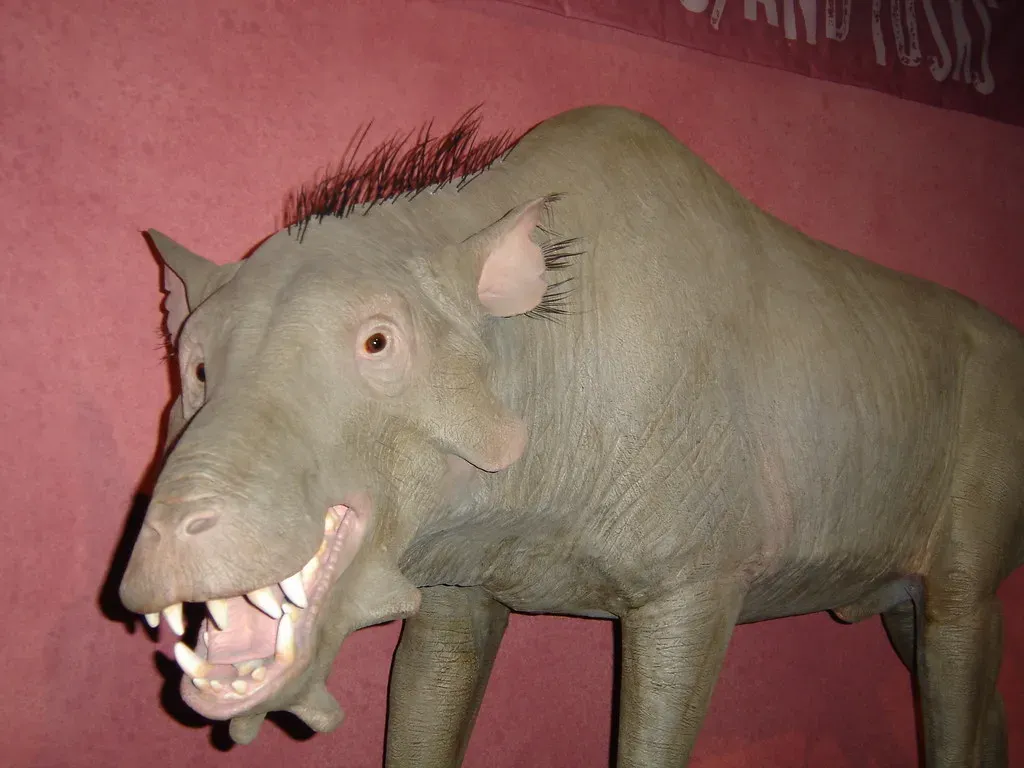
Modern pigs are already impressively formidable when they want to be. Wild boars have charged bears. But even the toughest wild boar in existence would’ve looked like a house cat standing next to Archaeotherium. They’re sometimes referred to as hell pigs, and while the name fits their appearance, they’re not actually pigs. They’re more closely related to hippos and whales. Archaeotherium was a cow-sized predatory omnivore with huge jaws that it used to hunt animals including prehistoric rhinos. A creature related to hippos and whales, wearing the face of a pig from a horror movie, and actively hunting rhinos for lunch. Prehistoric Earth was something else entirely.
The Entelodon, a prehistoric pig relative, was a full-time carnivore and possibly one of the most monstrous-looking mammals ever. Standing on all fours, this beast was as tall as a man, and had an immense head armed with powerful jaws and sharp teeth. Scientists believe that it was able to hunt live prey, but that it also scared other predators away from their kills. Its bite marks also suggest that it fought viciously with its own kind, and it is even possible that Entelodonts were cannibalistic. Cannibalistic, rhino-hunting, man-sized creatures with terrifying jaws. Honestly, the Pleistocene had absolutely zero chill.
Conclusion
The prehistoric world was not just a rougher, wilder version of the one you live in today. It was something genuinely alien, populated by creatures so creative in their design that they still stump scientists centuries after their fossil records were first uncovered. From Opabinia’s five eyes and backward mouth, to Helicoprion’s spinning saw-jaw, to Quetzalcoatlus soaring overhead like a featherless giraffe with wings, Earth’s past reads less like natural history and more like surrealist art.
What’s most striking is that these weren’t monstrous failures of evolution. They were winners. They dominated their environments, sometimes for tens of millions of years longer than humans have even existed. Evolution works slowly and randomly, changing little bits here and there until an entirely new thing emerges eons later. Sometimes, these changes are insignificant or boring, yet other times, the mutations are so ridiculously weird that they’re destined for the prehistoric hall of fame. When you see how much certain creatures have changed over time, it makes you wonder how today’s animals will adapt for the future.
Will the creatures of today look just as bizarre to whoever inherits this planet millions of years from now? What do you think? Drop your thoughts in the comments below.