
There’s something quietly magical about the person at the dinner table who makes everyone lean in. You know the one. They start talking and the whole room goes still – forks hovering, drinks forgotten. It’s not a trick. It’s not performance. It just happens. And chances are, that person has no idea they’re doing anything special at all.
Storytelling is universal to the human experience – and it has been suggested that storytelling developed not long after the development of language itself. So when you feel that pull to shape a moment into a narrative, you’re not just being talkative. You’re tapping into something ancient, something coded deep into the human blueprint. The signs are all around you, if you know where to look. Let’s dive in.
You Turn Everyday Moments Into Mini-Epics

You went to the grocery store. That’s it. That’s the whole event. Yet somehow, by the time you’re telling a friend about it, there’s a protagonist (you), a conflict (the self-checkout machine), a plot twist (the unexpected coupon), and a satisfying resolution. Storytelling is a skill that comes naturally to human beings – some people are better storytellers than others, but we all have a lifetime’s practice of converting our experiences into anecdotes.
The natural-born storyteller doesn’t need extraordinary material to work with. You are moved by daily life experiences, and whether good or bad, these experiences spark the inner storyteller in you, so much so that you find yourself narrating real-life experiences with child-like enthusiasm. Honestly, that ability to find drama in the mundane? That’s the whole job description right there.
You Have a Deeply Wired Sense of Empathy

Natural-born storytellers don’t just observe people – they feel them. You walk into a room and you’re already reading the emotional temperature before anyone has said a word. That sensitivity isn’t weakness. It’s raw material. Stories have an ability to enhance empathy and increase emotional intelligence through the process of simulation and understanding the motives, thoughts, and emotions characters in the story are experiencing.
Here’s the thing: you can’t move an audience unless you understand them first. Emotional connection means tapping into the emotions of your audience – emotional stories are simply more memorable. The most compelling storytellers throughout human history weren’t necessarily the loudest voices around the fire. They were the ones who noticed the fear in someone’s eyes and knew exactly which story would ease it.
You Instinctively Build Suspense Without Even Trying
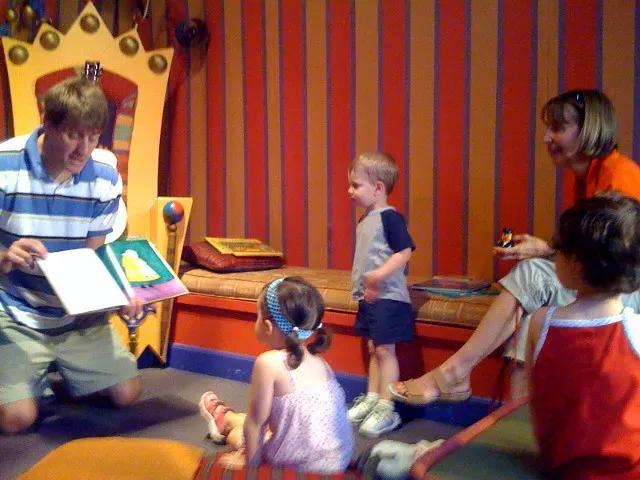
You know that friend who starts a story and you find yourself genuinely unable to look away? That might be you. Natural storytellers carry an internal sense of pacing – they know when to slow down, when to speed up, and exactly when to drop the detail that makes everything click. A good storyteller knows how to pace their stories – knowing when to speed up and when to slow down.
A great story builds up over time and ends with a climactic win or devastating loss. Good storytellers don’t rush through a story too soon and are sure to add important details that add suspense and build the anticipation for the outcome. Think of it like letting a pot of coffee brew – nobody wants you to pour it early. The waiting is part of the experience, and you understand that intuitively.
People Always Come to You First With Their Stories

There’s a quiet but unmistakable sign that someone is a natural storyteller: other people want them to witness their stories too. If you’re constantly the first person your friends call after something big happens, that’s not a coincidence. Storytelling helps in sharing personal experiences and values with others, building social connections, and enhancing empathy – and these social aspects can contribute significantly to one’s sense of meaning in life by fostering relationships and community belonging.
You become a kind of living archive. People trust you to hold their narratives carefully, to reflect them back in a way that feels true. Research has shown that the presence of good storytellers is associated with increased cooperation – and in return, skilled storytellers are preferred social partners. Our ancestors already knew this. The most skilled storyteller wasn’t just entertained – they were essential.
Your Imagination Works Overtime, Constantly

You sit in a waiting room for ten minutes and you’ve already invented backstories for three strangers. You watch someone walk by and wonder: where are they going? What are they carrying? What’s the story they’re not telling? I think this is one of the most underrated signs of a natural storyteller – the imagination that simply refuses to stay quiet. Stories let us imagine what doesn’t exist. They tap into our uniquely human ability to envision alternate realities, possible futures, and innovative solutions.
Fantasy is functional – fiction enables us to conduct virtual experiments in lieu of real ones, and think through their possible outcomes without actually having to suffer them. We can speculate about events that might occur, problems that might ensue, and solutions that might be implemented. Your wandering imagination isn’t distraction. It’s rehearsal.
You Use Your Body as Much as Your Words

Watch a natural storyteller and you’ll notice something immediately: they’re not just talking. They’re performing. The voice drops low at the scary part. The hands fly up during the twist. The eyebrows do half the work. Storytelling is considered a more personal experience as the listener frequently has greater levels of eye contact with the teller as compared to listening to a story read from a book.
At our core, our innate communication skills are miming and oral storytelling. Think about that for a second. Before writing, before language had fully evolved, our ancestors told stories through gesture, rhythm, and expression. The first hominid to walk upright left arms and hands free not only for carrying and toolmaking but also, importantly, for making gestures. When you use your whole body to tell a story today, you’re doing something humans have been doing for well over a million years. Wild, right?
You Find Deep Meaning in Other People’s Stories

Natural-born storytellers aren’t just producers – they’re devoted consumers too. You’re the person who finishes a film and sits quietly in the credits, still inside the story. You read a novel and feel genuinely bereft when it ends. Recent findings in cognitive neuroscience reveal that when we read fiction, our brains engage in a process strikingly similar to real-life experience – with the same neural circuits activated when we process real-world social interactions, emotions, and problem-solving also engaged when we read about fictional events.
This deep absorption in narrative isn’t just a personality quirk. It’s a sign of a mind that thinks in story. When we experience a story, multiple regions of the brain activate – including those for emotion, language, and memory. Storytellers absorb the world differently from everyone else. They don’t just watch – they translate, they feel, they file everything away for later use.
You Understand That Every Story Needs a Purpose

Here’s where natural storytellers really separate themselves from people who simply talk a lot. You don’t tell a story for the sake of hearing your own voice. There’s always a point – a feeling you want to leave someone with, a truth you’re trying to hold up to the light. A strong story has a unifying theme that gives it depth and meaning. You understand this without anyone having to explain it to you.
One reason people are drawn to stories is that they help us feel in control – they help us to find order in things that have happened to us and make sense of the events of a random world. Your ancestors understood this profoundly. Myths were not merely explanations – they were emotional maps, teaching how to live, how to relate to nature, how to honor ancestors, and how to navigate both chaos and beauty. You carry that same instinct forward, even if your “myth” is about your terrible commute on a Tuesday morning.
You Feel Compelled to Pass Stories Down and Keep Them Alive
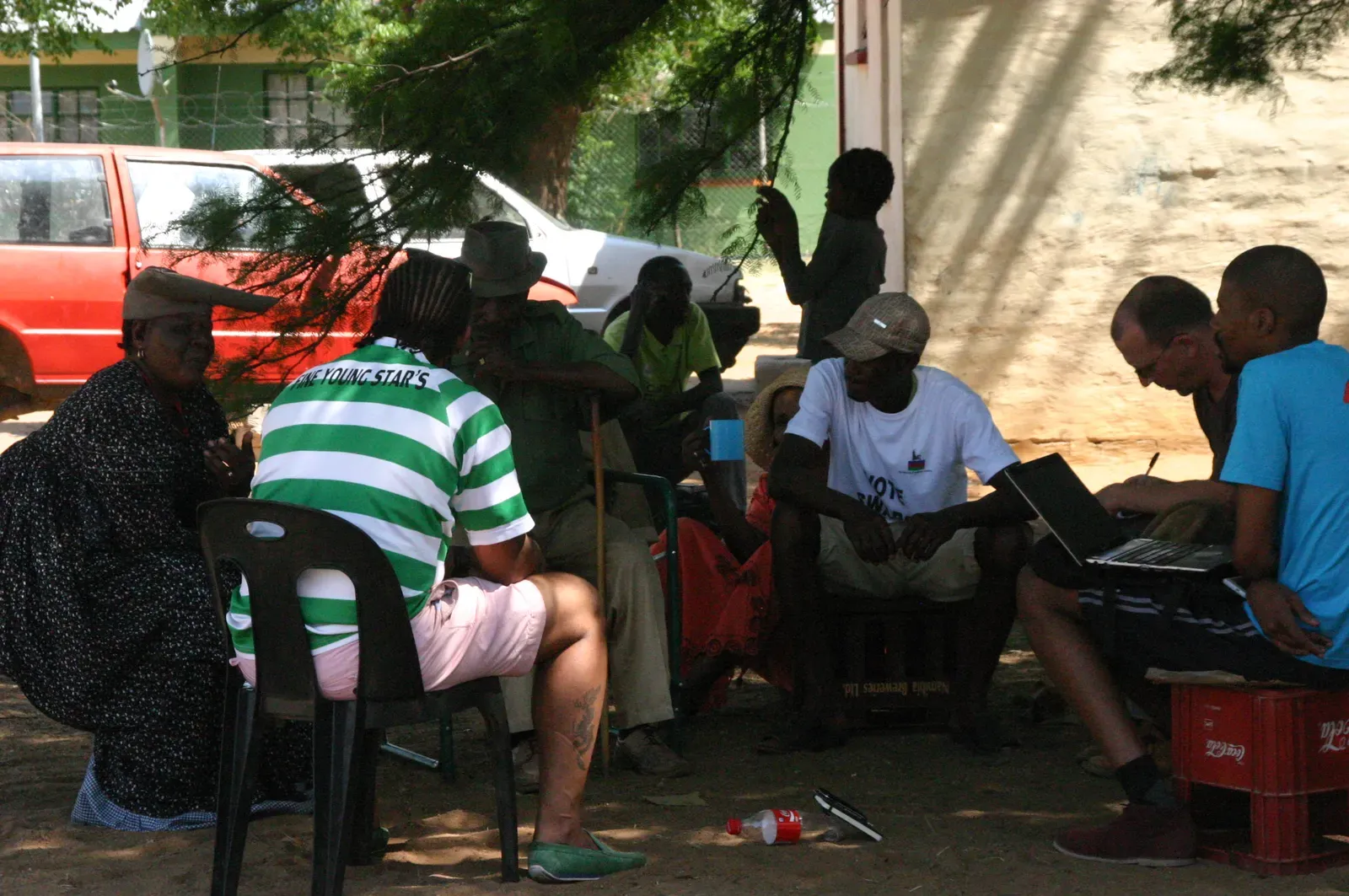
There’s a specific kind of storyteller who becomes the keeper of family lore, the one who remembers how grandma described her childhood, the one who insists the old stories get told again at every gathering. If that’s you, you’re acting on one of the oldest human impulses that exists. Storytelling greatly increases the amount of knowledge a person can acquire over a lifetime – humans can learn from the experiences of all the people in their social network, and because stories are passed down from generation to generation, they can also learn from individuals who lived decades or even centuries before them. The practice of storytelling was thus key to the emergence of cumulative culture.
Our ancestors wove tales by firelight, passing down myths, legends, and histories from one generation to the next – a tradition that spans cultures, continents, and epochs, leaving an indelible mark on the collective imagination of humanity. When you feel that urge to preserve a story, to make sure it doesn’t disappear, you’re doing exactly what the greatest storytellers in human history have always done. Every story you’ve ever heard and every story you will ever tell becomes another layer in humanity’s ongoing architecture of imagination.
Conclusion: You Were Born For This
Here’s the honest truth – not everyone will recognize these traits in themselves right away. Some of the most gifted natural storytellers walk around completely unaware of what they’re carrying. They think they just “talk too much” or “over-explain things.” They don’t realize that the instinct to shape experience into narrative is one of the most valuable and deeply human gifts there is.
It is in our nature to tell stories and inform others of our life events – storytelling, whether factual or fictional, is an intrinsic human characteristic. You don’t need a publisher, a microphone, or a stage to be a storyteller. You just need the courage to trust the instinct you already have. Individuals proficient in storytelling exhibit a stronger sense of meaning in life – and honestly, that alone makes the whole thing worth embracing.
So the next time you catch yourself turning a minor inconvenience into a riveting three-minute tale, don’t apologize for it. Lean in. Your ancestors would be proud. How many of these signs did you recognize in yourself?