There is something almost impossible to wrap your head around when you stand at the rim of the Grand Canyon, or gaze up at the sheer, snow-crowned wall of the Himalayas, and realize that what you are looking at was not always there. None of it. Mountains that seem eternal were once seafloors. Deserts that feel ancient were once lush, tropical basins. Our planet has been restlessly reshaping itself for billions of years, and the landscapes we call mysterious are really just the fingerprints of titanic forces we are still working to understand.
You might think of the Earth as a stable, dependable thing beneath your feet. That is a comfortable illusion. In reality, the ground you stand on has been crumpling, tearing, sliding, and erupting since the planet was born. The story behind Earth’s most jaw-dropping, head-scratching landscapes is one of slow-motion violence, unimaginable heat, and timescales that make human civilization look like a blink. So let’s dive in.
The Engine Beneath Your Feet: How Plate Tectonics Drives Everything
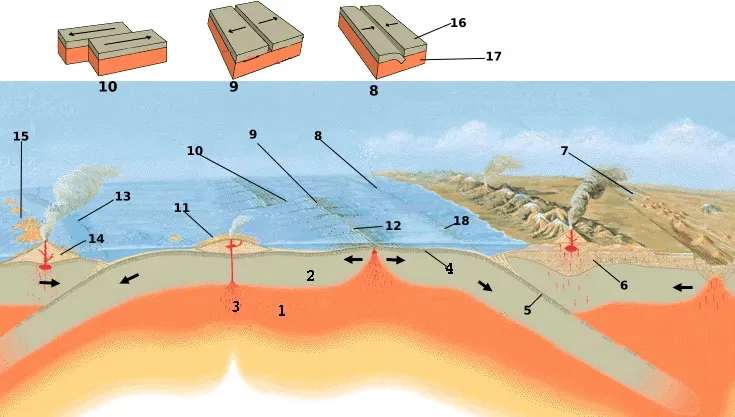
Here is the thing most people never fully appreciate: the ground beneath you is not fixed. Earth is dynamic, consisting of constantly moving plates made of rigid continental and oceanic lithosphere, and these plates pull apart, collide, or slide past one another with great force, creating strings of volcanic islands, new ocean floor, earthquakes, and mountains. It is, honestly, one of the most radical ideas in all of science, and it changes everything about how you see a landscape.
The theory of plate tectonics has provided an overarching framework to describe the past geography of continents and oceans, the processes controlling creation and destruction of landforms, and the evolution of Earth’s crust, atmosphere, biosphere, hydrosphere, and climates. Think of the planet as a cracked egg whose shell pieces are endlessly grinding and drifting, and you start to get the picture. Every mountain, valley, island chain, and ocean trench you have ever seen is a product of this restless motion.
The Supercontinent That Explains Everything: Pangaea’s Breakup
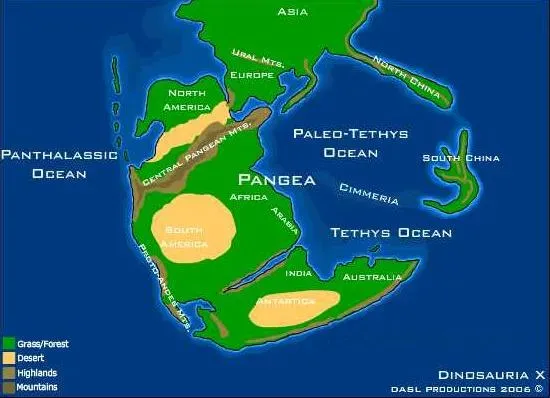
Alfred Wegener postulated that throughout most of geologic time there was only one continent, which he called Pangaea, and the breakup of this continent heralded Earth’s current continental configuration as the continent-sized parts began to move away from one another. Wrap your head around that for a moment: every continent you know, every ocean that separates them, every mountain range that divides nations, all of it traces back to a single, colossal landmass that simply fell apart.
Continental plates began to move and collide more purposefully during the Proterozoic Eon, forming the planet’s first supercontinents. These colossal landmasses, like Columbia, Rodinia, and Pannotia, assembled and broke apart in cycles governed by the restless dance of plate tectonics. Beneath these shifting continents, Earth’s mantle churned with convection currents, dragging landmasses across the globe over millions of years. You are, quite literally, living on a piece of ancient debris.
The Himalayas: When Two Worlds Collided
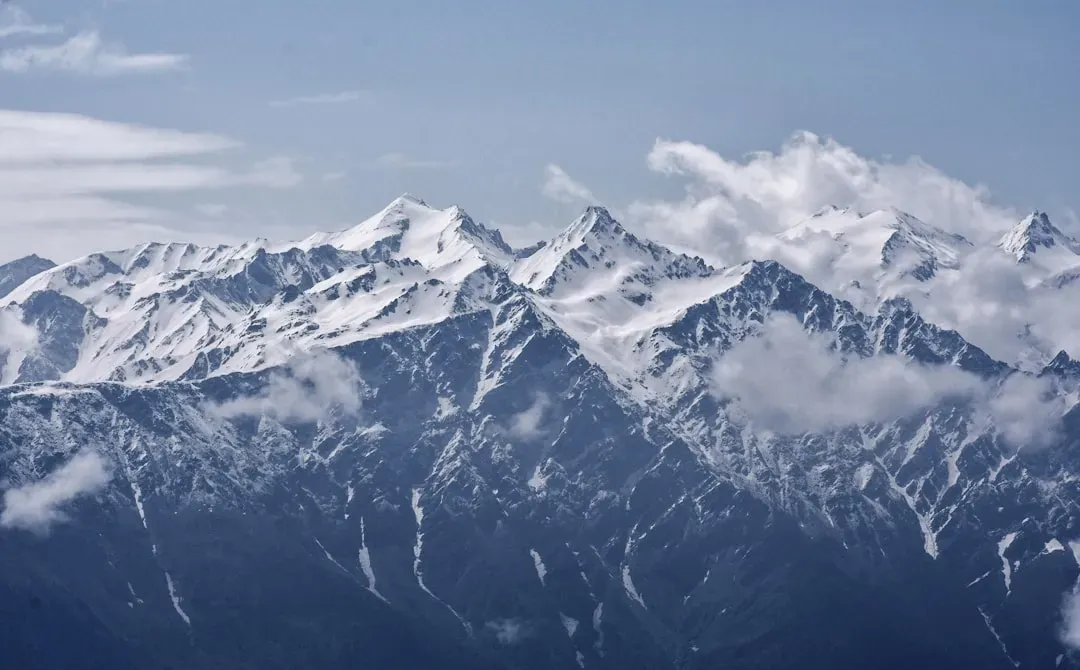
I think few geological events capture the imagination quite like the story of how the Himalayas were born. The geology of the Himalayas is one of the most dramatic and visible creations of the immense mountain range formed by plate tectonic forces and sculpted by weathering and erosion. The Himalayas are the result of an ongoing orogeny, the collision of the continental crust of two tectonic plates, the Indian Plate thrusting into the Eurasian Plate. The collision was not a sudden event. It was a slow, grinding, relentless siege.
The Indian landmass was once situated well south of the Equator, but its northern margins began to collide against the southward-moving Eurasian Plate about 40 to 50 million years ago. The Himalayas and the Tibetan Plateau to the north have risen very rapidly. In just 50 million years, peaks such as Mt. Everest have risen to heights of more than 9 km. The Himalayas are still growing today, rising more than a centimeter every year, which is a growth rate of roughly 10 km per million years.
The Grand Canyon and Its Missing Billion Years
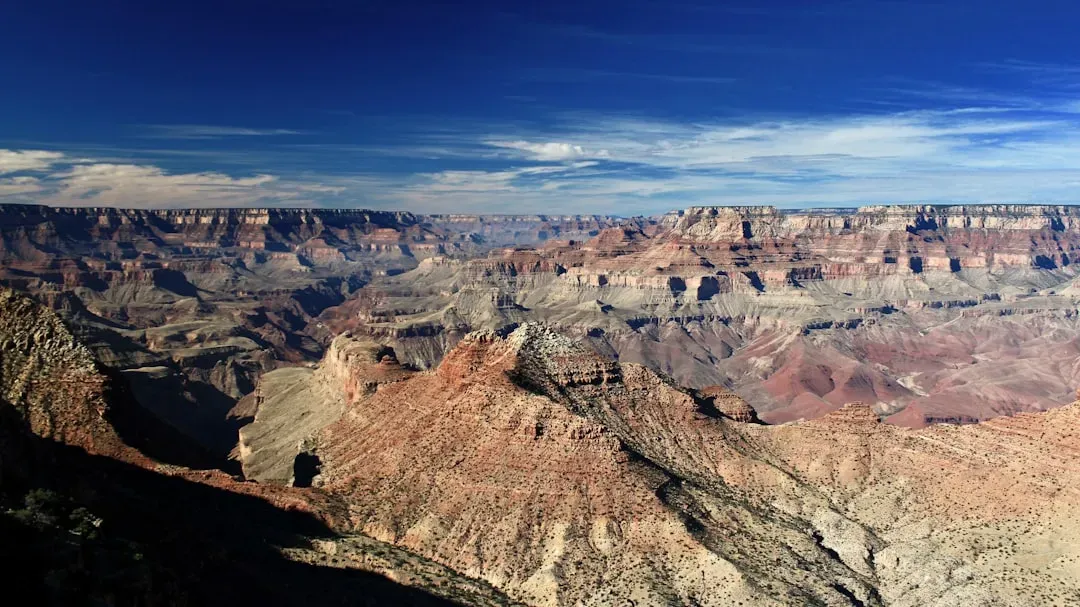
If you ever get to stand at the South Rim and look down, you will see something that most people walk past without realizing how deeply strange it is. The Great Unconformity of the Grand Canyon occurs where sedimentary rock layers rest on basement rocks that are as much as 1.3-billion-years older. Researchers have long asked: what happened during the long period of time in between? There is no satisfying answer yet. That is what makes it so captivating.
Where the Tonto Group overlies the Vishnu Basement Rocks, the Great Unconformity represents a period as much as 1.2 to 1.6 billion years. To put that in perspective, complex animal life has only existed on Earth for roughly 600 million years. There is currently no widely accepted explanation for the Great Unconformity among geoscientists, though it is widely accepted that there was a combination of events which may have caused such an extensive phenomenon. The canyon does not just show you rock. It shows you a mystery carved in stone.
Rift Valleys: Where the Earth Tears Itself Apart
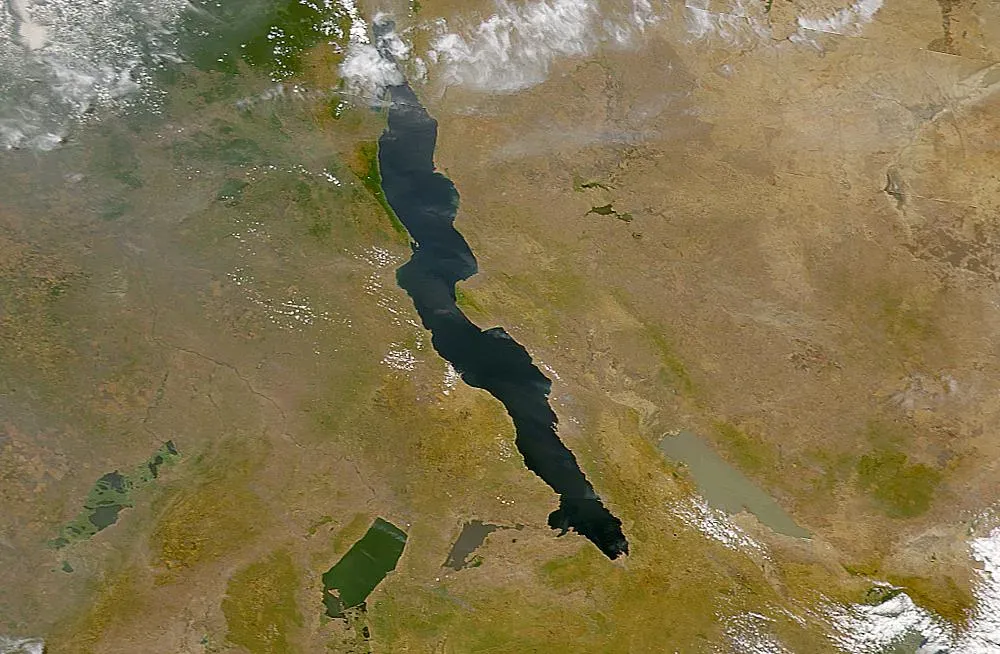
Most people think of tectonic forces as pushing things together. Honestly, the opposite is just as dramatic. When divergent plate motion occurs beneath a continental crust, rift structures and normal faults form. This continental rifting causes valley floors to drop down along fault lines. The combination of down-dropped basins and adjacent fault-block mountains can produce dramatic range fronts. Picture the ground simply cracking open and sinking, with mountains rearing up on either side. That is a rift valley, and Earth has some spectacular ones.
In some areas, tectonic processes create and maintain high elevations such as mountains and plateaus. In others, they produce topographic depressions, as exemplified by Death Valley in the western United States, the Dead Sea in the Middle East, or the Turfan Depression in western China. The Dead Sea sits at the lowest point on Earth’s surface, and it exists entirely because ancient geological rifting pulled the land apart. It is not a quirk of geography. It is geology working in slow, devastating motion.
The San Andreas Fault: A Landscape Written in Scars
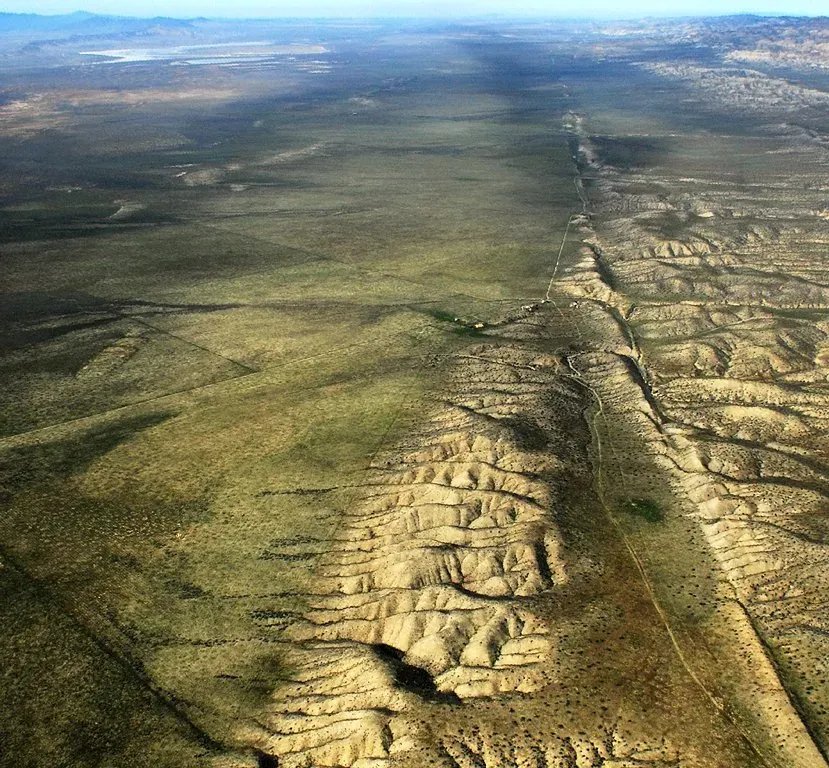
California’s dramatic coastline, its scenic bays, and its notoriously active earthquake zones are all products of the same geological process. Thousands of earthquakes over millions of years have built this landscape not only along the major fault line, the San Andreas Fault, but also on other faults within the broad zone of shearing between the Pacific and North American plates. You might think of living near a fault line as living in danger, and that is true. But it also means you live in one of the most geologically spectacular places on Earth.
California’s sheared-up landscape and earthquake hazards reflect the movement of the Pacific Plate past the edge of North America along a transform plate boundary that extends from the Mexican border to north of San Francisco. This feature includes the famous San Andreas Fault, responsible not only for destructive earthquakes, but also for the spectacular scenery of the San Francisco Bay area and other coastal regions of California. Every gorgeous vista along the California coast has an earthquake fault somewhere in its biography.
True Polar Wander: When the Whole Earth Lurched
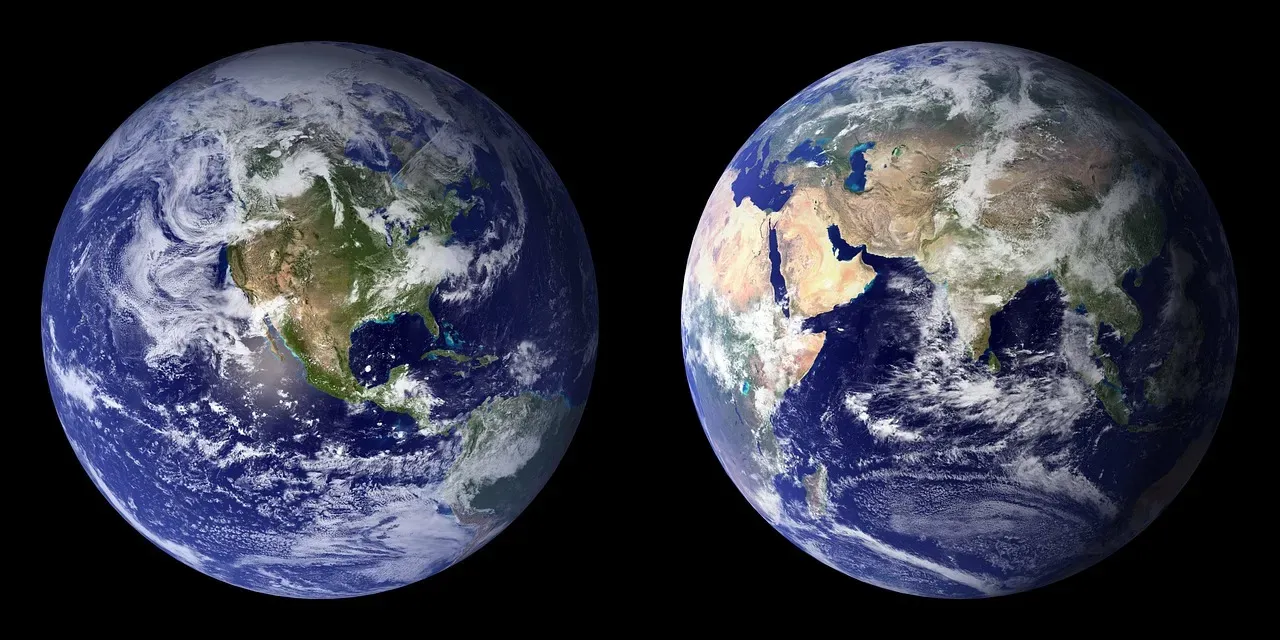
Now here is where things get genuinely mind-bending. Beyond the familiar story of plates grinding past each other, there is a phenomenon called true polar wander, and if you have never heard of it, prepare to feel small. The ancient rocky lurch was part of a phenomenon known as true polar wander, in which the topmost layers of the planet, likely all the way down to the liquid outer core, rotate significantly even as Earth continues its daily turn around its usual spin axis. The entire surface of the planet can shift, not just individual plates.
Paleomagnetic signatures in certain rocks indicate that sometime between 174 and 157 million years ago, the whole region of East Asia shifted southward by a startling 25 degrees, plunging once lush landscapes into zones of desiccating heat. To appreciate the scale of that, consider this: if a similar shift were to happen today, a flag planted in Dallas, Texas, would end up where Northern Manitoba, Canada, currently sits. That is not tectonic drift. That is something far larger and stranger, and scientists are still debating whether it is truly real.
Ancient Rocks, Oldest Landscapes: The Deep Time Records
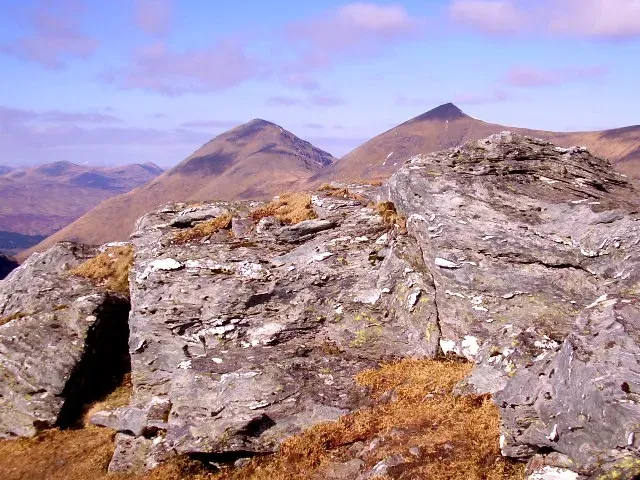
Some landscapes on Earth are not just old in the way mountains are old. They are genuinely primordial, carrying traces of a planet still finding its form. The oldest rocks known are located in northern Quebec and date to 4.3 billion years ago. These are part of Canada’s Precambrian shield, the ancient core of the North American continental landmass. Standing on that rock is the closest you will ever get to touching the beginning of the world. It is, in my opinion, one of the most extraordinary experiences geology can offer.
It was during the Archean Eon, around 4 to 2.5 billion years ago, that the seeds of geology and life began to take root. The planet’s crust thickened. The first continental nuclei, called cratons, formed. These cratons were the geological hearts of future continents, enduring the planet’s fury for billions of years. Remarkably, they still lie buried beneath places like Canada, Australia, and South Africa. The landscapes above them look ordinary. Beneath, they are carrying the oldest secret the planet has.
Conclusion
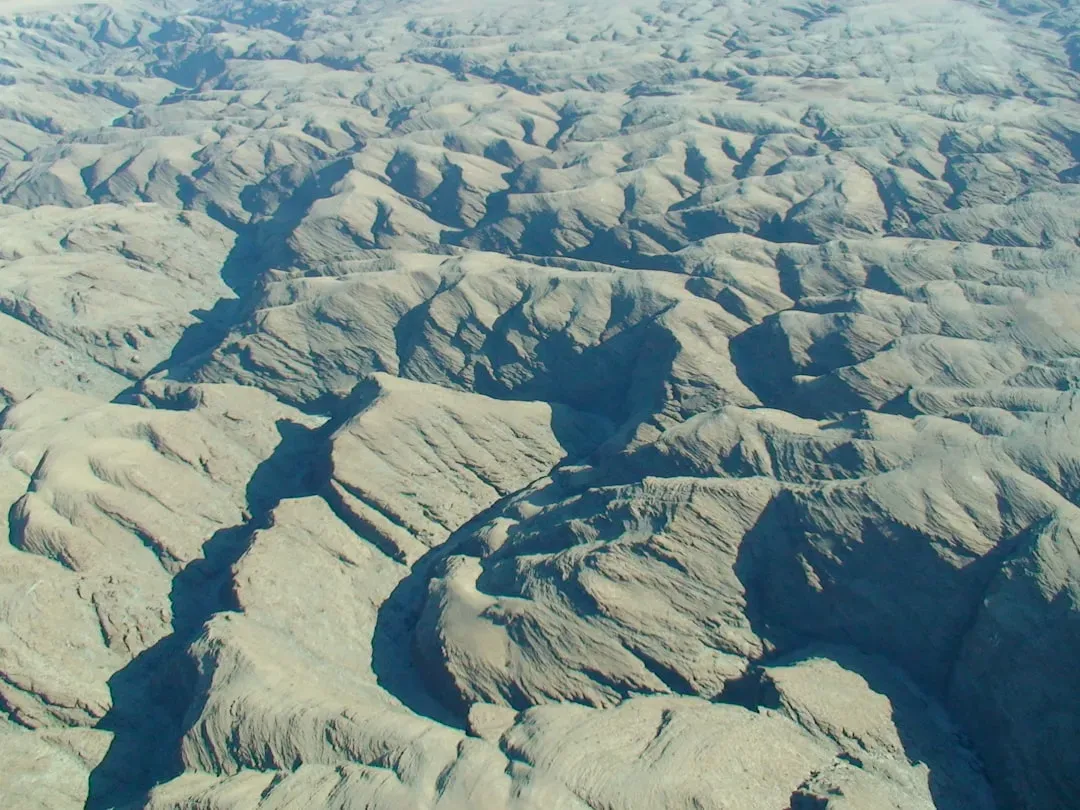
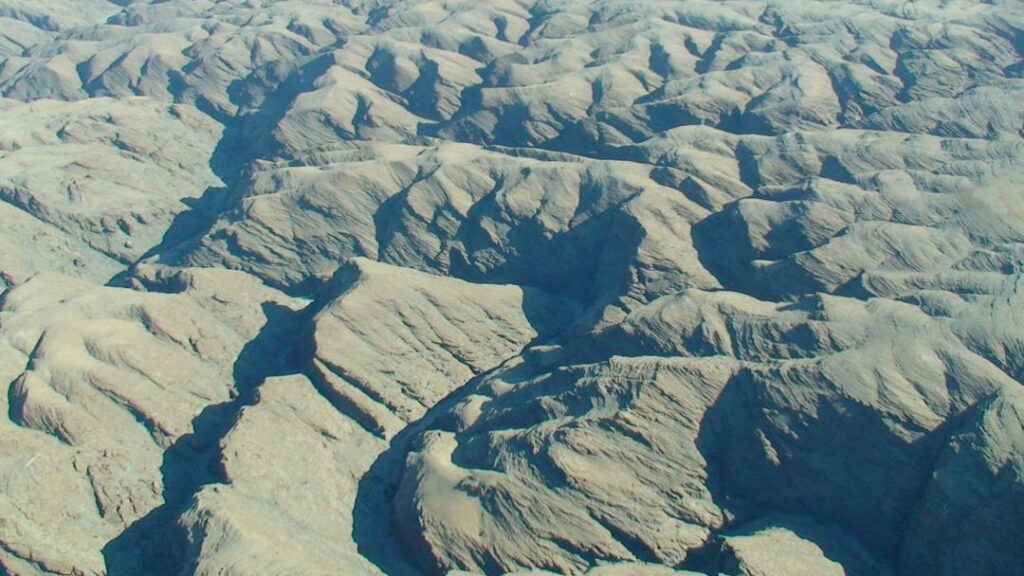
Every mysterious landscape on Earth, from the knife-edged limestone spires of Madagascar to the volcanic columns of Northern Ireland, from the ghost-shaped rock pillars of the Russian taiga to the incomprehensible silence of the Grand Canyon’s missing billion years, is really a message. Virtually all large-scale landforms are the result of both tectonic processes that built the large differences in elevation and erosional processes that sculpted the relief of such areas into their individual shapes. The planet did not draw these shapes for you to admire. It drew them because it could not help itself.
You live on a restless, churning, self-reinventing world. Plate motion may seem slow, but over millions of years plate tectonics shapes the distribution of continents and oceans and mountain ranges that shape diverse ecosystems and influence global climate. The ground you walk on today was somewhere else entirely a hundred million years ago, and it will be somewhere else again long after humans are gone. There is something deeply humbling and deeply thrilling about that. The next time you stand before a breathtaking landscape, ask yourself: what kind of ancient collision created this, and what is it still becoming?