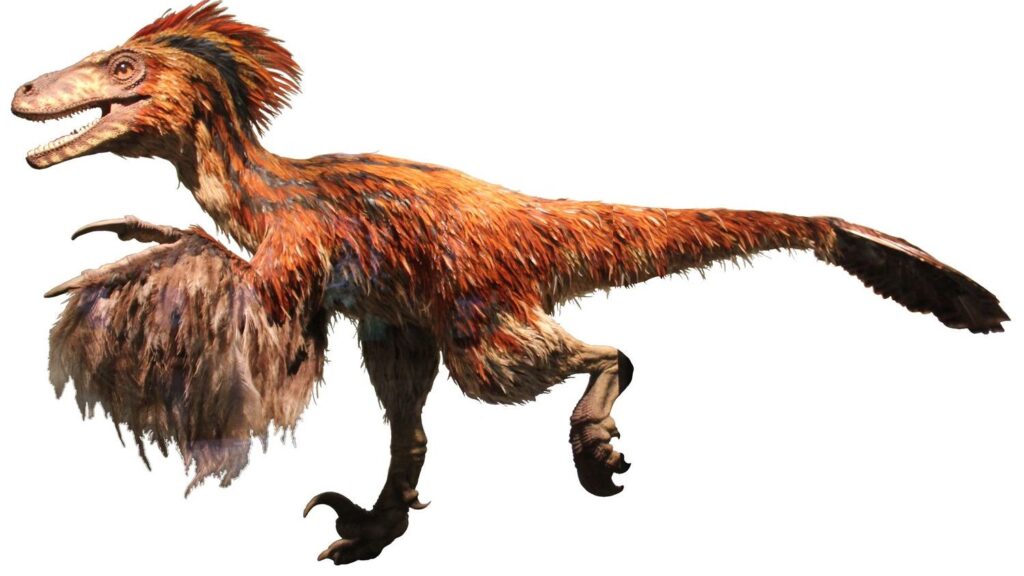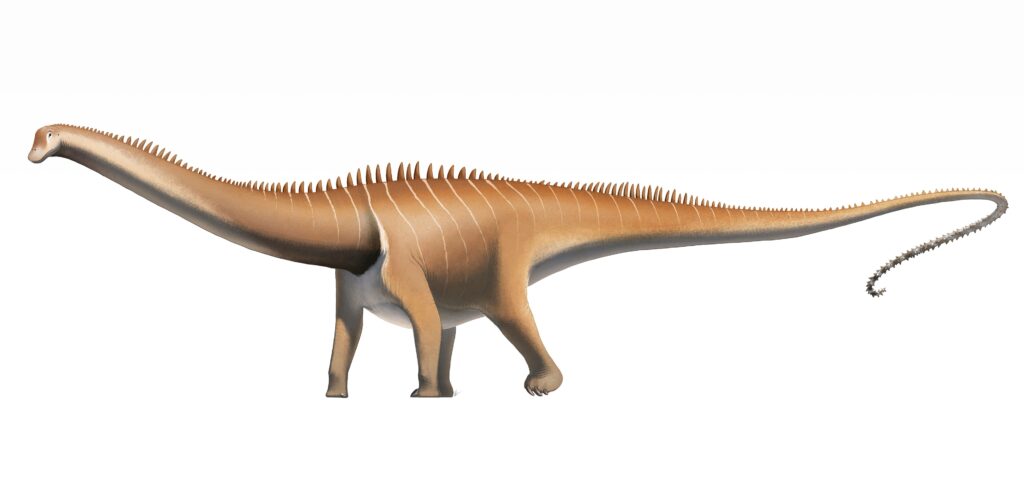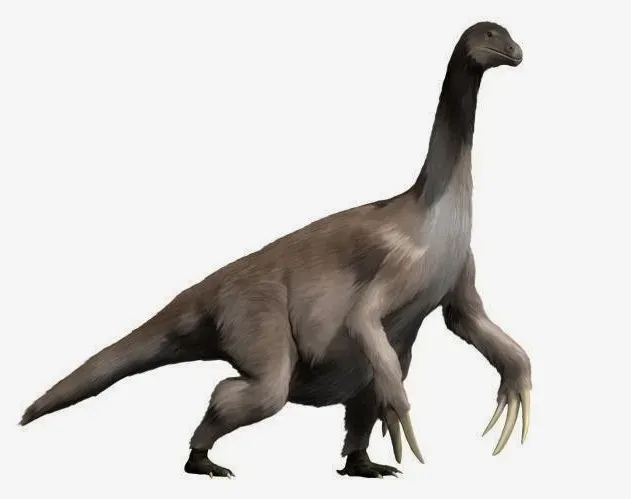
Sixty-six million years ago, life on Earth was doing just fine. Towering dinosaurs ruled the land. The seas teemed with mosasaurs and ammonites. The skies belonged to pterosaurs with wingspans wider than small aircraft. Then, in what geologists estimate was essentially a single afternoon, everything changed.
What followed was arguably the most consequential single event in the history of complex life on our planet. The story of how it happened, why it was so catastrophic, and what came after is far stranger, more contested, and more surprising than most people realize. Get ready, because this one goes deep. Let’s dive in.
What Exactly Was the End-Cretaceous Extinction?
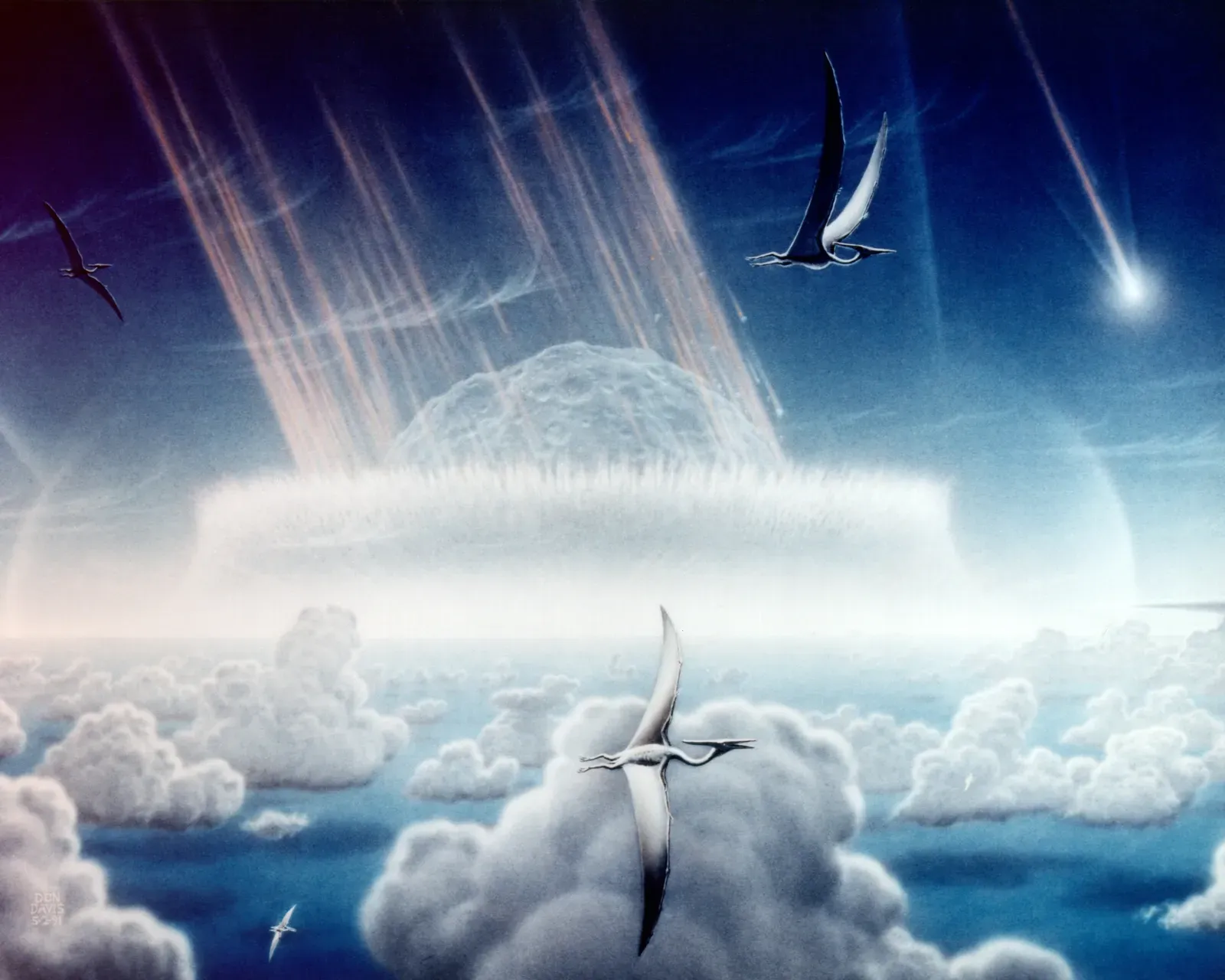
Here’s the thing about extinction events: most people picture them as a dramatic moment when the lights go out for the dinosaurs. The reality is both simpler and more staggering. The Cretaceous–Paleogene (K–Pg) extinction event was a major mass extinction of three-quarters of the plant and animal species on Earth, occurring approximately 66 million years ago. To put that in perspective, imagine three out of every four species alive today simply vanishing.
The K–Pg extinction was a global event responsible for eliminating roughly four-fifths of all animal species at or very close to the boundary between the Cretaceous and Paleogene periods, including nearly all of the dinosaurs and many marine invertebrates. The K–Pg extinction ranks third in severity of the five major extinction episodes that punctuate the span of geologic time. Third, not first – which tells you something about how brutal Earth’s history truly has been.
The Cosmic Bullet: The Chicxulub Impact
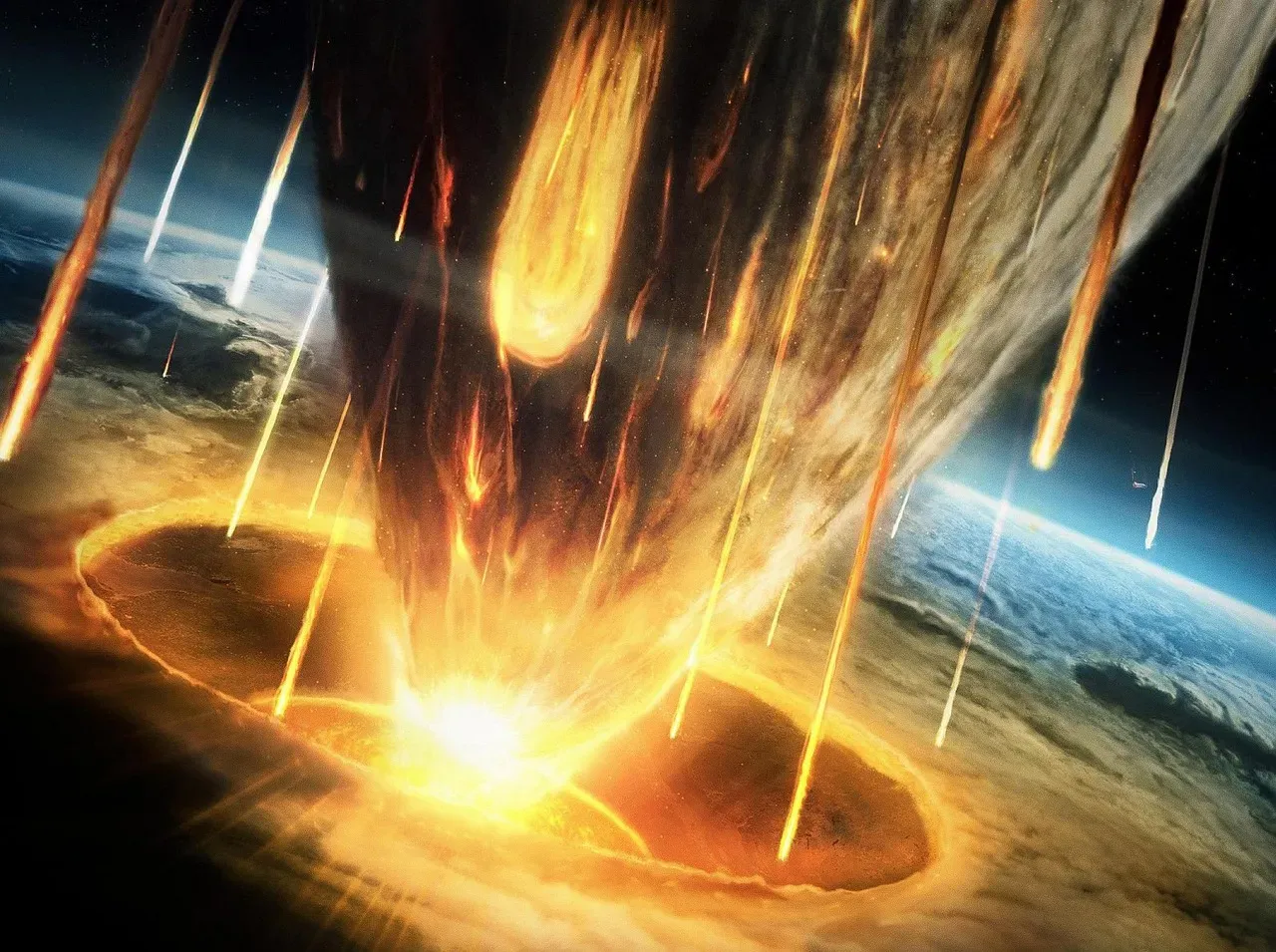
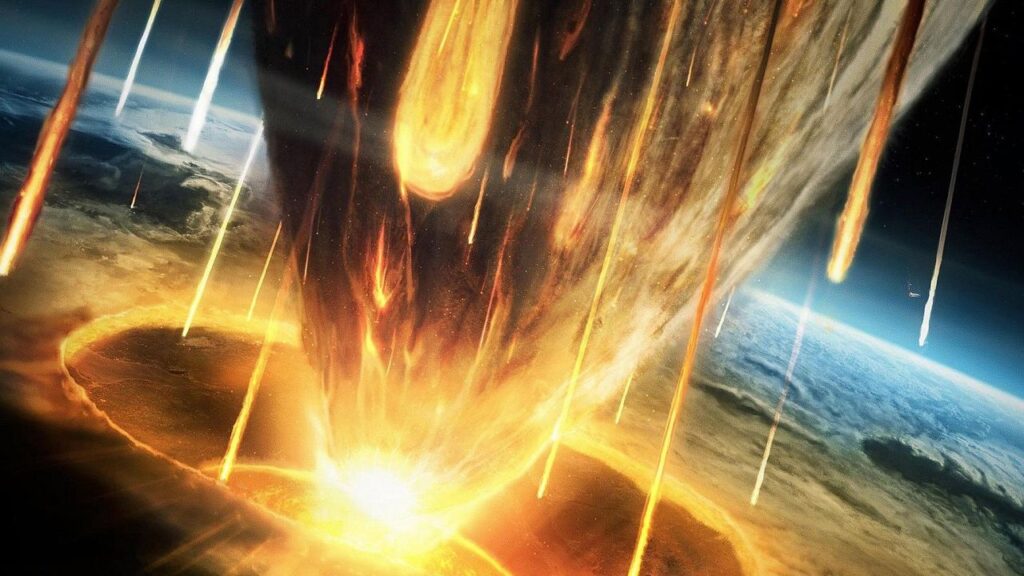
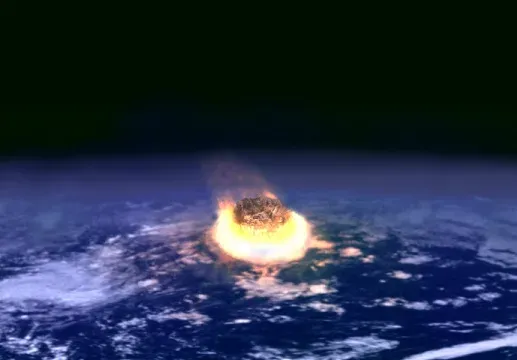
Honestly, the sheer scale of what struck Earth is difficult to wrap your head around. Think of a rock roughly the size of a small city hurtling through space. About 66 million years ago, an asteroid roughly seven and a half miles across slammed into the waters off what is now Mexico’s Yucatán Peninsula at approximately 45,000 miles an hour, leaving a crater more than 120 miles wide and flinging huge volumes of dust, debris, and sulfur into the atmosphere. The resulting shockwave was unlike anything life had experienced since the formation of the Moon.
The impact produced as much explosive energy as 100 teratons of TNT, which is 4.5 billion times the explosive power of the Hiroshima atomic bomb. Wildfires ignited any land within 900 miles of the impact, a huge tsunami rippled outward from the impact zone, and overnight, the ecosystems that supported non-avian dinosaurs began to collapse. You want to talk about a bad day? That was the bad day to end all bad days.
The Smoking Gun: Scientific Evidence for the Impact
For decades, scientists suspected something catastrophic had happened at the K–Pg boundary, but they lacked the proof. The breakthrough came from a surprisingly subtle clue. In the late 1970s, geologist Walter Alvarez and his father, Nobel Prize–winning scientist Luis Walter Alvarez, put forth their theory that the extinction was caused by an impact event, with the main evidence contained in a thin layer of clay at the K–Pg boundary in Gubbio, Italy, which contained an abnormally high concentration of iridium, an element rare on Earth but common in asteroids.
Identified in 1990, the crater is oval with an average diameter of roughly 180 kilometers, and in March 2010 an international panel of 41 scientists reviewed twenty years of scientific literature and endorsed the asteroid hypothesis, specifically the Chicxulub impact, as the cause of the extinction, determining that a ten to fifteen kilometer wide asteroid hurtled into Earth at Chicxulub on Mexico’s Yucatán Peninsula. Most recently, geochemical evidence from the impact site has confirmed that the object that smashed into Earth was an asteroid that originally formed beyond the orbit of Jupiter. A visitor from the outer solar system. Almost poetic, if it weren’t so devastating.
The Volcanic Wildcard: The Deccan Traps Debate
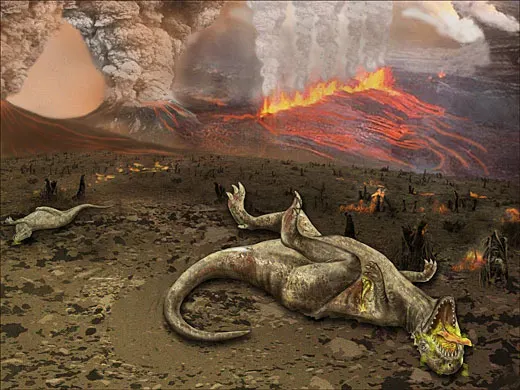
Here is where things get genuinely interesting, and I think this is the most underappreciated part of the whole story. The asteroid did not strike a quiet, stable planet. The Cretaceous–Paleogene mass extinction coincided with two major global environmental perturbations: heightened volcanism associated with the Deccan Traps and the Chicxulub asteroid impact, and intense debate has focused on the relative roles of these two events as the driving mechanisms for the extinction.
The Deccan Traps had been erupting for roughly 300,000 years before the Chicxulub asteroid, and during their nearly one million years of eruptions, the Traps are estimated to have pumped enormous quantities of carbon dioxide and sulfur into the atmosphere. While some authors initially suggested the eruptions were a major cause of the mass extinction, this theory has been rejected as a result of research into the Chicxulub impact, now thought to be the primary cause, though some scholars continue to argue the eruptions may have contributed, and it is now generally accepted that the Deccan eruptions played a minor role at most, or may have even partially negated the effects of the impact. A volcano that may have accidentally softened the blow of an asteroid. You genuinely cannot make this stuff up.
Who Survived – and Why It Matters for You
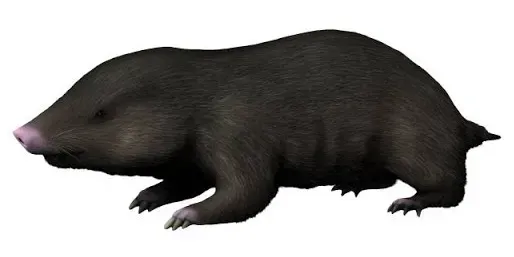
Let’s be real: you are only here reading this article because certain small, furry creatures made it through that catastrophe. During the Mesozoic Era, dinosaurs dominated all habitats on land while mammals remained small, mostly mouse to shrew-sized animals – some paleontologists have speculated they might have been nocturnal to avoid dinosaurs. All that changed with the end-Cretaceous extinction, as mammals survived and took over, and the following Paleogene Period saw the evolution of everything from bats to whales.
Over 93 percent of mammal species became extinct across the Cretaceous–Paleogene boundary, but they also recovered far more quickly than previously thought. Mammals, in contrast to other animals, could eat insects and aquatic plants, which were relatively abundant after the meteor strike, and as the remaining dinosaurs died off, mammals began to flourish. A study suggests that ground-dwelling and semi-arboreal mammals were better able to survive the cataclysm than tree-dwelling mammals, due to the global devastation of forests that followed the Chicxulub asteroid impact. Being small, burrowing, and not picky about food turned out to be the greatest evolutionary advantage in Earth’s history.
Life After the Apocalypse: Recovering a Broken World
The aftermath of the extinction was not an empty, silent world frozen in time. Life, as it always does, pushed back. The K–Pg extinction had a profound effect on the evolution of life on Earth, and the elimination of dominant Cretaceous groups allowed other organisms to take their place, causing a remarkable amount of species diversification during the Paleogene Period. Think of it like a forest fire: devastating in the moment, but followed by an explosion of new growth that would never have happened otherwise.
The recovery of mammal diversity was remarkably rapid; within 300,000 years, local diversity recovered and regional diversity rose to twice Cretaceous levels, driven by increased endemicity, and morphological diversity increased above levels observed in the Cretaceous. Around 100,000 years after the asteroid, a new mammal appeared in Montana and swiftly became common – Purgatorius, with gentle molar cusps for eating fruits and highly mobile ankles for clinging and climbing in trees, was an early member of the primate line, and it, or perhaps another closely related creature, was our ancestor. Let that land for a moment. You can trace a straight line from a small, fruit-eating creature in post-apocalyptic Montana to the person reading these words today.
Conclusion: Coincidence, Inevitability, or Something in Between?
So, was the End-Cretaceous extinction a random cosmic accident or something that was, in some deeper sense, inevitable? I think the honest answer is: both, and neither. Fossil evidence suggests a one-two punch unlike anything in Earth’s history – the asteroid may have slammed into a planet already reeling from the massive, extremely violent eruptions of volcanoes in the Deccan Traps. The conditions for catastrophe were already building. The asteroid was simply the final, irreversible trigger.
Without the end-Cretaceous extinction, we might not be here to learn about it. That single sentence carries the weight of everything. The very disaster that ended the Mesozoic Era is the reason mammals rose, primates evolved, and human intelligence eventually emerged. It is humbling, a little unsettling, and maybe even beautiful in the most brutal way possible. The next time you look up at a clear night sky, remember that one of those distant wandering rocks once reshaped all life on this planet. It makes you wonder – what if it had missed?