There are creatures that exist somewhere between science and legend, and megalodon sits right at that crossroads. For millions of years, this colossal shark ruled warm seas across the globe, and yet everything we know about it fits in a museum display case. Teeth. A few vertebrae. Bite marks carved into ancient whale bones like signatures left by a monster that never bothered hiding.
What makes the megalodon so endlessly fascinating is not just its raw size, though that alone is staggering. It’s the fact that this creature shaped an entire ocean ecosystem and then vanished, leaving behind just enough evidence to keep scientists arguing and the rest of us awake at night. So let’s dive in.
A Body So Big, Scientists Are Still Arguing About It
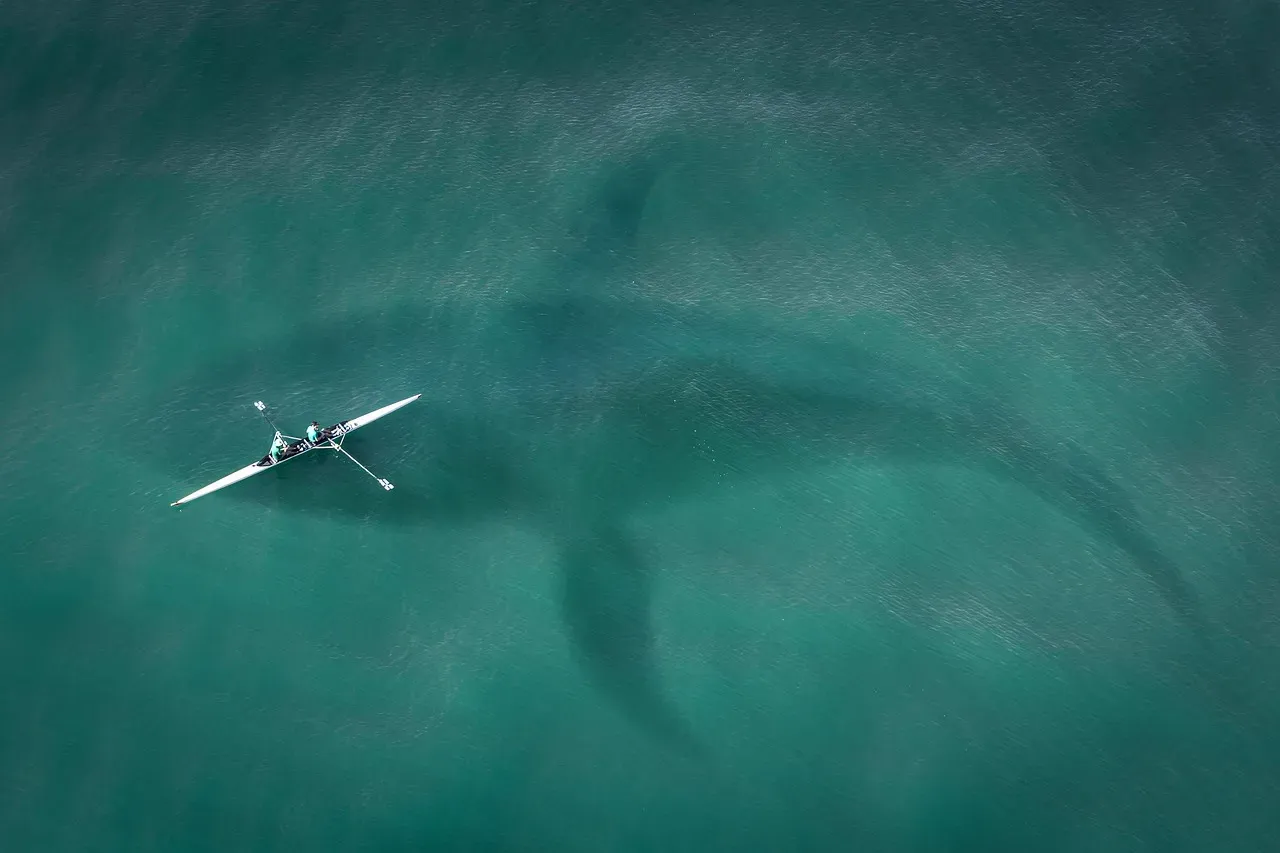
Let’s be real. You’ve probably seen a movie version of megalodon and thought it looked absurd. The truth is somehow even harder to believe. A 2025 study, written by 29 fossil shark experts, found that megalodon may have grown up to 24.3 metres long. That is roughly the length of two school buses parked end to end, sliding silently through the ocean.
The study challenges previous size estimates and presents the possibility that megalodon weighed an estimated 94 tonnes. The research, conducted over the course of 2024 and 2025, used an innovative approach by examining a tail-less vertebral column found in Belgium, measuring eleven meters in length, and comparing it to vertebrae from a larger individual found in Denmark. Think about that. Just the trunk section of this animal was eleven meters long, and that was not even close to the biggest specimen they found.
The Surprising Shape That Rewrote the Books
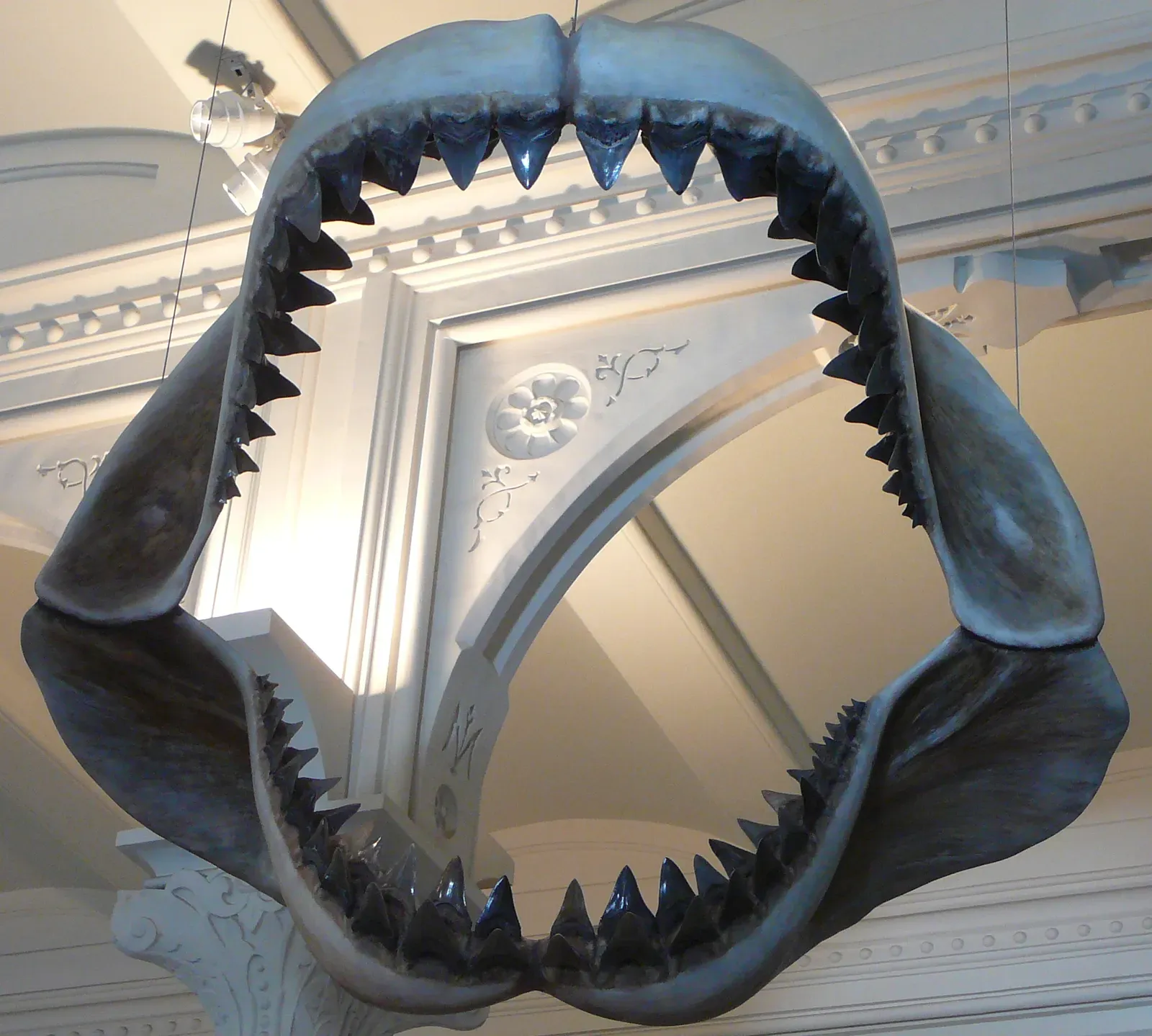
For years, everyone assumed megalodon looked like an enormous great white shark. Stocky, wide, brutish. Turns out, that image was almost certainly wrong. New research suggests it was actually sleeker and more streamlined, similar to a lemon shark. That changes everything we thought we understood about how this animal moved, hunted, and dominated its world.
Based on comparisons of body part proportions, the body form of megalodon likely resembled superficially the modern lemon shark, which has a more slender body than the modern great white shark. Researchers also noticed that modern-day gigantic sharks, such as the whale shark and basking shark, as well as many gigantic aquatic vertebrates like whales, have slender bodies because large stocky bodies are hydrodynamically inefficient for swimming. In contrast, the great white shark with a stocky body cannot be gigantic because of hydrodynamic constraints. Honestly, this is one of the more elegant findings in recent paleontology. Gigantism, it turns out, requires a certain kind of engineering.
Teeth the Size of a Human Hand, and a Jaw to Match
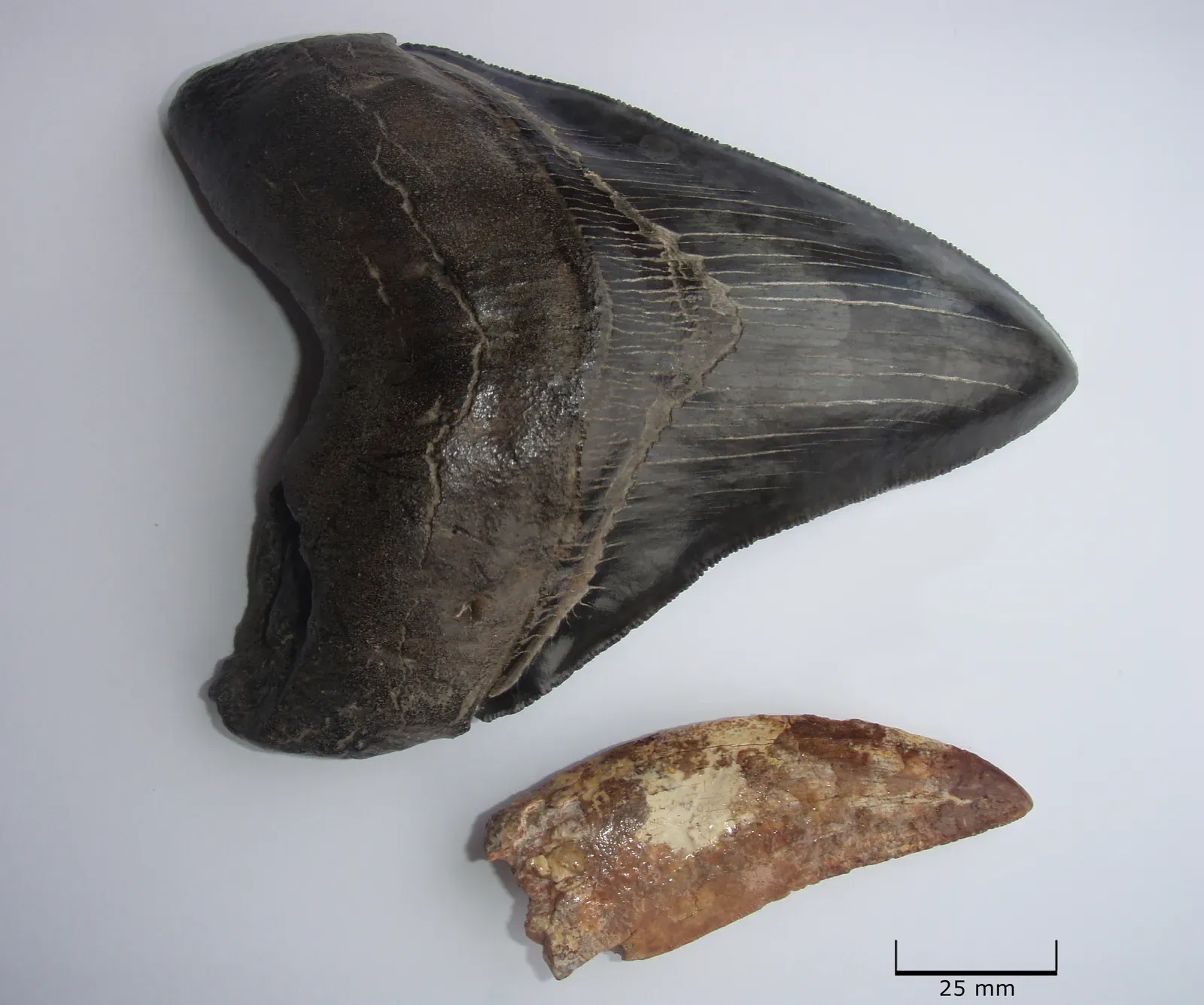
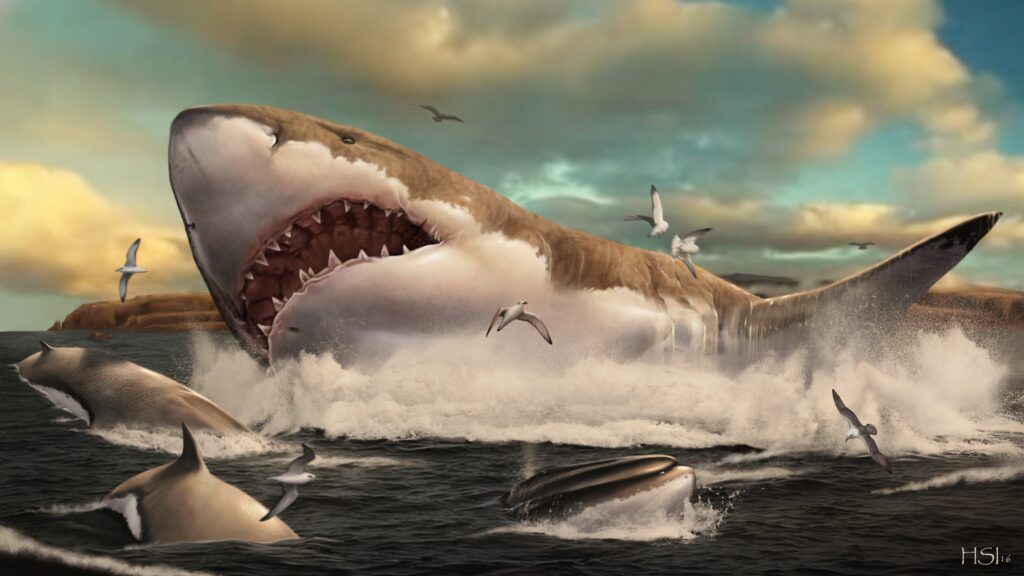
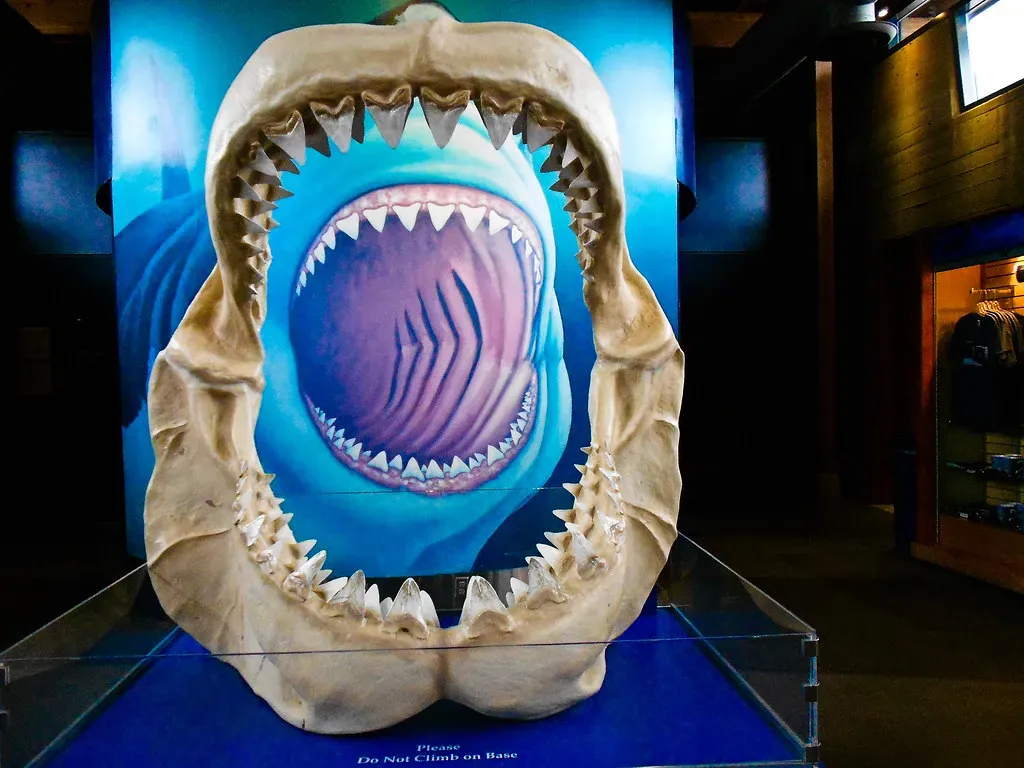
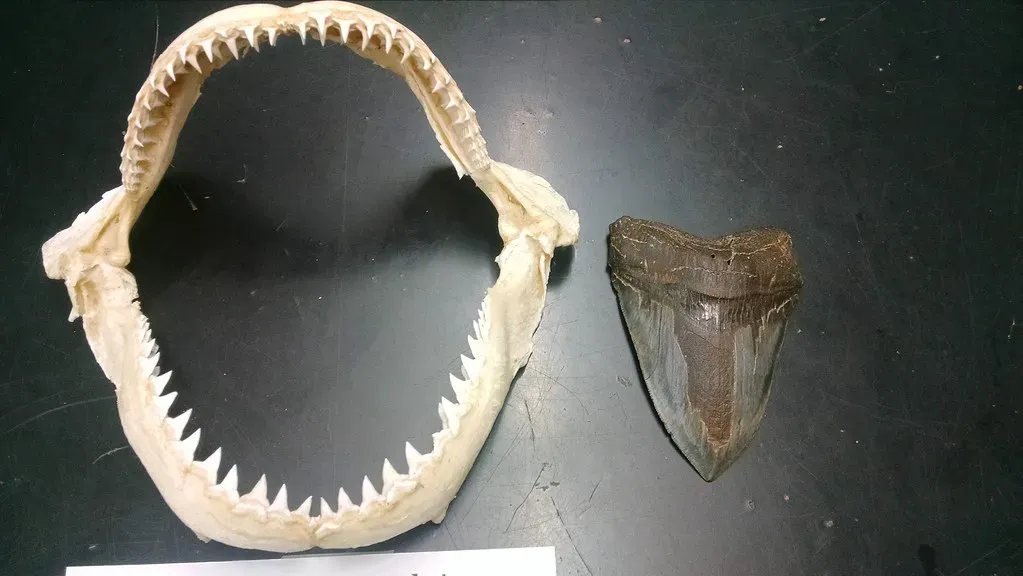
If you want to understand megalodon’s power in a single image, picture this. Megalodon dispatched its prey with a ferocious bite and lethal, serrated teeth that could reach up to 7 inches long, the size of a human hand. These were not just big teeth. They were weapons shaped by millions of years of evolution, serrated perfectly for tearing through flesh and bone.
The megalodon’s jaw was a marvel of prehistoric evolution, possessing powerful jaws that could open wide enough to engulf two adult people side-by-side. It is estimated that their jaw would span 8.8 to 11 feet wide. To make things even more unsettling, scientists calculate that a bite from a megalodon jaw could generate force of up to 40,000 pounds, which would make it the strongest bite in the entire animal kingdom. For context, a T-Rex bite force is estimated at roughly 12,000 pounds. Megalodon wasn’t playing in the same league.
A Diet Far More Complex Than Anyone Guessed
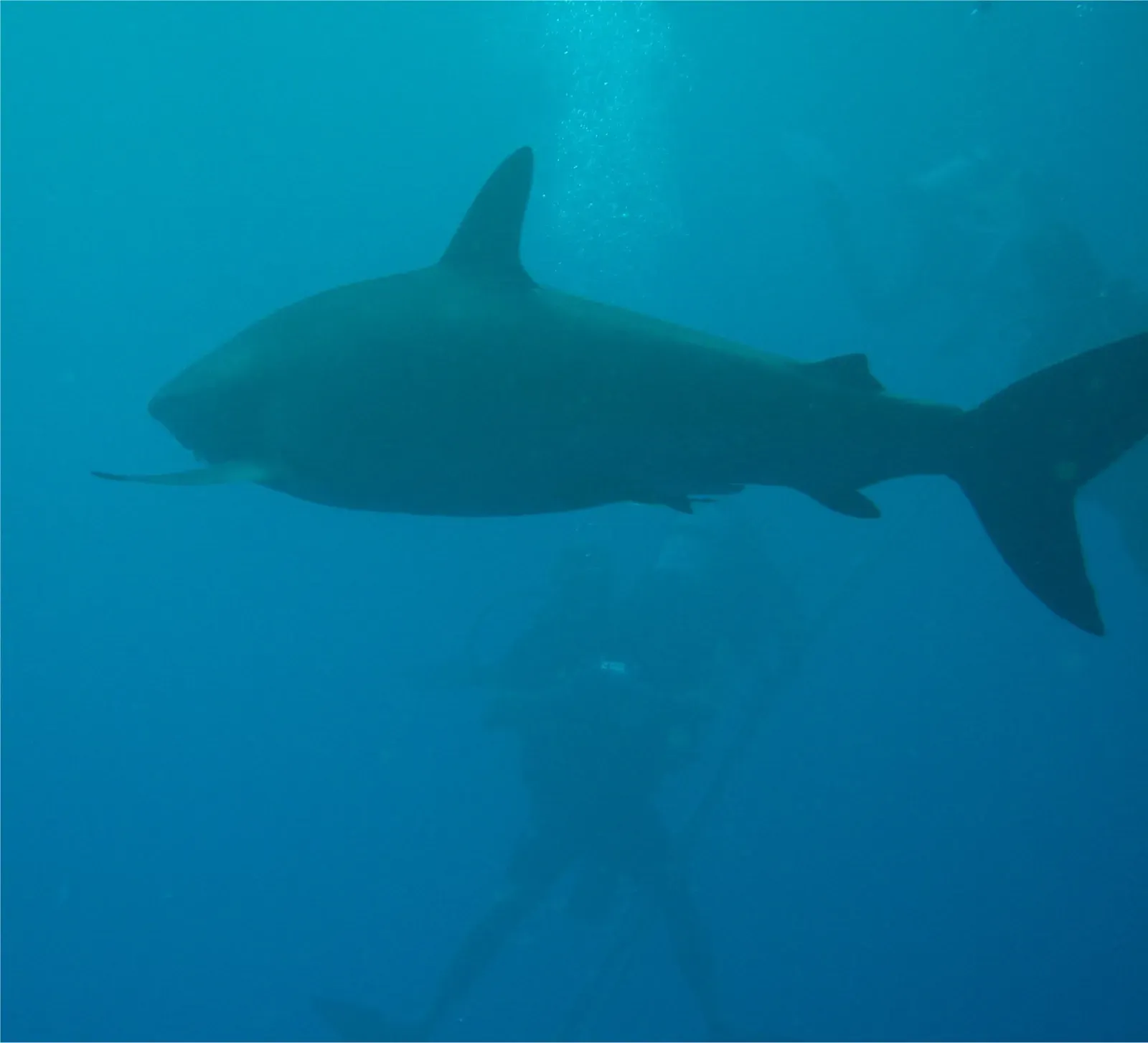
Here’s the thing. Popular culture sold you a very simple story: megalodon ate whales. Full stop. Recent science tells a far richer, more surprising story. Megalodon, once thought to feed mainly on whales, exhibited a broad and flexible diet, consuming both marine mammals and large fish across multiple food chain levels. Zinc isotope analysis of fossil teeth indicates megalodon was an ecologically versatile generalist, with regional and temporal variation in prey.
Direct fossil evidence indicates that megalodon preyed upon many cetacean species, such as dolphins, small whales, sperm whales, bowhead whales, and rorquals. In addition, they also targeted seals, sirenians, and sea turtles. The shark was an opportunist and piscivorous, and it would have also gone after smaller fish and other sharks. Think of it like an apex predator version of a buffet. If it moved and it fit in or near that massive jaw, it was fair game.
A Global Ruler With Surprising Hunting Tactics
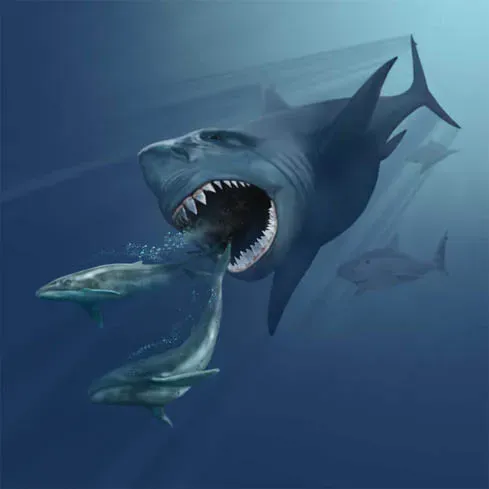
Fossil evidence indicates that megalodon had a cosmopolitan distribution in warm-temperate to tropical marine environments. Its remains have been recovered from every continent except Antarctica, demonstrating a broad ecological tolerance. Teeth and vertebral centra have been found in marine sediments ranging from coastal to deep-water deposits, signifying that the species occupied a wide range of habitats, from continental shelves to open ocean zones. This was not a regional predator. This was a creature that claimed the warm oceans of the entire planet as its territory.
Its hunting style was equally impressive and varied by prey size. It is believed that larger prey, like small whales, were struck in the chest, the robust megalodon teeth able to puncture through their tough ribs. Conversely, they likely rammed smaller prey with their snouts to stun them before biting. Different targets required different strategies. Numerous fossilized flipper bones and tail vertebrae of large whales have been found with megalodon bite marks, which suggests that megalodon would immobilize a large whale before killing and feeding on it. That’s intelligent, calculated predation, not mindless ferocity.
Raising the Young in a World Full of Danger
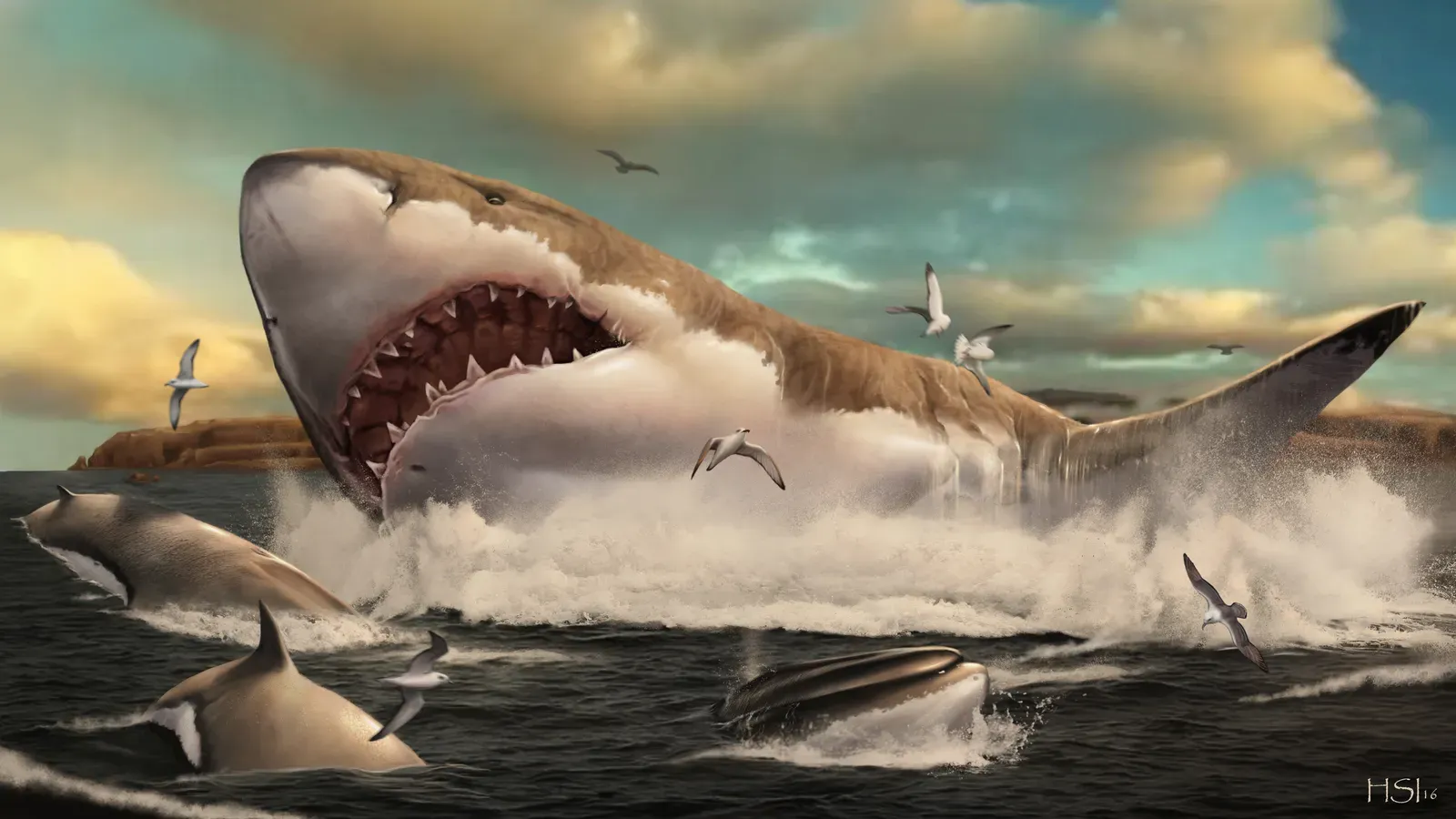
Even the mightiest predator ever to swim an ocean was once a vulnerable infant. Megalodon made use of nursery areas to birth their young, specifically warm-water coastal environments with abundant food and protection from predators. Nursery sites were identified in the Gatún Formation of Panama, the Calvert Formation of Maryland, Banco de Concepción in the Canary Islands, the Bone Valley Formation of Florida, and the Reverté Quarries of Spain. Five confirmed nursery locations scattered across the globe. That tells you how widespread and deliberate this creature’s reproductive strategy really was.
Growth data collected from fossilised vertebrae suggests that newborn megalodons were already formidable creatures, measuring between 3.6 and 3.9 meters in length at birth, and may have competed with adult white sharks for similar food sources. Still, being born large didn’t make them invincible. Infant megalodons were around 3.5 meters at their smallest, and the pups were vulnerable to predation by other shark species, such as the great hammerhead shark and the snaggletooth shark. Even baby megalodons had enemies. The ancient ocean was not a forgiving place.
Why the Greatest Predator on Earth Simply Disappeared
I think this is the part that genuinely haunts people, and rightly so. Something so immense, so dominant, so perfectly built for its world, simply stopped existing. As the shark preferred warmer waters, it is thought that oceanic cooling associated with the onset of the ice ages, coupled with the lowering of sea levels and resulting loss of suitable nursery areas, may have contributed to its decline. A reduction in the diversity of baleen whales and a shift in their distribution toward polar regions may have reduced megalodon’s primary food source.
A team of international researchers investigating the diet of megalodon found that the chemical signature of its diet locked within its fossilised teeth shows that what it was eating overlapped with great white sharks. The study suggests this could have contributed to megalodon dying out around 3.6 million years ago in the Pliocene. It wasn’t one catastrophic event. The combination of a decline in prey species, a changing climate, and increasing competition may have been enough to wipe out the largest ever shark. Even the greatest predator Earth ever produced could not outrun a world that was changing faster than it could adapt.
Conclusion: A Shadow Still Stretching Across Our Oceans
Megalodon is gone. That much is certain. Scientific evidence indicates that the species disappeared around 3.6 million years ago. The fossil record shows no confirmed megalodon teeth younger than that period. No deep-sea footage, no washed-up carcass, no credible sighting has ever changed that conclusion, and none likely ever will.
Yet its legacy refuses to fade quietly. Every serrated tooth pulled from a riverbed or ocean floor is a physical piece of a world that once existed, where something truly extraordinary ruled the seas. Even “supercarnivores” are not immune to extinction, and that sobering truth applies as much today as it did three million years ago. The megalodon’s story is not just a tale of prehistoric power. It is a reminder that dominance, no matter how complete, is always temporary. What do you think would have happened to our oceans if megalodon had survived? Tell us in the comments.