Few films have ever lodged themselves so permanently into the human imagination the way Jurassic Park did when it first roared onto screens in the summer of 1993. Steven Spielberg didn’t just make a movie about dinosaurs – he made you believe they were real, breathing creatures standing right in front of you. The science in the film sounded convincing, almost disturbingly so, and an entire generation walked out of theaters genuinely wondering whether InGen’s amber-based cloning could actually happen someday.
But here’s the thing – the gap between what the film presented and what real science actually says is both fascinating and a little humbling. Some of what Jurassic Park got right is surprisingly impressive. Some of what it got wrong is almost comically off the mark. You are about to find out exactly where the film soared and where it stumbled. Let’s dive in.
The Amber Trap: What You Were Told vs. What Science Actually Says
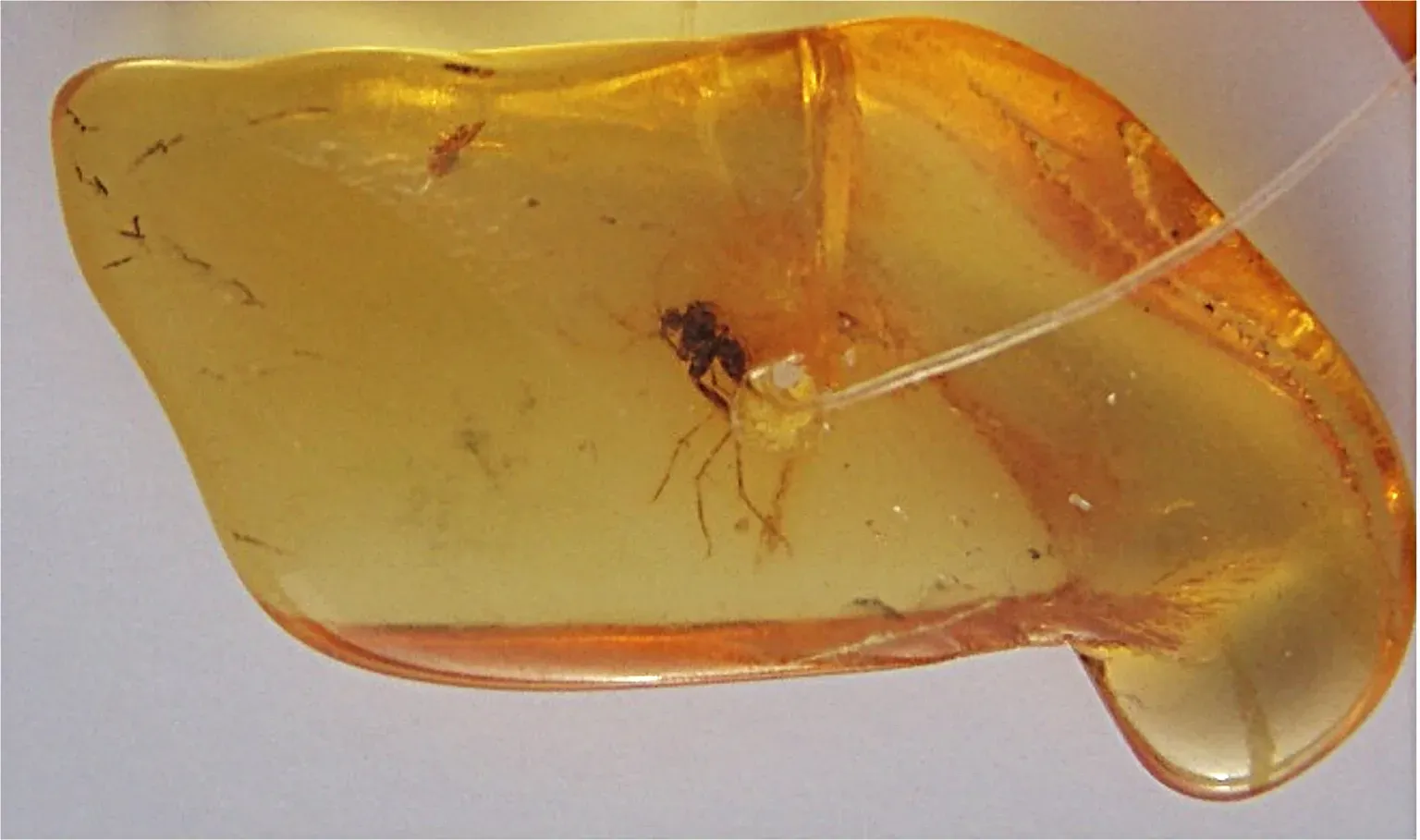
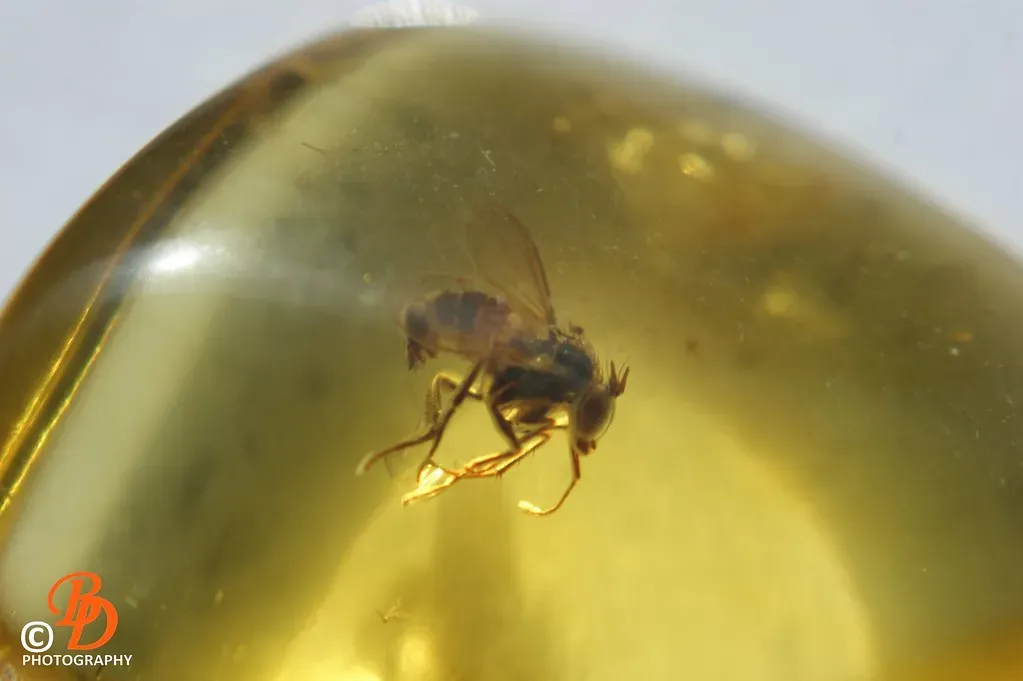
You have almost certainly heard the central premise: a mosquito drinks dinosaur blood millions of years ago, gets stuck in tree resin, hardens into amber, and the DNA inside remains perfectly preserved for scientists to extract. It sounds elegant, almost poetic. The film sold it brilliantly. The film illustrated the concept of dinosaur blood trapped inside hardened fossilized tree resin, which remained viable for analysis and reproduction over millions of years. What a concept. What a shame it doesn’t hold up.
In reality, the blood and tissue of a once-living creature are not able to remain intact for millions of years inside amber, meaning there would be no viable DNA to study. While it might be a nice idea, the preserving properties of amber have their limits, and DNA would not be able to survive even in a partially broken down form. Think of DNA like a detailed blueprint written on rice paper – brilliant while it lasts, but catastrophically fragile over geological timescales. Experiments since the 1990s have failed to recover authenticated DNA from amber or younger but still ancient resins, and for something as old as a dinosaur, DNA just doesn’t last long enough.
The DNA Half-Life Problem: Why 65 Million Years Is Simply Too Long
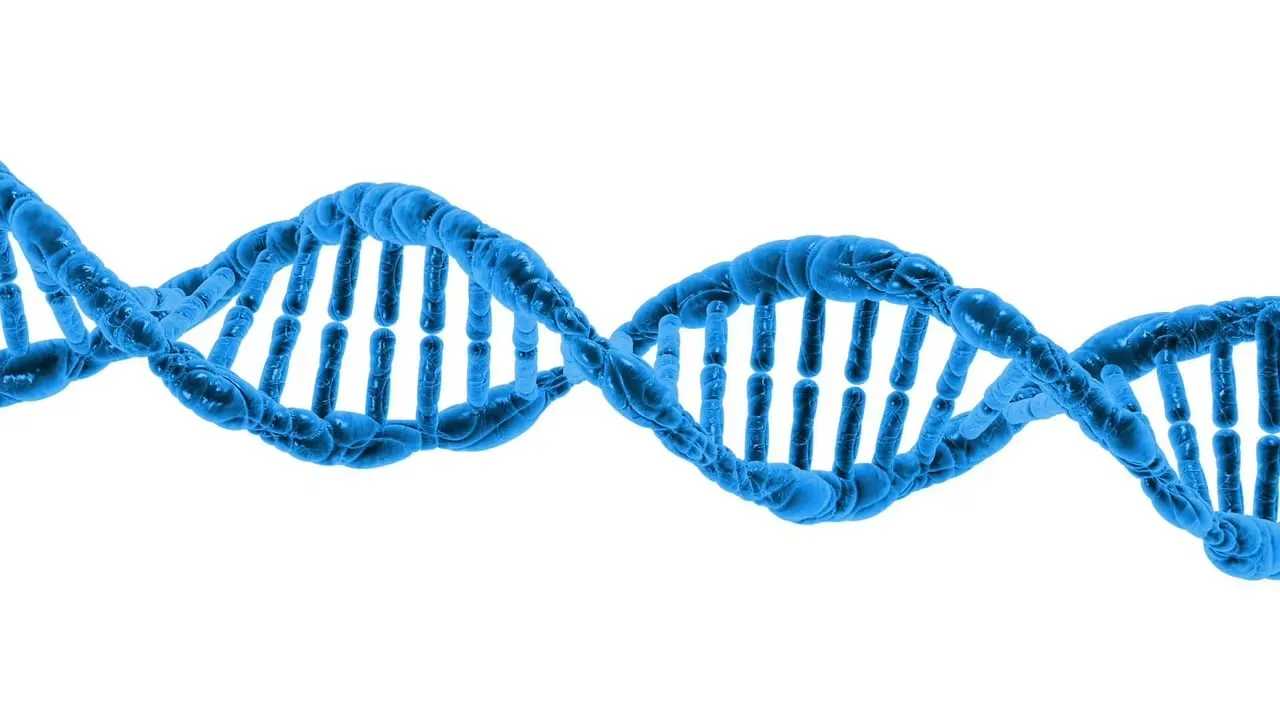
You might wonder how long DNA can actually survive. The answer might surprise you. Up until recently, the oldest DNA that was successfully retrieved was about 500,000 years old. That record has since been broken and now stands at 1.2 million years – but when you are talking about dinosaurs, you are talking about more than sixty million years. That is not a small gap. That is an almost incomprehensible chasm of time, and no amber cocoon is going to bridge it.
DNA breaks down quickly and is highly vulnerable to time. Without the DNA, the science that Jurassic Park suggests is real can never actually be a reality. Paleogeneticists maintain that after 1.5 million years, nucleotide bonds that make up DNA wouldn’t be long enough to extract any meaningful data. So even the most optimistic scientist in the world would have to admit that pulling a complete dinosaur genome from a 65-million-year-old mosquito is not just unlikely – it is essentially impossible with everything we understand about molecular decay today.
Frog DNA Was the Wrong Choice – Here Is What Should Have Been Used
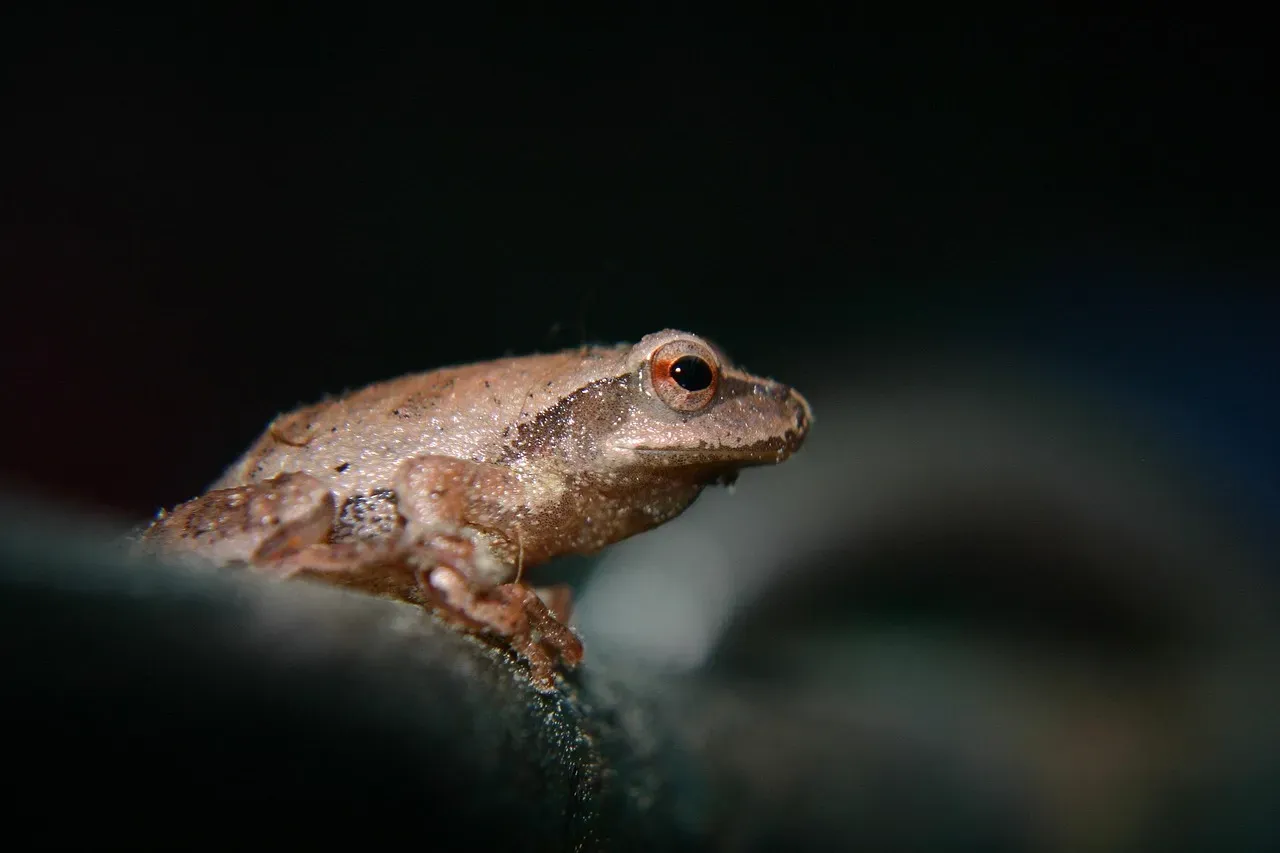
Jurassic Park suggests that scientists found fragmented dinosaur DNA and successfully filled in the genetic holes with frog DNA. Honestly, from a 1990s screenwriting perspective, this was a smart creative move. It explains the self-reproduction plotline beautifully. Scientifically, though, it was a significant swing and a miss. Frogs are amphibians, and dinosaurs were much closer on the evolutionary tree to modern birds and even crocodiles – not to a frog sitting on a lily pad.
Scientists would not use frogs for this purpose. Information from collagen protein analysis from a T. rex bone has taught researchers that the dinosaur’s closest relative appears to be a chicken. If you were trying to do this at all, your best bet would be to look at bird genomes, because birds are thought to be the nearest living relatives of dinosaurs – but even birds are not that close to dinosaurs. There is a certain irony in the fact that the terrifying T. rex strutting across that island was genetically speaking closer to the chicken in your sandwich than to any frog.
The Real Velociraptor: Forget Everything You Think You Know
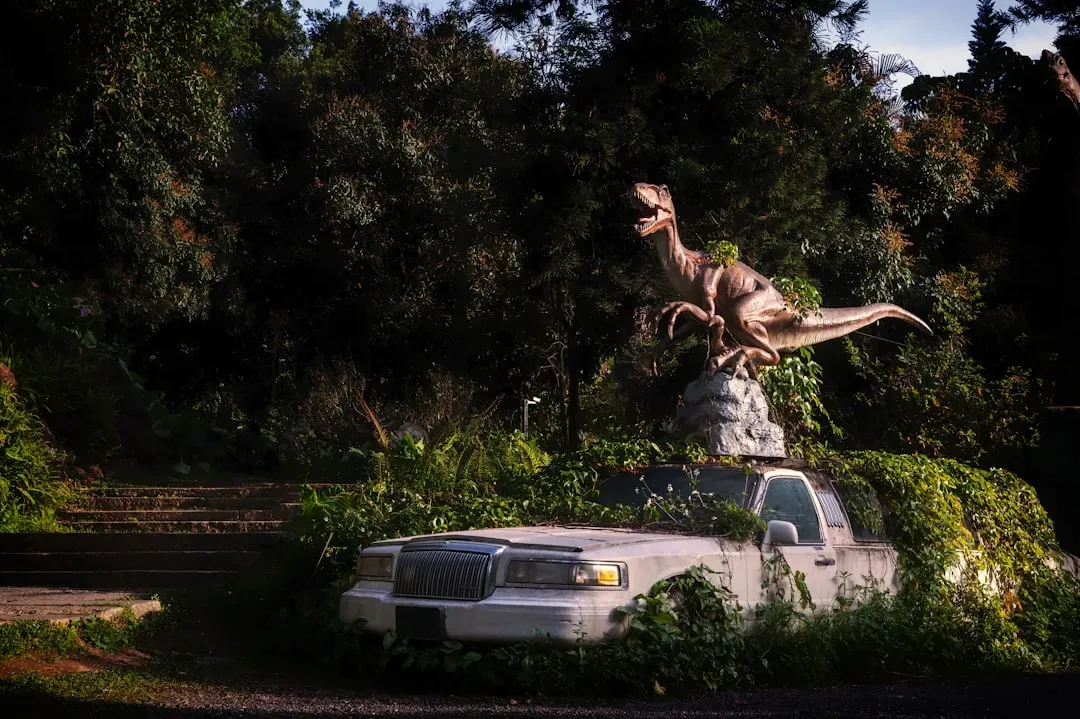
Let’s be real – the raptors in Jurassic Park are terrifying. The kitchen scene alone has kept generations of viewers glancing nervously around refrigerators. You probably picture them as sleek, human-sized killing machines coordinating hunts with almost military-level precision. Here is the hard truth: Velociraptor was roughly the size of a turkey, considerably smaller than the approximately 6-foot-tall and 200-pound reptiles seen in the novels and films. A turkey. Not exactly nightmare fuel, unless you have been to a particularly aggressive petting zoo.
The raptors portrayed in Jurassic Park were actually modeled after the closely related dromaeosaurid Deinonychus. Paleontologists in both the novel and film excavate a skeleton in Montana – far from the central Asian range of Velociraptor but characteristic of the Deinonychus range. Crichton at one point apologetically told Ostrom that he had decided to use the name Velociraptor in place of Deinonychus because the former name was “more dramatic.” You cannot fault the man for his showmanship, honestly.
Where Were the Feathers? The Dinosaur Science the Film Refused to Show You
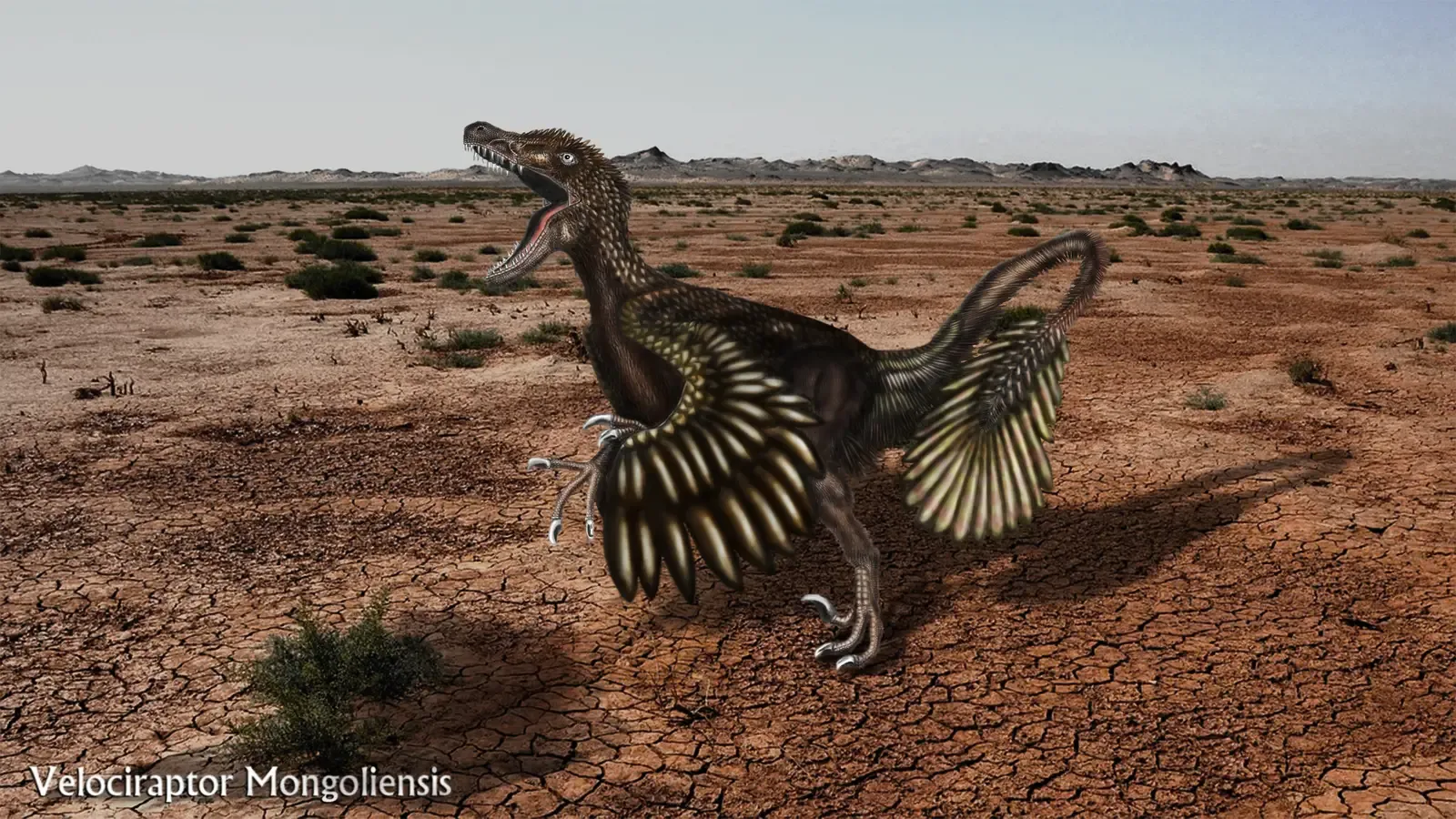
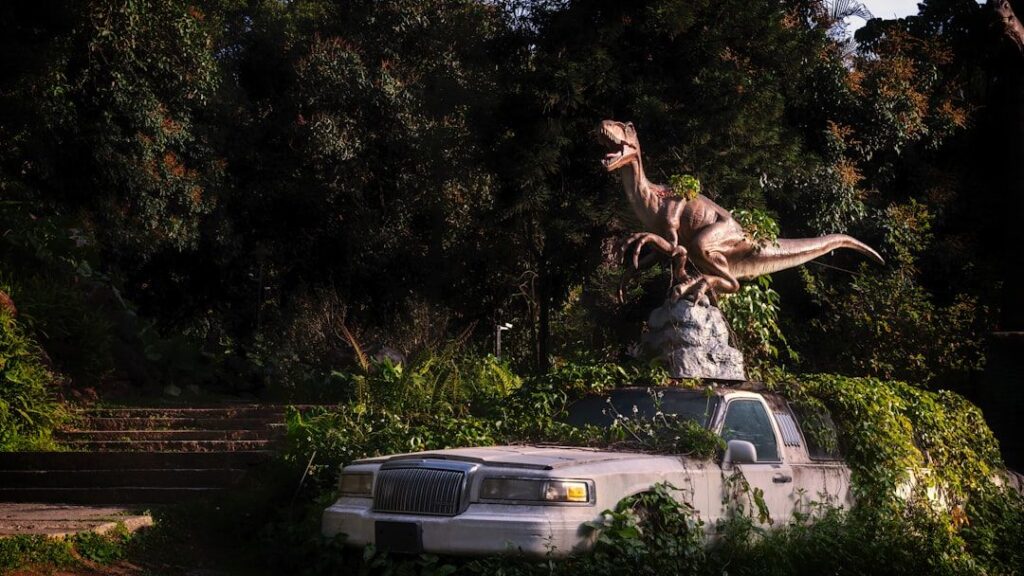
Velociraptors have been misunderstood ever since they were featured in Jurassic Park as giant scaly dinosaurs that hunted in packs and disemboweled prey with sickle-shaped claws. That portrayal got several things wrong. Velociraptors were actually feathered animals. The image of a sleek, scaly raptor hunting through the jungle is cinematic gold – but it is about as scientifically accurate as giving one of them a top hat. We know Velociraptor’s body was covered in feathers as close relatives, including Microraptor and Zhenyuanlong, have been found with preserved feathers.
Jurassic Park and its sequel The Lost World: Jurassic Park were released before the discovery that dromaeosaurs had feathers, so the Velociraptor in both films was depicted as scaled and featherless. The franchise has largely maintained this look ever since, even as science moved on. Jurassic World received criticism for its outdated depiction of featherless Velociraptors, a design choice that was made to maintain consistency with earlier films – with Horner acknowledging that he knew Velociraptor should have feathers and be more colorful, but that the look couldn’t really be changed because everything goes back to the first movie. Continuity beat accuracy. Hollywood being Hollywood.
The T. Rex Vision Myth That Fooled a Generation
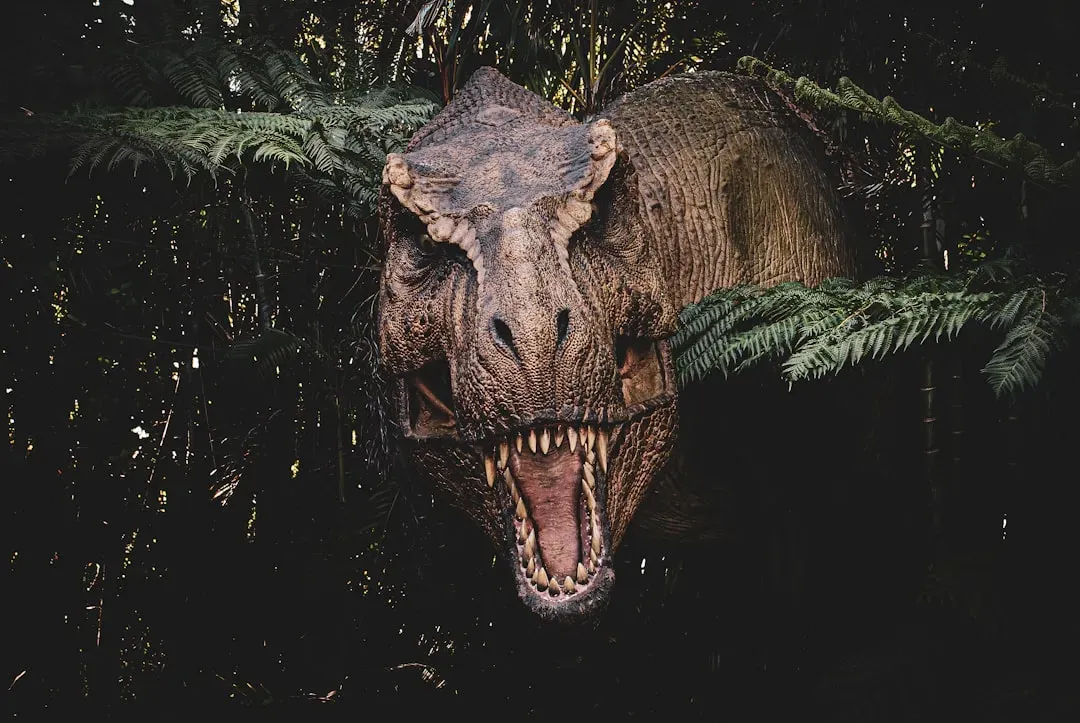
You have probably quoted this line yourself, or at least thought about it during tense moments in your life: “Don’t move. It can’t see us if we don’t move.” It is one of the most iconic moments in cinema history. It is also, according to science, completely wrong. In the novel and its film adaptation, it is stated that the T. rex has vision based on movement, but later studies indicate that the dinosaur had binocular vision, like a bird of prey. In fact, staying perfectly still in front of a real T. rex would have been a tragically bad survival strategy.
A model study by Kent Stevens suggests that T. rex had a binocular range of around 55 degrees, better than that of modern-day hawks and eagles. And it would have only gotten better. Paleontologists know from the fossil record that, over millennia, T. rex’s eyes got larger and its snout got lower and narrower, giving it even clearer sight lines. Even at the time Jurassic Park was made, it wasn’t known for sure whether the giant dinosaur’s vision was based on movement. Because some reptiles are known to exhibit the trait, consultant Jack Horner didn’t object to having Spielberg include it. More recent research suggests, however, that T. rex probably had pretty excellent vision.
The Dilophosaurus: The Film’s Most Outrageous Scientific Liberty
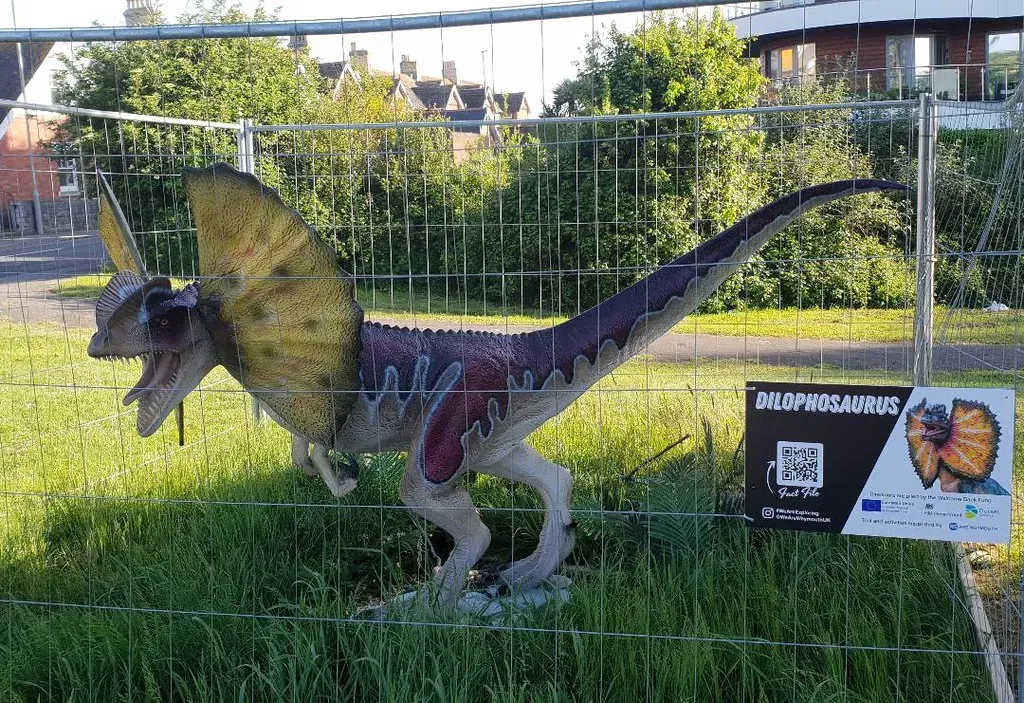
You remember that iconic scene – the frilled neck fan unfurling, the blinding toxic spit, poor Dennis Nedry unable to escape. Thrilling cinema. Absolutely bonkers paleontology. The depiction of Dilophosaurus, the dinosaur that kills Dennis Nedry in the first Jurassic Park, is easily the most egregious scientific inaccuracy in the whole franchise. They didn’t spit. Those neck frills didn’t exist. The real Dilophosaurus was actually a very different animal, and a pretty interesting one even without the Hollywood embellishments.
Since the first of the Jurassic Park films was released, scientists have confirmed that the Dilophosaurus did not spit venom like it does in the film, though it was the largest land animal in the early Jurassic era. No fossil evidence has shown that the Dilophosaurus had any such fan or spit venom, though it did have a ridge of feathers down the back of its head. When Jurassic Park was being made, there was a carnivore whose fossilized tooth was found to have grooves in it like a venomous snake, implying it could at least secrete venom when it bit its prey. So the venom idea wasn’t entirely pulled from thin air – just wildly dramatized and attached to the wrong dinosaur.
What Jurassic Park Actually Got Right – Science Deserves the Credit Too
It would be unfair to spend all our time picking the film apart without acknowledging some genuinely impressive scientific groundwork. Famed paleontologist Jack Horner was used during production to ensure the dinosaurs exhibited scientifically accurate behavior, and Robert T. Bakker, also a paleontologist, gave animators information about the dinosaur’s physical characteristics. The effort was real. The commitment was evident. Although Jurassic Park was certainly more scientifically accurate than most previous attempts at bringing dinosaurs to the big screen, Hollywood did take significant liberties with certain aspects of the animals’ portrayals.
The prestigious science journal Nature published a breathtaking new discovery about ancient DNA extracted from insect amber in June 1993, a single day before another momentous occasion: the release of Jurassic Park. The timing was extraordinary and helped cement the film’s scientific credibility in the public mind. Neither Crichton nor the scientists of the 1980s nor the reading audience of the time had the data for determining the shelf life of paleoDNA – in fact, the popularity of Jurassic Park spurred much of the research that has now made clear how much of a pipe dream recovering ancient DNA really is. In a strange, roundabout way, a film full of scientific inaccuracies actually pushed real science forward. There is something genuinely wonderful about that.
Conclusion
Jurassic Park is not a documentary. It never claimed to be one. What it did do was light a fire under an entire generation’s curiosity about evolution, paleontology, genetics, and the wildly uncomfortable ethical question of whether humans should attempt to reverse extinction. That question, by the way, is more relevant now in 2026 than it has ever been, as real biotech companies are seriously exploring de-extinction programs for more recently lost species.
The science in Jurassic Park is flawed, sometimes hilariously so – but the conversation it started was real, rigorous, and ongoing. You now know that the raptors were closer to turkeys, the T. rex could likely see you perfectly fine whether you moved or not, and no mosquito in amber is handing over usable dinosaur DNA anytime soon. But you also know that the film’s ambition sparked genuine scientific inquiry that continues to reshape our understanding of prehistoric life.
Perhaps the most honest thing the franchise ever said came not from a scientist but from a writer: life finds a way. So, it seems, does curiosity. What part of the science surprised you most – and would you still visit Jurassic Park if you had the chance?