Evolution is one of the most mind-bending stories ever told, and honestly, the further back you look, the stranger it gets. Picture a wolf-sized, hoofed creature wandering a riverbank – and then picture a blue whale. Now try to convince yourself those two things share a family tree. That’s the kind of head-spinning reality this article is about.
From mountainous hornless giants to car-sized millipede ancestors, the ancient world was packed with creatures so bizarre and so different from what they eventually became that scientists themselves argued for decades over how on Earth they were connected. Some of these beasts look nothing like their modern descendants. Some look alarmingly familiar. All of them will change the way you see the animal kingdom today. So let’s dive in.
Ambulocetus: The Walking Whale That Turned Into Today’s Ocean Giants
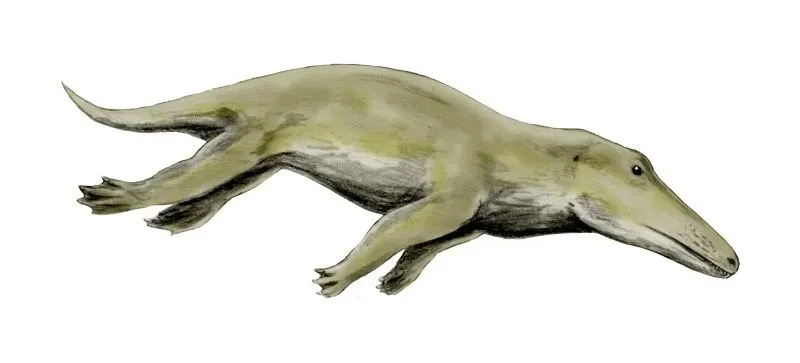
Let’s be real – if someone told you that the blue whale, the largest animal to ever live on this planet, descended from a four-legged mammal that waddled around riverbanks and estuaries some 48 million years ago, you’d probably laugh. Ambulocetus, whose name literally translates from Latin as “walking whale,” is a genus of early semiaquatic cetacean from the Kuldana Formation in Pakistan, dating to roughly 48 or 47 million years ago during the Early Eocene. It looked more like a heavily built crocodile-sized otter than anything you’d associate with the ocean.
Although Ambulocetus was large – about 11 to 12 feet long – and had strong limbs, the animal probably could not walk well on land. It had squat legs that splayed from its body, flipper-like hind feet, and weighed about 400 pounds. On land it probably waddled and pulled its body with its forelimbs, a bit like sea lions do today. In the water, paleontologists expect that Ambulocetus swam by undulating its spine up and down while using its paddle-like hind feet for an extra push – a swim stroke that was a predecessor to the way modern whales flick their broad tail flukes. The connection is undeniable once you see it.
Paraceratherium: The Hornless Rhino That Dwarfed Elephants
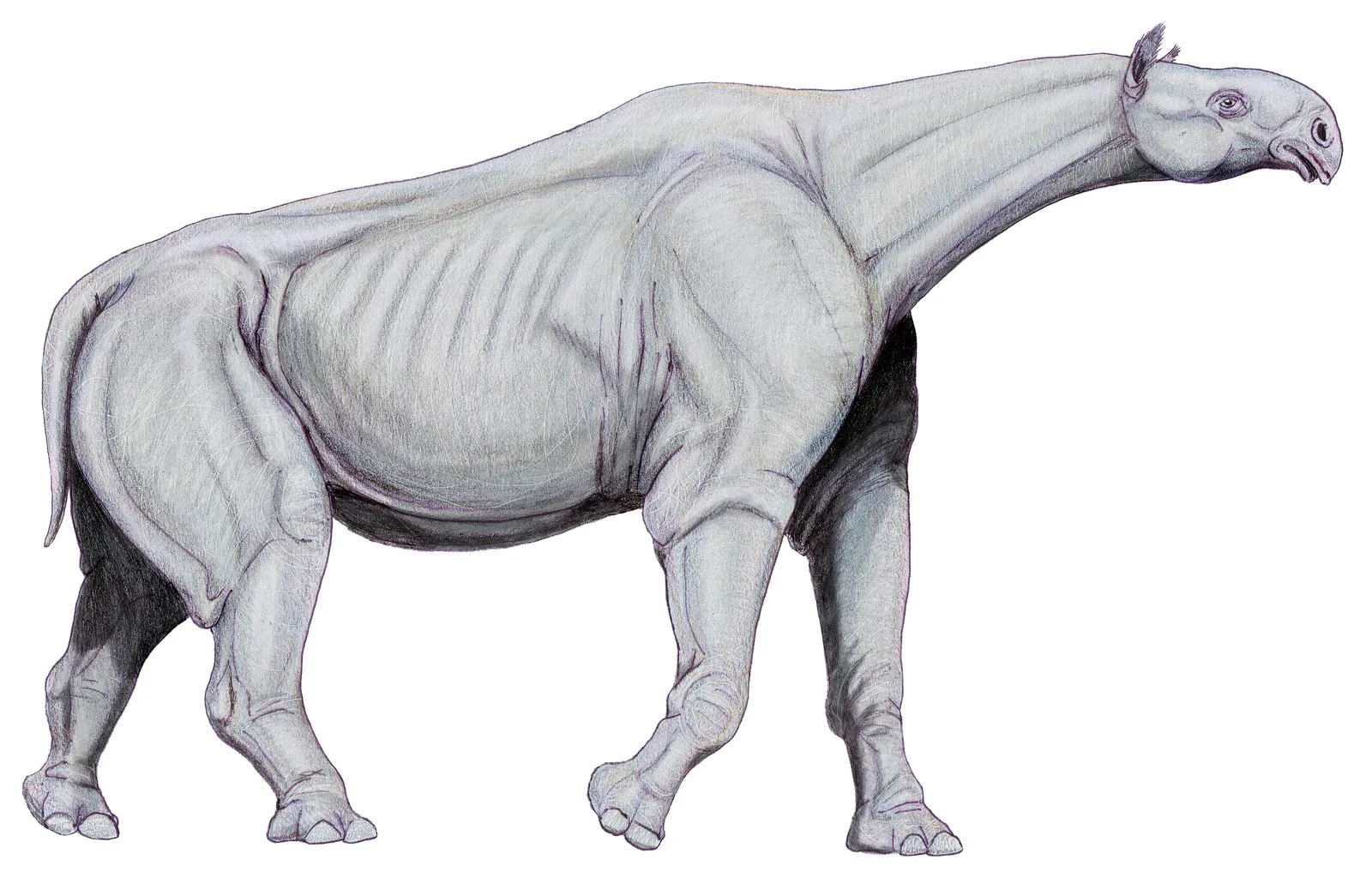
You look at a rhinoceros today and you might think it already looks ancient and imposing. Now imagine that same family tree, but scaled up to something almost incomprehensibly massive. Paraceratherium is one of the largest terrestrial mammals that has ever existed, living from the Early to Late Oligocene epoch, roughly 34 to 23 million years ago. Its shoulder height was about 4.8 metres – nearly 16 feet – and its weight is estimated at about 15 to 20 tonnes. To put that in perspective, that’s roughly the weight of four or five African elephants stacked on the scales.
Paraceratherium is an extinct genus of hornless rhinocerotoids belonging to the family Paraceratheriidae. While a giant rhino without a horn might look odd compared to living species, Paraceratherium belonged to a major and totally extinct group of rhinos, and most fossil rhinos don’t show any evidence of horns at all. The simple, low-crowned teeth indicate that Paraceratherium was a browser with a diet consisting of relatively soft leaves and shrubs – essentially a titanic leaf-eater that used its long, giraffe-like neck to reach the forest canopy. It’s wild to think that today’s compact, horn-bearing rhinos are the descendants of such a colossal creature.
Megatherium: The Giant Ground Sloth Behind Today’s Sleepy Tree-Huggers
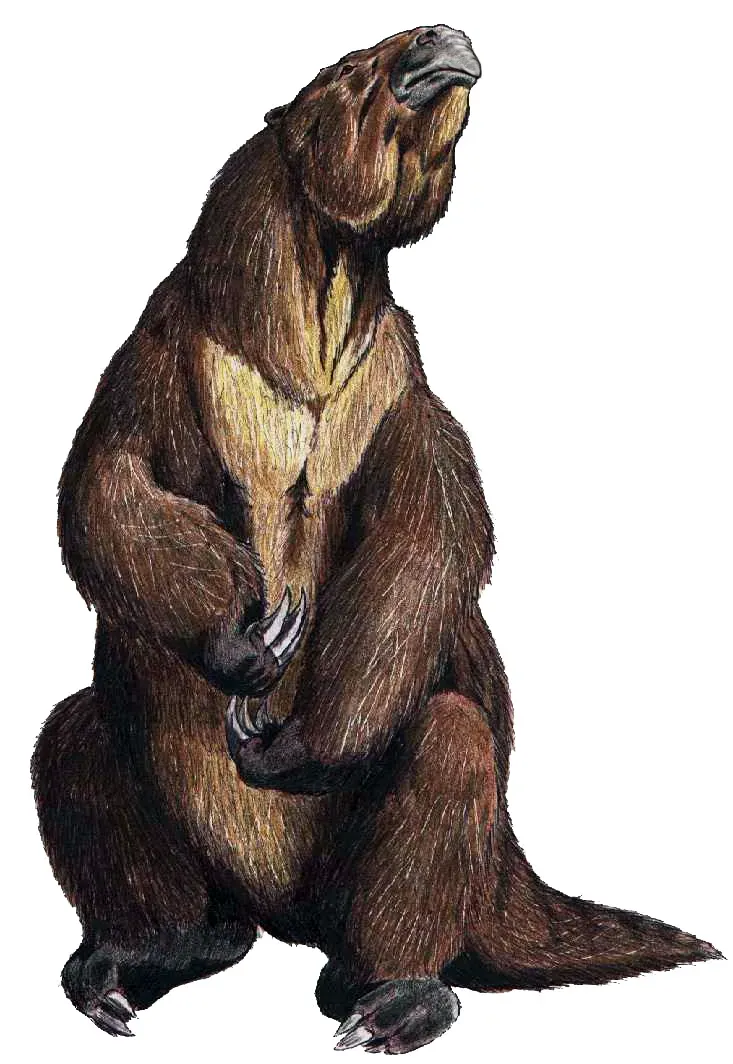
You know the modern sloth – slow, endearing, hanging upside down with that permanently cheerful expression. Now meet its ancient cousin, which was basically the polar opposite of adorable and relaxed. Megatherium was a giant ground sloth, and its scientific name, Megatherium americanum, means “great beast from America.” It was up to ten times larger than any living sloth species, about the size of a modern elephant at around 12 feet tall, and is believed to be the largest-ever mammal capable of standing on two feet.
Prehistoric giant ground sloths once roamed the Americas. To defend themselves, ground sloths had long, sharp claws on the ends of several of their fingers: the 6-metre-long Eremotherium had four such claws, each nearly a foot in length. They also had size on their side – with thick bones and even thicker joints, they could strike with a surprising amount of power. Think of it this way: the gentle, doe-eyed tree sloth you see clinging to a branch is essentially a scaled-down, domesticated version of what was once a walking tank with weapons for hands. Evolution really does have a sense of humor.
Arthropleura: The Car-Sized Millipede Related to Today’s Garden Crawlers
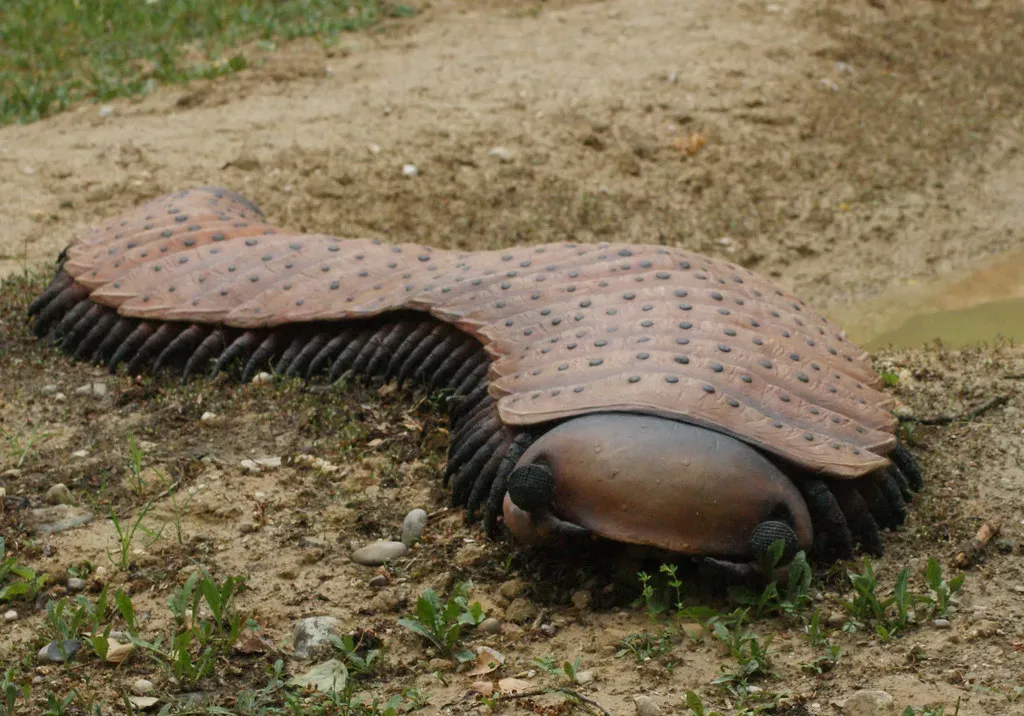
Here’s the thing – most people have a fairly relaxed relationship with millipedes. They’re small, they curl up, they’re harmless. Now imagine one stretching across your entire living room floor and you’ll start to understand why the Carboniferous period was a very different kind of world. At 2.5 metres in length, Arthropleura is widely considered the largest invertebrate to ever walk the Earth. This giant ancestor of today’s millipedes is not an insect but a myriapod – an adjacent yet distinct group of invertebrates, or rather arthropods, that includes millipedes and centipedes.
Arthropleura lived across Europe and North America for more than 50 million years between the Early Carboniferous and the Early Permian. Like many bugs, living and extinct, it was a detritivore that fed on pretty much any rotting biological material it came across, from dead trees to dead animals. Around 300 million years ago, the planet had an unusually high oxygen content in its atmosphere. This allowed insects and other arthropods to get bigger than they’ve ever been, before or since. It’s a sobering thought – if atmospheric oxygen had stayed that high, your morning garden would look very different today.
Entelodon: The Terrifying “Hell Pig” Behind Today’s Hippos and Whales
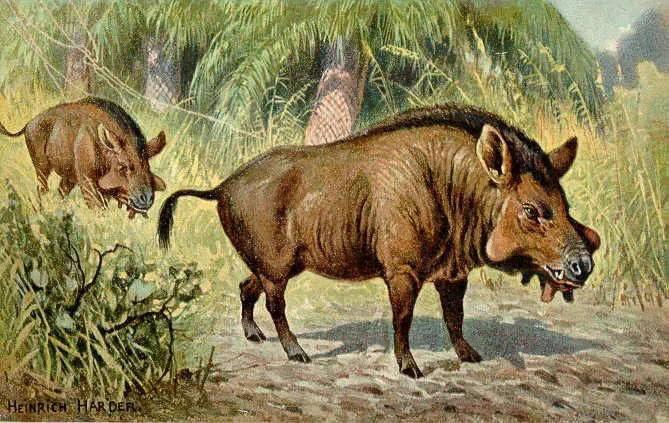
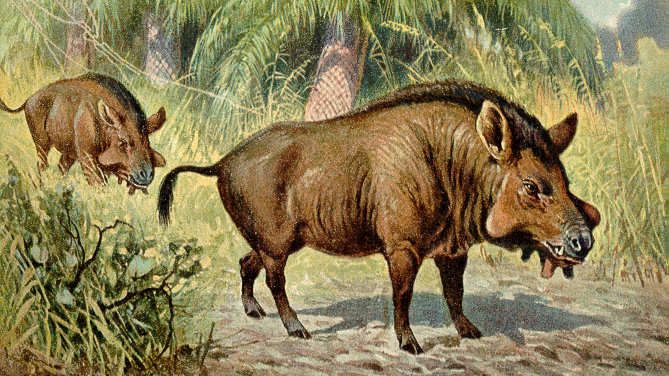
I know it sounds crazy, but some of the most alarming creatures in prehistoric history are closely related to animals you’d never suspect. Entelodon was a hoofed animal that lived in the Paleogene period. Originally thought to be a type of prehistoric pig, it is now believed to be more closely related to whales and hippos. It lived in North America, Europe and Asia from the mid-Paleocene to the early Neogene period. With massive bone-crushing jaws, bony facial protrusions, and a frame roughly the size of a large cow, it earned its nickname “the hell pig” for good reason.
The mesonychids were a group of carnivorous mammals that thrived in the Eocene and died out with the epoch’s conclusion. While these fearsome creatures looked very similar to today’s wolves and hyenas, they actually had hoof-like toes on their feet and are more closely related to modern-day pigs, cows and deer than to any modern carnivores. The evolutionary tree of life is full of these stunning misfires between appearance and actual lineage. Entelodon is perhaps the most dramatic example of an animal that looks like one thing but is, genetically and ancestrally, something else entirely.
Meganeura: The Giant Dragonfly That Ruled the Carboniferous Skies
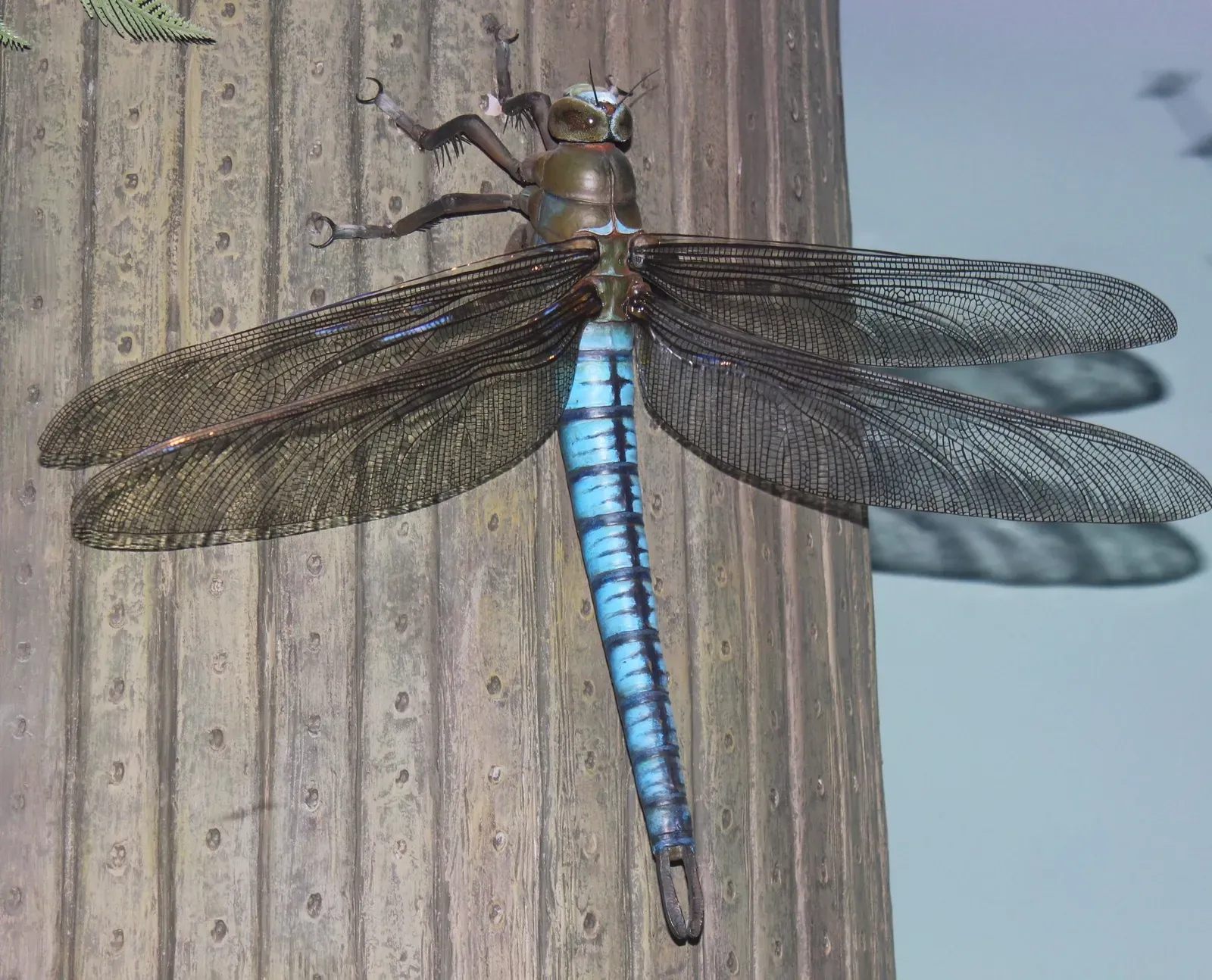
Dragonflies today are remarkable – precise, fast, ancient hunters of the insect world. They’re also small enough to sit on your finger. But their ancestors? Honestly terrifying. With a wingspan measuring more than 70 centimetres, six spindly, spiny legs and huge compound eyes, Meganeura was terrifying enough to scare even the most ardent insect lover. This four-winged monster is widely regarded as the largest flying insect ever, dwarfing its extant dragonfly relatives.
Like many of today’s dragonfly species, though, Meganeura lived in open habitats close to ponds and slow-moving streams. It was likely the apex predator in these clearings, using the spines on its legs as a “flying trap” to ensnare prey ranging from other flying insects to amphibians and even lizard-like vertebrates. Think about that – a flying insect the size of a large hawk, ambushing amphibians from the air. Today’s dragonflies are essentially shrunken, polite echoes of that prehistoric terror, still using the same hunting instincts, just scaled down to something your garden can handle.
Dimetrodon: The Sail-Backed Beast More Closely Related to You Than to Any Dinosaur
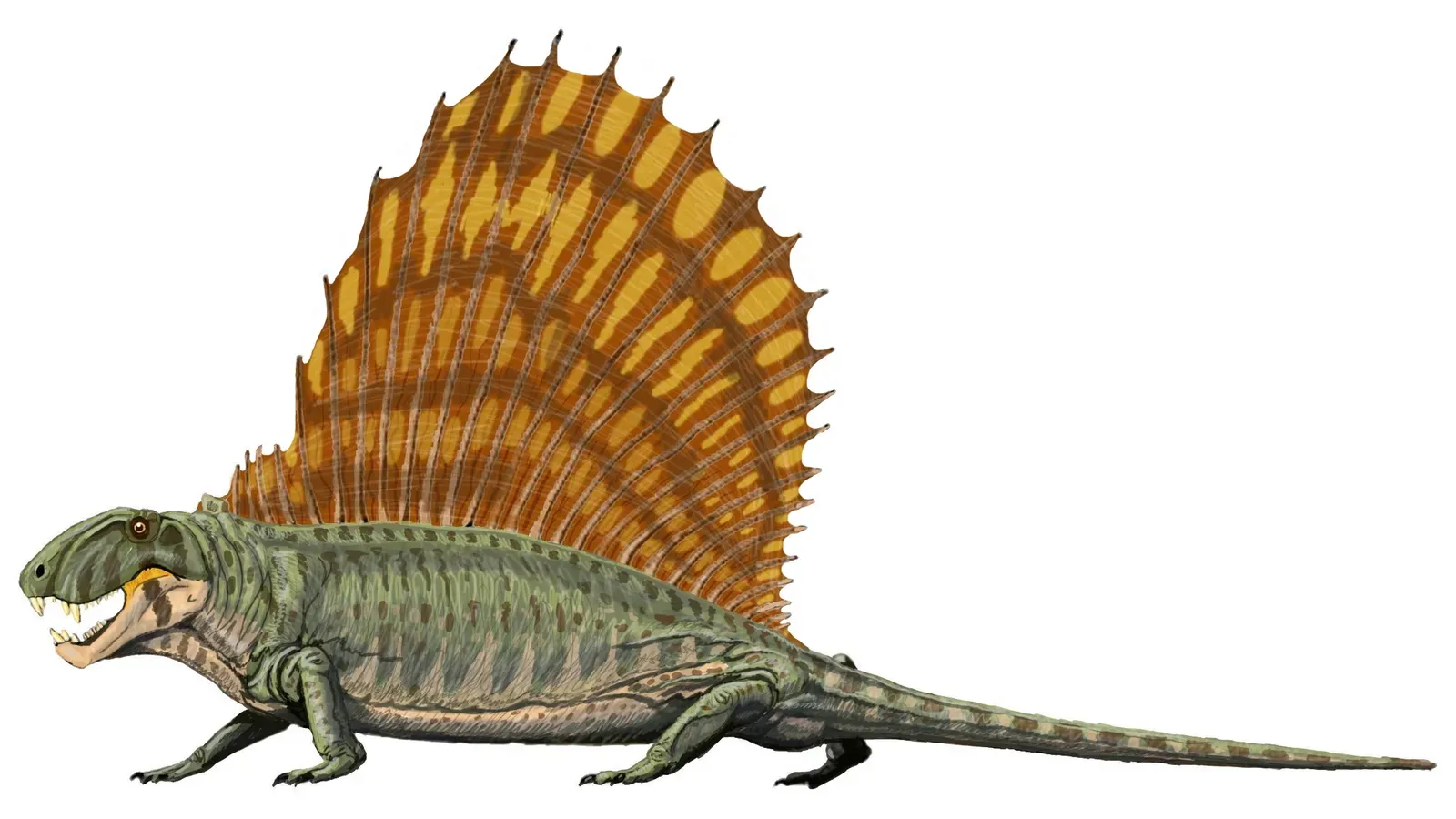
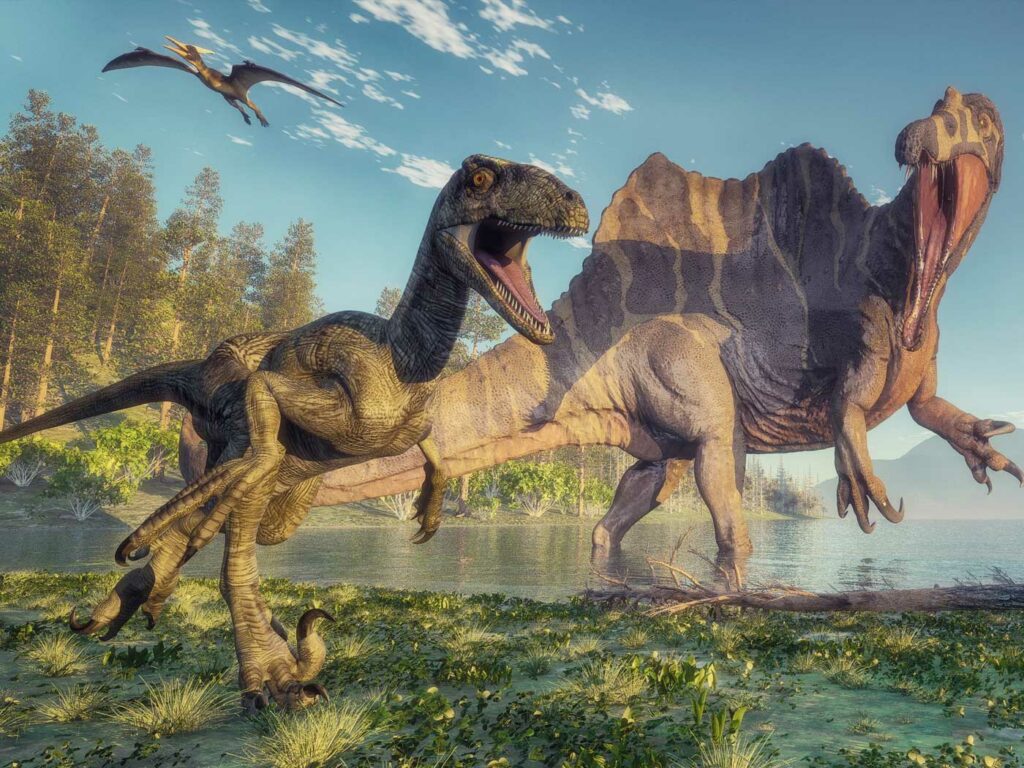
Ask almost anyone and they’ll tell you Dimetrodon was a dinosaur. It has the look: massive, scaly, snarling, with that dramatic sail rising from its back. But here’s the fact that rewrites everything – this scaly, tiger-sized beast wasn’t a dinosaur at all. In fact, it’s more closely related to us than to Spinosaurus. Dimetrodon was a protomammal and had a few features that set it apart from dinosaurs, most of which were found in its skull.
Behind its eyes it had a temporal fenestra, a small hole where lower jaw muscles attach to the skull. Dimetrodon and other protomammals had just one of these; dinosaurs and their ancestors had two. That single structural detail places Dimetrodon firmly on the mammal side of the evolutionary divide. It lived approximately 295 to 272 million years ago, long before the first dinosaur ever set foot on Earth. Recent research involving ancient animals shows how humans and other animals still carry some of those animals’ characteristics today. Studies have shown that the earliest multicellular organisms used biochemical pathways and processes that are still at work in modern organisms. Dimetrodon is perhaps the most vivid example of that living thread connecting us to the deep, strange past.
Conclusion: The Past Is Never Really Gone
Every time you watch a sloth, spot a dragonfly, or catch a rhino documentary, you’re looking at the end result of hundreds of millions of years of radical transformation. These seven ancient beasts remind us that life on Earth is not a straight line – it’s a wild, sprawling, often bizarre web of connections that loops back on itself in the most unexpected ways.
The real takeaway here is humility. Over the eons, animals have changed greatly, and there are many extinct species with living relatives. Many of these lineages have become smaller over time, and they often appear much cuter and more approachable than their prehistoric counterparts. The modern world looks calm and familiar, but underneath it all, you’re sharing the planet with the shrunken, softened, surviving descendants of monsters.
Next time you see a millipede crossing your kitchen floor, maybe give it a slightly more respectful nod. Its ancestor once stretched the length of a car. Which of these ancient relatives surprised you the most? Drop your thoughts in the comments – the answer might say something fascinating about what you thought you knew about evolution.