Long before T. rex ever set a clawed foot on dry ground, Earth’s most spectacular predators were already doing something far more extreme. They were hunting, dominating, and reshaping entire ecosystems at the bottom of ancient seas. It’s a chapter of natural history that gets overshadowed by dinosaurs, which, honestly, is a shame, because the ocean’s pre-dinosaur rulers were stranger, older, and in some ways even more terrifying.
You might picture prehistoric life as a world of thunder lizards and flying reptiles. But the real drama happened underwater, hundreds of millions of years before any dinosaur existed. So buckle up, because what you’re about to read might completely rewire the way you think about life on this planet. Let’s dive in.
Anomalocaris: The World’s First Apex Predator
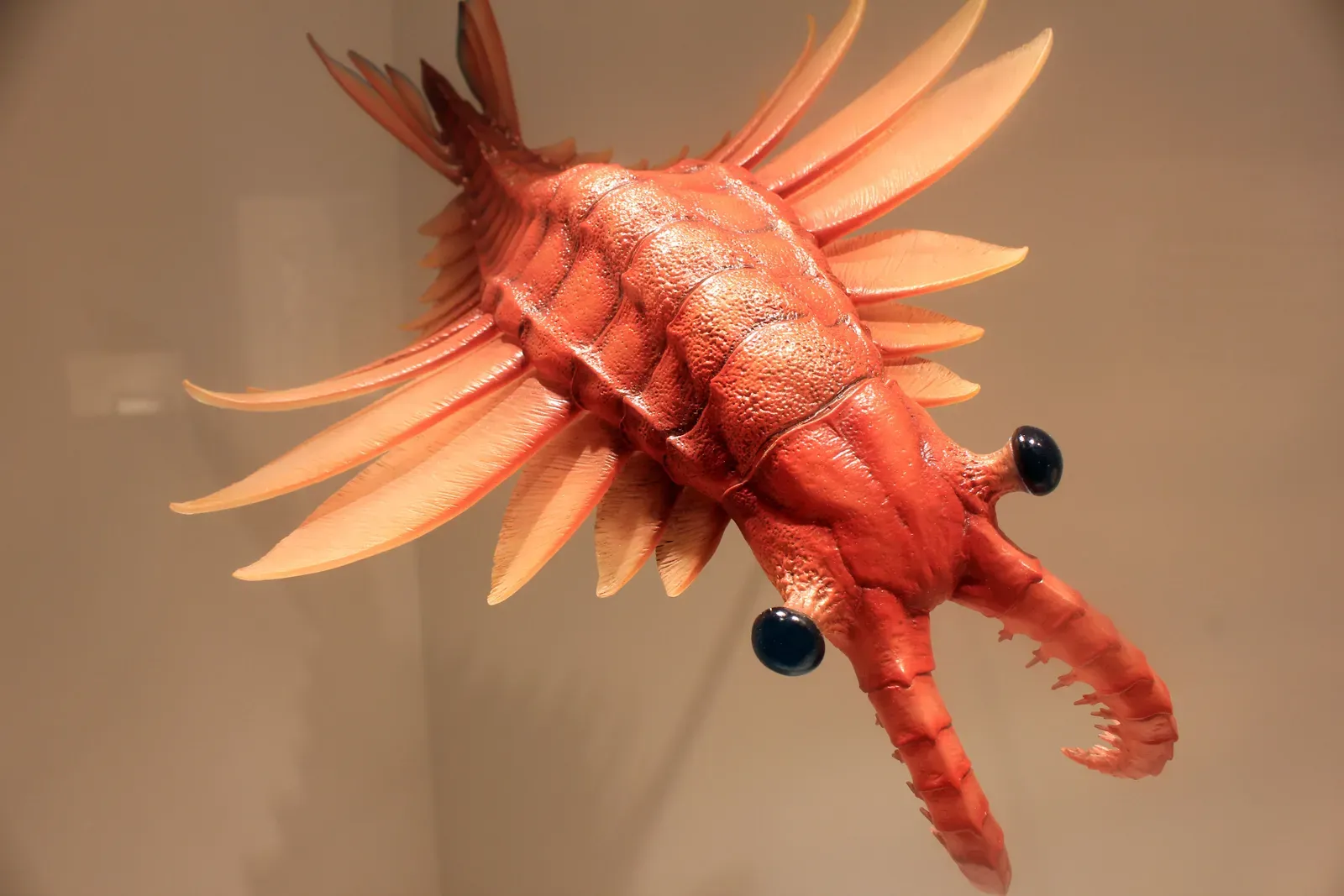
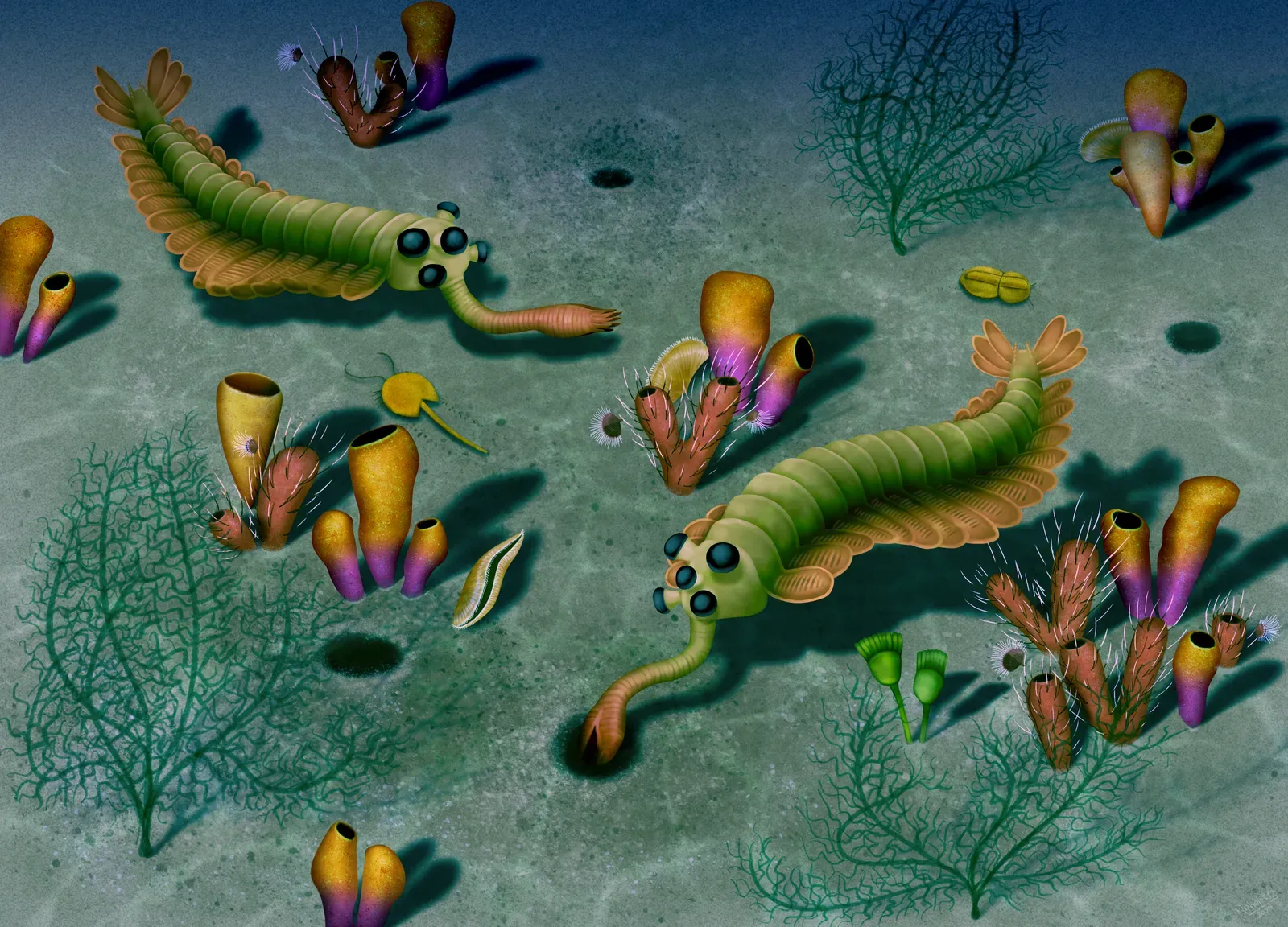
If you think the concept of a top predator is a relatively recent invention in Earth’s history, think again. Living approximately 520 million years ago during the Cambrian Period, Anomalocaris, whose name literally means “abnormal shrimp,” is considered one of the first known apex predators. That is not a typo. Five hundred and twenty million years. To put that into perspective, that’s roughly four times older than the earliest dinosaurs.
Anomalocaris is recognized as one of the earliest known apex predators of the Cambrian seas, featuring a distinctive body plan that included a pair of large, grasping frontal appendages, a circular mouth lined with teeth-like plates, and compound eyes that provided sharp vision for hunting. Scientists believe Anomalocaris may have had some of the largest and most sophisticated compound eyes ever known, with researchers estimating the animal had very sharp sight. Think of it like the great white shark of its era, only weirder looking and somehow even more ancient.
As the first top apex predator, Anomalocaris may have been responsible for an early evolutionary arms race, forcing other animals to develop hard shells for protection. It quite literally changed the course of evolution for everything else living in the sea. Specimens of Anomalocaris have been found worldwide, spanning from Cambrian Stage 3 to the Guzhangian, which tells you this creature wasn’t a regional fluke. It was a global force. Honestly, that detail alone should give you goosebumps.
Eurypterids: The Giant Sea Scorpions That Came Before Everything
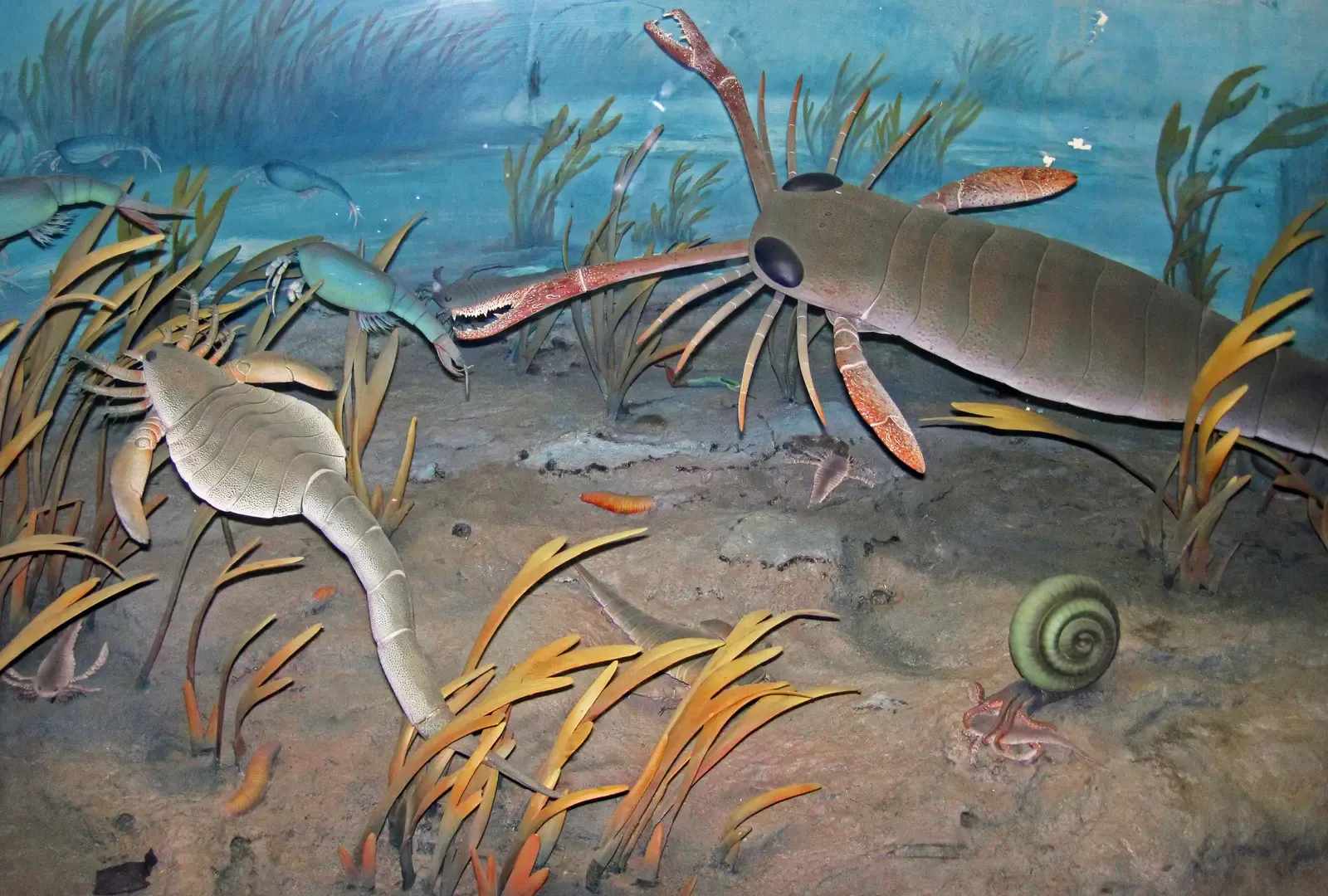
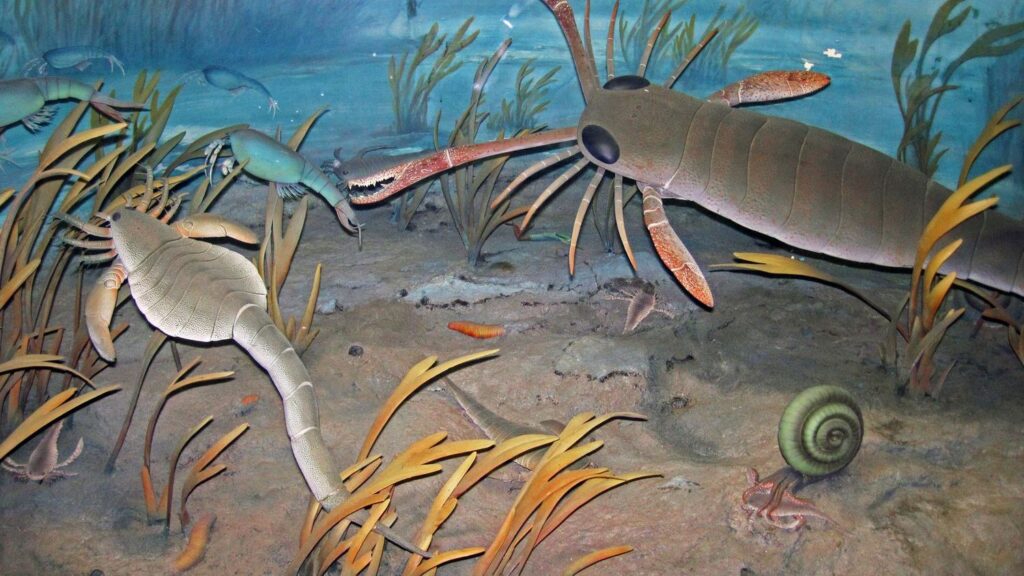
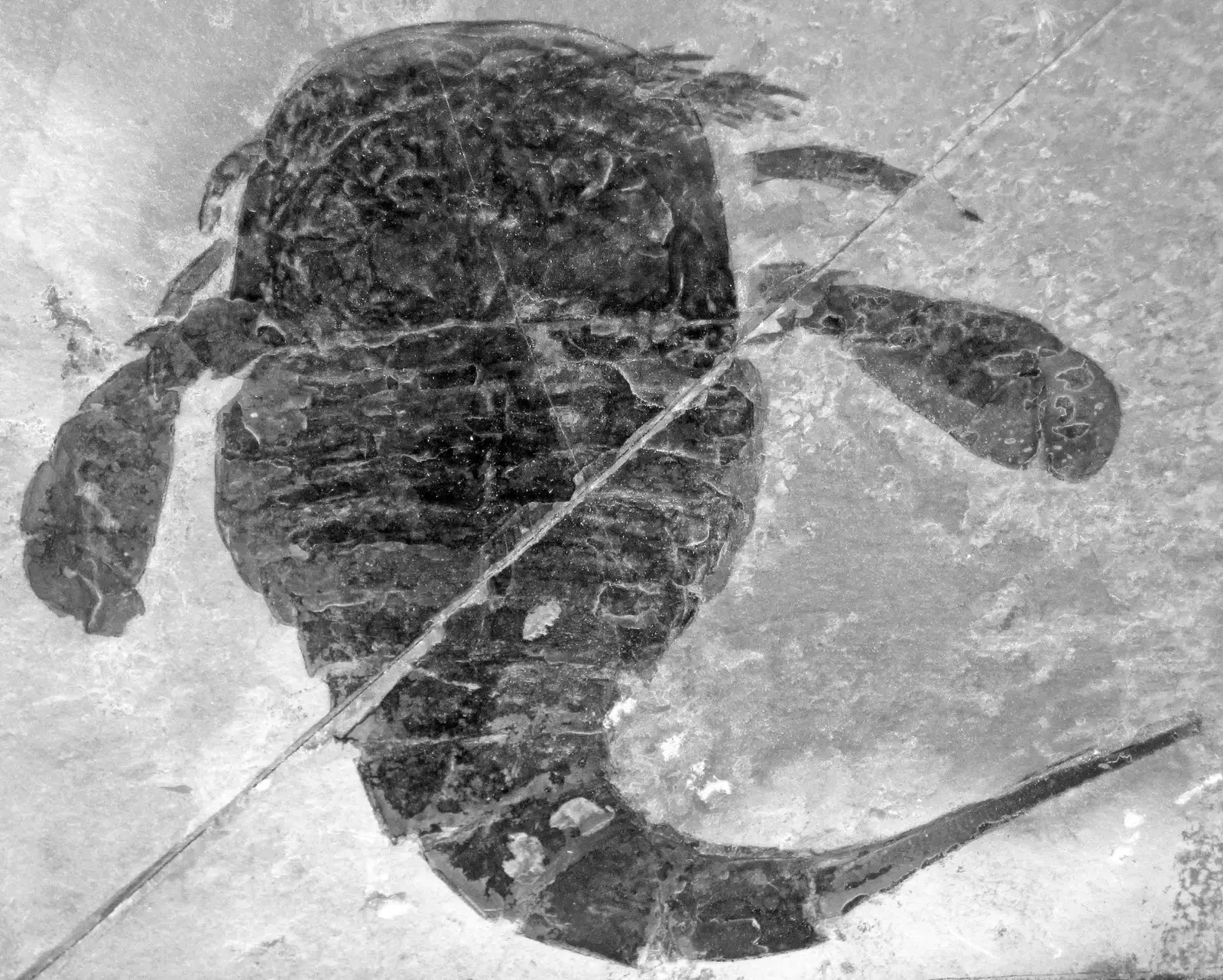
Here’s the thing about eurypterids. They sound like a science fiction villain, and honestly, they kind of were. Eurypterids, often called sea scorpions, were an extinct group of arthropods related to modern spiders and scorpions that lived from about 470 to 252 million years ago. That’s an almost incomprehensible stretch of evolutionary dominance. For comparison, the entire age of dinosaurs lasted roughly 180 million years.
Some species, like Jaekelopterus, grew over 2.5 metres long, wielding huge clawed appendages that could grasp, slash, or pin down prey. Perhaps most surprising of all, eurypterids were close relatives of spiders and scorpions, not crustaceans, meaning that the ancestors of today’s tiny arachnids once produced giants capable of ruling entire ecosystems. Let that sink in for a moment. The same family tree that gave us the little house spider also gave the ancient world a two-and-a-half-metre armored nightmare.
Eurypterids were not merely monsters of their age. They were innovators. They helped pioneer new modes of predation, exploited untapped freshwater environments, and may have influenced the evolutionary arms race that drove early fish to develop stronger armor and jaws. Many eurypterid fossils are found in non-marine or marginal marine deposits, strongly suggesting that freshwater rivers, lakes, and floodplains were important habitats, and these excursions onto land may have been short-lived and purposeful, allowing eurypterids to migrate between water bodies or escape predators. They weren’t just sea monsters. They were boundary-pushers. Remarkable creatures by any measure.
Dunkleosteus: The Armored Guillotine of the Devonian Sea
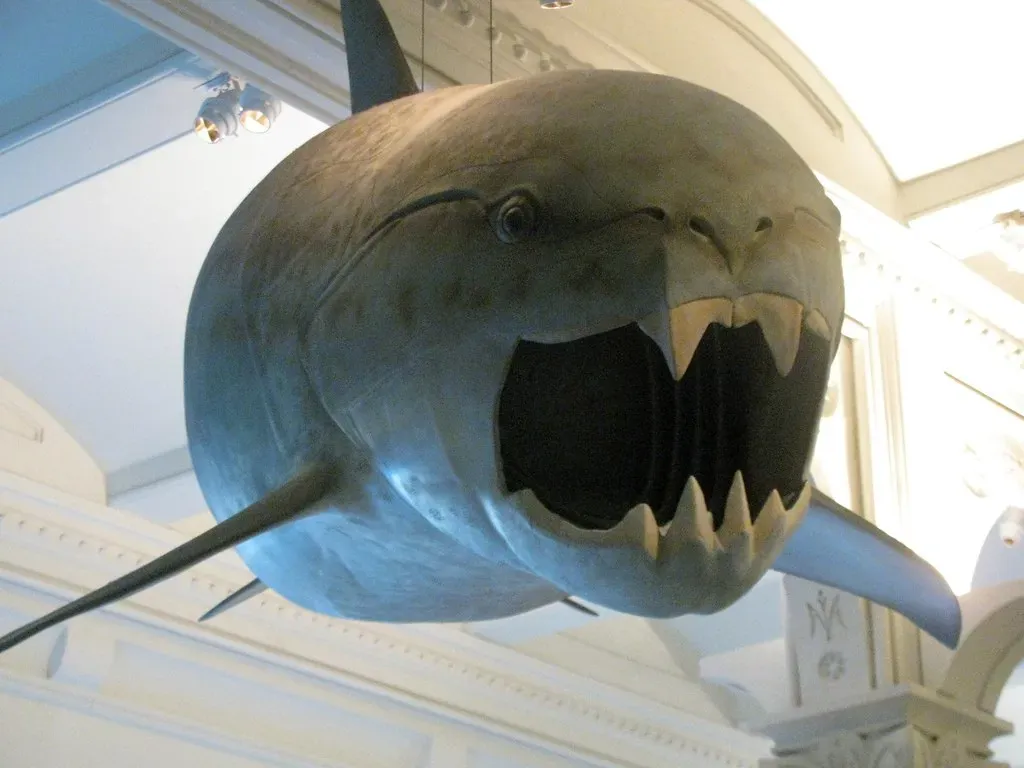
You want a sea monster that feels truly visceral? Meet Dunkleosteus. Dunkleosteus is an extinct genus of large arthrodire fish that existed during the Late Devonian period, about 382 to 358 million years ago. It was a pelagic fish inhabiting open waters, and one of the first vertebrate apex predators of any ecosystem. This was a fish that essentially wore a tank on its face, and it used that tank as a weapon.
Dunkleosteus lacked proper teeth. Instead, it had two pairs of long, bony blades that protruded from its upper and lower jaws, creating a cutting apparatus that crudely resembled a guillotine. At the tip of these blades, Dunkleosteus was capable of biting down at a force of 80,000 psi, more comparable to the bite force of a large alligator. Researchers have estimated that it was capable of opening its jaws in just 20 milliseconds, thanks to some specially designed joints working in tandem with several powerful muscles, and this is lightning fast, fast enough to create a small vacuum just in front of its mouth. The ocean’s version of a snap trap, essentially.
Dunkleosteus lived during the Devonian Period, a time of flourishing marine life. Coral reefs expanded, and jawed fishes diversified. Yet it was also a perilous time, with predators like Dunkleosteus shaping the evolution of marine organisms. Prey species evolved thicker armor or faster swimming techniques to survive, while predators adapted to breach these defenses. Despite its evolutionary success, Dunkleosteus did not survive the end-Devonian mass extinction events. Two major extinction pulses occurred near the close of the Devonian: the Kellwasser Event, followed by the later and more severe Hangenberg Event. Even the mightiest guillotine eventually meets its end.
Helicoprion: The Buzz-Saw Shark That Defied Extinction
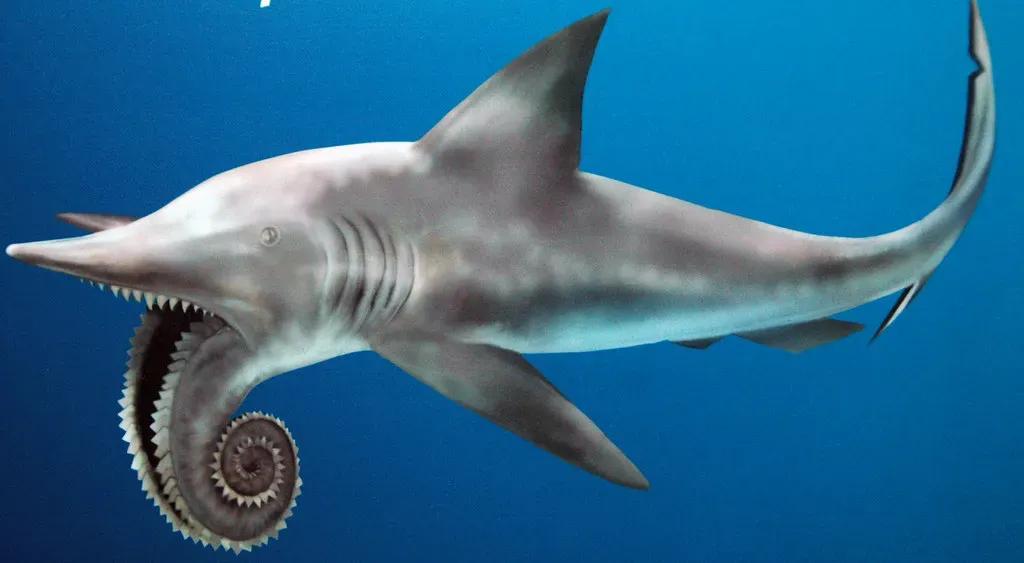
If you had to design the strangest possible weapon for a sea predator, you might land somewhere close to what Helicoprion actually had. Helicoprion is an extinct genus of large shark-like cartilaginous fish that lived from the Early to the Middle Permian, about 290 to 270 million years ago. Its most bizarre feature was a spiral arrangement of teeth that paleontologists spent over a century arguing about, and honestly, you can’t blame them.
Helicoprion is mainly known from its fused, spiral-shaped tooth whorls, which account for almost all documented fossils of the taxon. The position and function of these structures was long debated, but studies based on specimens preserving jaw cartilage indicate that they were positioned in the lower jaw and were specialised for grasping and slicing soft-bodied prey such as cephalopods. Its trademark tooth whorl is a single, continuously growing spiral of teeth, with new teeth forming at the back and older teeth moving forward into the cutting edge. Imagine a living, breathing buzz saw built right into the jaw. It’s one of the most unique evolutionary inventions in the fossil record.
The whorl-toothed Helicoprion originally appeared in the waters of the Late Carboniferous period around 280 million years ago, survived the Permian-Triassic extinction calamity, and ultimately disappeared in the Triassic Period about 225 million years ago. The Permian-Triassic mass catastrophe, which wiped out 70% of all terrestrial species and 90% of any aquatic creatures, managed to spare the Helicoprion. That survival detail is almost as fascinating as the creature itself. Most life on Earth was obliterated, but the buzz-saw fish kept swimming. It’s hard not to respect that kind of resilience.
The Eurypterid Legacy and the Rise of Terrifying Pre-Dinosaur Marine Dynasties
The first sea monster fossils were discovered about 50 years before we found any dinosaurs, and we have known about them for around 250 years. Sea monsters ruled the oceans for over 180 million years, while modern humans have only been around for about 300,000 years. Let that comparison sink in for a second. The reign of ancient sea creatures makes human civilization look like a brief afternoon nap.
In today’s oceans, food chains typically reach six levels, with animals such as great white sharks and orcas as apex predators. However, researchers discovered that ancient marine ecosystems contained a previously unseen seventh level filled with enormous marine reptiles. Some, such as Sachicasaurus and Monquirasaurus, could grow up to and beyond 10 metres long and are known as hyper-apex predators. The ancient ocean wasn’t just competitive. It operated on a completely different scale of brutality than anything you see today.
The extinction event that devastated ancient marine life was the Permian-Triassic extinction, also known as “The Great Dying,” which wiped out 96% of all ocean dwellers. Other jawed, non-armoured fish, such as sharks and bony fish, were less strongly affected by mass extinctions. They diversified post-extinction, filled the niches left by the ancient armored fish, and ultimately went on to establish the ecosystems we recognise in our oceans today. The monsters vanished, and in their wake came the ancestors of everything swimming in the sea right now.
Conclusion: The Ocean Had Monsters Long Before the Land Did
There is something deeply humbling about all of this. The story of life on Earth is far older, stranger, and more dramatic than most of us were ever taught in school. Before the first dinosaur took a single step on solid ground, the oceans had already hosted hundreds of millions of years of arms races, evolutionary experiments, mass extinctions, and jaw-dropping predators. Anomalocaris stalked Cambrian seas with compound eyes sharper than almost anything alive today. Eurypterids ruled freshwater and saltwater alike for over 200 million years. Dunkleosteus bit through armor like a guillotine. Helicoprion survived one of the worst extinction events in Earth’s history with a buzz saw in its mouth.
I think the real takeaway here is that the ocean has always been the original proving ground for life on this planet. It shaped predators, drove evolution, reset ecosystems, and kept on going through calamity after calamity. Every shark, every orca, every creature swimming in the sea today is, in some way, a distant heir to these ancient monsters. Their stories are written in rock and fossil, waiting for anyone curious enough to look. So the next time you stand at the shoreline and stare out at the water, just remember: what swam there before was far more extraordinary than anything you can imagine. What would you have thought if you’d seen it?