
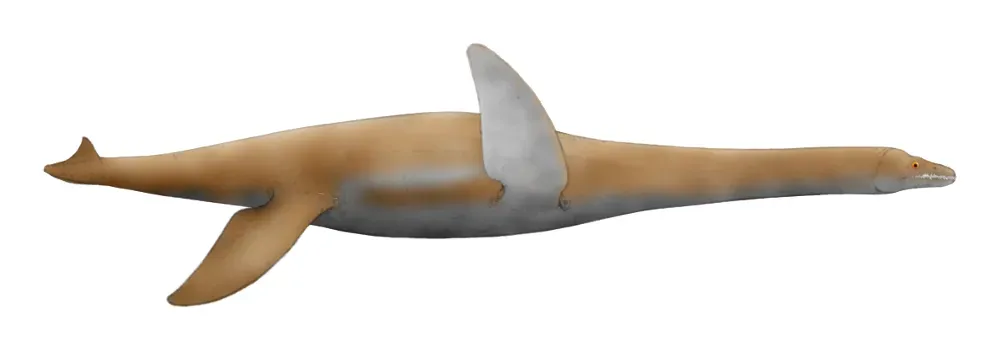
When most people think about the age of reptiles, their minds leap to towering dinosaurs stomping across sun-baked plains. But beneath the surface of ancient Mesozoic seas, a whole other world was playing out – one that was arguably just as dramatic, just as fierce, and honestly even more mysterious. Three groups of creatures dominated those primordial waters: ichthyosaurs, plesiosaurs, and mosasaurs.
These were not simple sea lizards lazily drifting through warm shallows. They were sophisticated, powerful, and in many ways surprisingly modern animals. What science has uncovered about them over the past few decades is nothing short of stunning. Let’s dive in.
Lords of the Ancient Ocean: Who Were They, Really?
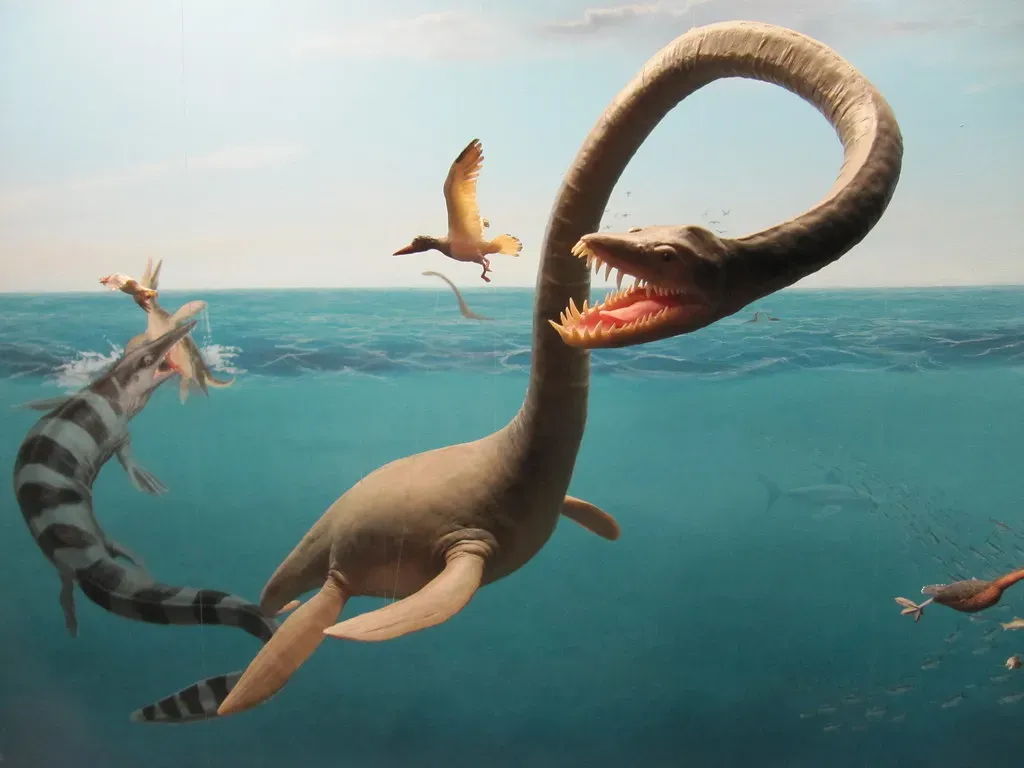
Here’s the thing that trips up most people: ichthyosaurs, plesiosaurs, and mosasaurs were not dinosaurs. Like other ancient marine reptiles, the genera in Ichthyosauria are not part of the clade Dinosauria. They were a completely separate lineage of reptiles that conquered the seas independently, which makes their story even more remarkable.
During the Mesozoic era, about ten clades of reptiles underwent a dramatic return to aquatic life, colonizing most marine environments and exhibiting great systematic diversity. Many were among the greatest marine predators of their time, and ichthyosaurs, plesiosaurs, and mosasaurs were iconic clades of large Mesozoic giants that mirrored terrestrial dinosaurs in their ecological dominance. Think of them as the wolves, big cats, and bears of the ancient ocean – different in form, but each ruling their own niche with deadly precision.
Ichthyosaurs: The Dolphins That Weren’t Dolphins
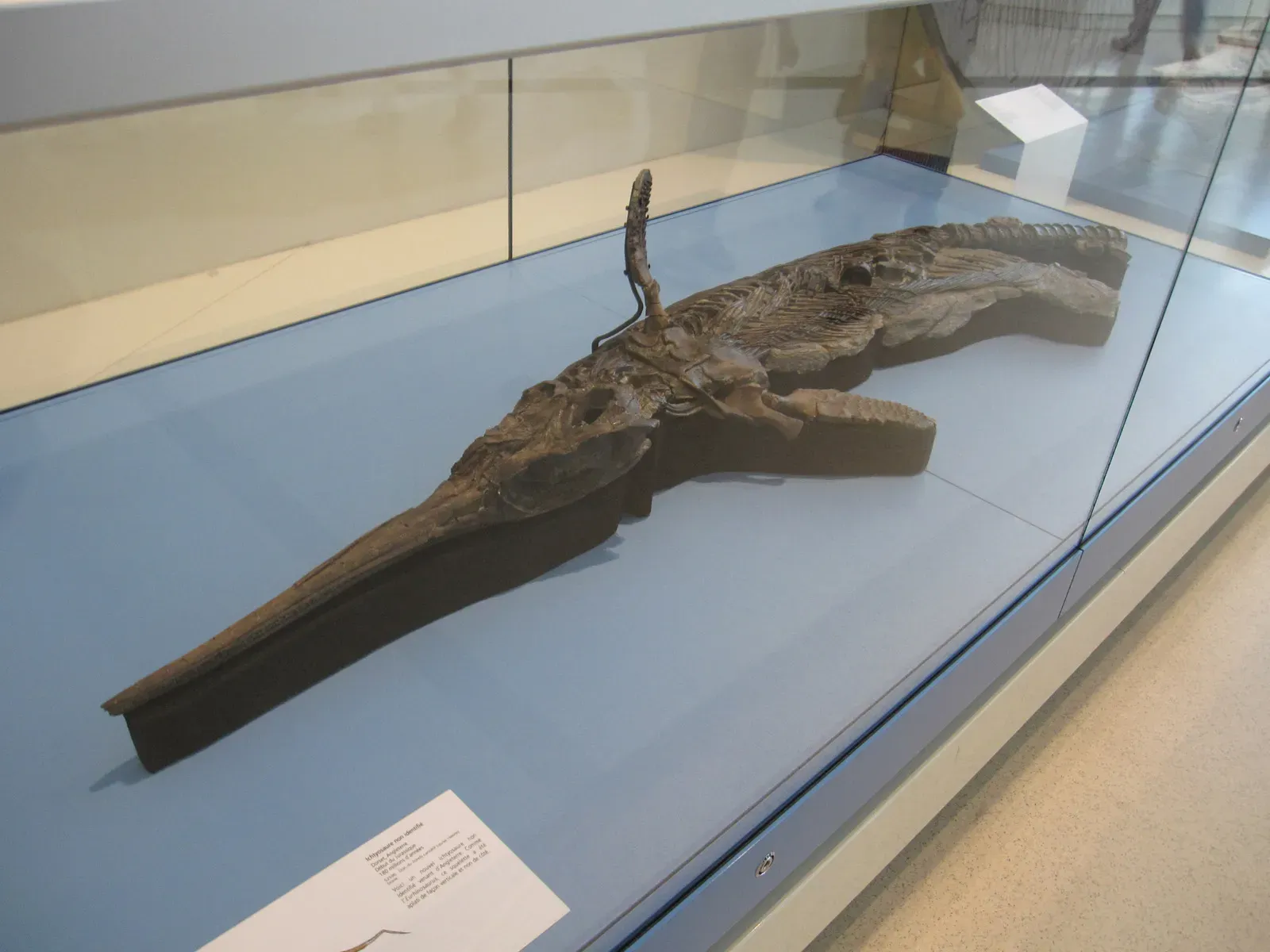
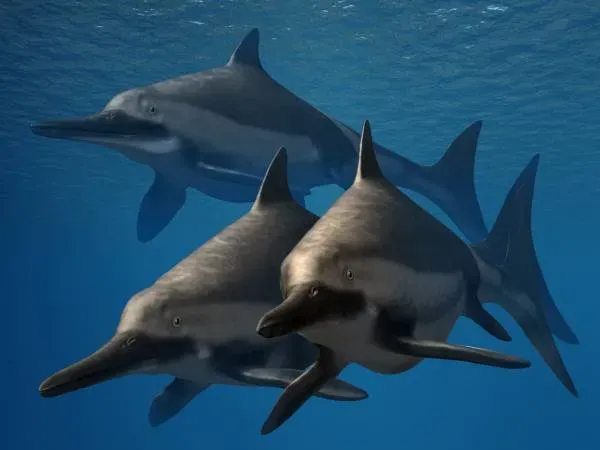
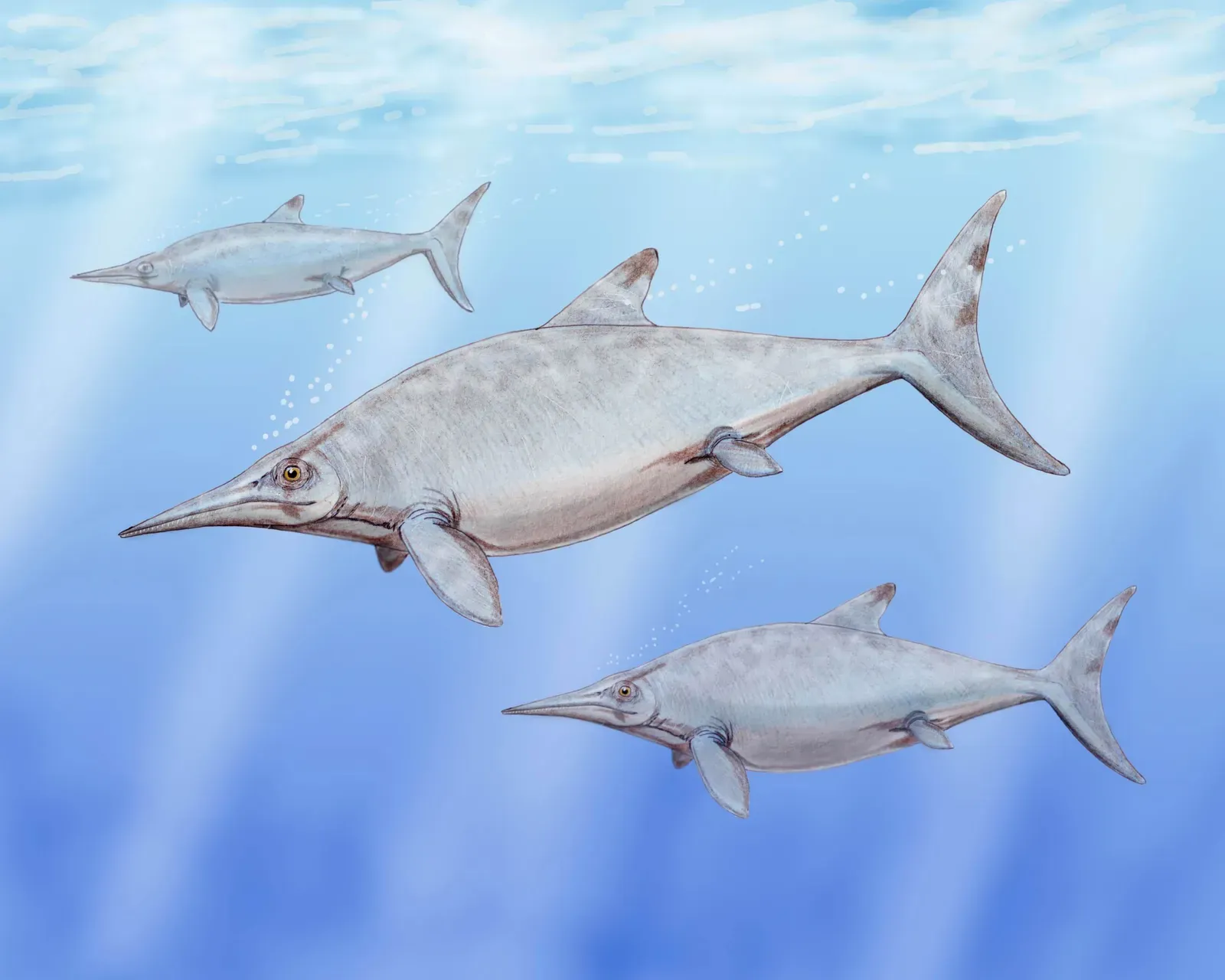
If you stumbled upon an ichthyosaur fossil without any context, you might honestly mistake it for a dolphin. Ichthyosaurs were marine reptiles with streamlined bodies, no necks, and smooth heads. They were air-breathing creatures with two nostrils situated far back on the top of the head, generally similar in shape to a modern porpoise. Yet they evolved this body plan hundreds of millions of years before dolphins ever existed.
The earliest ichthyosaurs had long, flexible bodies and probably swam by undulating, like living eels. More advanced ichthyosaurs had compact, very fishlike bodies with crescent-shaped tails. It is one of nature’s most stunning examples of convergent evolution – different animals arriving at the same solution to the same problem through completely different paths. Honestly, it never stops being fascinating.
Plesiosaurs: Long Necks, Big Mysteries, and the Loch Ness Legend
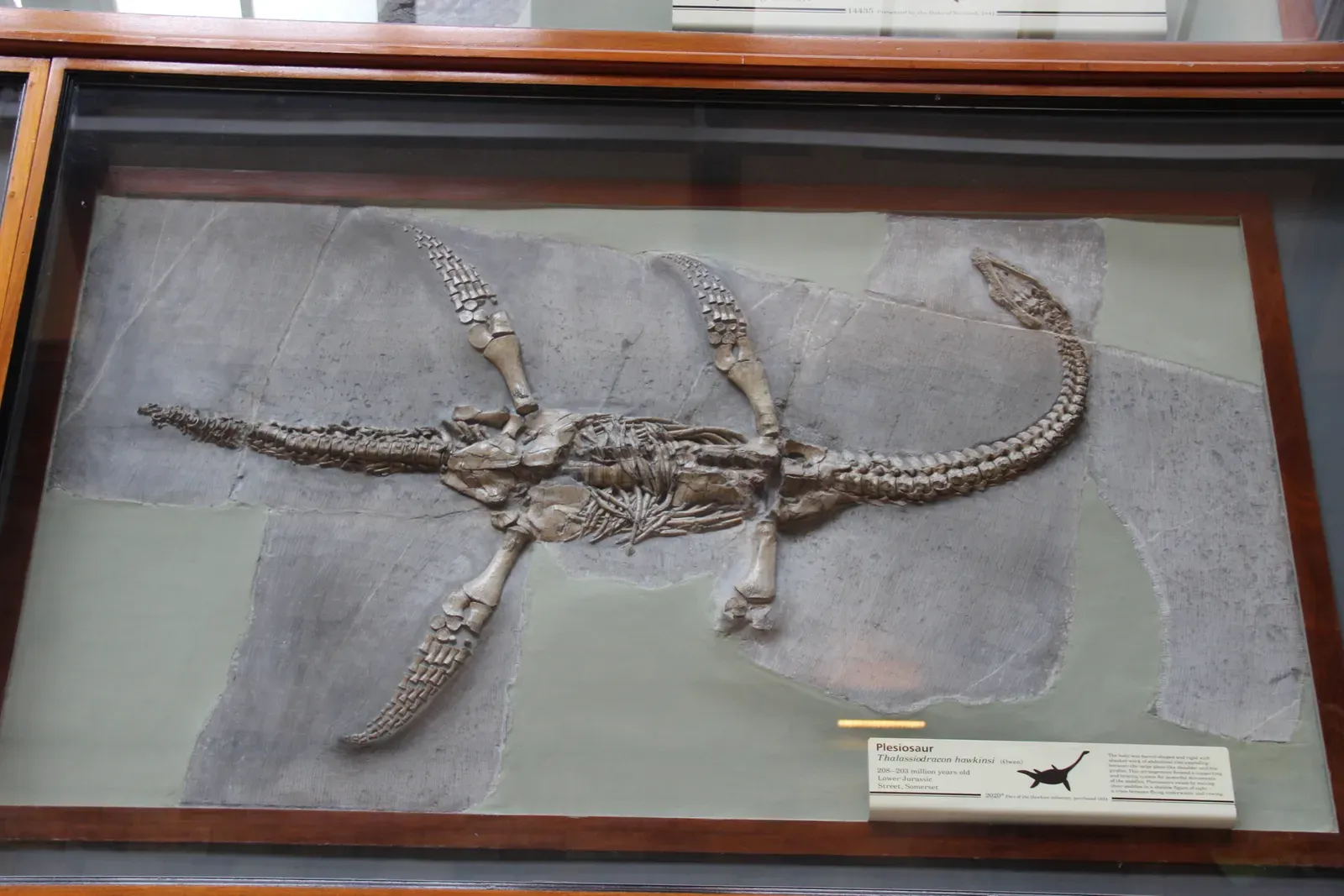
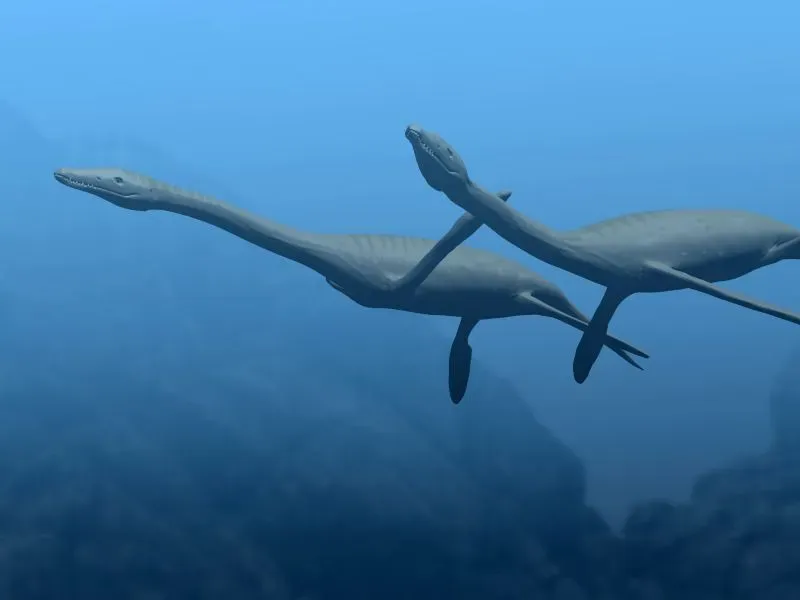
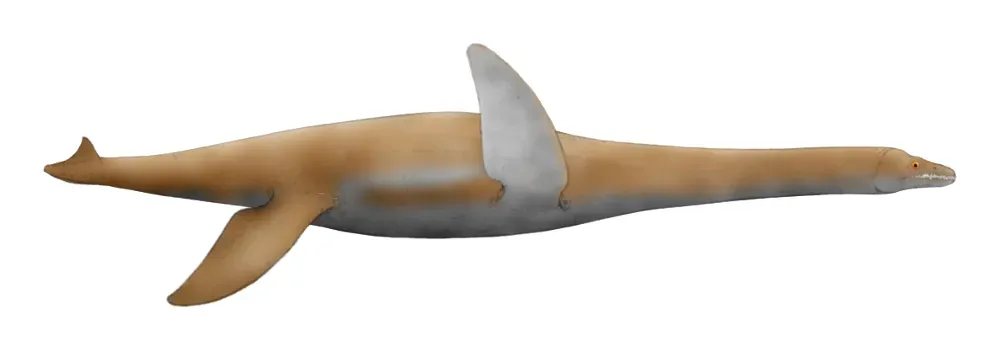
You have almost certainly seen a plesiosaur, at least in cartoon form. Plesiosaurs are considered to be the model of the imaginary Loch Ness monster. Their iconic silhouette, with that impossibly long neck rising from a wide body supported by four massive flippers, has captured the human imagination for centuries. But the real animal was far stranger and more interesting than any lake monster legend.
Some species, reaching a length of up to seventeen meters, had a short neck and a large head in a “pliosauromorph” build, making them fast apex predators of large prey. The two types are related to the traditional division of the Plesiosauria into two suborders: the long-necked Plesiosauroidea and the short-necked Pliosauroidea. So when you picture a plesiosaur, you might be picturing only half the picture. The other half was something far more terrifying.
Mosasaurs: The Last and Most Ruthless Rulers
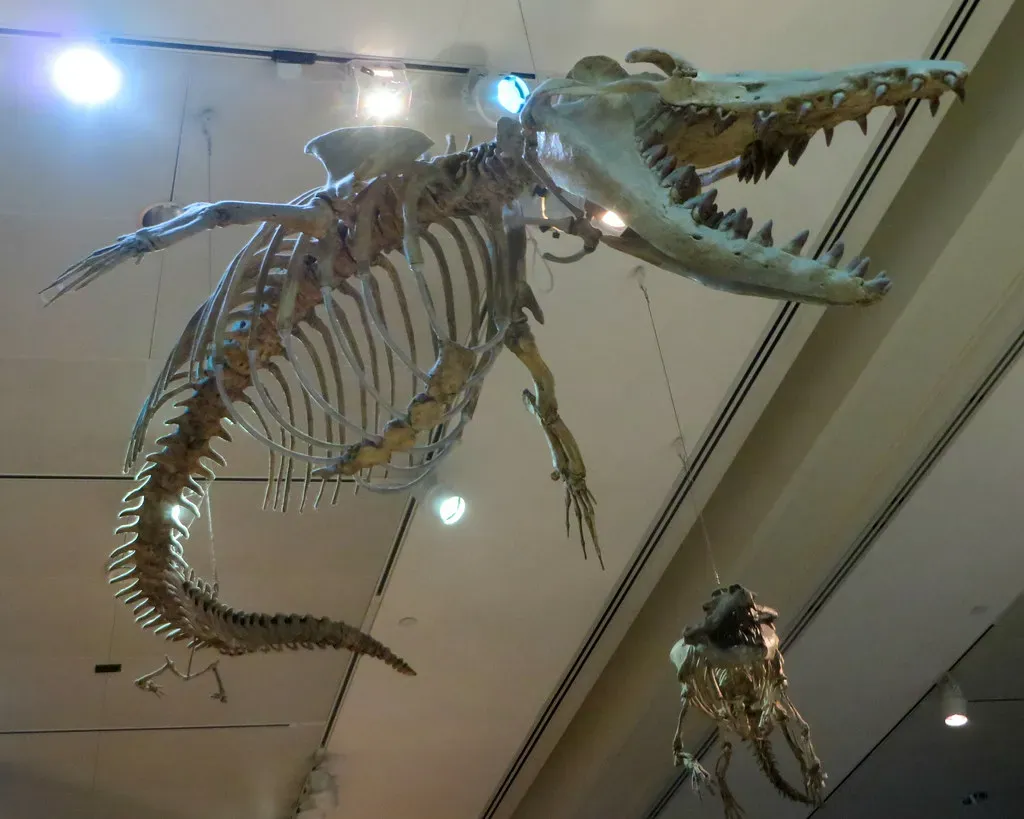
Mosasaurs are an extinct group of large aquatic reptiles within the family Mosasauridae that lived during the Late Cretaceous. They arrived on the scene relatively late compared to their two counterparts, but they wasted absolutely no time making their presence felt. Think of them as the ocean’s final answer to the question of what the most efficient marine predator could look like.
The largest mosasaur currently on public display is Bruce, a sixty-five to seventy percent complete specimen of Tylosaurus pembinensis dating from the Late Cretaceous period, approximately eighty million years ago, measuring over thirteen meters from nose tip to tail tip. Bruce was discovered in 1974 north of Thornhill, Manitoba, Canada, and resides at the Canadian Fossil Discovery Centre. Bruce was awarded the Guinness Record for the largest mosasaur on public display in 2014. Standing in front of that fossil, you would not feel anything other than very small.
Warm-Blooded or Cold? The Surprising Truth About Their Metabolism
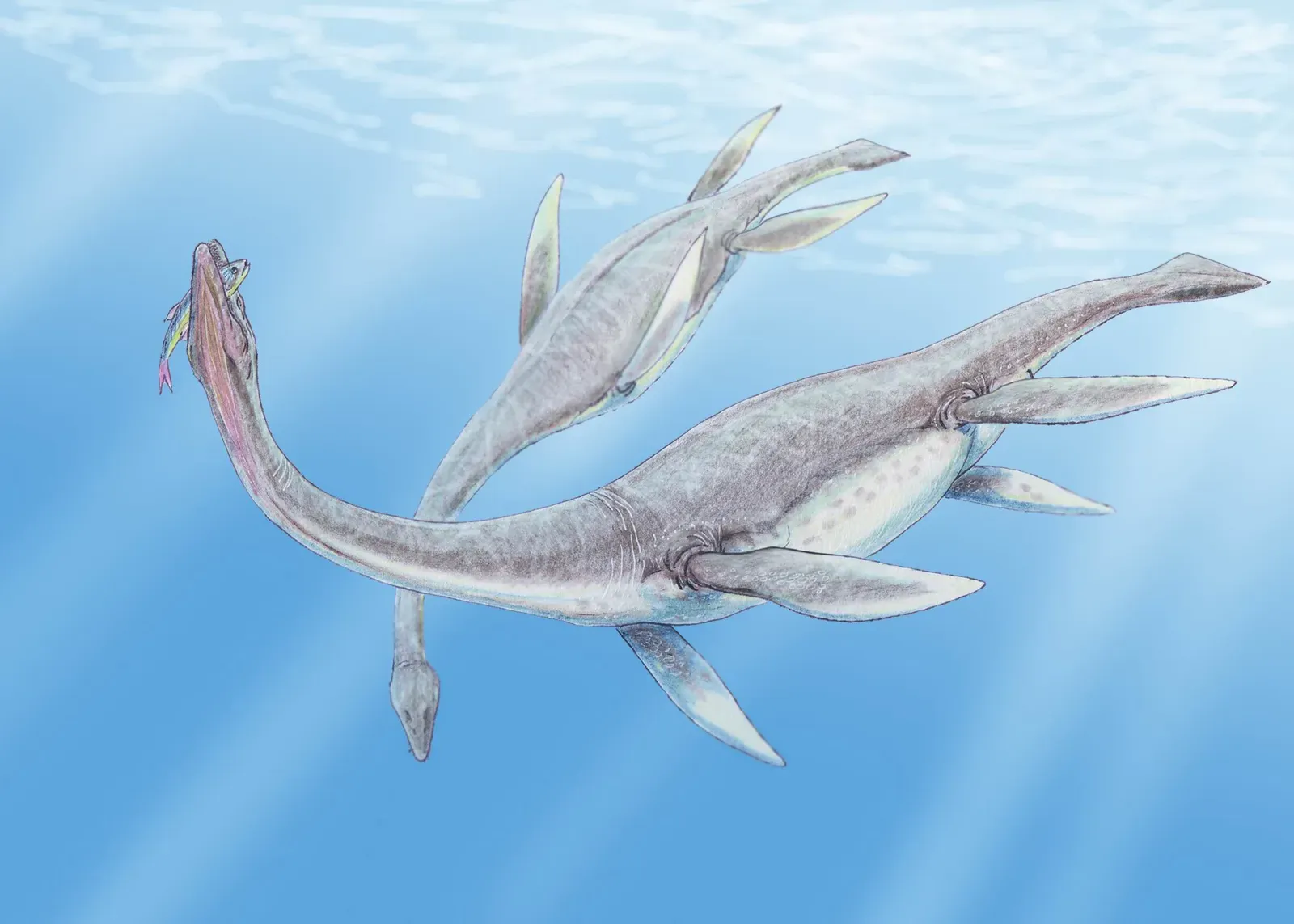
For a long time, scientists assumed these ancient sea creatures were cold-blooded like modern lizards. From the time the four-paddled, long-necked Plesiosaurus was named in 1821, paleontologists generally thought of marine reptiles as comparable to lizards, snakes and crocodiles in the terrestrial realm, and believed their body temperature was determined by the surrounding seawater. That assumption, it turns out, was completely wrong.
Three large extinct swimming reptiles – the ichthyosaurs, plesiosaurs, and mosasaurs – were active predators in the Mesozoic oceans. Data analysis of oxygen isotopes in their teeth implies that ichthyosaurs and plesiosaurs, which were both pursuit predators, probably controlled their own body temperature. The data for the mosasaurs, which are thought to have hunted by ambush, are more equivocal. So your mental image of these animals needs a serious upgrade. Picture them more like warm-blooded ocean hunters than sluggish sun-basking lizards.
How They Moved: A Study in Aquatic Engineering
The way each group moved through water was radically different from the others, and studying those differences reveals just how creative evolution can get. The flipper arrangement in plesiosaurs is unusual for aquatic animals in that all four limbs were probably used to propel the animal through the water by up-and-down movements, with the tail most likely used only for directional control. This contrasts with the ichthyosaurs and the later mosasaurs, in which the tail provided the main propulsion.
Ichthyosaurs had a length-to-depth ratio between three and five, which is optimal to minimize water resistance or drag. Their smooth skin and streamlined bodies prevented excessive turbulence. Their hydrodynamic efficiency, the degree to which energy is converted into forward movement, would approach that of dolphins. Plesiosaurs, by contrast, essentially “flew” through the water using their flippers the way birds use wings, which is an extraordinary convergence with the way sea turtles and penguins move today.
Giving Birth in the Open Ocean: A Revolutionary Discovery
One of the most mind-bending revelations about these creatures is how they reproduced. Many marine reptiles gave birth live directly in the water, allowing them to evolve away from any particular land-moving adaptations. This was a game-changer. It meant they were truly, completely committed to the ocean – no more hauling themselves onto beaches like modern sea turtles.
Over time, evidence for live birth in other marine reptiles has accumulated. A fossil of the long-snouted, short-necked plesiosaur Polycotylus was found with the bones of an embryo inside, and mosasaurs evolved the ability to give live birth as well. The discovery of several specimens of juvenile and neonate-sized mosasaurs indicate that mosasaurs gave birth to live young, and that they spent their early years of life out in the open ocean, not in sheltered nurseries or shallow water as previously believed. The parallels with modern whales and dolphins are genuinely striking.
Skin, Scales, and Secrets Hidden in Fossils
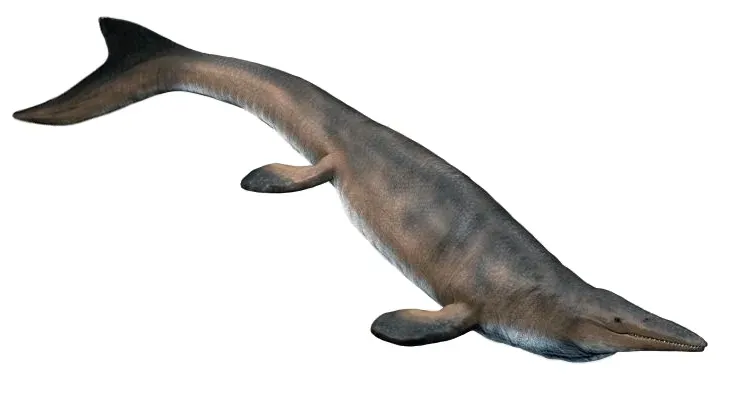
You might not think much about what these animals looked like on the outside, but the details of their skin and body coverings are actually deeply revealing. The physical disparities among ichthyosaurs, plesiosaurs, mosasaurs and other marine reptiles underscore the fact that there was no single, optimal way to be a saurian in the water. Body coverings are one example. While ichthyosaurs slid through the water with slick skin, other marine reptiles evolved streamlined scales.
Material from Jordan has shown that the bodies of mosasaurs, as well as the membranes between their fingers and toes, were covered with small, overlapping, diamond-shaped scales resembling those of snakes, and mosasaur scales varied across the body in type and size. Even more remarkably, a fossil of Platecarpus tympaniticus has been found that preserved not only skin impressions but also internal organs. Several reddish areas in the fossil may represent the heart, lungs, and kidneys. The trachea is also preserved, along with part of what may be the retina in the eye. That level of preservation is almost unbelievable – it’s like finding a photograph from 70 million years ago.
Extinction: How Did Three Dynasties Fall?
Every dynasty ends. The exits of these three groups were as varied as their lifestyles, and each story carries its own lessons. The last ichthyosaurs died out around ninety million years ago during the Cretaceous after they were unable to adapt to changes in the ocean and the extinction of some of their food sources. Plesiosaurs lasted until the end of the Cretaceous and were eventually wiped out during the same extinction event that killed the non-bird dinosaurs.
A first extinction event in the beginning of the Cenomanian eliminated two of the three ichthyosaur feeding guilds still present: the “soft-prey specialists” and the “generalists,” leaving only an unspecialized apex predator group. The second extinction event took place during the Cenomanian-Turonian boundary event, a marine anoxic event, after which just a single lineage survived. Ichthyosaur extinction was thus a pair of abrupt events rather than a long decline, probably related to environmental upheavals and climatic changes. For mosasaurs, the asteroid impact that ended the Cretaceous delivered the fatal blow – cutting short what had been a breathtakingly rapid rise to dominance across the world’s oceans.
Conclusion: What Their Vanished World Tells Us
There is something deeply humbling about sitting with the fact that these extraordinary animals existed for tens of millions of years, dominated entire ecosystems, and then vanished completely. These marine reptiles illustrate a mosaic of morphological, physiological, and ecological adaptations to an aquatic lifestyle, some of which are convergent with those found in Cenozoic marine mammals, and others completely unique. They were, in their own right, nature’s greatest experiments in ocean living.
Every new fossil that comes out of the ground, every isotope analysis, every preserved skin impression rewrites what we thought we knew. The evolution of Mesozoic marine reptiles wasn’t static and about long stretches of conservatism, but dynamic and complex, with major overturns and innovations happening right to the end. These weren’t mere backdrops to the dinosaur story. They were the stars of their own epic, playing out beneath the waves while the rest of the world watched the wrong horizon. Next time you stand at the ocean’s edge and peer into the deep, dark water – consider what kind of world once churned beneath the surface. What would you have guessed was down there?