
Australia’s Great Australian Bight – southern right whales gathered at this key breeding site now produce calves less frequently, a trend researchers tied to distant climate shifts in the Southern Ocean.
Calving Rates Shift After Decades of Monitoring
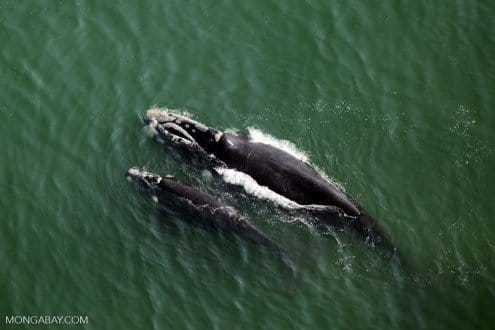
Calving Rates Shift After Decades of Monitoring (Image Credits: Imgs.mongabay.com)
Scientists tracked more than 1,100 calving events among 696 individual females from 1991 to 2024. They relied on photo-identification, noting unique callosity patterns on each whale’s head. This method revealed a clear pattern: the average interval between births lengthened from 3.4 years to 4.1 years starting around 2015.
Three-year intervals became rarer, while four- and five-year gaps increased. Such delays compound for a slow-reproducing species. Lead author Claire Charlton explained, “These extended calving intervals mean fewer calves are being born overall, and this reduces population growth over time.” The findings appeared in a Scientific Reports paper by teams from Australian, South African, and U.S. institutions.
Environmental Changes Drive the Decline
Analyses linked half the variation in calving intervals to conditions in the whales’ Antarctic feeding grounds. Antarctic sea ice concentration dropped sharply after 2013, with persistent negative anomalies. Mid-latitude sea surface temperatures rose steadily from 2010 onward.
Chlorophyll-a levels, a productivity proxy, fell in mid-latitudes but rose in high latitudes. The Antarctic Oscillation stayed in positive phases more often after 2015. Cross-correlations showed calving delays aligned with low sea ice two years prior and warmer waters in the year before birth. Principal component analysis confirmed these factors explained over half the trend.
Krill Shortages Strain Whale Mothers
Southern right whales migrate to Antarctic and sub-Antarctic waters each summer for krill and copepods. Sea ice shelters young krill and algae, their base food. Declines displace this prey southward or favor less nutritious salps and jellyfish.
Females lose a third of their body weight nursing. Scarce food slows energy recovery, delaying ovulation. Marine ecologist Peter Corkeron noted, “When conditions are getting worse, you pull back on having as many babies.”
- Shrinking sea ice reduces krill habitat.
- Warmer mid-latitude waters cut productivity.
- High-latitude chlorophyll spikes signal food web shifts.
- Positive Antarctic Oscillation alters currents and weather.
- Krill catches hit 0.5 million tons in 2024, heightening competition.
Global Patterns and Urgent Calls to Action
Australia’s population, estimated at 2,300 to 4,000, represents 16-26% of pre-whaling levels. Calf counts peaked at 222 in 2016 before falling to 200 in 2024. Similar reproductive drops appeared in South Africa and Argentina populations.
Threats compound from ship strikes, entanglements, and noise. Researchers urged expanded marine protected areas, krill fishery limits, and climate mitigation. Charlton warned, “The future of southern right whales is likely to be closely tied to the management of krill harvesting and addressing climate change.”
Key Takeaways
- Calving intervals lengthened 20% since 2015, stalling recovery.
- Sea ice loss and warming explain over half the reproductive variation.
- Coordinated Southern Ocean protections offer the best hope.
Southern right whales serve as sentinels for Southern Ocean health; their struggles signal ecosystem strain felt thousands of miles away. Stronger safeguards could preserve this conservation success story before losses mount. What steps should prioritize whale protection amid climate pressures? Tell us in the comments.