When most people picture dinosaurs, they imagine thundering, mindless beasts, all scales and teeth and zero strategy. But here’s the thing: that image has been quietly crumbling for decades. Paleontology has been having something of a quiet revolution, and what’s coming out the other side might genuinely surprise you.
Over the past fifty years, the scientific view and public image of the intelligence and behavioral sophistication of dinosaurs has undergone considerable transformation. While dinosaurs were once considered to be slow-witted, slow-moving reptiles whose very lack of behavioral flexibility and learning skills might have contributed to their demise, the members of many dinosaur species are now recognized to have functioned at an avian level of behavioral complexity. In other words, some of these creatures were thinking in ways that would feel eerily familiar today. So buckle up, because a few of these entries are going to change how you imagine the prehistoric world entirely. Let’s dive in.
1. Troodon: The Prehistoric Genius You’ve Never Heard Of
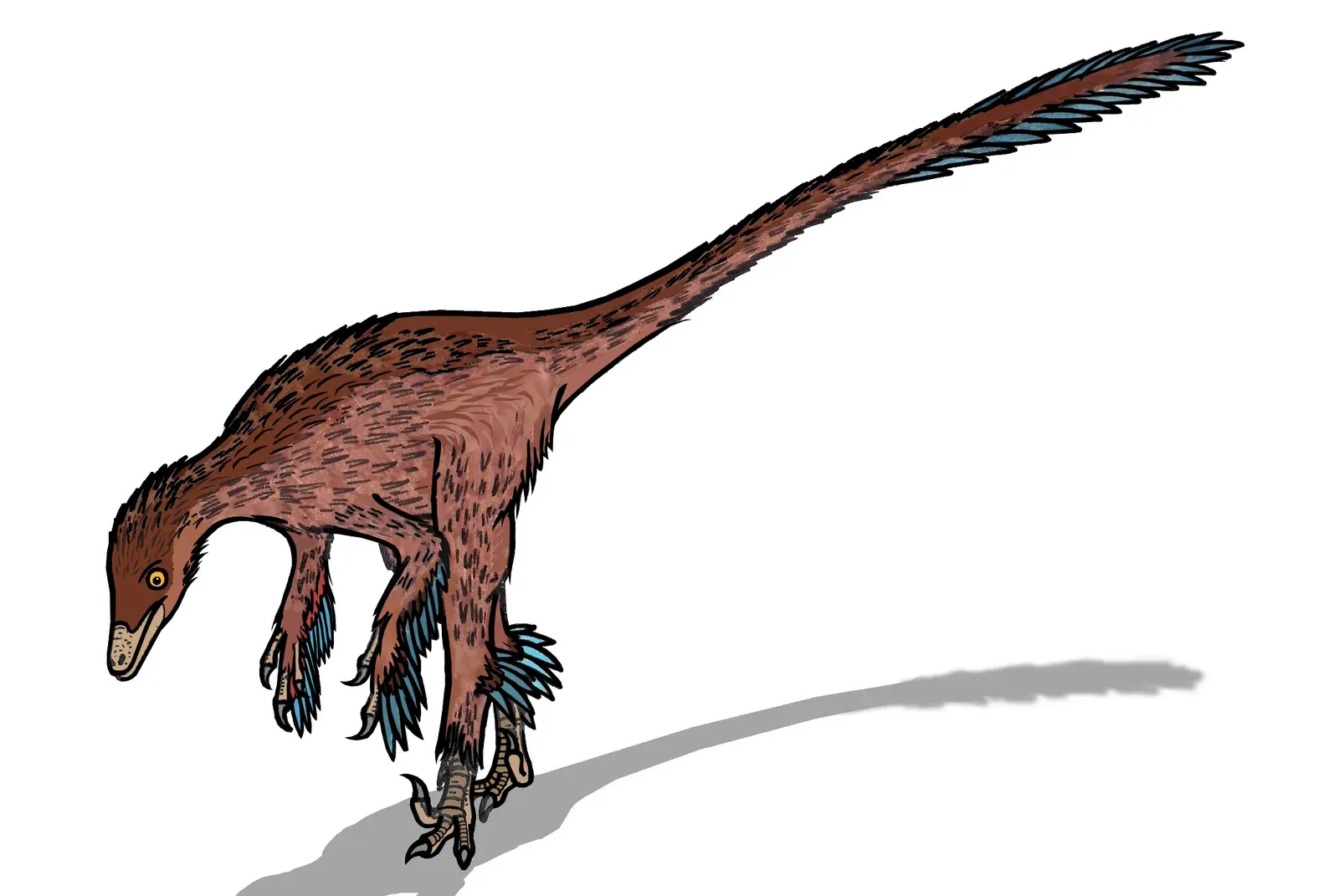
If the dinosaur world had an Einstein, it was almost certainly Troodon. Often considered the Einstein of dinosaurs, Troodon had a relatively large brain for its body size, and fossil evidence suggests it had excellent eyesight, stereo vision, and a keen sense of hearing. Some paleontologists argue that Troodon might have hunted in small groups, suggesting advanced cognitive abilities. That last part is worth sitting with for a moment. Cooperative hunting requires planning. It requires communication. That’s not primitive reptile behavior.
Troodon is believed to be the smartest dinosaur ever, with an EQ (encephalization quotient) of 5.8. This small coelurosaurian dinosaur had a huge brain, especially considering its size, and generally had a higher brain-to-body ratio compared to other dinosaurs. To put this in perspective, think of the encephalization quotient like a cognitive “horsepower” rating. Its enlarged cerebral hemispheres, regions associated with higher-order processing in modern animals, suggest that it might have been capable of learning and memory retention. While its exact behaviors remain speculative, its neural architecture sets it apart as one of the most cognitively advanced dinosaurs. Honestly, if Troodon had survived long enough, who knows what evolutionary path it might have taken.
2. Velociraptor: Smarter Than the Movies, Not Quite a Jurassic Park Genius
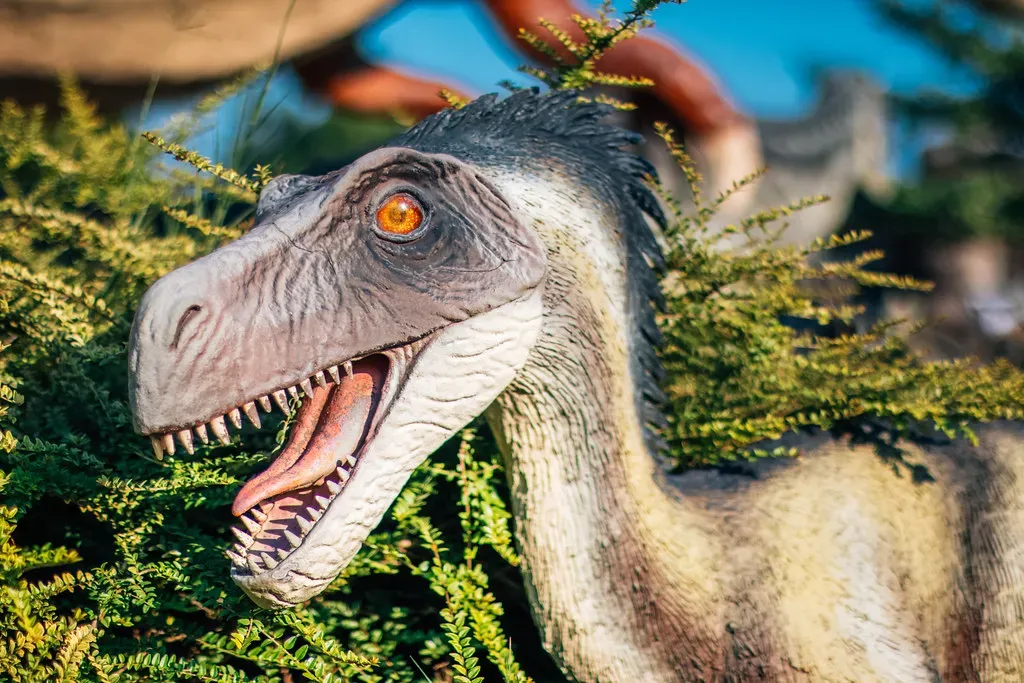
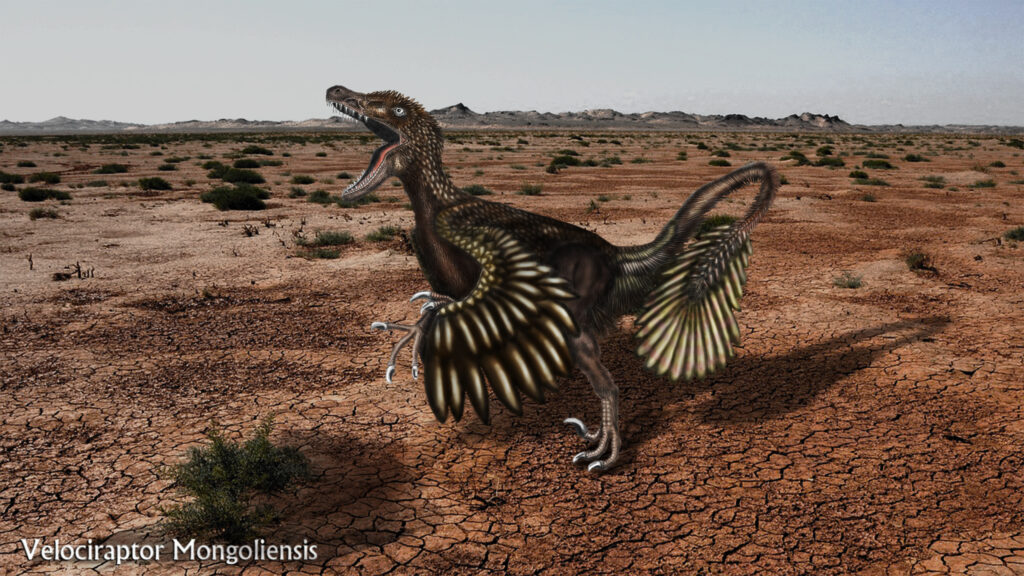
You already know Velociraptor from the Jurassic Park franchise, but you probably don’t know the real version. Velociraptor is one of the dinosaur genera most familiar to the general public due to its prominent role in the Jurassic Park films. In reality, however, Velociraptor was roughly the size of a turkey, considerably smaller than the approximately 2-meter-tall reptiles seen in those films. So the nightmarish door-opening predator of Hollywood? Actually closer to a particularly dangerous chicken. But don’t underestimate it.
The infamous Velociraptor had a brain proportionally larger than most reptiles and many modern birds. This neural development likely supported complex behaviors, including pack hunting, which requires coordination, communication, and strategic thinking. Its intelligence was noted to be relatively high compared to other dinosaurs, with a brain size suggesting advanced cognitive abilities. Additionally, Velociraptor likely laid eggs in open nests and may have exhibited parental care, similar to modern birds. It’s not quite a crow or a raven, but for its era, it was operating on a level that sets it apart from the rest.
3. Deinonychus: The Tactical Hunter With a Terrifying Claw
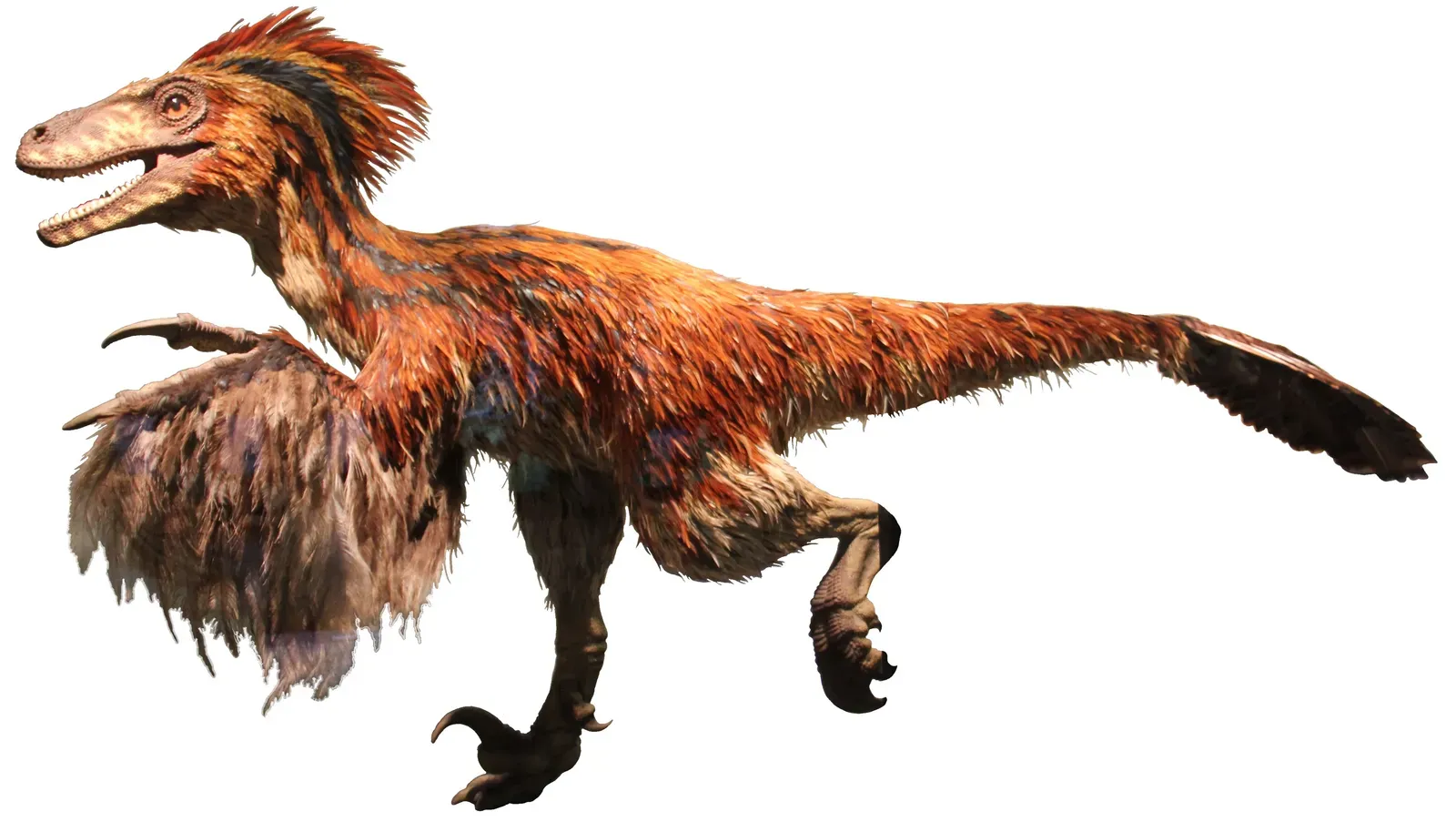
Here’s a name that deserves far more attention than it gets. Deinonychus, whose name means “terrible claw,” was the dinosaur that actually inspired the Jurassic Park raptors, and its credentials as a cognitive standout are genuinely impressive. Deinonychus had a brain-to-body ratio similar to the modern ostrich, which is impressive for a predator from the Early Cretaceous period. It was agile, walked on two legs, and likely used pack hunting strategies. This apex predator had a strong sense of balance and coordination, and its agility and potential group tactics suggest it had unusually advanced intelligence for a dinosaur.
Deinonychus’ anatomical and behavioral characteristics suggest high cognitive abilities. It had a relatively large brain for its body size, indicative of advanced sensory processing and coordination. Deinonychus’ large, sickle-shaped claws on each hind foot were lethal weapons that pointed to its ability to engage in complex hunting strategies, potentially involving pack behavior to take down larger prey. Think about that dynamic: a smaller predator organizing strategies to take down prey that dwarfed it in size. That’s not instinct working on autopilot. Deinonychus was one of the smartest dinosaurs, with a brain-to-body weight ratio significantly higher than any other species of dromaeosaurid, suggesting it was unusually intelligent for its size.
4. Maiasaura: The Devoted Dinosaur Parent That Will Completely Surprise You
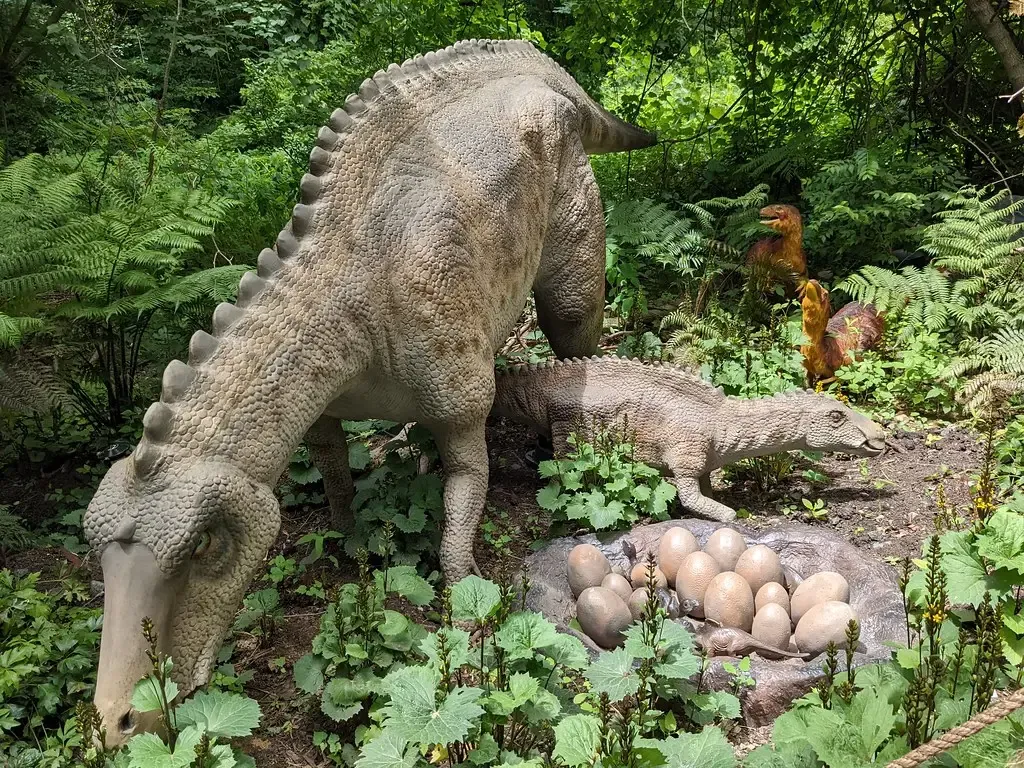
Of all the entries on this list, this is the one that tends to make jaws drop. Most people associate dinosaur intelligence with ferocity and hunting tactics. Nobody really expects the standout moment to come from a gentle herbivore. Yet here we are. The name “Maiasaura” means “good mother lizard,” and fossil nests show evidence of parental care. This herbivore from the Late Cretaceous lived in large herds, possibly to protect young from predators, and had a brain capable of complex social behavior, suggesting intelligence beyond simple survival instincts.
In a study conducted by Horner and colleagues, it was found that adult Maiasaura dinosaurs returned to the same nesting spot year after year, proving that they had enough intelligence to remember the place and appreciate its favorable character. Let that sink in. Year after year, returning to the same location. That kind of spatial memory and long-term decision-making is something you’d associate with elephants or migratory birds. Instead of finding just one dinosaur or one nest, an entire nesting ground was discovered, spaced closer together than the length of one adult. The eggs were arranged in a spiral and placed on top of rotten vegetation to keep them warm. The most important find was of hatchlings which had underdeveloped legs, making walking unlikely, yet had worn teeth. It is estimated that the hatchlings might have spent a year in the nest, with parents feeding and protecting them. A year of active parenting. In a dinosaur. I think that earns genuine respect.
5. Oviraptor: The Wrongly Accused Parent Who Was Way Ahead of Its Time
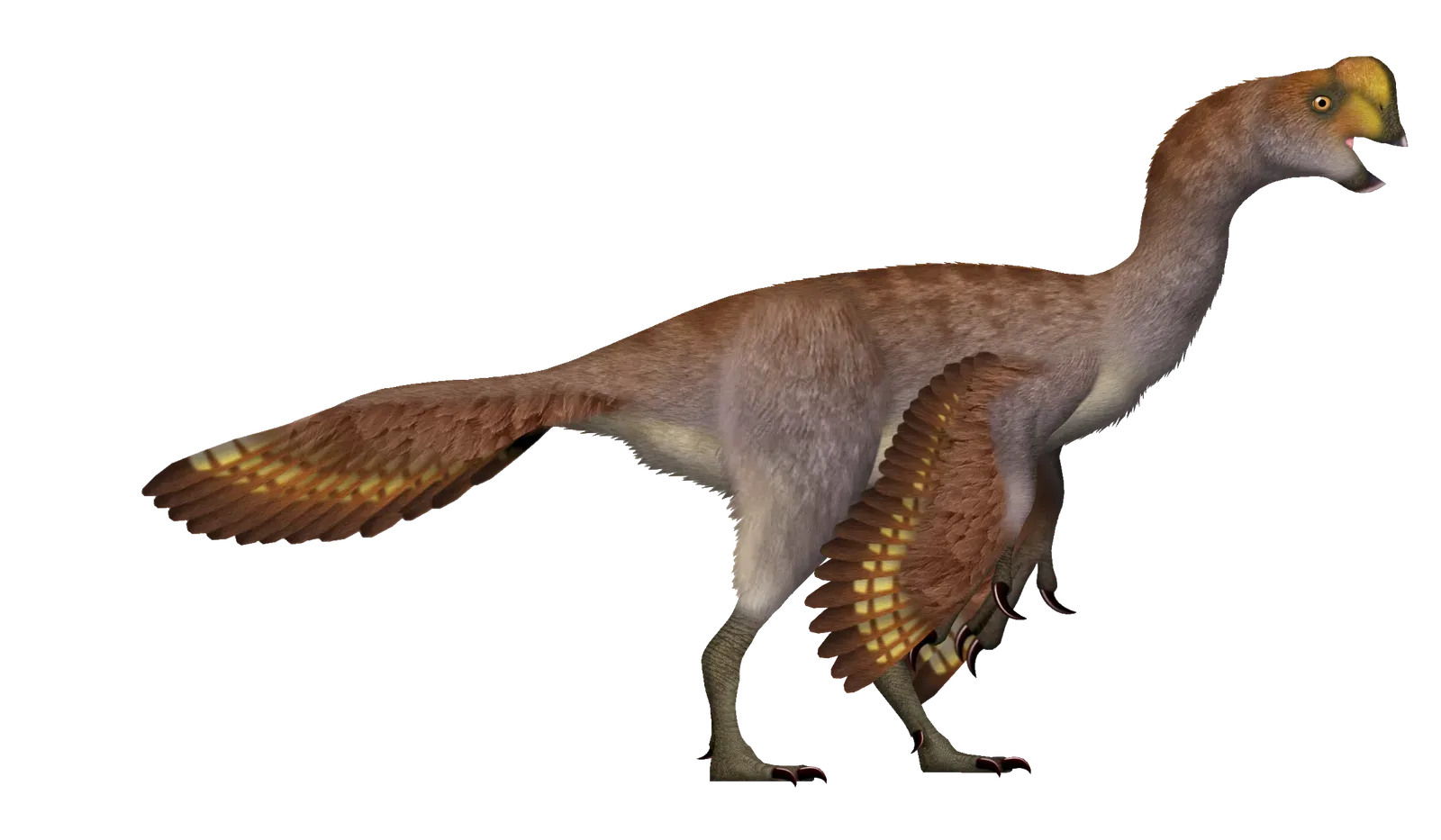
Few dinosaurs have had a more dramatic scientific reputation shift than Oviraptor. Its very name, which translates to “egg thief,” was based on a spectacular misunderstanding. In 1923, scientists found the first Oviraptor fossil in Mongolia in a place called the Djadokhta Formation. The fossil was lying near a nest of eggs, and people assumed that the dinosaur had been stealing and eating them. However, many years later, more research revealed that the Oviraptor was likely brooding those eggs, just like birds today. It wasn’t a thief; it was a caring parent.
Not only bird-like in appearance, with a toothless beak and crested head, the Oviraptor is now also notable for exhibiting brooding behavior that strongly mimics that of birds and is one of the very few dinosaurs found that definitely demonstrates advanced parental care. Oviraptor’s beak and crest suggest it had a varied diet, possibly including hard-shelled fruits, seeds, and small animals, indicating dietary flexibility and problem-solving skills in food acquisition. Its large brain, relative to its size, suggests higher cognitive functions, which, combined with its behavioral evidence, highlights Oviraptor’s intelligence among theropods. Dietary flexibility, by the way, is a huge marker of intelligence. Animals that can figure out how to exploit multiple food sources are problem-solvers, period.
6. Ornithomimus: The Ostrich Dinosaur That Outsmarted Its Environment
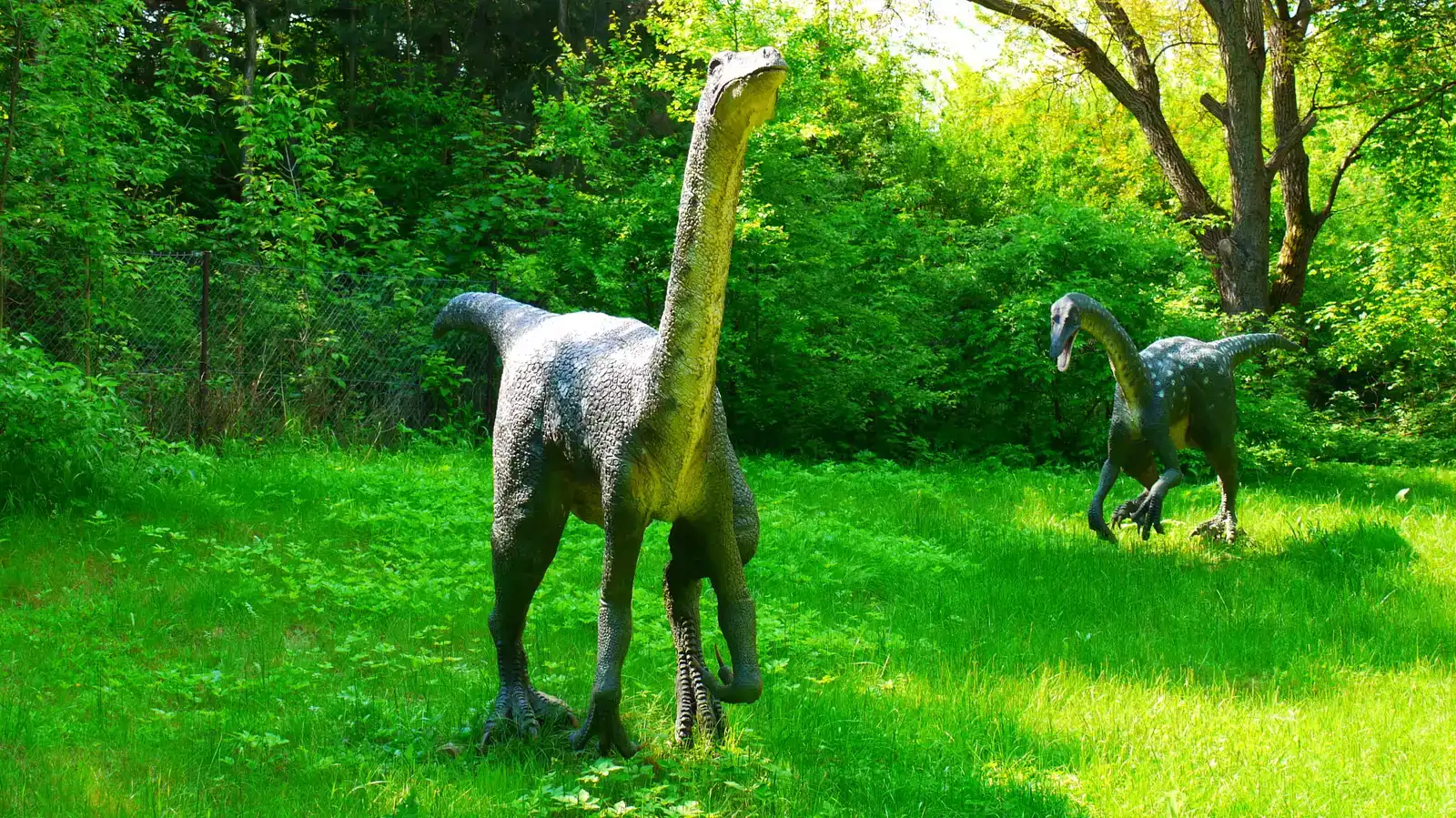
The final entry on this list is one of the most visually striking and conceptually fascinating. Ornithomimus, which literally means “bird mimic,” looked startlingly like a modern ostrich, complete with long legs, a small head, and a toothless beak. Paleontologists are convinced that Ornithomimus was probably as intelligent as a modern ostrich, which would make it one of the smartest creatures to have ever existed in its era. Ornithomimus had a large brain for its tiny head and this is thought to mean that it had one of the highest intelligence levels of all dinosaurs. Now, ostrich-level intelligence might sound underwhelming, but consider this: ostriches navigate vast territories, recognize threats, coordinate with their group, and adapt their behavior based on environmental cues. That’s no small feat.
Scientists believe that the reason they had such a large brain had to do with the need for kinesthetic coordination. However, it had a poor sense of smell, focusing primarily on its excellent eyesight to find threats, seek out food, and protect itself. Discoveries have revealed feather impressions on certain specimens, suggesting that these dinosaurs may have shared characteristics with their avian descendants. Overall, Ornithomimus plays a significant role in understanding the evolutionary links between dinosaurs and modern birds, showcasing the diversity of life in the Late Cretaceous ecosystem. In many ways, Ornithomimus is living proof that the line between “dinosaur” and “bird” was always blurrier than people imagine. You could argue that when you look at an ostrich today, you’re seeing something not so far removed from what Ornithomimus was doing roughly 70 million years ago.
Conclusion: Rethinking the Ancient Mind
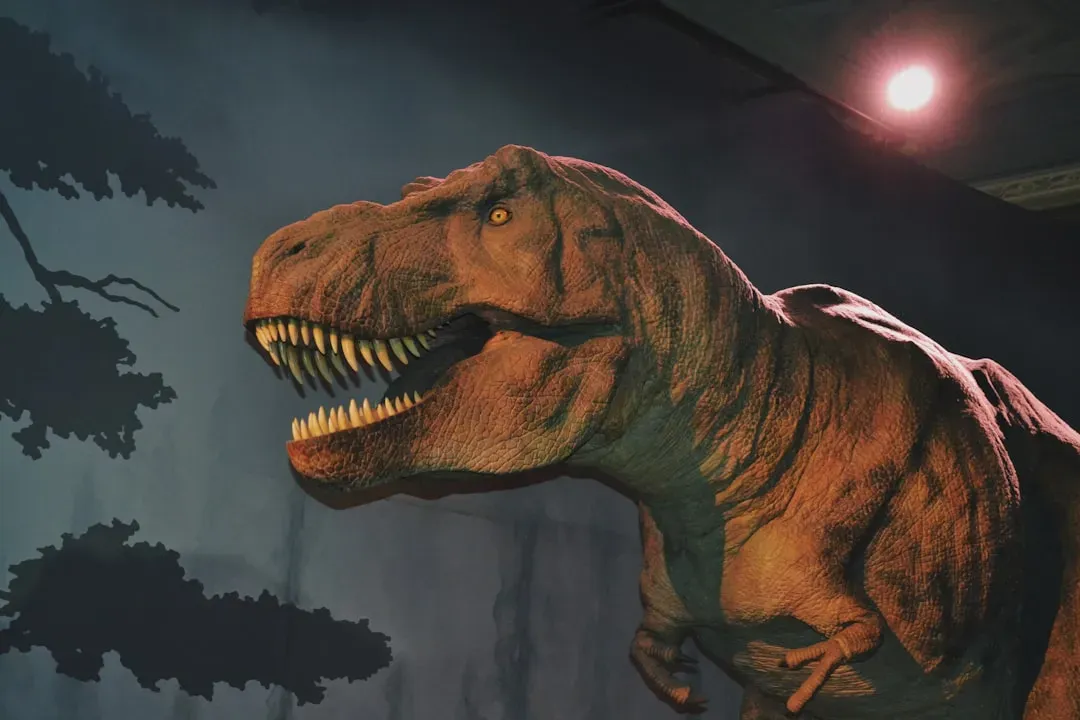
The old image of dinosaurs as lumbering, dull-eyed giants simply doesn’t hold up anymore. The persistent myth of dinosaur stupidity reflects not the limitations of these remarkable animals but rather the limitations of our understanding and imagination. As paleontological techniques advance and new fossils emerge, we continue to discover evidence of sophisticated behaviors, complex social structures, and neural adaptations that paint dinosaurs in a dramatically different light than their pop culture portrayals.
What’s remarkable is that the cognitive traits these six dinosaurs displayed, which include spatial memory, parental investment, cooperative hunting, and sensory sophistication, are the same traits we celebrate in the animal kingdom today. The EQ (encephalization quotient) measures brain size relative to body mass, suggesting that some dinosaurs, particularly theropods, might have had intelligence levels comparable to modern birds. Recent research utilizing computed tomography (CT) has enabled scientists to create accurate models of dinosaur brains, allowing for more comprehensive analyses of their cognitive capacities. The more science digs, the more fascinating the picture becomes.
Dinosaurs weren’t the evolutionary dead ends we once dismissed them as. They were, in many ways, the ancestors of some of the most cognitively complex animals alive today. Next time you watch a crow solve a puzzle, or a parrot mimic a sentence, you might want to thank a dinosaur. Which of these six surprised you the most? Drop your thoughts in the comments below.