When most people think about dinosaurs, they picture the massive, iconic creatures of the Jurassic era. The roaring T-Rex, the long-necked Brachiosaurus, the thundering herds of Triceratops. Yet millions of years before those giants took over the planet, a much quieter and stranger chapter in Earth’s history was already unfolding. Smaller, stranger, often overlooked creatures were quietly carving their place into the rock record, and honestly, their story is just as thrilling.
The Triassic was a time of transformation and ecological recovery after a catastrophic mass extinction event, spanning roughly from 252 to 200 million years ago, recognized for its diverse reptilian life. Dinosaurs only began to emerge towards the end of this period, paving the way for the giants of the Jurassic to emerge. Most of these early dinosaurs don’t get the spotlight they deserve. You’re about to meet nine of them. Let’s dive in.
1. Staurikosaurus – The Southern Cross Lizard of Brazil
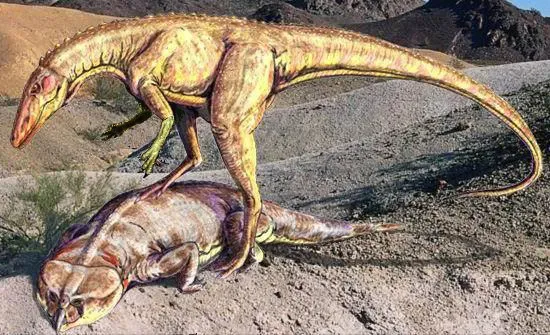
You’ve probably never heard of Staurikosaurus, and that’s a shame. It is a genus of herrerasaurid dinosaur from the Late Triassic of Brazil, found in the Santa Maria Formation, described as a small and agile, bipedal predator. Staurikosaurus lived during the late-Carnian and early-Norian stage of the Late Triassic, approximately 225 million years ago, which makes it one of the earliest dinosaurs known. Think about that for a moment. This little creature was stalking prey on what would one day become South America, in a world that looked nothing like our own.
Staurikosaurus was a small but active bipedal predator that preyed on small and medium-sized terrestrial vertebrates such as cynodonts, rhynchosaurs, and herbivorous synapsids. The mandible of Staurikosaurus suggests that a sliding joint in the jaw allowed it to move backwards and forwards, as well as up and down – an incredibly specialized feature for such an ancient animal. The genus name itself refers to the star constellation “The Southern Cross,” pictured in the coat of arms of Brazil and only visible in the southern hemisphere. When Staurikosaurus was described in 1970, it was unusual to find dinosaurs in the southern hemisphere.
2. Eoraptor – The Dawn Thief That Started It All
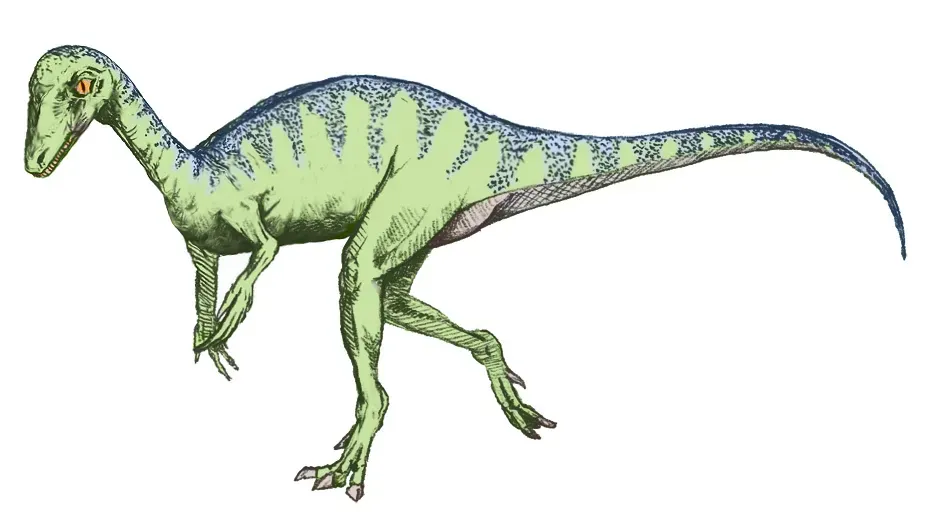
If any Triassic dinosaur deserves the title of “where it all began,” it’s Eoraptor. Eoraptor was one of the earliest dinosaurs, a small, lightweight creature from the Late Triassic found in Argentina. Discovered in 1991, it measured around one meter in length and weighed approximately ten kilograms. Its compact, slender body and long tail suggest agility and speed. Imagine something roughly the size of a house cat, but fast, sharp-toothed, and apparently very hungry.
Eoraptor had teeth indicative of a potentially omnivorous diet, combining features of both herbivores and carnivores. The exact placement of Eoraptor within the dinosaur family tree has been a debated topic, eventually being classified as a basal sauropodomorph. I think that’s what makes Eoraptor so fascinating. It sat right at a critical evolutionary fork in the road, and scientists still argue about exactly which branch it belonged to. Eoraptor was one of the first dinosaurs to appear in the fossil record, with a lightweight skeleton, long tail and five fingers on each hand. Scientists agree that the first dinosaur may also have had these features and looked something like Eoraptor.
3. Chindesaurus – Arizona’s Forgotten Predator
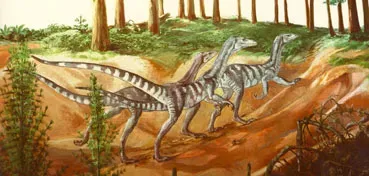
Here’s one that even many dinosaur fans haven’t come across. Chindesaurus was an early saurischian dinosaur that lived in what is now the United States. Only six specimens of this genus have been discovered. The first of these was found by Bryan Small in 1984 at the Chinle Formation, Apache County, Arizona. Other specimens have been found in New Mexico and Texas. Six specimens in nearly four decades of searching. That’s how rare and elusive this creature remains.
Chindesaurus is related to the Herrerasaurus and is in the same family, Herrerasauridae. What’s remarkable about this connection is that it places Chindesaurus firmly among the oldest predatory lineages on Earth. Dinosaurs from Triassic rocks in the National Park Service system are best known from Petrified Forest National Park in Arizona, which has most of the few Triassic dinosaur body fossils from the NPS. The park’s Triassic dinosaurs were “supporting players” in an ecosystem dominated by crocodile-like phytosaurs, armored aetosaurs, and giant amphibians. Supporting players, not rulers. That detail alone reshapes how you think about early dinosaur life.
4. Thecodontosaurus – The Socket-Toothed Survivor of England
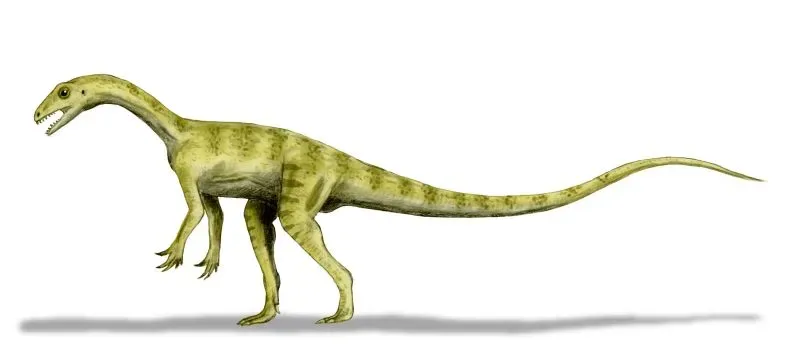
You wouldn’t expect England to be a hotspot for ancient dinosaurs, yet here we are. Thecodontosaurus, meaning “socket-tooth lizard,” is a genus of herbivorous basal sauropodomorph dinosaur that lived during the late Triassic period. Its remains are known mostly from Triassic “fissure fillings” in southern England. Thecodontosaurus was a small bipedal animal, about 2 meters long. Its teeth, set into individual sockets rather than fused to the jawbone, gave it a look that was surprisingly modern for something so ancient.
It is one of the first dinosaurs to be discovered and is one of the oldest that ever existed. Yet its story has a tragic twist. The original type specimen of Thecodontosaurus, a lower jaw, fell victim to heavy World War II bombings. Many remains of this dinosaur and other material related to it were destroyed in November 1940 during the Bristol Blitz. History and prehistory collided in the most devastating way. Thankfully, renewed interest in the Bristol area’s Late Triassic fissure deposits led to additional recoveries at Tytherington quarry in southwestern England, yielding over 1,000 new specimens, providing fresh insights into the dinosaur’s skeletal diversity.
5. Alwalkeria – India’s Own Triassic Pioneer
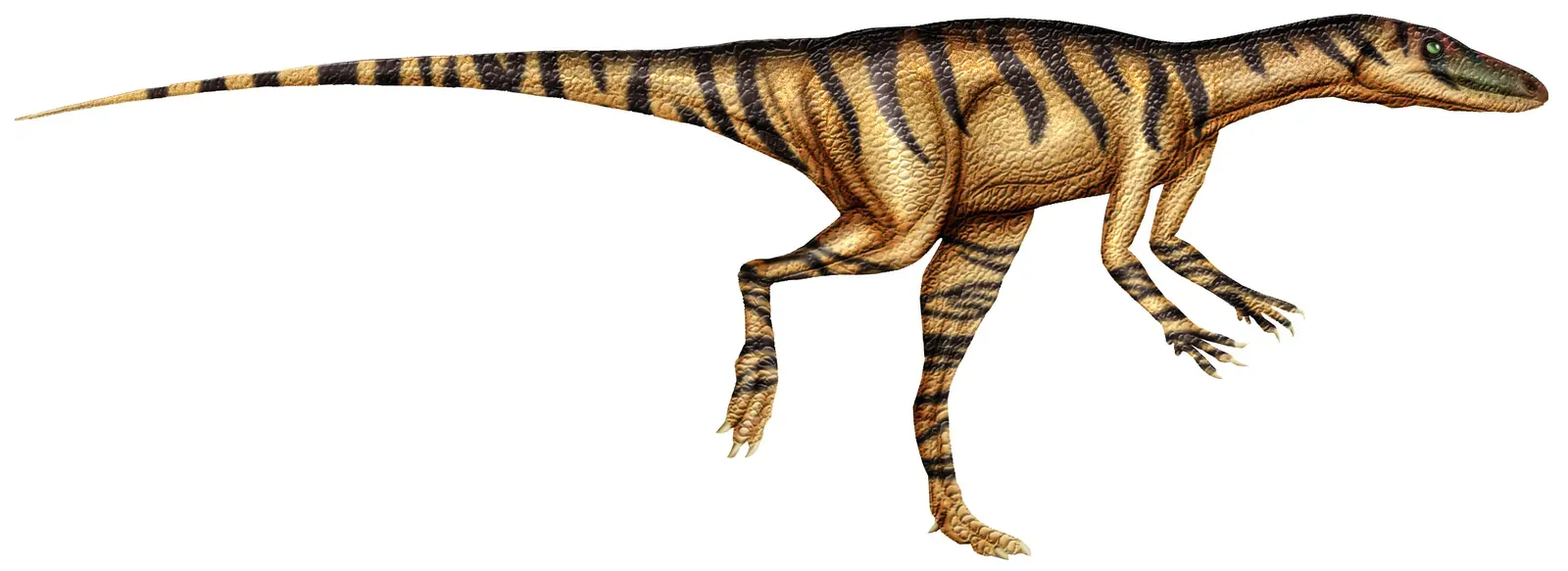
Most people don’t realize that India was home to some of the earliest dinosaurs on the planet. Alwalkeria is a genus of basal saurischian dinosaur from the Late Triassic of India. It was a small bipedal omnivore. That omnivorous diet is what makes it particularly interesting. While many of its contemporaries committed fully to either meat or plants, Alwalkeria was playing both sides of the menu. Remains of Alwalkeria have been recovered from the Maleri Formation of Andhra Pradesh, India, a Late Triassic geologic formation. Indeterminate prosauropod material has also been found in the Maleri, but Alwalkeria is the only named dinosaur species.
One of the most striking features of Alwalkeria is its teeth. Unlike many theropods, which were primarily carnivorous, it had a mix of sharp, pointed teeth and flat, grinding teeth. This suggests that this dinosaur was an omnivore capable of eating both meat and plant matter. Several features make Alwalkeria unique among basal dinosaurs. Besides its unserrated teeth, the mandibular symphysis is proportionally wider than almost any other known dinosaur. Also, there is a very large articulation between the fibula and the ankle. Little details like these remind you just how experimentally diverse early dinosaurs truly were.
6. Panphagia – The Original Sauropod Ancestor
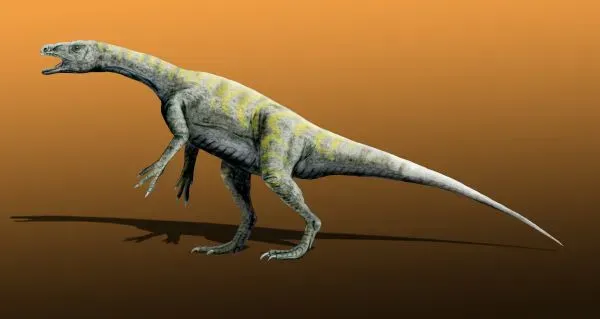
Let’s be real – the giant long-necked sauropods of the Jurassic period are among the most awe-inspiring creatures to have ever walked the Earth. So where did they come from? The answer, in part, points back to a small, overlooked dinosaur called Panphagia. The earliest dinosaurs are from the early Late Triassic (Carnian) of South America. By the Carnian, the main clades Saurischia and Ornithischia were already established, and the presence of the most primitive known sauropodomorph Saturnalia suggests that Saurischia had already diverged into Theropoda and Sauropodomorpha. Panphagia arrived right at that critical fork in the road.
Panphagia protos was described as a new small sauropodomorph dinosaur from the Ischigualasto Formation in northwest Argentina, based on a partial skeleton. Its teeth reveal something extraordinary. The teeth of Panphagia are slightly constricted at the base, as in basal sauropodomorphs, and as in other basal sauropodomorphs, the teeth of Panphagia have coarse oblique serrations on the anterior and posterior margins that differ from the fine, perpendicular serrations present in Saturnalia and basal saurischians. These tiny dental differences are the breadcrumbs that paleontologists follow across millions of years of evolution. Remarkable, when you think about it.
7. Camposaurus – Arizona’s Ghost of the Triassic
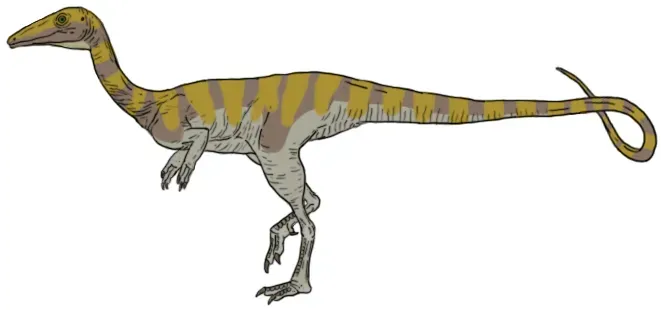
If you think the evidence for some dinosaurs is thin, Camposaurus takes that to a whole new extreme. Camposaurus was a small theropod dinosaur that lived during the Norian age of the Late Triassic period. From the partial lower leg bones found in Arizona, the only known remains of this dinosaur, we can tell that it was a small meat-eater. That’s essentially all science has to work with. A few leg bones. Not a skull, not a spine, not even a claw. Just fragments from the lower leg, found in one of the most famously fossil-rich landscapes in North America.
The Camposaurus is considered the most ancient neotheropod. This group is a remarkable survivor because the neotheropods were the only Triassic dinosaurs who lived through the Triassic-Jurassic extinction. That’s not a minor footnote. That’s a dynasty-founding lineage, quietly beginning its reign while every competitor around it was slowly disappearing. The end of the Triassic period was marked by a major mass extinction, the Triassic-Jurassic extinction event, that wiped out many groups and allowed dinosaurs to assume dominance in the Jurassic. Camposaurus, fragile and barely known, sat at the very root of that seismic shift.
8. Riojasaurus – Argentina’s Early Giant
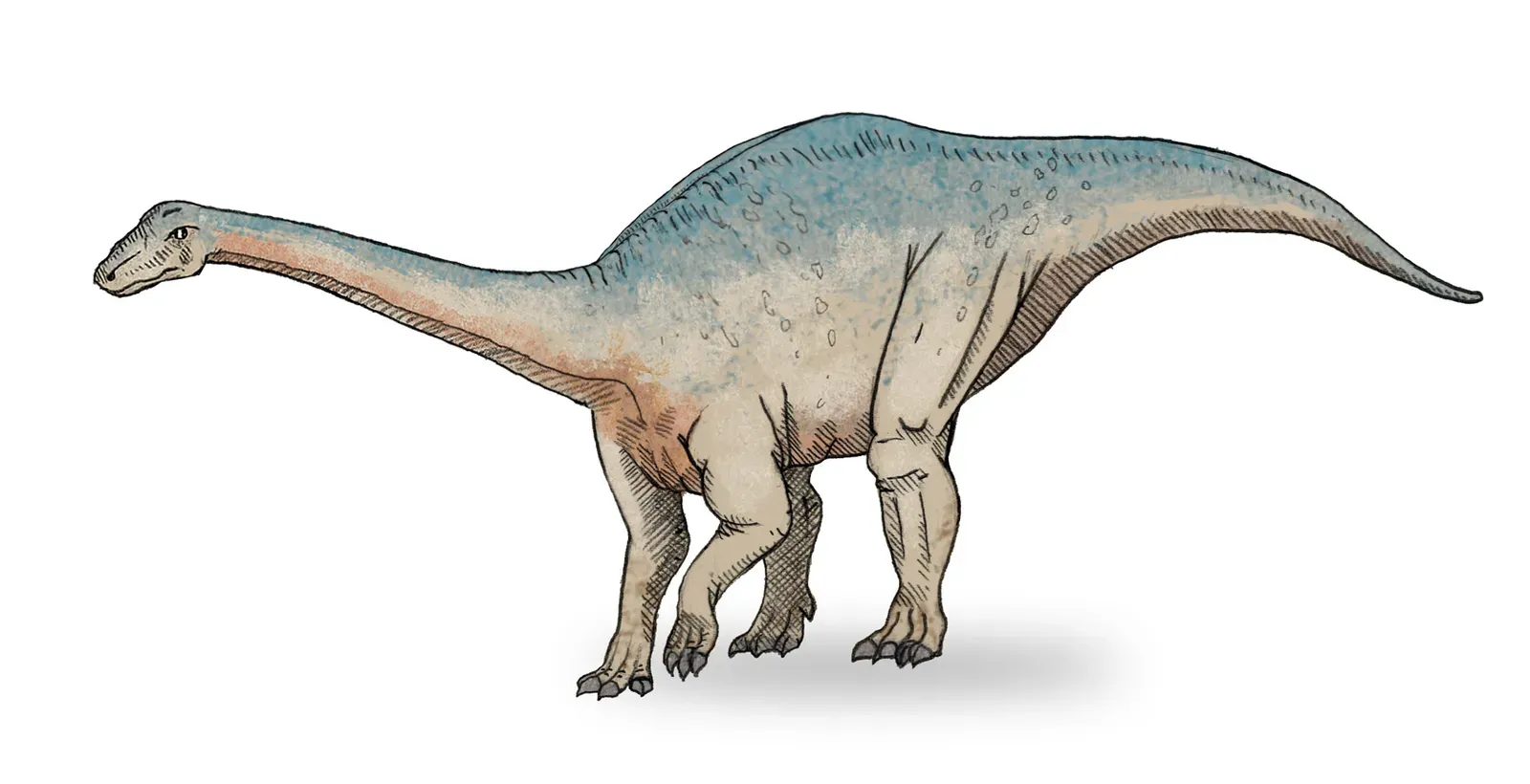
By the end of the Triassic, not all dinosaurs were small. Riojasaurus is a case in point. Riojasaurus was a sizeable Late Triassic herbivore that inhabited Argentina’s La Rioja Province about 225 to 219 million years ago. Discovered in the Los Colorados Formation, it measured around 10 meters in length and 3 meters in height. The animal was adapted for both four-legged and bipedal stances, supporting its herbivorous lifestyle. Ten meters long and roughly the height of a standard ceiling – in the Triassic. Before dinosaurs were supposed to be big.
Riojasaurus fossils featured scleral rings that suggested a cathemeral lifestyle, meaning it may have been active at various times throughout the day and night. Although a sauropodomorph, its anatomy suggests it was a rather closer relative to the earliest Jurassic sauropods. In other words, Riojasaurus was a living preview of the colossal sauropods that would dominate the Jurassic. By the end of the Triassic era, some of these dinosaurs became impressive in size. Riojasaurus and Lessemsaurus had each reached more than 9 meters in length. Scale like that, in a world where dinosaurs were supposedly minor players, is honestly astonishing.
9. Coelophysis – The Pack Hunter That Predated Everything
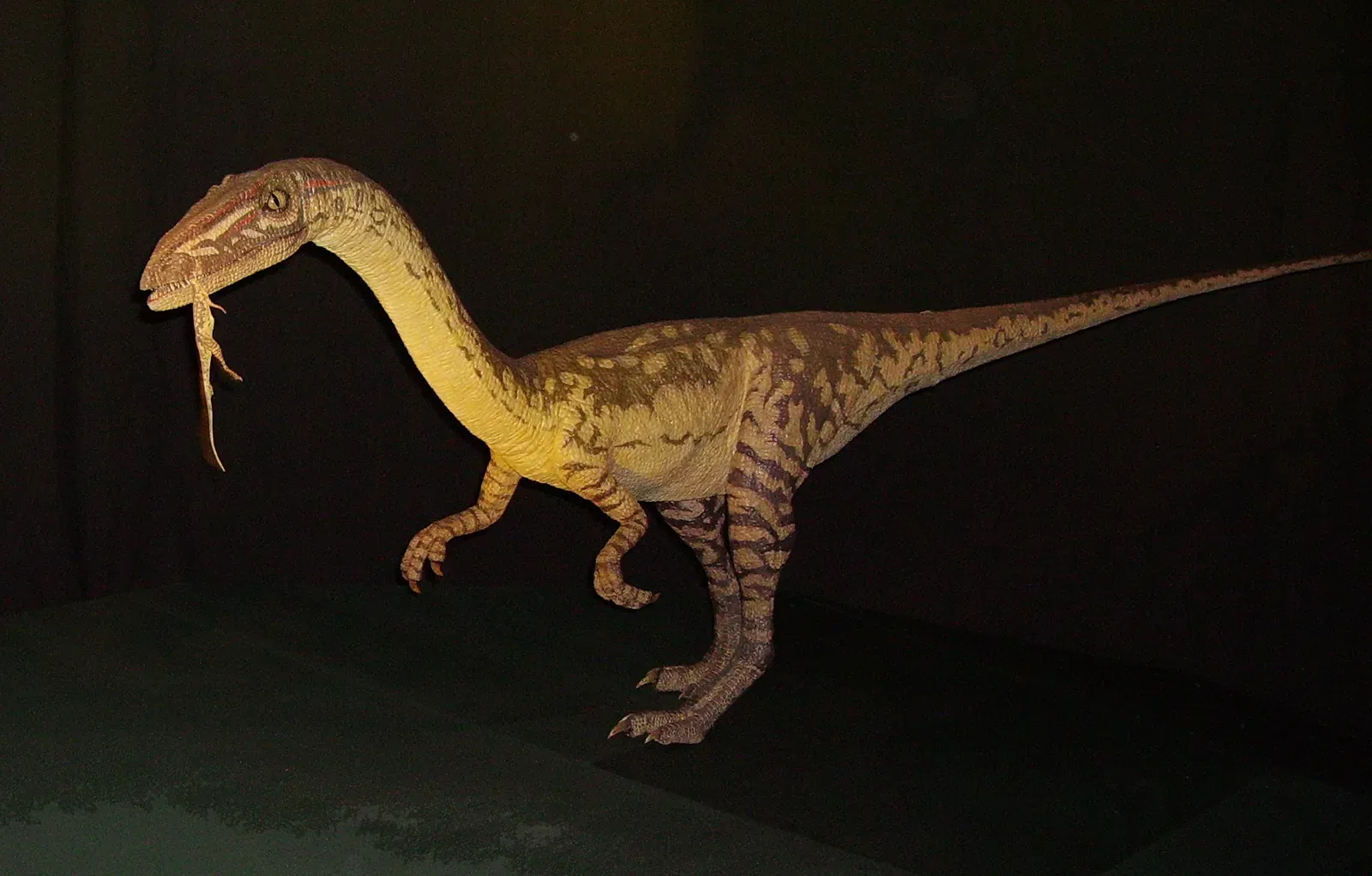
Coelophysis might be the most famous dinosaur on this list, yet most casual dinosaur fans still underestimate just how ancient and important it was. Among the first dinosaurs was the two-footed carnivore Coelophysis, which grew up to 9 feet tall, weighed up to a hundred pounds, and probably fed on small reptiles and amphibians. It showed up about 225 million years ago. Lean, fast, and hungry, it was the blueprint for the predatory dinosaur body plan that would persist for over 150 million years.
Coelophysis was a Late Triassic carnivorous dinosaur about 2 metres long, and its fossils have been found in the Chinle Formation in the Petrified Forest National Park of northeastern Arizona. What gives Coelophysis its legendary status in paleontology is the sheer abundance of its fossils. These early dinosaurs were mostly small, lightly built two-legged carnivores, including animals such as Coelophysis and its close relatives. This predator lived in large herds and, similar to birds, had hollow limbs. Hollow bones in a dinosaur that walked before the Jurassic even began. It’s a trait you’d associate with birds today, yet here it was, already refined in an animal from 225 million years ago. Evolution, it turns out, started experimenting far earlier than we give it credit for.
Conclusion: The Triassic’s Forgotten Founders
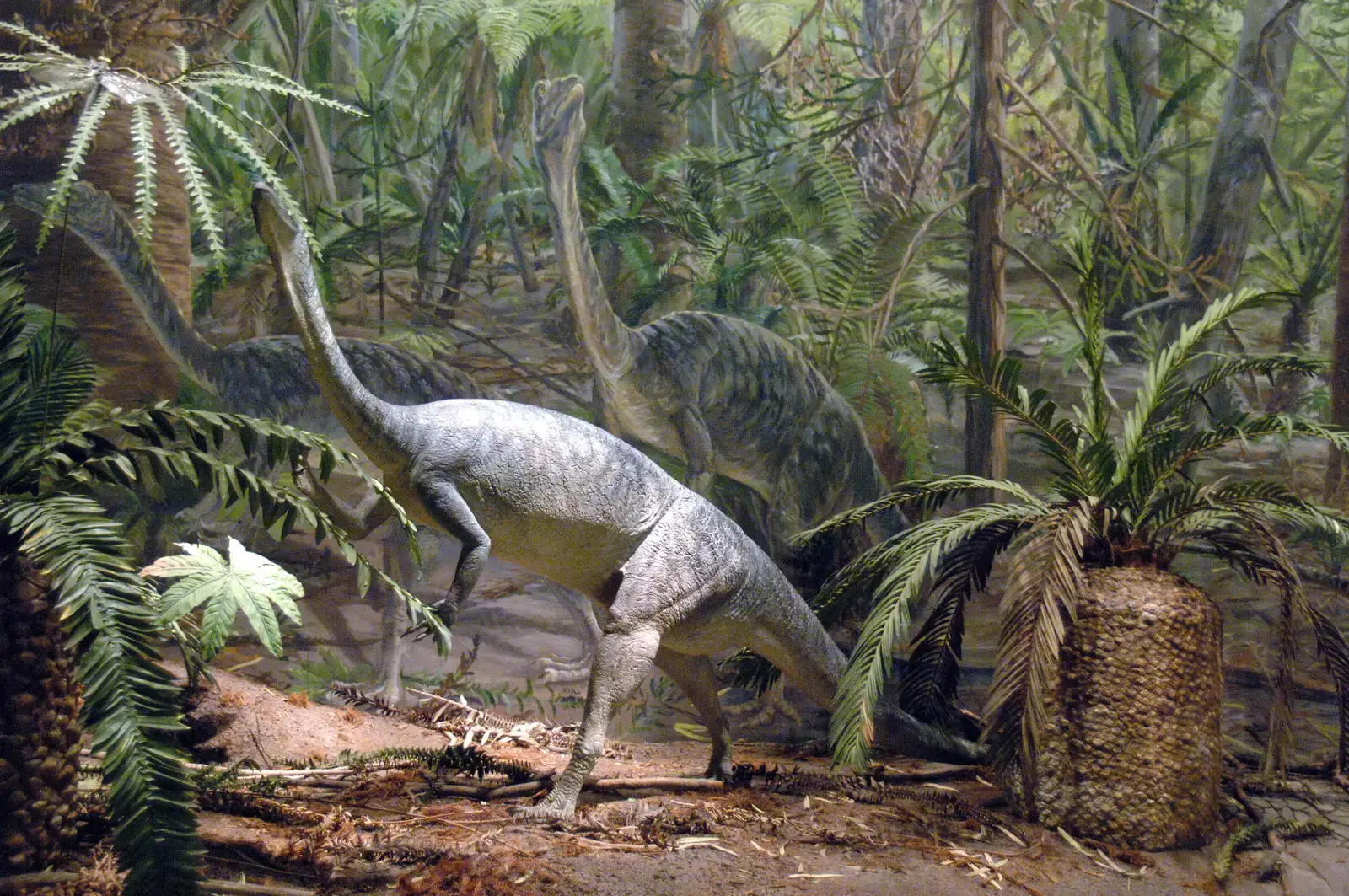
The Triassic period rarely gets the dramatic headlines that the Jurassic does. No blockbuster movies, no iconic silhouettes on museum posters. Yet it was during this quieter, stranger era that the entire foundation of the dinosaur world was quietly being built. Extinctions within the Triassic and at its end allowed the dinosaurs to expand into many niches that had become unoccupied. Dinosaurs became increasingly dominant, abundant and diverse, and remained that way for the next 150 million years.
These nine dinosaurs, from the tiny Alwalkeria of India to the surprisingly massive Riojasaurus of Argentina, were the trailblazers. They survived hostile climates, competed with creatures far more powerful than themselves, and laid the evolutionary groundwork for everything that came after them. The Triassic was a time of change, a transition from a world dominated by mammal-like reptiles to one ruled by dinosaurs. And these nine were at the very front of that transition.
It’s hard not to feel a sense of wonder knowing that some of history’s most important creatures are also among its least celebrated. Next time someone mentions the Jurassic, maybe you’ll think a little further back. What do you think – does the Triassic deserve more credit than it gets? Share your thoughts in the comments below.