
Pará State, Brazil – Planners of the massive Belo Monte hydroelectric complex on the Xingu River confront diminishing flows that challenge the project’s long-term viability.
Drastic Output Drops During Peak Drought
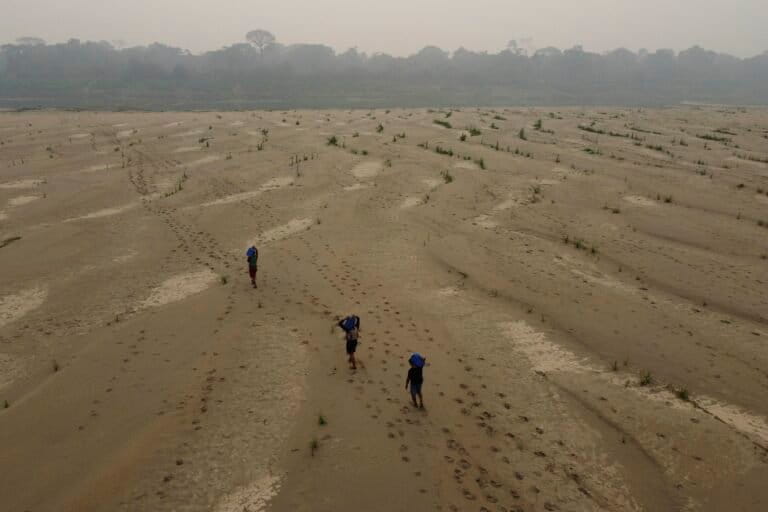
Drastic Output Drops During Peak Drought (Image Credits: Imgs.mongabay.com)
The facility managed a mere 145 megawatts per day on average from September to November 2024, representing just over 1% of its 11,233-megawatt capacity. That period marked Brazil’s most intense drought since records began in 1950. Only one of the plant’s 18 turbines spun during late August, before conditions worsened further. Output peaked briefly at 10,397 megawatts on April 30, 2024, yet failed to sustain levels through the dry season. Saulo Aires, climate change coordinator at Brazil’s National Water Agency (ANA), described the situation bluntly: “What we are seeing now is that the hydrological reality has already changed.”
Operators navigated these constraints amid nationwide energy strains. The run-of-river setup relies directly on incoming water volumes. Prolonged dry spells exposed this dependency sharply. Communities downstream felt ripple effects, including navigation issues and ecosystem strain.
Climate Projections Paint Grim Picture
Recent analyses from ANA and the Energy Research Office (EPE) highlight accelerating risks. Hydropower across the Amazon could forfeit up to 40% of generation capacity within 20 to 30 years under persistent historical planning methods. The Xingu Basin faces maximum flows declining by 50%, with dry stretches extending from 20 days historically to 40 days routinely, and potentially 150 days by century’s end. Rodrigo Paiva, a hydraulic research professor at the Federal University of Rio Grande do Sul and ANA study co-author, noted strong model signals for southern Amazon tributaries like the Xingu.
These forecasts assume moderate emissions scenarios. Further forest loss could intensify hydrological shifts. EPE projections demand 121 gigawatts of new capacity in solar, wind, and storage to offset shortfalls, potentially hiking system costs by 70% or 144 billion reais. Rafael Kelman, EPE study coordinator, warned of compounded pressures from reduced supply and rising demand tied to hotter temperatures.
Vulnerabilities Stem from Run-of-River Design
Belo Monte launched in 2016 without a vast reservoir, a deliberate choice to limit flooding. This approach heightened sensitivity to seasonal lows. Early planning overlooked emerging climate signals around 2010, when studies suggested scaling back by 30% or more. Limited historical data for remote rivers like the Xingu fueled uncertainties.
Table below contrasts recent performance against potential:
| Period | Generation (MW) | % of Capacity |
|---|---|---|
| Sept-Nov 2024 Avg | 145/day | 1% |
| April 30, 2024 Peak | 10,397 | 93% |
| Projected Xingu Max Flow Decline | – | 50% |
Norte Energia, the operator, counters that the plant proved vital during a 2025-2026 heat wave, covering 9.3% of national demand. The firm invested over 8 billion reais in mitigation, including Indigenous programs.
Toward Resilient Energy Planning
Experts urge integrating climate models into operations and new builds. Paiva emphasized adapting current rules, as past guarantees evaporate. Licensing battles persist, with Indigenous groups citing fish deformities and flow disruptions. Courts have scrutinized environmental compliance.
Brazil’s hydropower dependence, at 43.7% of supply, demands diversification. Wind and solar gains offer pathways forward. Yet southern topography limits new dams there.
Key Takeaways
- Amazon dams risk 40% capacity loss without climate-adjusted plans.[1]
- Xingu dry periods may triple in length by 2100.
- Adaptation calls for massive investments in renewables and storage.
Belo Monte stands as a stark reminder that yesterday’s blueprints falter against today’s climate. Brazil must pivot swiftly to secure tomorrow’s power grid. What steps should follow for Amazon energy projects? Share your views in the comments.