Picture this: you are a paleontologist in 1965, digging through the blazing heat of the Gobi Desert, when suddenly you uncover a pair of arms so enormous they look like they belong to some kind of ancient monster. No skull. No body. No legs. Just arms. Massive, terrifying, deeply confusing arms.
That is exactly how the world met Deinocheirus. For decades, this creature existed in science as nothing more than a haunting mystery, and the full truth turned out to be far stranger than anyone dared to imagine. So let’s dive in, because every single fact about this animal is more jaw-dropping than the last.
Fact 1: A Pair of Arms That Baffled Science for Nearly 50 Years
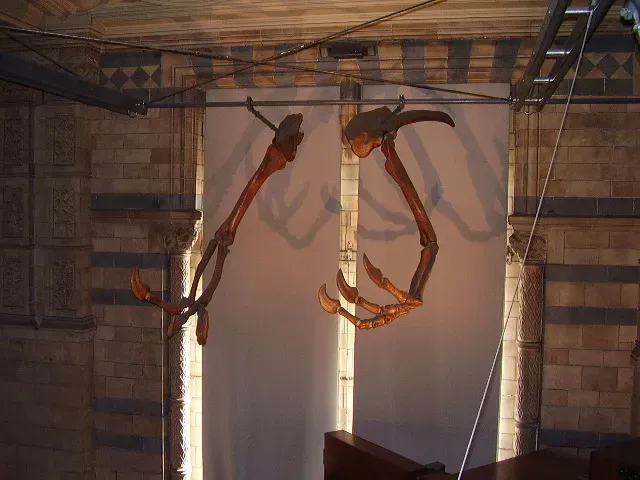
Honestly, few stories in the history of paleontology are as dramatic as this one. The first known fossil remains of Deinocheirus were discovered by Polish paleontologist Zofia Kielan-Jaworowska on July 9, 1965, at the Altan Ula III site in the Nemegt Basin of the Gobi Desert. What her team found was not a full skeleton. It was not even half a skeleton. It was essentially just two absolutely colossal arms, and that was enough to send the scientific world into a frenzy.
The scarcity of known Deinocheirus remains inhibited a thorough understanding of the animal for almost half a century, and the scientific literature often described it as among the most “enigmatic,” “mysterious,” and “bizarre” of dinosaurs. Think about that for a moment. For roughly fifty years, scientists could only stare at two arms and wonder. It is the paleontological equivalent of finding a single enormous shoe and spending your career trying to figure out who wore it.
Fact 2: Those Arms Were the Longest of Any Two-Legged Dinosaur on Earth
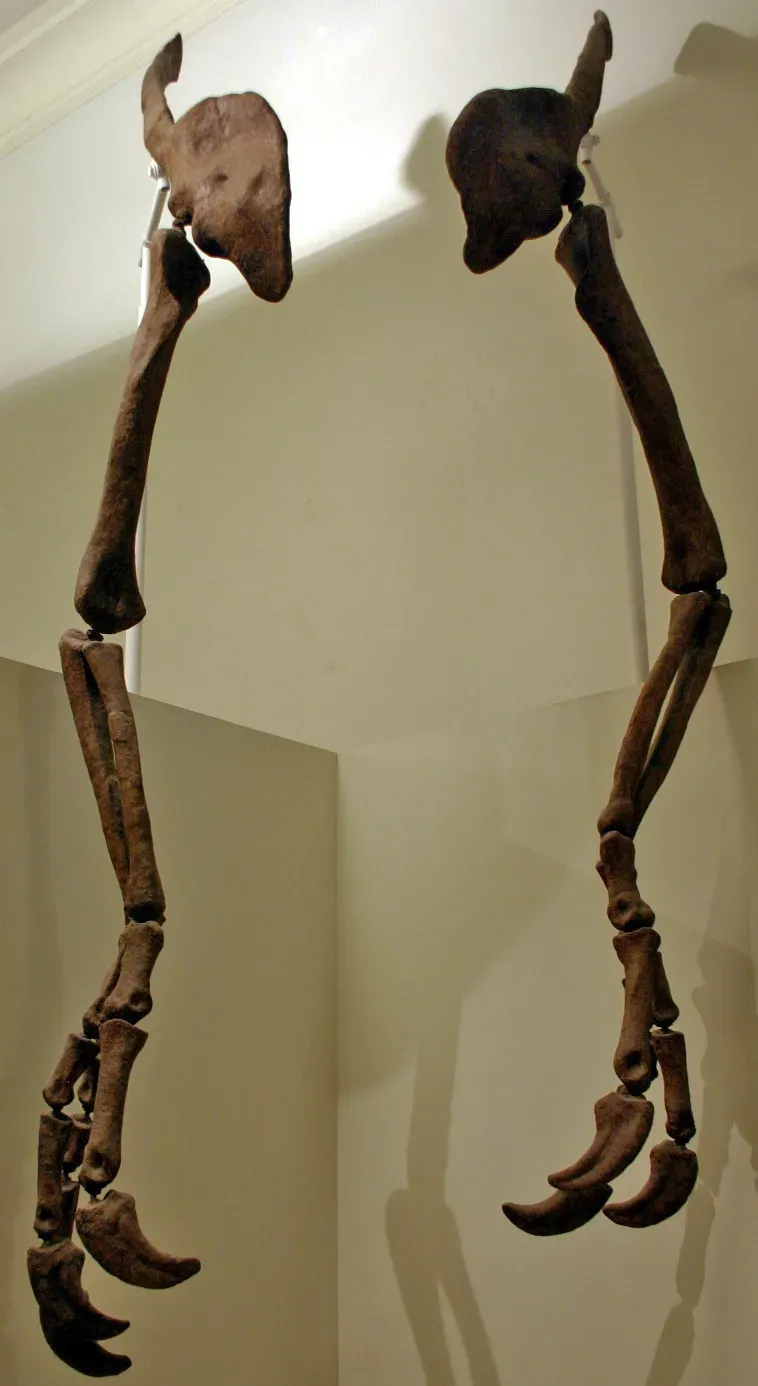
You might be wondering just how big these arms actually were. Well, hold on to your seat. The arms were among the largest of any bipedal dinosaur at 2.4 meters, roughly 7.9 feet long, with large, blunt claws on its three-fingered hands. To put that in perspective, imagine stretching your arms out and adding another full grown adult standing next to you. That is the kind of reach we are talking about.
Most large theropods, such as T. rex and Giganotosaurus, possessed comparatively tiny arms, making the giant arms of the mystery theropod a true enigma. So when scientists found these limbs, all the usual rules went out the window. Early guesses placed Deinocheirus as a fearsome, apex predator even bigger than a T. rex. Early depictions of Deinocheirus imagined an enormous long-armed carnivore as large as Tyrannosaurus. They were spectacularly wrong, which makes this story even better.
Fact 3: Its True Appearance Was Finally Revealed Thanks to Fossil Poachers
Here is where things get genuinely wild. The reason scientists were able to finally piece together what this creature looked like involves fossil poachers, notes scribbled on Mongolian currency, and some remarkable detective work. In 2009, paleontologist Phil Currie and the Korean-Mongolian team made a breakthrough. Using a set of notes written on Mongolian currency by fossil poachers, Currie and the team were able to locate a new specimen of Deinocheirus at a location called Bugiin Tsav. While the poachers had taken elements of the animal’s skull, hands, and feet, the team recovered most of the animal’s remaining skeleton.
Two more complete specimens were described in 2014, which shed light on many aspects of the animal. Parts of these new specimens had been looted from Mongolia some years before, but were repatriated in 2014. I think this part of the story deserves its own movie, honestly. A decades-long mystery, international fossil smuggling, and a breakthrough hidden in handwritten notes on currency. It reads like a thriller novel, not a science journal entry.
Fact 4: The Real Animal Looked Like Nothing Anyone Had Imagined
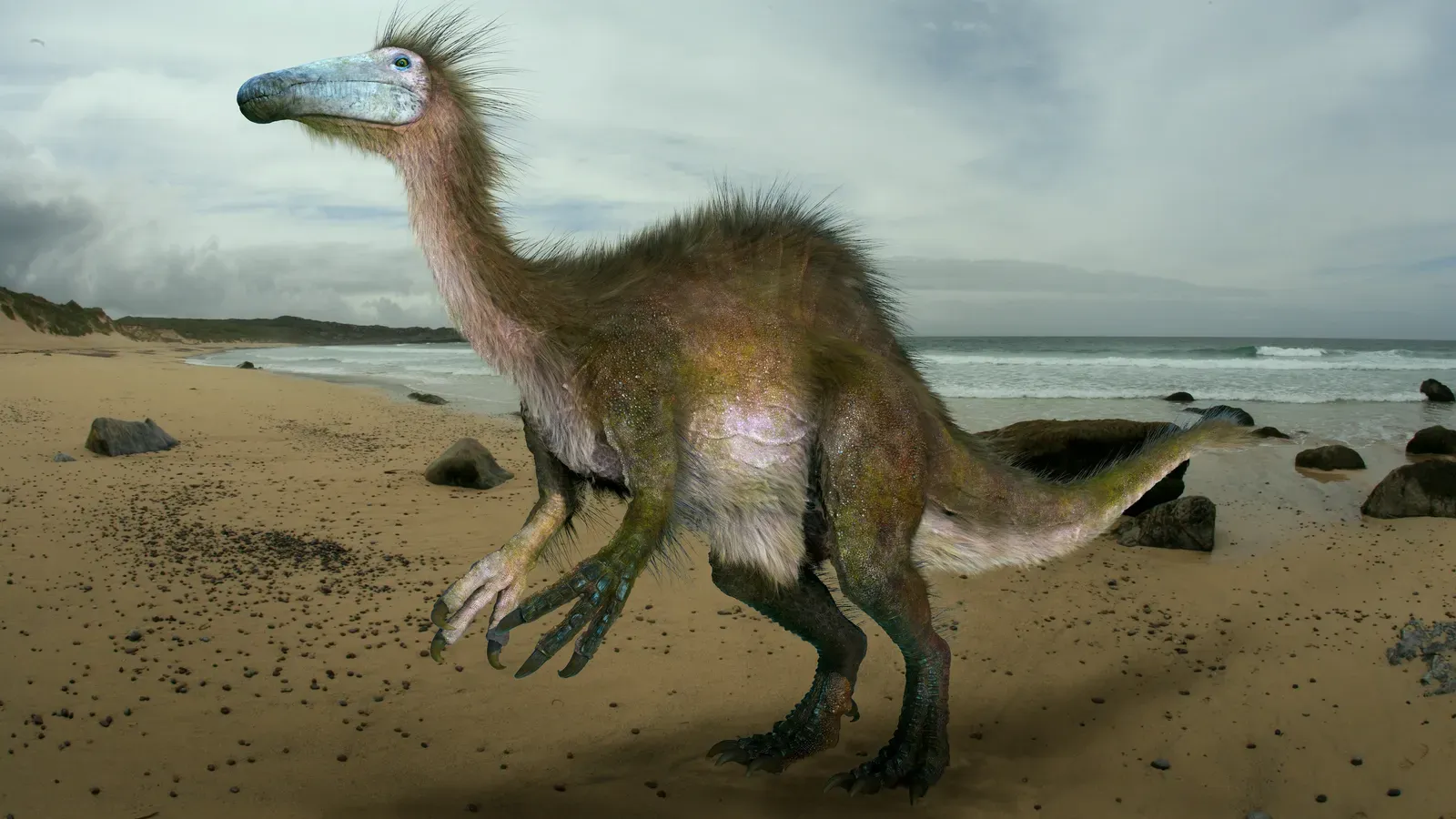
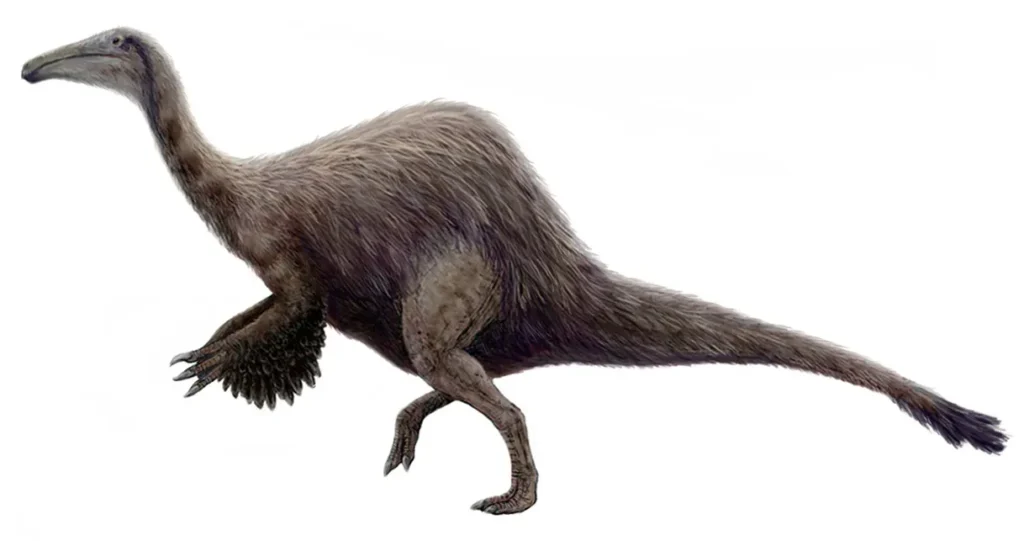
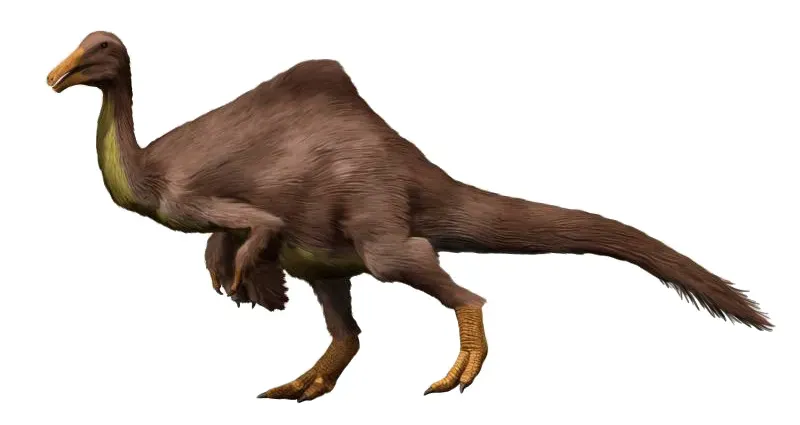
When scientists finally assembled a full picture of Deinocheirus, the reaction in the paleontology community was reportedly one of pure, stunned disbelief. We now know that it was a truly bizarre-looking creature, with huge, clawed hands, a beaked head like a duck, and a hump like a camel. That is not a description you typically read in a scientific paper. A duck’s beak. A camel’s hump. Giant claws. All on one creature.
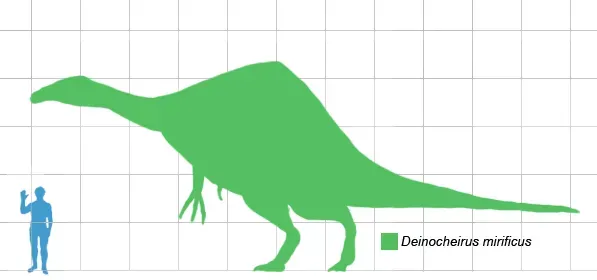
Deinocheirus was an unusual ornithomimosaur, the largest of the clade at 11 meters, or 36 feet long, and weighing 6.5 tonnes. To give you a sense of scale, that is roughly the length of a standard school bus and as heavy as a large African elephant. The enormous head and long neck led to a sail-back, pot-bellied torso atop stout legs that did little running. The sail-back was formed by long spines on its vertebrae, forming a point over the middle of the back, making it look like a hump-back. Strange does not even begin to cover it.
Fact 5: It Was an Omnivore That Swallowed Stones and Ate Fish
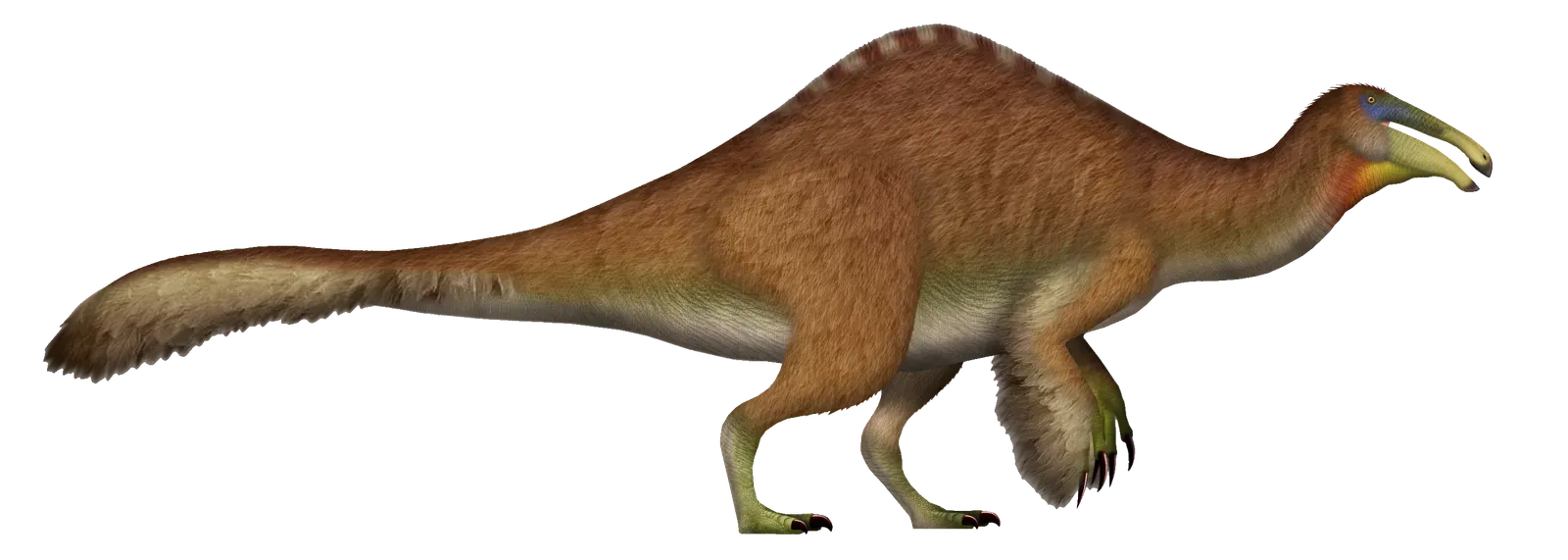
Let’s be real: when you first picture a dinosaur with arms the size of Deinocheirus, you assume it is a vicious, slashing predator. The truth is far more unexpected. Although ornithomimosaurs are generally considered to be herbivores, this is not certain for Deinocheirus. In addition to gastroliths, fish scales were found in the belly, showing that Deinocheirus may have been an omnivore. Fish scales, inside the fossilized remains of a creature whose arms could crush a car. The contrast is almost comedic.
The beak structure and the large tongue suggest an adaptation for foraging in water bodies. This dinosaur scooped up vegetation and possibly sieved through mud for aquatic prey. This behavior is akin to modern ducks and waterfowl, indicating a sophisticated method of food acquisition. It also swallowed gizzard stones to grind down tough plant matter, much like many plant-eating animals do today. Its terrible hands were probably nothing more than extravagant gathering devices, used to dig for food or pull down high branches. The most feared-looking arms in dinosaur history, used essentially for gardening and fishing.
Fact 6: Tarbosaurus Apparently Had Its Eye on Deinocheirus
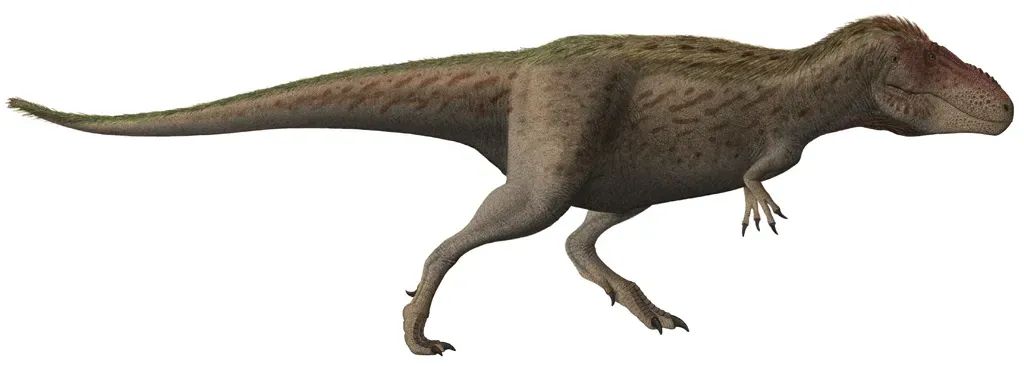
You might think that an animal the size of a bus with eight-foot arms would have nothing to fear. But nature always has a way of humbling even the mightiest. Bite marks on two gastralia were identified as belonging to Tarbosaurus, and it was proposed that this accounted for the scattered, disassociated state of the holotype specimen. Tarbosaurus was the Mongolian cousin of T. rex, a massive predator with bone-crushing jaws, and it left its mark quite literally on the fossilized bones of Deinocheirus.
The gastralia discovered at Bugiin Tsav preserved traces of Tarbosaurus bite marks, indicating that it preyed upon the giant omnivore. Despite this, analysis of Tarbosaurus enamel suggests that it preferred hadrosaurs and sauropods, meaning that the predation of Deinocheirus appears to have been a one-off event. Additionally, the bite marks appear to have occurred after the Deinocheirus died, highlighting the opportunism of big predators when it comes to free meals. So it was less of a predator-prey showdown and more of a very large, very unfortunate scavenging incident. Still, the evidence tells us these two giants definitely shared the same world.
Fact 7: Its Tail May Have Had a Fan of Feathers, and Its Name Is Pure Poetry
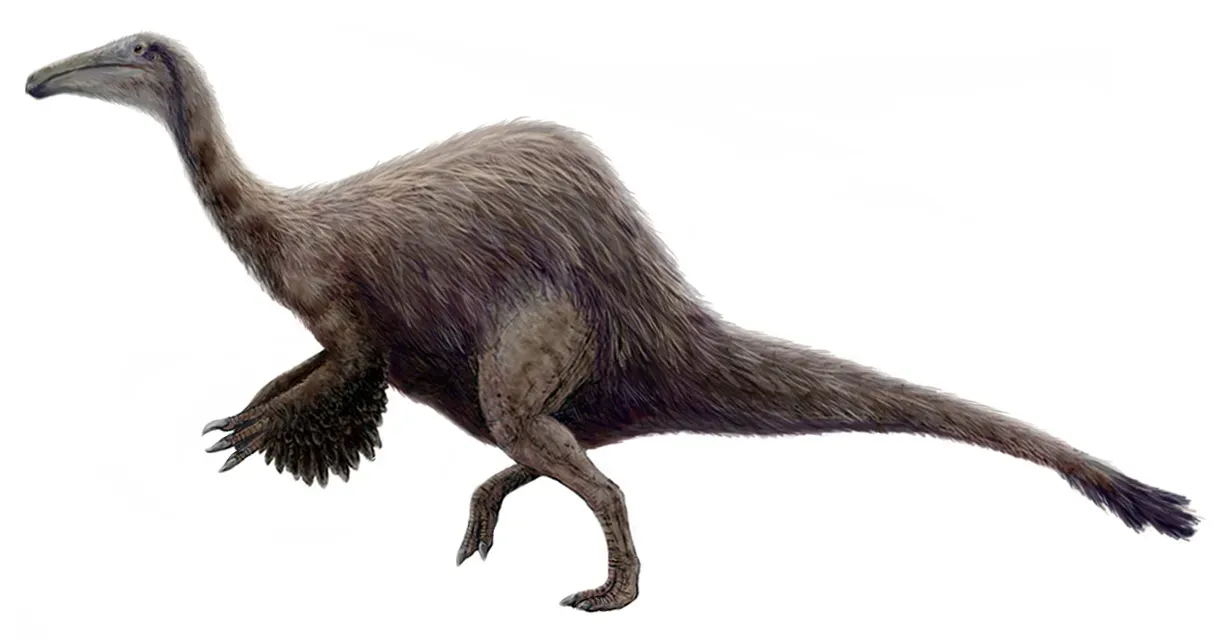
As if this creature needed to be any more surreal, consider what paleontologists discovered at the very end of its skeleton. Lee’s team showed that the bones at the end of Deinocheirus’s tail were fused into a single structure called a pygostyle, a feature that in modern birds supports tail feathers. If Deinocheirus had a pygostyle, it most likely wafted a fan of tail feathers too. So picture this creature waddling through a Mongolian wetland, enormous arms swinging, duck-beak dipping into the water, a camel hump on its back, and a fan of feathers at its tail like some prehistoric peacock.
The generic name is derived from Greek words meaning “horrible” and “hand,” due to the size and strong claws of the forelimbs. The specific name comes from Latin and means “unusual” or “peculiar,” chosen for the unusual structure of the forelimbs. So its full name, Deinocheirus mirificus, essentially translates to “unusual terrible hand.” The story of Deinocheirus is one of those things in paleontology that is just too crazy to have been made up. Paleontologists are still amazed that this terrifying pair of arms from the desert belonged to a hump-backed, duck-billed, omnivorous theropod. It is a name that somehow still undersells just how remarkable this animal truly was.
Conclusion: The Dinosaur That Kept Its Secrets for Half a Century
Deinocheirus is not just a dinosaur. It is a reminder that nature’s creativity has no boundaries, and that the more we dig, the stranger and more spectacular the story becomes. From a pair of baffling arms in the Gobi Desert to a full-body reconstruction that stunned the scientific world, this creature redefines what we think a dinosaur can be.
The story of Deinocheirus is one of those things in paleontology that is just too crazy to have been made up. It also teaches us something genuinely humbling: even with decades of study and expertise, nature still holds the power to completely blindside us. A duck-beaked, hump-backed, fish-eating giant with the longest arms of any two-legged animal to ever walk the earth was hiding in plain sight the whole time.
So the next time someone tells you they have dinosaurs all figured out, think of Deinocheirus. What other impossible creatures might still be waiting, buried just beneath the sand? What do you think, could there be something even stranger still out there? Tell us in the comments.