Millions of years before the first human ever set foot on this planet, some of history’s most extraordinary creatures were already making epic journeys across the face of the Earth. Dinosaurs did not simply stand still and wait for the world to change around them. They moved, they adapted, and in doing so, they spread their lineages across landmasses that today sit separated by vast oceans.
How is it possible that nearly identical dinosaur species show up in fossil records on opposite sides of the globe? What drove these ancient giants to walk hundreds or thousands of miles into new territory? The answers are stranger, richer, and more layered than you might ever expect. Let’s dive in.
The Breakup of Pangea Opened the Door for Dinosaur Spread
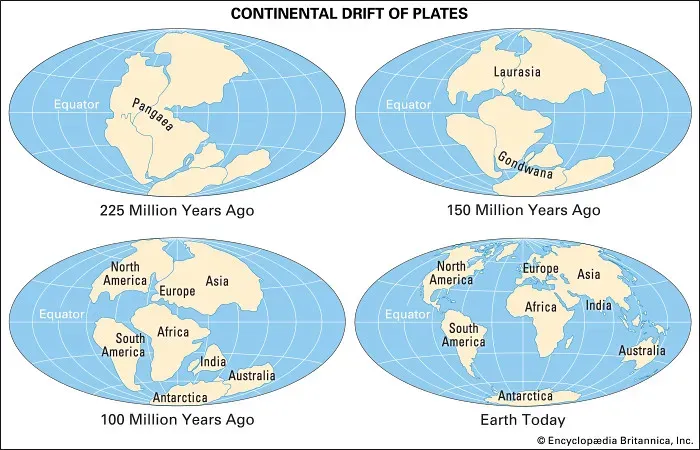
To understand why dinosaurs migrated at all, you first have to wrap your head around just how radically different the planet looked during their reign. The researchers who have studied this topic looked at what happened when Pangea broke up into smaller continents in the Triassic period, which is when dinosaurs first evolved. That single, massive supercontinent was essentially a wide open highway for any creature with legs, and dinosaurs made full use of it.
A crucial part of understanding Mesozoic migrations and dinosaur movement is understanding how Pangea shaped dinosaur passages. Living on a single massive landmass made it easier for dinosaurs to move from one area to another if food became scarce or threats such as predators became more prevalent. Think of Pangea the way you might think of a single enormous country with no borders, no oceans between regions, and no barriers to movement. It was the original open world.
Pangea began breaking apart at the start of the Mesozoic era in the Triassic period, so dinosaur migration likely slowed down by the Jurassic period as continents drifted further apart. Yet here is the fascinating part: the slowing down was never a complete stop. Dinosaur families kept appearing on continents that were already well separated from one another, and scientists have been puzzling over why ever since.
Temporary Land Bridges Formed by Shifting Sea Levels
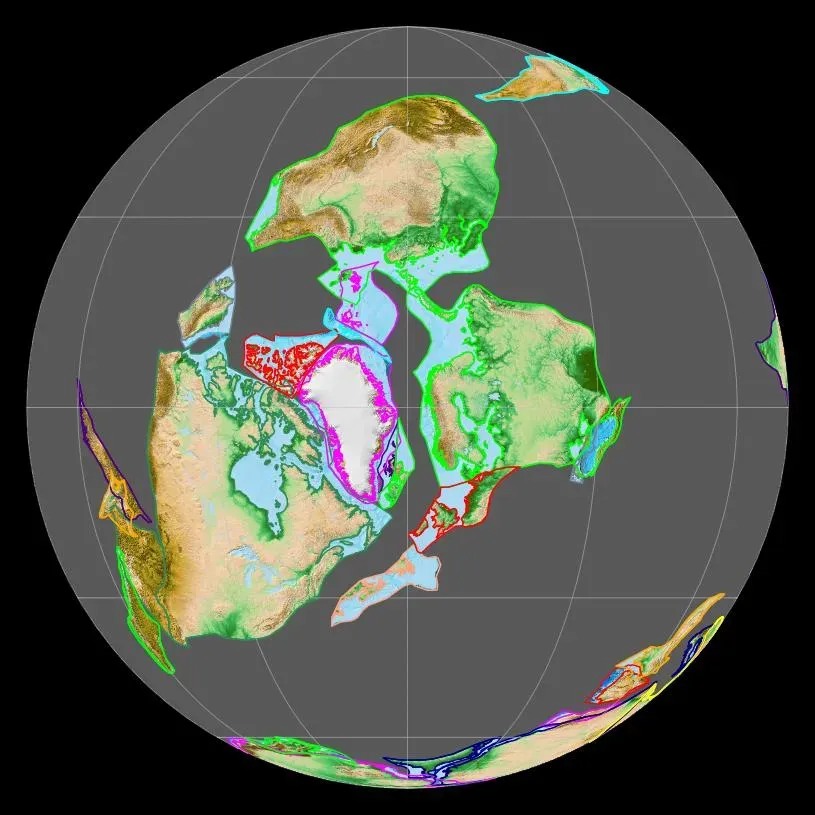
Here is a theory that honestly sounds almost too convenient to be true, yet the evidence keeps stacking up in its favor. Dinosaurs may have been able to move across continents, and between islands, by the formation of temporary land bridges, which could have formed because of fluctuating sea levels during the Cretaceous era. Imagine the ocean floor rising and falling like a slow, planetary tide over millions of years, briefly exposing stretches of dry land that creatures could walk across before the waters returned.
As a result of continental division, many land masses ended up with high sea levels. Dinosaurs in search of safe spaces relocated from these zones using temporary land bridges formed due to the world’s tectonic activity. This is not so different from how animals behave today. You see elephants or wildebeest following seasonal water sources across Africa. Scale that instinct up to a planetary level across millions of years, and you have something extraordinary.
The Dinosaur Dispersal Corridor Between Africa and South America
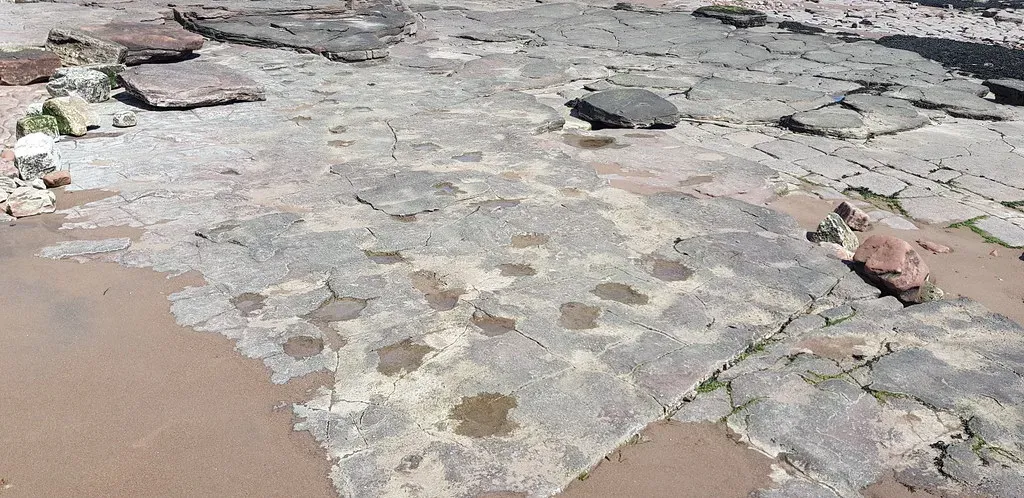
This is perhaps one of the most jaw-dropping pieces of physical evidence ever discovered for dinosaur continental migration. A groundbreaking study unveiled a set of nearly identical Early Cretaceous dinosaur footprints on two separate continents, illustrating a prehistoric connection between South America and Africa. The footprints were found in the Borborema region of northeastern Brazil and the Koum Basin in northern Cameroon, two sites now separated by the entire Atlantic Ocean.
The twin sites, once side by side, preserve what researchers now call the Dinosaur Dispersal Corridor. Most of the footprints belong to three-toed theropods, the fleet carnivores of their day. A handful of sauropod and ornithopod impressions round out the roster, hinting at herds of plant-eaters trudging through the same wetlands. The sheer fact that you can find matching dinosaur tracks on two different continents today is almost poetic. The ground remembers what the map has long forgotten.
Climate Change and CO2 Drops Unlocked Migration Routes
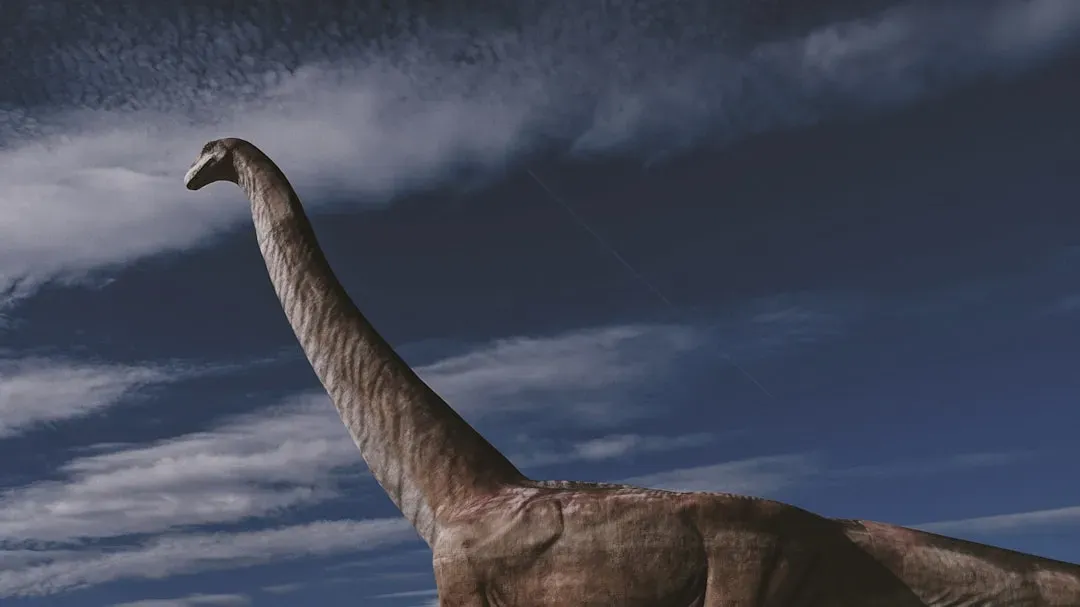
You might not immediately link ancient carbon dioxide levels to dinosaur road trips, but science has a way of surprising you. A drop in carbon dioxide levels may have helped sauropodomorphs, early relatives of the largest animal to ever walk the Earth, migrate thousands of kilometers north past once-forbidding deserts around 214 million years ago. It seems climate was not just a backdrop to prehistoric life. It was actively controlling the routes that were even possible to travel.
The study authors explained that on a planet supercharged with CO2, there were likely climate extremes that would have prevented the dinosaurs from migrating. “We know that with higher CO2, the dry gets drier and the wet gets wetter.” When the CO2 levels dipped 215 to 212 million years ago, the tropical regions may have become more mild, and the arid regions could have become less dry. In other words, entire deserts that once acted as impassable walls may have temporarily softened just enough to let dinosaur herds push through northward.
Following Food and Water Across Vast Distances
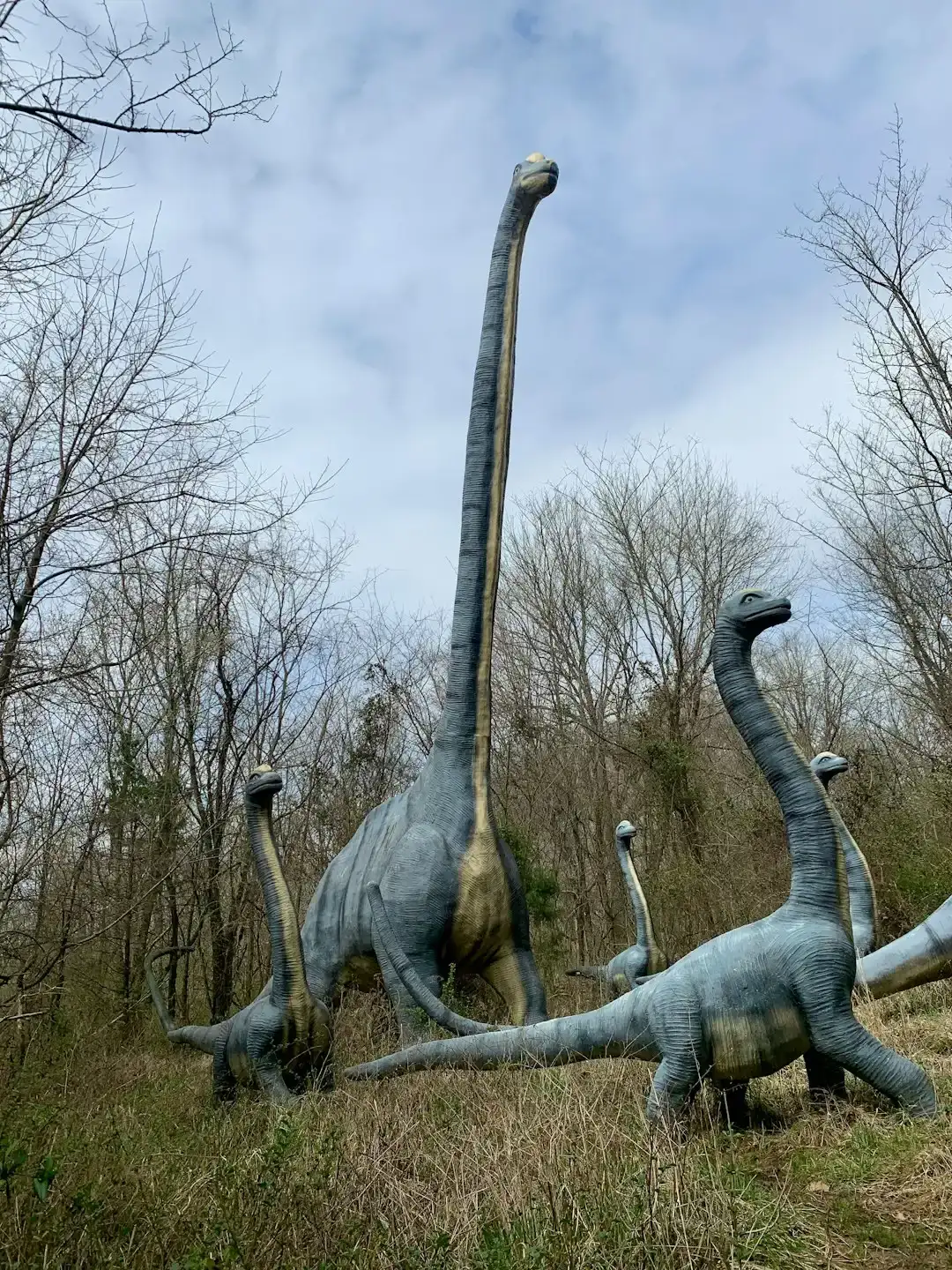
Let’s be real. When you strip everything else away, the simplest explanation for migration is usually hunger. Dinosaurs needed large amounts of food and water to sustain their energy so the species could flourish. The species would have to find more abundant food sources, such as lush vegetation or herds of prey animals, if food or water sources dried up. This is exactly the same logic that drives modern migrations of wildebeest across the Serengeti or caribou across the Arctic tundra today.
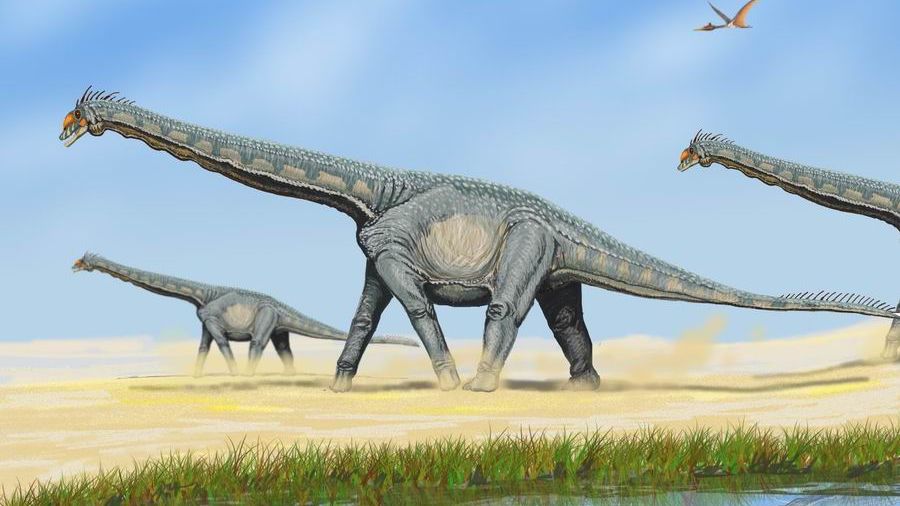
Responding to shifts in food and water availability, long-necked plant-eaters likely trudged from floodplain lowlands to distant uplands and back again as the seasons changed. Oxygen isotope analysis from fossilized sauropod teeth has actually provided some of the best physical evidence of this kind of seasonal movement. Dinosaurs needed large amounts of food and water to sustain their energy so the species could flourish. The species would have to find more abundant food sources, such as lush vegetation or herds of prey animals, if food or water sources dried up. It is a surprisingly ordinary motivation for such an extraordinary animal.
Predator Pressure Pushed Herbivores Into New Territories
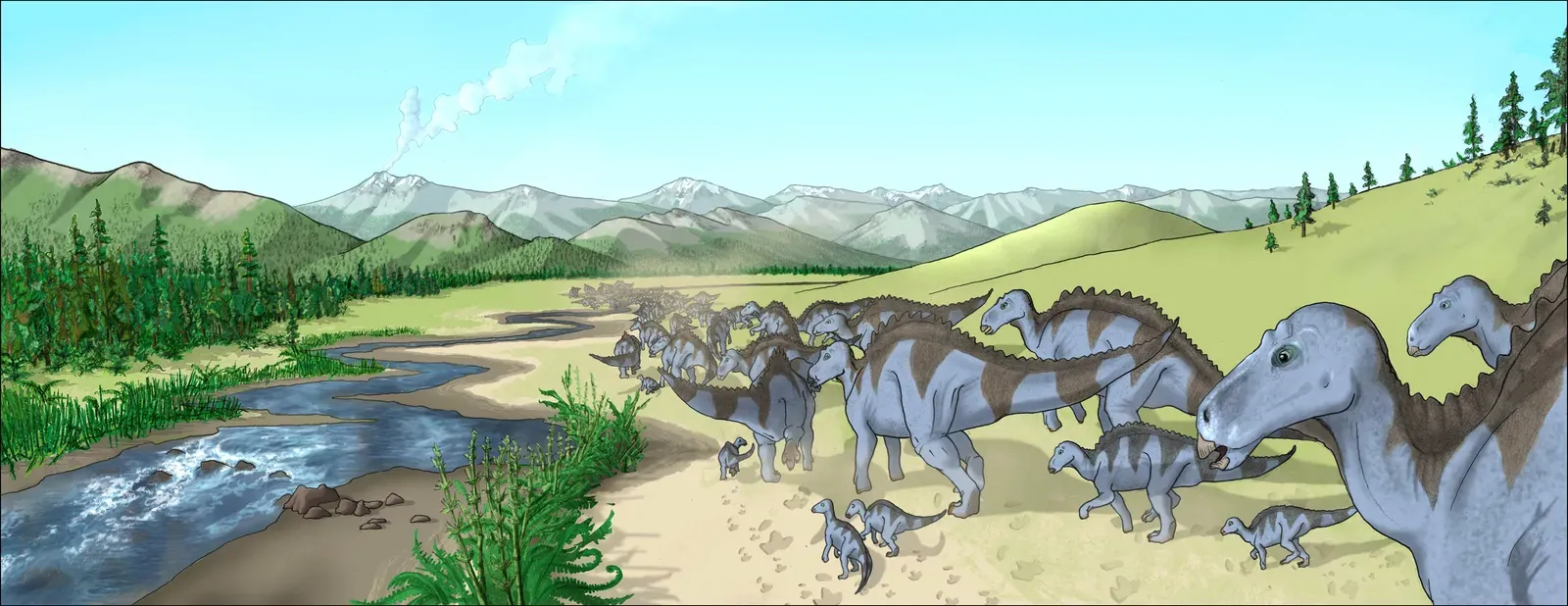
Think about it from the prey’s perspective for a moment. Migration allowed dinosaurs to avoid predators. A group of triceratopses may have naturally chosen to find a new habitat if a group of T. rex began hunting in the area. This kind of pressure-driven dispersal is something we recognize clearly in modern ecosystems. When a predator becomes too successful in one region, the prey simply moves. The only difference here is that the scale was continental.
Some dinosaurs may have also migrated due to alterations in temperature and food sources as the Mesozoic climate changed. Migration increased a species’ chance of survival and adaptation as Earth underwent natural changes. Honestly, I think this is one of the most underappreciated drivers in the whole discussion. The relationship between predator and prey is a powerful engine for movement, and over millions of years, that engine could push entire populations across land bridges and into completely new ecological zones.
Europe’s Isolation and Reconnection as an Evolutionary Springboard
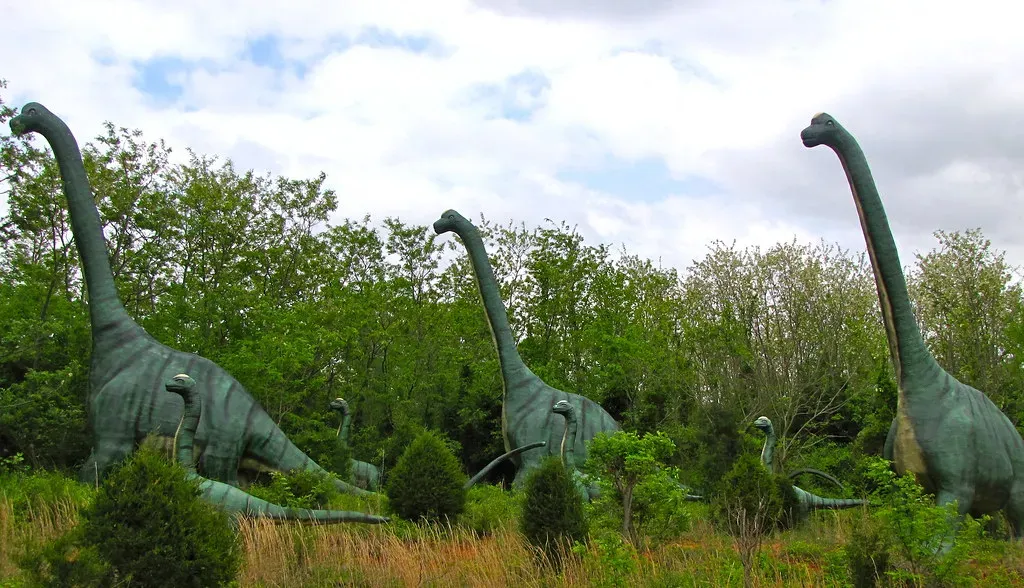
Here is a theory that reads almost like a story of isolation, reinvention, and return. One theory suggests that the isolation of Europe during the Mesozoic Era played a significant role in the evolution and subsequent migration of new dinosaur groups. As Europe reconnected with other continents, these dinosaurs expanded their geographic ranges, taking advantage of the newly available habitats. This theory highlights the influence of continental fragmentation on dinosaur migration patterns. Europe, in this scenario, was a kind of evolutionary pressure cooker.
The findings support the idea that, although continental splitting undoubtedly reduced intercontinental migration of dinosaurs, it did not completely inhibit it. Surprisingly, the study also showed that all connections between Europe and other continents during the Early Cretaceous were out-going. Every single connection researchers found was pointing away from Europe, as if an entire continent’s worth of new species suddenly had somewhere better to be. It is a curious, almost mysterious result that scientists are still working to fully explain.
River Valleys as Ancient Highways Across Continents
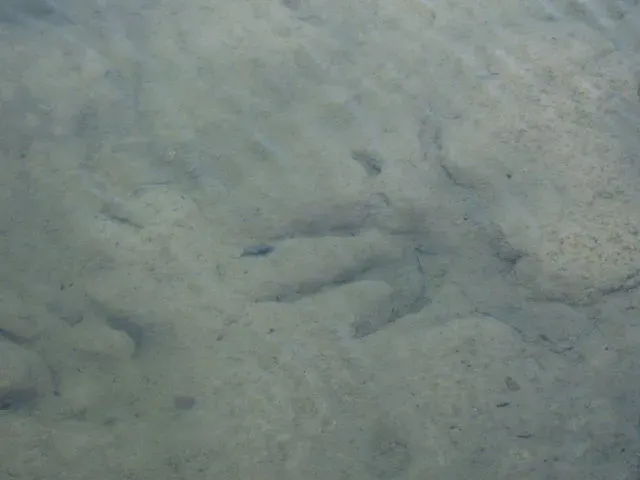
You would not think of a riverbank as a migration corridor, but the fossil evidence tells a completely different story. River valleys served as natural highways. Their floodplains offered water, sheltering vegetation, and soft ground ideal for capturing prints. When you think about it, this makes perfect ecological sense. Rivers provide the two things every large migrating animal desperately needs: water and food in the form of vegetation or prey attracted by that water.
Before the continental connection between Africa and South America was severed, “rivers flowed and lakes formed in the basins.” “Plants fed the herbivores and supported a food chain. Muddy sediments left by the rivers and lakes contain dinosaur footprints, including those of meat-eaters, documenting that these river valleys could provide specific avenues for life to travel across the continents 120 million years ago.” Those fossilized tracks embedded in ancient riverbeds are essentially prehistoric road signs, still legible today if you know how to read them.
The Asia-North America Connection: A Cretaceous Crossing
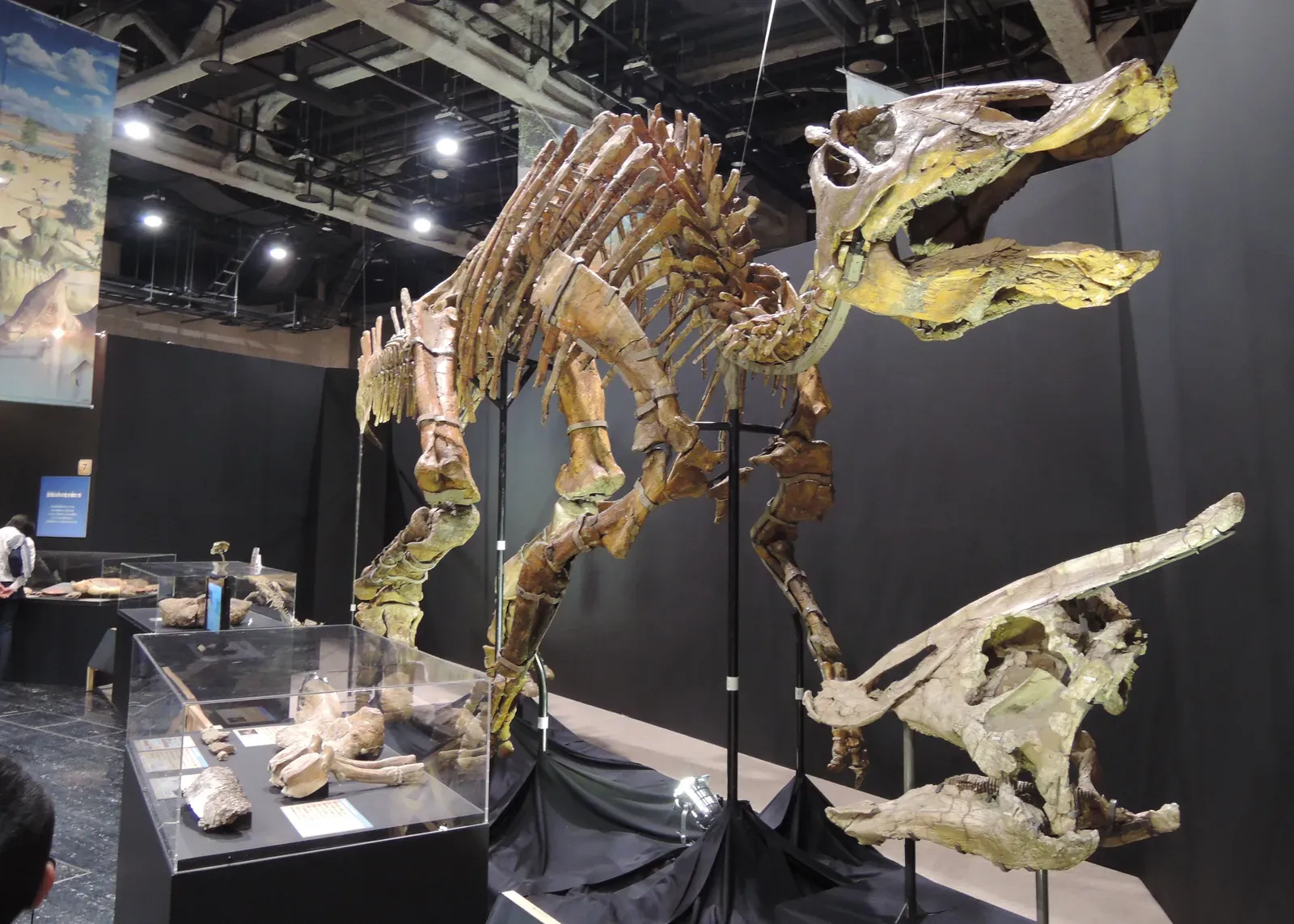
The ancient predecessor of what would eventually become the Bering land bridge region played a much earlier and less celebrated role in dinosaur migration. Similar dinosaur fossils occur both in Asia and in North America. Saurolophus was found in both Mongolia and western North America. Relatives of Troodon, Triceratops, and Tyrannosaurus rex all came from Asia. The genetic and fossil fingerprint of Asian origins is stamped unmistakably across the North American dinosaur record.
Paleontologists have long thought the Prince Creek Formation was once a dinosaur highway, with migrating hadrosaurs, ceratopsians and theropods crossing a land bridge between Asia and North America and dispersing across the continent. The idea that some of the most iconic North American dinosaurs were originally immigrants from Asia is both humbling and thrilling. Sauropods uniquely occupied climatic niches characterized by high temperatures and were strongly bounded by minimum cold temperatures. This constrained the distribution and dispersal pathways of sauropods to tropical areas, excluding them from latitudinal extremes. Climate, as always, determined who could use which corridor and when.
Conclusion
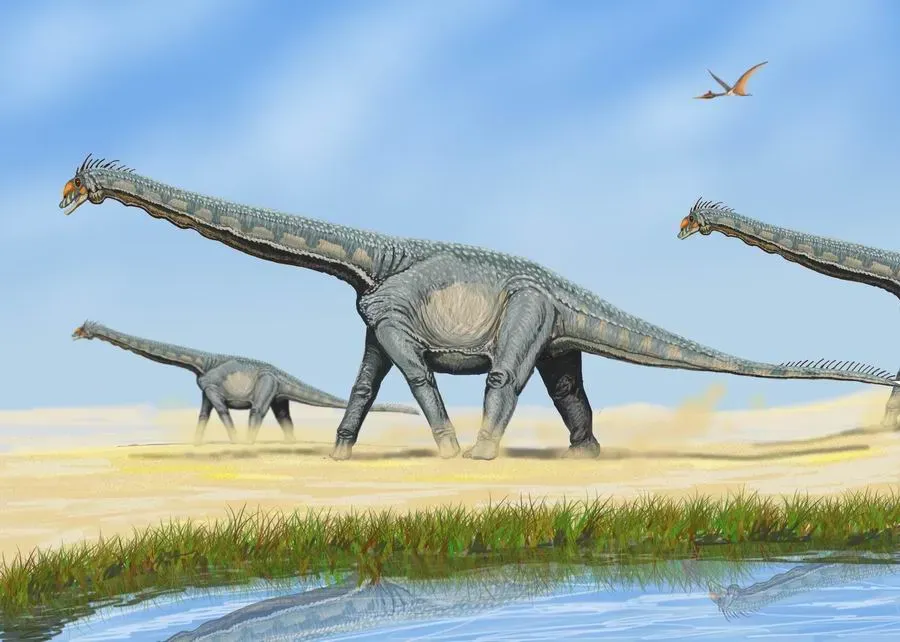
What strikes you most when you pull all nine of these theories together is just how layered and interconnected the drivers of dinosaur migration really were. It was never just one thing. It was climate, geology, food, predators, river corridors, and the slow dance of continental plates all working together across deep time. The tracks remind us that continents move at a snail’s pace, yet over millions of years that pace is enough to reshape oceans, climates, and the paths available to life.
The dinosaurs were not wandering randomly. They were responding, adapting, and surviving in ways that look surprisingly familiar when you hold them up against the migrations we observe in the animal kingdom today. Dinosaurs were incredible at adapting to our planet. Their ability to adjust their diets and migrate aided their evolution, allowing them to roam and rule for millions of years. There is something deeply moving about that. These enormous creatures, separated from us by tens of millions of years, were driven by the same fundamental imperatives: find food, escape danger, and survive.
The next time you look at a world map and marvel at how perfectly the coastlines of Africa and South America seem to fit together, remember that dinosaurs once walked that seam. What theory surprised you most? Drop your thoughts in the comments below.