Picture this: a thundering herd of prey animals, suddenly flanked from multiple directions by a coordinated team of predatory dinosaurs, closing in with terrifying precision. It’s one of the most iconic images from science fiction – yet the question of whether it ever really happened is far more complicated, and far more fascinating, than Hollywood would have you believe.
The truth is, paleontologists have been wrestling with this very question for decades. Every new fossil site, every tooth analysis, every set of footprints locked in ancient rock adds another piece to a puzzle that refuses to stay put. So, is the whole “pack hunting dinosaur” idea brilliant science or a big cinematic myth? Let’s dive in.
Where the Idea of Pack Hunting Dinosaurs Actually Came From
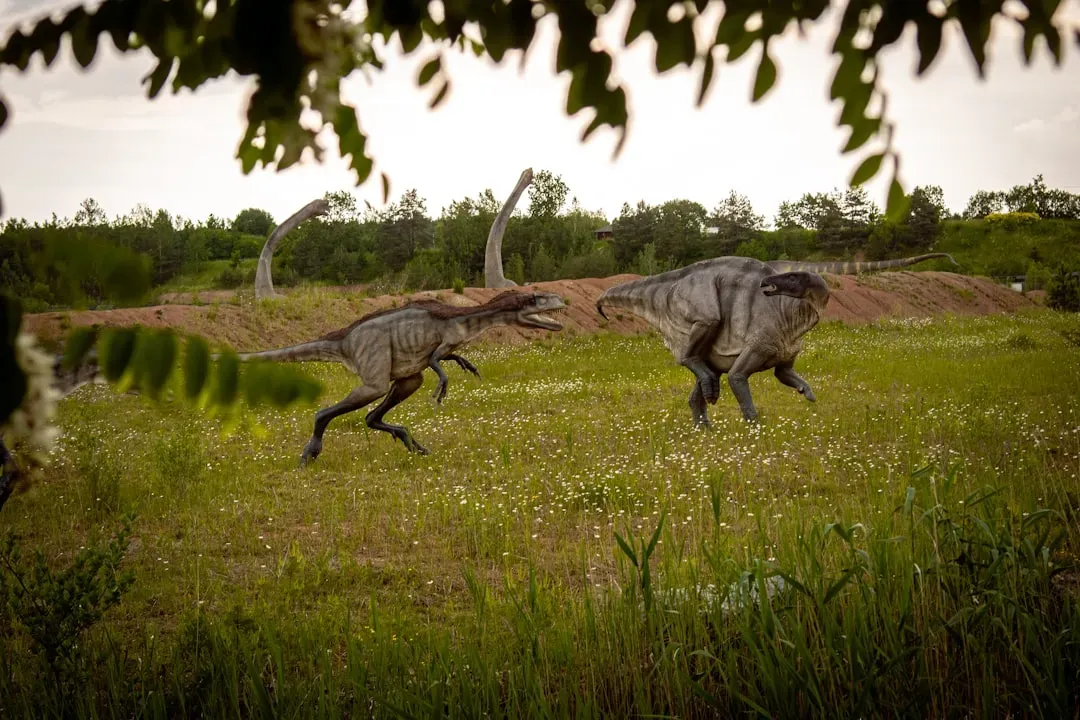
Most people trace the pack hunting idea back to Jurassic Park, but its real origins lie in science. The debate begins with the discovery of several Deinonychus antirrhopus specimens and a paleontological cold case involving a Tenontosaurus. Back in 1969, paleontologists found the partial remains of a Tenontosaurus alongside at least four similarly shredded Deinonychus, and at that time, the researchers proposed that the carnivores hunted cooperatively to bring down the herbivore before evidently succumbing to early deaths themselves.
This roughly 112-million-year-old “crime scene” is considered the very origin of the dinosaur pack hunting hypothesis. A big Deinonychus was only about 11 feet long and roughly 200 pounds, making it unlikely that a single individual could bring down a Tenontosaurus on its own. The discovery of partial Deinonychus skeletons at almost a third of sites containing Tenontosaurus led scientists to conclude that Deinonychus were working together like wolves to take down much larger prey. Honestly, you can see why the idea caught on so quickly.
How Jurassic Park Burned the Theory Into Our Brains
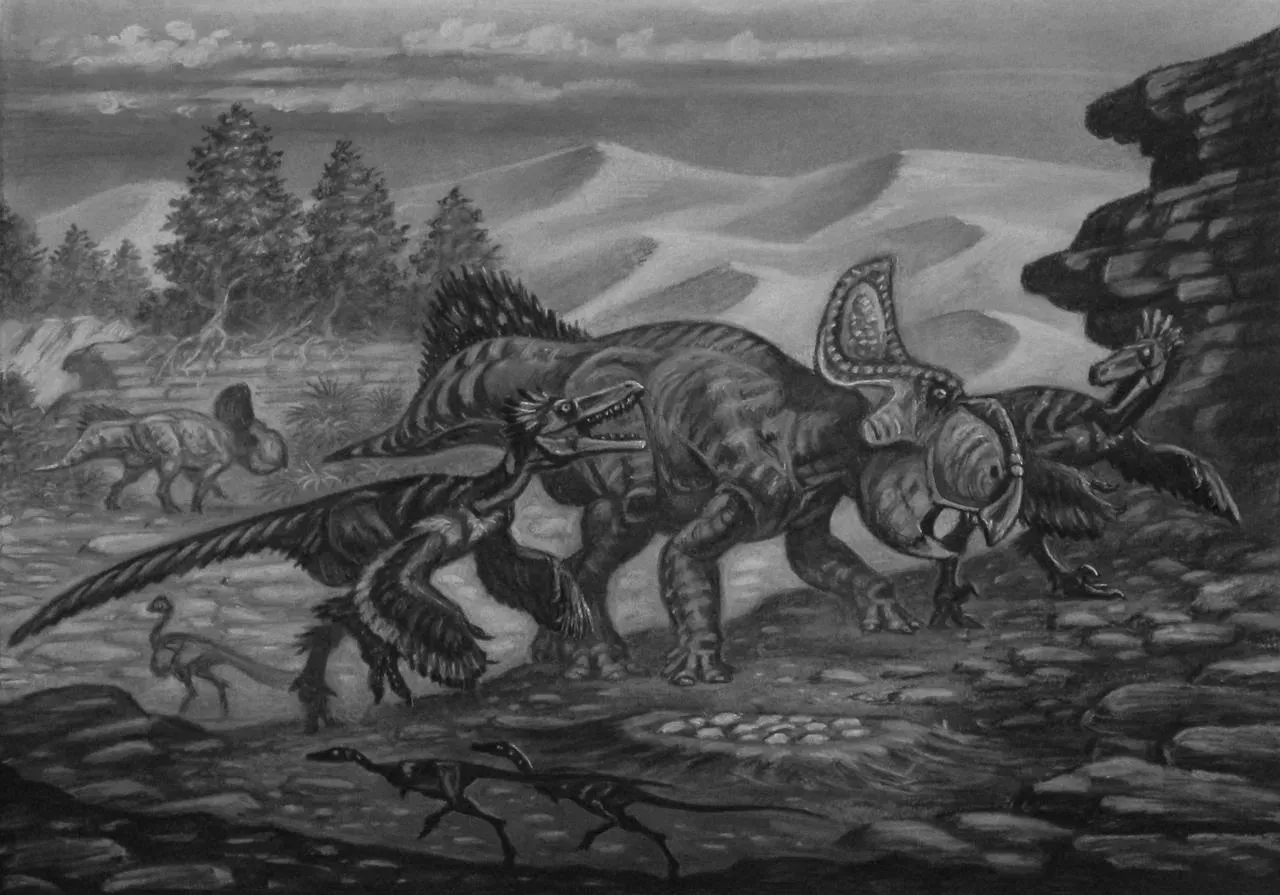
In the famous scene from Jurassic Park where ranger Robert Muldoon aims at a velociraptor only to be ambushed from the side, pack hunting among theropods became permanently ingrained in the public imagination. The raptors, with their sickle-shaped talons, were portrayed as highly intelligent apex predators that worked in coordinated groups to hunt large prey. That image stuck around for thirty years and counting.
Here’s the thing though: science and cinema almost never agree perfectly. Researchers are at loggerheads over whether these extinct hunters were ever actually smart enough to work together to take down their prey. A new analysis of raptor teeth shows that raptorial dinosaurs likely did not hunt in big, coordinated packs like dogs, and though widely accepted, evidence for this behavior is relatively weak. The movies made it feel like settled fact when it was always just a hypothesis.
The Fossil Bone Beds That Changed Everything
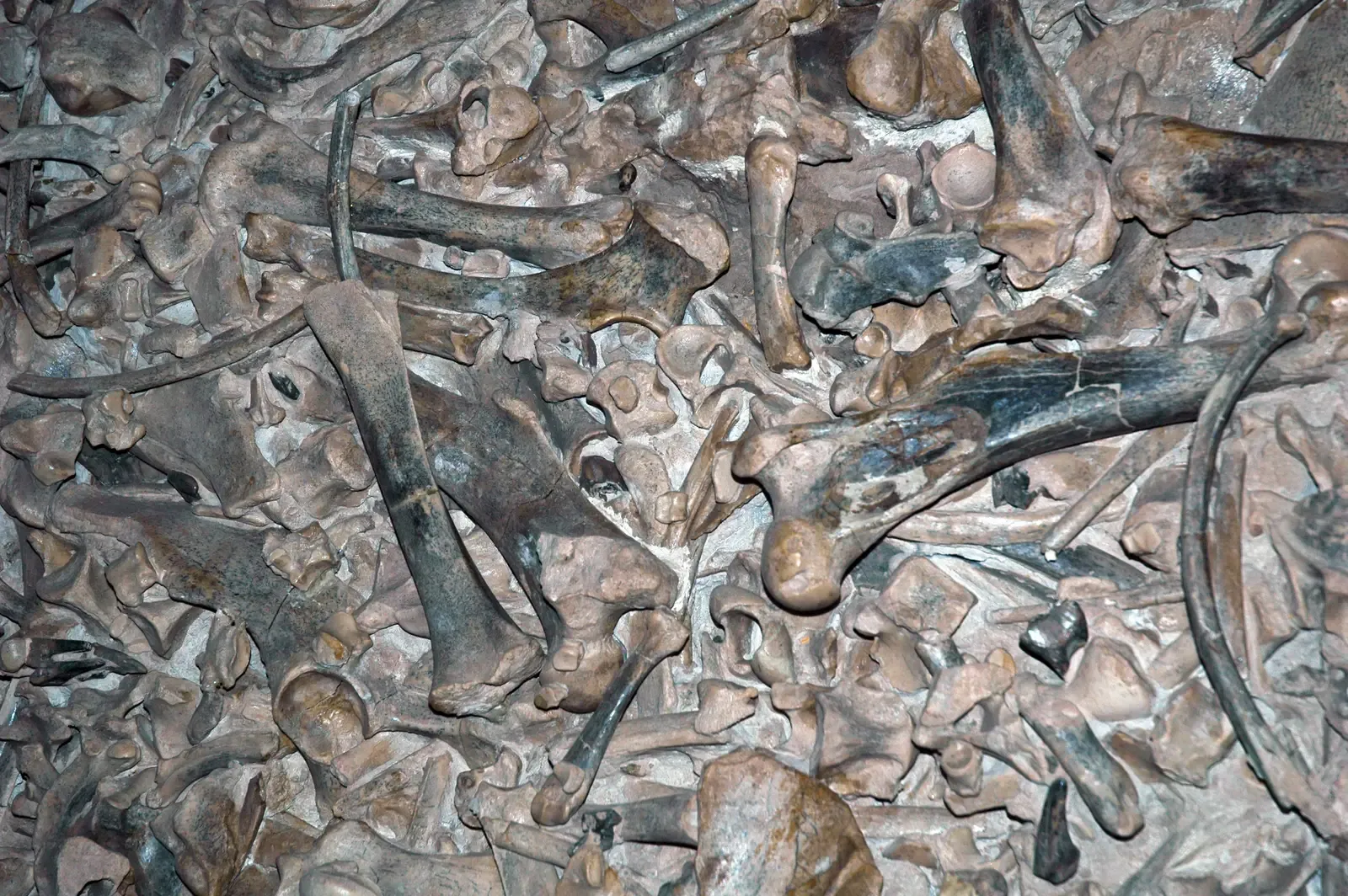
If you want to make the case that some dinosaurs may have at least traveled and lived in groups, you need to look at the bone beds. A study detailed a find in the Grand Staircase-Escalante National Monument in Utah, where roughly four or five fossil skeletons of Teratophoneus, a member of the tyrannosaurid family, were found together alongside fossils of fish, rays, and an ancient crocodilian. This wasn’t just a random collection of bones. Geochemical analysis revealed that the similarity of rare earth element patterns is highly suggestive that these organisms died and were fossilized together, apparently drowning in a flood that washed them into a lake bed.
The recently discovered fossil bed was also not the first time several tyrannosaurid fossils were found in one area. A bed of 12 Albertosaurus specimens was found in Alberta, Canada, back in 1910, while three Daspletosaurus specimens were found together at a single fossil site in 2005. The simultaneous death of these dinosaurs implies that they traveled together to where they were eventually killed, providing more evidence to the theory of their social hunting behaviors and a stark contrast to the long-held notion that these animals were incapable of such behavior. That is, to put it mildly, a dramatic revelation.
What Footprints and Trackways Actually Tell You
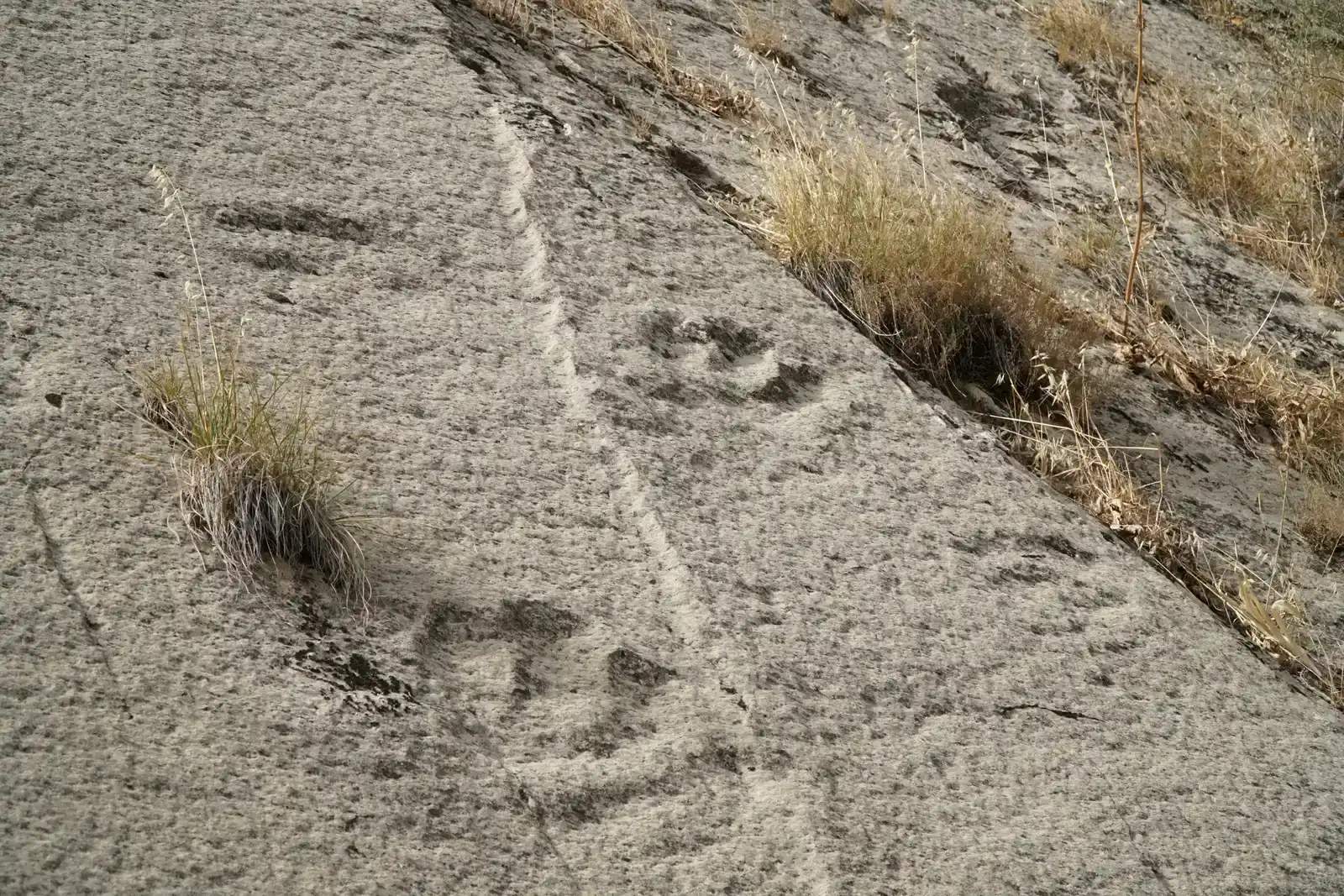
Dinosaur trackways, which are fossilized prints of predators moving together, can also indicate group behavior. Evidence of this kind is limited but known from some species, such as tyrannosaurs. Yet even these are not conclusive proof that they hunted as one group. Think of it like finding tire tracks from several cars heading the same direction on a highway. It tells you something, but not everything. In 2007, a trackway discovered in China appeared to show several dinosaurs similar to Deinonychus moving together as a group, which, while not proof of pack hunting, could be precious evidence that it was not only the herbivores that moved in groups.
Still, the footprint argument cuts both ways. Komodo dragons leave similar converging trails because when they detect that a Komodo has taken down prey, all the dragons in the area head toward the kill site. If this behavior were ever fossilized, the tracks would look like multiple individuals heading in the same direction, and that is definitely not because they were pack hunting. It is a useful analogy that reminds us how easy it is to jump to dramatic conclusions from subtle evidence. Fossil evidence of dinosaur behavior is relatively rare, and it is genuinely difficult to determine whether tracks left by multiple dinosaurs are the result of pack hunting or simply coincidence.
What Teeth Chemistry Reveals About Raptor Behavior
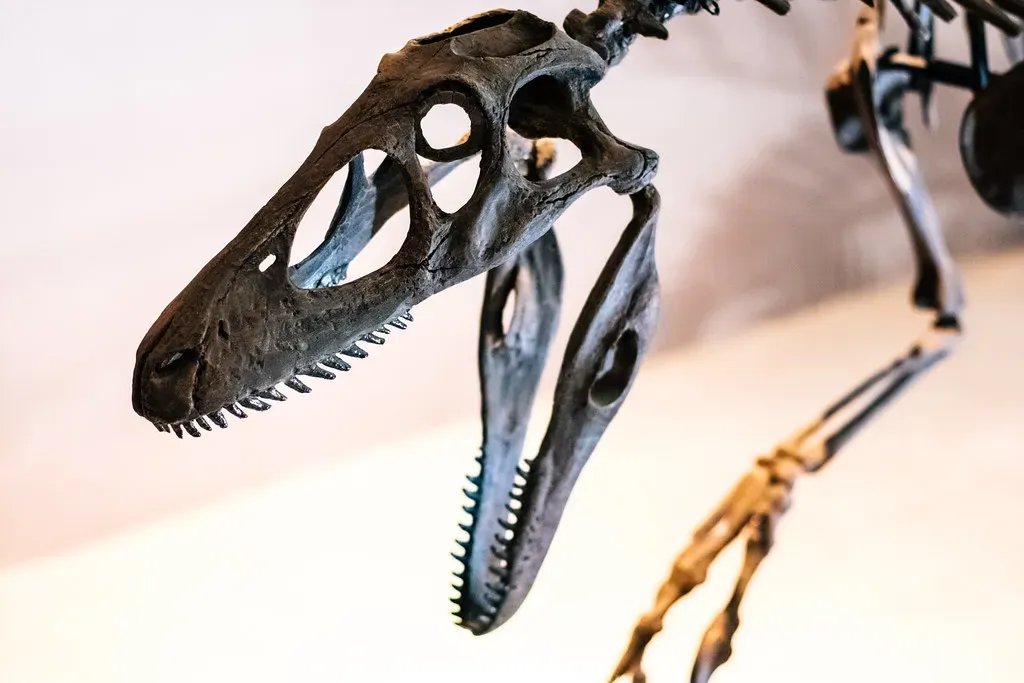
This is where things get truly fascinating. Scientists have found a clever new way to investigate the question, not through bones or footprints, but through the chemistry locked inside fossilized teeth. Chemical analysis of modern and fossil teeth reveals that in animals that hunt in packs, young and old teeth are isotopically very similar, whereas in non-pack-hunting animals, the young’s teeth have a different chemical composition than the adults’. That distinction is surprisingly powerful.
Researchers found the same dietary difference pattern in raptors, where the smallest teeth and the large teeth did not have the same average carbon isotope values, indicating they were eating different foods. This means the young were not being fed by the adults, which is a key reason scientists believe Jurassic Park was wrong about raptor behavior. In Komodo dragons, babies are actually at risk of being eaten by adults, so they take refuge in trees where they find food unavailable to their larger ground-dwelling parents. The implication for raptors? Much the same deal. Not exactly the loving, coordinated wolf pack we imagined.
The Case for Loose Association vs. True Pack Hunting
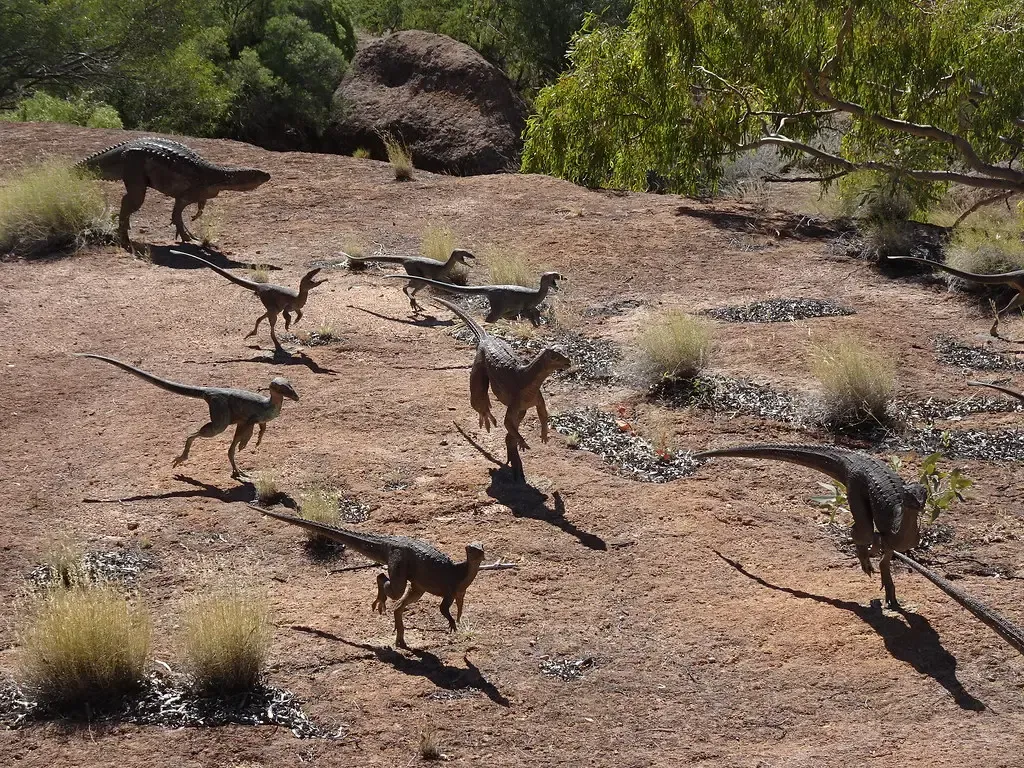
Through phylogenetic inference and careful analysis, researchers have concluded that mammal-like cooperative pack hunting is both unparsimonious and unlikely for nonavian theropods, and that the default assumption should therefore be that these dinosaurs were solitary hunters or, at most, foraged in loose associations. That phrase “loose association” is doing a lot of work here. It suggests these animals may have tolerated each other near a kill without actually coordinating their attack. Later research reexamined the famous Deinonychus evidence and posited that the incident was altogether more frenzied and less cooperative. There is some evidence one of the raptors killed another, suggesting they fought over the Tenontosaurus remains, and the hypothesis is that the event was more akin to a Komodo dragon kill than a wolf pack hunt.
Scientists have proposed a model for raptor behavior that is thought to be more like Komodo dragons, in which individuals may attack the same animal but cooperation is limited. Think of it less like a military operation and more like a chaotic feeding frenzy where every predator is fundamentally in it for themselves. A further step in understanding this would be working out whether the dinosaur in question had the brain capacity to work cooperatively. Research focusing on the potential brain capacity of theropods does argue the case for pack hunting, but these findings are hotly debated amongst paleontologists. The brain question alone could fill a separate article entirely.
Which Dinosaurs Have the Strongest Case for Group Behavior?
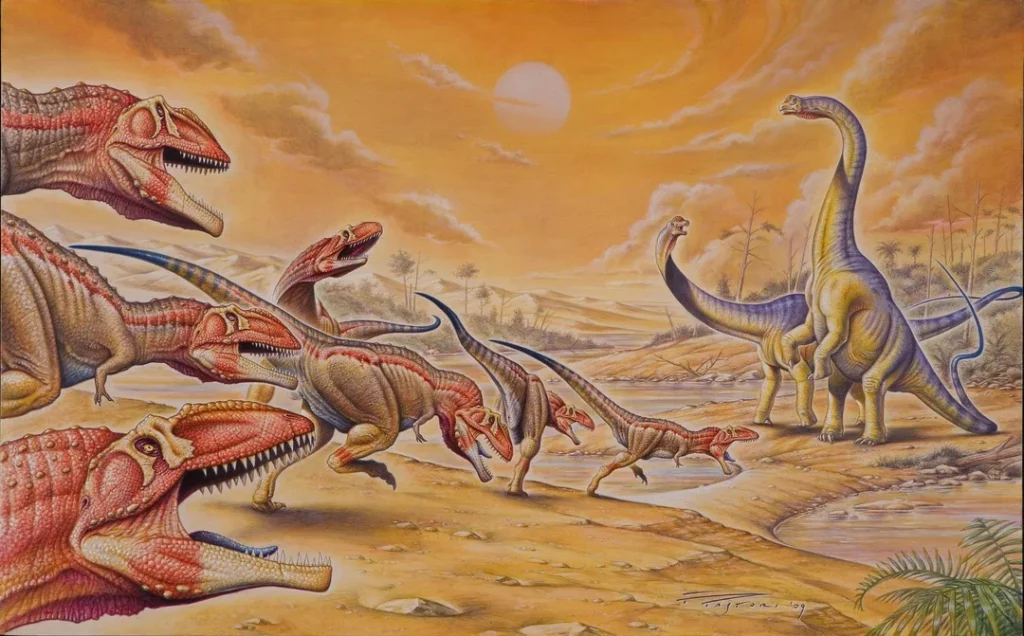
Not all dinosaurs are equal in this debate. Some have far more compelling evidence than others. Paleontologists in 2006 found a group of Mapusaurus that appear to have lived together, and similarly, a mass grave in Utah suggests this same social behavior among tyrannosaurs. The fossil group at Utah’s Grand Staircase-Escalante National Monument, which stands as the first tyrannosaur mass death site in the southern U.S., has been preserved well enough for researchers to conclude that the group of tyrannosaurs did indeed live together. That is no small finding when you consider how rare complete fossil evidence truly is.
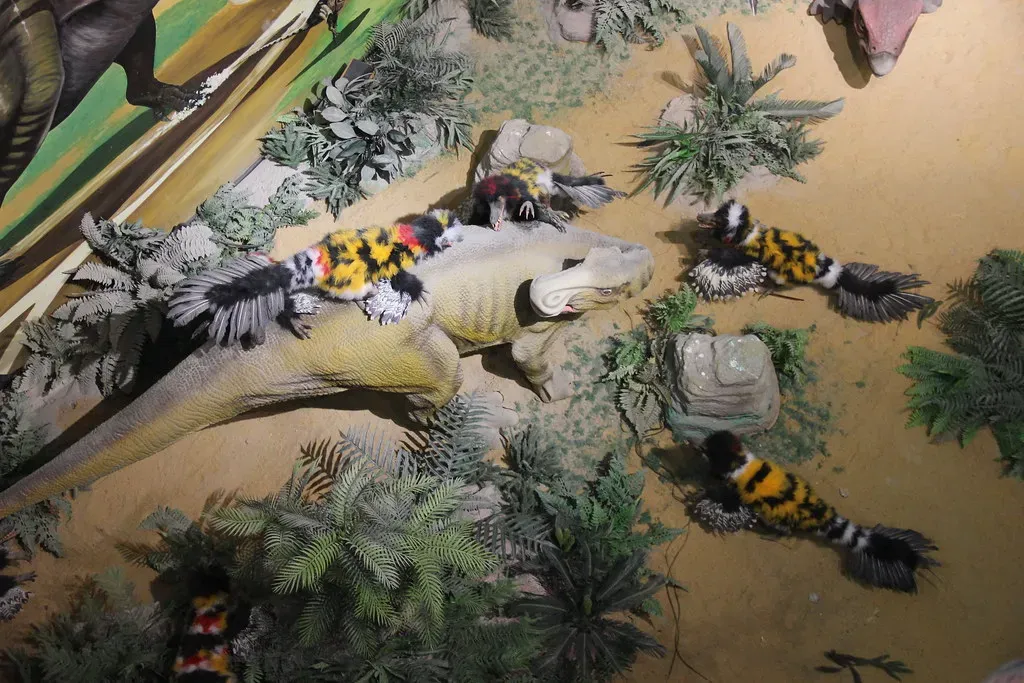
A nine-ton block of sandstone holds the fossilized bones of at least six Utahraptors, including an adult, four juveniles, and a baby, covered in feathers with a huge sickle claw on each second toe, along with the remains of an iguanodont herbivore. The whole scene suggests that a pack, or even a family, of raptors succumbed to a quicksand death while pursuing the trapped herbivore. Now, that is a compelling scene right there. Velociraptor is one species that some paleontologists believe was potentially smart enough to band together on hunts, though the debate remains fiercely unresolved.
Conclusion
So, did dinosaurs really hunt in packs? The honest answer is: some probably traveled in groups, some may have converged on kills opportunistically, and a small number just possibly coordinated hunts in a rudimentary way. But the slick, wolf-like, chess-playing raptors of Jurassic Park? There is actually not very much direct evidence for pack hunting in dinosaurs, and much of the evidence in favor of pack hunting remains circumstantial.
The science is alive, evolving, and genuinely thrilling. Every new bone bed, every isotope analysis, and every mudstone footprint shifts the conversation. What you can be sure of is that the real story of how these ancient predators lived is even stranger and more complex than Hollywood ever dreamed up. While we can make some educated guesses based on what we know of their anatomy and behavior, the reality is that we may never know for sure whether dinosaurs hunted in packs. Nonetheless, the ongoing exploration and study of fossil evidence continues to provide new insights into the behavior of these fascinating creatures.
The next time you watch a velociraptor outwit a human on screen, enjoy the spectacle – just take it with a very large grain of prehistoric salt. What do you think? Were dinosaurs cunning pack hunters, or solitary opportunists wearing a cooperative disguise? Tell us in the comments.