
Imagine walking along a sunny Florida beach, shoes off, salt air in your lungs, and you glance down to see a massive black triangle jutting out of the sand. Your first thought? Probably a rock. Your second thought, once you pick it up and feel its weight and serrated edges, might just change your day completely. You are holding the tooth of one of the largest predators that ever lived. A tooth that spent millions of years buried in the ocean floor, and somehow found its way into your hands.
Megalodon teeth are still turning up on American beaches with surprising regularity, in Florida, Maryland, North Carolina, South Carolina, and beyond. For something that supposedly vanished from the earth millions of years ago, this ancient giant has a remarkable habit of resurfacing. If you have ever wondered how this happens, or whether you might find one yourself, you are in exactly the right place. Let’s dive in.
A Creature So Large, It Barely Seems Real
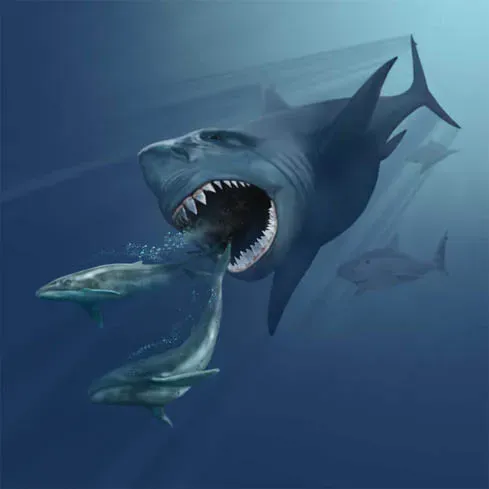
Honestly, no amount of reading truly prepares you for understanding just how massive the megalodon actually was. The megalodon was the largest fish ever known, a designation based on discoveries of hundreds of fossil teeth, two vertebral columns, and a handful of individual vertebrae. Think about that for a moment. We are talking about a fish so enormous that scientists piece together its size almost entirely from its teeth.
Data suggests that mature adult megalodons had a mean length of between 13 and 14 metres, with the largest specimens measuring up to an estimated 24.3 metres long. For context, that is longer than a standard semi-truck and trailer combined. Reaching lengths of up to 60 to 70 feet and an estimated maximum weight of over 60 tons, the megalodon is the largest known shark in Earth’s history. To compare, the largest modern great white sharks max out at around 23 feet and around three and a half tons.
These jaws were lined with 276 teeth, and studies reconstructing the shark’s bite force suggest it may have been one of the most powerful predators ever to have existed. Humans have been measured with a bite force of around 1,317 Newtons, while great white sharks have been predicted to bite down with a force of 18,216N. Researchers have estimated that megalodon had a bite of between 108,514 and 182,201N. So yes, it was not just big. It was the kind of big that reshapes your entire understanding of what “predator” really means.
Why Teeth Are Basically All That Survives
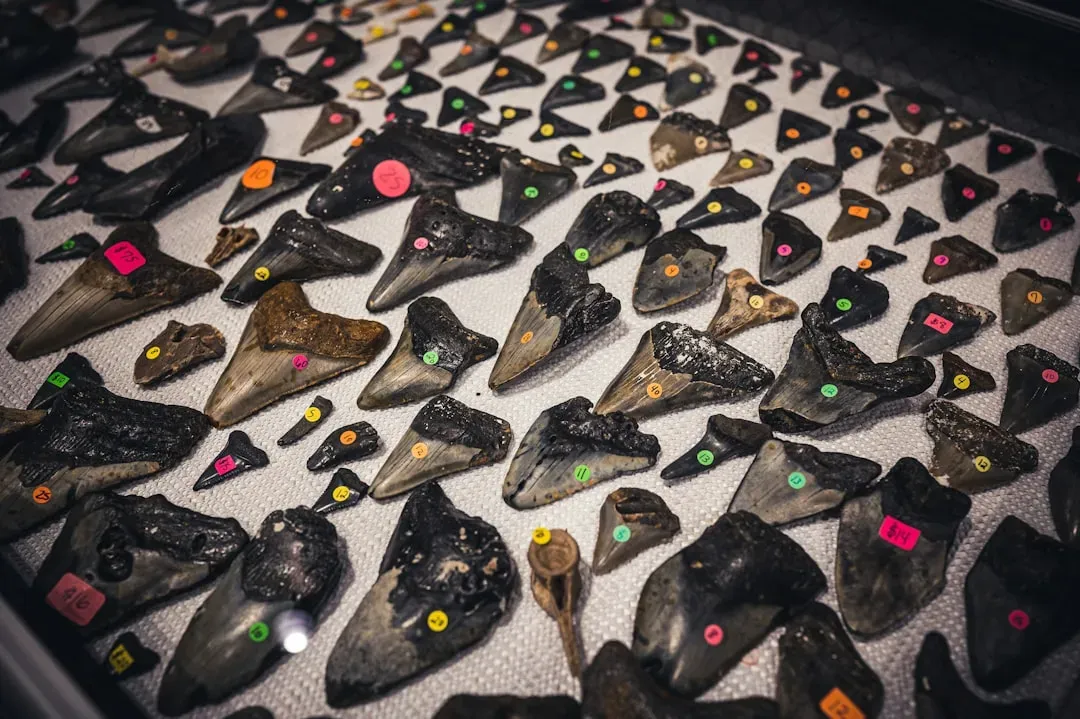
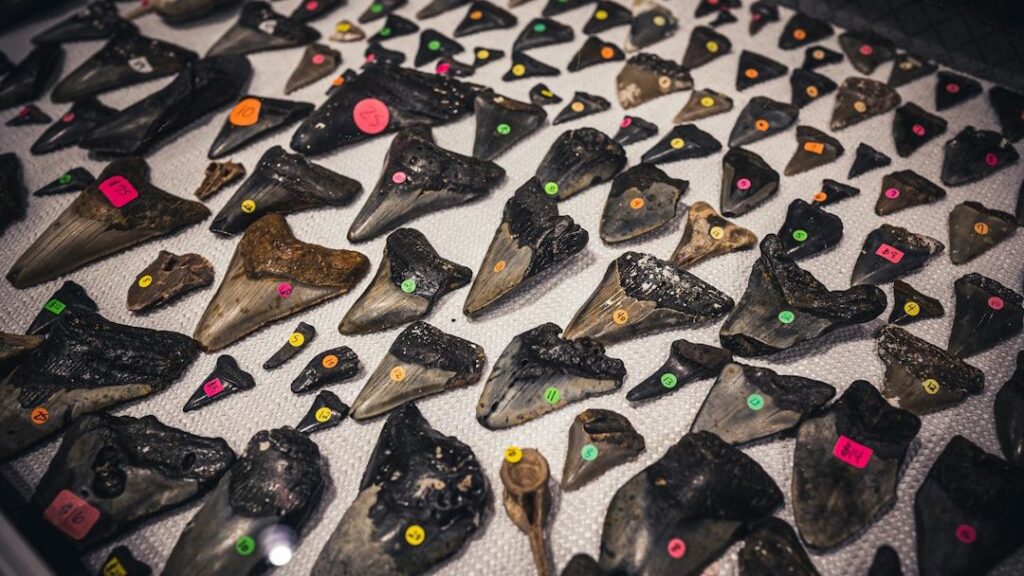
Here is the thing most people do not realize. When you find a megalodon tooth, you are holding almost the only physical evidence this creature ever left behind. Almost all fossil remains of megalodon are teeth. Sharks continually produce teeth throughout their entire lives. Depending on what they eat, sharks lose a set of teeth every one to two weeks, getting through up to 40,000 teeth in their lifetime. This means shark teeth are continuously raining down onto the ocean floor, increasing the chance they will get fossilised.
Because shark skeletons are made of cartilage, which doesn’t fossilize easily, scientists just have the teeth to go on when estimating maximum size. This has caused a wide range of maximum sizes to be proposed over the years, but most scientifically accepted maximum sizes fall in the 50 to 60 foot range. It is a strange quirk of biology and geology. The very thing that makes the megalodon so hard to fully understand is also the reason its teeth are everywhere.
Sharks lose tens of thousands of teeth in their lifetimes, and many sink to the ocean floor, hidden for millions of years before resurfacing. When these teeth are rapidly buried by sediment, they can undergo fossilisation, with minerals slowly replacing the organic material over time, until geological forces shift and erode the landscape, eventually freeing the fossils to be discovered by a lucky beachgoer. It is almost poetic, when you think about it. A tooth that was once used to crush whale bones is now a treasure waiting patiently in the sand for you to notice it.
The Best US Beaches and Waterways Where You Can Find Them
You might be surprised to learn just how many US states offer real, legitimate opportunities to stumble across a megalodon tooth. Many areas besides Florida have great locations to look for megalodon teeth. They have been found in every state along the east coast of the US from New Jersey to Florida. That is a remarkable stretch of coastline, and it means your next family road trip could double as a prehistoric treasure hunt.
The region’s acclaimed sites for fossil hunting include Venice, Florida, which is branded as the “Shark Tooth Capital of the World.” Other beaches in and around Sarasota County are also prime shark tooth sites, such as Caspersen Beach. The Peace River, Myakka River, and parts of Venice Beach are particularly well known for yielding fossilized shark teeth, including megalodon specimens. I think Venice deserves every bit of its legendary reputation among fossil hunters.
Millions of years ago, parts of the mid-Atlantic states surrounding the Chesapeake Bay were submerged beneath a warm, shallow sea. Miocene sharks flocked to the area to feast on aquatic plants and algae, and their fossilized teeth provide a record of their presence. One well-known location for fossil hunting is the Calvert Cliffs of Maryland, located in Calvert County. Shark teeth can be found along the shore near exposed cliff sides that stand some 100 feet tall beside a narrow beach. As wind and water erode the cliff face, prehistoric fossils emerge.
A Historic Discovery at Calvert Cliffs That Made Headlines
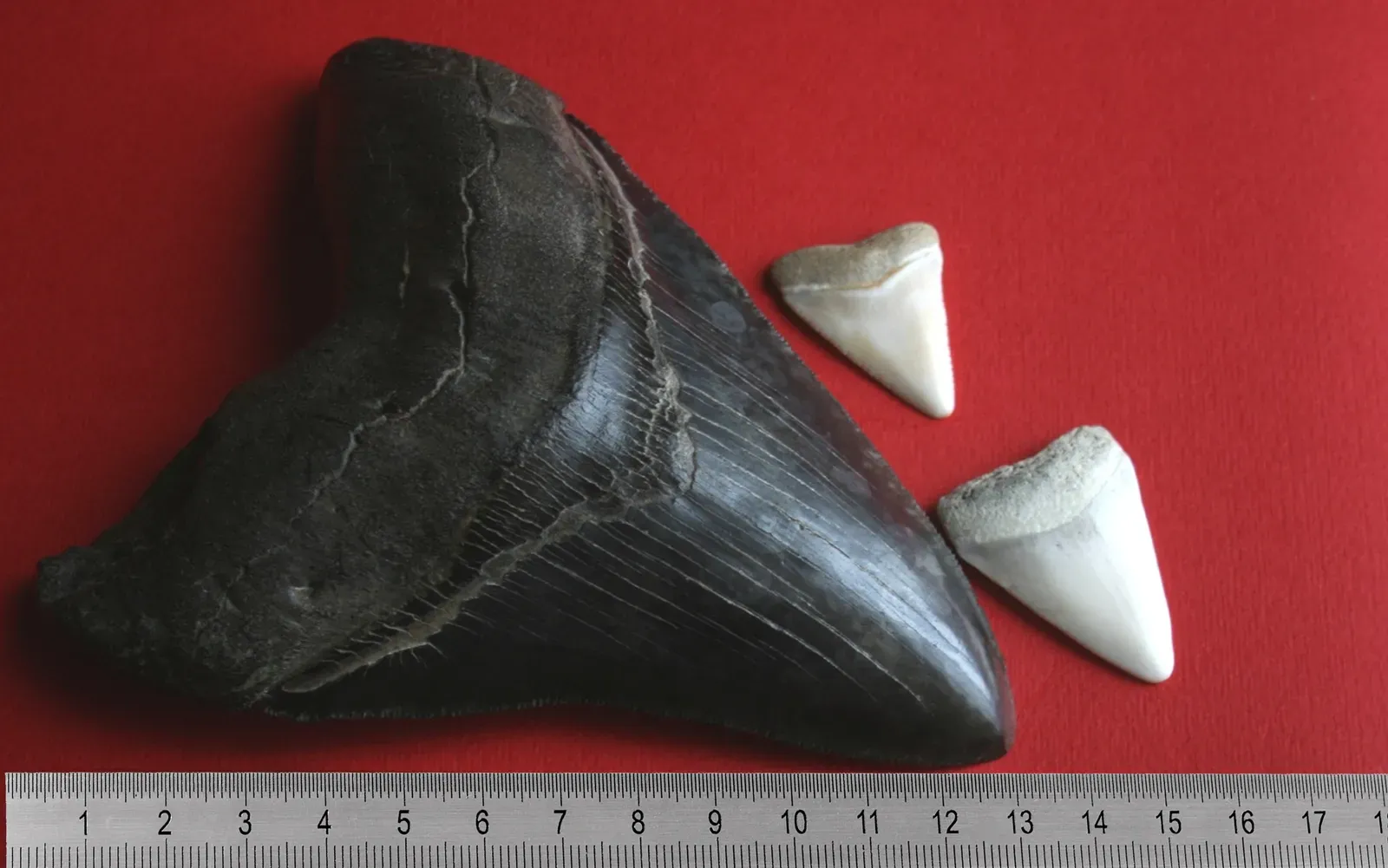
Sometimes, a discovery is so extraordinary it stops scientists in their tracks. That is exactly what happened at Calvert Cliffs, Maryland, a few years back. 53 teeth from one individual megalodon were painstakingly collected over the span of six years from the same Calvert Cliffs location. The megalodon those teeth came from would have been close to 50 feet long. Six years of patience, six years of returning to the same stretch of beach, slowly assembling the puzzle of a single ancient giant.
The teeth themselves are eye-popping in size, some of them up to 5.5 inches long. They are serrated, like steak knives. To have found so many teeth preserved together is considered “exceedingly rare.” Worldwide, fewer than a dozen known partial dentitions from megalodons exist. That is not just a cool beach find. That is a once-in-a-generation scientific event.
For the past eight years, scientists have been searching and finding teeth that belonged to the same shark, a giant megalodon that swam in the waters that is now the Chesapeake Bay 10 million years ago. It is hard to fully wrap your mind around the idea that what is now a peaceful bay was once the hunting ground of one of the most ferocious animals in Earth’s history. But the teeth do not lie.
How to Spot and Identify a Real Megalodon Tooth
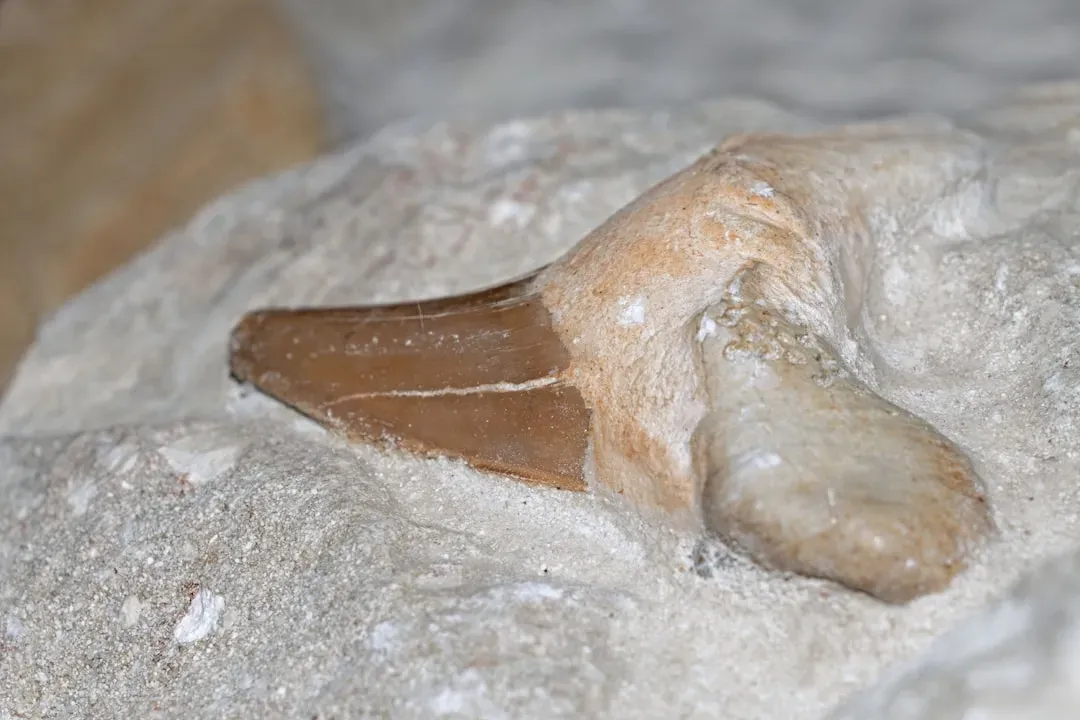
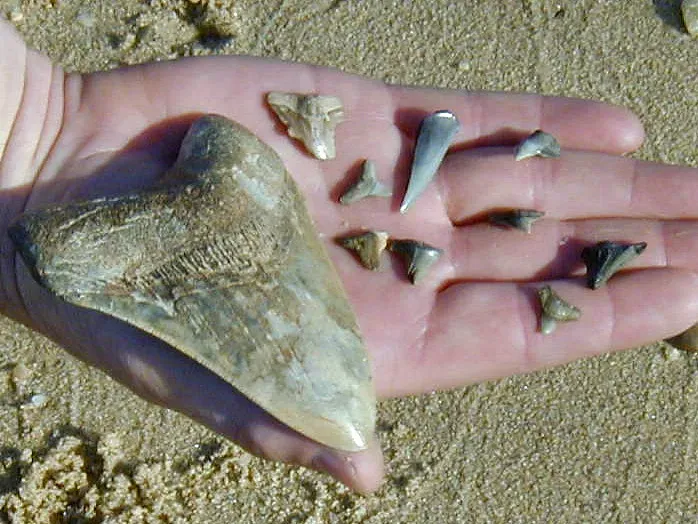
Let’s be real. Not every dark triangle you pull from the sand is a megalodon tooth. The good news is that with a few basic tips, you can learn to tell the difference fairly quickly. Megalodon teeth are similar to those of modern white sharks in that they are triangular, serrated, and symmetrical. They differ from modern white shark teeth in that they are larger and thicker, the serrations on each tooth occur in regular intervals, and they possess a bourlette, a darker chevron-shaped region near the tooth’s root.
One of the ways to know you have found a real megalodon tooth is if it’s substantially bigger than a large shark tooth. Megalodon tooth fossils tend to range between 3 and 5 inches in length, with the largest found being over 7 inches long. Colors can also vary widely. Depending on conditions, fossilized megalodon teeth can be all kinds of colors, ranging from nearly black, grey, mottled, beige, almost salmon-colored, to nearly white. This variety in colors is caused by the locations and conditions the tooth was in during fossilization.
Authentic megalodon teeth are fossils, which means they have gone through mineralization over millions of years. This gives them a distinct texture, weight, and appearance. A real tooth typically has a dense, heavy feel. Its coloration varies due to the minerals in the sediment where it was buried. If something feels too light or looks too perfect and shiny, it is almost certainly a replica. Real fossils carry the imperfections of deep time.
Practical Tips for Planning Your Own Fossil Hunt
Uploaded by AlbertHerring, CC BY 2.0)
Thinking about heading out to try your luck? Good. It is one of the most genuinely thrilling outdoor activities you can do, and it costs almost nothing to start. While most vertebrate fossils and fossil sites in Florida are legally protected, the abundance of shark teeth means they are exempt from any fossil permit requirements. That is fantastic news for casual hunters, though it is always smart to double-check the specific rules for whatever state park or beach you plan to visit.
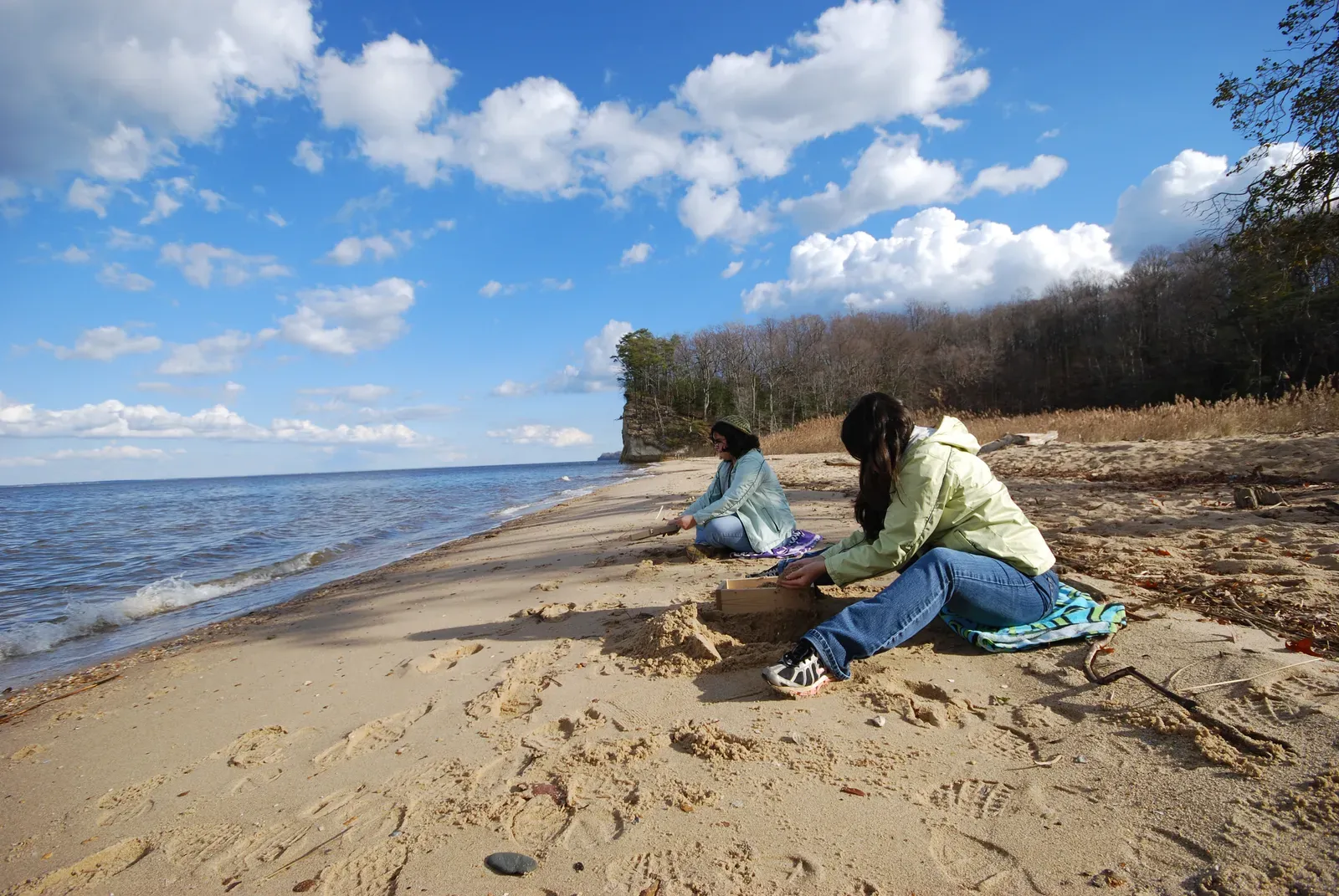
Look for dark triangular shapes mixed within broken shells and sand on the beach, particularly at the tide line where waves crash onto the shore. With a little concentration and patience, you may be fortunate enough to find teeth from white sharks, tiger sharks, bull sharks, lemon sharks, and, if you are one of the lucky ones, perhaps even a massive prehistoric megalodon tooth. The best time to hunt is after a storm when the waves have exposed new layers of sand, but there are enough teeth regularly found that any time is a good time to look.
The best time to search is after a storm or during low tide when sand has shifted. Many fossil hunters use sifting tools or mesh screens. Think of it like panning for gold, except your gold is millions of years old and used to belong to the ocean’s most feared apex predator. Dry season, typically February through April, brings lower rivers and better visibility, but Florida is truly a year-round destination for outdoor activities.
Conclusion
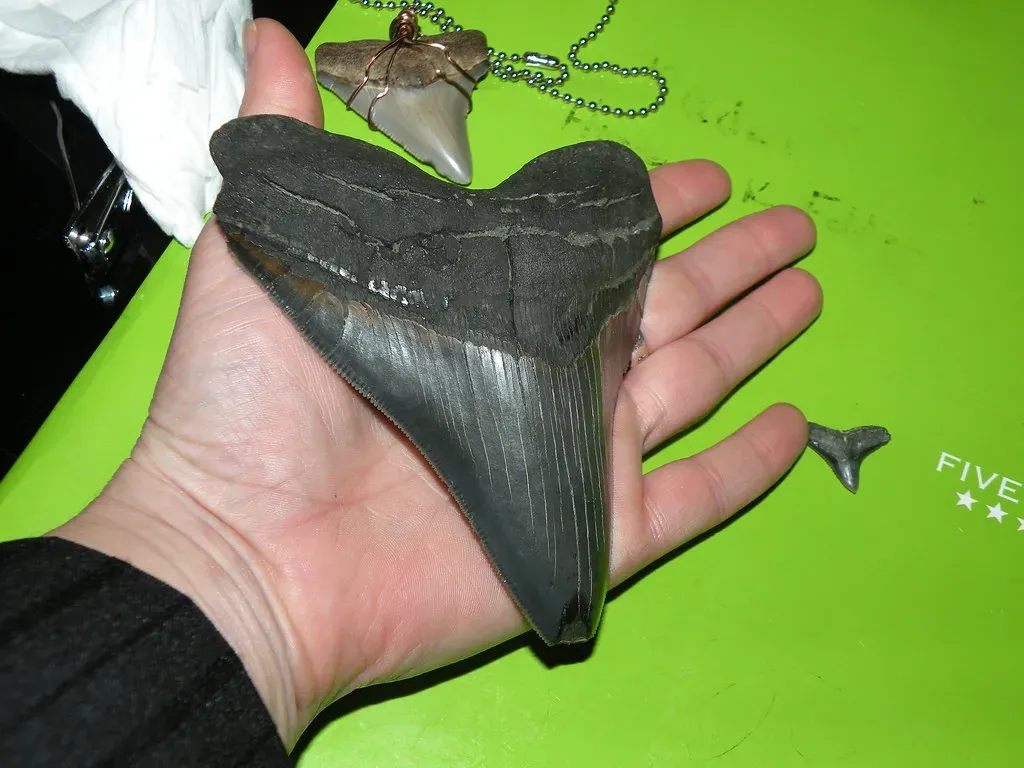
There is something deeply stirring about the fact that these ancient teeth are still surfacing. They have outlasted entire species, ice ages, and the rise and fall of civilizations, and yet here they are, tumbling out of eroding cliffs and washing up on public beaches for curious hands to find. It is astonishing to think about the sheer number of shark teeth still hidden beneath the sand. Despite countless people combing the shore every day, the supply never seems to run out.
The megalodon might be gone, but its legacy is literally underfoot on dozens of US coastlines. Whether you are a seasoned fossil hunter or just someone who enjoys a long beach walk, there is something quietly magical about knowing that the next dark triangle in the sand could be a tooth from a creature that ruled the oceans for over ten million years. So the next time you visit a beach in Florida, Maryland, or the Carolinas, slow down a little. Scan the tide line. Pick up that dark rock that catches your eye. You might be more surprised than you expect. What would you do if you actually found one?