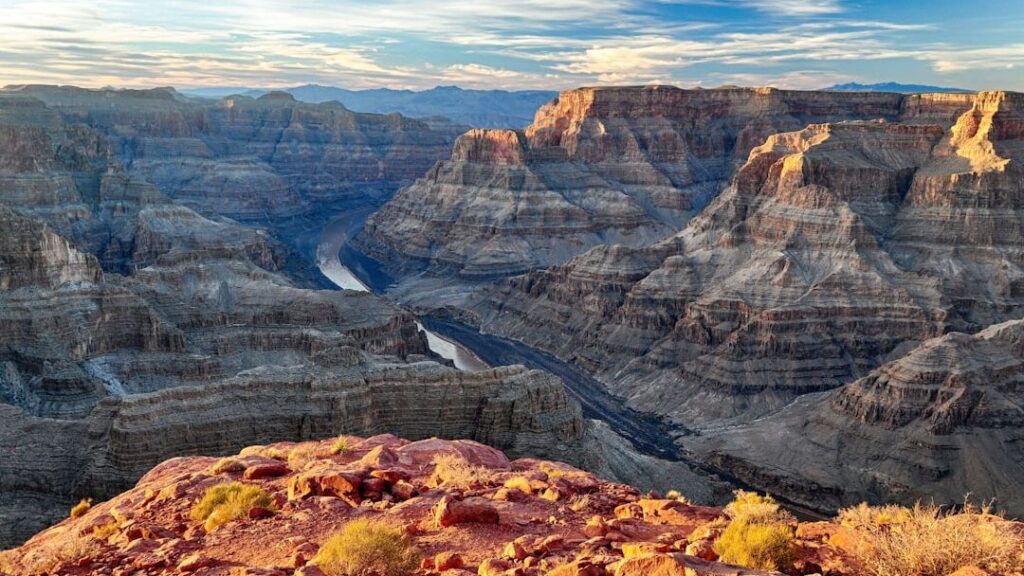
Most people who stand at the rim of the Grand Canyon are overwhelmed by its sheer size. You look out across miles of layered stone and feel small, and honestly, that reaction makes complete sense. What most visitors don’t realize, though, is that those breathtaking walls of red and gold are not just scenery. They are a fossil archive. A living library of life on Earth, stretching back to a time when you wouldn’t recognize this planet at all.
The rocks exposed in the Grand Canyon’s walls record approximately one third of the planet’s entire history, from the Precambrian through the Permian Period of the Paleozoic Era, containing important information about the evolution and history of life. That’s not a small thing. That’s extraordinary. So let’s take a walk through time together, layer by layer, creature by creature, and discover what the canyon has been hiding all along.
A Timeline Written in Stone: Reading the Canyon’s Rock Layers
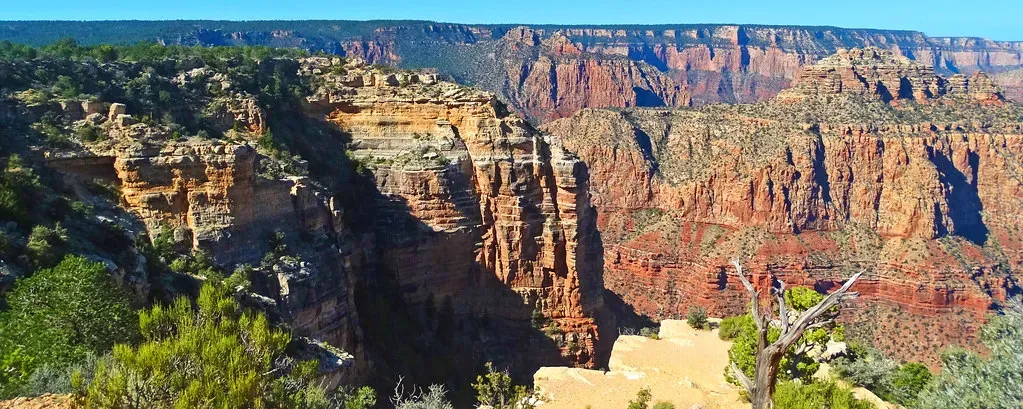
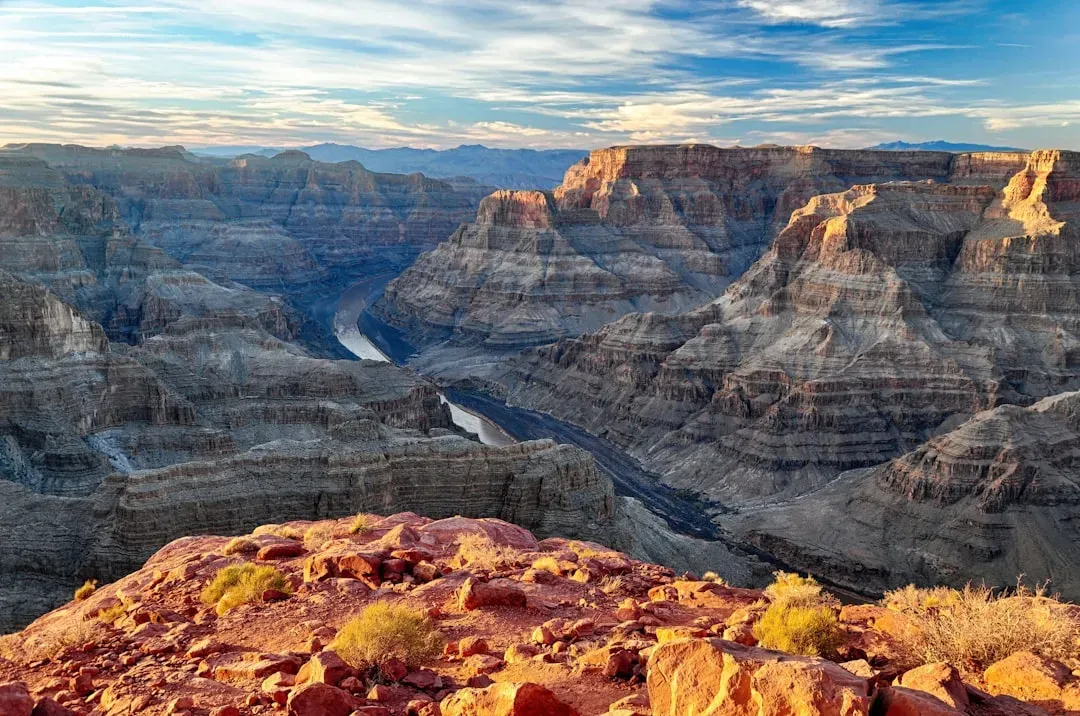
Here’s the thing about the Grand Canyon that most casual visitors miss entirely. Every single layer you see from the rim is a different chapter of Earth’s story. Thinking of the geologic record as a book is helpful to understand each page of Earth’s history, as the beginning of the story starts at the bottom of the canyon and moves forward in time as you get closer to the rim. You’re literally reading backwards through time as you descend.
Stretching 277 miles long, up to 18 miles wide, and over a mile deep, the canyon reveals layer after layer of rock, each telling its own story of ancient seas, deserts, and tectonic shifts. And the layers are not subtle. The dark Vishnu Schist at the canyon’s base is nearly two billion years old, while the uppermost Kaibab Limestone is just 270 million years old. That’s not a gap you can gloss over. That is an almost unimaginable span of time packed into a single view.
The Oldest Whispers: Stromatolites and the Dawn of Life
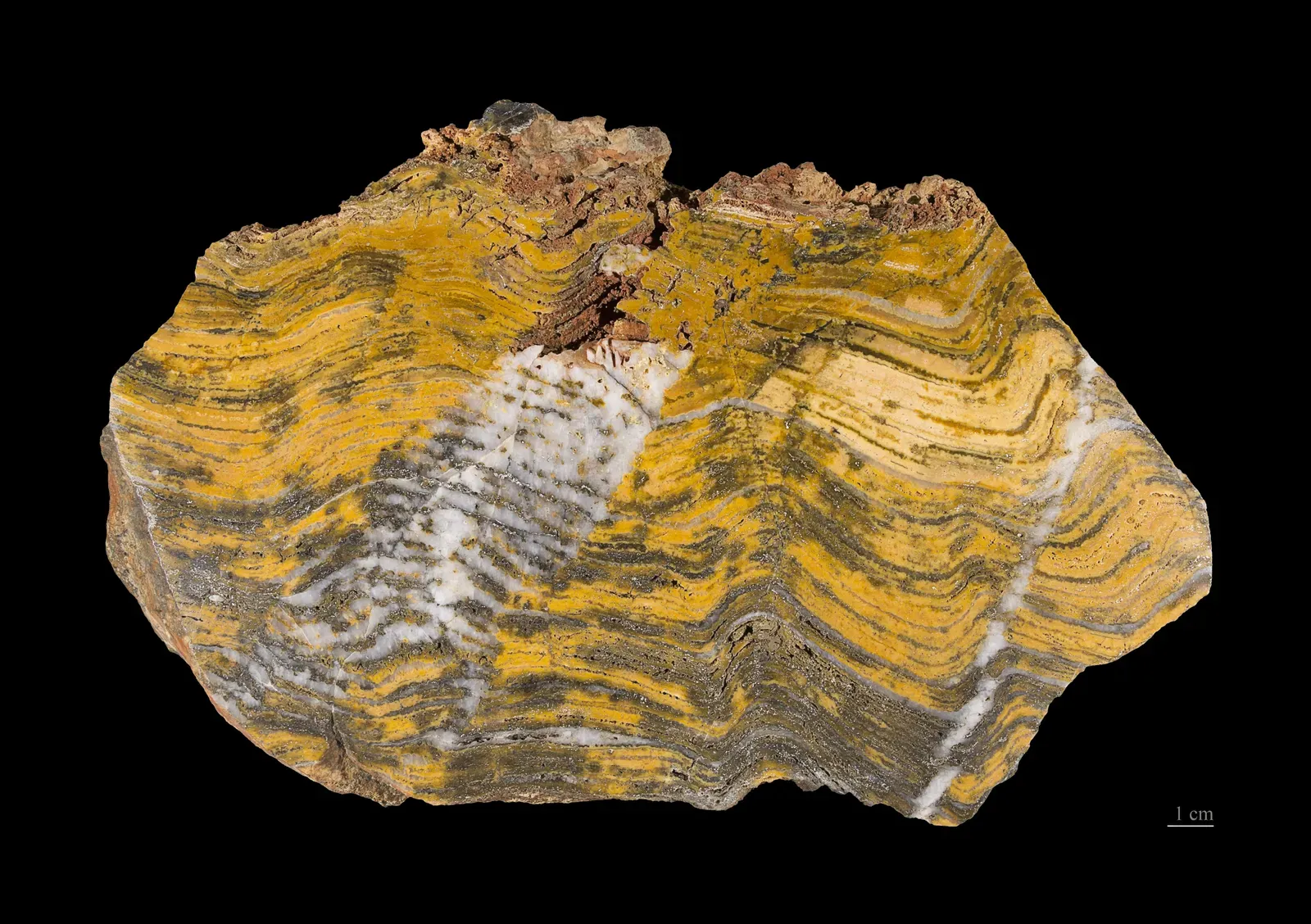
If you could travel to the very bottom of the canyon, you would be standing next to some of the oldest evidence of life ever discovered in North America. Stromatolites and microfossils are the only fossils present in the Precambrian Grand Canyon Supergroup, the oldest sedimentary rocks in the park. The oldest fossils in the park are stromatolites, which were particularly abundant in the Mesoproterozoic Bass Formation, roughly 1,255 million years old, near the base of the Supergroup.
Think about what that means. These are not bones, not footprints, not shells. Fossils of stromatolites and algae are found in this layer, and they represent mats of ancient microorganisms doing something radical for their time: photosynthesizing. Creating oxygen. Quietly rewriting the chemistry of an entire planet. The canyon preserves a rich history of life on Earth that stretches back over a billion years, with a fossil record containing a wide variety of organisms, from ancient bacterial colonies to Ice Age mammals. That range alone is jaw-dropping.
The Cambrian Explosion: When the Grand Canyon Was a ‘Goldilocks Zone’
Roughly 500 million years ago, something extraordinary happened in what you now know as Arizona. During the Cambrian explosion, which played out in the coastal waters of Earth’s oceans about 540 million years ago, most animal body types that exist today emerged in a relatively short time span. Back then, the Grand Canyon was closer to the equator, and the region was covered by a warm, shallow sea teeming with burgeoning life, including aquatic creatures resembling modern-day shrimp, pill bugs and slugs, all developing new ways to exploit the abundant resources.
The Grand Canyon during the Cambrian was a shallow, equatorial sea, an ideal ‘Goldilocks zone’ where oxygen and nutrients were plentiful and wave damage was minimal. These optimal conditions allowed evolutionary innovation to flourish. Animals could afford to develop complex traits, such as intricate feeding appendages and sensory organs, giving them an edge in the struggle for survival. It’s a bit like a business boom town where every organism had the resources to take big evolutionary risks. The results were spectacular.
A Star Wars Worm and Half-Billion-Year-Old Soft Fossils
In 2023, scientists made a discovery during a Colorado River expedition that genuinely stunned the paleontology community. For the first time in this famous national park, scientists found exceptionally preserved remains of soft-bodied animals, such as mollusks, crustaceans, and even fragments of their last meals. Soft tissue preservation of that age is almost unheard of. It changed everything researchers thought they knew about Cambrian life in this region.
Among the most remarkable finds was a new species of ancient worm. The fossilized worm found in the Grand Canyon represents a previously unknown species. Due to its relatively large size, about 3.9 inches long, and distinct teeth, it was named Kraytdraco spectatus, after the fictional krayt dragon from the Star Wars universe. This particular worm appears to have had a gradient of hundreds of branching teeth used to sweep food into an extendable mouth. I know it sounds like science fiction, but this is the very real and very ancient world hiding inside the canyon’s walls.
Trilobites, Shark Teeth, and the Age of Ancient Seas
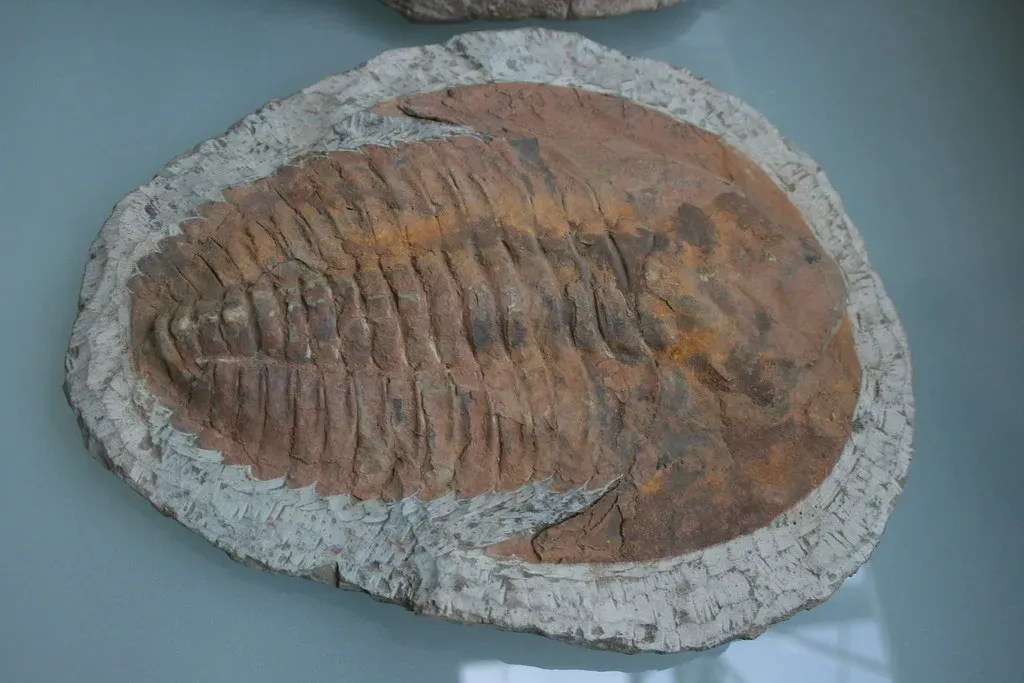
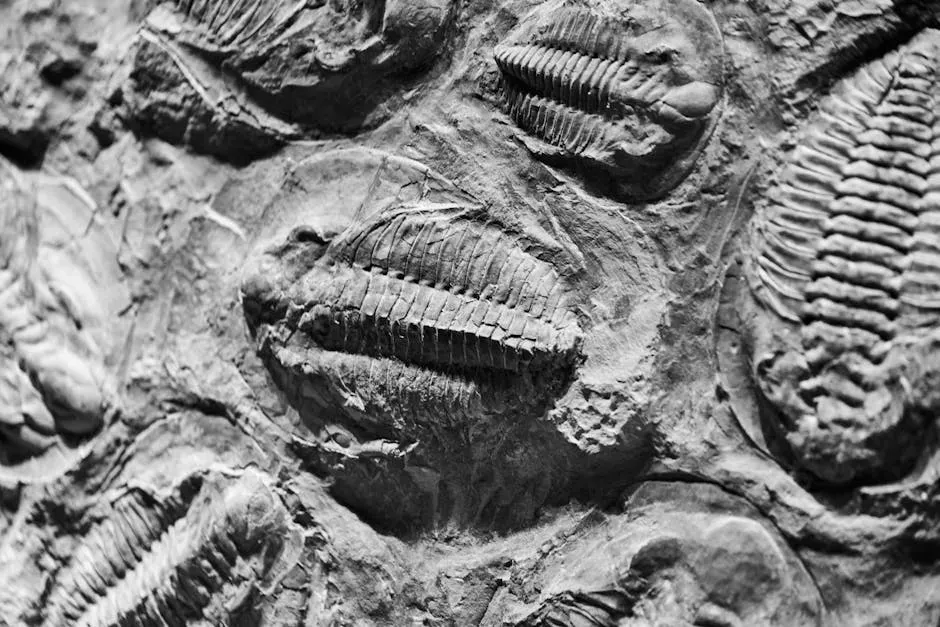
As you climb higher in the canyon’s rock layers, you move through millions of years of sea life. Trilobites are some of the oldest fossils to appear in the Grand Canyon’s fossil record. These sea creatures, related to insects and crustaceans, roamed a shallow ocean between 525 to 505 million years ago searching for dead organic material to eat. Trilobite fossils can be found in the Tapeats Sandstone, Bright Angel Shale, and Muav Limestone rock layers.
Both the Redwall Limestone and the Surprise Canyon Formation have significant records of invertebrate fossils. The Redwall Limestone was deposited under shallow marine conditions about 340 million years ago during the Early to Middle Mississippian. Both formations contain a wide assortment of marine invertebrates common in the Mississippian, such as brachiopods, corals, bryozoans, nautiloids, bivalves, gastropods, and echinoderms. Vertebrate fossils include teeth from sharks, a group that diversified during this time interval. Sharks, swimming through what is now Arizona. Let that sink in.
The 313-Million-Year-Old Footprints That Almost Went Unnoticed
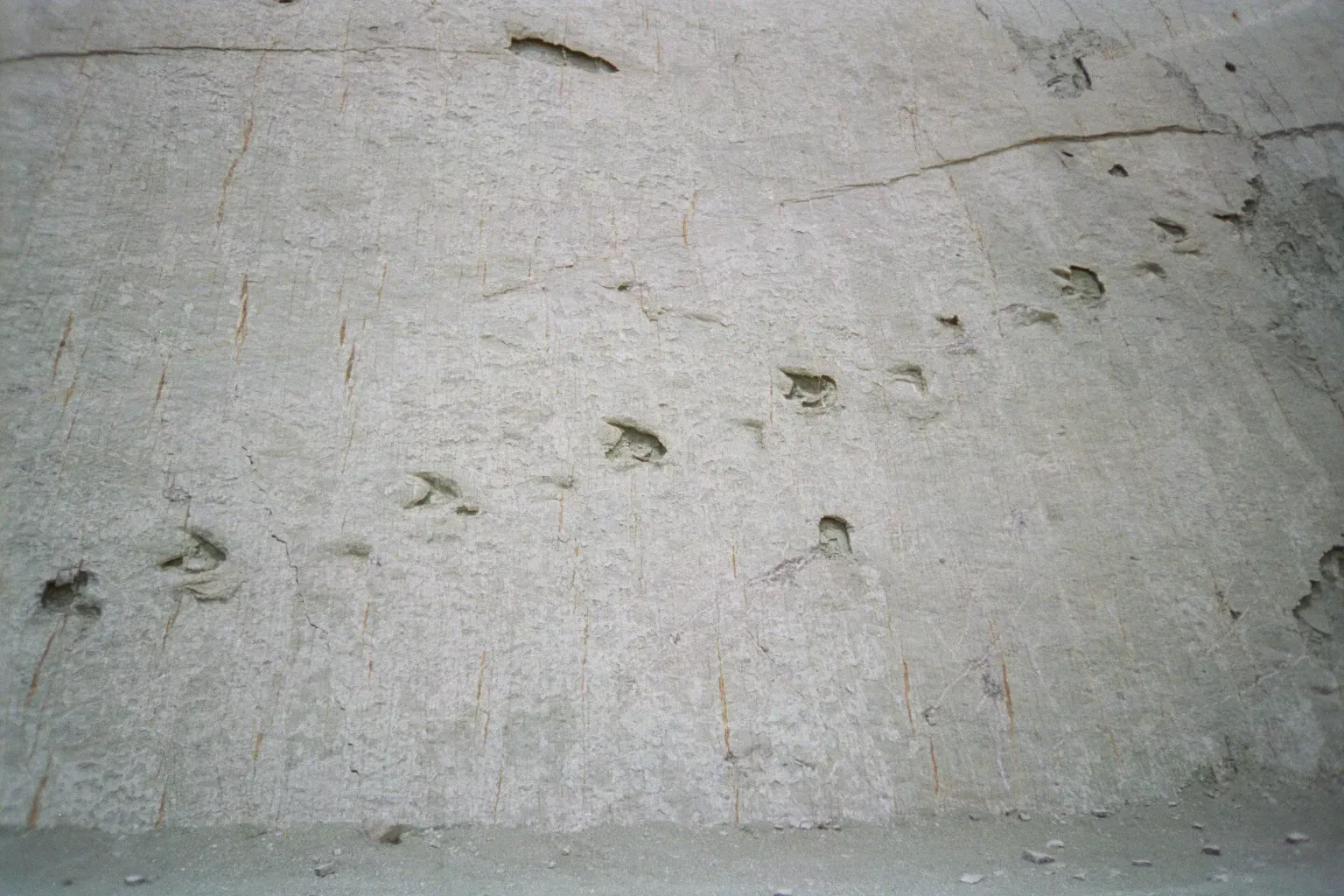
Sometimes the most important discoveries happen by pure accident. In 2016, a Norwegian geology professor named Allan Krill was hiking the Bright Angel Trail with his students when he noticed something on a fallen boulder. The boulder had been part of the Grand Canyon’s Manakacha Formation prior to collapsing, and it rested in plain sight of blissfully ignorant hikers until Krill and his students came along. Curiosity prompted the professor to send a photo to Stephen Rowland, a paleontologist at the University of Nevada Las Vegas. To Krill’s surprise, Rowland was able to determine that the tracks came from two separate animals traversing a sand dune, imprinted an astonishing 313 million years ago.
The two sets of footprints are among the oldest tracks on Earth of shelled-egg-laying animals, such as reptiles, and the earliest evidence of vertebrate animals walking in sand dunes. Think about how close this discovery came to never happening. The boulder had been sitting in plain view of millions of hikers for years. The first set of tracks reveals a distinctive, sideways-drifting pattern of footprints, interpreted as the trackmaker employing a lateral-sequence gait while diagonally ascending the dune slope. In this kind of movement, the legs on one side of the animal move in succession before the legs on the other side do the same. That’s the same walking pattern used by dogs and cats today.
Desert Dunes and Early Reptiles: The Permian World Above
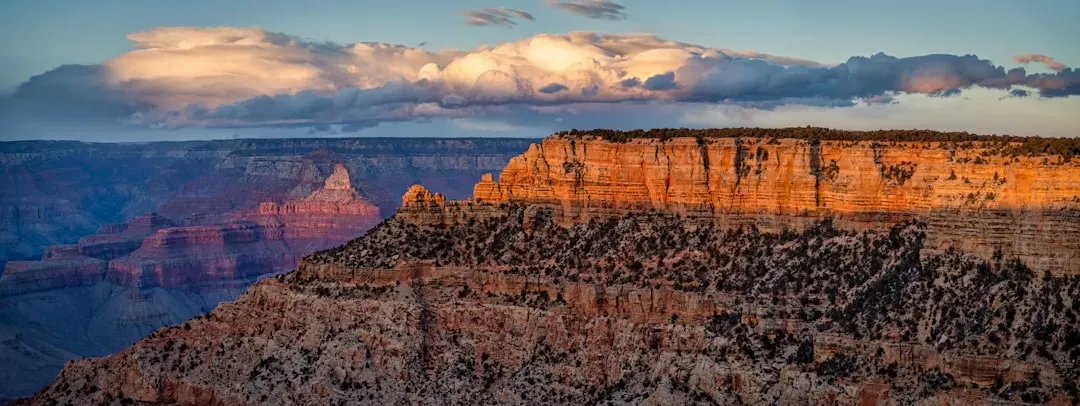
Moving further up the canyon’s walls brings you into a very different ancient world. Strata exposed in the upper portions of the Grand Canyon contain information about both marine and terrestrial life during the early to middle Permian, between about 290 and 270 million years ago. On land, the evolution of the amniotic egg allowed amniotes, including the ancestors of today’s mammals and reptiles, to become more abundant relative to amphibians. This was a turning point in life on Earth.
Close to the rim of the Grand Canyon lies the Coconino Sandstone. This layer is the result of a vast sand dune-covered landscape, and it’s common to find reptile, scorpion, and spider tracks from when these creatures were scurrying across the dunes 280 million years ago. You can stand on that very same rock today. As you stand on the Kaibab Limestone on the South Rim, imagine what the Grand Canyon landscape was like 275 million years ago, a vast ocean full of sea life, including fish, sharks, cephalopods, shrimp, and crinoids. Layer by layer, the canyon takes you on a journey through worlds that no longer exist.
Ice Age Caves and the Grand Canyon’s Megafauna Secrets
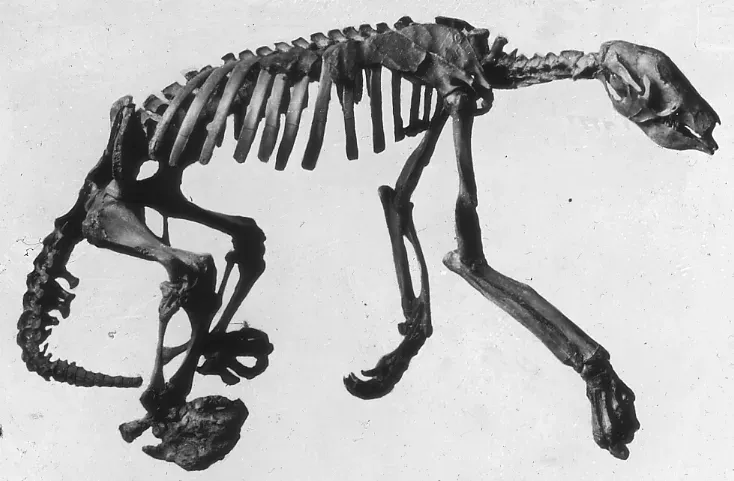
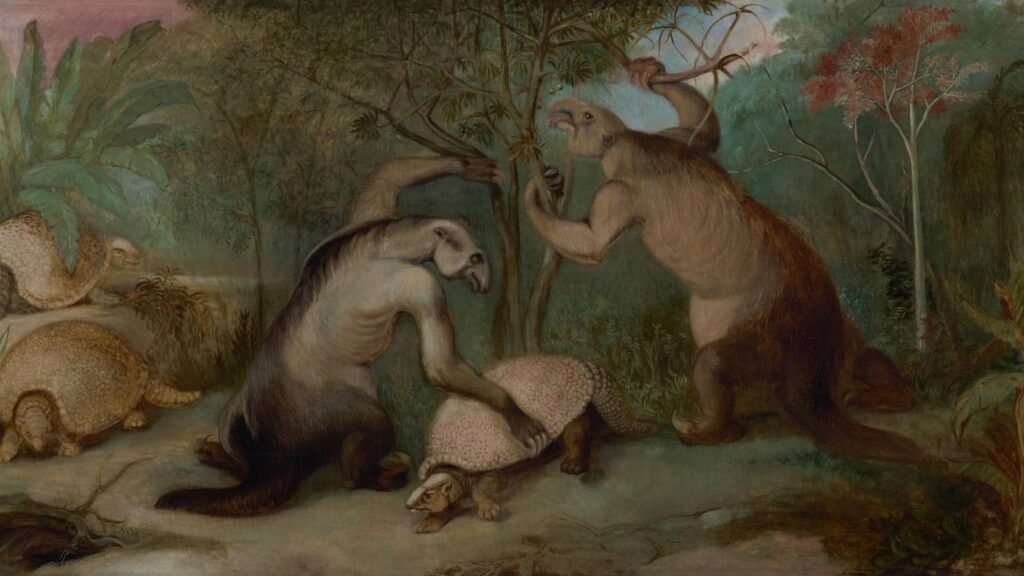
The story doesn’t end with ancient seas and desert reptiles. The Grand Canyon’s deep limestone caves hold a completely different kind of prehistoric treasure. The Pleistocene Grand Canyon had more woodland vegetation than today and was inhabited by Shasta ground sloths, Harrington mountain goats, vampire bats, and other animals that utilized caves within the canyon walls. It’s honestly hard to picture giant ground sloths wandering through a place that today looks like a stark desert landscape.
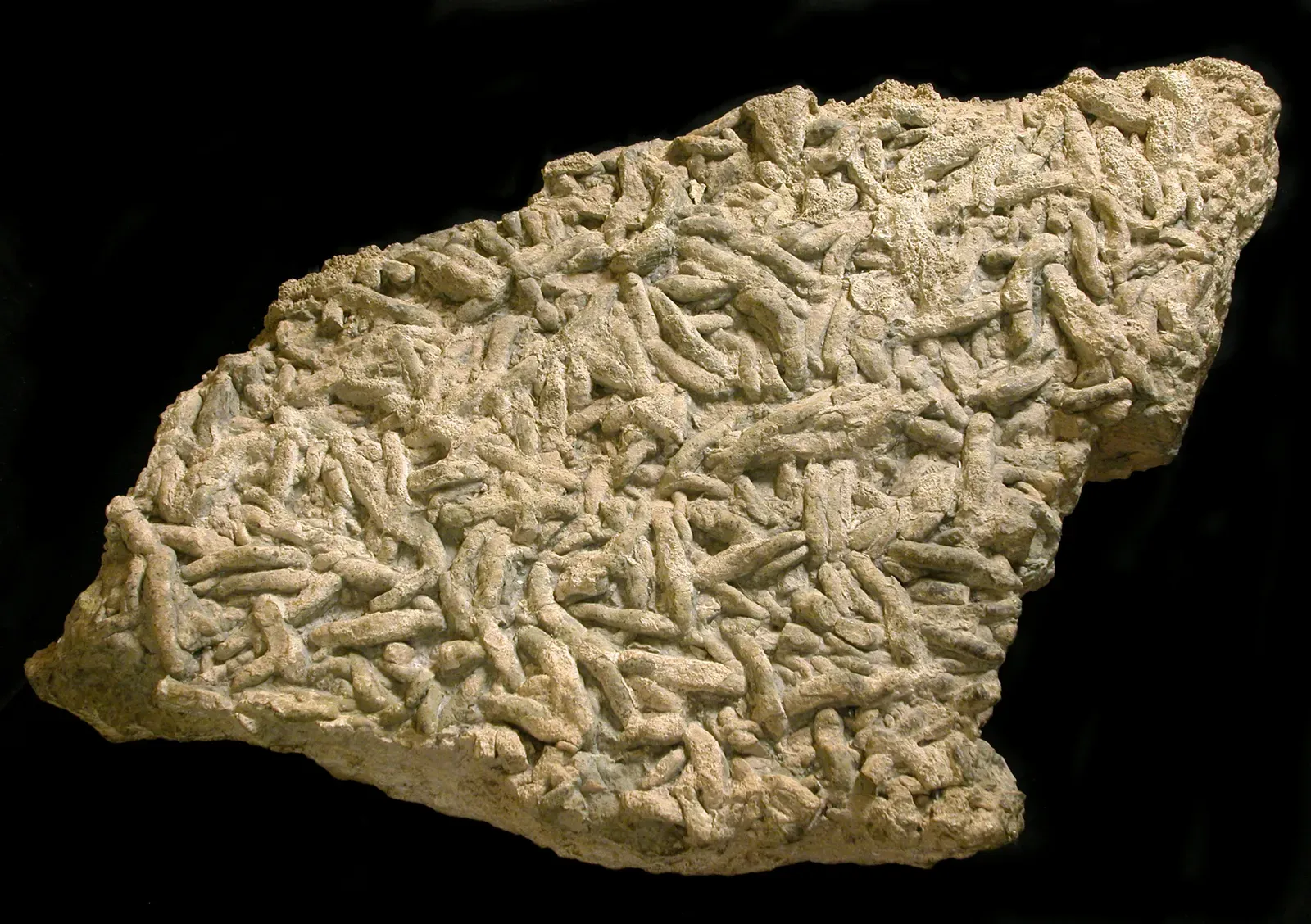
Both body and trace fossils, mostly packrat middens and coprolites or fossil dung, have been recovered in caves. Rampart Cave in the western Grand Canyon had thick deposits of sloth dung and also preserved sloth hair and skin. During the last Ice Age, the Grand Canyon was cooler and wetter than it is today, allowing vegetation to flourish. This would have provided plenty of food for such a large herbivore. Studies of preserved sloth dung indicate the Shasta ground sloth was likely driven extinct by human hunting rather than climate change, which is, honestly, both fascinating and sobering at the same time.
Conclusion: The Canyon Is Still Talking. Are You Listening?
The Grand Canyon is not just a natural wonder you visit, photograph, and leave behind. It is an ongoing scientific conversation. A major paleontological publication documents more than 1.2 billion years of paleontological history in the Grand Canyon, and researchers are still finding new pieces of the puzzle every single year. That 2023 discovery of soft-bodied Cambrian fossils proved that even one of the most studied landscapes on Earth can still surprise us completely.
Together with the mostly younger rocks exposed in the rest of the Colorado Plateau, the Grand Canyon provides one of the world’s best sedimentary rock records for studying the evolution of life. Every hike into its depths is a descent through time. Every layer underfoot is a page of a story that took billions of years to write. You don’t need a science degree to appreciate that. You just need to slow down, look closely, and let the canyon speak.
The next time you peer over that rim, ask yourself this: what else might still be hidden inside those ancient walls, waiting for the right boulder to fall? What would you have expected to find?