
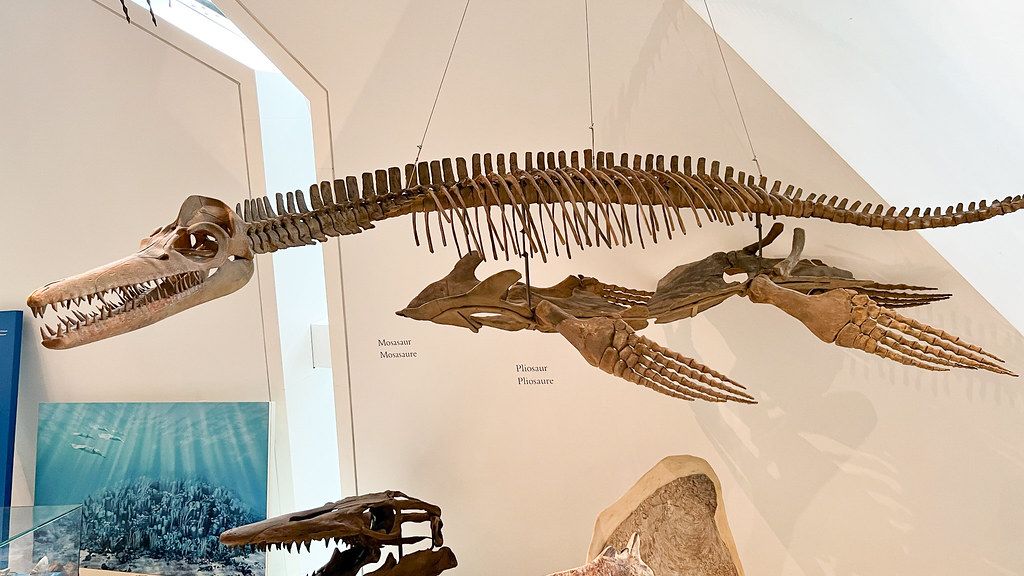
Picture an ocean so alive, so violently teeming with colossal creatures, that our modern seas would look almost empty by comparison. No whales. No dolphins. No great white sharks ruling the depths. Instead, something far older, far stranger, and in many ways far more terrifying was in charge. The Jurassic Period, spanning roughly from about 201 million years ago to 145 million years ago, produced some of the most astonishing marine predators Earth has ever seen. These weren’t fish. They weren’t dinosaurs. They were ocean giants so perfectly engineered for their world that their disappearance remains one of paleontology’s most haunting puzzles.
So here’s the question that keeps scientists up at night: where did they all go? How did creatures that dominated entire oceans for millions of years simply vanish? The answer, it turns out, is layered, complicated, and loaded with revelations that most people never hear about. Let’s dive in.
A World Beneath the Jurassic Waves
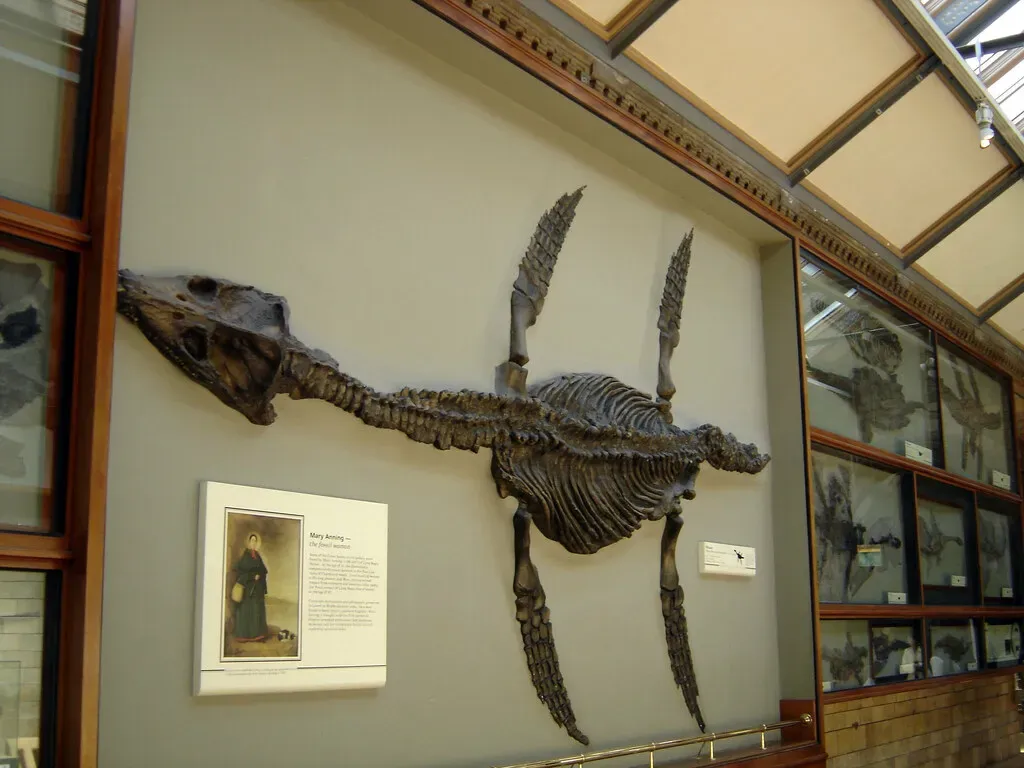
Back in the Jurassic Era, the oceans were teeming with all sorts of reptiles and marine life that were both amazing and terrifying. You need to picture this correctly, because the scale of it is genuinely mind-bending. If you could travel back in time, the sea would have been significantly warmer than today, and the coastline itself would be utterly unrecognizable to modern eyes.
The oceans were inhabited by marine reptiles such as ichthyosaurs and plesiosaurs, while pterosaurs dominated the skies above. You’d also share the water with ammonites ranging from just a few centimetres to as large as a bicycle wheel, predatory creatures that stalked and fed on crustaceans using long arms extending from their hard shells. This wasn’t a calm, serene blue world. It was a multilayered battlefield of predator and prey, and the giants that ruled it were unlike anything alive today.
The Plesiosaurs: Long-Necked Ghosts of a Lost Sea
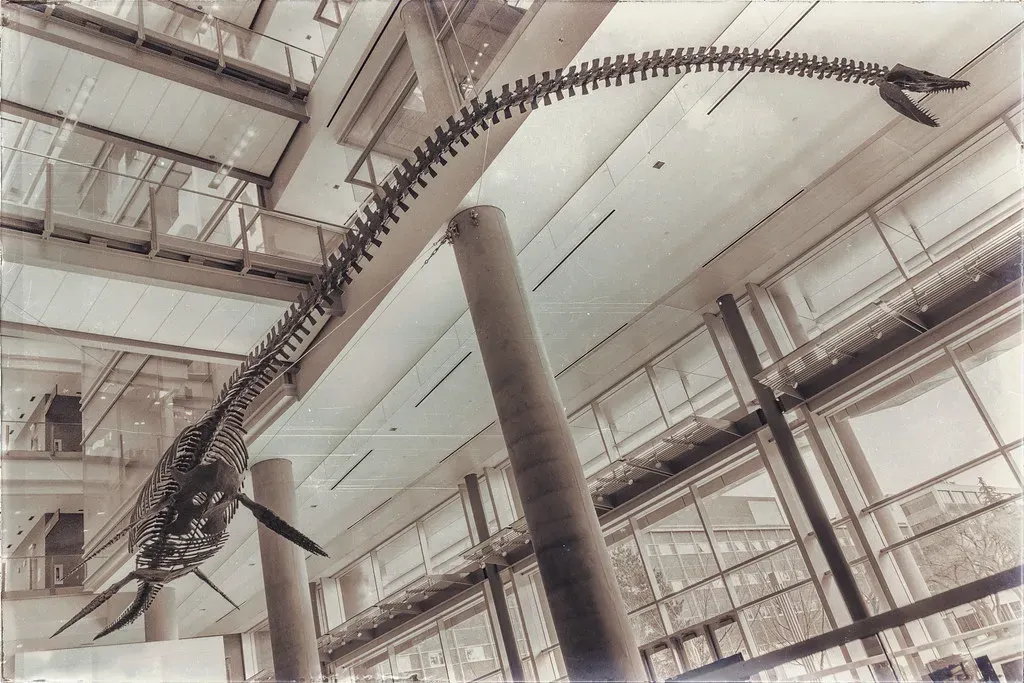
Honestly, plesiosaurs might be the most visually iconic of all Jurassic sea creatures. You know the silhouette. Their name came from the Greek for “near to lizards,” and they typically had broad bodies, flippers, and short tails. Their most distinctive feature, however, was their enormous neck. When scientists first assembled their fossils, they actually mixed up the ends, placing the skull at the wrong end entirely. That’s how spectacularly strange these animals were.
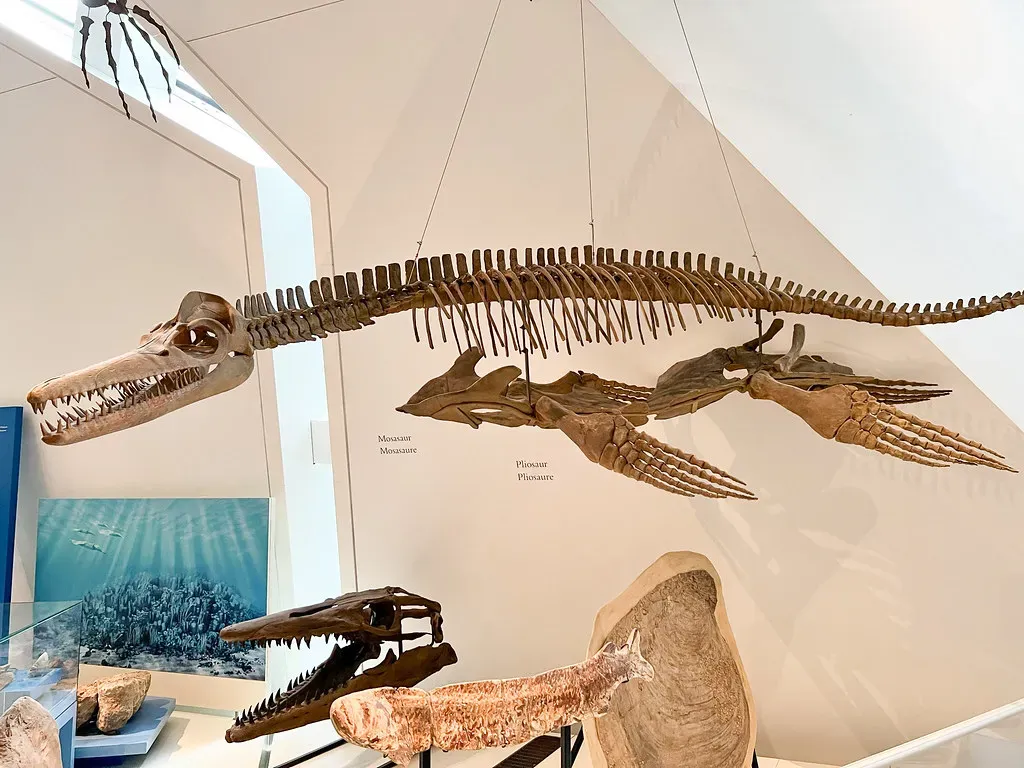
Plesiosaurs were a group of large, long-necked marine reptiles belonging to the order Plesiosauria. They appeared in the Late Triassic period and became especially prevalent during the Jurassic period, thriving until their disappearance in the Cretaceous-Paleogene extinction event roughly 66 million years ago. They “flew” through the water using all four flippers in a coordinated motion, generating lift and thrust much like underwater wings, giving them exceptional maneuverability, stability, and control that allowed for precise turns and sudden bursts of speed.
Pliosaurs: The Ocean’s Ultimate Killing Machine
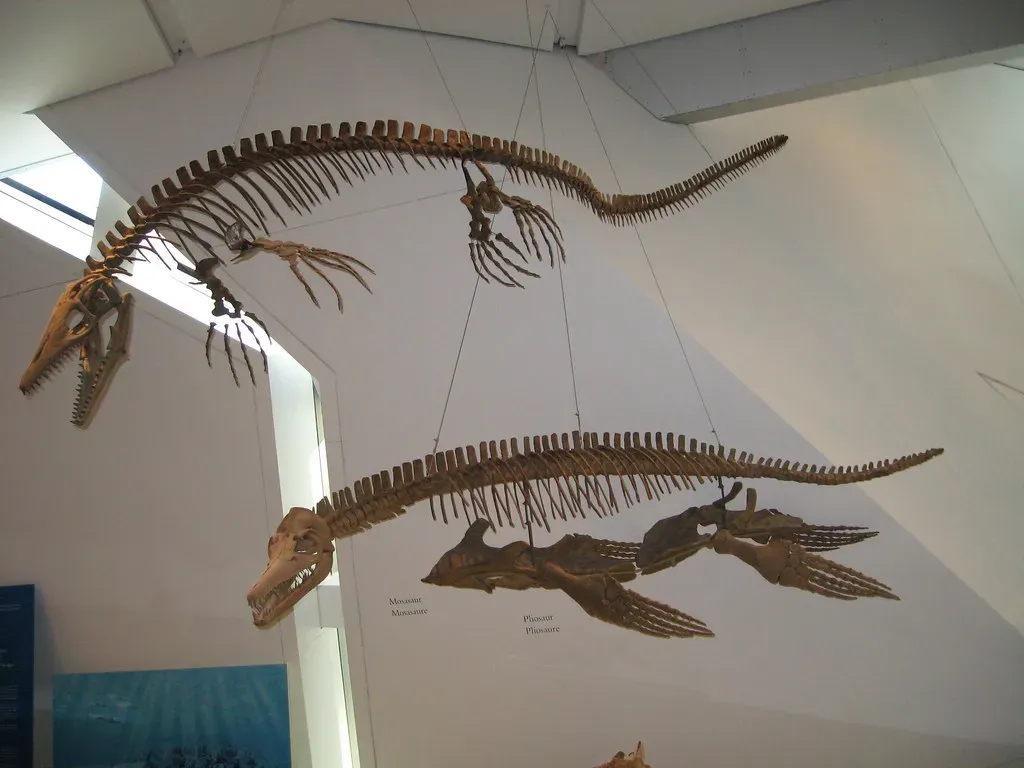
If plesiosaurs were the graceful long-necked wanderers of the Jurassic seas, pliosaurs were something altogether more terrifying. Think of them as the ocean’s answer to a T. rex, only faster, more agile, and surrounded on all sides by water. Pliosaurs, meaning “more lizard,” are a group of Jurassic marine reptiles belonging to the order Plesiosauria, but unlike their long-necked plesiosaur cousins, these animals had short necks with a large, elongated head similar to crocodiles, ranging from around four to ten metres in length, but capable of reaching up to 15 metres.
The pliosaur’s bite force, calculated from the size of its muscles, has been estimated at 32,000 newtons – roughly double that of a saltwater crocodile, the most powerful living biter on Earth today. Combined with the ability to accelerate up to approximately 30 miles per hour, this was also one of the fastest animals in the Jurassic seas and certainly an apex predator in its ecosystems. You wouldn’t have wanted to be anything sharing that water. The pliosaur didn’t look for a fair fight.
Liopleurodon: Monster of the Deep or Misunderstood Legend?
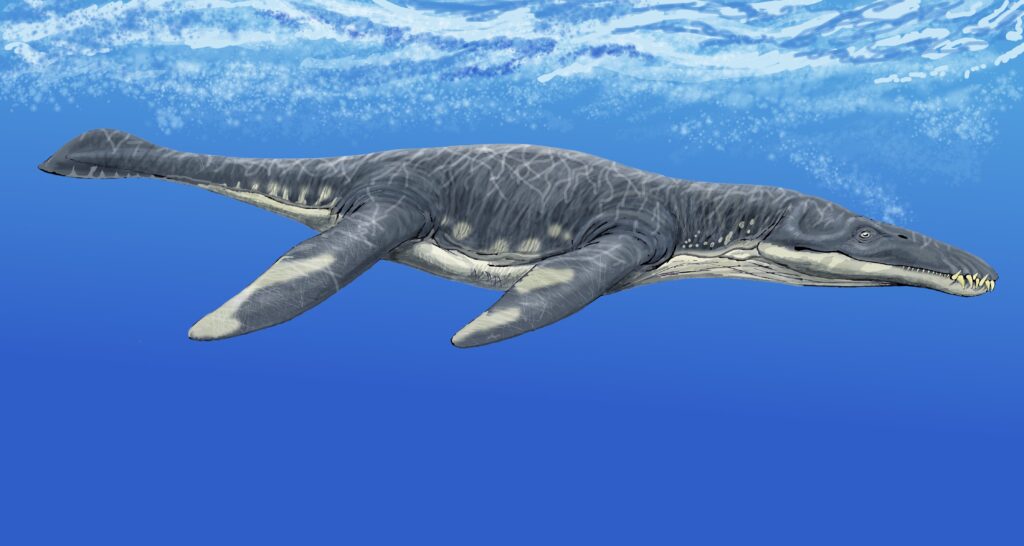
Let’s be real – Liopleurodon has a bit of a reputation problem. Thanks to a famous BBC television series, many people grew up believing this creature was a bus-sized leviathan measuring nearly 25 metres long. The truth is considerably more modest, though no less impressive. More recent studies of Liopleurodon have estimated its size at a more conservative 8 to 10 metres – similar to a large orca. Still, Liopleurodon had some of the largest jaws in the animal kingdom relative to its body size, with roughly 20 percent of its total length made up by its toothy grin.
Liopleurodon likely possessed large, well-developed olfactory bulbs in its skull, indicating a highly refined sense of smell even underwater, which would have been crucial for locating prey, potentially even tracking scents across considerable distances in the vast Jurassic oceans. Liopleurodon lived in Western Europe from 166 to 155 million years ago, sharing its open ocean habitat with other marine reptiles such as ichthyosaurs and plesiosaurs, and anatomical studies suggest it was likely a very fast and agile swimmer, built for ambushing its prey from below. It sounds less like a monster and more like a perfectly designed ambush weapon.
Ophthalmosaurus: The Deep-Diving Eye Giant
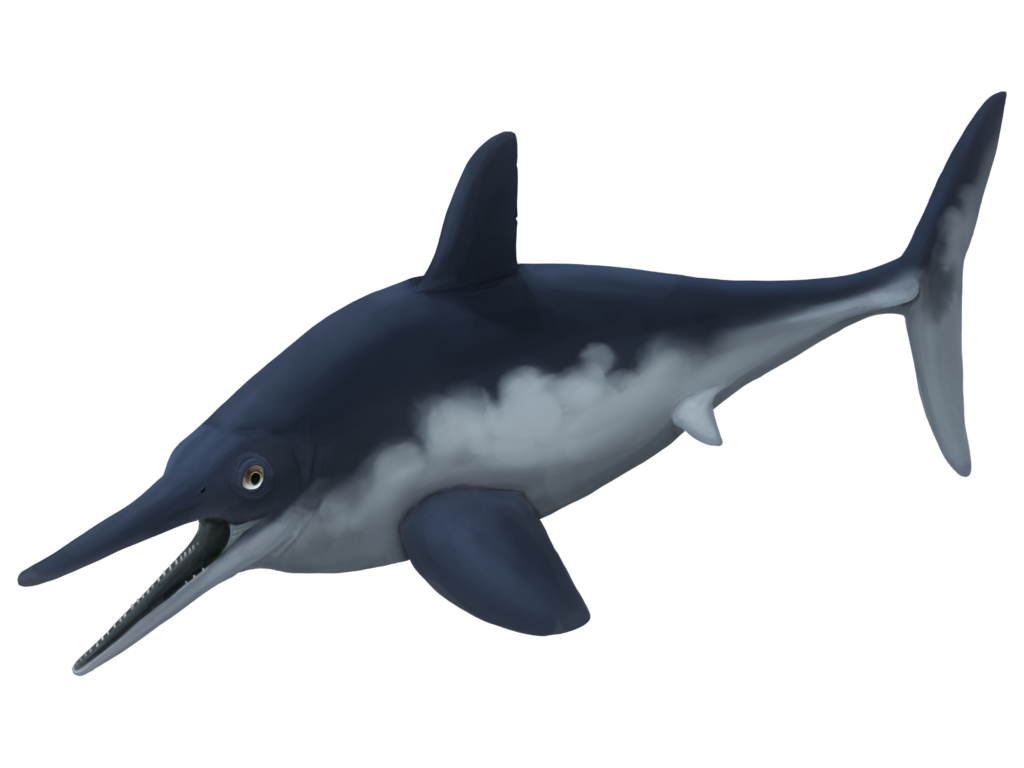
Here’s a creature that doesn’t get nearly enough attention, and I think that’s a genuine shame. Ophthalmosaurus is a genus of ichthyosaur known from the Middle to Late Jurassic. Its name literally means “eye lizard,” and when you understand why, it becomes one of the most fascinating animals you’ll ever read about. Not only did its eyes take up most of the orbital cavity, but Ophthalmosaurus possibly had the proportionately largest eyes amongst the known sea creatures of the Late Jurassic seas.
Ophthalmosaurus could likely dive for around 20 minutes, and assuming a conservative cruising speed of one metre per second, it could reach depths of 600 metres or more during a dive, reaching the mesopelagic zone. Fossils of this creature reveal evidence of decompression sickness, known as “the bends,” which is evidence of routine dives beyond 500 metres to hunt squid in lightless zones, while also evading predators like Liopleurodon. You’re essentially looking at a reptilian version of a deep-sea predator, built from the inside out for a life in permanent darkness.
The Hidden Extinction: A Mystery Within a Mystery
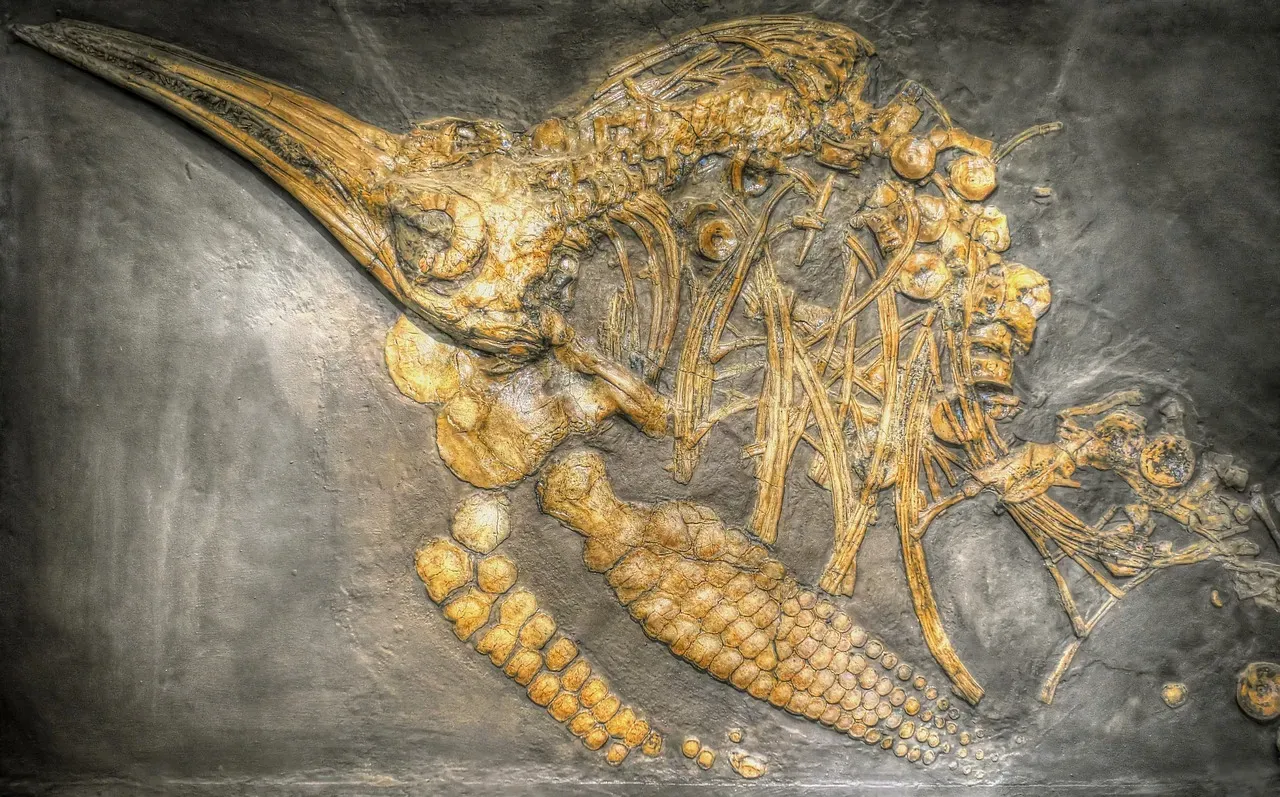
You might assume these giants all disappeared in one dramatic event, swept away by the same catastrophe that eventually erased the dinosaurs. The true story is far more complicated and, honestly, more unsettling. Their rapid expansion was brought to a halt at the end of the Triassic, 200 million years ago, by two extinction events in quick succession. Despite the effects of the second extinction event already being known, new research shows that plesiosaurs and ichthyosaurs were more vulnerable because of a previous event several million years earlier.
Among the casualties of that earlier event were the shastasaurid ichthyosaurs, a group of whale-sized marine reptiles that could reach up to 21 metres long. Ichthyosaurs would never reach such massive sizes again, for reasons that are still described by researchers as “still a mystery.” The ammonites and other ocean creatures were living just two million years after the Late Triassic extinction, which was caused by volcanic activity as the ancient landmass Pangaea started to break up, releasing large amounts of carbon dioxide into the air. It is estimated that more than half of all marine genera were wiped out, including some large marine reptiles and reef-building creatures.
Why Their World Could Not Last: Climate, Ecology, and Collapse
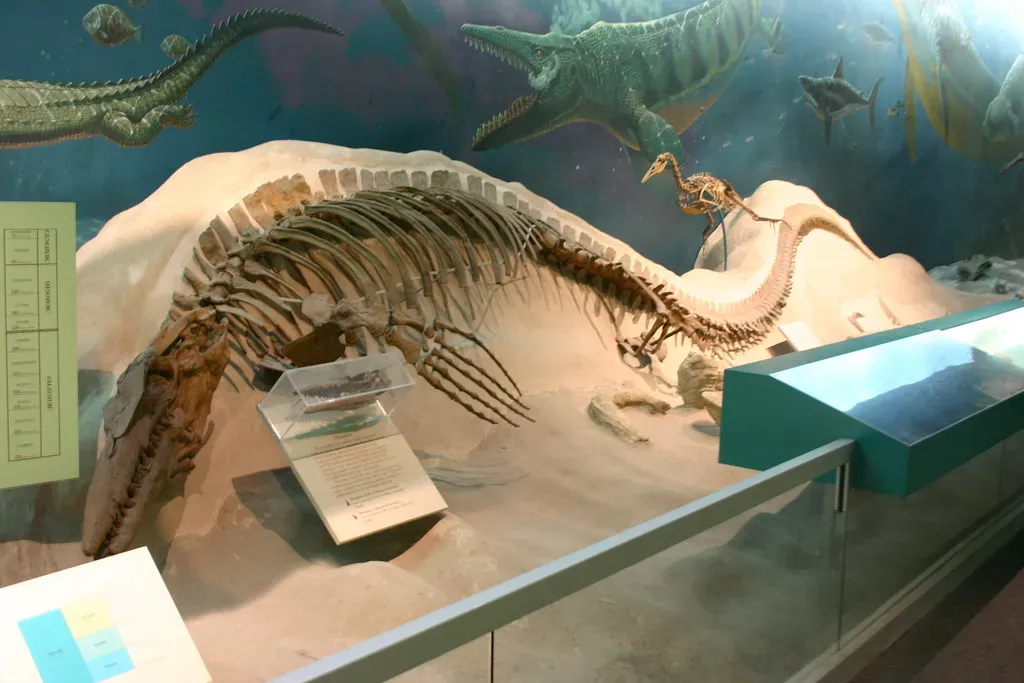
It’s hard to say for sure exactly why these creatures lost their grip on the oceans, but the evidence points toward a devastating combination of ecological shifts and environmental chaos. While the plesiosaurs and ichthyosaurs were able to survive the end-Triassic extinction, they didn’t last forever. The last ichthyosaurs died out around 90 million years ago during the Cretaceous after they were unable to adapt to changes in the ocean and the extinction of some of their food sources.
While the top-predator pliosaurs seemed almost untouchable by major extinction events, the ichthyosaurs displayed much greater ecological fragility. Those that managed to survive into the Early Cretaceous hunted bigger prey than their predecessors, but they were still much farther down the food chain than the giant pliosaurs. When the Mid-Cretaceous extinction event hit, all the remaining ichthyosaurs died out. Marine reptiles known as mosasaurs became prominent around this time, stepping into the ecological roles that the ichthyosaurs and pliosaurs had vacated. Nature, it turns out, doesn’t tolerate an empty throne for long.
What the Fossils Still Tell Us Today
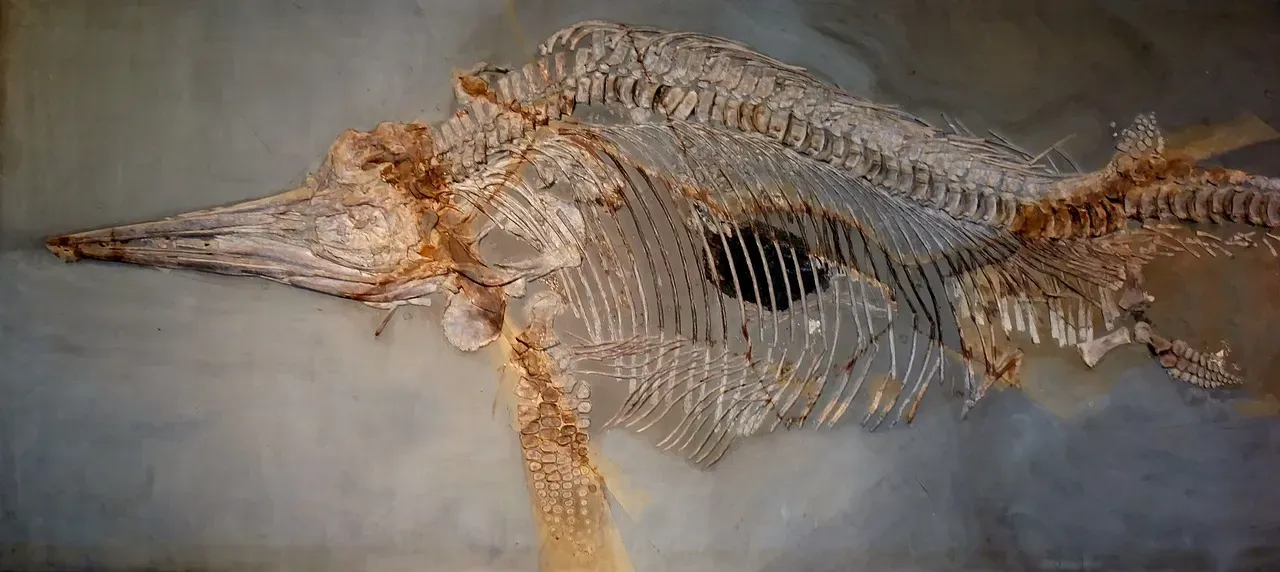
You might be surprised to learn that in 2026, we are still making major discoveries about these animals from cliffs, quarries, and coastlines around the world. The fossilised remains of a gigantic ichthyosaur, colloquially known as a “sea dragon,” were uncovered at the Rutland Water Nature Reserve in the UK, measuring at least ten metres in length with a skull weighing roughly one tonne, making it the largest and most complete ichthyosaur of its kind found to date in Britain.
There is now also a Guinness World Record holder for the most complete pliosaur skull in existence, currently on display at The Etches Collection Museum in Dorset. Plesiosaur remains are most commonly preserved in marine sedimentary rocks, deposited on ancient seafloors later uplifted into deserts, mountains, and plains as continents shifted. Today, plesiosaur fossils are known from every continent, including Antarctica, revealing that these reptiles thrived in globally connected oceans for much of the Mesozoic Era. Every new fossil is a new page in a story we’re still only beginning to fully read.
Conclusion: Giants Lost, Lessons Found
What happened to the ocean’s lost giants of the Jurassic Period is not a single story. It’s a cascade of events, across millions of years, each one nudging the balance of nature a little further until creatures that once owned entire seas became nothing more than stone impressions in a clifftop. Volcanic eruptions, shifting food webs, ocean acidification, cooling temperatures – these animals didn’t fall to one enemy. They fell to the slow, relentless rewriting of the world they were built for.
What makes their story genuinely profound, I think, is what it tells us about resilience and fragility. These were not weak creatures. They were the most powerful predators their age ever produced. Yet even they could not outrun the planet’s capacity for change. The Jurassic ocean giants remind us that dominance is never permanent, and that the most awe-inspiring creatures in Earth’s history are often the ones that leave behind only fragments of bone and an ocean full of unanswered questions.
What would you have guessed was behind their disappearance before reading this? Tell us in the comments.