
When most people picture dinosaurs, their minds sprint straight to the towering Tyrannosaurus rex, the long-necked Brachiosaurus, or the terrifying velociraptor of movie fame. The giants. The monsters. The creatures that could flatten a forest just by walking through it. That popular image, honestly, could not be further from the truth of how dinosaurs actually started out.
The real story of dinosaur origins is far more fascinating – and much more humbling. These animals did not burst onto the scene as rulers of the Earth. They were small, scrappy, fast-moving survivors in a world that was not quite ready to hand them the throne. So let’s dive in.
A World Recovering From Catastrophe: The Triassic Stage Is Set
You have to picture a planet still healing from near-total destruction. Dinosaurs diverged from their archosaur ancestors during the Middle to Late Triassic, roughly 20 million years after the devastating Permian–Triassic extinction event wiped out an estimated 96 percent of all marine species and 70 percent of terrestrial vertebrate species approximately 252 million years ago. The world that emerged was scarred, strange, and wide open for anything tough enough to claim it.
The vast supercontinent of Pangaea dominated the globe during the Triassic, and the global climate during this period was mostly hot and dry, with deserts spanning much of Pangaea’s interior. Life clung to river valleys, coastal fringes, and lush pockets of vegetation wherever they could be found. It was a brutal world, and anything hoping to thrive in it needed to be quick, clever, and relentless.
The First Dinosaurs Were Not the Stars of the Show
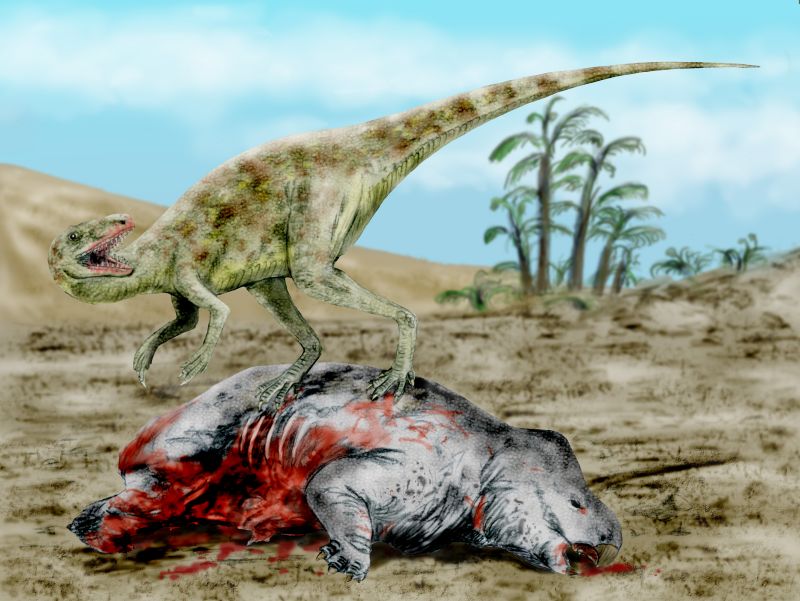
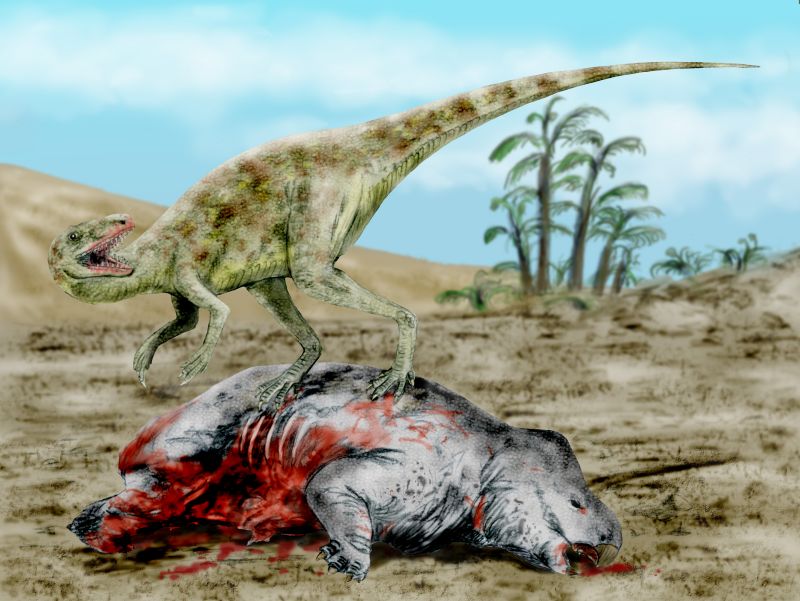
Here is something that genuinely surprises people: when dinosaurs first appeared, they were nobodies. When dinosaurs appeared, they were not the dominant terrestrial animals. The terrestrial habitats were occupied by various types of archosauromorphs and therapsids, and their main competitors were the pseudosuchians, such as aetosaurs, ornithosuchids, and rauisuchians, which were more successful than the dinosaurs.
The first dinosaurs appeared in the Late Triassic, but they were not the fearsome predators you see in the movies and other popular media. In fact, they were rather small, walked on two legs, and many were preyed on by giant reptiles. Think about that for a second. The ancestors of the T. rex were actually getting eaten themselves. The food chain can be a humbling place.
Eoraptor: The “Dawn Thief” That Started It All
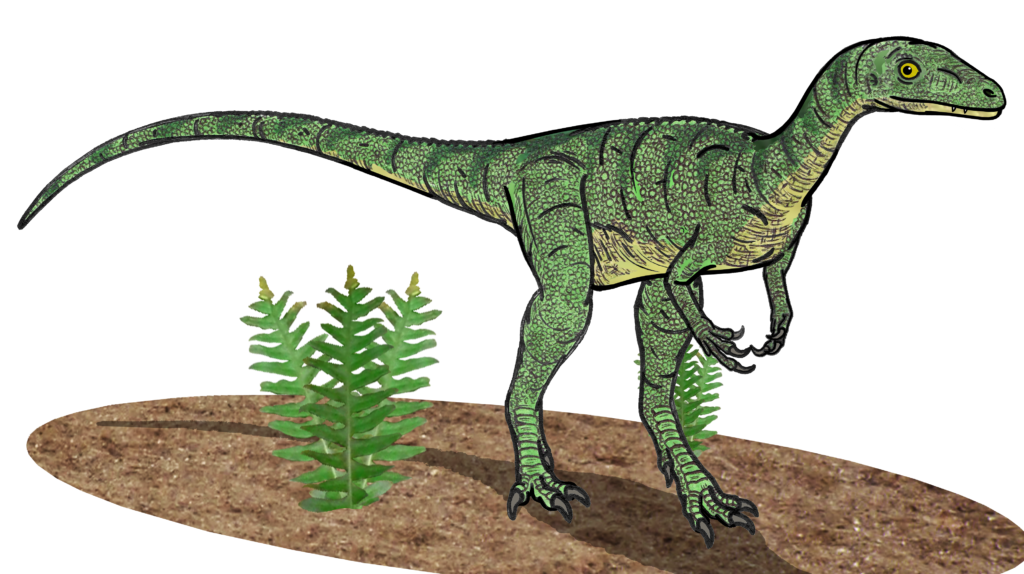
Eoraptor was first discovered by paleontologist Ricardo Martinez in 1991 in the Ischigualasto Badlands of Argentina. The area is now a desert, but during the time of Eoraptor it was a river valley. The species was named by paleontologist Paul Sereno in 1993 and its name means “dawn thief.” You can almost feel the drama in that name – a small, sneaky creature lurking at the very edge of a new era.
Also referred to as the “dawn raptor,” Eoraptor was a small carnivore with many razor-sharp teeth. It had five-fingered hands, a feature consistent with the earliest dinosaur ancestors. Paleontologists now believe that Eoraptor closely resembles the common ancestor of all dinosaurs, and the study of fossils like that of Eoraptor may eventually allow a better understanding of the evolution of key traits present in later species. It’s almost poetic that the creature most like the “original dinosaur” could have fit comfortably in your backseat.
Coelophysis: Small, Fast, and Fiercely Effective
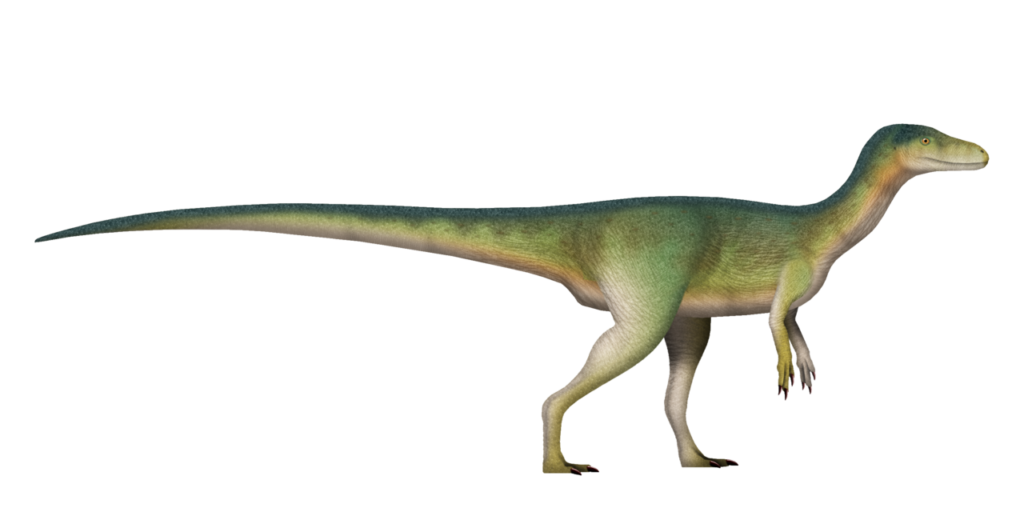
One of the earlier dinosaurs to appear on Earth was Coelophysis. It was a small but skilled hunter that lived during the Late Triassic Period over 200 million years ago. Coelophysis was also one of the first theropods, a group of two-legged, mostly carnivorous dinosaurs that would later include hunters like the Tyrannosaurus rex. Yet its entire body was compact, agile, and built for speed rather than brute force.
Coelophysis was much smaller than T. rex – but also probably much faster. With a small body, a long neck, two long legs, and sharp claws, it was six to ten feet long and lived as a carnivore. Much of what scientists know about Coelophysis can be traced back to 1947, when a group of paleontologists from the American Museum of Natural History discovered hundreds of skeletons at Ghost Ranch, New Mexico. Hundreds of skeletons in one place. That kind of discovery changes the game entirely.
Built to Move: The Anatomy Behind Their Agility
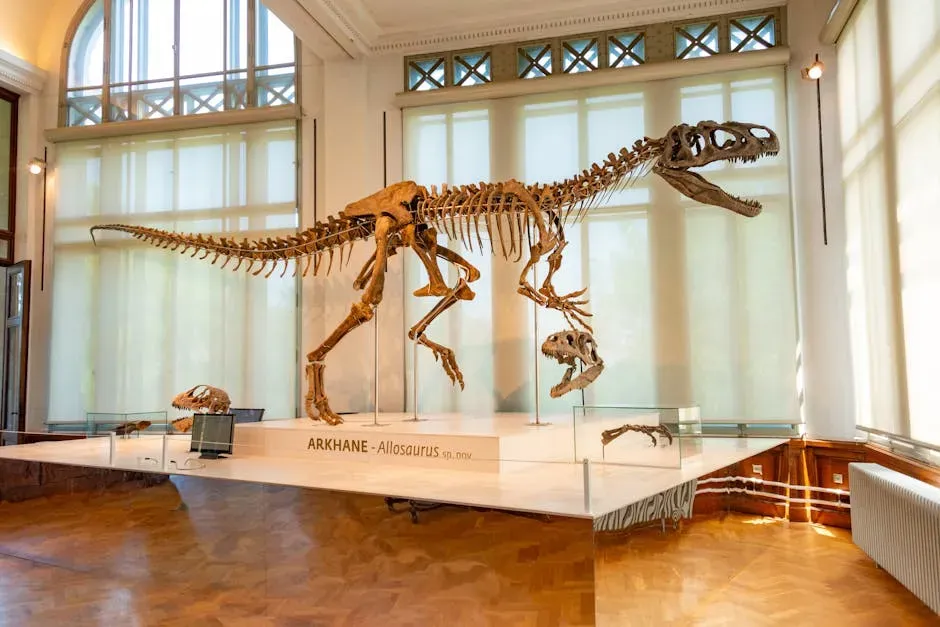
There is a reason these early dinosaurs could outmaneuver so many of their competitors, and it comes down to body engineering. While crocodiles and lizards have their legs sticking out from the body at right angles, to become bipedal, dinosaurs had to tuck them directly under the body. This means that they had to modify the hip and backbone connections, the tops of the thigh bones where the bones join the hip, plus the joints in the knees and ankles. Together, all of these features help to define a dinosaur.
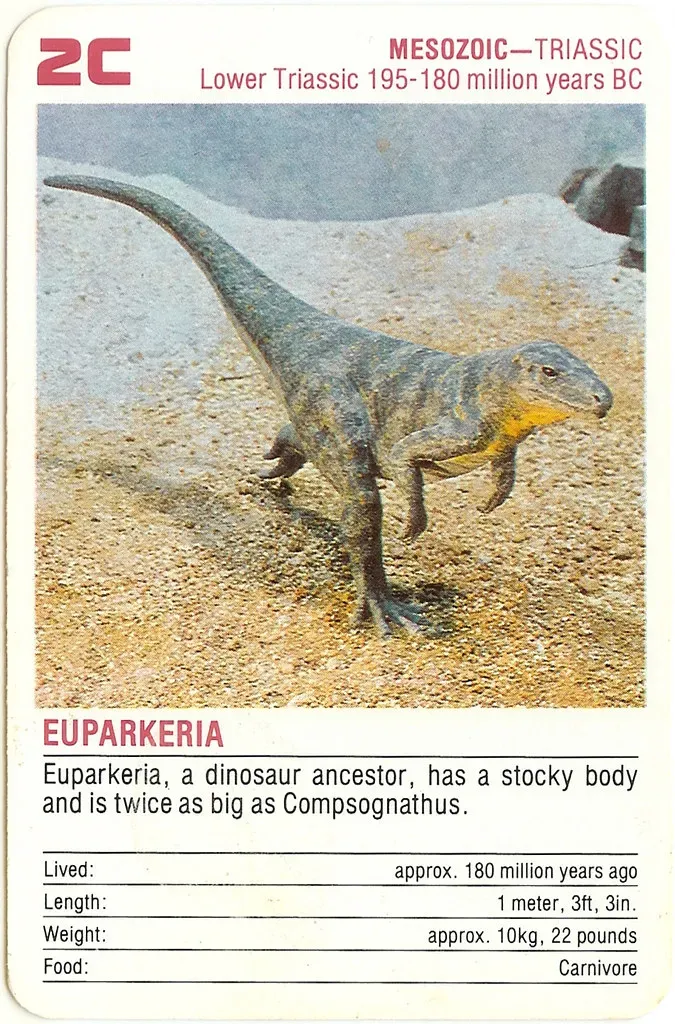
Ornithodirans from early formation sites support the model of early dinosaurs as small, bipedal predators. They all walked on two feet, were quick on their feet, had clawed hands that could hold objects, and had sharp teeth. Think of it like the difference between a lumbering bear and a sprinting cheetah. These early dinosaurs were built for the cheetah lifestyle, pure and simple.
Fast Growth: The Secret Weapon Nobody Talks About
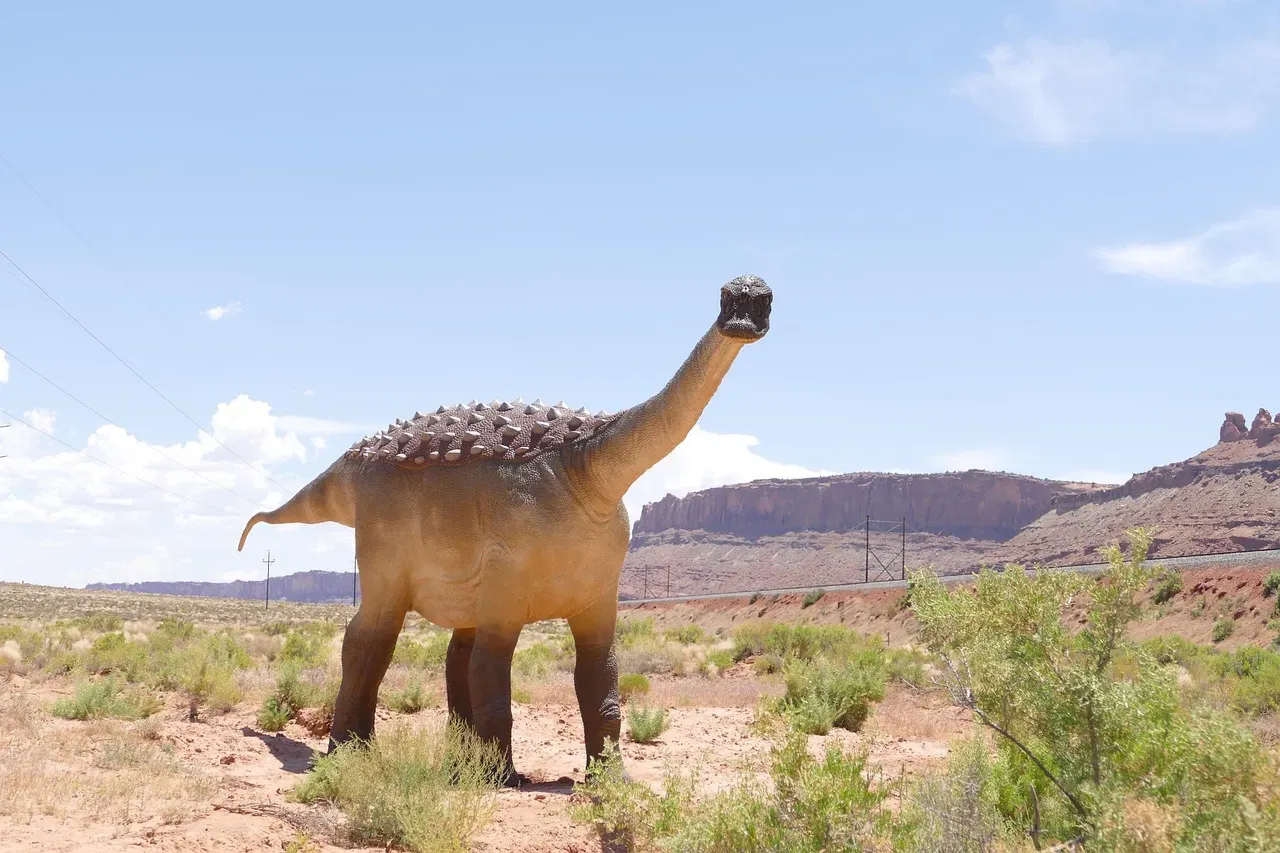
One of the most underrated advantages the earliest dinosaurs had over their competition was how quickly they grew. Dinosaurs existed for 165 million years, and the animals’ evolutionary success was partly due to their fast growth rate. A study finds that this pattern of fast growth appeared in the earliest dinosaurs. That is not a trivial detail – in a dangerous, competitive world, growing up fast meant surviving long enough to reproduce.
Fast growth was beneficial in a changing world, and fast growth combined with dinosaur biology and behavior allowed dinosaurs to succeed early. The first few lines of primitive dinosaurs diversified rapidly through the Triassic period, and dinosaur species quickly evolved the specialized features and range of sizes needed to exploit nearly every terrestrial ecological niche. It is a classic underdog story: small, fast-maturing creatures who could adapt quicker than anyone else in the room.
The Triassic-Jurassic Extinction: The Moment Everything Changed
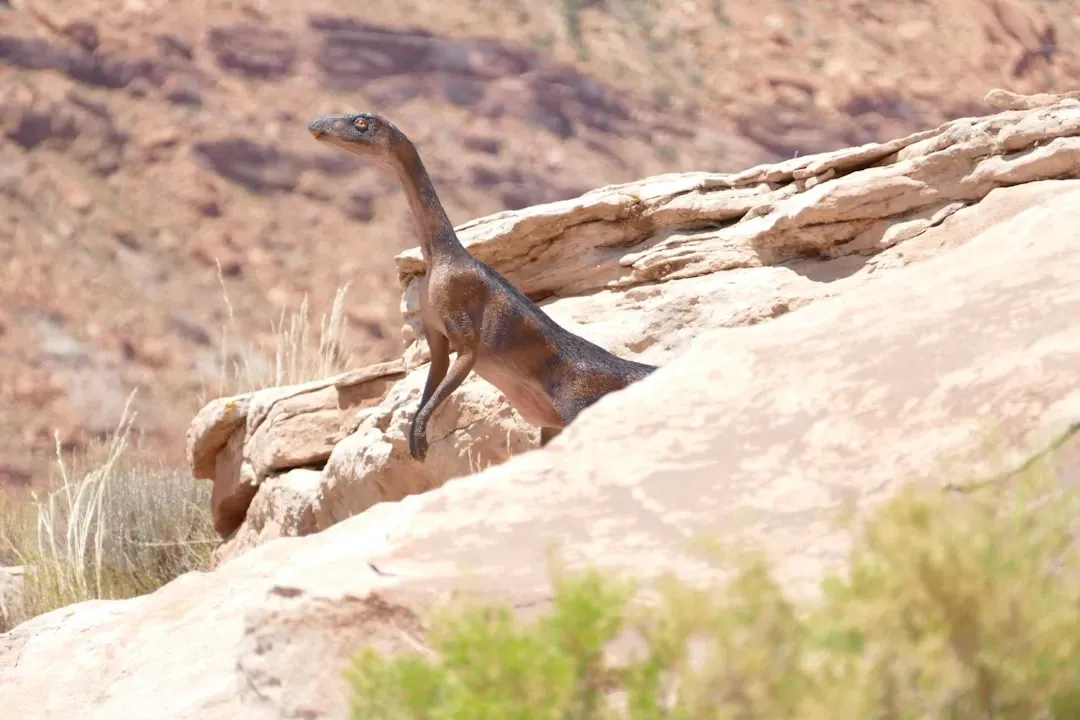
If early dinosaurs were underdogs for most of the Triassic, the event that finally handed them the crown was catastrophic for almost everyone else. The end of the Triassic period was marked by a major mass extinction, the Triassic–Jurassic extinction event, that wiped out many groups, including most pseudosuchians, and allowed dinosaurs to assume dominance in the Jurassic. The very competitors that had kept dinosaurs in the shadows for millions of years were suddenly gone.
Dinosaurs became the dominant terrestrial vertebrates after the Triassic–Jurassic extinction event 201.3 million years ago, and their dominance continued throughout the Jurassic and Cretaceous periods. Some of the early, primitive dinosaurs also became extinct, but more adaptive ones survived to evolve into the Jurassic. The survivors were, in large part, the direct descendants of those same small, quick, nimble hunters from the Triassic riverbanks. Resilience, it turns out, is its own kind of superpower.
Conclusion: Tiny Beginnings, Enormous Legacy
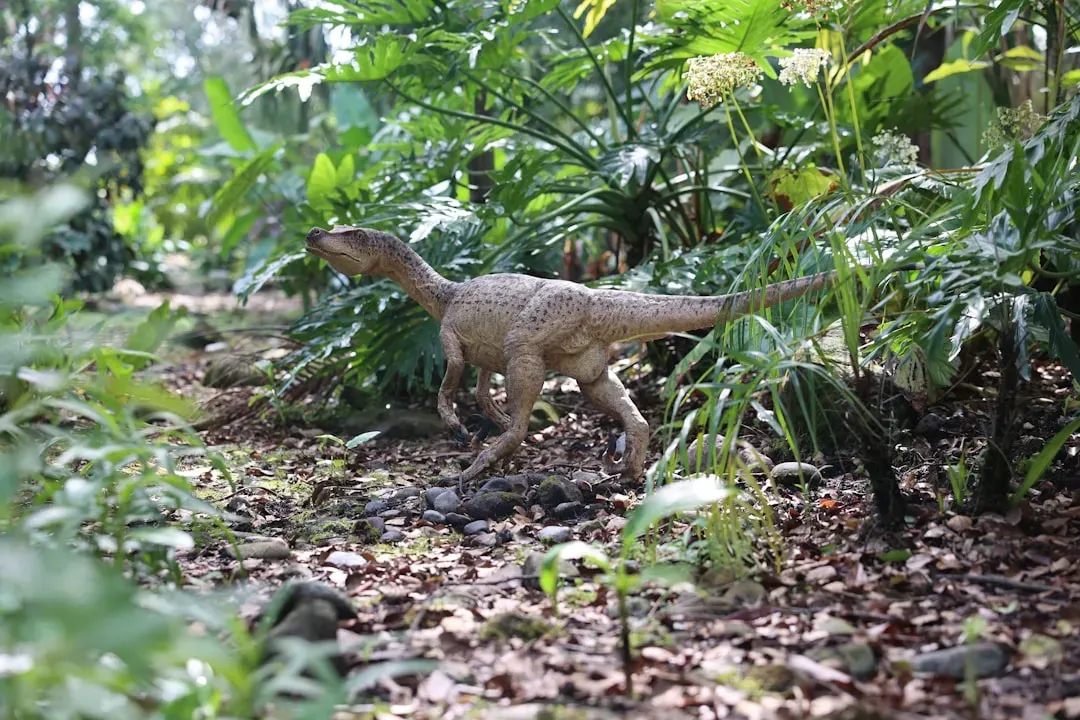
There is something deeply inspiring about the real origin story of the dinosaurs. These were not born-rulers. They were small, fast, intelligent-enough creatures who survived a world stacked against them, outgrew their competition, and eventually became the most dominant land animals in Earth’s history. Dinosaurs are one of the most successful groups of animals to have roamed the planet. For over 170 million years they dominated the land, from small creatures just a few feet long to some of the largest animals ever to have walked Earth.
That arc, from a rabbit-sized predator dodging crocodile-like giants in a Triassic desert to the thunder of a T. rex across the Cretaceous plains, is one of the most staggering transformations in the history of life. The first dinosaurs were likely small bipedal predators, but they rapidly diversified. The next time you watch a documentary featuring enormous, roaring giants, spare a thought for their scrappy little ancestors – the original underdogs who started it all.
What surprises you most about where dinosaurs actually came from? Drop your thoughts in the comments.