When most people picture a dinosaur parent, they probably imagine something like a giant scaly monster stomping around with zero interest in its babies. Honestly, that image isn’t completely wrong – but it’s not the whole story either. The science of how dinosaurs raised their young has exploded in recent decades, and what researchers have uncovered is stranger, more fascinating, and far more complex than anyone expected.
From nests warmed by ancient volcanoes to juvenile dinosaurs forming something eerily similar to school groups, the parenting secrets of these prehistoric giants are slowly being pulled out of the rock. Some of it is genuinely shocking. Some of it will make you rethink everything you thought you knew about the Mesozoic world. So let’s dive in.
1. Dinosaurs Were the Original “Free-Range” Parents
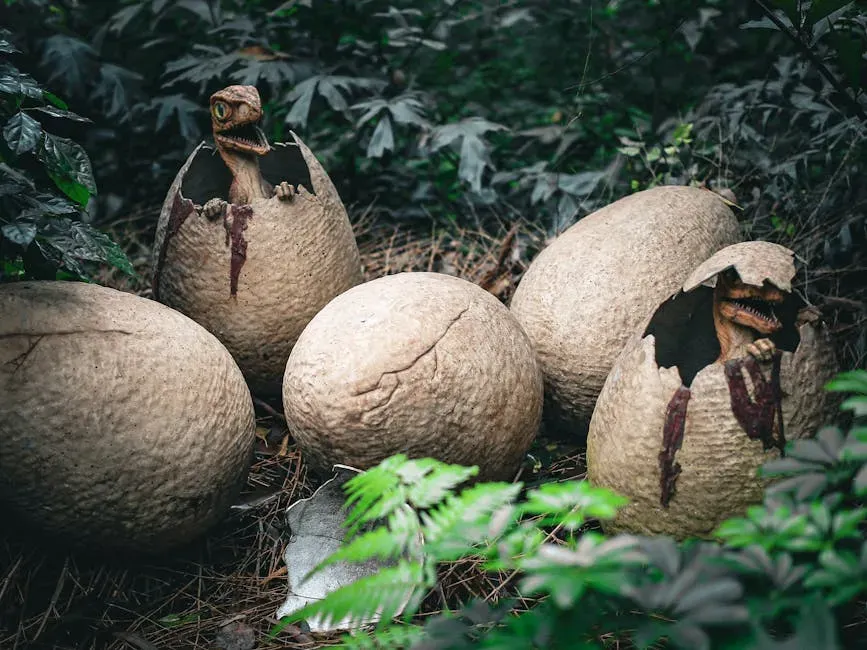
You might think of hands-on parenting as the gold standard – but dinosaurs took a radically different approach. While they did provide some parental care, young dinosaurs were relatively independent, and after just a few short months or a year, juvenile dinosaurs left their parents and roamed alone, watching out for each other. Think about that for a second. A baby Brachiosaurus barely the size of a golden retriever, out in the wild, fending for itself.
According to University of Maryland researcher Thomas R. Holtz Jr., his study, published in November 2025 in the Italian Journal of Geosciences, explored the effect of early independence in dinosaurs compared to long-term maternal care in mammals and their respective ecosystems. While dinosaurs did provide some parental care, young dinosaurs were relatively independent and after just a few short months or a year, juvenile dinosaurs left their parents and roamed alone. This “free-range” style wasn’t neglect – it was a wildly effective survival strategy.
2. Dino Dads May Have Done Most of the Brooding
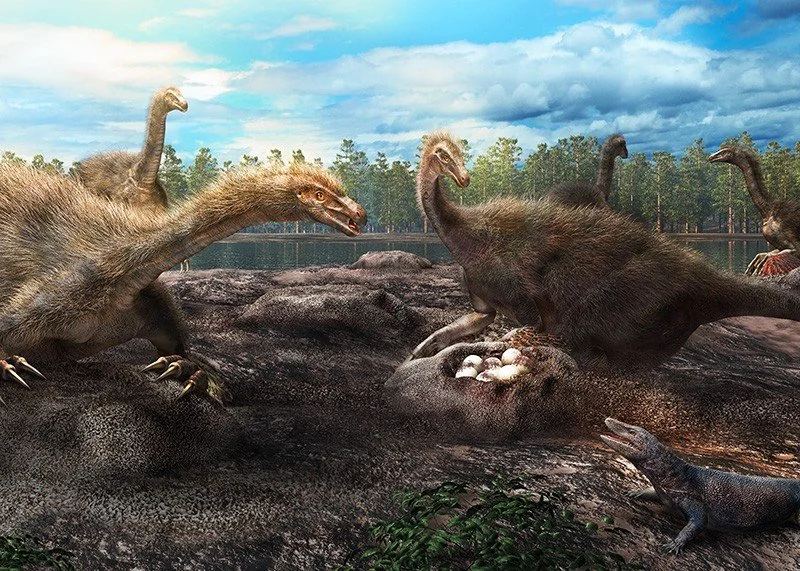
Here’s a twist you probably didn’t see coming. While mammals overwhelmingly leave childcare to mothers, some theropod dinosaurs appear to have been surprisingly progressive. The remains of several types of Cretaceous theropods were found in association with fossil nests, and scientists believe these dinosaurs were brooding the clutch of eggs – the research puts forward evidence to suggest that the animals brooding the nest were actually the males.
Researchers examined the fossilized bones of three theropod species – Troodon formosus, Oviraptor philoceratops, and Citipati osmolskae – all found in association with nests in brooding-like postures. By examining the internal bone structure and finding a lack of evidence for bone cavities left during egg formation, scientists concluded that these fossils represented males, suggesting the fathers were the ones brooding the nests. It’s a behavior we see echoed in ostriches today.
3. Some Dinosaurs Used Geothermal Heat to Incubate Their Eggs
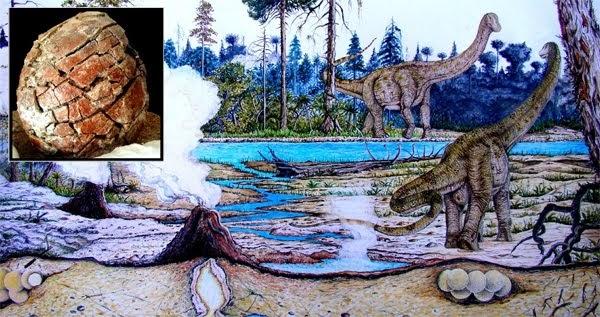
This is one that sounds almost too clever to be true. Some dinosaur species didn’t sit on their eggs or pile vegetation over them – they used the Earth itself as a giant incubator. Researchers reported the first definitive evidence of a group of sauropods that nested repetitively and purposely at a Cretaceous hydrothermal site at Sanagasta, La Rioja Province, Argentina, with the discovery showing nest fidelity over a long time and a relationship between egg clutches and a hydrothermal environment that favored their incubation.
Each of the 80 or so egg clusters at that site was found next to a geyser, a hot vent, or other volcanically heated locations – and this was no coincidence, since eggs need moisture and heat to incubate properly, and these dinosaurs were essentially using the planet to keep their babies warm. That is, frankly, astonishing. It’s the prehistoric equivalent of building your nursery next to a heated floor system – except the floor is a volcano.
4. Maiasaura: The “Good Mother Lizard” That Changed Everything
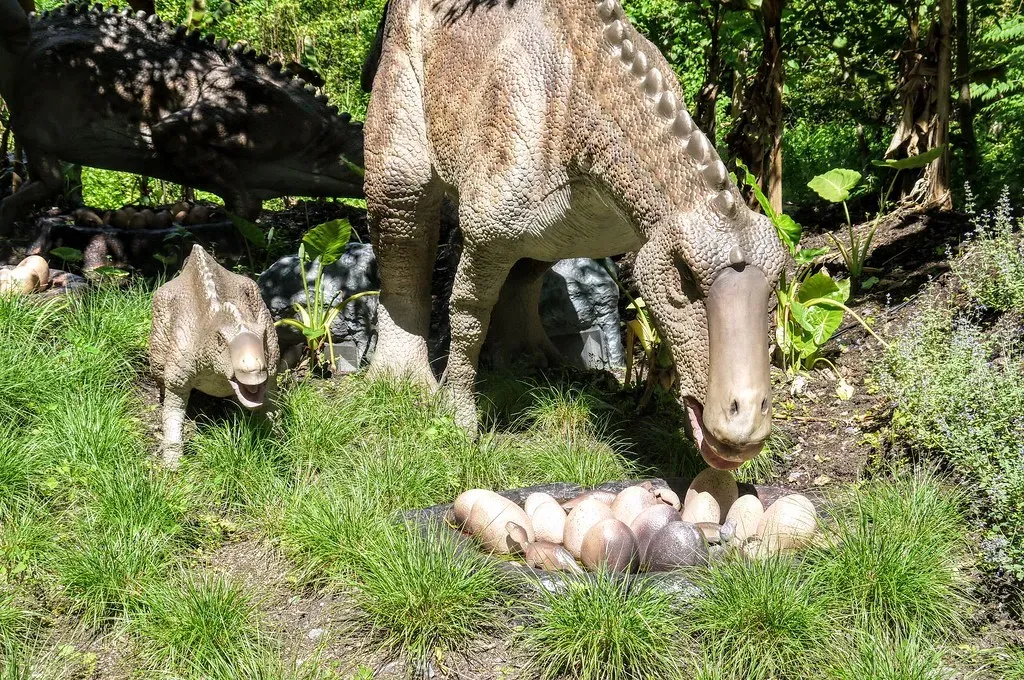
If one dinosaur rewrote the entire rulebook on dino parenting, it’s Maiasaura. The best example of parental care in dinosaurs is the hadrosaur Maiasaura, and in 1979, Jack Horner discovered adult skeletons near babies, suggesting that parents brought food to offspring and guarded nests from predators. This was genuinely revolutionary for paleontology at the time. Before that find, most scientists assumed dinosaurs were cold, indifferent parents.
The clutches of Maiasaura eggs were spread apart, meaning the dinosaur nested in colonies, and these nesting grounds were preserved in successive layers, meaning parents returned to the same grounds to mate, possibly every year, much like many birds today. Maiasaura, whose name means “good mother lizard,” became one of the earliest and best examples of dinosaurs watching over their offspring for an extended period after hatching. It’s the kind of fossil story that genuinely moves you.
5. Juveniles Formed Age-Segregated “Schools” Like a Dinosaur Daycare
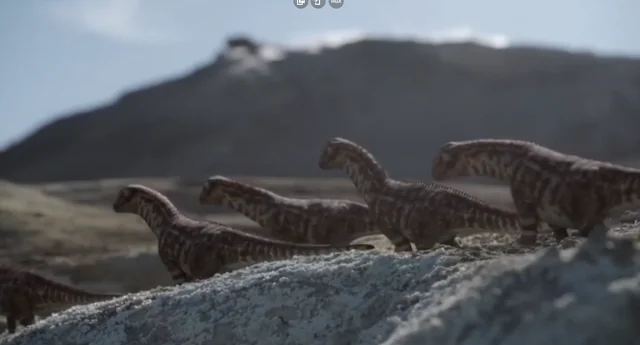
I know it sounds crazy, but picture this: herds of young dinosaurs traveling together without their parents, sorted neatly by age – basically prehistoric school groups. Researchers observed that fossils were grouped by age, with dinosaur eggs and hatchlings found in one area, while skeletons of juveniles were grouped in a nearby location, and remains of adult dinosaurs were found alone or in pairs throughout the field site.
The dinosaurs likely worked as a community, laying their eggs in a common nesting ground, while juveniles congregated in “schools” and adults roamed and foraged for the herd – and this may mean that the young were not following their parents in a small family structure, but rather there was a larger community structure where adults shared in raising the whole community. Researchers from MIT, Argentina, and South Africa discovered signs of complex herd behavior as early as 193 million years ago – 40 million years earlier than other records of dinosaur herding. That’s a level of social sophistication that genuinely surprises most people.
6. Oviraptors Were Devoted Parents, Not Egg Thieves
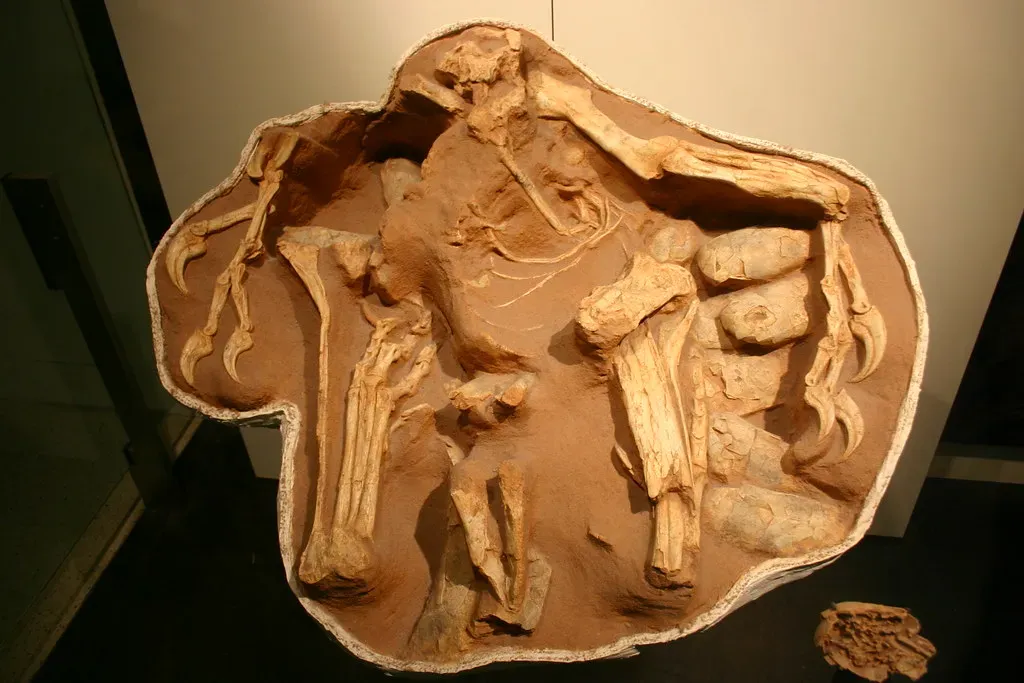
For decades, one of the most infamous dinosaurs in the fossil record carried a reputation it never deserved. Oviraptor, whose name comes from the Latin for “egg thieves,” was first discovered in the 1920s near eggs thought to belong to the ceratopsian dinosaur Protoceratops. Scientists initially believed Oviraptor stole and ate other dinosaurs’ eggs – but it has since been confirmed that the eggs actually belonged to Oviraptor, and in fact, oviraptorids show substantial evidence of putting their lives on the line for their young.
The spectacular nesting Citipati fossil provides some of the most remarkable evidence of how these dinosaurs incubated their eggs – the large adult skeleton is preserved at the center of a ring of eggs, with its arms wrapped around the clutch, and this Citipati parent was shielding the eggs when it perished in a sandstorm. Researchers have also found a large number of oviraptorosaur nests with adult dinosaur skeletons nearby, suggesting these dinosaurs were, in the words of one researcher, completely obsessed with their eggs.
7. Some Giant Sauropods Simply Laid Their Eggs and Left
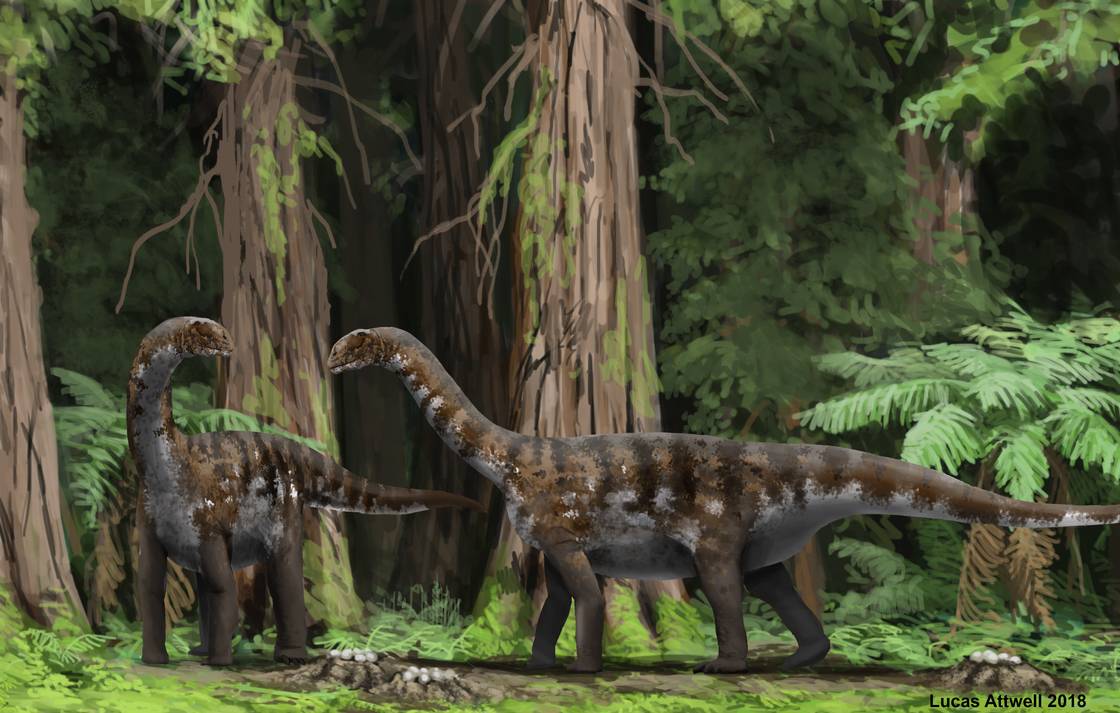
Not every dinosaur was a devoted parent. Let’s be real – the bigger you are, the harder it is to hover over a nest without crushing everything inside it. The biggest dinosaurs might have done little to look after the next generation, and for groups like sauropods – including long-necked giants like Apatosaurus and Brachiosaurus – there is no evidence of post-laying care, even though paleontologists have found their expansive nesting grounds, including some sites where dinosaurs laid eggs in geothermally warm areas.
Dinosaurs like Protoceratops and Mussaurus that laid soft-shelled eggs had to cover them so they wouldn’t dry out, but the shells were too thin to support the weight of a parent – so these dinosaurs would have constructed nests to cover their eggs but probably did little beyond watching over the nest area. It’s the reptilian equivalent of dropping your kid off at daycare and never looking back. Brutal, yes. But biologically sensible given the sheer size difference involved.
8. Colored Eggs May Signal Evolved Nest Protection Strategies
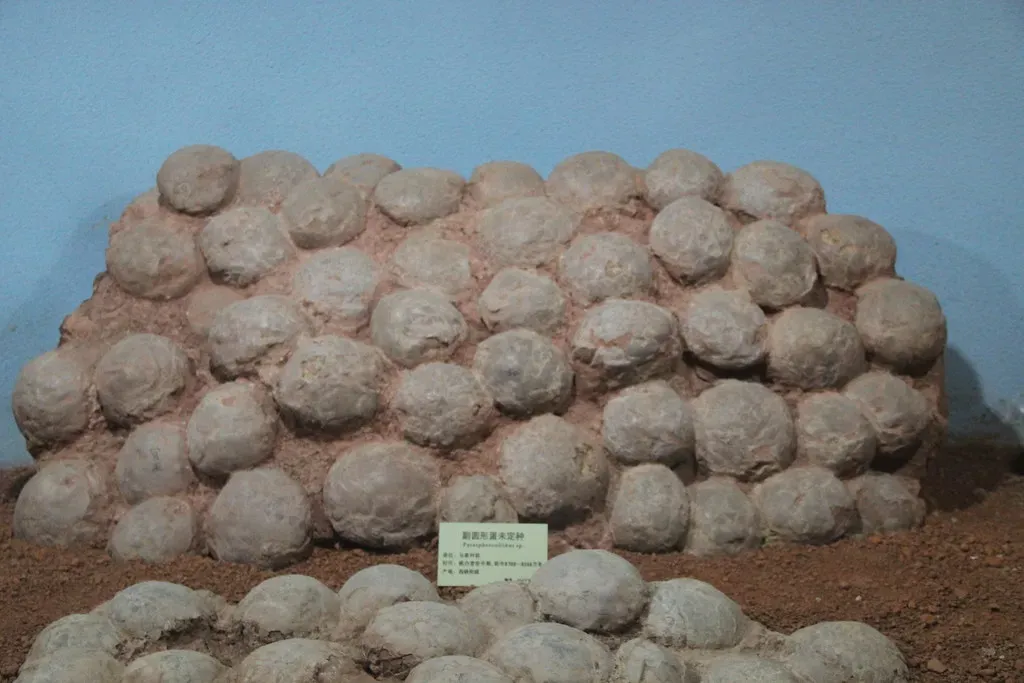
Here’s something unexpected: dinosaurs may have evolved colored eggs as a form of parenting strategy. The common ancestor of all dinosaurs laid soft-shelled eggs buried in moist soil, and hard-shelled eggs evolved multiple times in several lineages – and the rise of colored eggs in the fossil record coincides with the shift to partially open nests that dinosaurs incubated by sitting on them, much like many modern birds do.
The appearance of colored eggs coincides with the evolution of partially open nests, and may have been driven by new selective pressures – for example, brown speckled eggs may have been better camouflaged from predators when the parents left the nest to feed. Some modern birds use egg colors to fight brood parasites like cuckoos, and for now we can only speculate about the existence of dinosaur brood parasites – though the idea of a furtive oviraptorid sneaking an egg into another dinosaur’s nest is fascinating to consider. The more you learn, the more dinosaurs start to feel like recognizable creatures.
9. Arctic Dinosaurs May Have Tended Their Hatchlings Through Polar Darkness
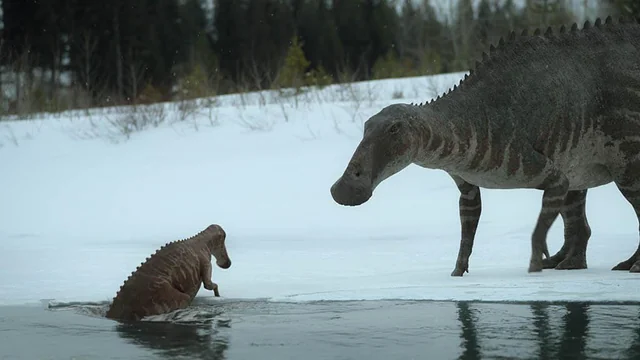
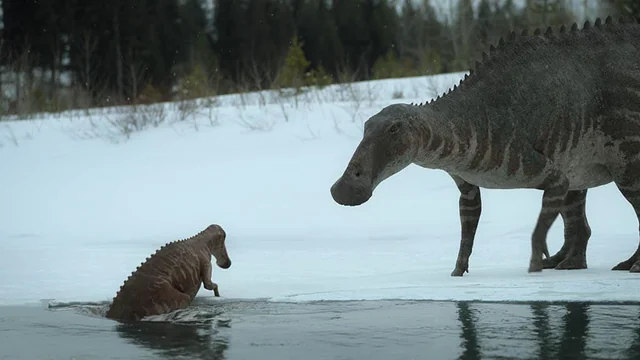
Of all the theories on this list, this one might be the most cinematic. Imagine a herd of hadrosaurs caring for their newborns under the Northern Lights, in the freezing darkness of a Cretaceous Arctic winter. During a collection trip in Alaska, a field team led by Patrick Druckenmiller found fossils in the High Arctic including hadrosaurs, ceratopsians, and troodontids, as well as some very tiny teeth and bones from very recent hatchlings – paleontologists once thought dinosaurs could not have survived so far north, but today it is recognized that many dinosaurs thrived above the Arctic Circle.
Combined with evidence from other hadrosaur species that parents tended to their hatchlings, a remarkable picture emerges: Ugrunaaluk herds may have carefully tended their babies through many weeks of polar darkness, helping them forage on bark, ferns, and moss under the northern lights – and such a lifestyle may have been possible due to the warmer Cretaceous climate, which would have meant snowy conditions for part of the year but less extreme Arctic temperatures than today. That image alone deserves a feature film.
10. Dinosaur Parenting Shaped Entire Ecosystems in Ways We’re Still Discovering
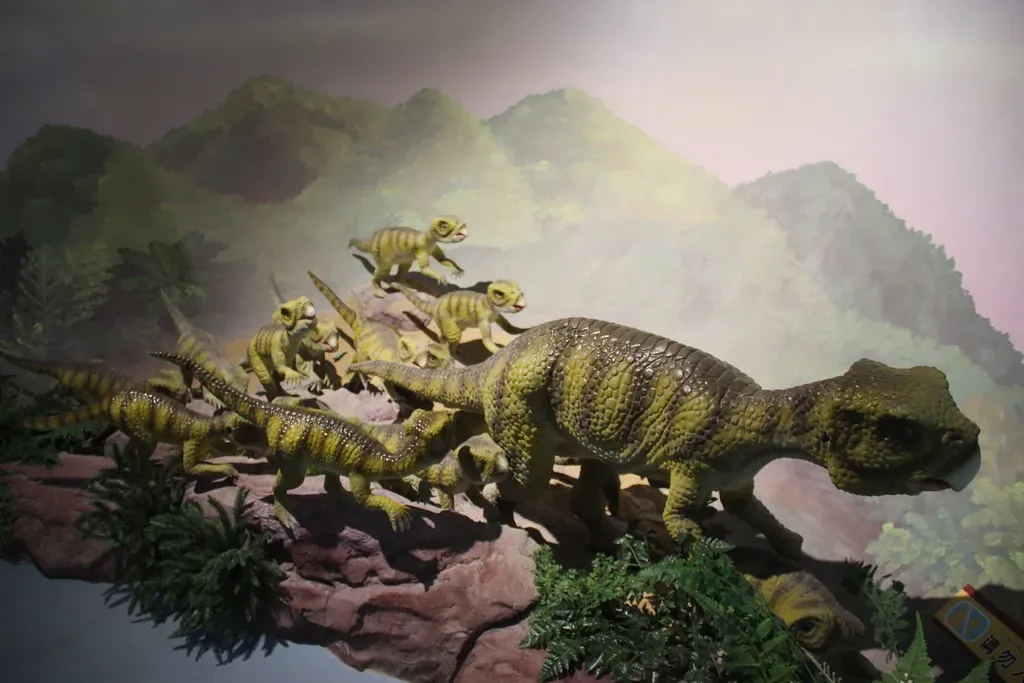
Perhaps the most mind-blowing theory of all isn’t about a single species – it’s about what dinosaur parenting did to the entire planet. Unlike mammals, where offspring remain dependent on their parents for years, juvenile dinosaurs quickly became independent, filling distinct ecological roles, and this shift in understanding is offering fresh insights into the ecological diversity of the Mesozoic era. It’s a bit like realizing a single parenting decision rippled outward to shape entire food webs.
Over different life stages, what a dinosaur ate changed, what species could threaten it changed, and where it could move effectively also changed – so while adults and offspring were technically the same biological species, they occupied fundamentally different ecological niches and could be considered different “functional species.” The Mesozoic world was also warmer, with plants growing faster due to higher carbon dioxide levels, which likely created more available food – and dinosaurs may have needed less energy than mammals of the same size, allowing ancient habitats to support more animals at once. The way they parented wasn’t just a private family matter. It was an ecological force.
Conclusion: The Parenting Secrets of the Ancient World
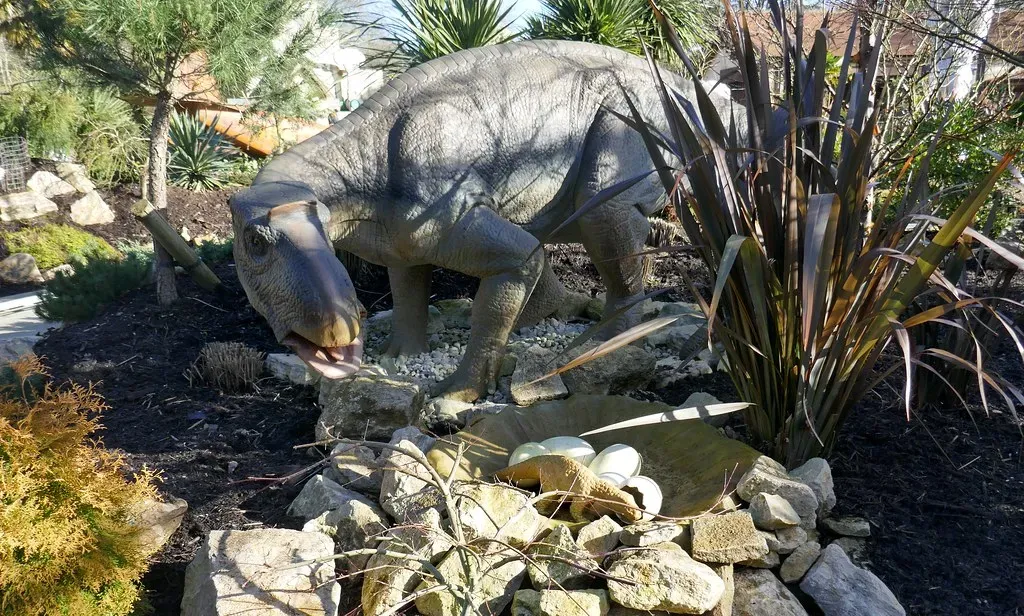
What’s remarkable about all of this is how much we’ve learned – and how much we still don’t know. Narratives about dinosaur research are often framed in the context of new discoveries revealing more birdlike anatomy and behaviors, but in the case of dinosaur reproduction, the true story is much blurrier – paleontologists have begun to answer previously elusive questions about how dinosaurs nested, how eggs matured, and how parents cared for their offspring.
Dinosaurs weren’t just giant monsters stomping through the jungle. They were complex, behaviorally diverse creatures with parenting strategies ranging from devoted nest-guarders to geothermal-exploiting engineers to completely absent free-rangers. As one researcher put it, we shouldn’t think of dinosaurs as “mammals cloaked in scales and feathers” – they’re distinctive creatures and we’re still working to capture the full picture. The fossil record keeps surprising us, one tiny egg fragment at a time.
So next time you think of a T. rex, maybe picture it as a parent first. What kind of parent do you think it was – devoted guardian, or cold-blooded leaver? Tell us what you think in the comments.