
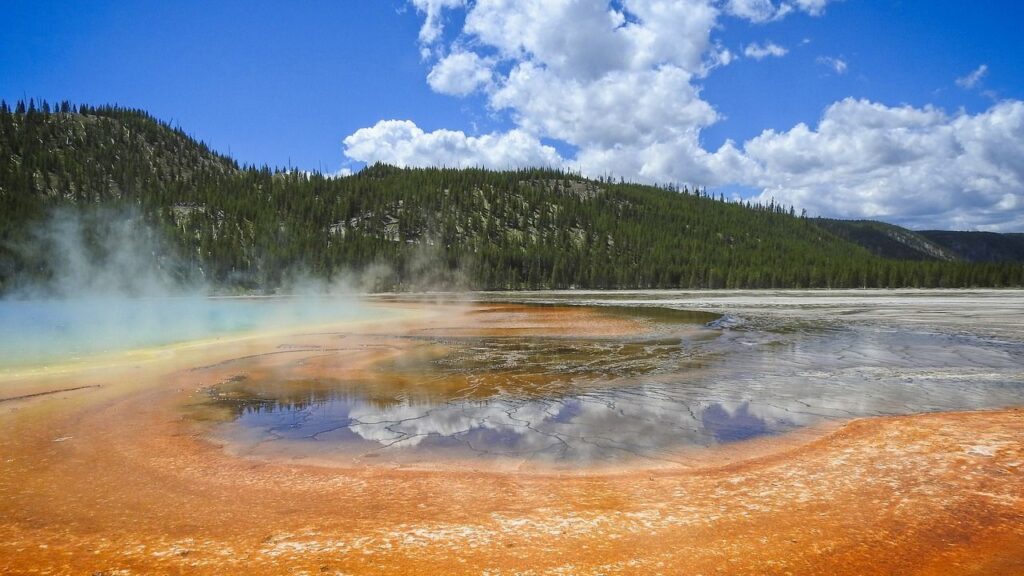
Beneath the steaming geysers and rainbow-colored hot springs of one of America’s most beloved national parks lies something ancient, enormous, and almost incomprehensibly powerful. You might visit Yellowstone thinking you’re walking through a breathtaking wilderness. What you’re actually walking over is one of the most violent geological forces our planet has ever produced. A supervolcano. And it’s still very much alive.
Most people know Yellowstone for Old Faithful and bison herds. Far fewer realize they’re standing directly on top of a magma chamber that has reshaped the North American continent multiple times over millions of years. The story of this prehistoric force is one that mixes awe, science, and a healthy dose of geological humility. Let’s dive in.
What Exactly Makes Yellowstone a “Supervolcano”?
Here’s the thing about the term “supervolcano” – it’s not just a dramatic label someone invented for disaster movies. A supervolcano is technically defined as a volcano that has had an eruption with a volcanic explosivity index of 8, the largest recorded value on the scale, meaning the volume of deposits for such an eruption is greater than 1,000 cubic kilometers. To put that in perspective, the infamous 1980 Mount St. Helens eruption was considered catastrophic by human standards. Yellowstone’s eruptions have dwarfed it by thousands of times.
A supervolcano implies an eruption of magnitude 8 on the Volcano Explosivity Index, indicating an eruption of more than 250 cubic miles of magma, and Yellowstone qualifies because it has had not just one but at least three such eruptions: 2.1 million years ago, 1.2 million years ago, and 640,000 years ago. Think of it like comparing a firecracker to a nuclear bomb. The scale is simply on another level entirely.
The Deep Engine: Yellowstone’s Mantle Plume Origins
The hotspot first surfaced 17 million years ago as massive outpourings of fluid basalt lava in the Columbia Plateau and Steens Basalt region. That’s not a typo. Seventeen million years. The system now powering Yellowstone has been burning a trail across the North American continent for longer than our earliest human ancestors existed.
Seismic tomography has revealed a 350-kilometer-wide, cylindrical thermal anomaly extending from the deepest mantle to just beneath Yellowstone, supporting the mantle plume origin, and in this model, the North American Plate moves southwest at about 2.2 centimeters per year over the relatively stationary plume, creating the observed age-progression of eruptive centers. Honestly, I find this almost poetic. The continent is slowly drifting, and the hotspot stays put, like a blowtorch beneath a slowly sliding iron sheet, burning fresh holes as new territory passes over it.
Three Cataclysmic Eruptions That Rewrote the Landscape
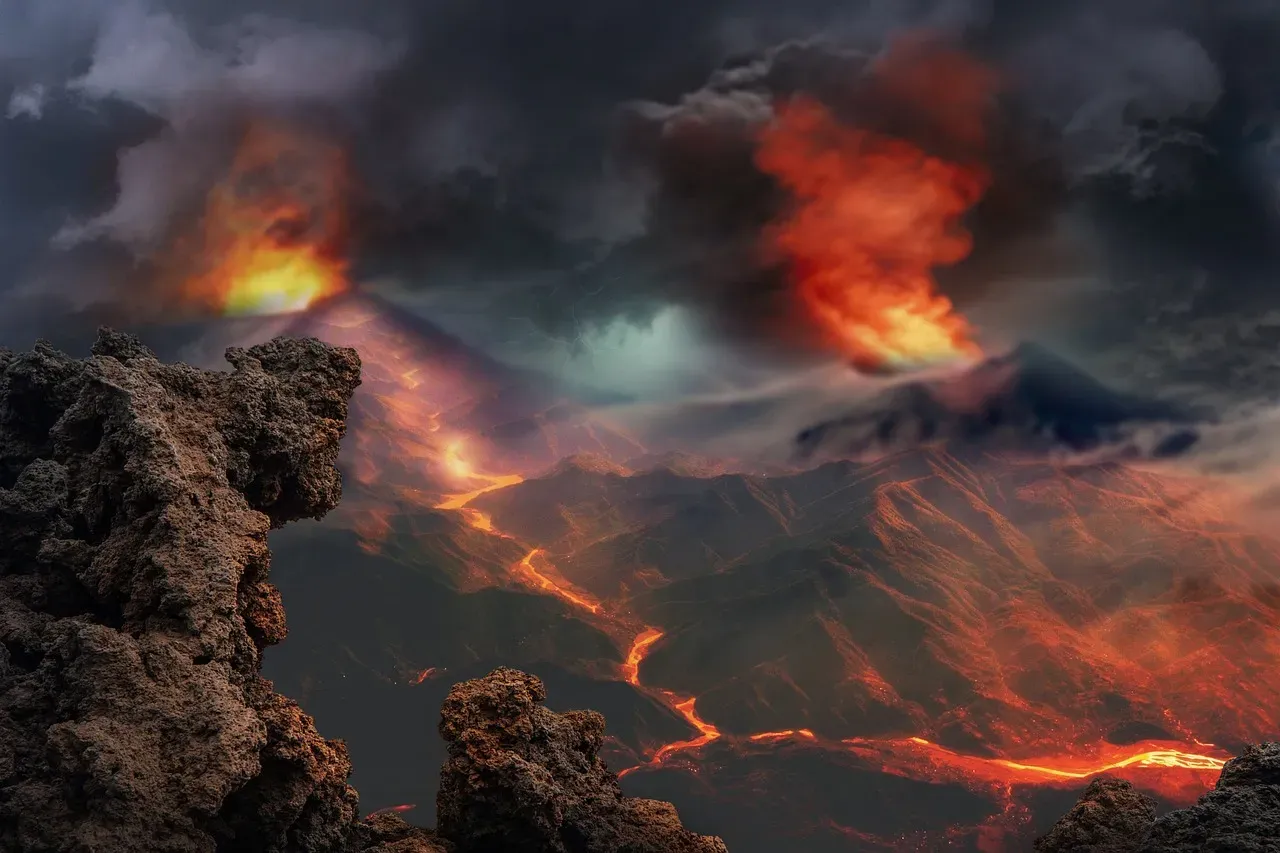
Molten rock rising from deep within the Earth produced three cataclysmic eruptions more powerful than any in the world’s recorded history. The first caldera-forming eruption occurred about 2.1 million years ago. The eruptive blast removed so much magma from its subsurface storage reservoir that the ground above it collapsed into the magma chamber and left a gigantic depression – a hole larger than the state of Rhode Island. The huge crater, known as a caldera, measured as much as 80 kilometers long, 65 kilometers wide, and hundreds of meters deep.
During the three giant caldera-forming eruptions that occurred between 2.1 million and 631,000 years ago, tiny particles of volcanic debris covered much of the western half of North America, likely a third of a meter deep several hundred kilometers from Yellowstone and several centimeters thick farther away. Wind carried sulfur aerosol and the lightest ash particles around the planet and likely caused a notable decrease in temperatures around the globe. A continent blanketed in ash. Global temperatures dropping. It reads like science fiction, but it was very real prehistory.
How Yellowstone Literally Shaped the Continent
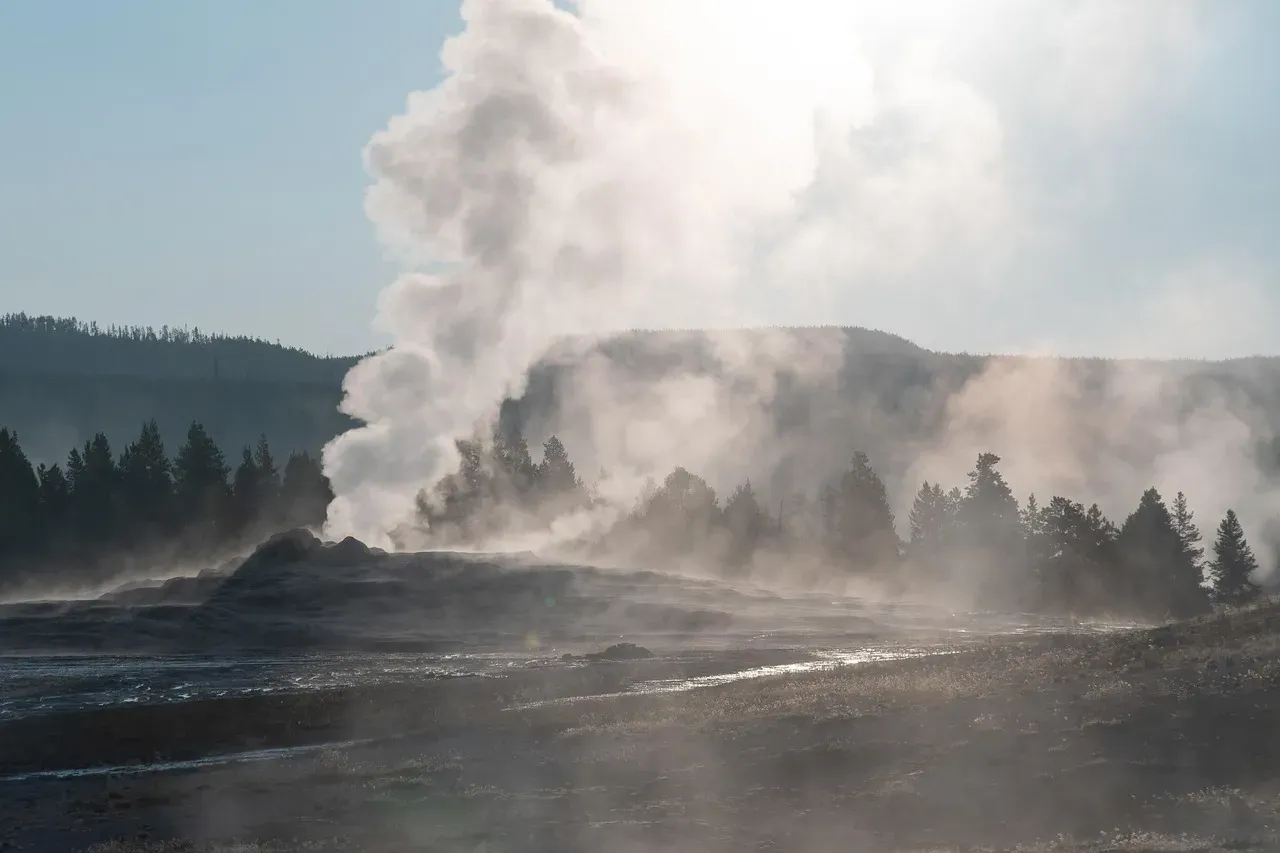
Yellowstone’s volcanism is the most recent in a 17 million-year history of volcanic activity that progressed from southwest to northeast along the Snake River Plain. A track of volcanic complexes can be traced for more than 750 kilometers and marks the surface manifestation of hotspot volcanism where a plume of mantle material rises into the crust, is stored, then erupts. That trail is essentially a scar carved into the continent by one of Earth’s most enduring geological engines.
Since the hotspot first emerged, the North American Plate has been moving west-southwest over it, so that a chain of explosive rhyolite volcanic centers extends across the Snake River Plain to Yellowstone, and this line of supervolcanoes is concurrent with continental rifting forming the Basin and Range Province. So not only did Yellowstone’s hotspot blast the landscape repeatedly, it also helped pull the continent apart at the seams, forming entire mountain-and-valley systems that define the American West today. That is prehistoric power on a scale that’s hard to fully absorb.
The Living Surface: Geysers, Hot Springs, and Hydrothermal Wonders
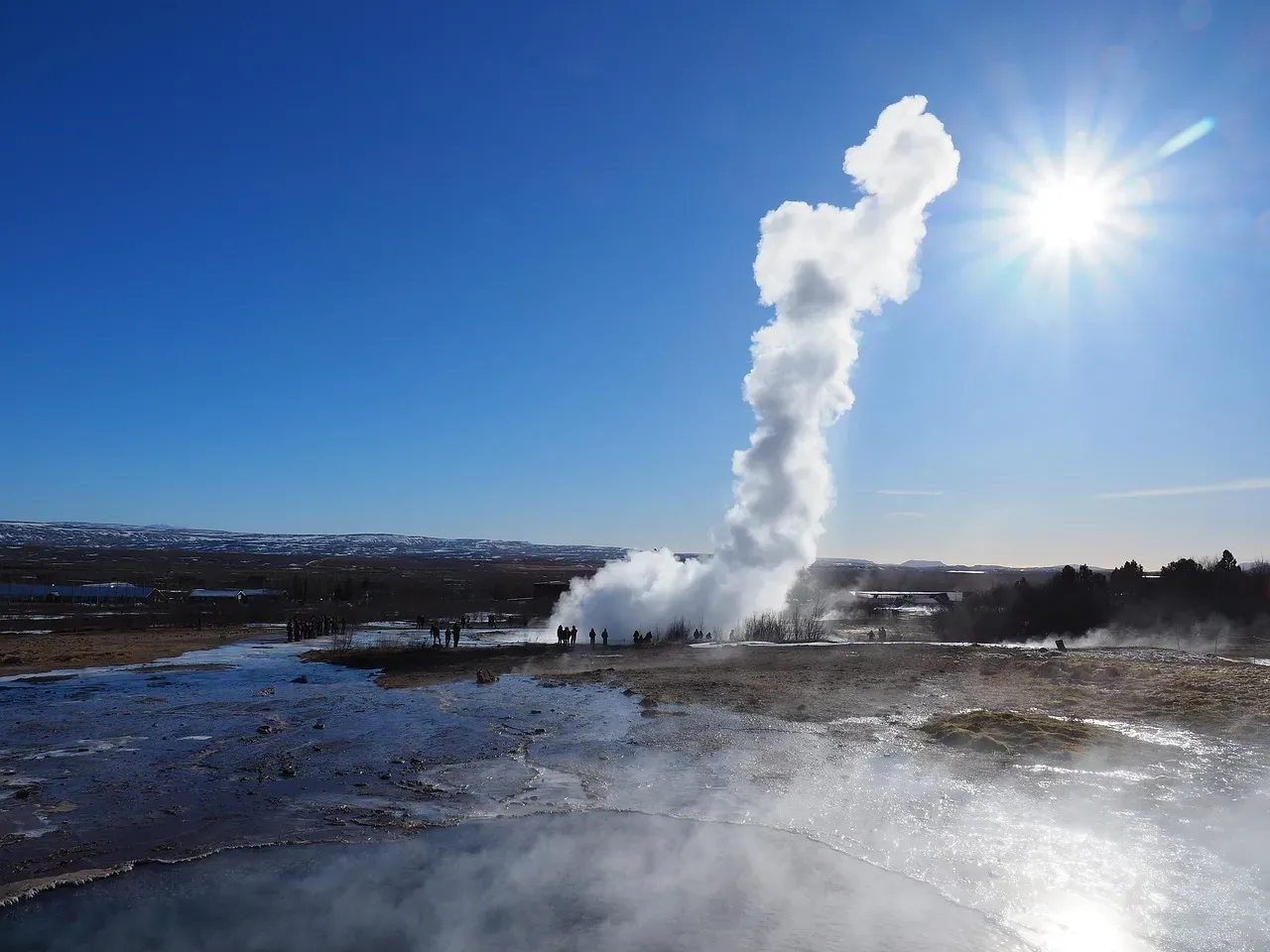
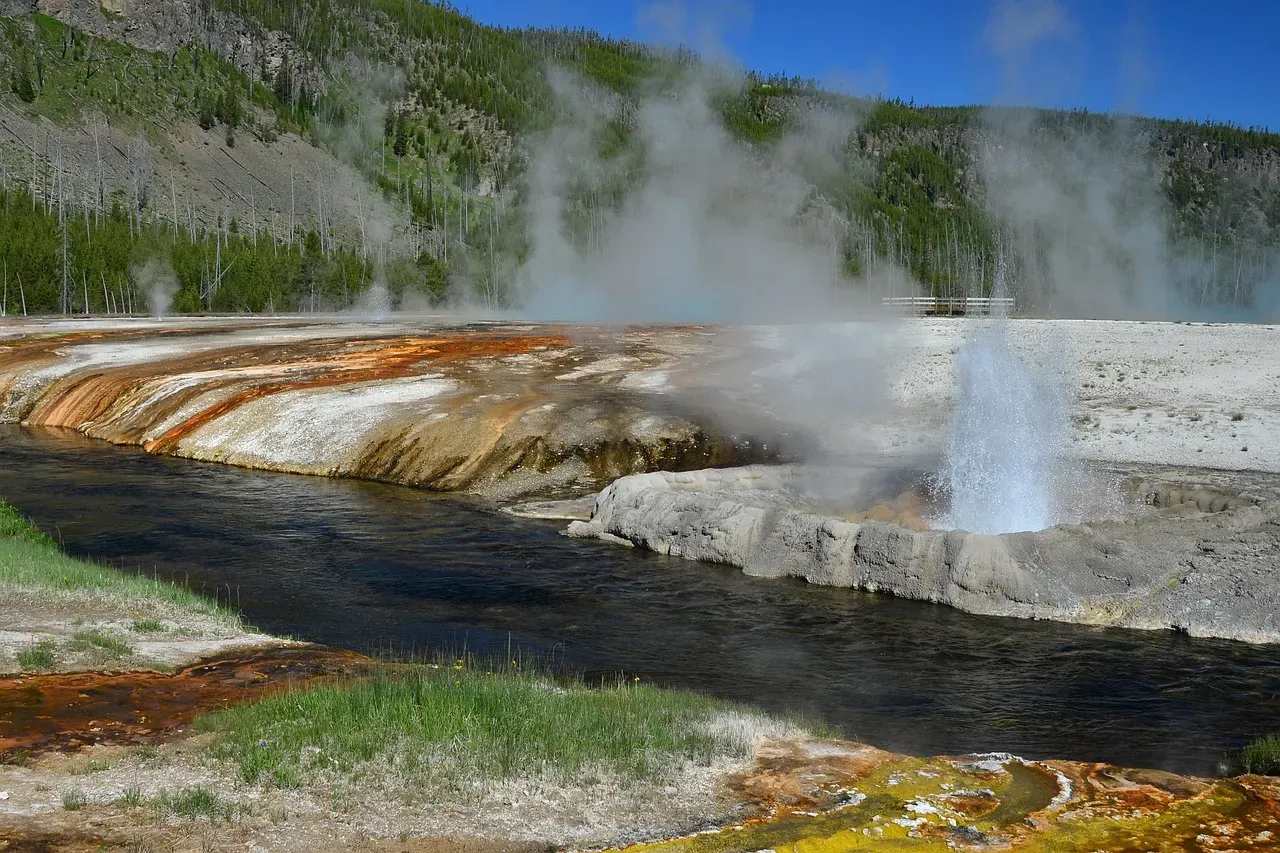
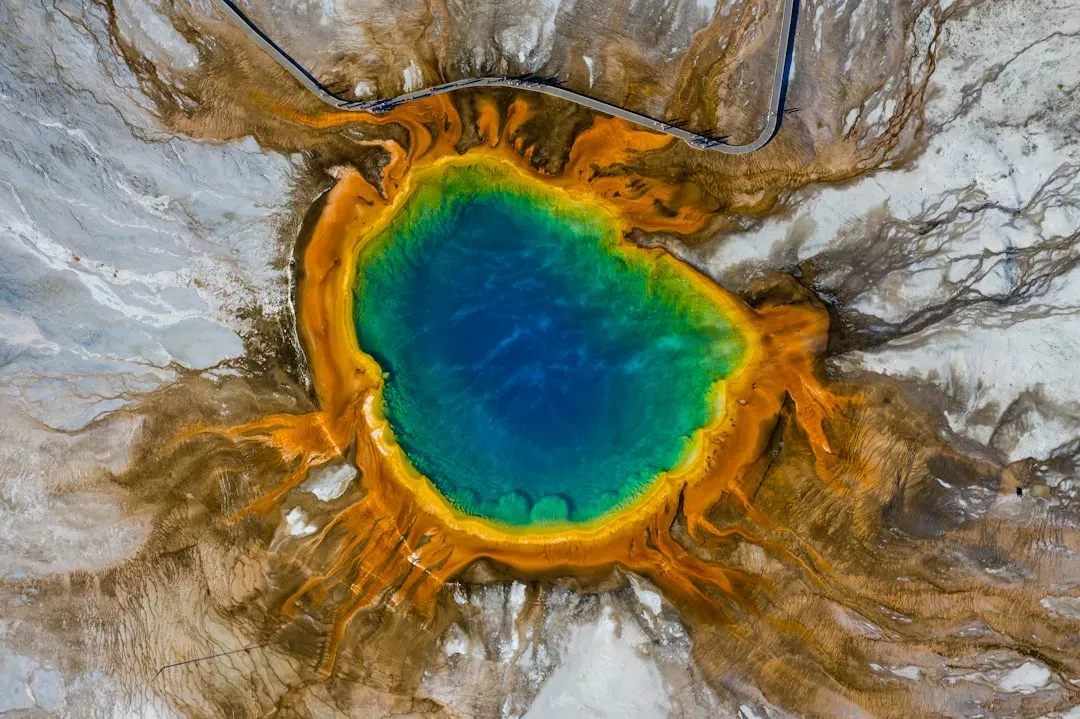
Yellowstone’s principal attractions are its some 10,000 hydrothermal features, which constitute roughly half of all those known in the world. Let that sink in. Roughly half of everything like it on the entire planet, all concentrated in one national park. It’s not just impressive – it’s almost surreal.
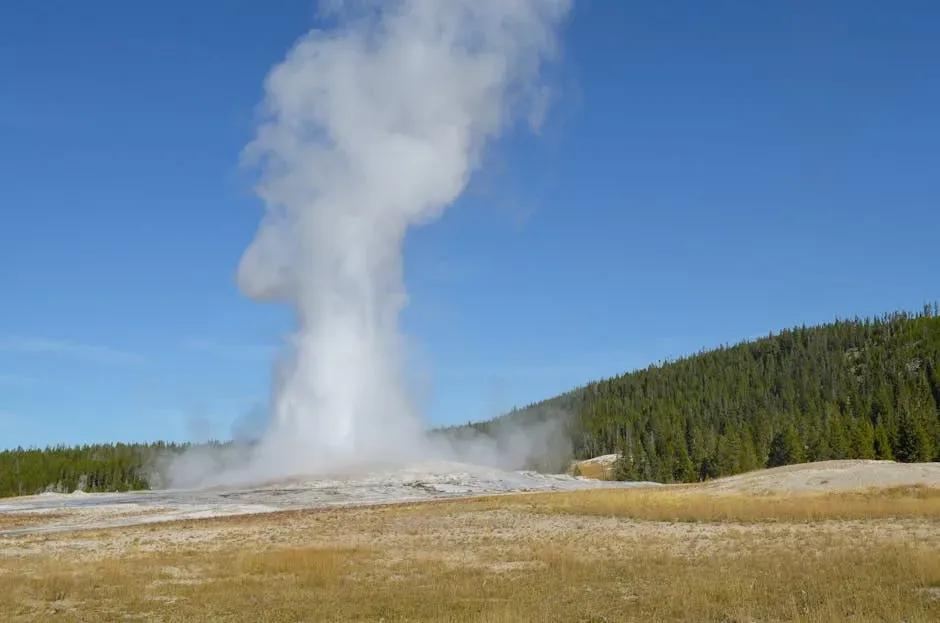
Geysers represent a familiar and special type of surface expression of Yellowstone’s active hydrothermal systems and are especially abundant in the Lower, Midway, and Upper Geyser Basins near Old Faithful. All geysers require two fundamental features: a subsurface reservoir where hot waters can accumulate and reach boiling temperatures, and a constriction in the geyser conduit that provides throttling and focusing of erupting fluids. For a geyser to erupt, the subsurface reservoir boils, builds pressure, then ejects small amounts of water, with enough water ejected causing pressure to drop and the remaining water to become a steam-water mixture forcibly ejected through the constricted conduit. It’s essentially a natural pressure cooker valve – elegant in its simplicity, spectacular in its result.
Wildlife, Extremophiles, and an Ecosystem Like No Other
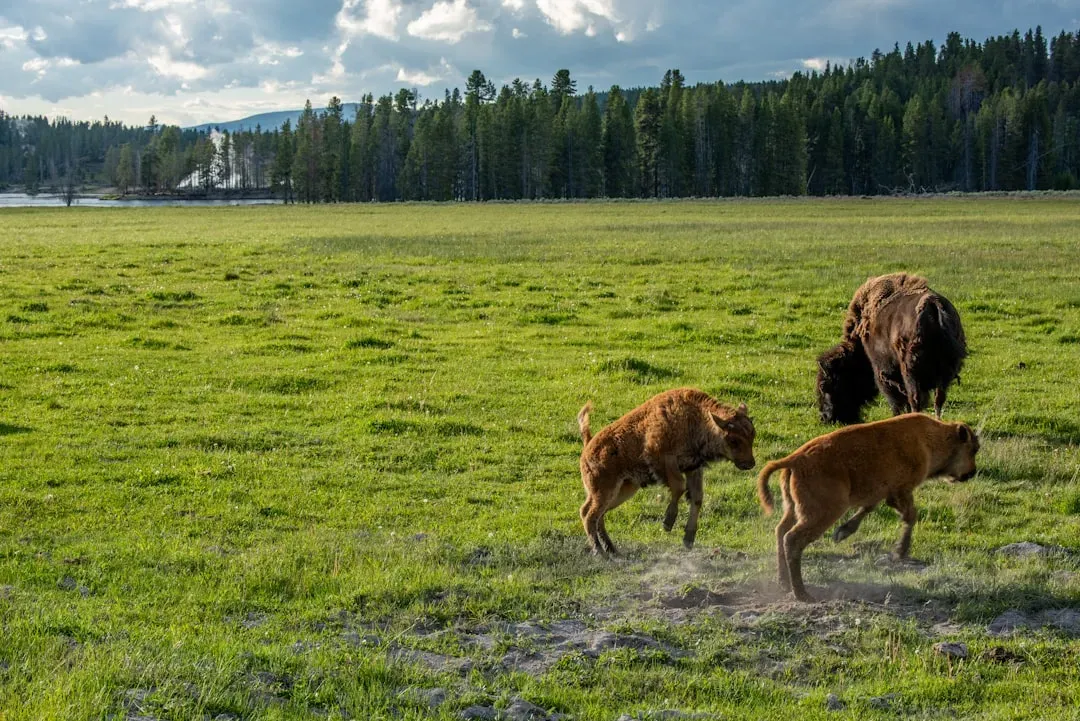
Yellowstone has been nicknamed the “American Serengeti” because, like its East African counterpart, it is also a vast ecosystem of open plains, savanna, and woodlands. It consists of approximately 12,000 square miles and is even home to its own “Big Five” for wildlife sightings – bears, wolves, bison, elk, and moose. The volcanic heat that created this landscape didn’t just destroy – it also sustained an extraordinarily rich web of life.
When considering life in Yellowstone’s thermal basins, extremophiles – organisms that thrive in, if not require, extreme temperature or acidic conditions – come immediately to mind, and some of these extremophiles vibrantly display colorful bacterial mats characteristic of some thermal features. The thermal features along the Firehole River provide enough heat to expose vegetation for elk to graze there year-round, and the elk in this part of Yellowstone National Park are the only elk herd to spend both summer and winter inside the park. Life here has found a way to use the volcano itself as a survival tool. You really can’t make this stuff up.
Monitoring the Giant: What Science Is Watching Right Now
Beneath Yellowstone’s stunning surface lies a hyperactive seismic world, now better understood thanks to machine learning. Researchers have uncovered over 86,000 earthquakes – ten times more than previously known – revealing chaotic swarms moving along rough, young fault lines. Scientists only discovered this in 2025. It’s a reminder that even with everything we know, Yellowstone still has secrets.
Continuous GPS stations indicate a pause in the uplift that had been occurring on the north caldera rim to the south of Norris Geyser Basin. The uplift started in July 2025 but ceased by mid-January 2026. Yellowstone Caldera activity remains at background levels. In Norris Geyser Basin, Steamboat Geyser erupted on February 27 of 2026, and Echinus Geyser erupted about 40 times during the month – the first eruptions of the geyser since 2020. The volcano is always doing something. Always moving. Always reminding you that it’s there.
Conclusion: A Force That Humbles Everything We Know
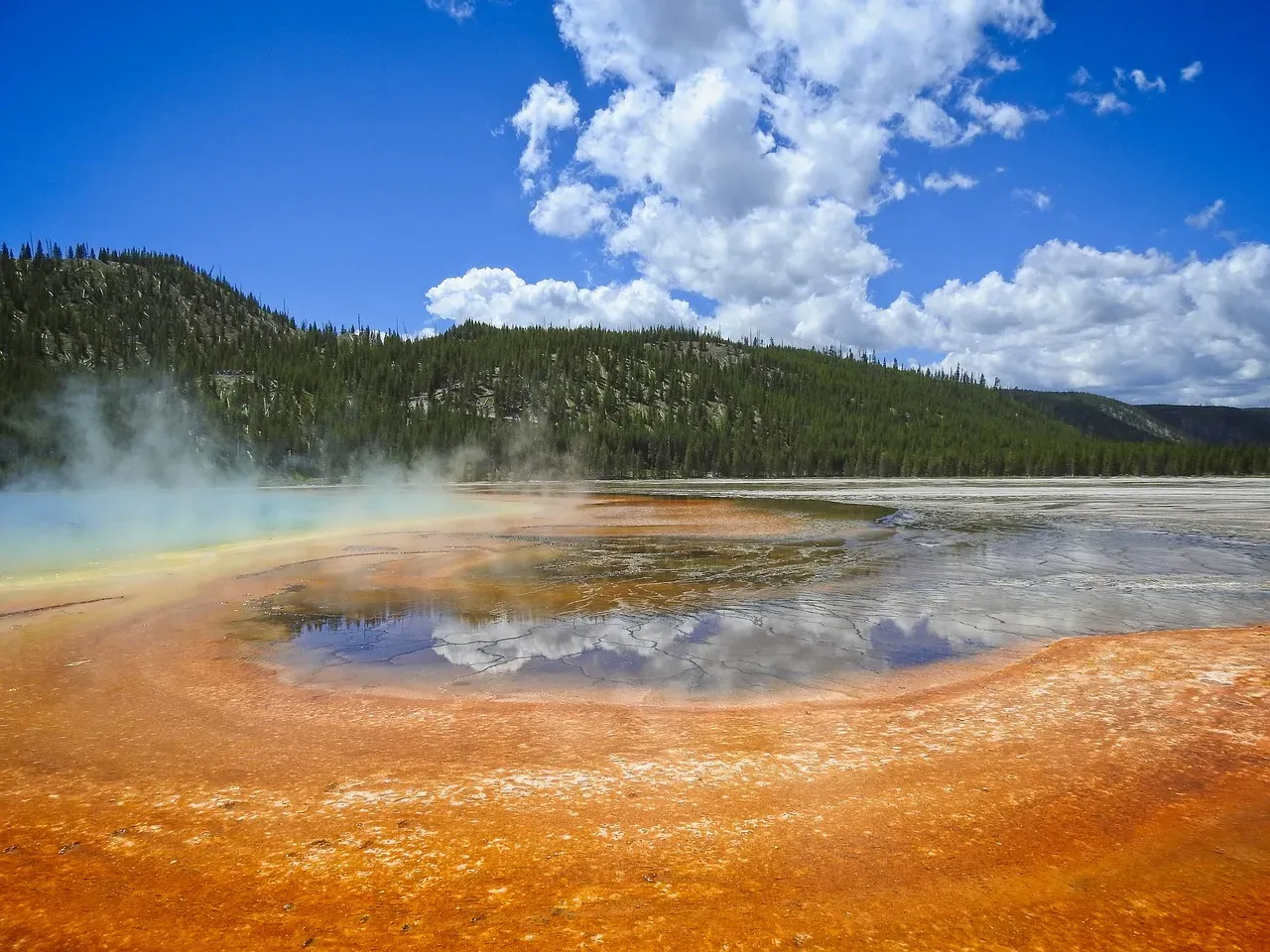
You could spend a lifetime studying Yellowstone and still find yourself standing open-mouthed in front of a boiling pool, completely humbled. This is not just a park. It’s a living record of Earth’s most dramatic biography – written in lava, ash, and steam across millions of years. The park is the centerpiece of the Greater Yellowstone Ecosystem, the largest remaining nearly intact ecosystem in the Earth’s northern temperate zone, and in 1978 Yellowstone was named a UNESCO World Heritage Site.
It carved canyons. It blanketed continents in ash. It shaped mountain ranges you’ve probably driven through without ever knowing the hand that built them. The Yellowstone Volcano Observatory monitors volcanic activity and does not consider an eruption imminent. So you don’t need to cancel your next trip. Still, there’s something deeply moving about standing on ground that has exploded with world-altering force and will, someday, do so again. The question isn’t whether Yellowstone will awaken – it’s whether any of us will be around to witness it. What do you think: does knowing what lies beneath change the way you’d experience the park?