Romania’s Hațeg UNESCO Geopark – Paleontologists recently unveiled a new species of herbivorous dinosaur that roamed the region around 70 million years ago. Fossils unearthed near the village of Vălioara in the Hațeg Basin point to a creature closely tied to the duck-billed dinosaurs known as hadrosauroids. This find highlights the unique evolutionary path taken by dinosaurs on what were once isolated European islands.
A Fossil Trove in an Island World
A Fossil Trove in an Island World (Image Credits: Wikimedia)
Researchers stumbled upon the remains in the richly layered sediments of the Hațeg Basin. These deposits preserve a snapshot of life during the late Cretaceous period. The area formed part of a fragmented archipelago, where dinosaurs adapted in relative isolation from their mainland counterparts.
The discovery adds to the growing collection of fossils from this geopark, a UNESCO-designated site celebrated for its paleontological treasures. Scientists identified the bones as belonging to a distinct species within the hadrosauroid family. This revelation came after meticulous analysis confirmed unique traits setting it apart from known relatives.
Unveiling Kryptohadros kallaiae
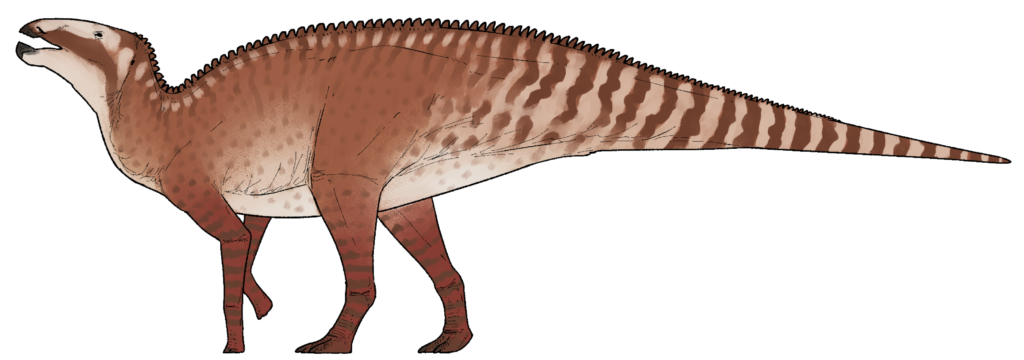
The newly named Kryptohadros kallaiae stands out as a medium-sized herbivore. It shared the duck-billed features typical of its group, including a broad beak suited for grinding plant matter. Fossils suggest it thrived in the lush, island environments of prehistoric Europe.
Unlike larger mainland hadrosaurs, this species likely developed specialized adaptations for its island habitat. Paleontologists noted subtle differences in bone structure that hint at a more compact build. Such variations underscore how geography shaped dinosaur diversity in the final millennia before the Cretaceous extinction.
Links to Telmatosaurus and Beyond
Kryptohadros kallaiae belongs to the Telmatosauridae group, which includes the Romanian species Telmatosaurus. Both dinosaurs evolved on these ancient European landmasses, forming a clade distinct from Asian or North American lineages. This connection bolsters theories of insular dwarfism among island-dwelling dinosaurs.
Telmatosaurus, discovered earlier in the same basin, provides a close comparison. Yet Kryptohadros exhibits enough differences to warrant its own classification. Researchers classify it as a sister taxon, enriching the family tree of European hadrosauroids.
- Habitat: Isolated islands in the late Cretaceous European archipelago.
- Diet: Herbivorous, relying on vegetation processed by a duck-like bill.
- Age: Approximately 70 million years old.
- Relation: Part of Telmatosauridae, akin to Telmatosaurus.
- Location: Vălioara area, Hațeg Basin.
Implications for Dinosaur Evolution
This find reshapes understanding of hadrosauroid distribution across continents. It demonstrates how oceanic barriers fostered unique biodiversity hotspots. The Hațeg Basin continues to deliver evidence of a lost world where dinosaurs miniaturized and specialized.
Future excavations may uncover more members of this group. Such discoveries challenge long-held views on global dinosaur migration patterns. They also emphasize the Hațeg Geopark’s role as a key site for studying end-Cretaceous ecosystems.
| Feature | Kryptohadros kallaiae | Telmatosaurus |
|---|---|---|
| Group | Telmatosauridae | Telmatosauridae |
| Era | Late Cretaceous (~70M years) | Late Cretaceous |
| Habitat | European islands | Hațeg Basin |
Key Takeaways
- A new hadrosauroid species expands knowledge of island dinosaur evolution.
- Fossils from Hațeg Basin reveal ties to Telmatosaurus.
- The discovery underscores Romania’s paleontological importance.
The emergence of Kryptohadros kallaiae from Romania’s ancient soils reminds us of the hidden stories buried in geoparks worldwide. It invites further exploration into how isolation drove remarkable adaptations. What do you think this means for future fossil hunts? Tell us in the comments.