
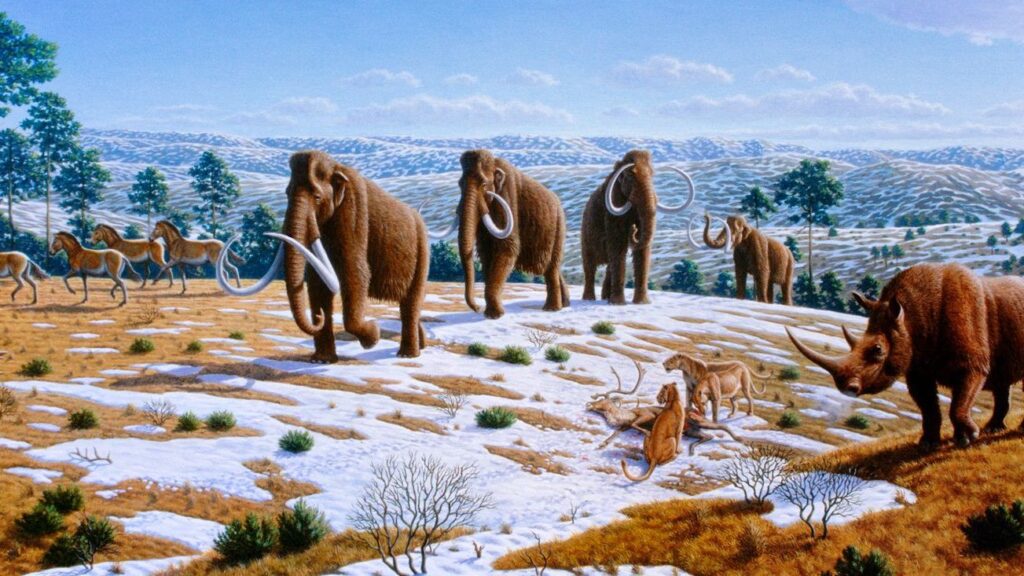
Picture a continent so alive, so overflowing with colossal beasts and thriving predators, that the landscape you walk across today would feel like a pale, quiet shadow of what once existed. You might not realize it, but the North America you know today is not a normal, natural landscape – that’s the view of archaeologist Stuart Fiedel, who investigates the prehistory of the Americas. What once roamed these plains, forests, and wetlands was nothing short of extraordinary.
You’re talking about beavers the size of bears, sloths weighing more than three thousand pounds, and seven-foot camels roaming the shores of marshy seas. It sounds like science fiction, but it was very much science fact. This is the story of the lost worlds of prehistoric North America, and once you start reading, you won’t want to stop.
The Mammoth Steppe: A Grassland Like No Other
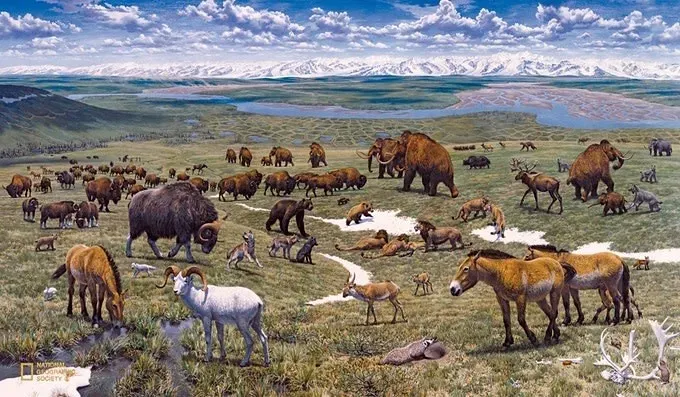
Imagine standing in a vast, windswept grassland stretching as far as the eye can see, colder and drier than almost anything alive today, yet teeming with life in a way that modern landscapes simply cannot match. This unique environment, called the Mammoth Steppe, was shaped by a continental climate with little precipitation and clear skies. The conditions were too cold for trees, and the dry steppe-like grasslands provided abundant food for grazing megafauna.
The Mammoth Steppe was not a static landscape. It was a complex biome that changed over time and across the region, resulting in a mosaic-like ecosystem that constantly varied in response to a shifting climate. Think of it less like a single habitat and more like a living patchwork quilt, always rearranging itself. During the Pleistocene, the climate changed far more dramatically than it has during the last ten thousand years, a period known as the Holocene, which was remarkably stable by comparison.
Giants of the Ice Age: Mammoths, Mastodons, and More
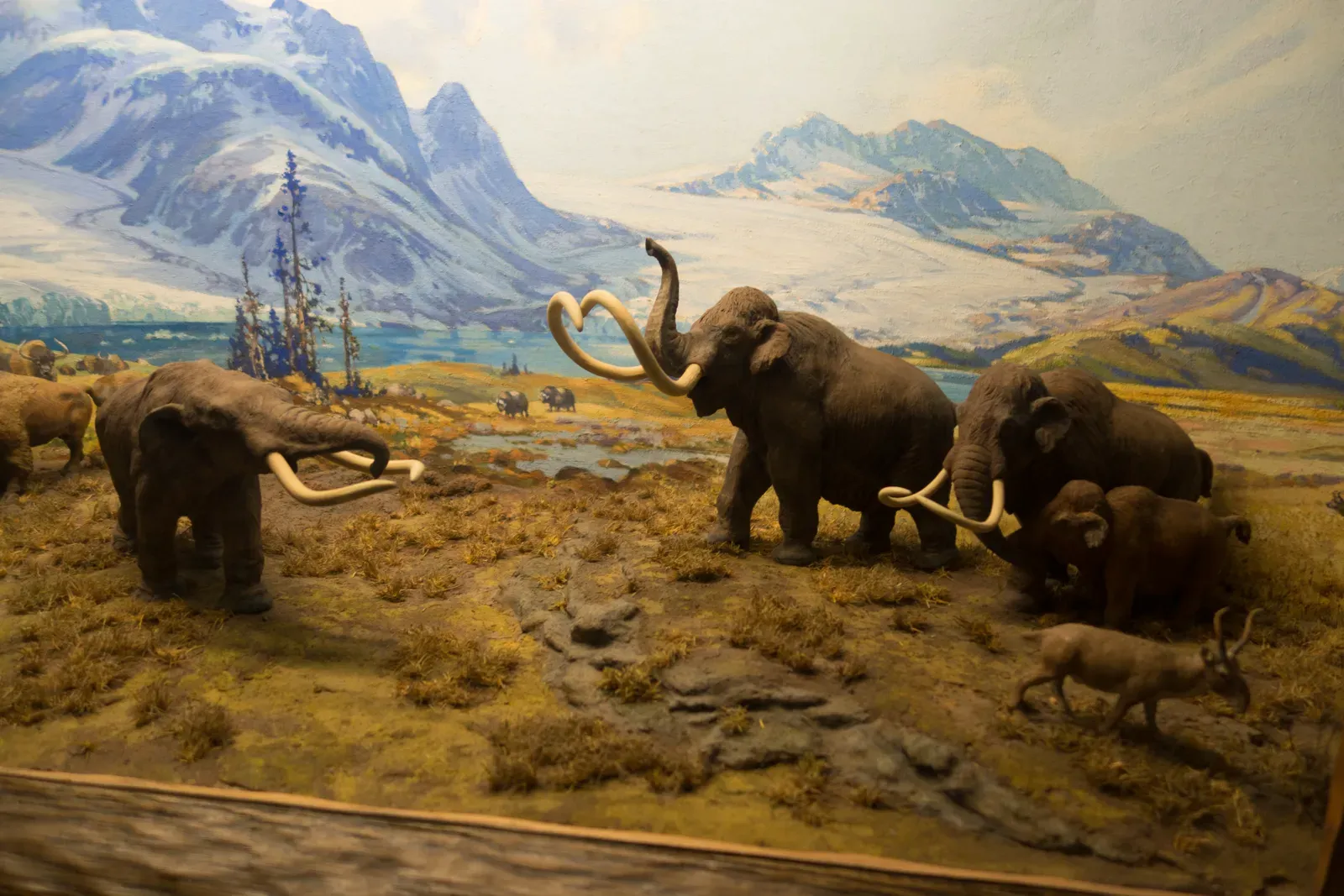
You’ve probably heard of the woolly mammoth, but do you really know how staggering these animals were in real life? Standing twelve feet tall at the shoulders and weighing six to eight tons, the woolly mammoth grazed the northern steppes of Ice Age North America using its colossal fifteen-foot curved tusks. That’s taller than most ceilings in a modern home, twice over.
Here’s the thing – the mammoth and the mastodon were often confused for one another, but they were actually quite different. American mastodons were distinct in their ecology, standing roughly eight to ten feet at the shoulder and weighing between eight and ten thousand pounds. Unlike the grass-grazing mammoths, mastodons were mixed grazers and browsers, preferring twigs, shrubs, low-lying tree branches, and pine needles. They were forest dwellers at heart, perfectly built for wooded terrain while their mammoth cousins owned the open plains.
Ferocious Predators: Saber-Toothed Cats, Dire Wolves, and Cave Lions
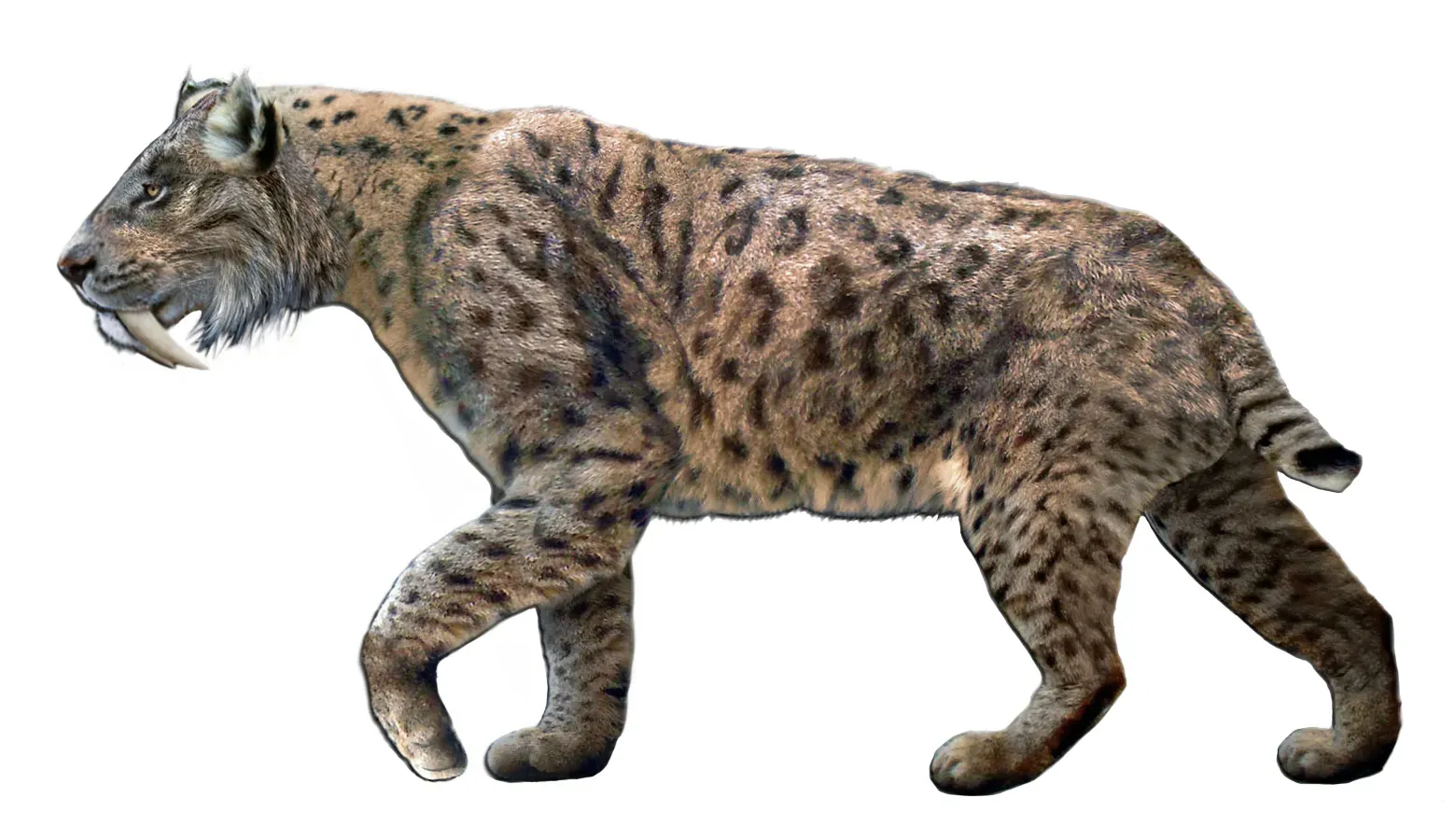
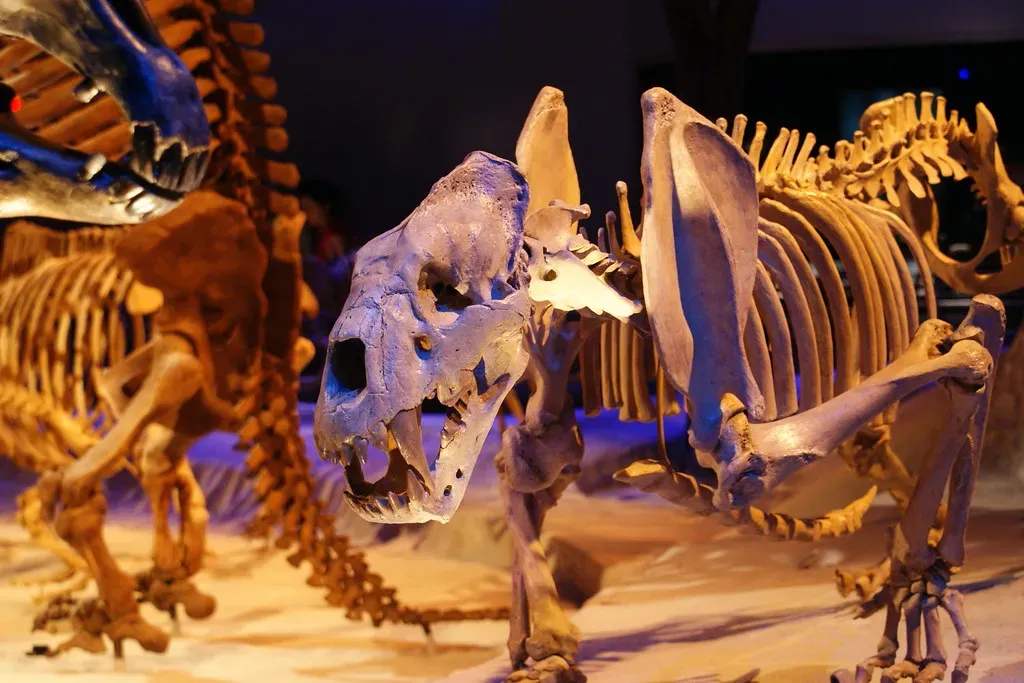
If you thought the predators of prehistoric North America were intimidating, you’d be absolutely right. Saber-toothed cats, known as Smilodon fatalis, were powerful predators weighing between three hundred fifty and six hundred pounds. Their most distinctive feature was their elongated upper canines, which could grow up to eleven inches. That’s essentially a blade attached to a living, breathing predator the size of a modern Siberian tiger. Genuinely terrifying.
The competition for dominance didn’t stop there. The American cave lion, known as Panthera atrox, called this continent home and was one of the largest known cats, almost a quarter larger than the lions we see in Africa and India today. It stood 1.2 metres at the shoulder and weighed up to 420 kilograms. Meanwhile, dire wolves were larger and more robust than modern gray wolves, possessing broad skulls, large teeth, and powerful jaws capable of crushing bones. Their fossils are abundant across North America, from Alaska to Mexico, suggesting extraordinary adaptability to various habitats including boreal grasslands, open woodlands, and tropical wetlands.
Strange and Surprising Creatures You Never Knew Existed
Let’s be real – most people know about mammoths and saber-toothed cats. But there were creatures in prehistoric North America that sound almost too strange to be real. The very first camels on the planet actually evolved right here in North America around forty-four million years ago. Those ancient camels migrated westward over the Bering land bridge around seven million years ago, eventually becoming the one-humped and two-humped camels of North Africa and Asia. So yes, camels are a North American export. Wrap your head around that one.
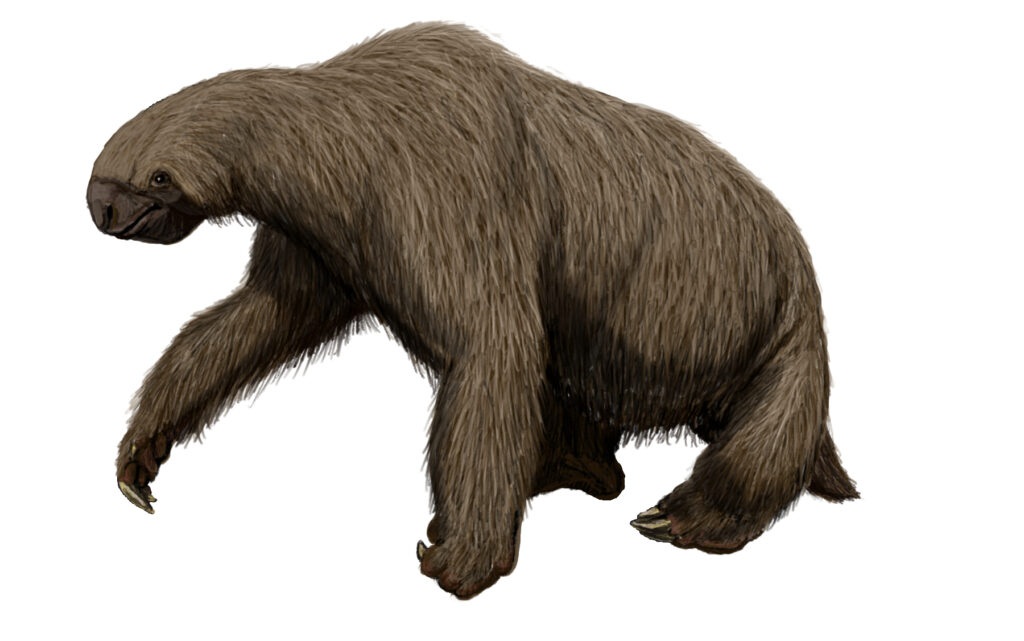
Then you have the giant ground sloth, which was equally mind-bending. Giant ground sloths such as Megalonyx jeffersonii were heavily built herbivores, reaching lengths of about ten feet and weighing up to two thousand two hundred pounds. These sloths could rear up on their hind legs, using their stout tails for support, to feed on tree leaves and branches with their enormous claws. They had a wide distribution across the contiguous United States, extending even into parts of southern Canada and Alaska during warmer periods. There was also the giant beaver, the largest rodent ever found in North America, comparable in size to a black bear, living as an aquatic plant-eating animal in lakes and ponds.
How These Ecosystems Actually Worked Together
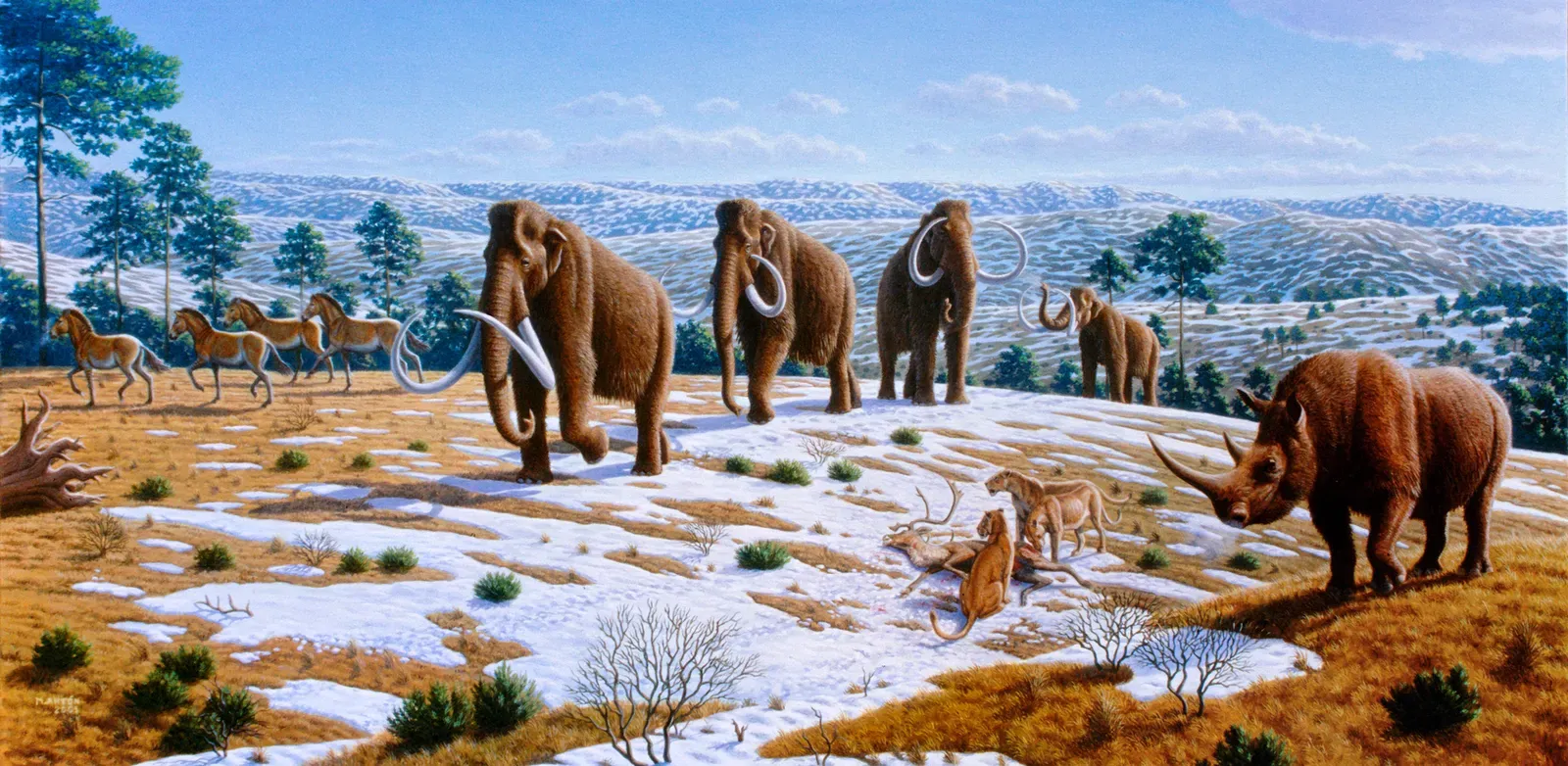
One of the most fascinating things about prehistoric North America isn’t just the individual animals – it’s how they all fit together. Their large size provided advantages such as increased resilience to cold climates and a broader range of available food sources. These creatures navigated landscapes ranging from vast grasslands and tundras to dense forests and wetlands, contributing enormously to the biodiversity of ancient North America. Picture the complexity of the African Serengeti, then multiply it by several times over.
Before the extinction events, a variety of C4 grazers, C3 browsers, and mixed feeders existed, similar in structure to modern African savannas. Each large species played a very specific role, almost like departments within a company. When those roles disappeared, the whole system shifted. The loss of large-bodied mammals at the terminal Pleistocene profoundly altered the behavior of surviving carnivores, disrupting predator-prey pairs and causing shifts in resource use. These findings are consistent with continental-level studies demonstrating a decline in biotic interactions after the megafauna extinction and a homogenization of ecosystems.
The Great Extinction: What Wiped Out These Lost Worlds
This is honestly one of the biggest mysteries in all of natural history – and the debate is still very much alive in 2026. Toward the end of the Pleistocene, North America lost 37 mammalian genera, including over seventy percent of its megafauna. That’s not a gradual fade; that’s a catastrophe. The extinction event is most distinct in North America, where thirty-two genera of large mammals vanished during an interval of roughly two thousand years, centered around eleven thousand years ago.
Scientists disagree over whether humans caused the die-off through overhunting, or whether climate change at the end of the ice age eliminated their habitats. Honestly, it may have been both. Research suggests that the causes varied across different animal groups and regions. In some cases, extinctions appear linked to hunting, while in others they are consistent with the ecological effects of climate change, and in at least one case, both hunting and climate change appear responsible. It’s hard to say for sure, but the weight of evidence increasingly points to a devastating combination of warming temperatures and the arrival of skilled human hunters as the continent’s ultimate double blow.
Conclusion: What These Lost Worlds Teach Us Today
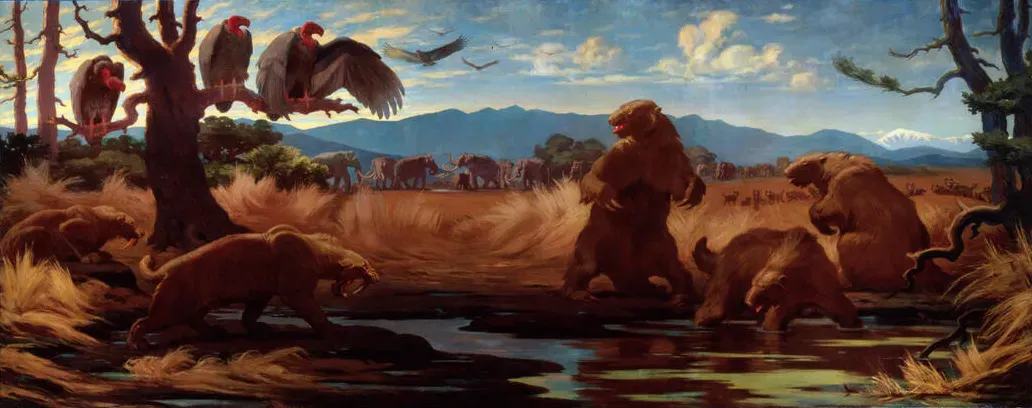
There’s something deeply humbling about sitting with the scale of what once existed here. North America wasn’t always a place of modest deer and coyotes. It was a continent of giants, ruled by creatures that seem almost mythological today. Research on these ancient communities reveals significant reorganization after the extinctions, particularly among carnivores, a measurable loss of ecological complexity, and many vacant niches. The loss of that complexity likely meant a lasting reduction in ecosystem resilience.
The story of these lost worlds isn’t just a history lesson. Overall, the Holocene body-size-isotopic niche was drastically reduced and considerable ecological complexity was lost. Without intervention, the loss of Earth’s remaining ecosystems that support megafauna will likely suffer the same fate. You’re not simply reading about something ancient and irrelevant. You’re reading about a warning. The question worth asking is: are we paying attention this time?