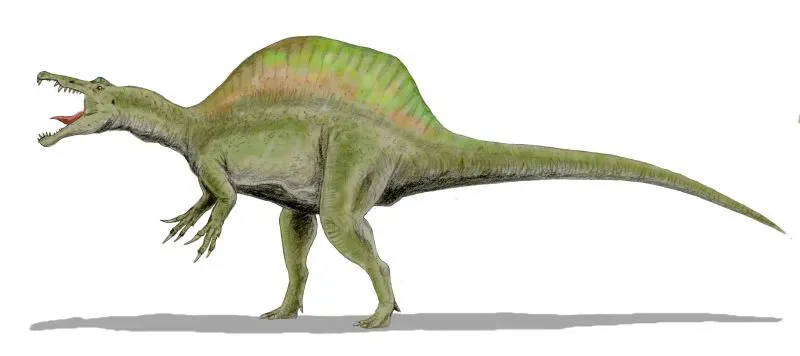
When you picture a giant predatory dinosaur, chances are you imagine something charging across open land, jaws snapping at fleeing prey. That mental image works fine for Tyrannosaurus rex. For Spinosaurus, however, it falls spectacularly short of reality.
This colossal creature, with its towering sail and crocodilian snout, rewrote every rule scientists thought they understood about how apex predators operate. The story of what Spinosaurus actually ate has been unfolding slowly, stubbornly, and quite dramatically over more than a century of research. There are fossil clues, isotope analyses, jaw mechanics, heated academic debates, and even a new species discovered in the middle of the Sahara. Honestly, the more you dig into it, the more astonishing it becomes. Let’s dive in.
A Giant Like No Other: Introducing Spinosaurus
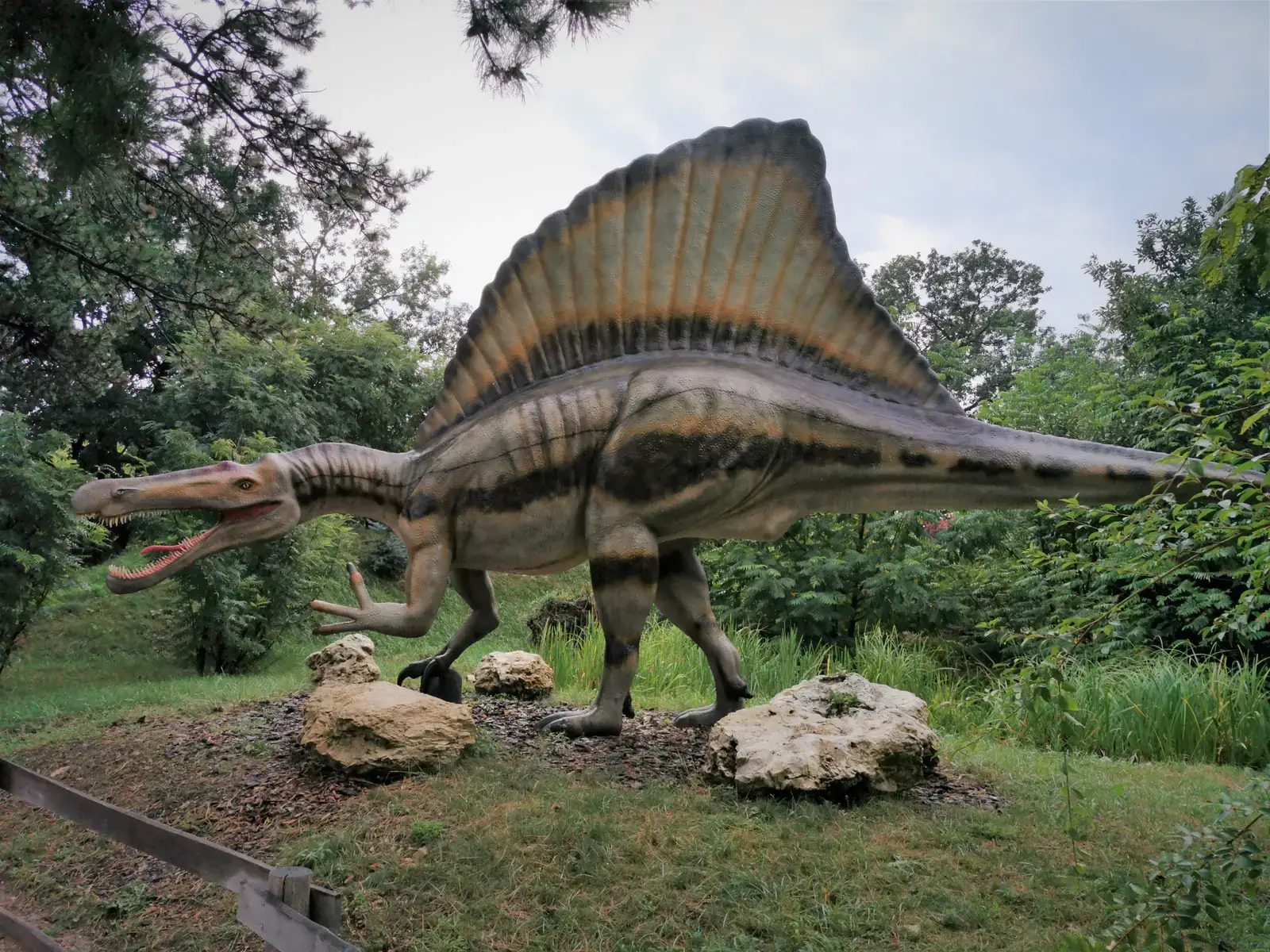
Spinosaurus was a notable carnivorous dinosaur that lived in northern Africa during the Late Cretaceous period, approximately 99 to 94 million years ago. To put that in perspective, this animal was prowling ancient river systems at a time when the Sahara was a lush, humid floodplain teeming with life. It shared its world not just with other dinosaurs, but with enormous crocodilians, pterosaurs, and fish the size of buses.
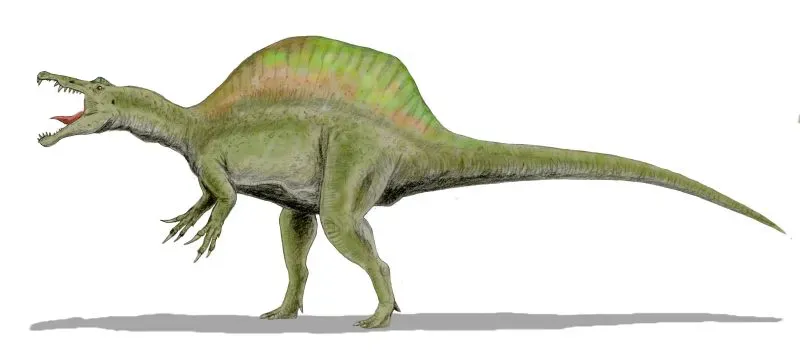
Spinosaurus is believed to be the largest known carnivore, potentially surpassing both Tyrannosaurus rex and Giganotosaurus in length, with estimates ranging from 14 to 18 meters. That is genuinely mind-bending. Its most distinctive feature is its long neural spines, which may have formed a sail-like structure, possibly for thermoregulation or mating displays. Whether that sail helped it hunt, attract mates, or regulate body heat remains a fiercely contested question even today.
The Skull Tells the Story: Anatomy Built for Fishing
Uploaded by FunkMonk, CC BY 2.0)
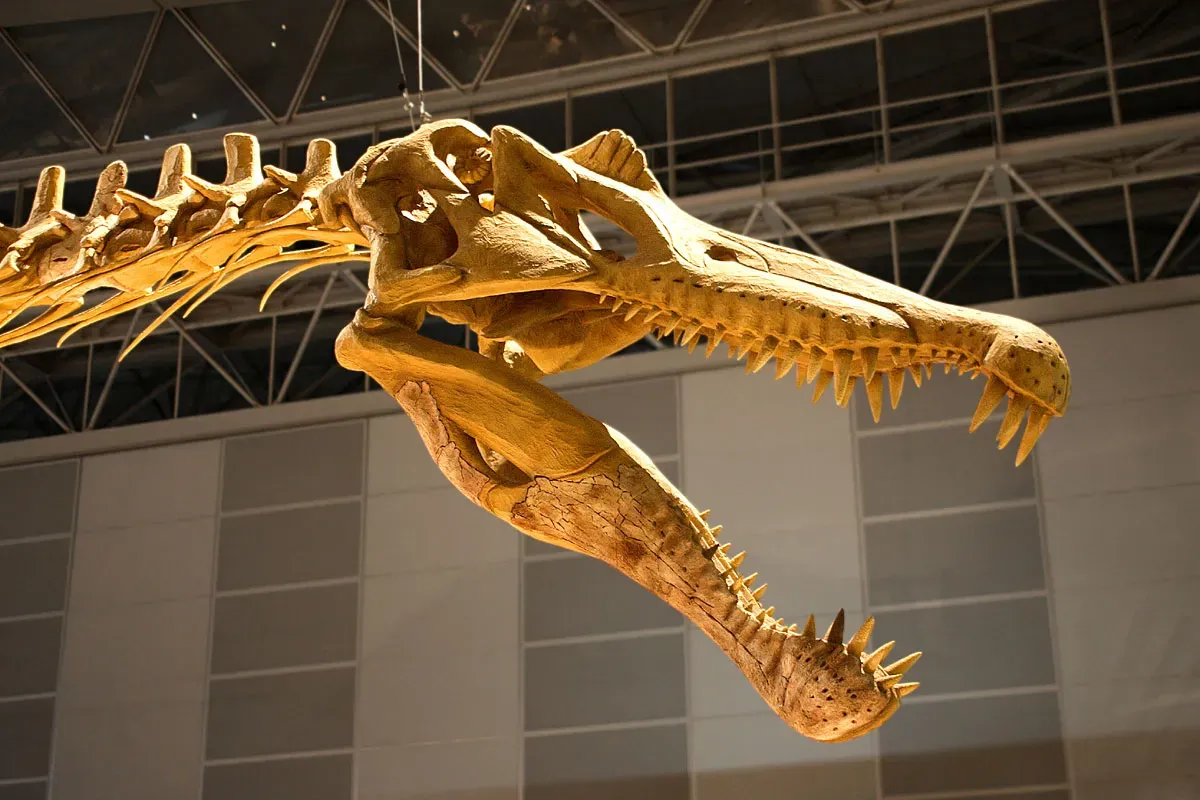
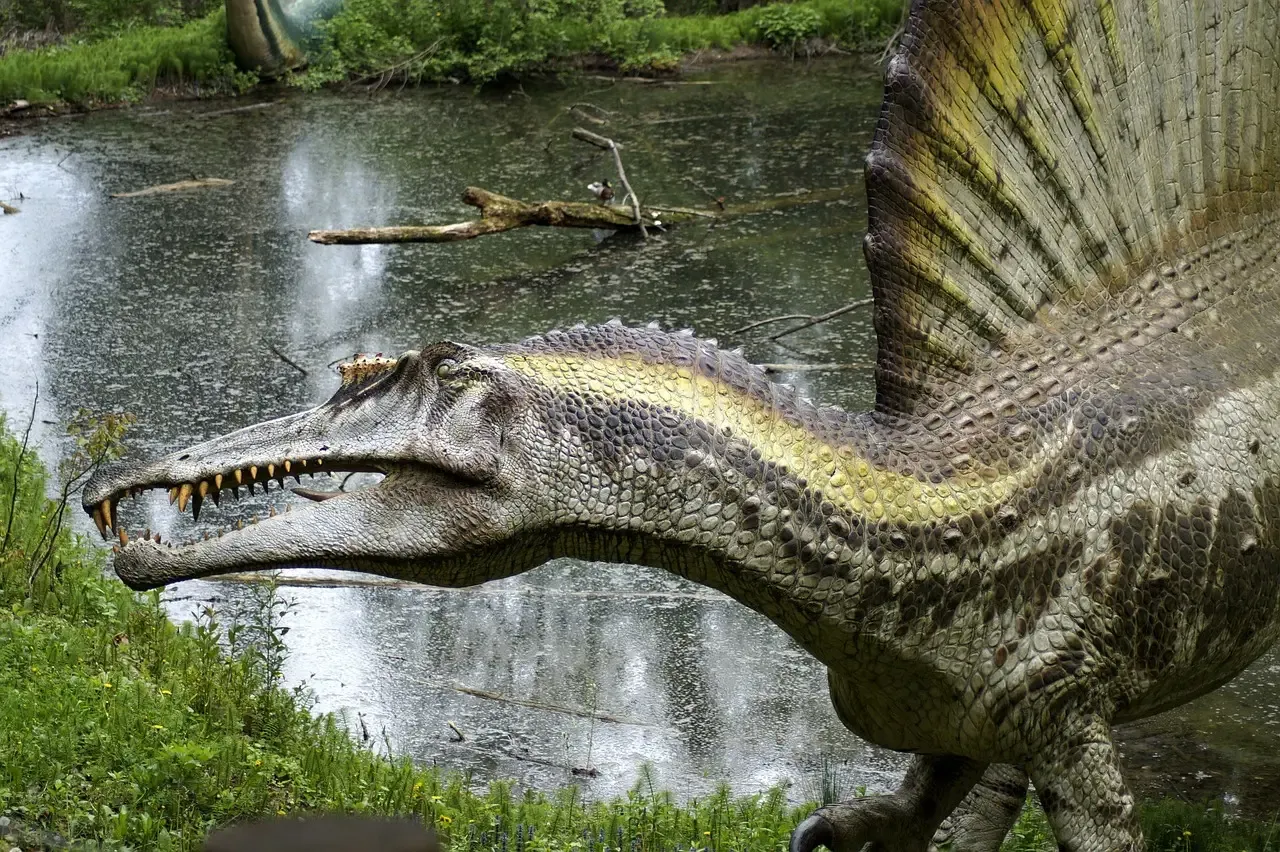
The skull of Spinosaurus provided the first major evidence for a specialized diet, deviating entirely from the deep, robust skulls of bone-crushing theropods. Its snout was elongated, low, and surprisingly narrow, bearing a strong resemblance to the jaws of modern crocodilians. This morphology was designed for quick, snapping strikes rather than sustaining the high bite forces needed to tear through large terrestrial prey. Think of it like comparing a gharial’s needle-thin jaws to the bone-crushing mouth of an alligator. They are built for entirely different meals.
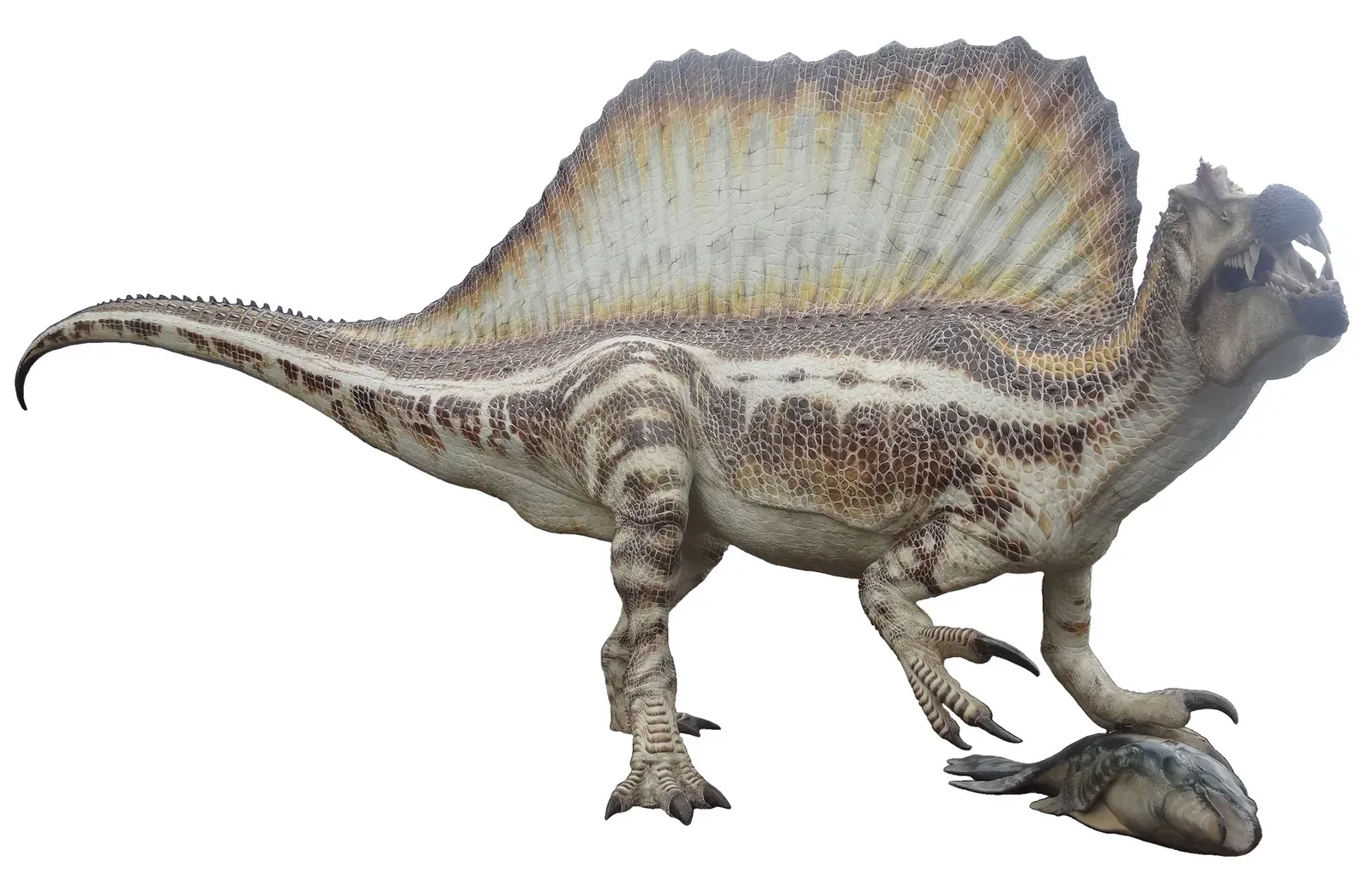
Unlike most theropods that had serrated bladed teeth perfect for slicing through flesh, Spinosaurus and its relatives had conical-shaped teeth that were more like that of a crocodile, better adapted for holding on to slippery prey, like fish. The front of the snout also featured an interlocking arrangement of teeth, forming a structure known as a terminal rosette that maximized the grip on captured aquatic animals. When you build a mousetrap this specific, you are not hunting elephants.
Isotopes Don’t Lie: Chemical Evidence of a Watery Diet
A 2010 isotope analysis by Romain Amiot and colleagues found that oxygen isotope ratios of spinosaurid teeth, including teeth of Spinosaurus, indicate semiaquatic lifestyles. This was a game-changer. Isotope chemistry essentially reads the chemical diary locked inside ancient bone, and the diary was surprisingly clear on this point.
The oxygen isotope values found in the teeth are closer to those of contemporary turtles and crocodiles than to other land-dwelling theropod dinosaurs from the same area, suggesting that Spinosaurus spent a significant amount of its time in the water, consuming aquatic prey. Stable isotope results also show that spinosaurs fed on fish, while non-spinosaurid theropods ate mostly herbivorous dinosaurs. The chemical evidence paints a portrait of a predator deeply, almost exclusively committed to life in the water.
The Prey Itself: Giants of the Ancient River
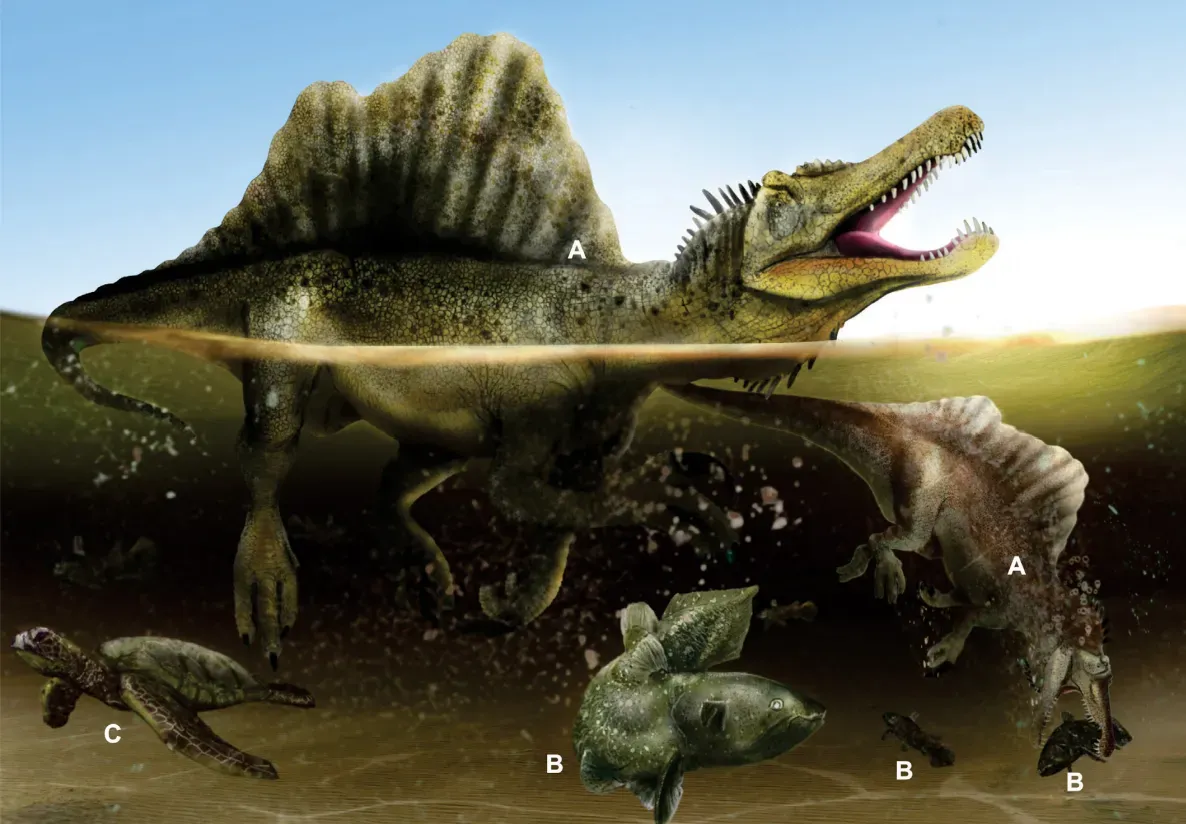
Spinosaurus lived in a world teeming with colossal fish, and its anatomy was perfectly adapted to exploit them. Among its likely prey were immense sawfish like Onchopristis, which could grow up to 8 meters long, and large coelacanths such as Mawsonia. Imagine going fishing and your catch is a creature the length of a school bus with a serrated rostrum like a chainsaw. That was apparently just a Tuesday for Spinosaurus.
Specimens of Onchopristis have been associated with the jaws of Spinosaurus in North Africa, indicating that Spinosaurus would have preyed upon Onchopristis based on direct evidence of piscivory. Fossil evidence of puncture marks on the sawfish’s rostrum made by Spinosaurus are common, and there has even been a barb found stuck in the upper jaw of a spinosaurid. It’s hard to find more direct evidence than a tooth mark in your prey’s face.
Beyond Fish: A Surprisingly Broad and Opportunistic Menu
Here is where things get really interesting, and where the “fish only” narrative starts to crack at the edges. A 2024 paper suggests Spinosaurus and other spinosaurines also preyed upon small to medium-sized terrestrial vertebrates and even pterosaurs. This makes a lot of intuitive sense when you consider how large and opportunistic modern predators like crocodiles behave. A big enough predator rarely says no to an easy meal.
Spinosaurids are known to have had an unusually broad diet based on direct evidence that includes fish, dinosaurs and pterosaurs. Spinosaurids occasionally preyed on or scavenged dinosaurs, such as juvenile Iguanodon, indicating a willingness to consume terrestrial meat. Spinosaurus would have possessed the strength and size to subdue smaller or medium-sized dinosaurs that ventured too close to the water’s edge. Let’s be real, if you weigh several tonnes and something walks into your hunting ground, you are probably not ignoring it.
Wader or Swimmer? How Spinosaurus Actually Hunted
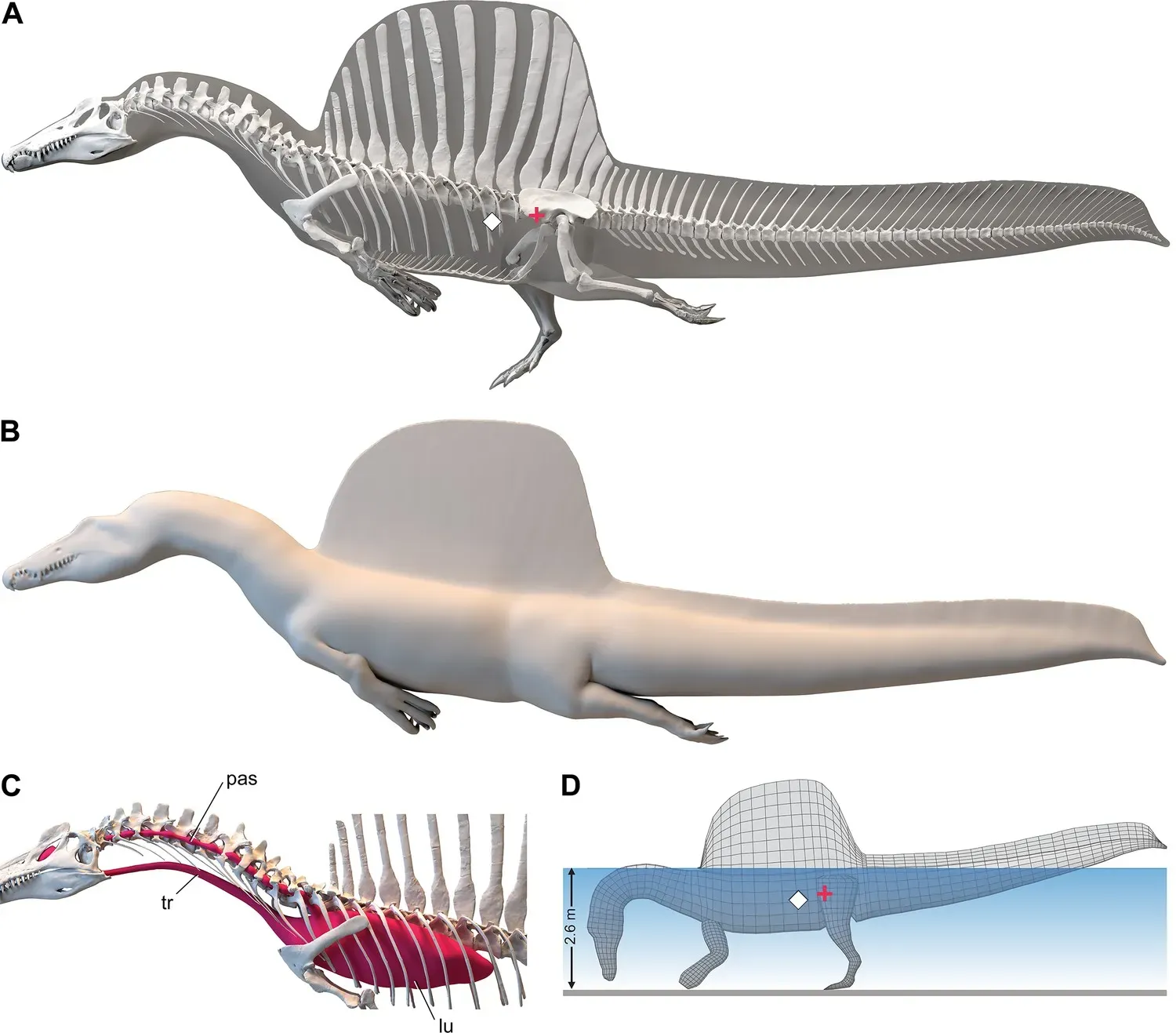
For years, controversy has swirled around how a Cretaceous-era, sail-backed dinosaur hunted its prey. Spinosaurus was among the largest predators ever to prowl the Earth and one of the most adapted to water, but was it an aquatic denizen of the seas, diving deep to chase down its meals, or a semiaquatic wader that snatched prey from the shallows close to shore? This debate has genuinely split the paleontology world into two camps, and both sides have compelling arguments.
The position of the nostrils high on the skull would have allowed spinosaurs to have a greater proportion of their jaws in the water compared to other theropods, which has led to speculation that this dinosaur had a hunting style not too dissimilar to that of a modern heron. One analysis found that Spinosaurus was able to wade into waterways more than six feet deep without floating, where it could ambush fish of any size with its claws and jaws, all while keeping its toes firmly anchored in the mud. It is hard to say for sure which behavior dominated, but the image of a colossal dinosaur doing its best heron impression is, honestly, one of the most delightful things paleontology has ever produced.
The New Discovery That Changes Everything: Spinosaurus mirabilis
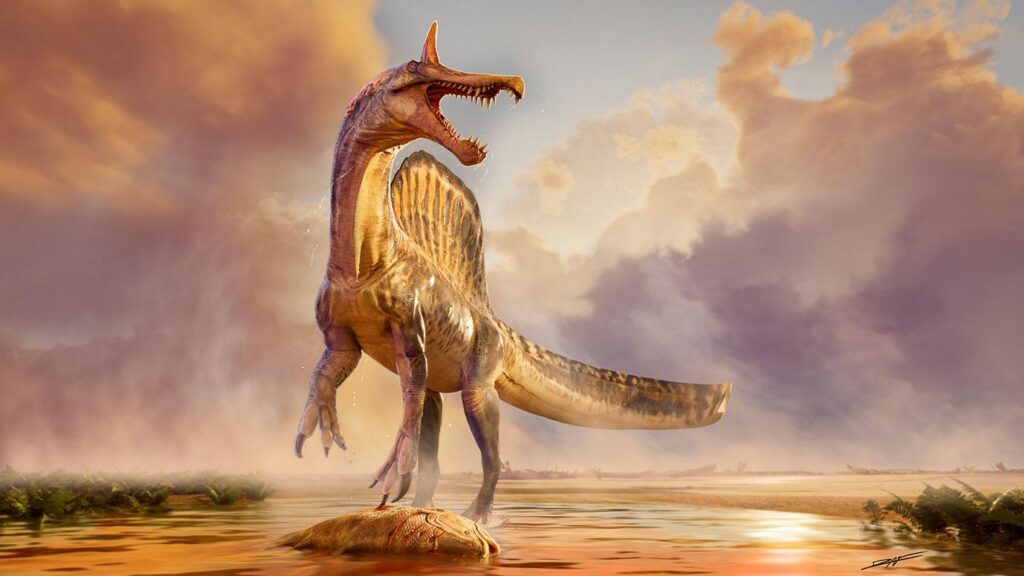
Paleontologists have identified the first unequivocal new species of the fish-eating dinosaur Spinosaurus in more than a century. Spinosaurus mirabilis is one of the last-surviving spinosaurid species. The new species lived 95 to 100 million years ago, and the fossil remains were found in the Sahara Desert, in a remote location called Jenguebi, in the country of Niger. That is extraordinary on its own, but the real surprise is what this fossil’s location tells us.
The discovery of Spinosaurus mirabilis challenges long-standing ideas about where and how spinosaurid dinosaurs lived. Until now, most spinosaurid fossils had been found in coastal deposits, prompting speculation that these predators may have been fully aquatic. However, the new fossil locality in Niger is between 500 and 1,000 km from the nearest ancient marine shoreline. Spinosaurus mirabilis was a shallow water predator that preyed on fish, though its habitat was some 600 miles inland from the ancient Tethys Sea. This dramatically expands our understanding of how far inland these animals ranged, and suggests their river-hunting lifestyle was far more widespread and adaptable than previously imagined.
Conclusion: A Predator That Defied Every Expectation
Spinosaurus_BW.jpg: ArthurWeasley, CC BY 2.5)
What makes the Spinosaurus diet story so remarkable is not just what the animal ate, but how different it was from everything else stalking the Cretaceous landscape. It is thought that by specializing as fish-eaters, Spinosaurus was able to avoid resource competition with other large predators, such as the allosauroids. In a world crowded with enormous, land-based killers, Spinosaurus essentially turned to the rivers and claimed an entirely different kingdom for itself.
The picture that emerges from over a century of research is of a creature far more nuanced and fascinating than any Hollywood blockbuster could capture. Primarily a fish hunter. Occasionally an opportunist. Possibly a wader, possibly a swimmer, perhaps both depending on the day. Scientific findings reveal the diet of Spinosaurus was more complex than once thought, showing a versatile predator adapted to hunt both in water and on land. Every new fossil, every isotope analysis, and every heated academic paper adds another brushstroke to a portrait that keeps refusing to stay still.
The Spinosaurus is proof that the prehistoric world was stranger and more inventive than our imaginations tend to allow. A dinosaur the size of a city bus, patiently wading through an ancient African river, snatching fish the size of cars – and occasionally eyeing whatever wandered a little too close to the bank. What other secrets do you think are still buried out there, waiting to rewrite the story all over again?