Netflix released “The Dinosaurs!” on March 6, 2026, captivating audiences with a four-part series that chronicles the 165-million-year reign of these ancient reptiles. Narrated by Morgan Freeman and executive produced by Steven Spielberg, the documentary draws on the latest fossil evidence to depict how dinosaurs adapted through hunting prowess, social interactions, and environmental challenges. Viewers witness a world where proto-dinosaurs hatched into chaos and giants ruled until a cosmic catastrophe ended their dominance.
Origins in Peril: Triassic Survival Tactics
Origins in Peril: Triassic Survival Tactics (Image Credits: Reddit)
A fuzzy proto-dinosaur named Marasuchus hatched 235 million years ago amid Triassic turmoil, showcasing early traits that propelled the dinosaur dynasty. This small biped boasted advanced lungs, lightweight bones, and signs of warm-blooded metabolism, allowing it to outpace rivals in a volatile climate filled with carnivorous reptiles.
Plateosaurus emerged next, stretching long necks to browse high vegetation on the supercontinent Pangaea. Its growth spurt foreshadowed the massive sauropods to come. Predators like Liliensternus, roughly twice the size of a grizzly bear, demonstrated sharp hunting instincts by stalking and ambushing pterosaurs. These behaviors highlighted dinosaurs’ edge over competitors like the beaked rhynchosaur, which faded as ecosystems shifted.
Dominance Through Diversification: Jurassic Conquests
A massive extinction event around 201 million years ago cleared paths for dinosaurs to explode in variety during the Jurassic. They grew larger, evolved elongated necks, and developed body armor to fend off threats, marking a leap in physical and behavioral sophistication.
Dilophosaurus stood out as a formidable hunter with precise, deadly strikes, yet males displayed unexpected gentleness during courtship rituals. Stegosaurus patrolled with vibrant plates and a spiked tail, using them for defense and possibly display. Meanwhile, small herbivores like Heterodontosaurus navigated dangerous landscapes with beaked mouths and versatile teeth, underscoring the era’s quirky adaptations.
Allosaurus added a grim note, resorting to cannibalism after felling a Stegosaurus, revealing opportunistic feeding strategies amid fierce competition.
Empire of Adaptation: Cretaceous Innovations
The Cretaceous brought brutal winters and rising seas, forcing dinosaurs into bold behavioral shifts around 125 million years ago. Feathered Yutyrannus, a tyrannosaur kin, blended into snowy terrains to stalk prey with cunning camouflage.
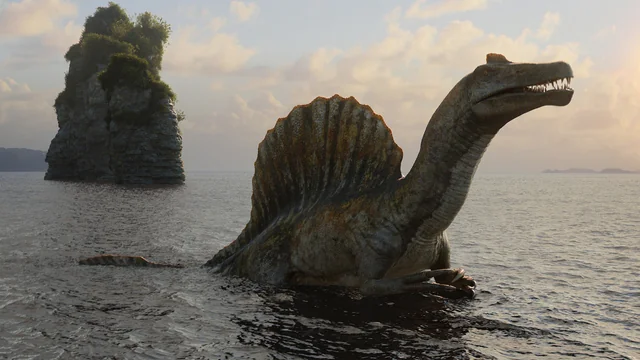
Pterosaurs like Hatzegopteryx, rivaling small planes in size, soared from island perches to crush sauropods with powerful beaks. Spinosaurus pioneered semi-aquatic life, wielding elongated jaws to snag sharks and other large aquatic prey. Longipteryx, among the tiniest dinosaurs, mastered flight, linking ancient forms to modern birds.
- Hatzegopteryx exploited height for aerial ambushes.
- Spinosaurus shifted to riverine hunting grounds.
- Yutyrannus used feathers for thermal regulation and stealth.
Final Stand: Behaviors Before the Fall
In the late Cretaceous, dinosaurs blanketed the globe, with Tyrannosaurus rex as the ultimate predator around 72 million years ago. Continental drift reshaped habitats, but an asteroid loomed as the true threat.
T. rex balanced ferocity with care, dragging kills like Ankylosaurus carcasses to nourish hatchlings, suggesting parental investment. Pachycephalosaurs clashed in head-butting duels, their thickened skulls serving as rams in territorial battles. Aquatic hunters such as Hesperornis pursued fish clumsily on land but sleekly in water, only to fall prey to Mosasaurus.
| Dinosaur | Key Behavior | Era |
|---|---|---|
| T. rex | Parental provisioning | Late Cretaceous |
| Pachycephalosaurus | Head-butting contests | Late Cretaceous |
| Dilophosaurus | Courtship gentleness | Early Jurassic |
Key Takeaways
- Dinosaurs exhibited warm-blooded traits and feathers far earlier than once thought, aiding survival in harsh conditions.
- Hunting ranged from stealthy stalks to aerial dives, reflecting diverse ecosystems.
- Evidence points to complex social behaviors like parenting and mating displays, inferred from fossils and modern analogs.
The series culminates in the asteroid’s devastation, underscoring dinosaurs’ remarkable resilience over eons. “The Dinosaurs!” not only entertains but educates on how fossil clues reveal these lost lives. Which prehistoric behavior fascinates you most? Share your thoughts in the comments.