
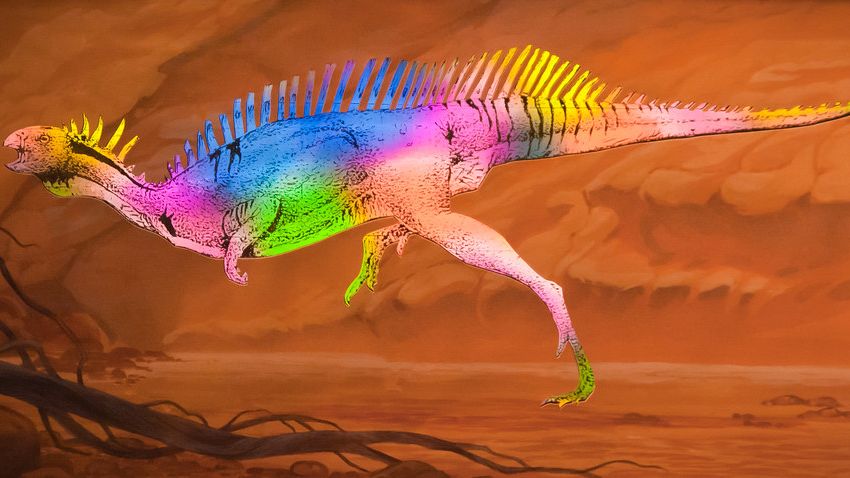
Picture every dinosaur you’ve ever seen in a museum, a movie, or a children’s book. Chances are it was painted in dull shades of grey, muddy brown, or swampy green. That image, it turns out, may be wildly wrong. Science has been quietly rewriting the visual history of prehistoric life, and the results are genuinely jaw-dropping.
You might not have heard much about it yet, but the field of dinosaur color science has exploded with discoveries over the past couple of decades, and the pace is only accelerating as we move deeper into the 2020s. The ancient world, it seems, was a whole lot more dazzling than anyone imagined. Let’s dive in.
The Old Image of the Grey Dinosaur Is Finally Dead

For most of scientific history, you would have looked at a dinosaur reconstruction and simply accepted that nobody could know what color these creatures were. Fossils preserve bones, sometimes impressions, occasionally skin texture. Color? That seemed impossible to recover. Honestly, it was a reasonable assumption – but science loves to prove reasonable assumptions wrong.
The idea that dinosaurs sported colorful feathers, once considered outlandish, has become conventional wisdom. What shifted the thinking was not a single dramatic discovery, but a slow and compelling accumulation of evidence pulled from microscopic structures hidden inside fossil feathers. Dinosaur coloration is generally one of the unknowns in paleontology, since skin pigmentation is nearly always lost during fossilization. However, studies of feathered dinosaurs and skin impressions have shown that the color of some species can be inferred through the analysis of color-determining organelles known as melanosomes that are preserved in fossilized skin and feathers.
What Exactly Are Melanosomes, and Why Do They Matter So Much?
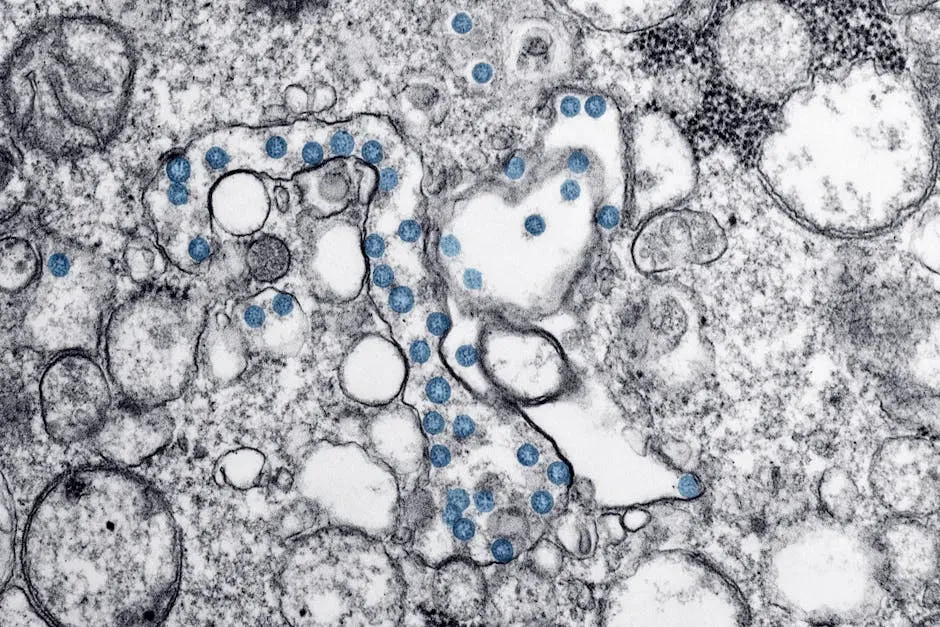
Here’s the thing – melanosomes are tiny organelles found inside pigment-producing cells, and they are basically nature’s paint pouches. Under the scanning electron microscope, both skin and feathers have been shown to contain melanosomes, intracellular structures containing melanin that give pigment to skin, feathers, and fur in living animals, with differently shaped melanosomes conferring different colors. Think of them like individual pixels in a photograph, each one carrying a specific hue depending on its shape.
Different shapes and arrangements of melanosomes in bird feathers are associated with different colors, including black, brown, red, buff, and even iridescent structural colors. The truly remarkable part? The multishaped melanosomes found in birds led scientists, particularly paleontologists, to wonder whether similar melanosomes are found in ancient birds and feathered dinosaurs, the ancestors of modern birds. Luckily, some fossil finds include fossilized feathers, and with a high-powered microscope, scientists can actually see melanosome structures preserved in these petrified plumages.
The Fossils That Changed Everything: China’s Incredible Gift to Science
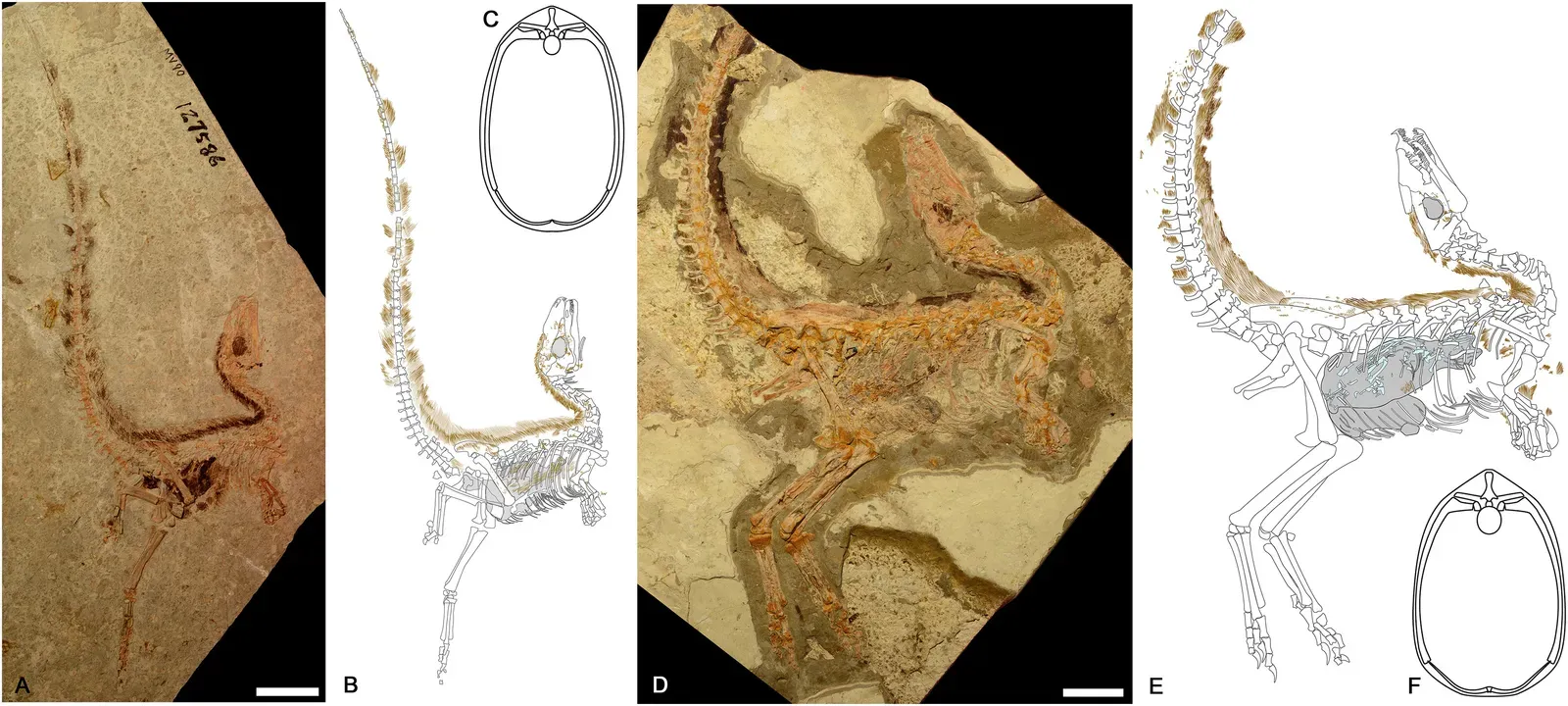
The presence of melanosomes, the characteristic bodies that give feathers their color, has been demonstrated in feathers and feather-like structures of fossil early birds and dinosaurs from the Early Cretaceous Jehol Group of China. You might not immediately grasp how significant that is, but consider this: researchers could now, for the very first time, look at a creature that lived over 100 million years ago and make a scientifically grounded argument about its actual color. That’s not art. That’s forensics.
The data provides empirical evidence for reconstructing the colors and color patterning of these extinct birds and theropod dinosaurs. For example, the dark-colored stripes on the tail of the theropod dinosaur Sinosauropteryx can reasonably be inferred to have exhibited chestnut to reddish-brown tones. The dinosaur Sinosauropteryx, from that same time, had featherlike bristles running across its head, back, and tail. These bristles also turned out to contain pheomelanosomes, revealing that the dinosaur had reddish-brown stripes covering the tail.
Anchiornis, Microraptor, and the Dinosaurs That Looked Like Living Jewels
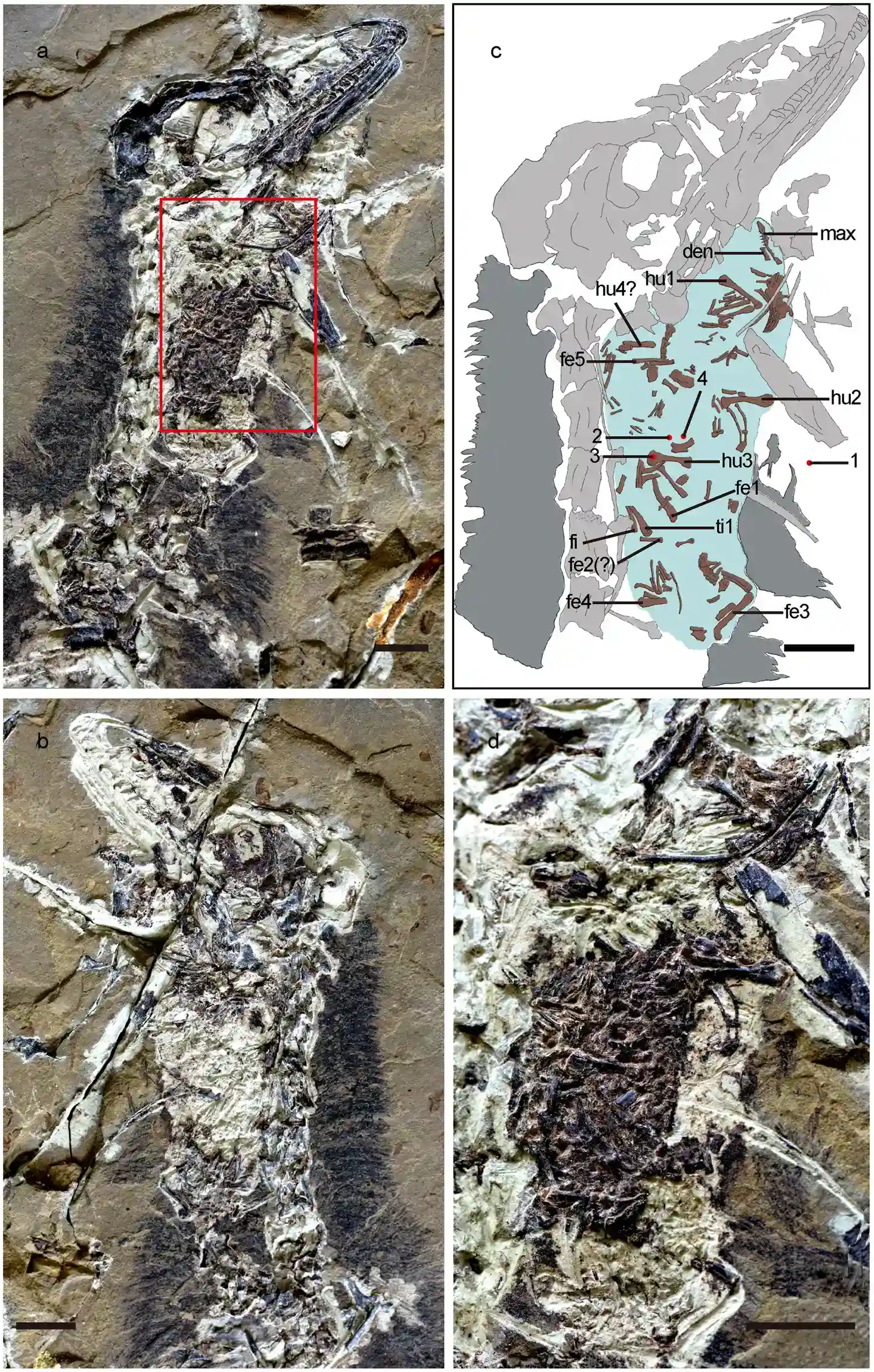
In 2010, paleontologists studied a well-preserved skeleton of Anchiornis, an averaptoran from the Tiaojishan Formation in China, and found melanosomes within its fossilized feathers. As different shaped melanosomes determine different colors, analysis of the melanosomes allowed the paleontologists to infer that Anchiornis had black, white, and grey feathers all over its body and a crest of dark red or ochre feathers on its head. That’s not guesswork. That is hard science. A creature from 160 million years ago, reconstructed in color, with real evidence behind it.
Then there’s Microraptor. A team of American and Chinese researchers revealed the detailed feather pattern and color of Microraptor, a pigeon-sized, four-winged dinosaur that lived about 120 million years ago. A new specimen showed the dinosaur had a glossy iridescent sheen and that its tail was narrow and adorned with a pair of streamer feathers, suggesting the importance of display in the early evolution of feathers. Imagine a crow crossed with a velociraptor, shimmering under the Cretaceous sun. I know it sounds crazy, but the evidence is there.
Color Was Not Just About Looking Pretty: Camouflage and Survival
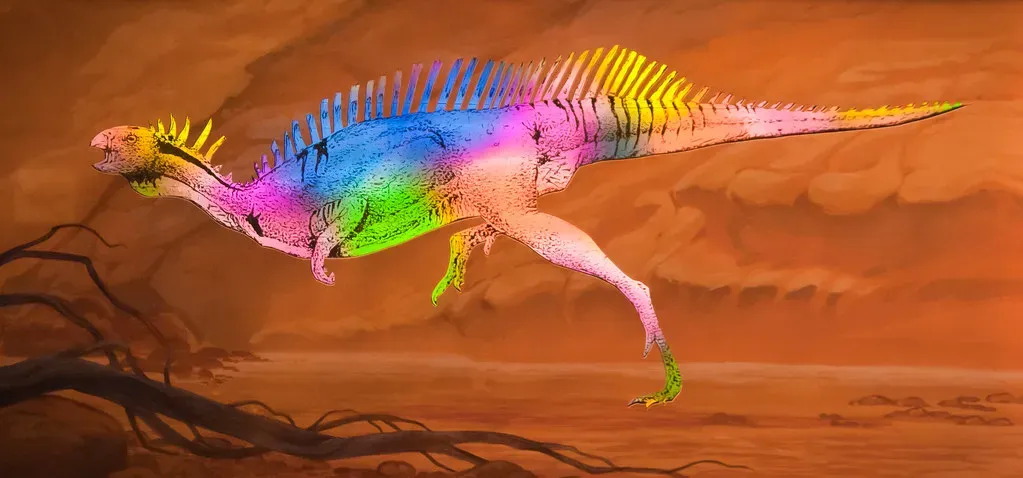
Researchers from the University of Bristol revealed how a small feathered dinosaur used its color patterning, including a bandit mask-like stripe across its eyes, to avoid being detected by its predators and prey. By reconstructing the likely color patterning of the Chinese dinosaur Sinosauropteryx, researchers have shown that it had multiple types of camouflage which likely helped it to avoid being eaten in a world full of larger meat-eating dinosaurs. Let’s be real – survival has always been the ultimate design brief for evolution, and color was one of nature’s sharpest tools.
The color patterns include a dark stripe around the eye, or a kind of bandit mask, which in modern birds helps to hide the eye from would-be predators, and a striped tail that may have been used to confuse both predators and prey. The small dinosaur also showed a counter-shaded pattern with a dark back and light belly, a pattern used by many modern animals to make the body look flatter and less three-dimensional. These are not coincidences. These are strategies, refined over millions of years.
Feathers as Flirtation: Color and the Drama of Dinosaur Mating
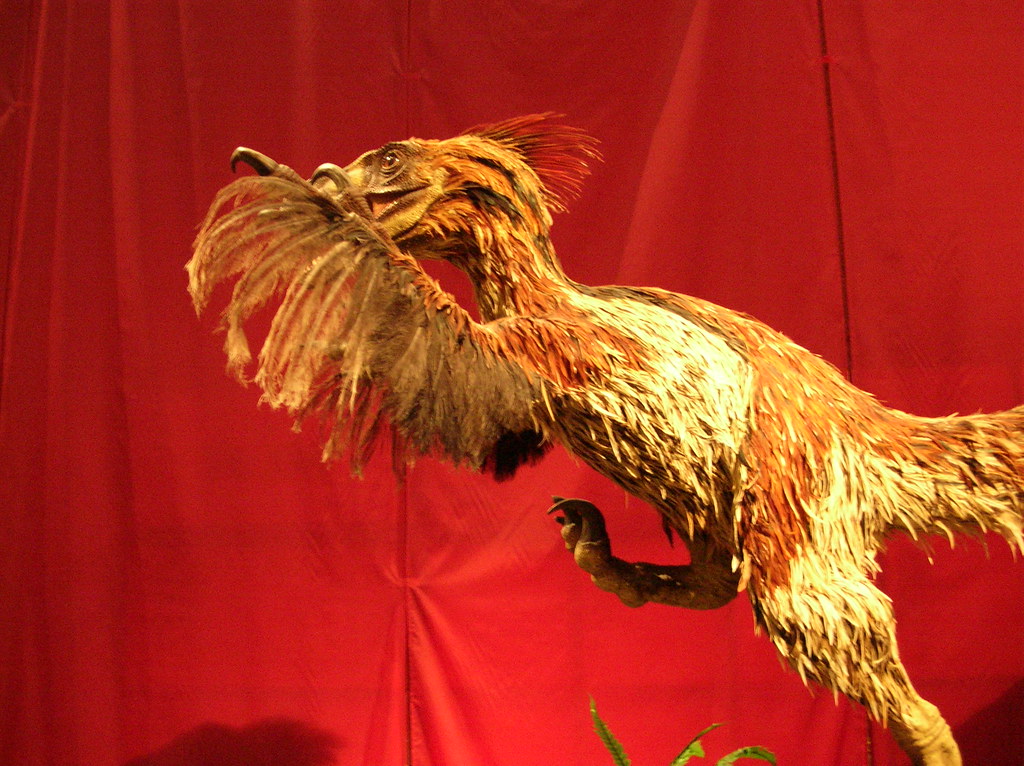
Researchers hypothesized that the evolution of feathers made dinosaurs more colorful, which in turn had a profoundly positive impact on communication, the selection of mates, and on dinosaurs’ procreation. Think about modern peacocks, birds of paradise, or even a male cardinal perched on your garden fence. That dazzling color isn’t random. It’s a survival strategy of a very different kind: attract the right partner, pass on your genes.
Dinosaurs could not only detect colors by means of their red, green, and blue color receptors – the same ones that humans have – but also via an additional receptor that humans lack, and crocodiles and birds possess, that probably let them see extremely short-wave and ultraviolet light as well. Beyond camouflage, the vibrant colors of dinosaur feathers might have served as a means of communication. Much like the peacock’s tail or the cardinal’s bright plumage, these colors could have been used to attract mates or signal dominance. A prehistoric world lit up with UV-visible color signals – now that is a scene worth imagining.
The Latest Discoveries: Even Giant Dinosaurs Had Color
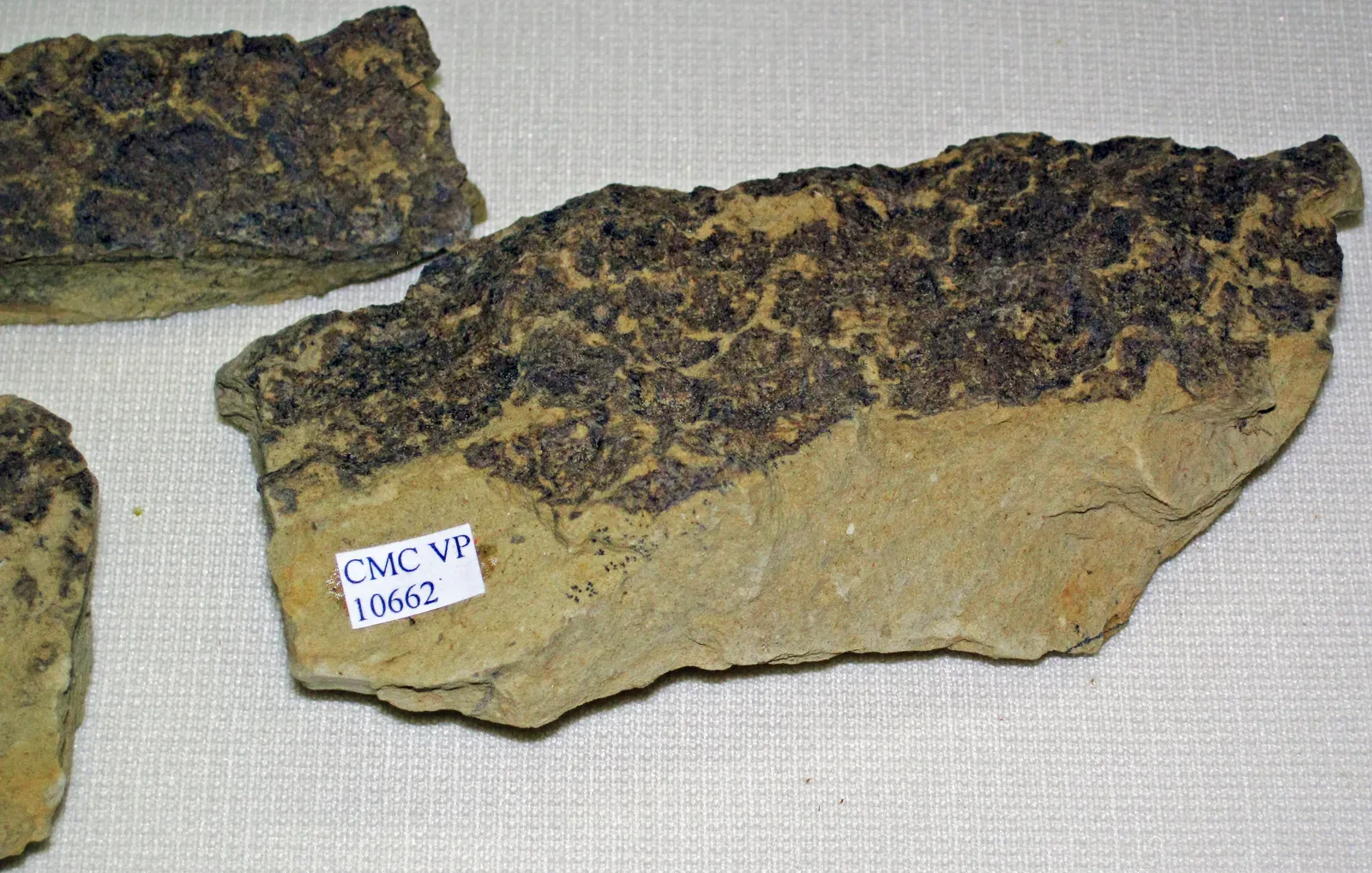
You might assume that color evidence was limited to small, bird-like theropods. That assumption just got shattered. From the Jurassic rocks of Montana’s Mother’s Day Quarry, paleontologists uncovered fossils of sauropod skin so delicately preserved that they include impressions of pigment-carrying structures called melanosomes. Sauropods, for context, are the enormous long-necked dinosaurs. The giants. Not exactly the creatures you’d expect to be sporting intricate color patterns.
While researchers were reluctant to fully reconstruct the color of the juvenile Diplodocus the skin came from, they detected that the dinosaur would have had conspicuous patterns across its scales. The finding suggests sauropod dinosaurs were not uniformly gray or brown, but had complex color patterns like other dinosaurs, birds, and reptiles. Recent discoveries of colored and patterned plumage on fossils suggest that feathers were used for purposes like camouflage, insulation, communication, and courtship, offering a deeper understanding of dinosaur behavior and evolution. Each new fossil seems to push this story further than the last.
Conclusion
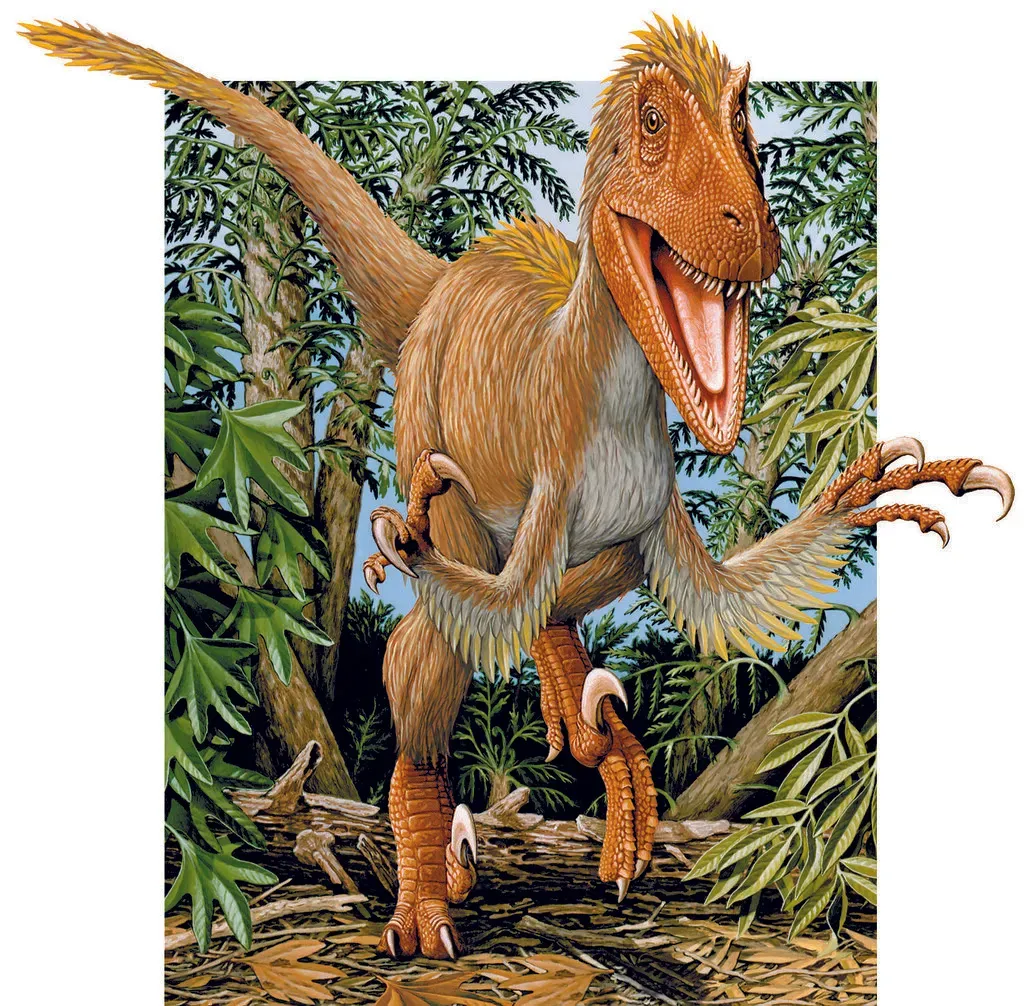
The image of the lumbering, drab-colored dinosaur is not just outdated – it is, at this point, scientifically indefensible. You now know that these creatures lived in a world splashed with reddish-brown, iridescent black, contrasting stripes, UV-visible signals, and complex camouflage patterns crafted by millions of years of natural selection. The evidence, locked in microscopic melanosomes inside stone, has spoken with remarkable clarity.
What makes this all so thrilling is that we are still in the early chapters of this particular story. Every new fossil found with preserved soft tissue or color-producing structures has the potential to rewrite what you think you know. The ancient world was not grey. It was gloriously, defiantly alive with color – and science is only just beginning to reveal the full picture.
So next time you stand in front of a dinosaur skeleton at a museum, try to resist the blank canvas in your mind. Dress it up. Give it stripes, a glossy sheen, a rust-red crest. Chances are, you’ll be closer to the truth than any painter was a hundred years ago. What color would you have guessed?