
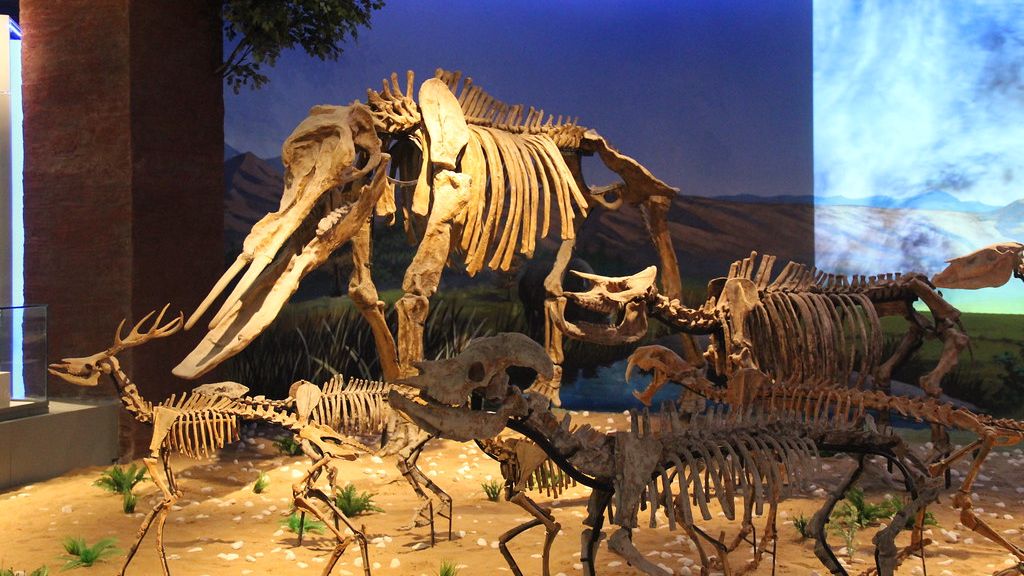
Picture a North America where towering creatures the size of small houses thunder across open grasslands, where snarling predators with teeth like hunting knives patrol ancient forests, and where the ground literally shakes under the weight of lumbering, armor-plated beasts. This wasn’t a fantasy world or some distant planet. This was your continent, not long ago in geological terms, a wild and jaw-dropping version of the land you live on today.
Millions of years before your skyscrapers, highways, and suburb sprawls took shape, North America was ruled by an extraordinary cast of colossal mammals that would leave any modern zoo looking timid by comparison. Their story is one of survival, dominance, mystery, and sudden, shocking loss. So buckle up, because this journey back in time is nothing short of extraordinary.
A World You Would Not Recognize: The Pleistocene Landscape
Fifty thousand years ago, North America was ruled by megafauna. Lumbering mammoths roamed the tundra, while forests were home to towering mastodons, fierce saber-toothed tigers, and enormous wolves. Honestly, if you could step into that world today, you’d probably think you’d landed on the wrong planet entirely. The scale of it, the sheer mass and noise of life, would be overwhelming.
These megafauna, which is ancient Greek for “large animals,” thrived in the geological period called the Pleistocene epoch, which spans 1.8 million to 12,000 years ago. These mammals lived on Earth for millions of years and were very important to almost all land-based ecosystems. Think of them less as curiosities and more as the engineers of an entire world, one you’ve inherited the ruins of.
The Woolly Mammoth: North America’s Most Iconic Colossus
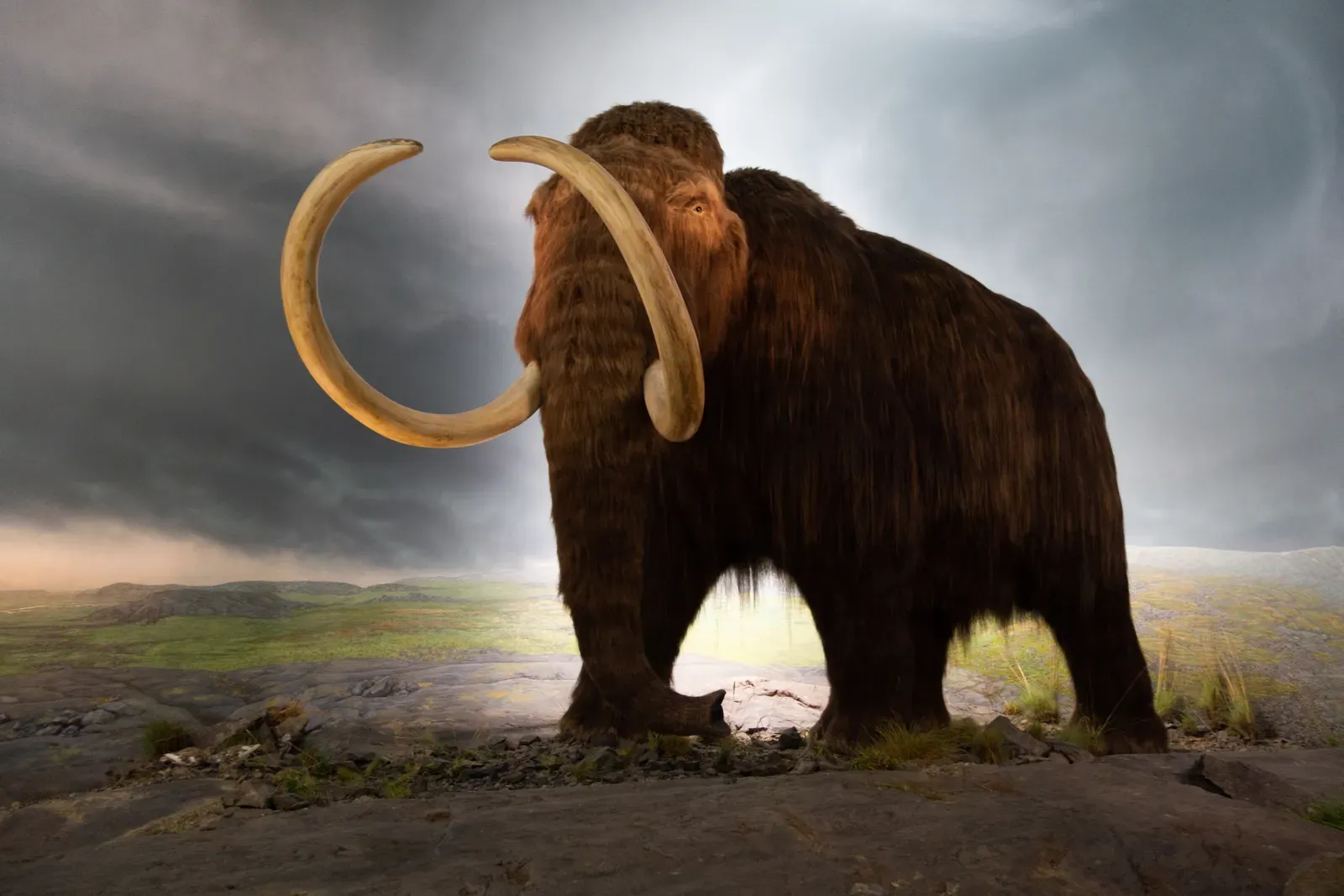
The woolly mammoth is one of the most famous extinct Ice Age megafauna. Standing 12 feet tall at the shoulders and weighing six to eight tons, it grazed the northern steppes of Ice Age North America using its colossal 15-foot curved tusks to dig under the snow for food and defend itself against predators. Let’s be real, there is nothing alive today that quite captures that kind of raw, ancient power.
Mammoths came to North America between 1.7 million and 1.2 million years ago. With their thick coat of hair, large fat reserves, and specially adapted blood, they were very well adapted to the cold. They were also very important to the survival of ancient humans throughout the Ice Age, their coats, meat, and bones providing valuable sources of warmth, food, and building materials. You could say the mammoth wasn’t just an animal. It was practically a hardware store for early humans.
The Mastodon: The Mammoth’s Often-Confused Cousin
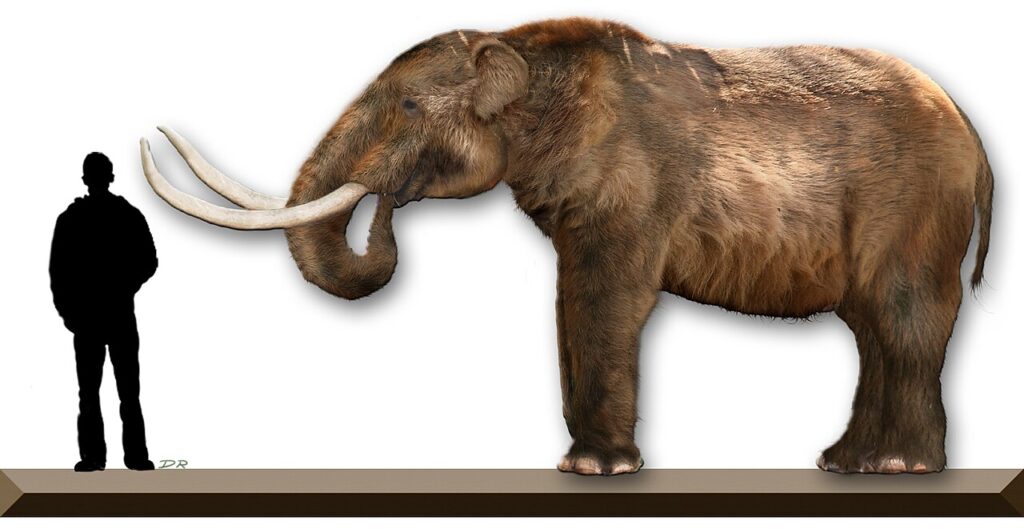
Mastodons and mammoths are often confused with each other, which is pretty understandable since they are both large, shaggy elephants living on the prehistoric plains of North America. Like woolly mammoths, mastodons also had thick coats of shaggy hair that kept them warm in Pleistocene North America. Here’s the thing, though. They were actually pretty different animals once you look closely.
Mastodons and mammoths were not the same animals. Mastodons were shorter and stockier than mammoths, with shorter, straighter tusks. The mastodon was most common in the Ice Age spruce forests of the eastern United States. They had cone-shaped teeth that they used for eating leaves off the tops of trees, and also had huge tusks that could grow to be up to 16 feet in length. A 16-foot tusk. That’s longer than most living rooms.
Smilodon: The Saber-Toothed Cat That Wasn’t a Tiger
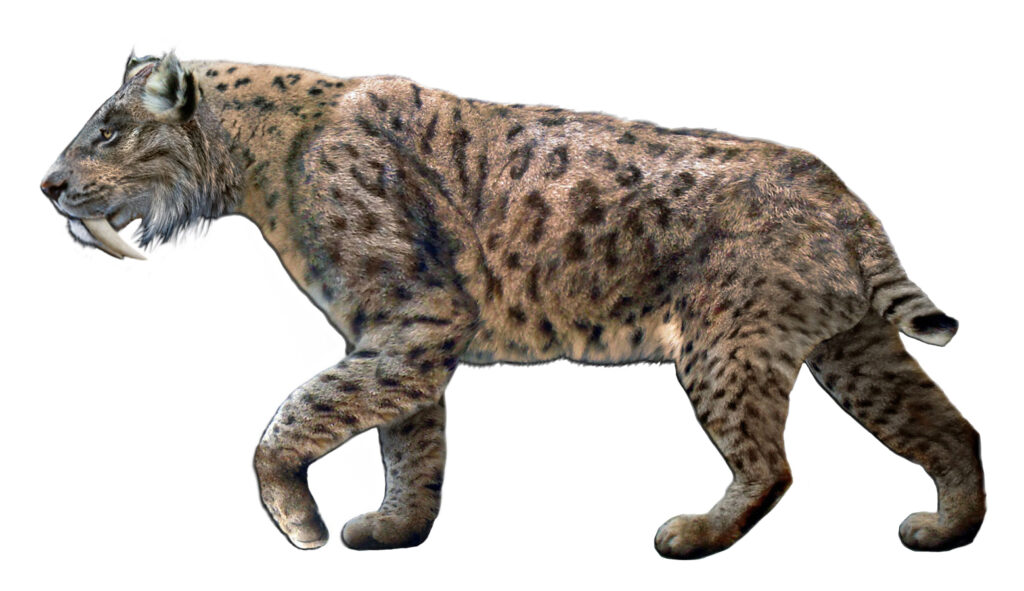
Smilodon is a genus of extinct felids. It is one of the best-known saber-toothed predators and prehistoric mammals. Although commonly known as the saber-toothed tiger, it was not closely related to the tiger or other modern cats, belonging to the extinct subfamily Machairodontinae. I know it sounds crazy, but the name “saber-toothed tiger” is basically a very old, very persistent case of mistaken identity.
The La Brea Tar Pits have given us incredible insights about this iconic Ice Age predator. More than 3,000 fossilized individuals have been pulled from the ooze, and their teeth have been a valuable source of information about their diets and lifestyle. Scientists have examined the wear patterns on their iconic canines to determine that they most likely fed primarily on smaller forest-dwelling animals like tapirs and deer, rather than massive prey on open plains as once thought. They were ambush predators, similar to many modern-day big cats.
The Giant Short-Faced Bear: Fastest and Most Fearsome
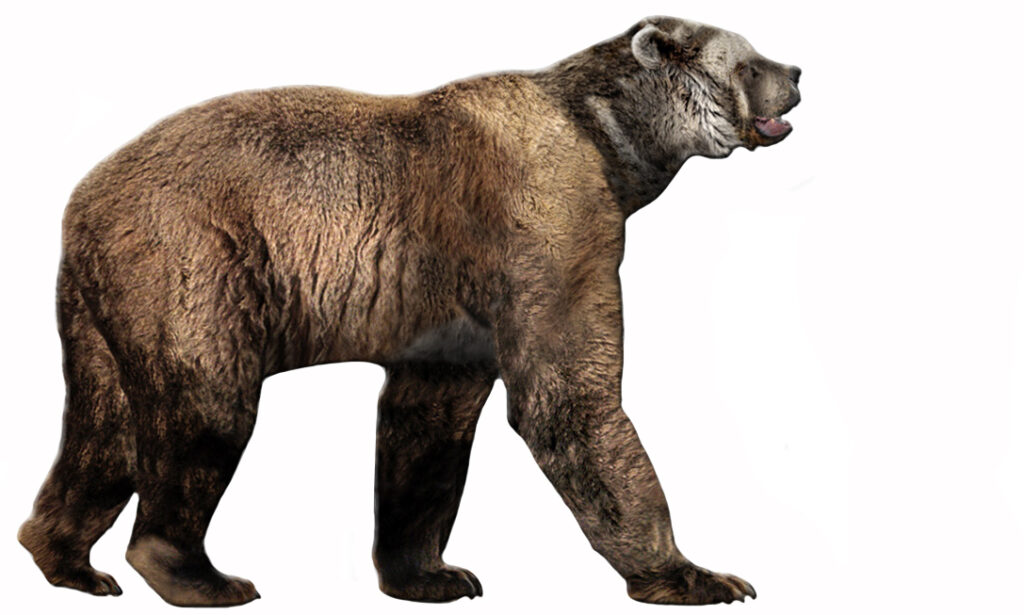
The giant short-faced bear was the largest carnivorous mammal to ever roam North America. Standing on its hind legs, an adult giant short-faced bear boasted a vertical reach of more than 14 feet. To put that in perspective, that’s taller than a standard one-story house. You would not want to cross paths with this creature on a morning hike.
To survive, these bears would have had to consume approximately 35 pounds of meat each day. At the height of its existence, short-faced bears were the most common bear found in North America. The most striking difference between modern North American bears and the giant short-faced bear were its long, lean, and muscular legs. Scientists believe those legs made it an exceptionally fast runner, perhaps the swiftest bear that has ever existed. A hungry, fast, 14-foot-tall bear. Sleep tight.
Dire Wolves, Ground Sloths, and Giants You Never Imagined
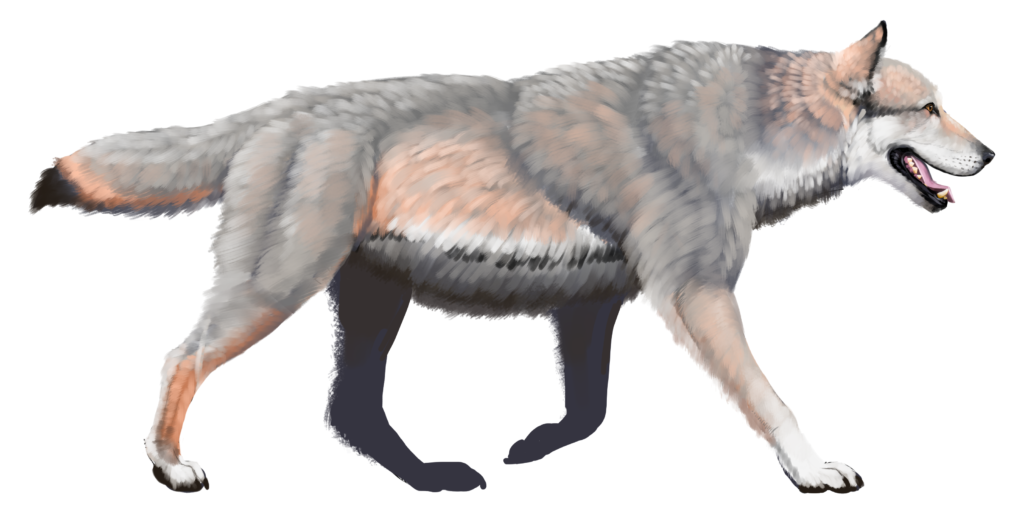
Dire wolves roamed every inch of North America from the frozen Canadian north down through Mexico and thrived in every imaginable ecosystem from boreal forests to grassland plains to tropical wetlands. Like gray wolves, dire wolves hunted in packs of 30 or more and fed on large prey like mammoths, giant sloths, and Ice Age horses. A pack of thirty. Let that image sit with you for a moment.
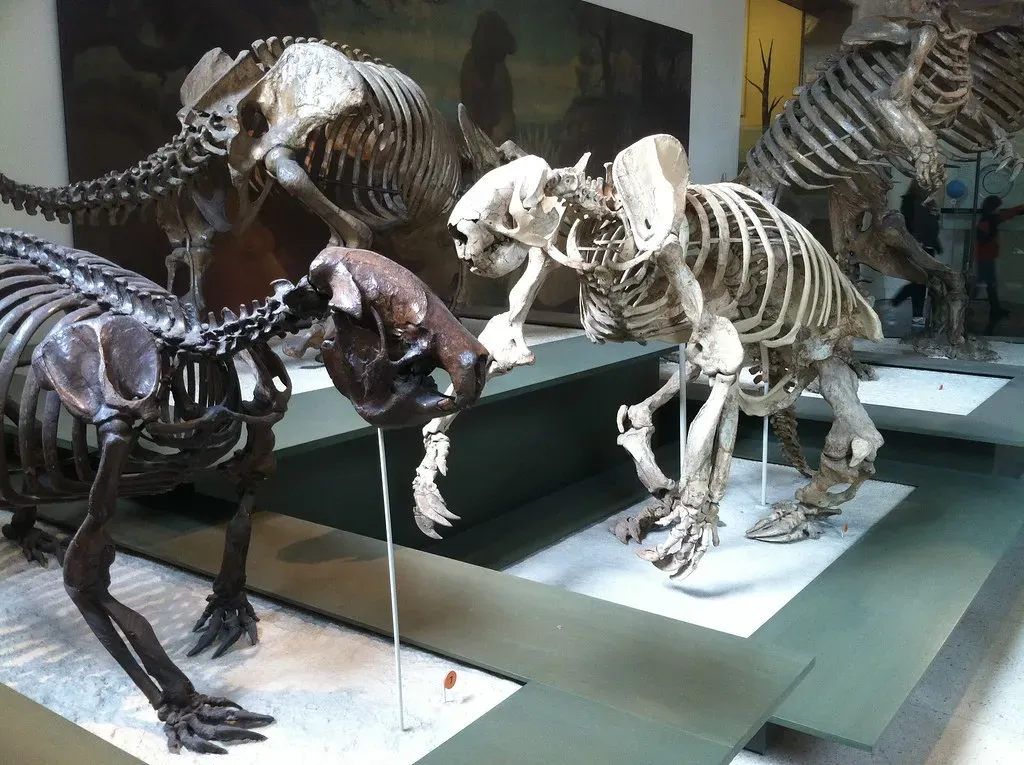
One famous giant sloth species was named for Thomas Jefferson, who initially believed that sloth fossils were a type of colossal cat he dubbed the Megalonyx, meaning “giant claw.” Like modern sloths, these huge ground sloths were probably slow, awkward walkers. Ground sloths also had elongated claws that they would have used to strip leaves and dig for roots. The giant beaver of North America grew over 2 meters in length and weighed roughly 90 to 125 kilograms, making it one of the largest rodents to ever exist. A beaver roughly the size of a black bear. Nature truly had no chill back then.
What Wiped Them Out? The Great Extinction Debate
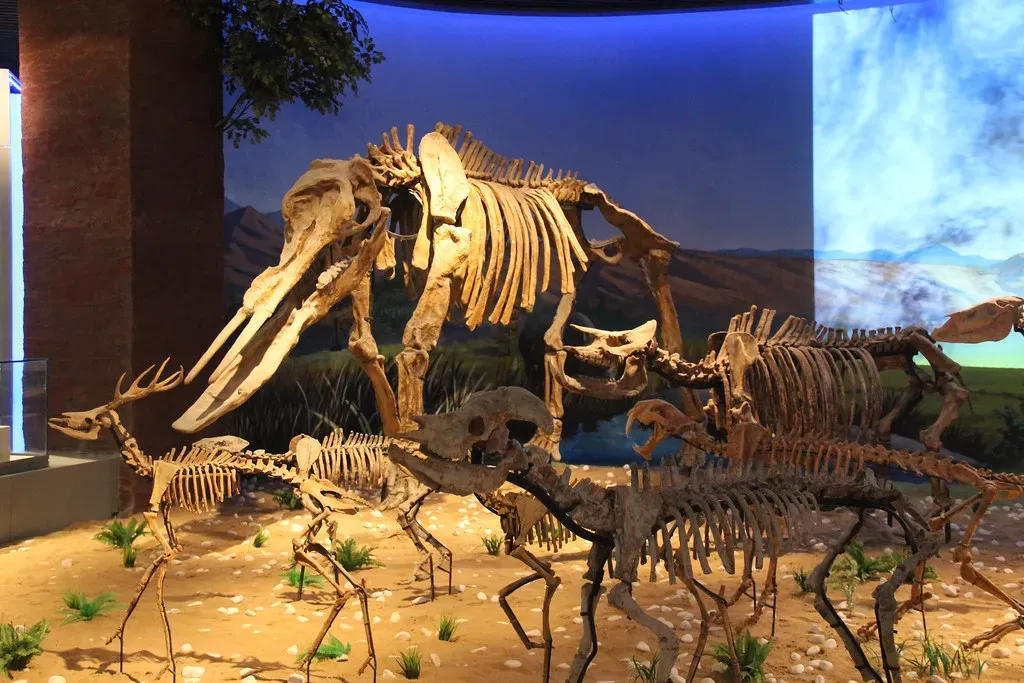
Around 12,700 years ago, North America lost 70 percent of its large mammals, a megafaunal extinction event paleontologists and archaeologists have been arguing over for more than half a century. It’s hard to say for sure what happened, but the debate is one of the most fascinating in all of science. Was it us? Was it the climate? Or was it something far stranger?
Most archaeologists blame over-hunting by paleo-humans, who would have encountered large prey animals unafraid of the hairless, two-legged newcomers. Others say that overkill of megafauna by humans was only one cause. The mass extinctions may have also been triggered by a sudden climatic shift that rapidly cooled the planet 12,800 years ago, known as the Younger Dryas, or animals could have been stricken with diseases carried by paleo-humans and their dogs. Still, the honest answer is that no single explanation fully satisfies everyone, and the argument rages on.
How Modern Science Is Unlocking Ancient Secrets

Recent years have seen the development of new biomolecular methods of archaeological exploration. Rather than heading out to excavate new sites, archaeologists are increasingly turning their attention to the scientific laboratory, using new techniques to probe existing material. It’s remarkable, really. You don’t always need a new discovery to learn something new. Sometimes the old bones just need a better question asked of them.
In 2025, scientists extracted and sequenced ancient RNA from 39,000-year-old woolly mammoth tissues, a breakthrough because RNA degrades much faster than DNA and almost never fossilizes. This marks one of the first successful recoveries of gene-expression material from deep time. RNA reveals physiology, gene regulation, and cellular activity that DNA alone cannot show. From fossils, scientists can hypothesize how a species looked and moved, how much the animals weighed, what they ate, if they lived in herds, and many other things. The giants are gone, but their secrets are still talking.
Conclusion
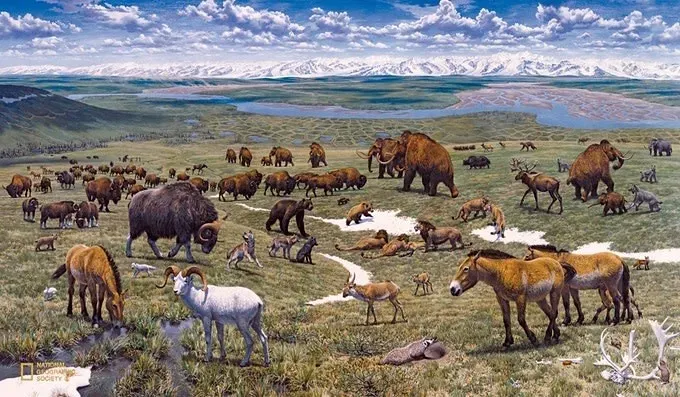
The story of North America’s lost giants is, at its heart, a story about the fragility and power of life itself. These were not weak or unlucky creatures. They dominated their world for millions of years, shaped entire ecosystems, and left behind bones that still stagger the imagination. Studying these ancient animals gives scientists important information that helps them understand the risks that today’s living animals face in our world.
There is something quietly humbling about standing in the same landscape where a 14-foot bear once prowled, or where herds of mammoths shook the earth with every step. The land looks ordinary now. It isn’t. Although we may never know exactly what caused the massive extinction of so many prehistoric behemoths, their existence and unlikely rapid demise reminds us of the importance of present conservation efforts. Today we can only catch a glimpse of what these giants were like, watching some of their lucky little cousins that still scurry across the lands. So next time you see a beaver, a bison, or even a coyote, think about what once walked beside their ancestors. The giants may be gone, but their shadow still falls across everything. What do you think ultimately sealed their fate – nature, or us?