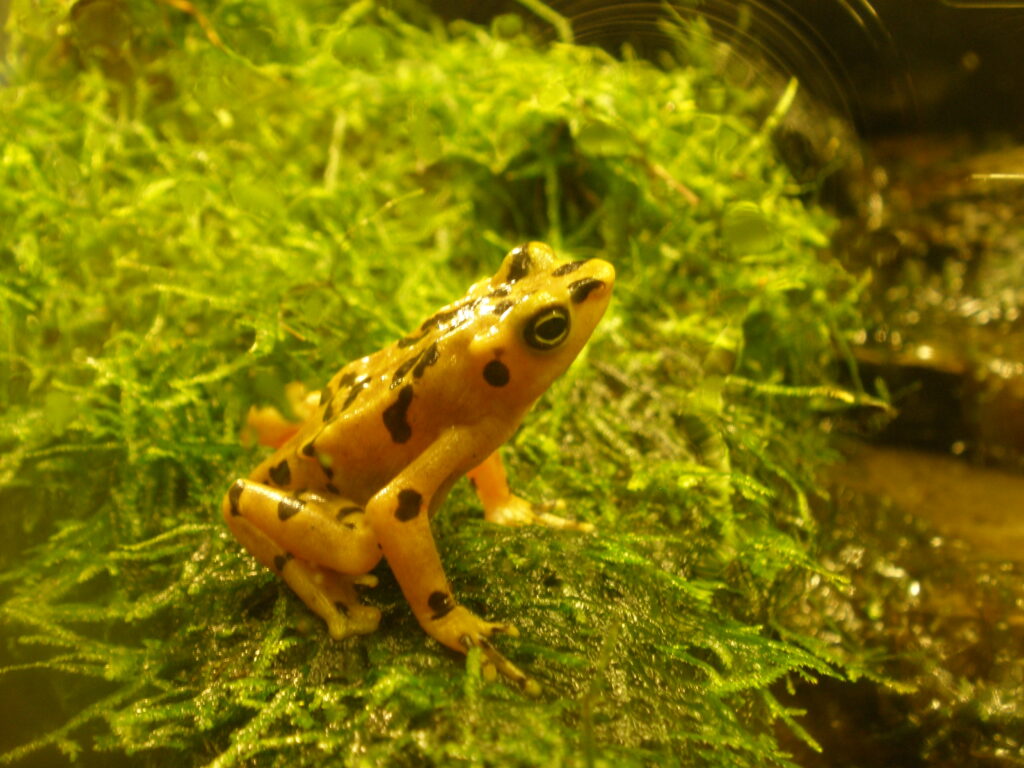
Panama – The vivid yellow Panamanian golden frog, a cherished national symbol, has not graced the wild streams of central Panama since 2009. A relentless fungal disease wiped out populations in their last refuge at El Valle de Anton five years earlier. Conservationists marked a turning point late last year by releasing 100 captive-bred frogs into monitored enclosures, testing strategies to revive the species amid lingering threats.
A Symbol Vanishes Overnight
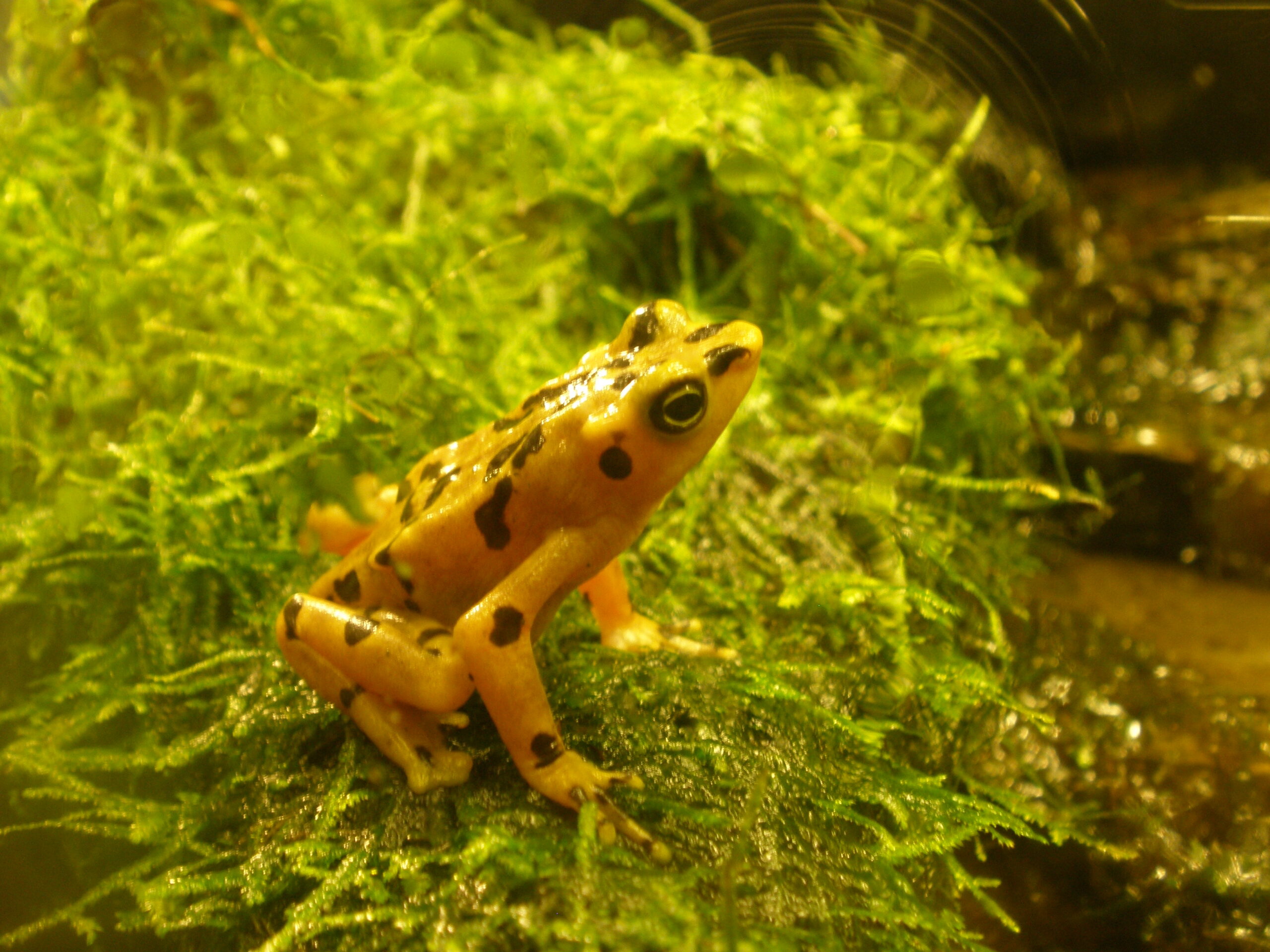
A Symbol Vanishes Overnight (Image Credits: Upload.wikimedia.org)
Researchers watched in dismay as chytridiomycosis, caused by the fungus Batrachochytrium dendrobatidis, barreled through Panama’s amphibian habitats. The pathogen arrived in lower Central America during the late 1980s, spreading via water, wildlife, and even human footwear. By 2004, it overwhelmed El Valle de Anton, the golden frog’s final holdout in the mountainous streams of central Panama.
Smithsonian scientists had forecasted the collapse based on the fungus’s advance pattern. The disease attacks amphibian skin, throwing off electrolyte balance and causing fatal heart failure. No confirmed sightings followed after 2009, rendering the species extinct in nature despite its cultural reverence in Panama.
Building an Ark in Captivity
Foreseeing disaster, teams launched the Panama Amphibian Rescue and Conservation Project in 2009. Partners including the Smithsonian Tropical Research Institute, Smithsonian’s National Zoo and Conservation Biology Institute, Cheyenne Mountain Zoo, and Zoo New England established breeding programs. They evacuated frogs before the fungus struck fully, nurturing generations in controlled environments.
These efforts preserved genetic diversity. Each golden frog packs potent skin toxins capable of killing over 1,000 mice, a defense dulled in captivity without wild prey. The project expanded to other species, achieving successful breeding for reintroduction candidates.
- Smithsonian Tropical Research Institute (STRI)
- Smithsonian’s National Zoo and Conservation Biology Institute (NZCBI)
- Cheyenne Mountain Zoo
- Zoo New England
- Panama’s National Secretary for Science, Technology and Innovation (SENACYT)
Into the Mesocosms: The Trial Begins
In August 2025, researchers placed 100 captive-bred golden frogs into soft-release pens called mesocosms – outdoor enclosures mimicking wild conditions with leaf litter and insects. Roberto Ibañez, STRI scientist and PARC director, led the effort alongside technicians like Jorge Guerrel and Orlando Garcés. The site lay in Panama’s central mountains where chytrid persists, allowing direct testing against the foe.
For 12 weeks, teams observed the frogs’ adaptation. Swabs tested for fungal loads, while diets shifted to wild insects to potentially restore toxins. Survivors transitioned to full freedom, a critical test of rewilding viability.
Facing the Fungus Head-On
Mortality hit hard: about 70 percent of the frogs succumbed to chytridiomycosis during the trial. Necropsies revealed infection patterns, yielding data on disease progression and toxin recovery. “This project was designed to see what would happen if we put these golden frogs back into a wild situation, just to kind of understand what are the disease dynamics, and how do these frogs regain their skin toxins,” said Brian Gratwicke, NZCBI conservation biologist.
Yet optimism endures. Models pinpoint “climatic refuges” – warmer spots tolerable for frogs but hostile to the fungus. Prior 2025 releases of species like lemur leaf frogs showed strong survival via acoustic monitoring, surpassing predictions.
Toward a Sustainable Return
“We provide care for some of the most endangered amphibians in Panama, and now we are entering a new phase of our work to study the science of rewilding,” Ibañez noted. Funding from the Bezos Earth Fund supports expanded trials under the Tropical Amphibian Research Initiative. Insights will guide releases in safer habitats, potentially restoring wild populations.
Key Takeaways
- 100 frogs entered mesocosms; 30 percent survived initial trial.
- Chytrid remains deadly, but data illuminates defenses like skin toxins.
- Climatic refuges offer promise for future sites.
This experiment signals progress against one of wildlife’s great pandemics, which has erased 90 amphibian species globally. As monitoring continues, the golden frog’s return could inspire recoveries worldwide. What do you think about these rewilding efforts? Tell us in the comments.