Sri Lanka – Deep within the lush rainforests of southwestern Sri Lanka, archaeologists uncovered remnants of a sophisticated hunting culture that thrived 48,000 years ago. Butchered bones of monkeys and squirrels in Fa-Hien Lena cave point to the use of bone-tipped arrows, marking the earliest known evidence of bow-and-arrow technology outside Africa. These finds challenge previous notions that dense tropical environments posed insurmountable barriers to early human expansion.
A Trove of Ancient Tools Emerges
A Trove of Ancient Tools Emerges (Image Credits: Upload.wikimedia.org)
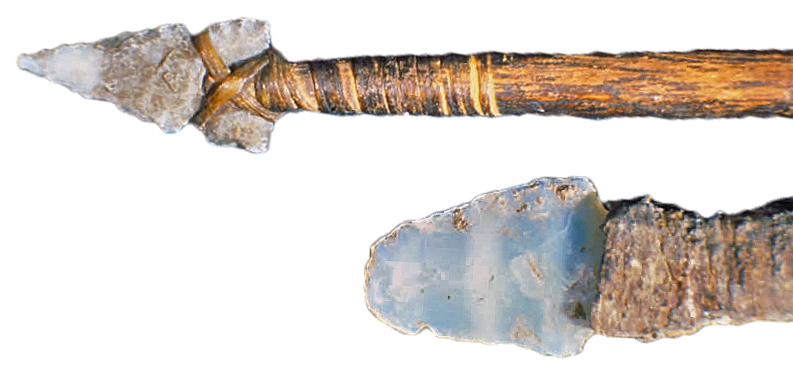
Excavations at Fa-Hien Lena cave, ongoing since the 1980s, yielded over 130 bone projectile points dating back 48,000 years. Researchers identified these small, lightweight artifacts as arrowheads, crafted primarily from the bones and teeth of monkeys and smaller mammals. Impact fractures and notches on the points suggested hafting to thin shafts for high-velocity propulsion.
Lead archaeologist Michelle Langley noted that the tools’ design ruled out spears or blow darts. “They are too small and light to have been spearheads… and too heavy and blunt to have been blow darts,” she explained. Additional discoveries included 29 bone implements like knives, scrapers, and awls, likely used for processing animal skins and plant fibers. A notched bone shuttle hinted at net-making for fishing or trapping.
Hunting Agile Prey in the Treetops
Butchered remains of semi-arboreal monkeys and giant squirrels dominated the faunal assemblage, indicating specialized predation strategies. Early humans targeted fast-moving, tree-dwelling species that spears could not easily reach. Bow-and-arrow systems allowed safer, longer-distance kills in the dense forest canopy.
Langley emphasized the suitability of this technology: “A spear isn’t particularly useful for catching a monkey or a squirrel in a forest… [Y]ou need something that’s swift and that can go high.” The cave layers spanned from 48,000 to 3,000 years ago, showing sustained occupation and adaptation.
- Monkey bones: Primary material for arrowheads, with cut marks from butchering.
- Squirrel remains: Evidence of diverse small-game hunting.
- Fish bones: Supplemented by possible netting techniques.
- Deer teeth: Used for awls and piercers.
Symbolic Artifacts and Social Complexity
Beyond hunting gear, the site revealed signs of cultural sophistication. Shell beads, sourced from coastal areas 20-30 kilometers away, suggested trade networks. Pigment nodules in red, yellow, and silver ochre, some drilled for stringing, pointed to ornamental practices.
Co-author Oshan Wedage highlighted the site’s importance: “Fa-Hien Lena has emerged as one of South Asia’s most important archaeological sites… preserving the remains of our species, their tools, and their prey in a tropical context.” These elements underscored a thriving community capable of both survival and expression.
Reshaping Views on Human Dispersal
The discoveries predated previous Eurasian bow-and-arrow evidence by over 16,000 years, aligning with South African finds from 64,000 years ago. They demonstrated Homo sapiens’ resilience during expansion into Asia around 70,000 years ago. Rainforests, once seen as migration hurdles, now appear as conquered frontiers.
Professor Michael Petraglia observed: “These findings provide some of the first detailed insights into how our species met the extreme adaptive challenges it encountered across tropical Asia during global human expansion.” No human remains surfaced, but the toolkit matched modern Homo sapiens capabilities.
| Hunting Method | Prey Suitability | Range/Advantage |
|---|---|---|
| Spear-throwing | Large ground animals | Short-range, high force |
| Bow-and-arrow | Agile arboreal prey | Long-range, precise velocity |
| Blow darts | Small birds/insects | Very light, poison-dependent |
Key Takeaways
- Fa-Hien Lena arrowheads represent the oldest bow-and-arrow use outside Africa at 48,000 years old.
- Crafted from prey bones, they enabled hunting of monkeys and squirrels in rainforests.
- Artifacts reveal trade, symbolism, and long-term adaptation in tropical environments.
This prehistoric innovation not only fueled survival but also propelled human conquest of diverse ecosystems. What strategies might early humans employ next in uncharted territories? Share your thoughts in the comments.