
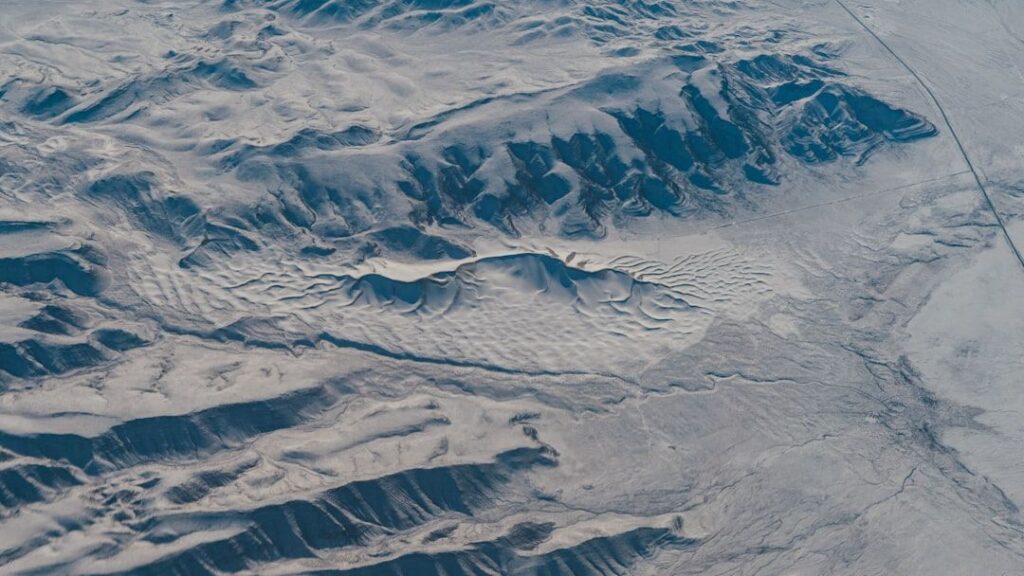
Picture yourself standing at the rim of the Grand Canyon, staring down at a mile of layered rock that stretches back nearly two billion years. Each stripe of color below you is a chapter in a story so vast, so staggering, that most people can’t fully wrap their minds around it. The planet beneath your feet is not merely old – it is ancient in a way that defies imagination, and it has been quietly recording its own history in stone since long before any creature with eyes existed to look at it.
Geology, at its heart, is detective work on a cosmic scale. When trying to understand the ancient history or “deep time” of our planet, we look to geology to tell us what the continents, oceans, and atmosphere were like – rocks hold the key to understanding our past. From tiny crystals no wider than a human hair to canyon walls stretching for miles, the Earth’s geological formations are its autobiography. Let’s dive in.
The Grand Canyon: A Mile-Deep Library of Earth’s History
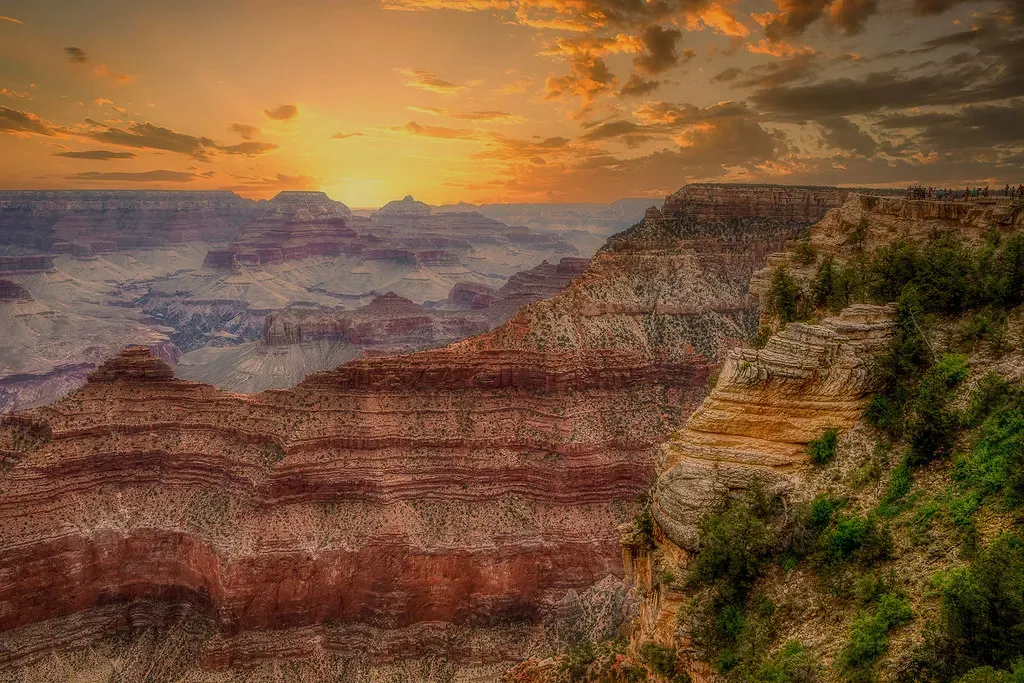
You have probably seen photographs of the Grand Canyon, but honestly, no image quite prepares you for the sheer geological drama of the place. The geology of the Grand Canyon area includes one of the most complete and studied sequences of rock on Earth. The nearly 40 major sedimentary rock layers exposed in the Grand Canyon range in age from about 200 million to nearly 2 billion years old, and most were deposited in warm, shallow seas and near ancient, long-gone sea shores in western North America.
As you move up toward the rim, the rocks become younger, meaning they were added more recently, and each layer is a page of the story describing life at that time. Down at the very bottom, the dark Vishnu Schist takes you back almost two billion years in one glance. The Paleozoic strata contain many fossils that help scientists learn about the geologic history of North America, and most of the fossils are ocean-dwelling creatures, telling us that the area now in the middle of Arizona was once a sea. There is something almost surreal about that.
Zircon Crystals: The Tiniest, Toughest Time Capsules on Earth
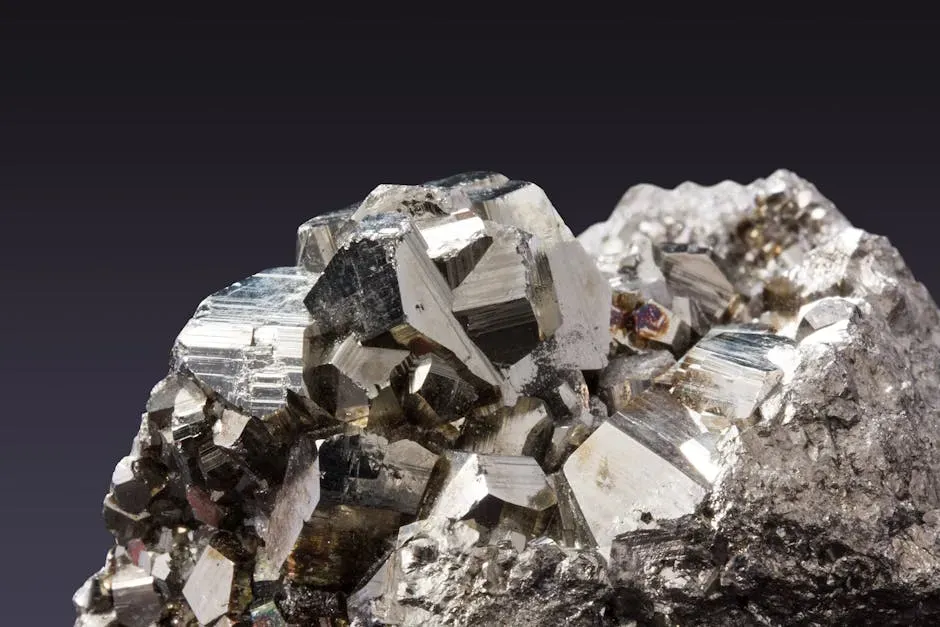
Here’s the thing about zircon – it is almost absurdly small and almost impossibly old at the same time. Zircons are minerals that typically exist as tiny crystals in rocks, but they have a big story to tell. A few zircon crystals have been found that are the oldest Earth materials ever discovered, and they reveal clues about periods of geological time for which there is no direct evidence.
These minerals not only survive geological processes such as melting, weathering, and chemical attack, which can destroy rocks and other minerals, but they record each event as a ring of new growth. Consequently, zircons can form a series of growth rings over time, much like tree rings. In recent years, geologists have figured out how to determine the age of each microscopic growth ring in a zircon. Think about that for a moment – a crystal barely the width of a human hair, carrying ring-by-ring evidence of mountain-building events that happened billions of years ago. In northwest Australia’s red sediment, a geological mystery hides in the form of ancient crystals of the hard mineral zircon, some of which are 4.4 billion years old and were formed before the Earth’s crust formed.
Banded Iron Formations: Stripes That Tell the Story of Our Atmosphere
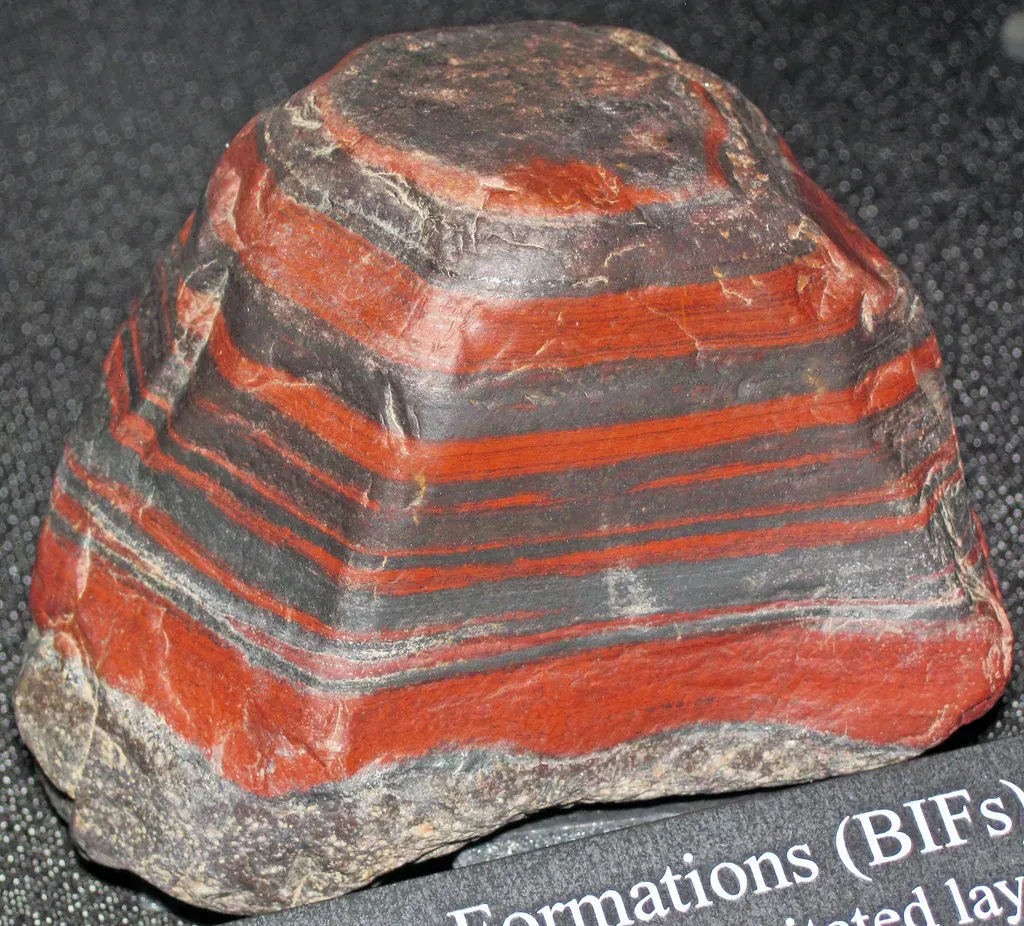
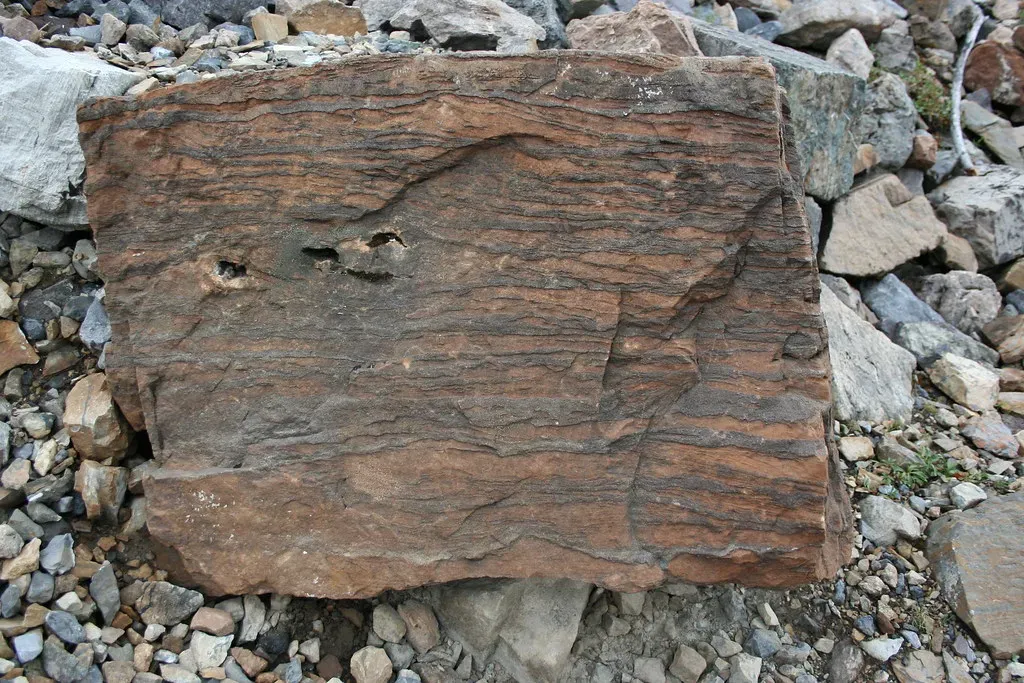
If you’ve ever seen a banded iron formation up close, you’ll understand why geologists get emotional about rocks. Banded Iron Formations, or BIFs, are one of Earth’s oldest and most intriguing geological records, providing a fascinating window into the planet’s early atmosphere, oceans, and the dawn of life. Formed between 3.8 and 1.8 billion years ago during the Archean and Proterozoic eons, BIFs are known for their distinct alternating layers of iron-rich minerals and chert or silica.
A nearly 3-billion-year-old banded iron formation from Canada shows that the atmosphere and ocean once had no oxygen. Photosynthetic organisms were making oxygen, but it reacted with the iron dissolved in seawater to form iron oxide minerals on the ocean floor, creating banded iron formations. These striped rocks are essentially nature’s own chemistry diary. BIFs thus serve as a geological record of one of Earth’s most critical transitions: the rise of oxygenic photosynthesis and the gradual oxygenation of the atmosphere, paving the way for more complex life forms. You could say that without these formations, you literally would not be breathing today.
Greenland’s Ancient Rocks and the Mystery of Earth’s Magnetic Field
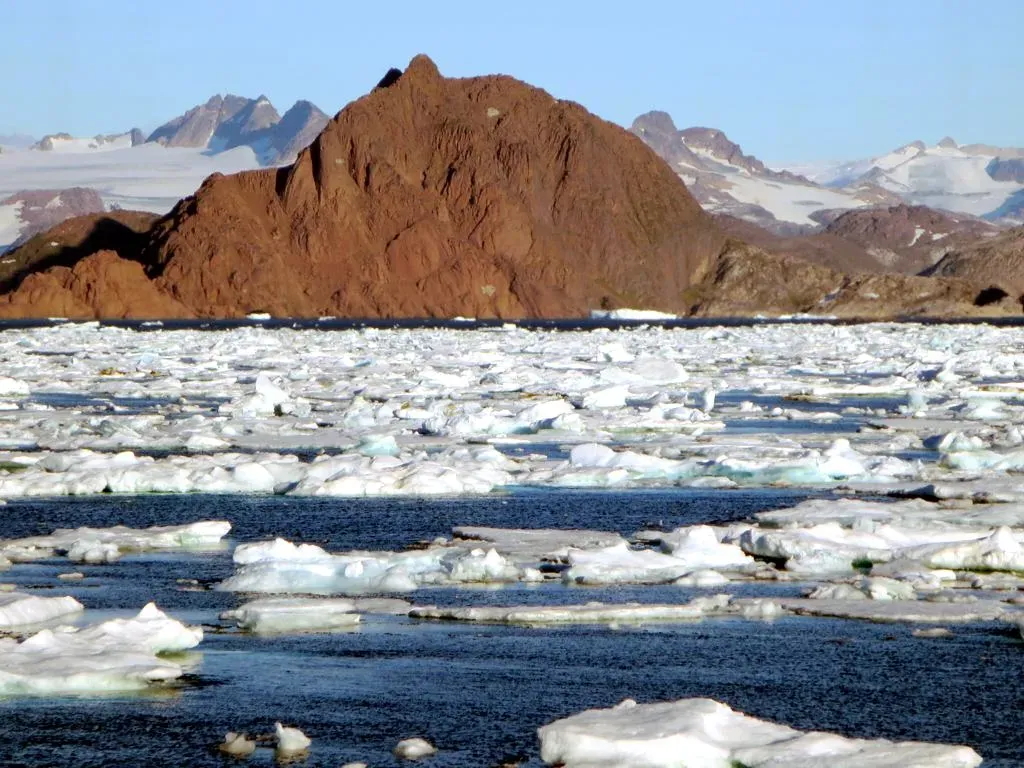
When you think about the oldest intact rocks on Earth, your mind might jump to ancient deserts or deep jungle outcrops – but some of the most profound geological time capsules are buried under ice in Greenland. Geologists at MIT and Oxford University have uncovered ancient rocks in Greenland that bear the oldest remnants of Earth’s early magnetic field. The rocks appear to be exceptionally pristine, having preserved their properties for billions of years, and the researchers determined that the rocks are about 3.7 billion years old.
The researchers set off on an expedition to the Isua Supracrustal Belt, a 20-mile stretch of exposed rock formations surrounded by towering ice sheets in the southwest of Greenland. There, scientists have discovered the oldest preserved rocks on Earth, which have been extensively studied in hopes of answering a slew of scientific questions about Earth’s ancient conditions. What makes this especially remarkable is that these rocks survived not just time, but multiple intense geological events. The team’s experiments showed that the rocks retained the ancient field despite having undergone two subsequent thermal events – any extreme thermal event, such as a tectonic shake-up of the subsurface or hydrothermal eruptions, could potentially heat up and erase a rock’s magnetic field.
Sedimentary Rock Layers and the Art of Reading Ancient Environments
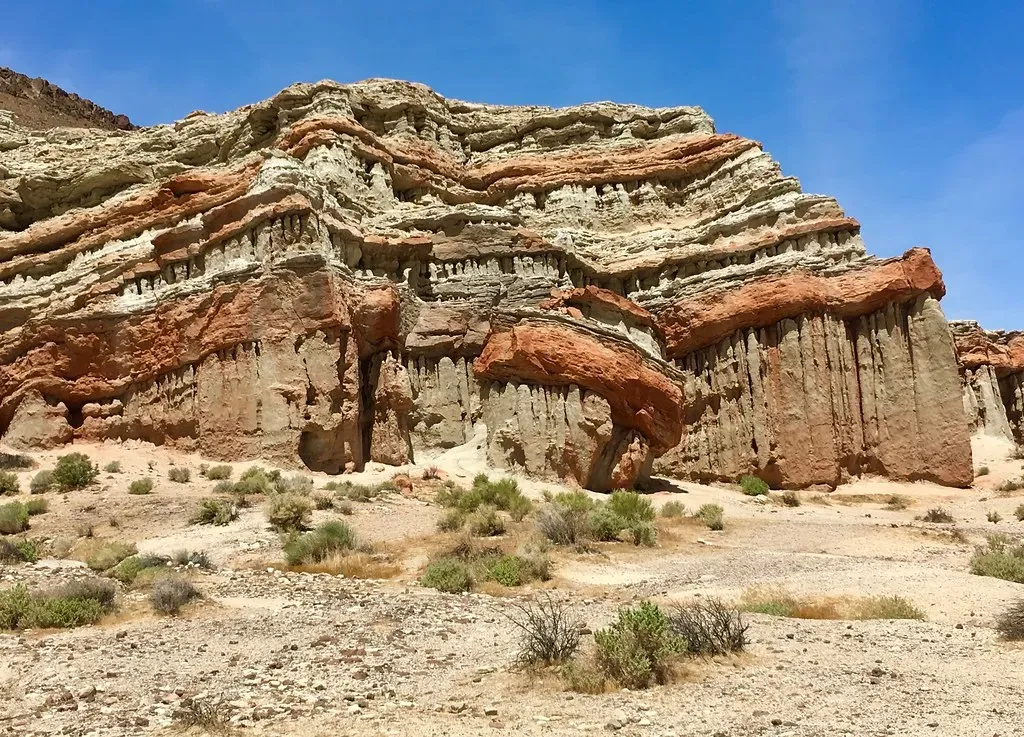
Sedimentary rocks are arguably the most underrated geological storytellers. They don’t get the glamour of volcanoes or the mystique of crystals, but I think they deserve far more credit. Earth scientists use the structure, sequence, and properties of rocks, sediments, and fossils, as well as the locations of current and past ocean basins, lakes, and rivers, to reconstruct events in Earth’s planetary history. Rock layers show the sequence of geological events, and the presence and amount of radioactive elements in rocks make it possible to determine their ages.
Sedimentary rocks are produced by breaking apart previously-existing rocks and transporting these fragments by wind, water, or ice, to later deposit them. The environment in which sediment gets deposited will leave a characteristic set of associations of sedimentary rocks and sedimentary structures. By observations of modern depositional settings, we can interpret ancient conditions by their sedimentary rocks and sedimentary structures. It is a bit like reading footprints in sand, except these footprints are hundreds of millions of years old. The rock record reveals that events on Earth can be catastrophic, occurring over hours to years, or gradual, occurring over thousands to millions of years.
Supercontinents and Plate Tectonics: When Rocks Reveal Moving Continents
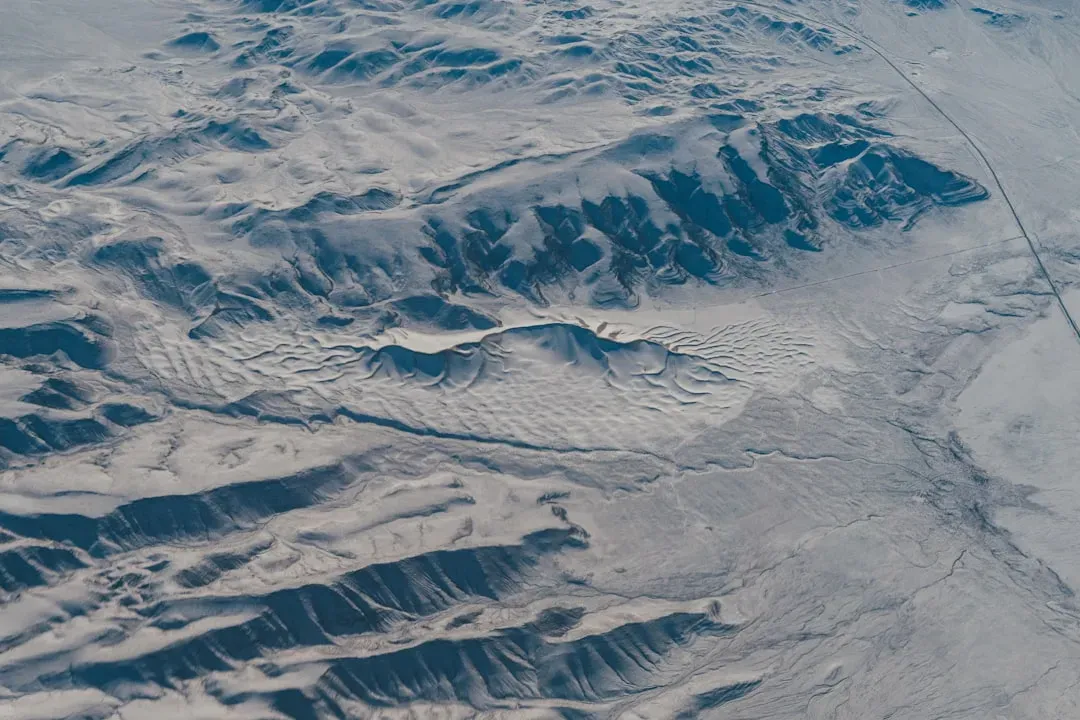
Here is something that genuinely blows my mind: the continents you see on a modern map have been rearranged multiple times over the history of the planet, and you can read that entire reshuffling story in the rocks. As the surface continually reshaped itself over hundreds of millions of years, continents formed and broke apart, and migrated across the surface, occasionally combining to form a supercontinent. Roughly 750 million years ago, the earliest-known supercontinent Rodinia began to break apart. The continents later recombined to form Pannotia, 600 to 540 million years ago, then finally Pangaea, which broke apart 200 million years ago.
The location of certain rocks at the time of their formation can be determined by looking at their “frozen in” signature of the Earth’s magnetic field. This is a staggering concept. Rocks essentially lock in a compass reading from the moment they cool, forever recording where they sat on the globe at that instant. It is extremely difficult to figure out what the world looked like in the past, particularly because the seafloor doesn’t last very long – it is always being recycled into the deep Earth at subduction zones, meaning we don’t actually have any plates as old as a billion years. Yet scientists piece it all together anyway, using every clue the rocks leave behind.
The Rock Record and the Story of Ancient Life
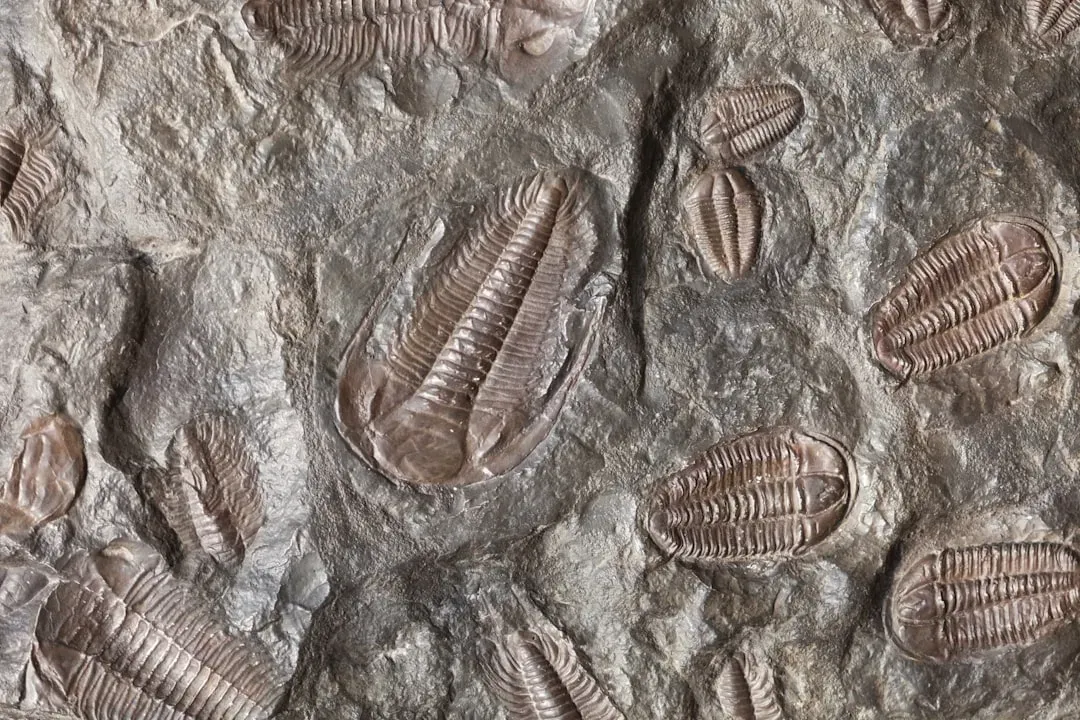
Geological formations don’t just hold chemical clues – they are also graveyards and nurseries of life itself. The earliest undisputed evidence of life on Earth dates at least from 3.5 billion years ago, during the Eoarchean Era, after a geological crust started to solidify following the earlier molten Hadean eon. That’s not just old – that’s almost incomprehensibly ancient, closer in time to the formation of the planet than to us today.
Within rocks, fossils are the remains of ancient living things that existed when those rocks were being produced. The rock record does not merely record environments of the past – it records the fact that those environments have changed radically over the vast scale of deep time. The Grand Canyon alone reveals trilobites that crawled in ancient seas, some of the oldest fossils in the Grand Canyon’s fossil record. These sea creatures, related to insects and crustaceans, roamed a shallow ocean between 525 to 505 million years ago searching for dead organic material to eat. Each layer introduces a new cast of creatures, a new climate, a new world entirely.
Conclusion: Reading the Earth’s Oldest Autobiography
Every mountain range, every canyon wall, every microscopic crystal you encounter is the planet narrating its own extraordinary story. Geological formations are not passive scenery – they are active archives, patient and permanent in a way that no human institution will ever be. Rocks hold the key to understanding our past, and as the science of geology grows more sophisticated, we find ourselves reading those pages with ever-greater clarity.
Understanding Earth’s age is fundamental to many scientific disciplines, including geology, paleontology, and evolutionary biology. It provides a framework for understanding the history of our planet, the evolution of life, and the processes that have shaped the Earth’s surface. There is something deeply humbling about standing on ancient rock and realizing that you are, yourself, one of the most recent footnotes in a four-and-a-half-billion-year saga. The Earth has been writing its story long before we arrived, and it will keep writing long after we are gone. The real question is: how much of it will you take the time to actually read?
What geological formation has surprised you the most? Drop your thoughts in the comments – we’d love to know.