
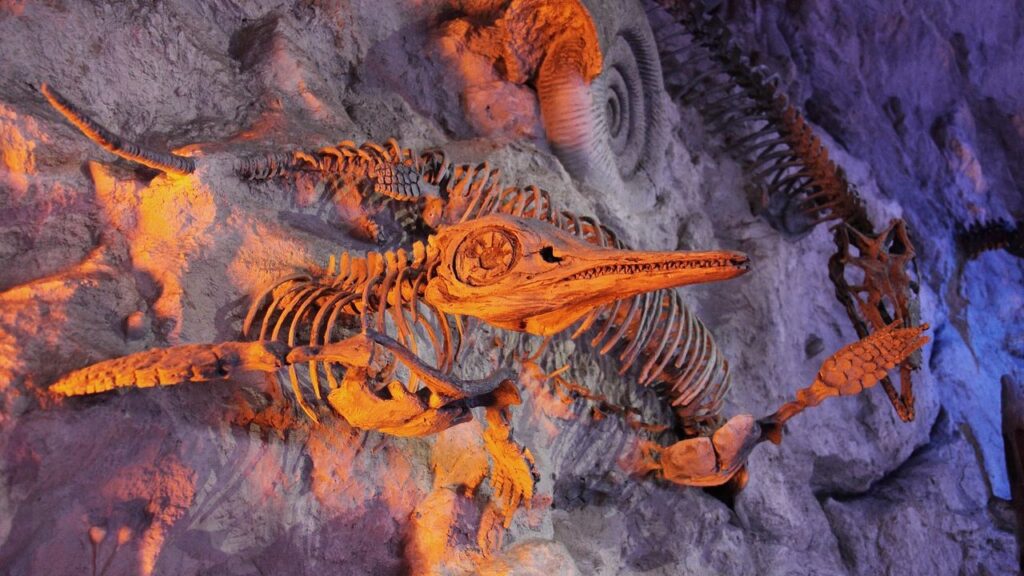
There is something deeply unsettling, in the best possible way, about the idea that the ocean you swim in today is only the latest chapter of a story stretching back hundreds of millions of years. Ancient seas were not tranquil, coral-dotted postcards. They were violent, alien, incomprehensible worlds. Colossal predators, seven-story food chains, amphibians the size of crocodiles roaming shallow bays after the worst extinction in Earth’s history. The picture we once had of prehistoric oceans was already remarkable. Then paleontologists started digging.
Piece by piece, bone by bone, the story keeps getting stranger. Some of these discoveries came from amateur fossil hunters on a casual beach walk. Others came from dusty museum drawers, ignored for decades. A few rewrote everything in a single afternoon. Let’s dive in.
The Largest Marine Reptile That Ever Lived Was Found by an 11-Year-Old Girl
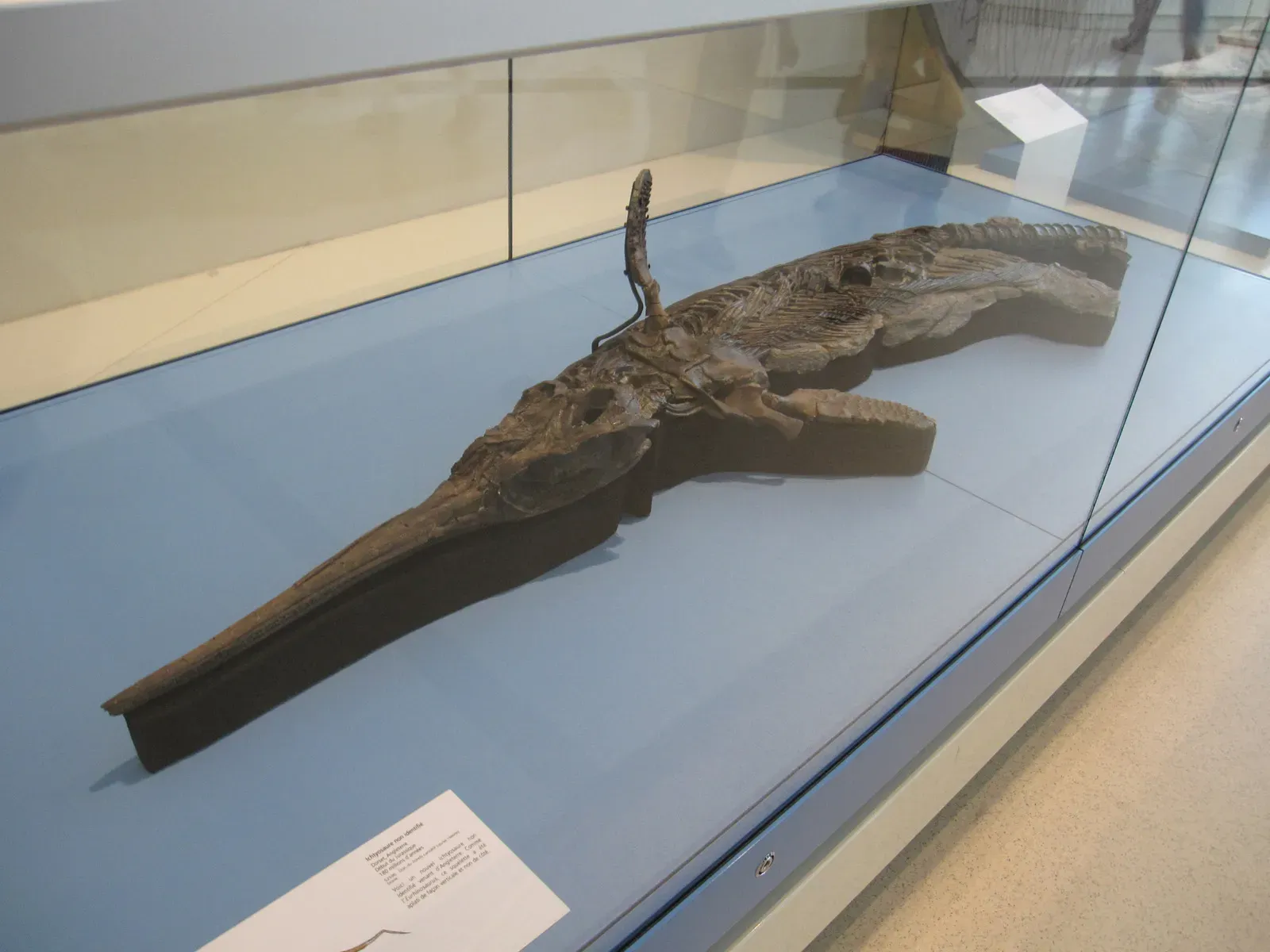
Uploaded by FunkMonk, CC BY-SA 2.0)
Honestly, if you needed one story to prove that science doesn’t belong exclusively to labs and universities, this is it. In May 2020, an eleven-year-old named Ruby Reynolds was fossil hunting on a beach at Blue Anchor in Somerset, England, when she and her father Justin spotted something remarkable. Ruby and her father drove to Blue Anchor, a seaside village in Somerset, to hunt for fossils along the beach, where they found a piece of fossilized bone at the top of the beach that was bigger than any piece of bone Justin had ever found before.
That chunk of bone turned out to be part of a jawbone belonging to a creature now named Ichthyotitan severnensis, or “giant fish lizard of the Severn.” Researchers described this new species of ichthyosaur as roughly 82 feet long, which is twice the length of a school bus. While the rest of the skeleton remains missing, comparisons of the jaw bones with other ichthyosaurs suggest Ichthyotitan’s size was as much as 25 meters long, which would make it not only the biggest ichthyosaur ever known, but also the largest marine reptile, measuring around the same length as the average blue whale.
Further investigation of the bones confirmed the ichthyosaur origin and revealed that the creature was still growing at the time of its death, with anomalous bone growth hinting at developmental strategies now lost to deep time that likely allowed late Triassic ichthyosaurs to reach the known biological limits of vertebrates in terms of size. Think about that. It hadn’t even finished growing.
Sea Monsters That Ruled the Rivers: Mosasaurs Were Not Who We Thought They Were
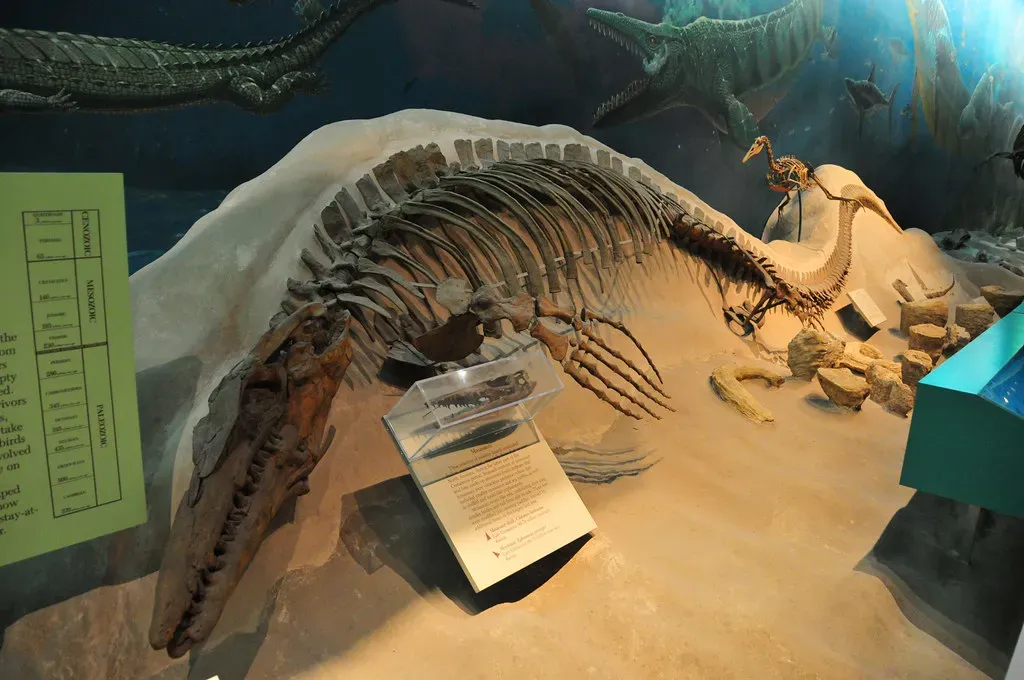
Here’s the thing about mosasaurs. You probably picture them the way Jurassic World depicted them, massive and terrifying, erupting from the ocean to swallow great white sharks whole. Nearly 70 million years ago, mosasaurs were the stuff of nightmares, with multiple species of the apex marine reptiles living during the Late Cretaceous, often growing anywhere from 30 to 40 feet long. Strictly ocean creatures, everyone assumed. Everyone was wrong.
Evidence from a single fossil tooth now shows that some mosasaurs also lived in freshwater rivers during the final chapter of their existence, just before they went extinct 66 million years ago, a discovery made by an international research team led by scientists at Uppsala University, who analyzed the chemical makeup of a mosasaur tooth found in North Dakota. The tooth was discovered in 2022 in a river deposit alongside fossils from very different creatures, including a tooth from Tyrannosaurus rex and a jawbone from a crocodile-like reptile, raising the intriguing question of how a giant marine reptile ended up in the same freshwater setting as land dinosaurs and river-dwelling crocodilians.
Many mosasaurs show low carbon values because they hunted deep in the ocean, but the North Dakota tooth had unusually high carbon values, higher than those of known mosasaurs, dinosaurs, or crocodiles, which suggests the animal stayed in shallow water and may even have fed on animals that drowned in rivers, possibly including dinosaurs. That last detail is genuinely wild to sit with.
A 47-Year-Old Fossil Hiding a Brand New Jurassic Sea Monster
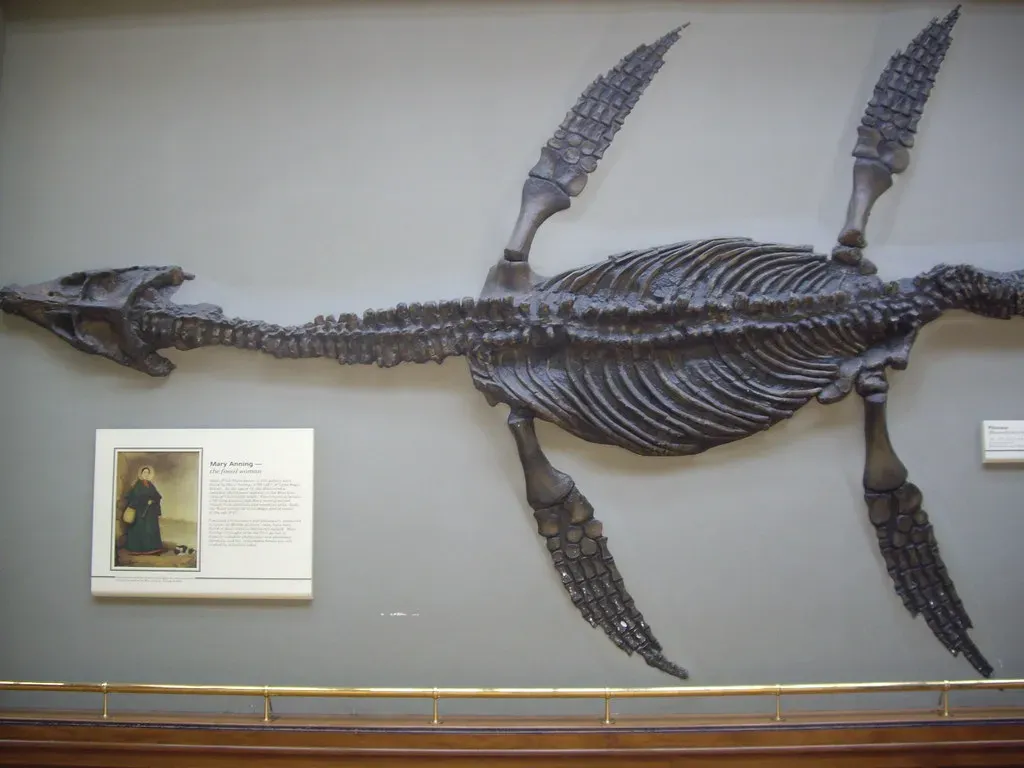
Sometimes the most jaw-dropping discoveries aren’t found in the field at all. They’re already sitting in museum storage, waiting for someone to look again. A new long-necked marine reptile, Plesionectes longicollum, was identified from a decades-old fossil found in Germany’s Posidonia Shale, with the remarkably preserved specimen rewriting part of the Jurassic marine story. The fossil had been collected nearly half a century earlier and simply hadn’t been given the attention it deserved.
Paleontologists identified a new species of ancient marine reptile from Germany’s world-renowned Posidonia Shale fossil beds, expanding our understanding of prehistoric ocean ecosystems that existed nearly 183 million years ago, with the newly classified species representing a previously unknown type of plesiosauroid, the group of long-necked marine reptiles that inhabited Earth’s oceans during the age of dinosaurs. The early Toarcian period when this animal lived was marked by significant environmental changes, including a major oceanic anoxic event that affected marine life worldwide. The idea that life was not just surviving but diversifying during a period of oceanic chaos is remarkable.
Australia’s Lost Fossils and the Sea Monsters After the Great Dying
Uploaded by FunkMonk, CC BY 2.0)
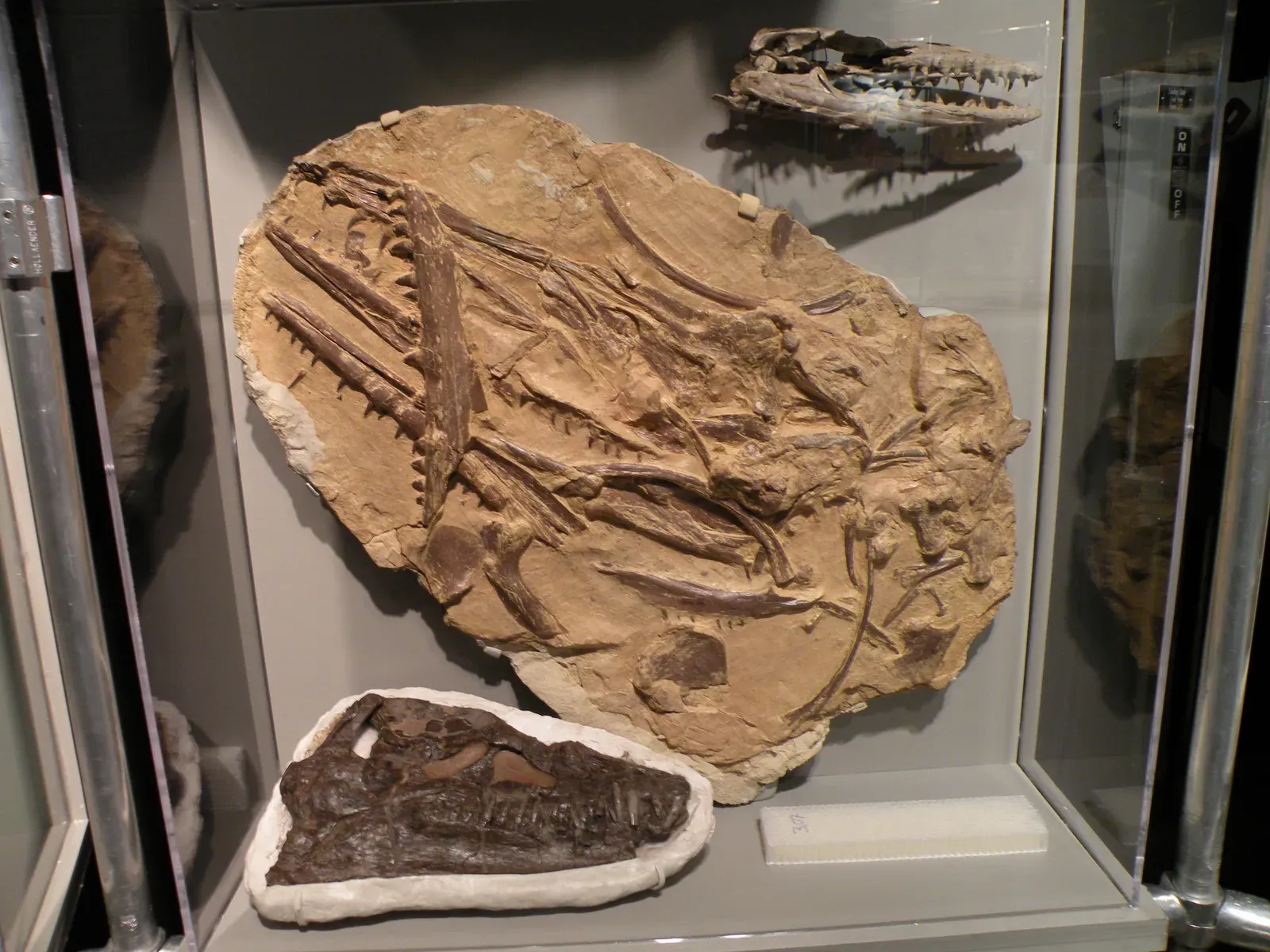
The end-Permian mass extinction was, without question, the worst catastrophe life on Earth has ever survived. The end-Permian mass extinction, the most devastating die-off in Earth’s history, struck about 252 million years ago and was followed by extreme global warming, after which modern-style marine ecosystems began to take shape, with the earliest sea-going tetrapods including amphibians and reptiles emerging and quickly becoming dominant aquatic apex predators. For decades, scientists had only a northern hemisphere view of this recovery.
A lost cache of 250-million-year-old fossils from Australia has rewritten part of the story of life after Earth’s worst mass extinction, with researchers uncovering evidence of a surprisingly diverse community of early ocean predators. Even more surprising was the global reach these animals demonstrated. Aphaneramma fossils have been discovered in rocks of similar age in Svalbard in the Scandinavian Arctic, the Russian Far East, Pakistan, and Madagascar, suggesting that some of the earliest Mesozoic marine tetrapods expanded quickly into multiple ecological roles and spread widely across the planet, possibly traveling along the coastlines of interconnected supercontinents.
Prehistoric Oceans Once Had a Seventh Trophic Level No Modern Sea Can Match
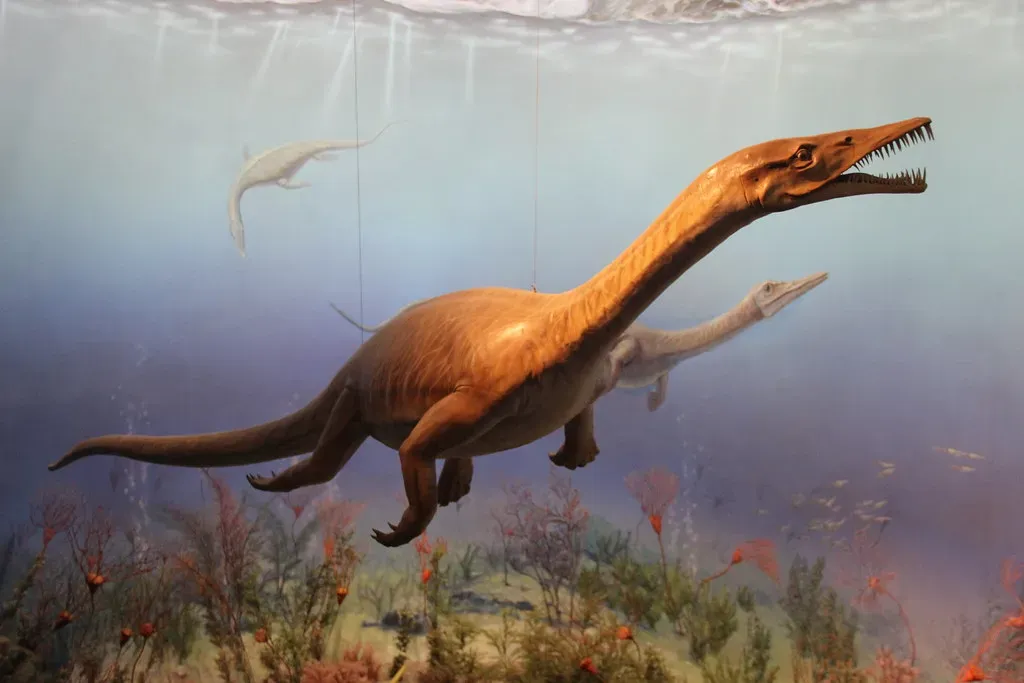
You might think the modern ocean is complex. You’d be underselling ancient ones considerably. Scientists reconstructed a 130-million-year-old marine ecosystem from Colombia and found predators operating at a food-chain level higher than any seen today, with the ancient seas bursting with life, from giant reptiles to rich invertebrate communities. In today’s world, killer whales and great white sharks represent the summit of oceanic food chains. In Colombia’s ancient Paja sea, something sat above even that.
According to the research, this prehistoric sea was filled with enormous marine reptiles, some growing longer than 10 meters, that occupied a previously unseen seventh level of the food chain. In today’s oceans, food chains typically reach only six levels, with animals such as killer whales and great white sharks sitting at the top, making the discovery of predators operating at a seventh trophic level highlight just how rich and complex the Paja ecosystem once was, while also offering rare insight into a deep evolutionary struggle where predators and prey continuously adapted in response to one another. I think about this like a chess game played on a board too big for any modern species to even understand.
The Paja Formation dates back to the Mesozoic era, shaped by rising sea levels and warmer global temperatures, with these conditions fueling a surge in marine biodiversity and supporting plesiosaurs, ichthyosaurs, and large numbers of invertebrates, creating one of the most intricate marine food webs ever identified.
The Elasmosaur That Hunted from Above and Baffled Scientists for Decades
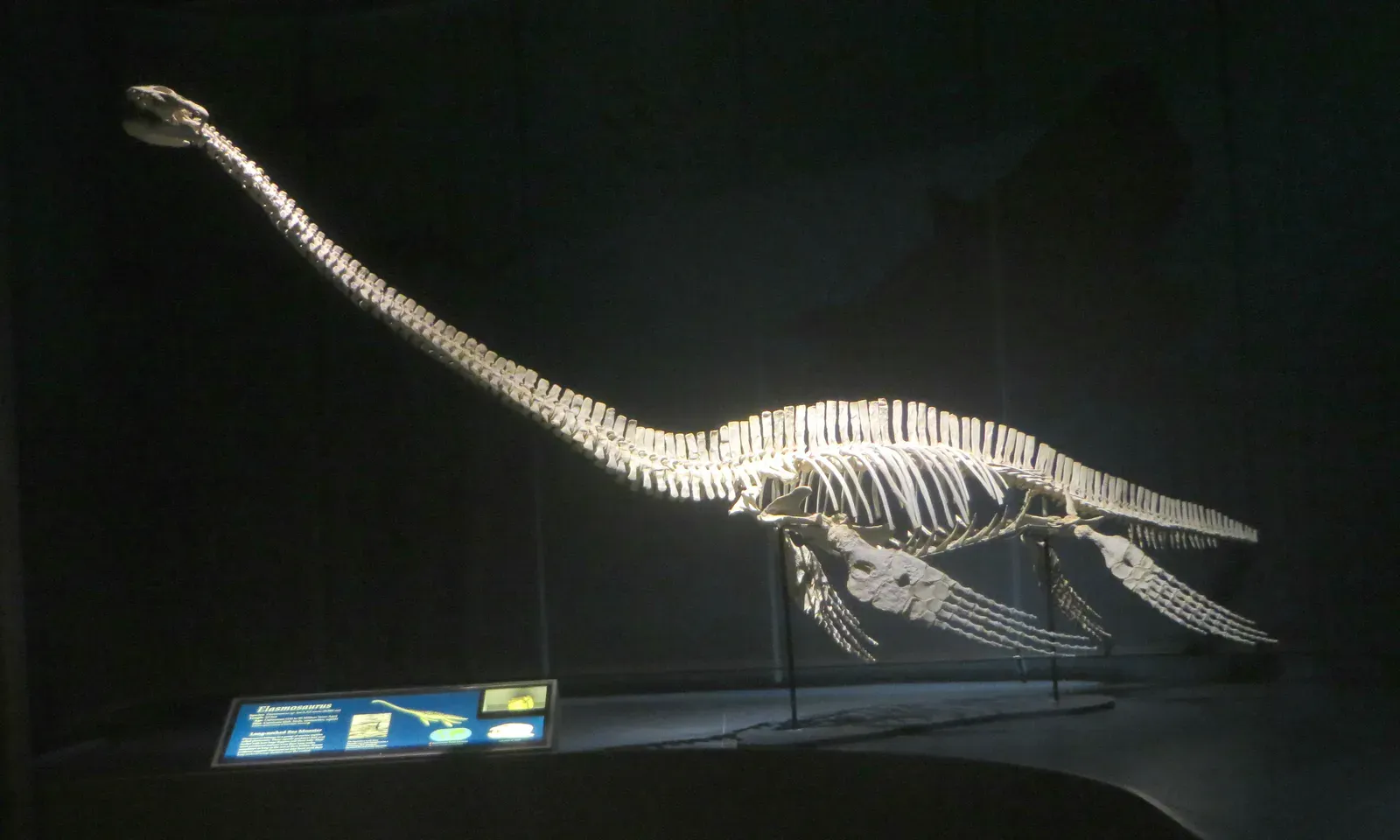
Off the coast of Vancouver Island, Canada, something enormous swam the Late Cretaceous seas roughly 85 million years ago. A prehistoric sea monster never before known to man was hunting prey in North America 85 million years ago, with the long-necked creature likely measuring about 39 feet and having heavy, sharp teeth that were ideal for crushing ammonite shells, while dozens of well-preserved cervical vertebrae indicate at least 50 bones in the neck. Fifty neck bones. For perspective, you have seven.
Traskasaura sandrae had a strange mix of primitive and derived traits unlike any other elasmosaur, and its unique adaptations allowed it to hunt prey from above, making it the first of the plesiosaur taxa known to do so. The first specimen was unearthed in 1988 in the Haslam Formation on Vancouver Island, formally described by scientists in 2002, and dates back to between 86 and 83 million years ago, with other fossils found in the same region including a right humerus and an excellently preserved juvenile skeleton. The mystery surrounding this creature’s true identity persisted for decades, which is a reminder that naming a fossil and understanding it are very different things.
A 462-Million-Year-Old Fossil Trove Preserved the Guts, Eyes, and Brains of Ancient Sea Creatures
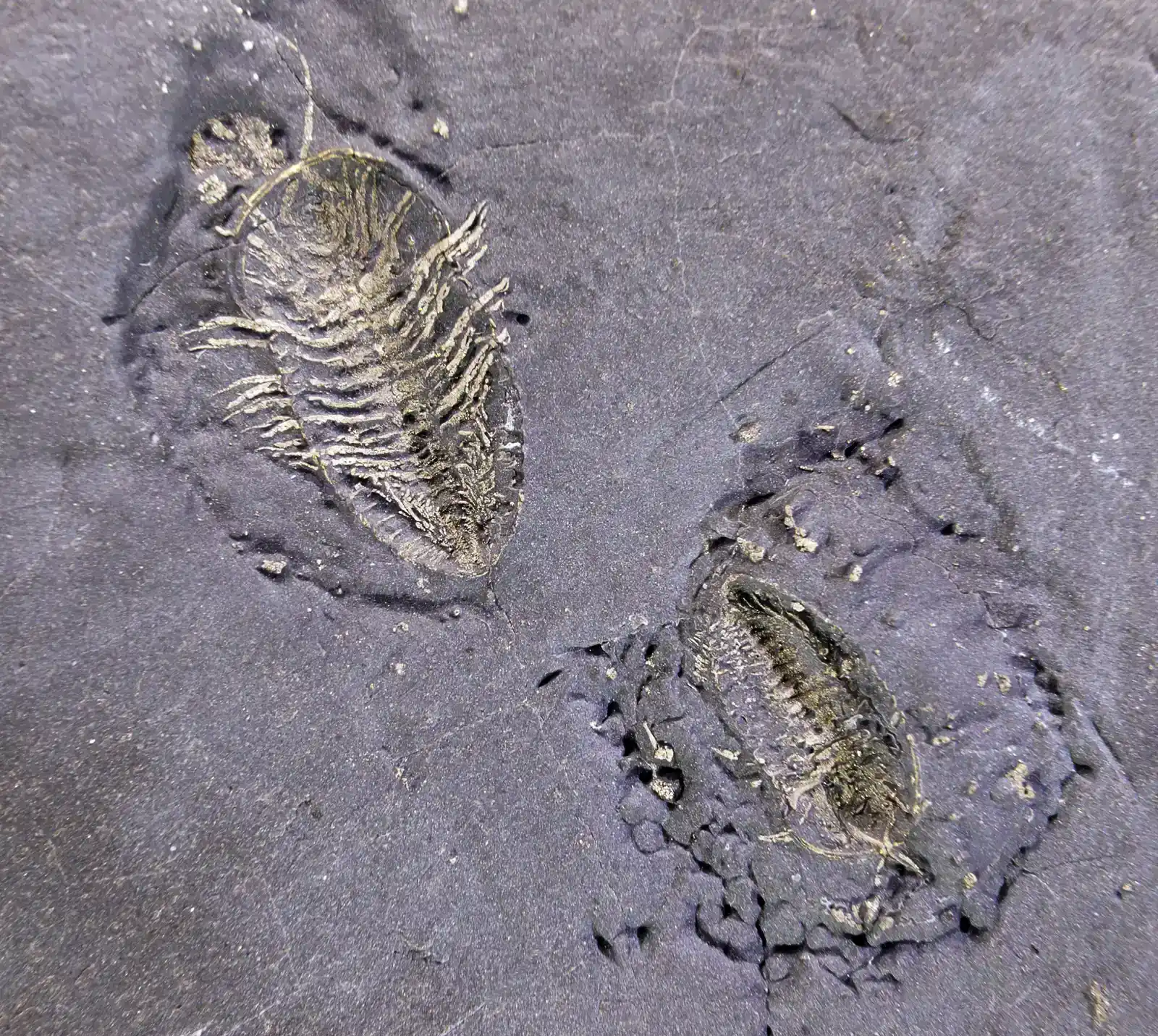
Soft tissue preservation in fossils is extraordinarily rare. Most of what paleontologists find are bones, shells, and teeth. Everything else, the guts, the eyes, the nervous system, tends to vanish long before the rock can capture it. That’s what makes the Castle Bank site in Wales so genuinely extraordinary. Paleontologists uncovered a miniature world of sea creatures whose tiny guts, eyes, and even brains remain visible 462 million years after they perished, with most ancient inhabitants just a couple of millimeters long and including nozzle-mouthed worms, horseshoe crabs, starfish, and early barnacles.
The stunning preservation of these fossils’ soft tissues reveals that the entire ecosystem was likely buried instantly, perhaps by a sudden rockslide, and this prevented decay and kept scavengers at bay, meaning that if larger creatures were milling around the ecosystem, they would have been buried alive as well. Also in the fossil trove are tiny enigmatic holdovers from the preceding Cambrian explosion, a period that started about 540 million years ago, when a burst of diverse life-forms emerged. It’s a snapshot of an ocean that existed long before fish had even evolved backbones, and it’s stunning that we can still read it so clearly.
Trilobites: The Ancient Ocean’s Great Shapeshifters

Let’s be real. When people think of prehistoric ocean life, trilobites often get overlooked in favor of the giant, toothy creatures. That’s a mistake. Trilobites, ancient marine arthropods, dominated Earth’s oceans for over 270 million years before going extinct 252 million years ago, with their segmented exoskeletons and compound eyes being iconic features and their fossils having been found worldwide. 270 million years. By comparison, humans have been anatomically modern for maybe 300,000 years.
Trilobites are crucial for understanding the Cambrian Explosion, a period of rapid evolutionary diversification, and one of the most fascinating aspects of trilobites is their adaptability, having evolved into thousands of species and occupied diverse ecological niches. What makes trilobite fossil discoveries so consistently important is what they reveal about ocean chemistry, temperature, and biodiversity shifts across deep time. Their fossilized tracks and burrows provide insights into their behavior, telling us not just what was alive in those ancient seas, but how those creatures actually lived and moved. That distinction matters enormously for reconstructing complete ecosystems rather than just inventorying bones.
Giant Ichthyosaurs Evolved to Whale-Size in a Geological Blink
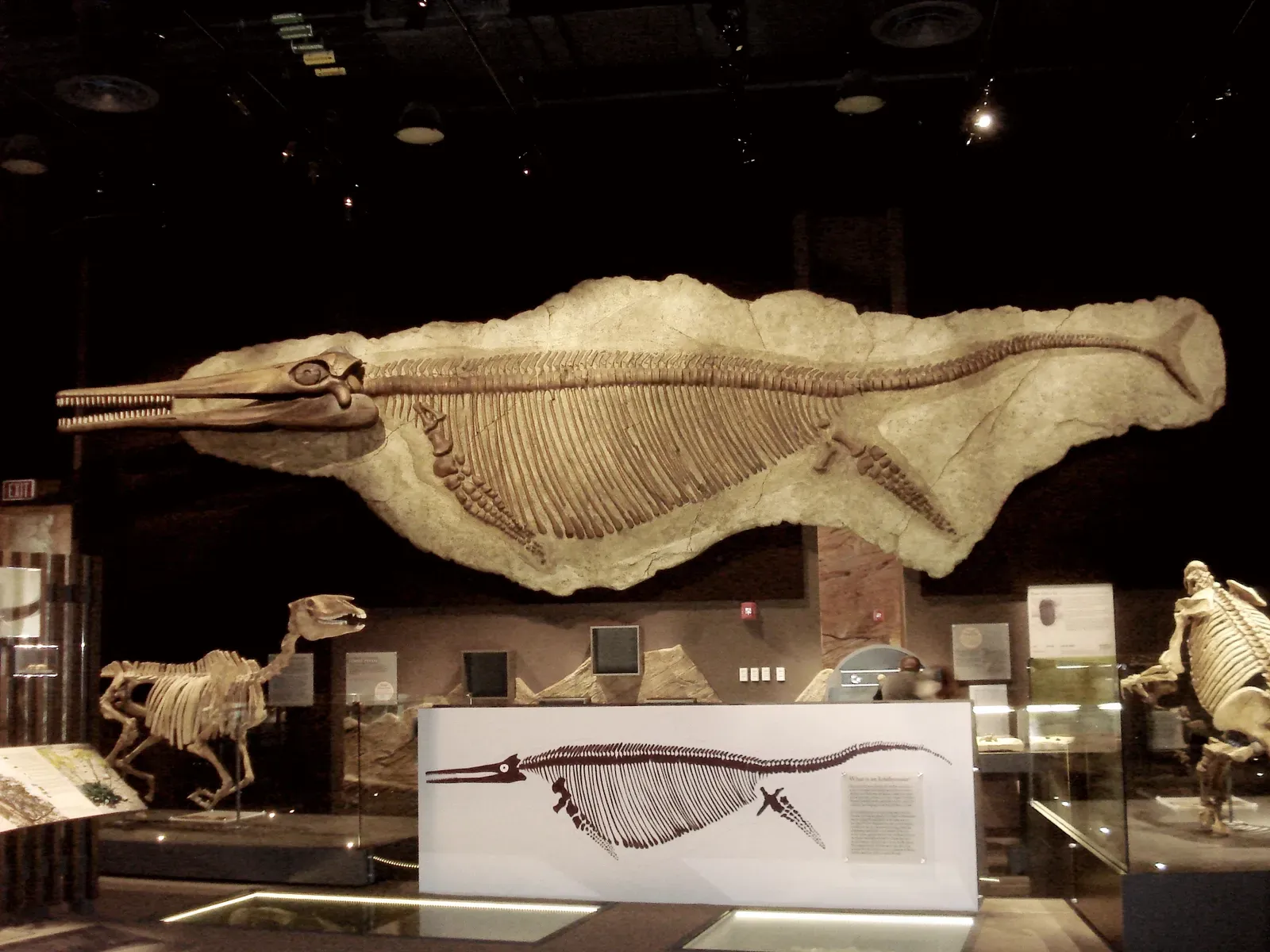
Evolution is often described as a slow, grinding process. The emergence of giant ichthyosaurs politely disagrees with that narrative. Paleontologists have long known that marine reptiles called ichthyosaurs could get very big, some comparable to humpback whales in size, but a new find indicates that these seagoing saurians evolved to be giants much faster than whales, with a giant species of ichthyosaur showing that these reptiles grew to whale-like sizes in less than three million years, whereas whales took tens of millions of years to do the same.
Ichthyosaurs were the first tetrapods, or four-limbed vertebrates, to reach truly gigantic sizes, and they appear to have evolved very rapidly, with individuals reaching up to 17 meters long emerging just a few million years after the group first appeared. That’s far faster than paleontologists expected and may tell researchers something important about how rich with life Triassic oceans were. The ocean during the Triassic was not a recovering, emptied wasteland after the great extinction. It was more like a pressure cooker of evolutionary innovation, turning up the heat and producing giants with almost alarming speed. It makes you wonder what conditions today’s oceans, if left alone long enough, might eventually produce.
Conclusion
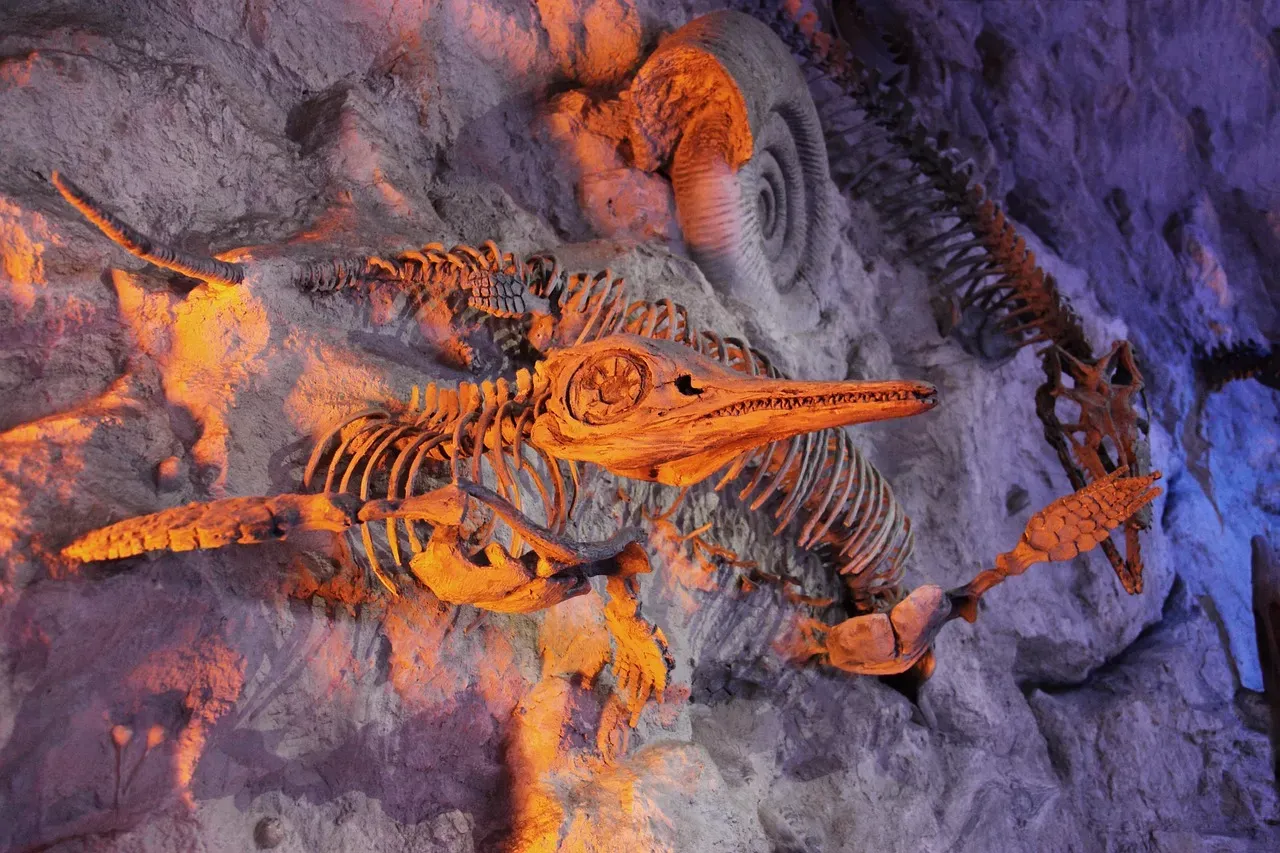
What strikes you when you line these discoveries up side by side is how profoundly limited our old picture of prehistoric oceans really was. We thought we knew the dominant predators, the trophic structures, the geographical boundaries. Then a girl on a beach found a jawbone, a museum finally opened a forgotten drawer, and a single tooth in North Dakota rewrote the final chapter of the mosasaur story. The real significance of these discoveries lies in how they illuminate the grand history of life on Earth, with fossils recording how life adapted or perished in the face of major environmental challenges from more than three billion years ago to the present day.
The prehistoric ocean was not one fixed thing. It was a living, evolving system that reinvented itself after extinction events, pushed predators to impossible sizes, and connected continents through the movement of creatures we are still only beginning to name. Every new fossil is a correction to a story we told too confidently. Very few fossil sites have been studied in enough detail to rebuild entire food webs, and as more discoveries emerge, scientists will be able to compare ecosystems across different regions and time periods, deepening knowledge of how ancient oceans influenced the modern seas we depend on today. The ocean has always kept its secrets deep. It just takes the right curious eyes, or the right storm to erode a cliff face, for those secrets to finally surface.
Which of these discoveries surprised you the most? Share your thoughts in the comments below.