
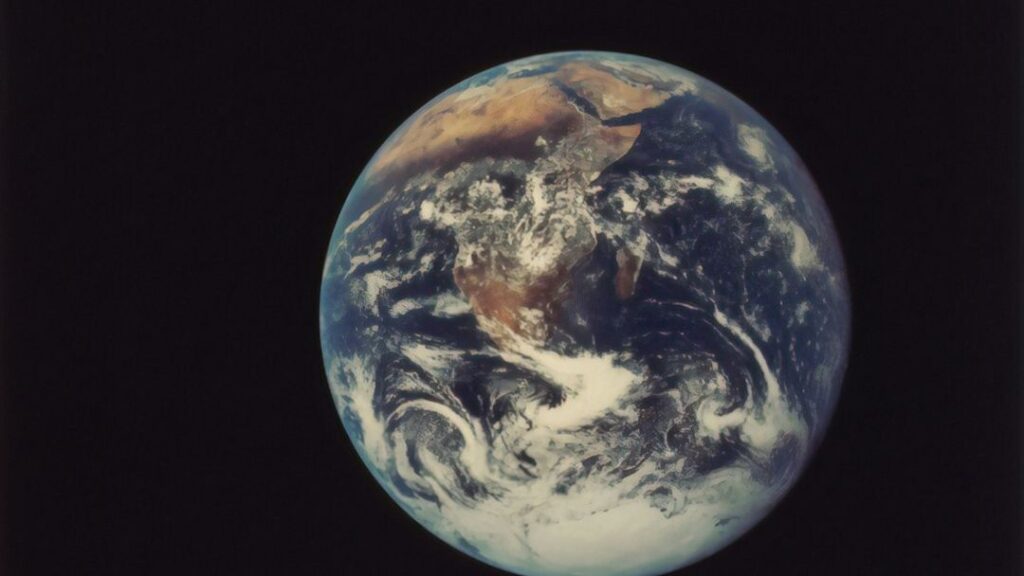
Imagine standing on solid ground, feeling entirely safe, while the very rock beneath your feet is actually inching its way across the globe. Sounds impossible, right? Yet that is exactly what our planet has been doing for billions of years – silently, relentlessly, reshaping oceans, building mountains, and in doing so, writing the greatest story of transformation ever told.
The evolution of this planet and its atmosphere gave rise to life, which in turn shaped Earth’s subsequent development. From oceans made of molten rock to the rich tapestry of ecosystems we know today, the Earth has never stood still. If you think you know this planet, brace yourself. What lies ahead in Earth’s geological story is more dramatic than you could possibly imagine. Let’s dive in.
A Fiery Beginning: Earth’s Violent Birth
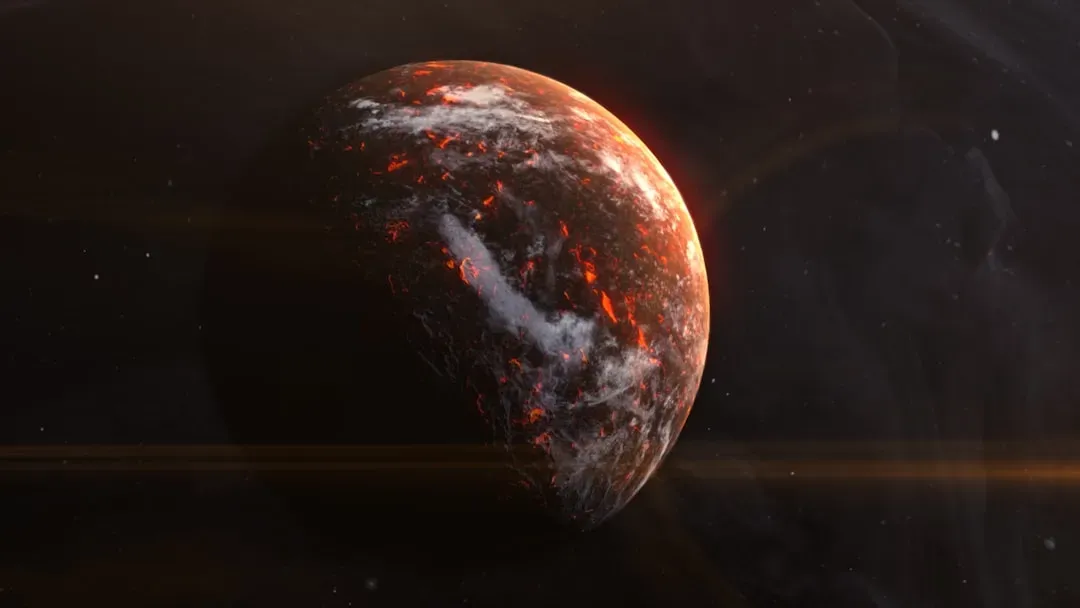
Earth formed around 4.54 billion years ago, approximately one-third the age of the universe, by accretion from the solar nebula. You can picture it like billions of dusty, rocky particles spinning in a vast cloud, slowly being pulled together by gravity into clumps that grew, collided, and eventually built a planet. It was nothing like the world you live on now.
Volcanic outgassing probably created the primordial atmosphere and then the ocean, but the early atmosphere contained almost no oxygen. Much of Earth was molten because of frequent collisions with other bodies, which led to extreme volcanism. Honestly, if you had been able to visit Earth back then, it would have looked more like the surface of the sun than any place remotely habitable. Everything we take for granted – breathable air, liquid water, solid ground – had to be built up over an unimaginably long time.
The Supercontinent Cycle: Earth’s Giant Jigsaw Puzzle
![The Supercontinent Cycle: Earth's Giant Jigsaw Puzzle (I did myself based on [1], also I added it on my dinosaur website (the link is [2]), CC BY-SA 2.5)](https://nvmwebsites-budwg5g9avh3epea.z03.azurefd.net/dinoworld/b6d3179306e2ce1827034db401e5bf89.webp)
Here’s the thing about the ground you walk on: it has never been fixed. As the surface continually reshaped itself over hundreds of millions of years, continents formed and broke apart. They migrated across the surface, occasionally combining to form a supercontinent. Roughly 750 million years ago, the earliest-known supercontinent Rodinia began to break apart. The continents later recombined to form Pannotia, 600 to 540 million years ago, then finally Pangaea, which broke apart 200 million years ago.
Due to movement of tectonic plates, the continents move in a “supercontinent cycle,” a periodic aggregation and dispersal over the course of 300 to 500 million years. Think of it like a slow-motion dance playing out over geological time. Continents waltz together, fuse, then drift apart again over hundreds of millions of years. Over the course of the planet’s 4.5 billion-year history, several supercontinents have formed and broken up, a result of churning and circulation in the Earth’s mantle, which makes up the vast majority of the planet’s volume.
Pangaea: When All the World Was One
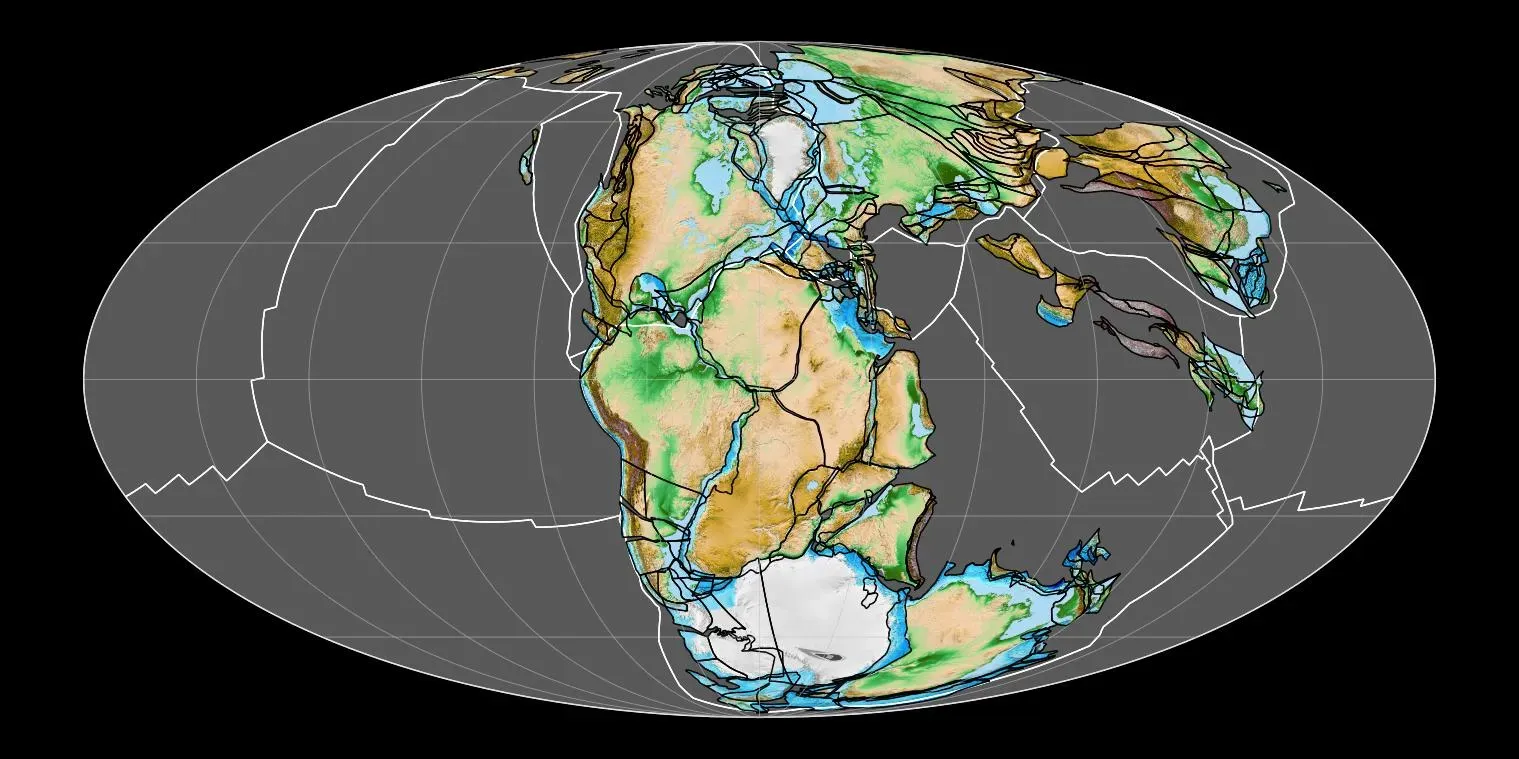
Pangaea incorporated almost all of Earth’s landmasses in early geologic time. Fully assembled by the Early Permian Epoch, some 299 million to about 273 million years ago, it began to break apart about 200 million years ago, eventually forming the modern continents and the Atlantic and Indian oceans. The name itself comes from Greek, meaning “all the Earth” – which is pretty fitting for a single landmass that swallowed every continent.
The interior of the continent may have been utterly dry, as it was locked behind massive mountain chains that blocked all moisture or rainfall. Yet coal deposits found in the United States and Europe reveal that parts of the ancient supercontinent near the equator must have been a lush, tropical rainforest, similar to the Amazonian jungle. I find it remarkable that you can read the climate history of an ancient world just from rocks sitting under your feet. The very active mid-ocean ridges associated with the breakup of Pangaea raised sea levels to the highest in the geological record, flooding much of the continents.
The Cambrian Explosion: Life’s Big Bang
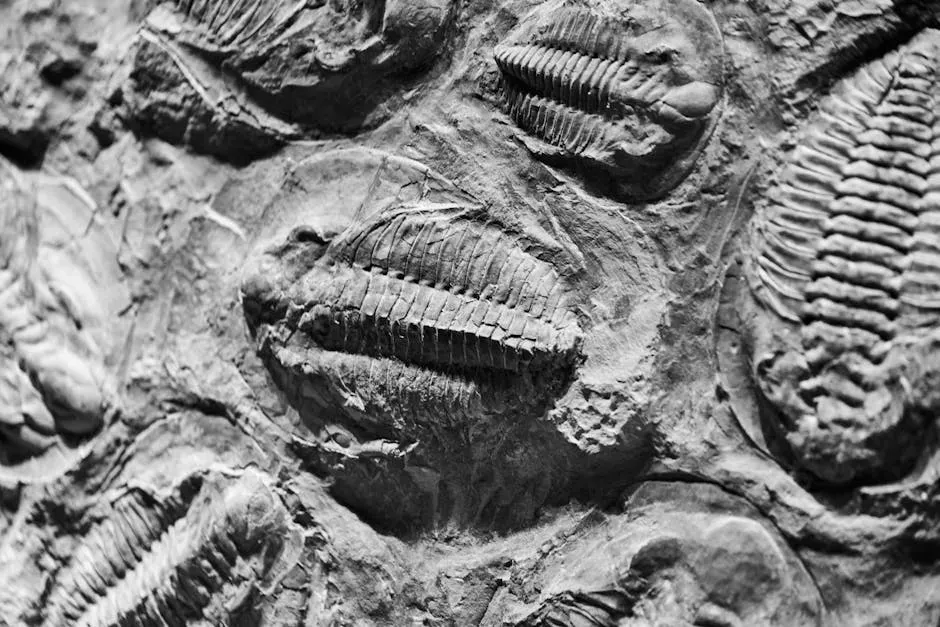
If there was ever a moment that changed life on Earth forever, this was it. The Cambrian explosion was the unparalleled emergence of organisms between 541 million and approximately 530 million years ago at the beginning of the Cambrian Period. The event was characterized by the appearance of many of the major phyla, between 20 and 35, that make up modern animal life. Before this moment, your planet was essentially populated by microbial mats and soft-bodied blobs. After it, life exploded into staggering complexity.
With 4 billion years of evolutionary history where not much shows up in the rock record, within just 20 or 30 million years – a geological blink – animals evolved hard shells, primitive backbones, and other precursors to life forms we see today. What caused this sudden leap? New research provides the clearest evidence yet that the Cambrian explosion could have been triggered by only a small increase in oxygen levels in Earth’s atmosphere and shallow ocean waters, with minor increases sufficient to propel major evolutionary leaps seen in the fossil record. It is genuinely humbling to realize that the extraordinary diversity of life on your planet today may have hinged on a relatively tiny chemical shift in the ancient ocean.
Plate Tectonics: The Engine Beneath Your Feet
![Plate Tectonics: The Engine Beneath Your Feet ([4], Public domain)](https://nvmwebsites-budwg5g9avh3epea.z03.azurefd.net/dinoworld/2bfea5a195efcea7e1d86149dc76be82.webp)
You might not feel it, but the ground you are standing on right now is moving. Plate tectonics shifts the continents, raises mountains, and moves the ocean floor, while processes not fully understood alter the climate. The theory that unifies all of this was a revolution in science. It unified the study of the Earth by drawing together many branches of the earth sciences, from paleontology to seismology, and provided explanations to questions that scientists had speculated upon for centuries, such as why earthquakes and volcanic eruptions occur in very specific areas, and how great mountain ranges like the Alps and Himalayas formed.
The movement of the plates is caused by the convection currents that roll over in the upper zone of the mantle. This movement in the mantle causes the plates to move slowly across the surface of the Earth. It is a bit like the Earth has a vast, slow boiling pot inside it – and everything resting on top is being constantly shuffled around. The Indian plate moved hundreds of miles in 135 million years at a remarkable speed of about 4 inches per year, and it crashed into the Eurasian plate with such force that it created the tallest mountain range on Earth – the Himalayas.
The Great Dying: Earth’s Most Catastrophic Moment
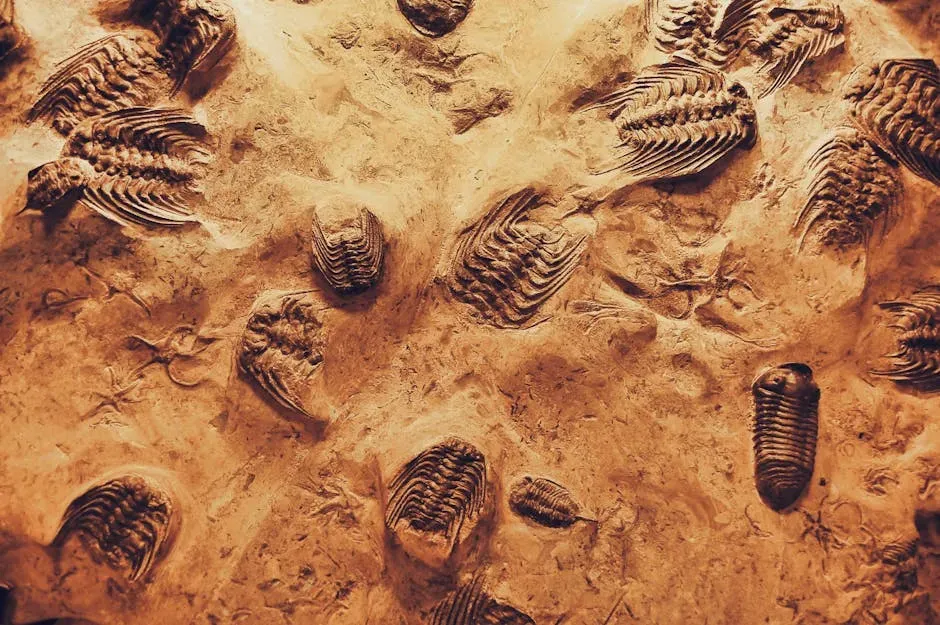
Of all the events in Earth’s geological past, none was more devastating than this. Some 252 million years ago, life on Earth faced the “Great Dying,” the Permian-Triassic extinction. The cataclysm was the single worst event life on Earth has ever experienced. Over about 60,000 years, 96 percent of all marine species and about three of every four species on land died out. Pause and sit with that for a moment. Nearly everything alive on Earth vanished in what is, by geological standards, a mere eyeblink.
Scientific consensus holds that the main cause of the extinction was flood basalt volcanic eruptions that created the Siberian Traps, which released sulfur dioxide and carbon dioxide, resulting in oxygen-starved, sulfurous oceans, elevated global temperatures, and acidified oceans. Recovery was agonizingly slow. A few groups began to recover immediately after the extinction, but diverse ecosystems did not reappear for at least 5 million years, which suggests that environmental perturbations may have continued for millions of years after the extinction. Life managed to rebuild itself, eventually giving rise to the age of the dinosaurs. But it was a close call – closer than you might ever want to imagine.
After the Dinosaurs: The Rise of the World You Know
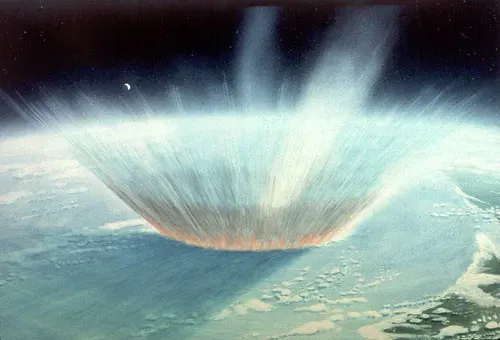
The Cretaceous-Paleogene extinction event is the most recent mass extinction and the only one definitively connected to a major asteroid impact. Some three quarters of all species on the planet, including all nonavian dinosaurs, went extinct. About 66 million years ago, an asteroid roughly 7.5 miles across slammed into the waters off what is now Mexico’s Yucatán Peninsula at 45,000 miles an hour. It sounds almost unbelievably cinematic, yet the geological record confirms every detail.
Though mass extinctions are deadly events, they open up the planet for new forms of life to emerge. This most studied mass extinction killed off the nonavian dinosaurs and made room for mammals and birds to rapidly diversify and evolve. You, reading this right now, are a direct beneficiary of that catastrophe. Very soon after the primate split, for reasons still unclear, apes developed the ability to walk upright. Brain size increased rapidly, and by 2 million years ago, the first animals classified in the genus Homo had appeared. Every human civilization, every discovery, every piece of art and science that has ever existed traces its roots back to the aftermath of a rock from space.
Conclusion: You Are the Latest Chapter in Earth’s Story
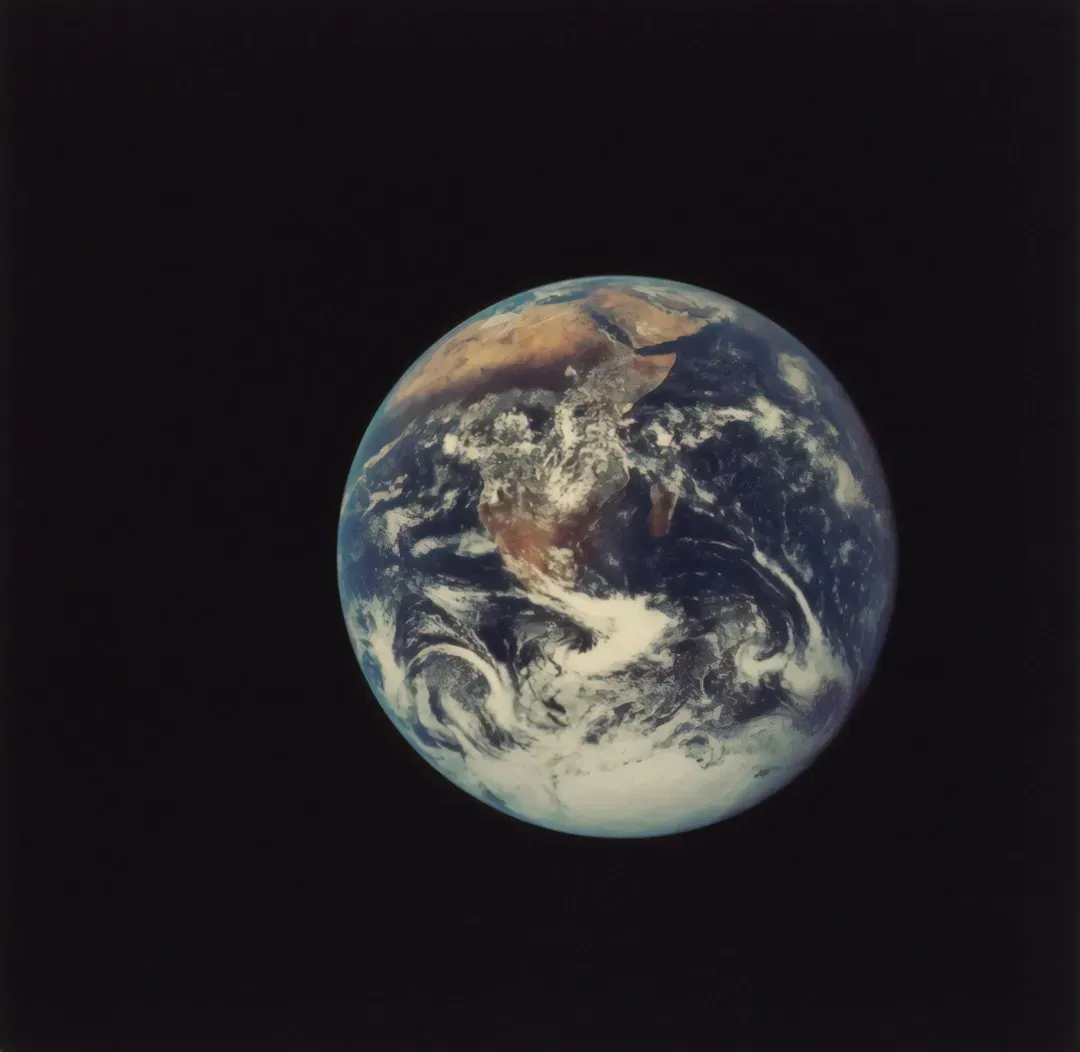
What you have just traveled through is not merely ancient history – it is the story of your origin, told in rock, ash, ocean, and bone. The natural history of Earth concerns the development of the planet from its formation to the present day, and nearly all branches of natural science have contributed to understanding of the main events of Earth’s past, characterized by constant geological change and biological evolution.
The planet you live on has survived molten beginnings, catastrophic extinctions, frozen ages, and continent-shattering collisions. Throughout Earth’s history, life has faced several cataclysmic events that reshaped evolution. Known as mass extinctions, these events wiped out the majority of species in relatively short periods. Each of these extinction events acted like a biological reset, clearing dominant species and allowing new life to emerge. There is something both humbling and thrilling about that. Every living thing today is the product of billions of years of resilience, adaptation, and sheer geological luck. The Earth’s story is far from over – in fact, the next chapter may already be unfolding right beneath your feet. So the question is: now that you know how extraordinary and fragile this story is, what will you do with that knowledge?