Paleontology has always had the power to make you rethink everything. You assume the story of dinosaurs is settled – something you learned in school, confirmed by museum visits and blockbuster movies. Then a single fossil from a Montana hillside or a Mongolian desert blows the whole narrative wide open. And honestly? That’s what makes this science so wildly exciting.
We are living, right now in 2026, in what many researchers are openly calling a golden era of dinosaur discovery. Around 1,400 dinosaur species are now known from more than 90 countries, and 2025 alone saw the discovery of 44 new species – nearly one a week. The pace is breathtaking. So buckle up, because what follows might just overturn everything you thought you knew about the age of the dinosaurs.
Nanotyrannus Is Real – and T. rex Just Lost Its Monopoly
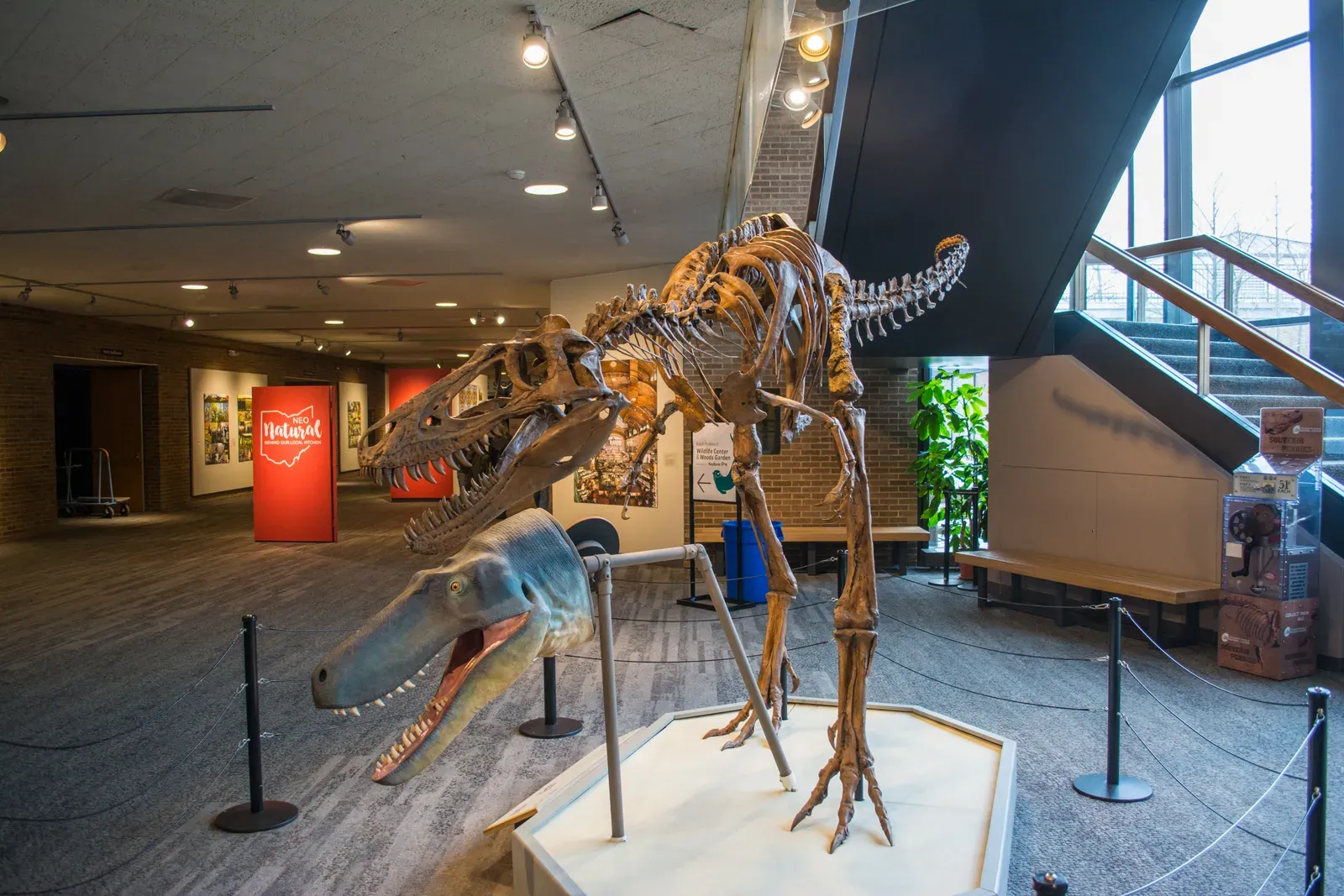
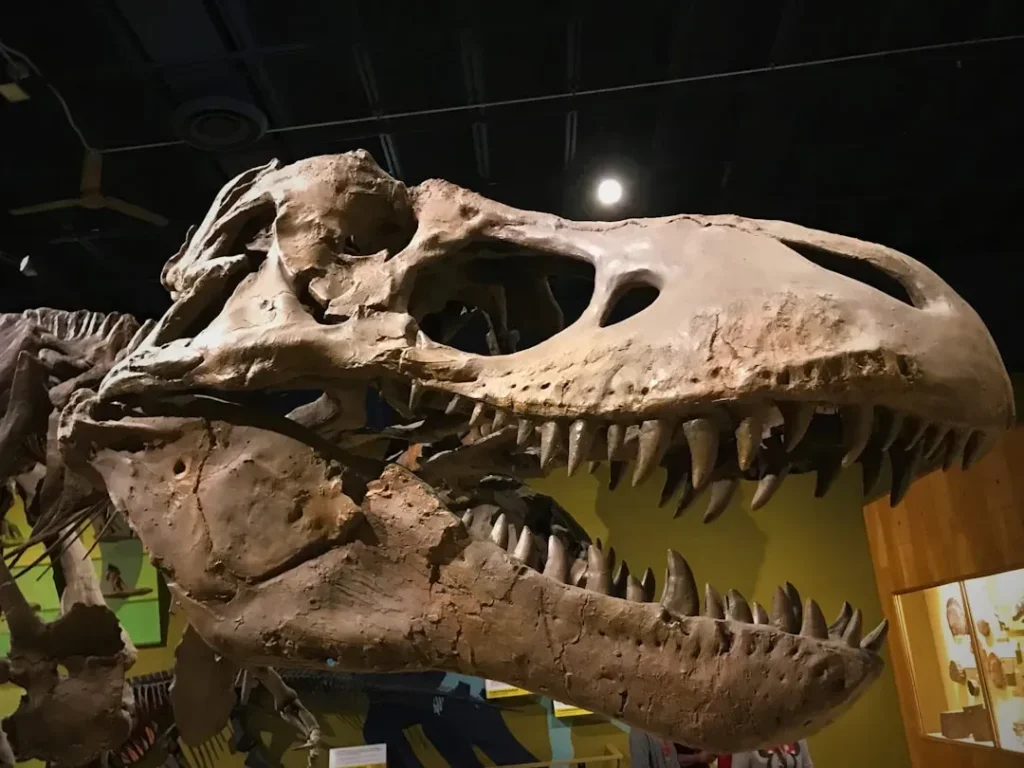
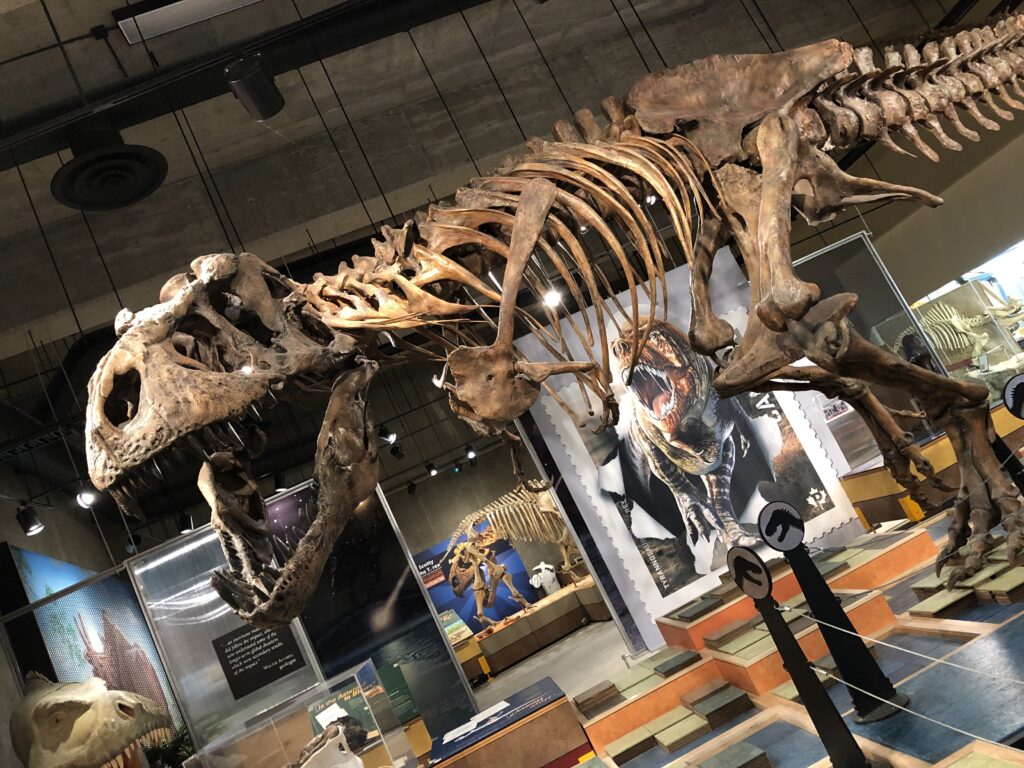
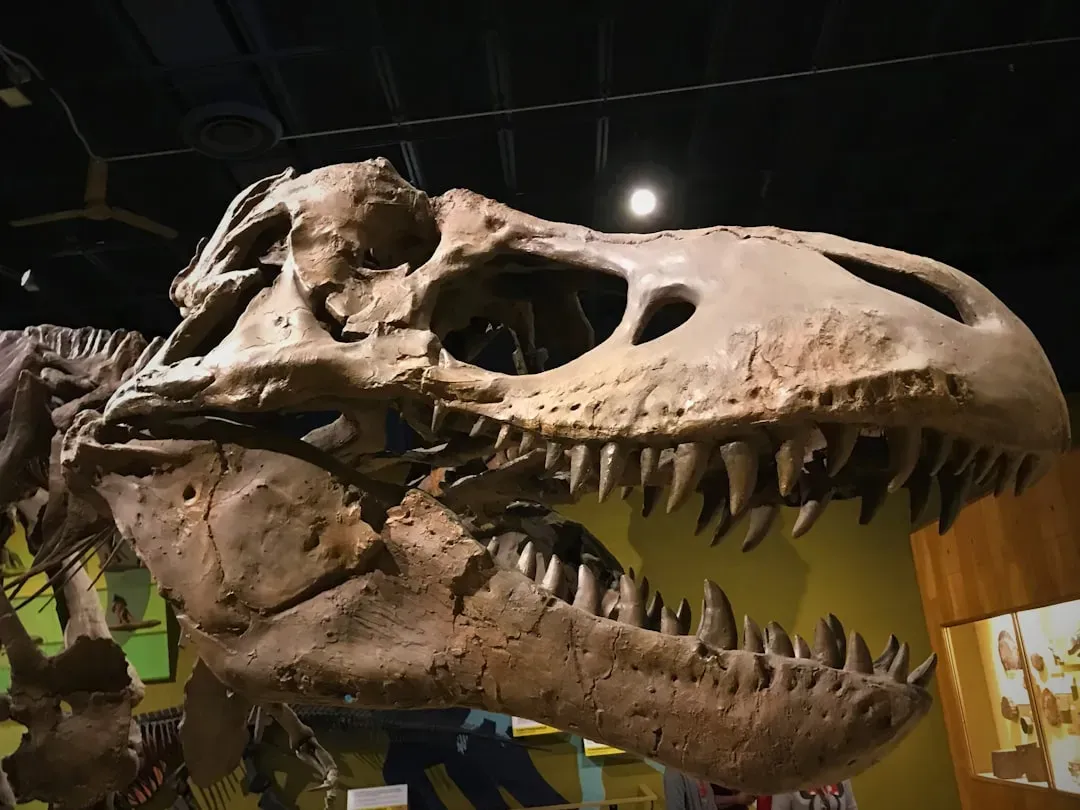
Imagine decades of scientific debate finally crashing to a resolution – and the answer completely reshapes one of history’s most iconic predators. That’s exactly what happened with Nanotyrannus. Nanotyrannus is a notorious dinosaur. Since first being named in 1988, paleontologists argued over whether medium-sized tyrannosaur fossils found alongside T. rex were juvenile T. rex individuals or a unique and distinct predator – and for a long time, the bulk of evidence appeared to favor the juvenile hypothesis.
That debate is now essentially over. An analysis published in Nature of a specimen nicknamed “Bloody Mary” – part of the famous “Dueling Dinosaurs” assemblage – found enough anatomical evidence to support Nanotyrannus as genuinely different from T. rex, including fewer tail vertebrae, more teeth, and longer, stronger forearms. Using growth rings, spinal fusion data and developmental anatomy, researchers demonstrated that the specimen was around 20 years old and physically mature when it died. Confirmation of Nanotyrannus means predator diversity in the last million years of the Cretaceous was much higher than previously thought, hinting that other small-bodied dinosaur species might also be victims of mistaken identity.
Mongolia’s Dragon Prince Rewrites the Tyrannosaur Family Tree
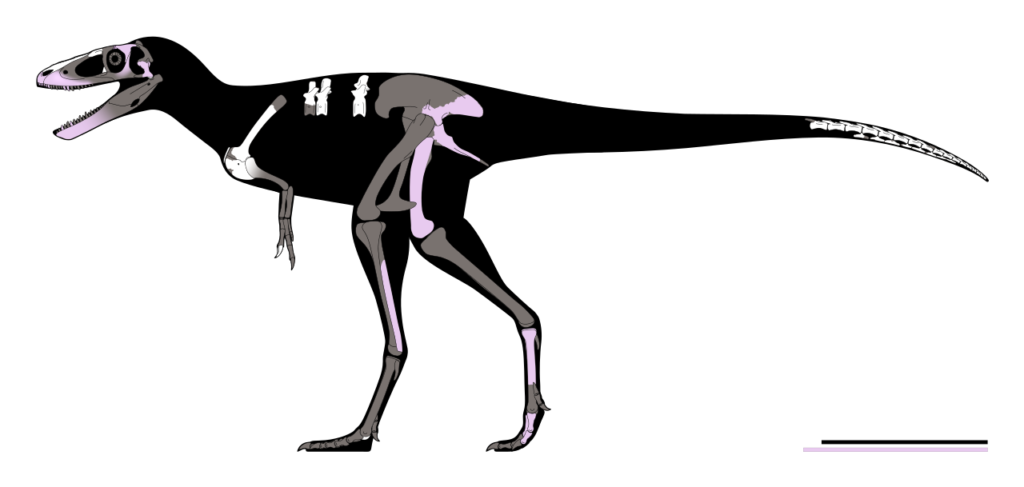
Here’s the thing – tyrant lizards didn’t just appear out of nowhere as giant apex predators. They had a long, fascinating journey across continents, and a discovery from the Gobi Desert is now illuminating that path like never before. A new early tyrannosaur named Khankhuuluu, which roughly translates to “dragon prince,” was found in the Gobi Desert and lived about 86 million years ago. It’s how Khankhuuluu adjusts the tyrannosaur family tree that makes it a standout specimen – the study, published in Nature, details multiple tyrannosaur migrations millions of years apart.
Think of it like tracing a family line across continents, one fossil at a time. Khankhuuluu was part of a burst of tyrannosaur evolution that led to slender, agile creatures crossing into prehistoric North America around 85 million years ago and proliferating there. Khankhuuluu mongoliensis weighed approximately 1,650 pounds and measured about 13 feet in length – likely an earlier tyrannosauroid, before these creatures evolved into the giant predators they eventually became. The results confirmed that Asian tyrannosauroids dispersed to North America, giving rise to Eutyrannosauria in the mid-Late Cretaceous. The implications for how we understand T. rex’s origins are profound.
Dinosaurs Were Thriving Right Up Until the Asteroid Hit
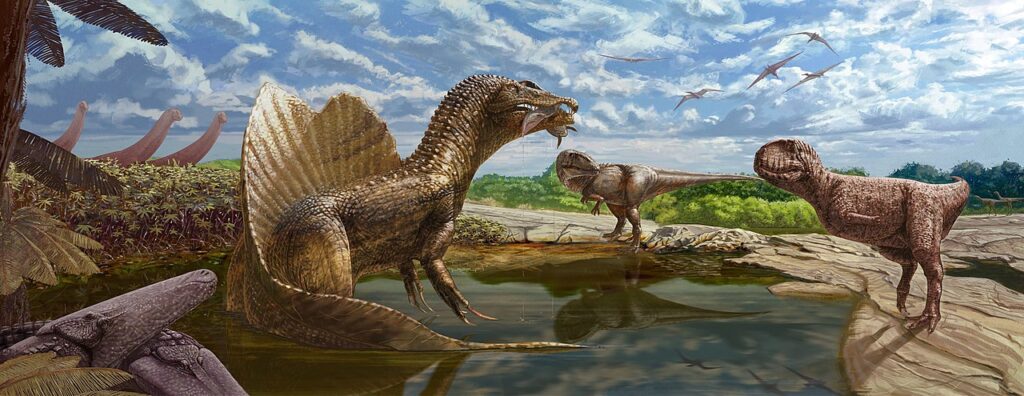
For a long time, the popular theory went something like this: dinosaurs were already struggling before the asteroid delivered the final blow. Scientists imagined a slow fade, a gradual retreat. New fossil evidence from New Mexico has shattered that idea. Dinosaurs weren’t dying out before the asteroid hit – they were thriving in vibrant, diverse habitats across North America, and fossil evidence from New Mexico shows that distinct “bioprovinces” of dinosaurs existed until the very end.
In the Naashoibito Member of the Kirtland Formation, researchers uncovered evidence of vibrant dinosaur ecosystems that thrived until just before the asteroid impact, and high-precision dating revealed that fossils from these rocks are between 66.4 and 66 million years old – placing them at the catastrophic Cretaceous-Paleogene boundary. Using ecological and biogeographic analyses, researchers discovered that dinosaurs in western North America lived in separate “bioprovinces,” divided not by mountains or rivers, but by temperature differences across regions. It wasn’t a dying world – it was a flourishing one, abruptly extinguished.
The Punk Rock Dinosaur: Spicomellus Rewrites Ankylosaur Origins
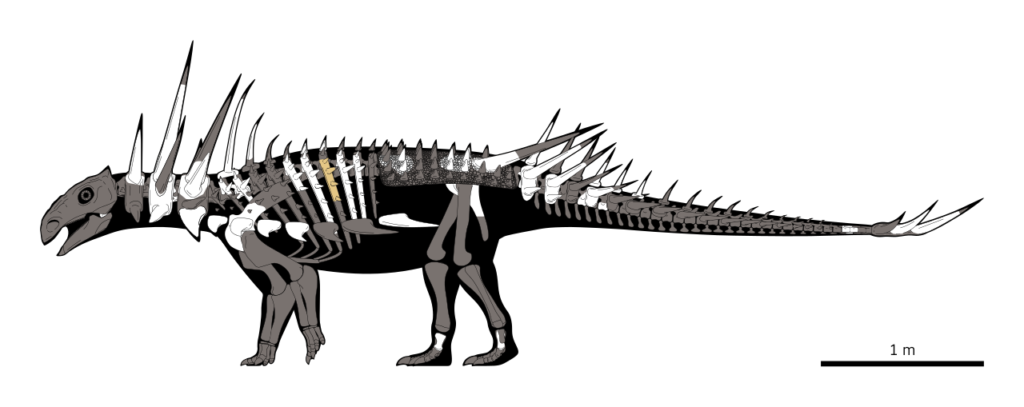
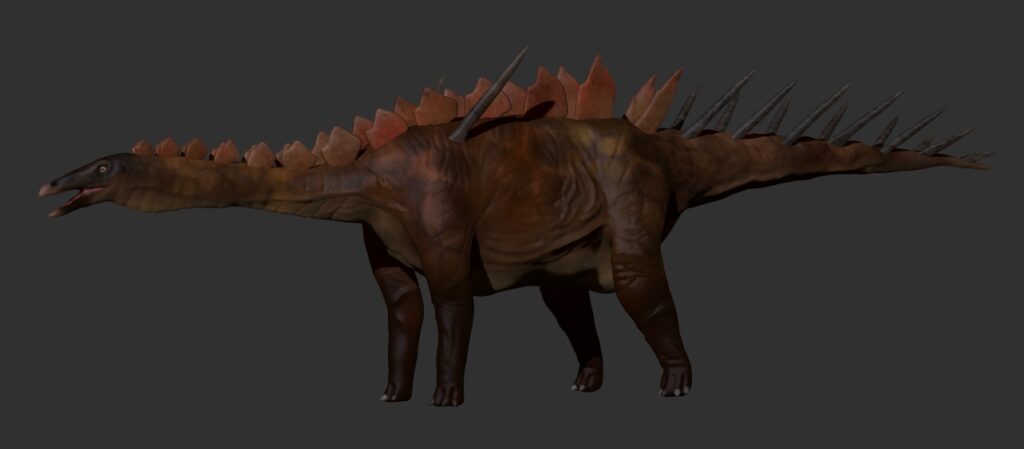
You wouldn’t expect the oldest known armored dinosaur to look like something out of a metal album cover. Yet that’s precisely the best description for Spicomellus. New fossils show that Spicomellus is the oldest known member of the ankylosaurs, heavily armored, low and squat plant-eaters – characterized by bizarre armor bristling with long spines all over the body, including a bony collar around the neck with spines the length of golf clubs sticking out of it.
Spicomellus was originally named in 2021 based on an incomplete rib from 165-million-year-old rocks in Morocco – a rib unlike that in any other animal, alive or extinct, with a series of long spines fused to its surface. In 2025, a team led by researcher Susie Maidment described a much more complete skeleton, revealing one of the strangest dinosaurs ever discovered. Dubbed the “punk rock dinosaur” by the BBC, Spicomellus is changing our understanding of ankylosaur evolution while also highlighting the importance of the Moroccan fossil record. I think it’s a reminder that evolution doesn’t always favor sleek design – sometimes it goes completely wild.
A Second Jurassic Bird Changes the Story of Flight
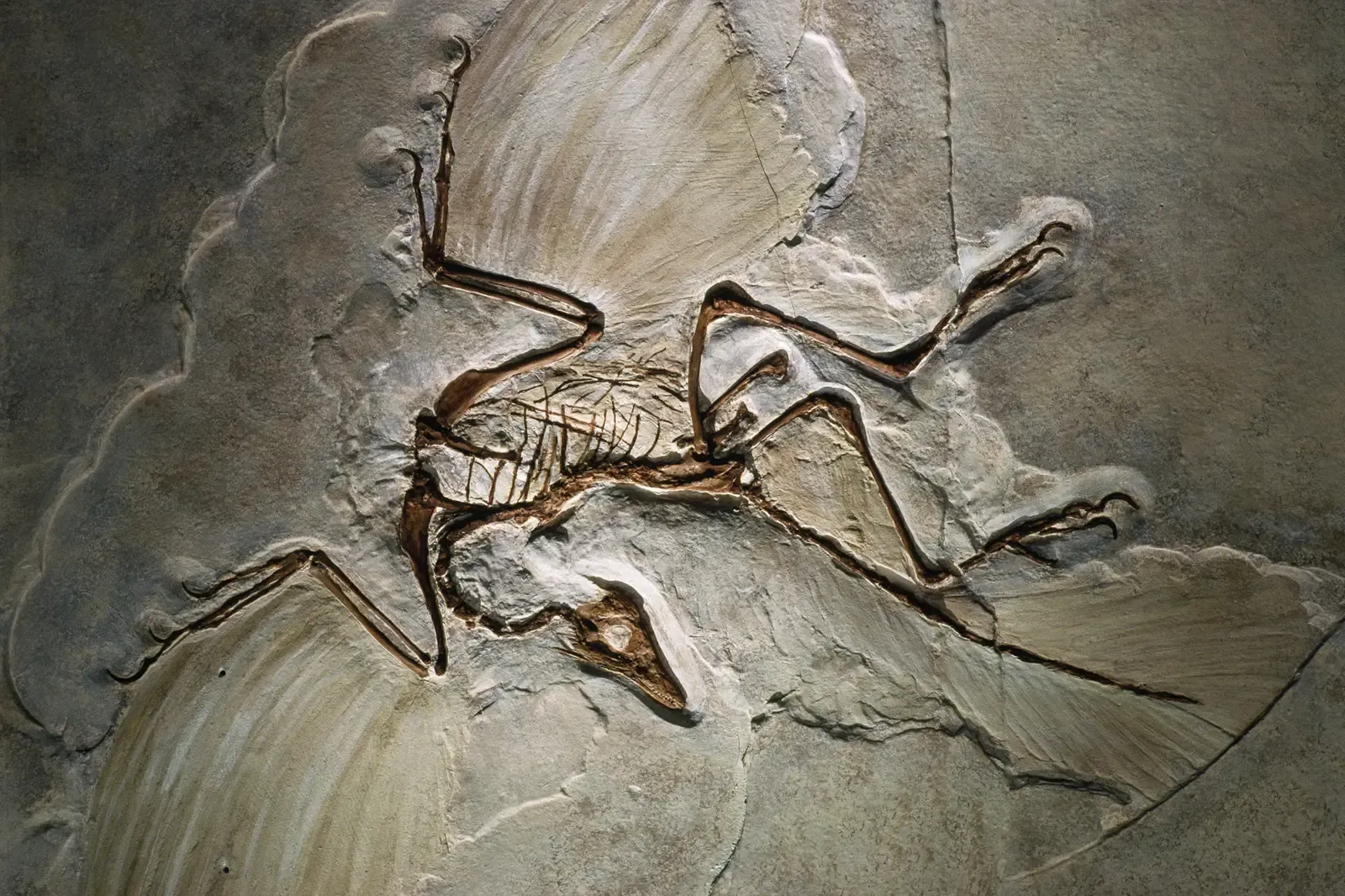
For nearly a century and a half, scientists had only one Jurassic bird to study: the legendary Archaeopteryx. It was the touchstone, the missing link, the only window into the dawn of avian life. Then, in 2025, that monopoly ended. For nearly 160 years, the only Jurassic bird paleontologists had discovered was Archaeopteryx. But researchers in China published a study detailing the fossil discovery of a second Jurassic bird: Baminornis zhenghensis. Their dating shows that this specimen was nearly as old as Archaeopteryx and had a short tail more like modern birds today – and such short-tailed fossils don’t normally appear in the fossil record until the Cretaceous Period.
Meanwhile, a breathtaking new Archaeopteryx specimen of its own surfaced at Chicago’s Field Museum, offering something nobody had seen before. The Chicago Archaeopteryx features more soft tissue and delicate skeletal details than any known fossil of its kind, and preparators discovered it has a set of feathers key to flight in modern birds. The hard slab of limestone around this specimen had also preserved a key layer of feathers called tertials that had never been documented before in Archaeopteryx. Two birds, two revelations, one completely revised chapter of evolutionary history.
Dinosaurs Were Colorful – and We Can Finally Prove It
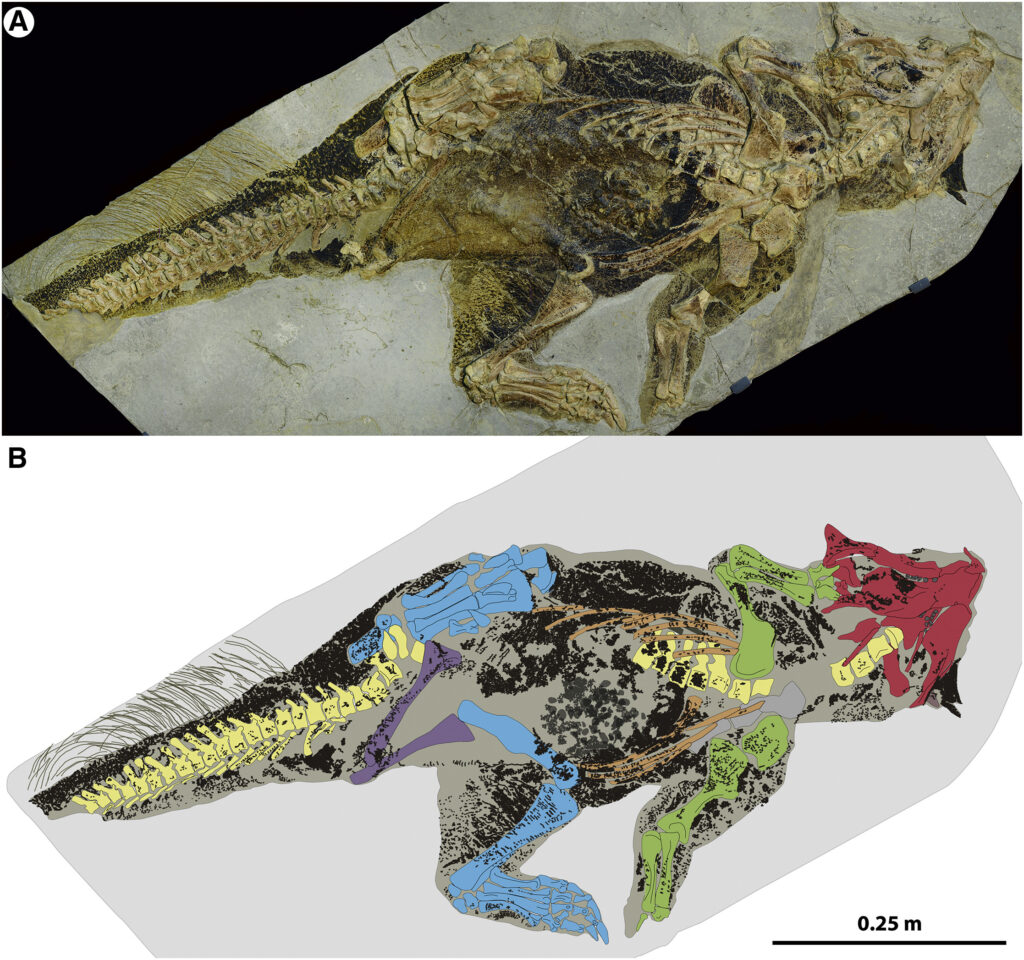
Admit it – you’ve always imagined dinosaurs as uniformly grey or dull green. That’s how they appeared in every book and film for generations. It turns out, many of them were far more visually striking than that. Scientists can now identify melanosomes – cellular structures containing melanin pigments that can be preserved for millions of years in fossilized soft tissues. The shape, size, and arrangement of these melanosomes correlate with specific colors in modern animals, allowing researchers to infer the original coloration of extinct species.
Studies of the feathered dinosaur Microraptor revealed it likely had iridescent black plumage similar to modern crows. Another small dinosaur, Sinosauropteryx, appears to have had a reddish-brown back and a banded tail. Even more remarkably, a study of the ceratopsian Psittacosaurus identified skin coloration showing countershading – darker on top and lighter underneath – a common camouflage pattern in modern animals. While researchers were reluctant to do a full color reconstruction of a juvenile Diplodocus whose skin was recently studied, they detected that the dinosaur would have had conspicuous patterns across its scales – suggesting sauropod dinosaurs were not uniformly gray or brown, but had complex color patterns like other dinosaurs, birds and reptiles.
Soft Tissue Preservation Is More Common Than Anyone Expected
This one still feels almost impossible to believe. We’re talking about biological material surviving inside bones for tens of millions of years – blood vessels, proteins, and molecular remnants locked in stone. It sounds like science fiction. Research from NC State University provides further evidence for the preservation of soft tissues and structures in fossils through deep time – the multimillion-year time frame within which scientists believe the Earth has existed – and confirms that such preservation can occur for 65 million years or more.
The enormous T. rex known as “Scotty” made headlines in 2025 for tiny structures found inside one of its fossilized ribs, and a study published in Scientific Reports in July reported the discovery of remnants of blood vessels inside that rib. Interestingly, researchers also found that soft tissue preservation does not seem to depend upon the species, age, or burial environment of the fossils in question, suggesting that the preservation of vessels through deep time may not be that uncommon. Every time science seems to hit a ceiling on what fossils can tell us, something like this blasts right through it.
AI and New Technology Are Transforming How We Find and Date Fossils
The classic image of a paleontologist is someone with a brush and a chisel, hunched over rock in blazing sun. That image isn’t wrong – but in 2026, there’s a lot more going on alongside that brush. Technology is now accelerating discovery in ways that would have seemed unimaginable just a decade ago. A new AI app called DinoTracker analyzes photos of fossil tracks and predicts which dinosaur made them, with accuracy rivaling human experts.
Dating fossils has always been one of paleontology’s trickiest challenges, especially when volcanic ash isn’t present nearby. Many dinosaur fossils are found in rock layers that can’t be directly dated, so their ages are estimated by other means. Now, two teams of paleontologists may have found a new way to date those difficult layers – getting clues from dinosaur eggs. Paleontologists now hypothesize that radioactive isotopes in eggshell itself are datable in the same way as volcanic minerals, meaning even a tiny, broken fragment of fossil eggshell could finally allow researchers to calculate how old deposits were, even when volcanic ash isn’t present. It’s remarkable. The bones haven’t changed. Our ability to read them has.
Conclusion: The Age of Dinosaurs Isn’t Over – It’s Just Beginning
If this article has done anything, I hope it’s made the prehistoric world feel less like a closed book and more like an open excavation. Every year, researchers uncover something that tilts the entire picture. A tyrannosaur that wasn’t a T. rex after all. A second Jurassic bird. A dinosaur the color of a crow. Giants still thriving right up until the apocalypse. Dinosaurs may be long extinct, but recent years have made it abundantly clear that they’re anything but settled science. New fossils, reanalyses of famous specimens, and increasingly sophisticated tools continue to upend what we thought we knew about how these animals lived, moved, fed, and evolved – and some discoveries forced researchers to confront the uncomfortable reality that long-held assumptions were simply wrong.
The sheer scale of what remains unknown is staggering. Many new discoveries come from paleontological hotspots such as Argentina, China, Mongolia and the US, but dinosaur fossils are also being found in many other places, from a Serbian village to the rainswept coast of northwest Scotland. The Earth still has secrets buried in its layers, and scientists are only just beginning to find the tools to read them. So the next time someone tells you dinosaurs are ancient history, you can smile and tell them – actually, the story is still being written. What discovery do you think will shake the dinosaur world next? Share your thoughts in the comments.