Imagine crouching down in the bleached desert of New Mexico and realizing that the impression beneath your feet was left by a barefoot teenager over twenty thousand years ago. Not a metaphor. Not a reconstruction. An actual footprint, pressed into ancient mud, frozen in gypsum, and waiting patiently through all of human history just for someone to notice it. That is exactly what happened at White Sands National Park, and it changed everything scientists thought they knew about our deep past.
Prehistoric North America was a world almost impossible to imagine now. Mammoths shouldering through grasslands, giant sloths lumbering near lakeshores, saber-toothed cats eyeing their prey from the shadows. People were there too, navigating that same wild landscape, hunting, raising children, and leaving traces of their lives that we are still decoding today. The story of how humans and animals shared, shaped, and sometimes ended each other is written in stone, bone, and mud. Let’s dive in.
The Ghost Tracks of White Sands: Where History Left Its Mark
(Original text: self-made), CC BY-SA 3.0)
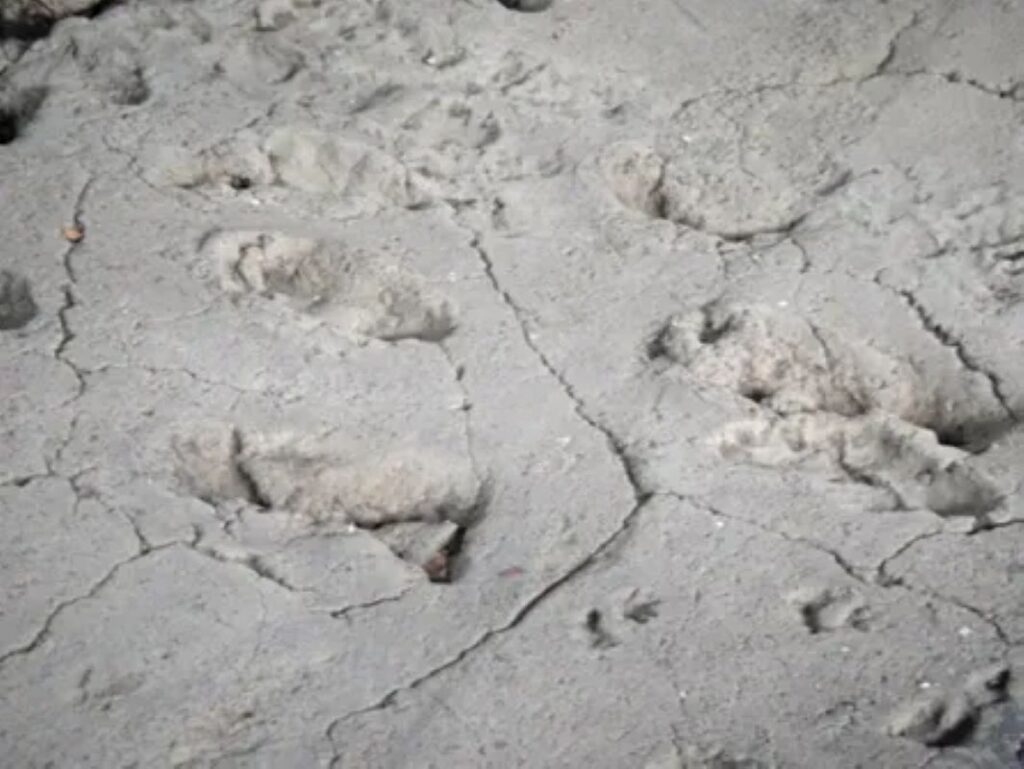
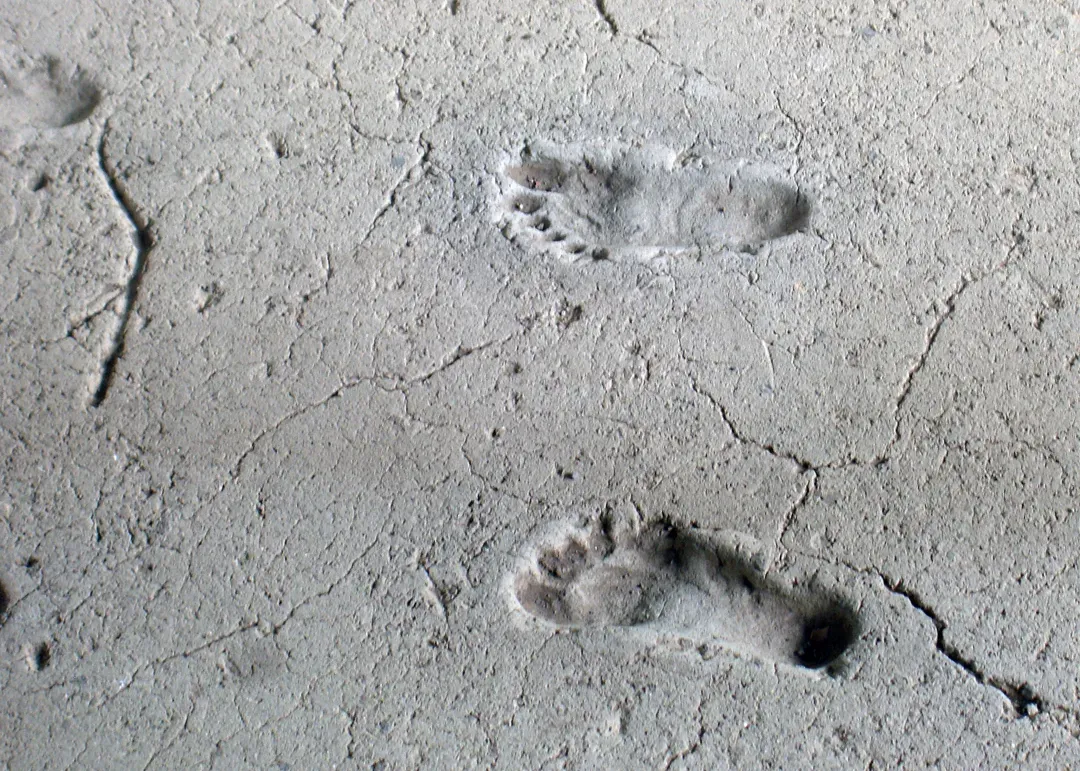
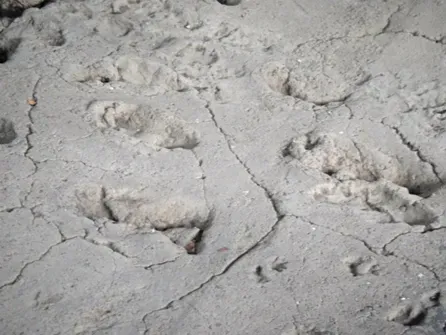
Let’s be real – finding the oldest human footprints in the Americas sounds like a once-in-a-lifetime discovery. The White Sands footprints are a set of ancient human footprints discovered in 2009 at White Sands National Park in New Mexico. What makes them extraordinary is not just their age, but the sheer scale of what was preserved there. Counting both human and animal tracks, there are hundreds of thousands of fossilized footprints in the White Sands area.
The lake that once bordered these prints is long gone, swallowed by time and climate. Careful study has uncovered thousands of tracks in the national park, providing snapshots of ancient humans and now-extinct animals like giant sloths and mammoths that wandered across the lands near ancient Lake Otero, a 1,600-square-mile body of water that dried up some 10,000 years ago. Honestly, there is something deeply moving about that. A whole world – wetlands, megafauna, and families on the move – all captured in hardened mud.
Dating the Footprints: A Scientific Debate Worth Knowing About
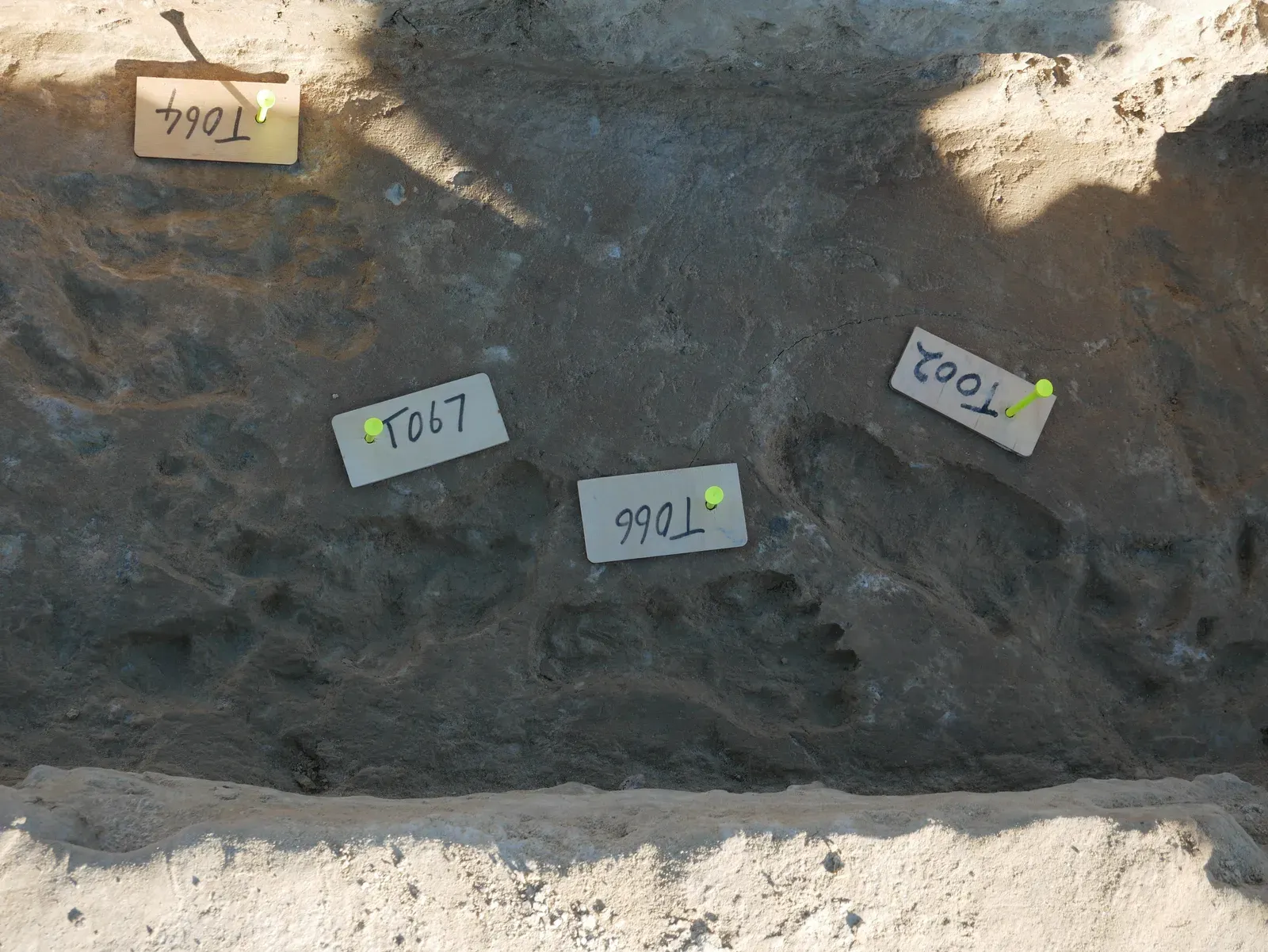
In 2021, the footprints were radiocarbon dated, based on seeds found in the sediment layers, to between 21,000 and 23,000 years ago. That date range is currently the subject of scientific debate, but if it is correct, the footprints would be possibly the oldest evidence of humans in the Americas. That is a staggering claim, and scientists have not just taken it at face value. They have gone back and tested it from multiple angles.
In a follow-up study published in Science, researchers used two new independent approaches to date the footprints, both of which resulted in the same age range as the original estimate. Using optically stimulated luminescence, researchers found that quartz samples collected within the footprint-bearing layers had a minimum age of roughly 21,500 years, providing further support to the radiocarbon results. Three separate lines of evidence, all pointing to the same window of time. That is about as close to a confirmation as archaeology gets.
A Living World Frozen in Mud: The Animals Who Shared the Shore
![A Living World Frozen in Mud: The Animals Who Shared the Shore (Osborn, H. F. (1942). Percy, M. R., ed. Proboscidea: A monograph of the discovery, evolution, migration and extinction of the mastodonts and elephants of the world 2. New York: J. Pierpont Morgan Fund. Frontispiece and [1], Public domain)](https://nvmwebsites-budwg5g9avh3epea.z03.azurefd.net/dinoworld/e425940364806c9c0255a096c49936ce.webp)
Here is the thing – these were not just human footprints. The landscape surrounding ancient Lake Otero was teeming with wildlife that you would not recognize today. Other tracks include those of extinct megafauna, such as Columbian mammoths and ground sloths, as well as those of predators such as the American lion and dire wolves. Picture that for a second – lions and dire wolves hunting the same lake edges where children played.
The lake and its lush surrounding vegetation attracted not only humans but also many now-extinct species such as plant-eating ancient camels, mammoths, and ground sloths. Predators, like American lions and dire wolves, enjoyed good living there as well. The fossilized footprints of White Sands are probably the most important resources in the Americas to understand the interaction of humans and extinct animals from the Ice Age. You would be hard pressed to find a richer, more intimate record of that ancient world anywhere else on Earth.
Hunters and the Hunted: Reading Stories in Stone
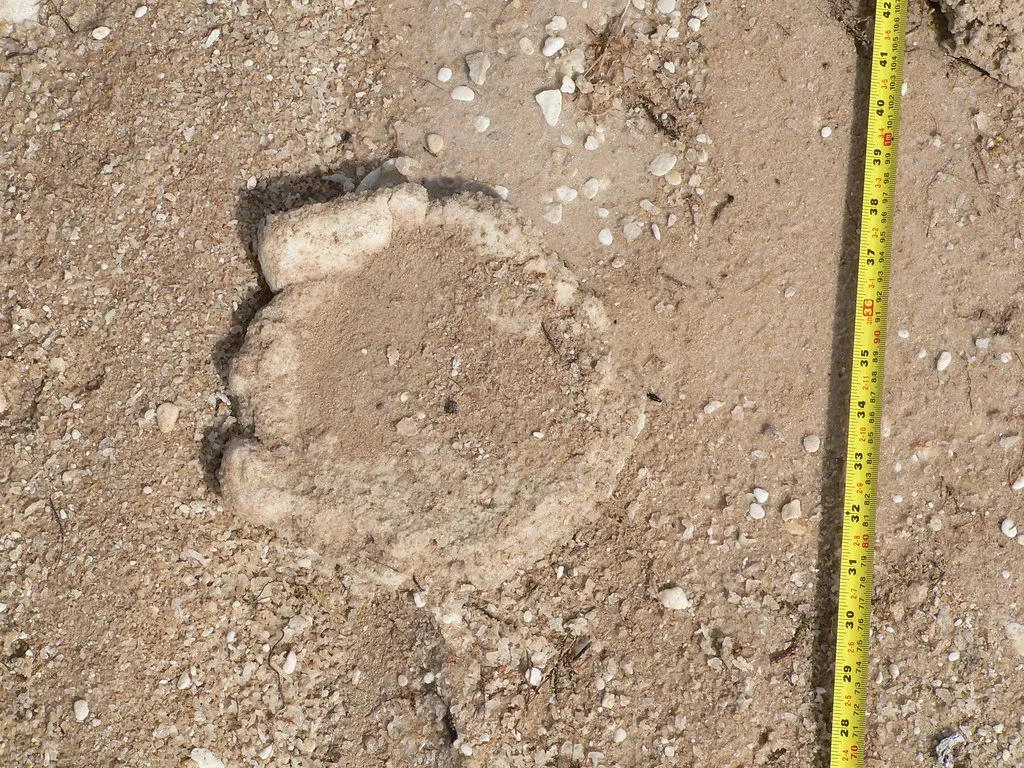
Some of the most gripping evidence at White Sands is not just that humans and animals lived side by side – it is that you can watch the moment of pursuit unfold across the ground. Other tracks tell the story of a group of ancient hunters apparently stalking a giant sloth. Their prints follow the animal’s prints and at times appear inside the sloth’s own, as though they stepped in its tracks as they trailed it. That is essentially a 23,000-year-old crime scene, still legible underfoot.
One set of prints appears to show human hunters tracking a giant sloth. Variations in the tracks left by the sloth show that it stood on its hind legs and spun around, possibly showing fear, but there is no evidence that the hunt was successful. I find that detail almost poetic. That sloth sensed danger, spun around in panic, and somehow escaped. The whole chase was sealed in stone, outcome and all.
Clovis Technology: The Weapon System That Rewrote the Hunt
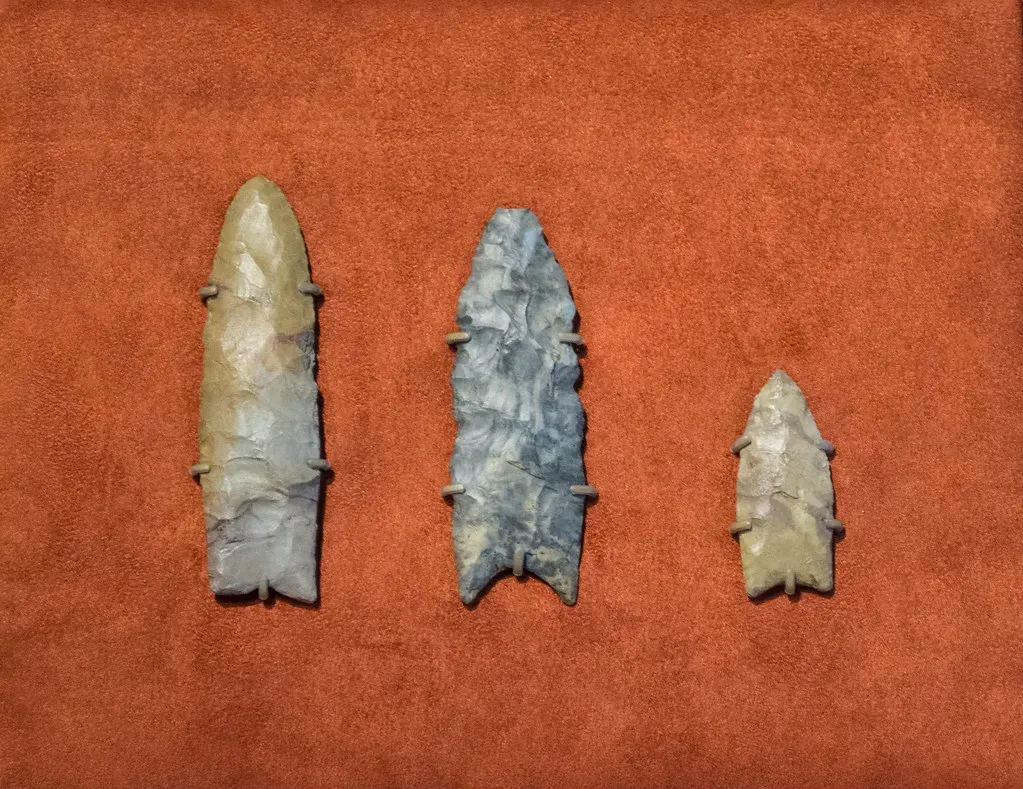
When archaeologists talk about prehistoric North American hunters, the name Clovis comes up constantly. Clovis points, named after their initial discovery site in Clovis, New Mexico, have long fascinated archaeologists. These meticulously crafted stone tools, known for their sharp edges and distinctive indentations on both sides of their base, were widely used by humans across North America roughly 13,000 years ago. Thousands of them have been found scattered across the continent, some even inside the skeletons of mammoths.
For decades, researchers assumed these were thrown like spears. New research suggests something far more clever. Research published in the journal PLOS ONE proposes that these hunters used razor-sharp stone tools known as Clovis points to kill prey by planting them in the ground and angling them upward to impale charging animals. The researchers discovered that once a charging animal’s flesh was pierced by the Clovis point, the weapon’s design caused it to function similarly to a modern-day hollow-point bullet, causing significant internal damage. This method would have allowed prehistoric hunters to take down enormous animals like mastodons and saber-toothed cats with minimal physical effort. Minimal physical effort against a mammoth. That is almost funny, and deeply impressive at the same time.
The Great Extinction Debate: Did Humans Really Kill Them All?
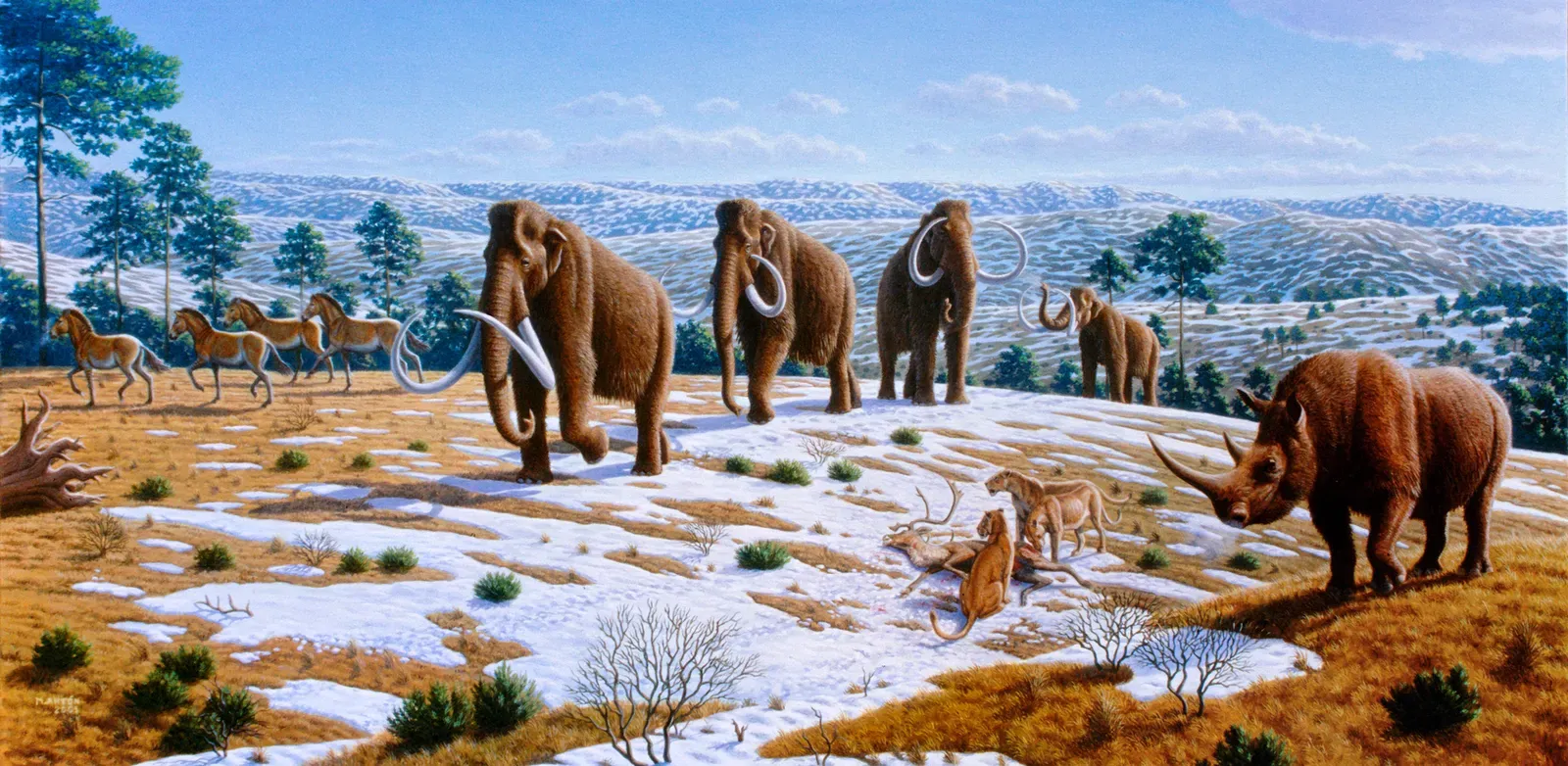
The end of the Pleistocene in North America saw the extinction of 38 genera of mostly large mammals. That is an enormous number. The question of whether prehistoric humans were responsible has sparked one of archaeology’s longest-running and most passionate debates. Dozens of large mammals such as mammoth and mastodon disappeared in North America at the end of the Pleistocene, with climate change and “overkill” by human hunters the most widely argued causes.
Honestly, the picture is messy, and that is probably closer to the truth than any single clean explanation. The results of recent research suggest that the causes for megafauna extinctions varied across taxa and by region. In three cases, extinctions appear linked to Clovis hunting, while in five others they are consistent with the effects of climate change. In a final case, both human hunting and climate change appear responsible. Between roughly three quarters and nine tenths of the northeastern megafauna were gone before humans ever came on the scene. So the story is not a simple tale of prehistoric overkill. Nature was already reshaping the world, and humans arrived into a crisis already unfolding.
Conclusion
What the footprints at White Sands and the scattered Clovis points across North America ultimately reveal is a deeply human story. People walked alongside mammoths, chased giant sloths, raised toddlers by drying lakeshores, and built hunting technology sophisticated enough to drop the largest creatures on Earth. They were not primitive shadows in the background. They were resourceful, adaptable, and profoundly present.
The debate over exactly when they arrived, how they hunted, and how much they changed the ecosystem will keep scientists busy for generations. Still, every new footprint uncovered, every bloodstained Clovis point analyzed, pushes that story further into focus. The ancient mud of White Sands does not just preserve tracks. It preserves moments of life – a child being carried, a sloth spinning in fear, a hunter following prey into the unknown.
We are still following those tracks ourselves, trying to understand who we were and what we owe to the world we inherited. What do you think is more fascinating – the human stories frozen in those footprints, or the mystery of the giants that vanished alongside them? Tell us in the comments.