Conservation teams in remote northern Queensland marked a groundbreaking achievement when an endangered palm cockatoo chick successfully fledged from an artificial nest hollow. This event, captured through meticulous monitoring, highlighted innovative efforts to combat habitat loss for one of Australia’s most iconic parrots. The success underscored the potential of human intervention to support wild populations in the face of mounting environmental pressures.
The Majestic Palm Cockatoo Faces Uncertain Future
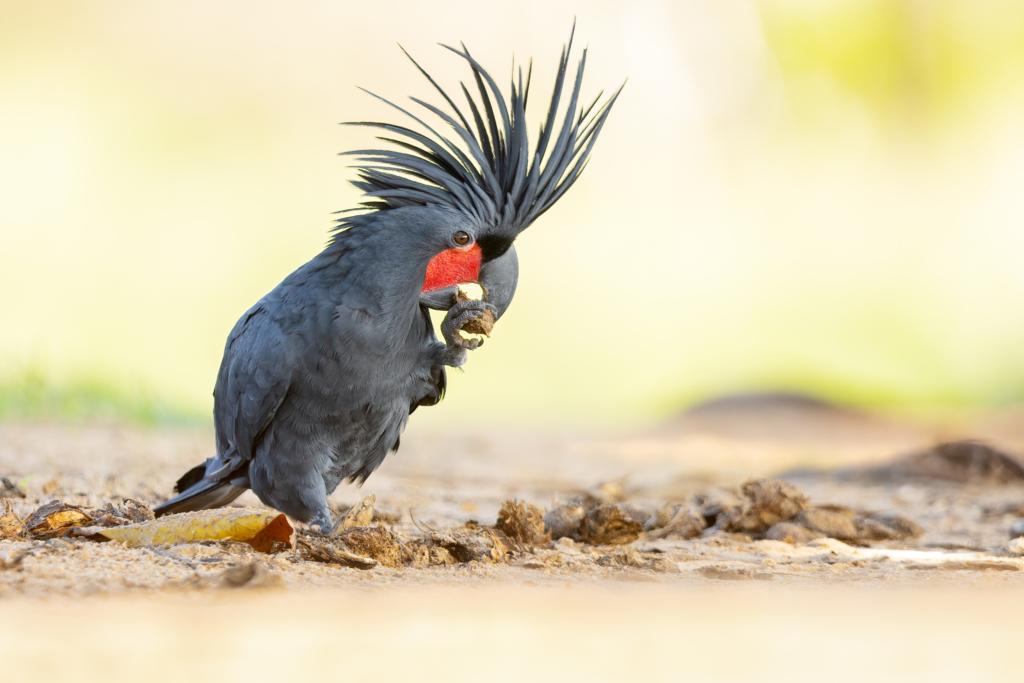
The Majestic Palm Cockatoo Faces Uncertain Future (Image Credits: Reddit)
Australia’s largest parrot by weight, the palm cockatoo boasts striking smoky-black feathers, vivid red cheek patches, and a prominent crest that flares during displays. Males captivate with a rare avian behavior: crafting tools from sticks and seed pods to drum rhythms on hollow trees as part of courtship. These birds play a vital ecological role, dispersing rainforest seeds with their powerful beaks capable of cracking the toughest pods.
Confined to the rainforests and savanna woodlands of Cape York Peninsula, fewer than 2,000 palm cockatoos remain in the wild. The species breeds slowly, with females laying just one egg every two years in carefully selected hollows within ancient trees. This vulnerability amplifies threats from habitat degradation, positioning the palm cockatoo among Australia’s most imperiled parrots.
Habitat Loss Drives Desperate Conservation Needs
Natural nesting hollows, essential for breeding, have dwindled due to unnaturally intense wildfires, extreme weather, and land clearing for bauxite mining. These old-growth trees, often centuries old, provide the deep cavities palm cockatoos require for raising young. Without them, breeding success plummets, accelerating population declines in this isolated region.
- Wildfires destroy mature trees harboring suitable hollows.
- Bauxite mining clears vast areas of potential habitat.
- Extreme weather events exacerbate tree loss and stress on remaining populations.
- Fewer hollows mean reduced breeding opportunities for slow-reproducing pairs.
Experts noted the severity of this crisis. Palm cockatoo specialist Dr. Christina Zdenek observed that such immediate adoption of new hollows “shows the desperate shortage of large natural hollows in the region.”
Restoring Breeding Grounds Through Collaboration
The Palm Cockatoo Breeding Habitat Restoration Project, led by People For Wildlife (PFW), addressed this gap head-on. Teams installed 29 artificial log hollows across northern Cape York, designed from years of research and local Indigenous knowledge to mimic natural sites precisely. Partnerships with Apudthama Traditional Owners ensured culturally sensitive implementation on their lands.
Key collaborators included Dr. Zdenek for scientific guidance and PFW experts like Dr. Benjamin Muller for on-ground work. Funding from the Australian Geographic Society, Louis Vuitton, and Queensland’s government enabled the scale-up. Methods ranged from hoisting hollowed logs into canopies to protecting existing nests with firebreaks and deploying temperature loggers for optimization.
| Project Component | Purpose |
|---|---|
| Artificial hollow installation | Provide new breeding sites |
| Remote cameras | Monitor usage and success |
| Firebreaks | Protect natural and artificial nests |
| Machine learning audio analysis | Detect calls for presence tracking |
A Monumental Milestone Captured on Camera
Just one month after installation, a pair selected one artificial hollow, laid an egg, and raised a chick to fledging – a feat documented by nearly 8,000 images from wildlife cameras between September and December 2025. High-resolution shots showed the young bird perched beside its father before taking flight, confirming the nest’s viability. This world-first event thrilled the team, proving artificial habitats could support full breeding cycles.
PFW Executive Director Dr. Daniel Natusch captured the significance: “This is truly hard work paying off. It’s a testament to the power of collaboration between Traditional Owners, scientists, and conservationists to ensure the survival of one of Australia’s most fascinating birds.” Dr. Zdenek added, “Witnessing a successful fledgling event is rare as it is, but to do so out of a hollow erected by humans … that’s incredible!”
Key Takeaways
- First documented palm cockatoo fledging from an artificial hollow worldwide.
- 29 new hollows installed, with rapid adoption by wild pairs.
- Proven model blending science, Indigenous knowledge, and on-ground action.
This fledging signals a viable path to bolster palm cockatoo numbers amid habitat scarcity. As projects expand with sustained funding, such innovations could safeguard this tool-wielding icon for future generations. What do you think this means for other endangered species? Tell us in the comments.