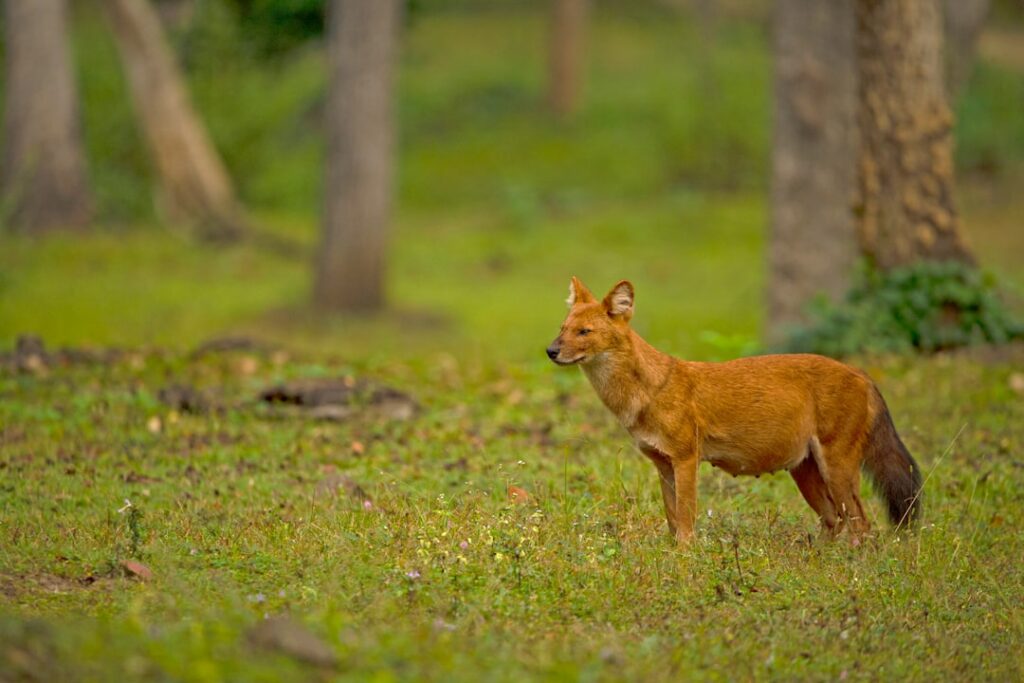
Pu Hoat Nature Reserve, Vietnam – Researchers captured the first confirmed image of a dhole in the country in more than two decades, reigniting interest in one of Asia’s most elusive carnivores. The reddish-brown wild dog appeared alone on a camera trap deep in wet evergreen forest, prompting questions about its survival amid widespread declines. This discovery emerged from systematic surveys in a rugged border region, where conservationists had long feared the species had vanished.
A Startling Camera Trap Discovery
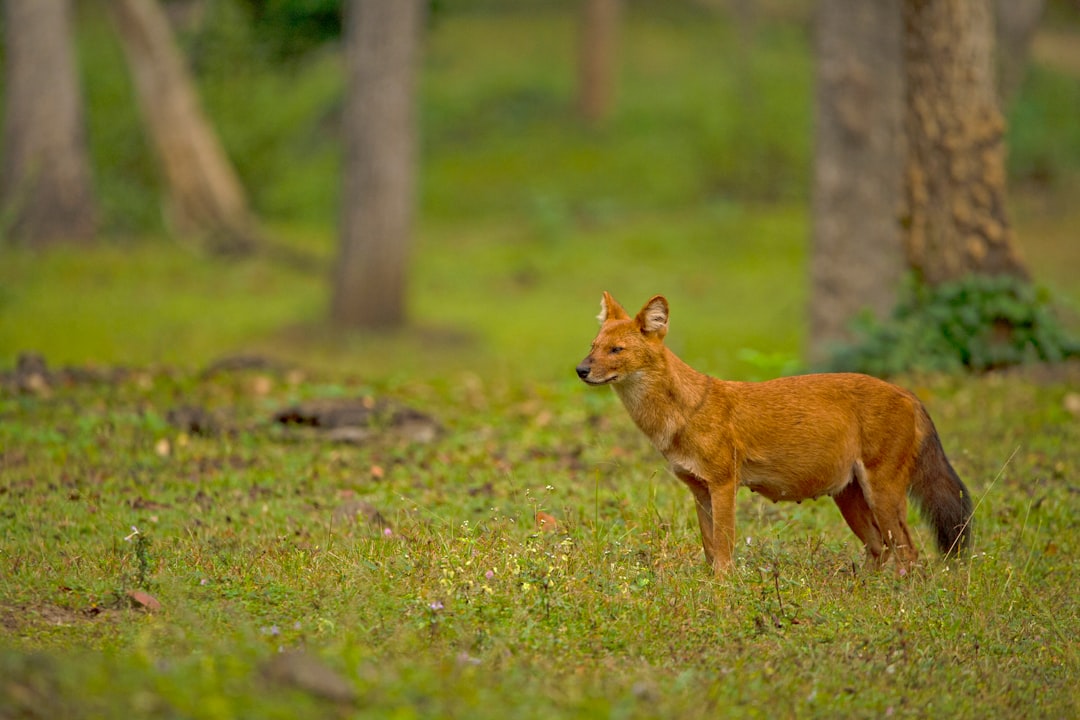
A Startling Camera Trap Discovery (Image Credits: Unsplash)
On December 31, 2023, a single mature adult dhole triggered a camera at 1,590 meters elevation in Pu Hoat Nature Reserve, Nghe An province. The reserve spans about 35,000 hectares of mountainous terrain rising to 2,450 meters and lies just 4.3 kilometers from the Laos border. Survey teams had deployed 45 camera stations in a grid pattern, using models like Reconyx HP2W and Covert Illuminator, which accumulated over 6,000 trap nights from November 2023 to March 2024.
Lead researcher Tuan Anh Nguyen from Vietnam National University initially suspected a domestic dog, a common sight in hunting areas. Four independent biologists later verified the image, noting distinct features like the dhole’s lack of a third lower molar and its convex skull profile. Canid footprints spotted during setup had fueled early doubts, but the evidence proved otherwise. This marked the first verified wild dhole record since 2003.
Profile of the Endangered Pack Hunter
The dhole, or Cuon alpinus, once roamed widely across Asia as one of its most abundant large carnivores. Adults measure 88 to 113 centimeters in body length, with bushy tails adding 41 to 50 centimeters, and weigh 10 to 21 kilograms. Their coats shine rusty red in winter, fading on the undersides, while rounded ears and hyena-like facial muscles aid in hunting. Unlike wolves, dholes lack a howl; they communicate with high-pitched whistles and screams during chases.
These highly social animals form clans of 12 to 40 members without strict hierarchies, often with multiple breeding females raising pups communally in dens. Packs hunt diurnally, targeting medium ungulates like sambar deer and muntjac at speeds up to 50 kilometers per hour. They shear flesh with specialized teeth and tolerate scavengers at kills. In tropical forests, dholes compete with tigers and leopards but favor different prey sizes.
- Body length: 88–113 cm (plus tail)
- Pack size: Typically 12–40 individuals
- Key vocalization: Whistling “coo-coo” calls
- Diet staples: Ungulates, plus fruits and insects
- Unique trait: Only six lower molars
Decades of Decline and the Snaring Crisis
Extensive surveys underscored the dhole’s precarious status in Vietnam. From 2014 to 2024, teams set 3,231 cameras across 1,657 stations in 31 protected sites, logging 269,524 trap nights with no other detections. Previous confirmed sightings dated to Pu Mat National Park in 1999 and Yok Don National Park in 2003–2004. The IUCN Red List had deemed the species possibly extinct there.
Vietnam sits at the heart of Southeast Asia’s snaring crisis, where thousands of wire traps target wildlife for trade. These nonselective devices kill dholes directly and deplete prey like deer and boar, starving packs. Habitat fragmentation, persecution, and diseases from domestic dogs compound the threats. Other apex predators, including tigers and leopards, have absented the landscape for 20 years, risking trophic cascades that impoverish forests.
Andrew Tilker, a co-author from the Leibniz Institute for Zoo and Wildlife Research, warned that losing top carnivores alters food webs in ways that may take decades to manifest. “Studies from other ecosystems have shown that the loss of top carnivores can trigger trophic cascades that affect the entire food web, leading to impoverished forests,” he stated.
Path Forward for Recovery
The Pu Hoat record hints at a remnant population or a vagrant from Laos, where dholes persist at low densities. Researchers view the reserve as a promising refuge, thanks to its intact forests and proximity to neighboring habitats. Yet a single individual cannot sustain the species; broader recovery demands action. Globally, fewer than 2,500 mature dholes remain, classified as Endangered.
Experts call for holistic strategies: intensified patrolling to dismantle snares, prey restoration, reduced demand for wildlife products, and community involvement. Reintroduction efforts, modeled on European gray wolf recoveries, could follow if threats subside. Nguyen emphasized the site’s potential: “It tells us that the site is promising.”
Key Takeaways
- Pu Hoat offers a rare glimpse of hope amid Vietnam’s dhole extirpation.
- Snaring remains the top threat, demanding urgent enforcement.
- Restoring apex predators could heal forest ecosystems through trophic balance.
This fleeting image challenges assumptions of total loss and underscores the urgency of protection. Forests like Pu Hoat could anchor comebacks if threats ease. What do you think about bolstering conservation in such border reserves? Tell us in the comments.