
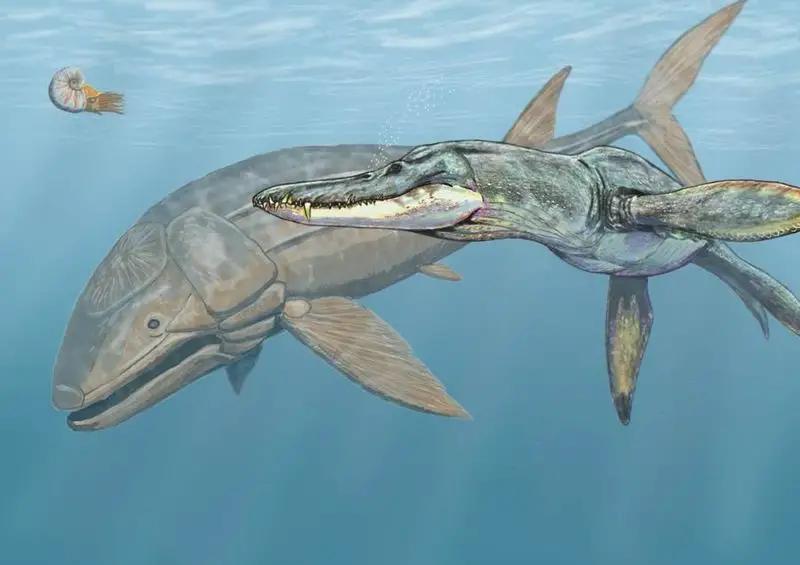
Long before sharks ruled our oceans and whales cruised the open water, the ancient seas were home to a cast of predators so strange, so enormous, and so perfectly deadly that the modern ocean feels almost tame by comparison. We are talking about creatures that emerged from eons of brutal evolution, monsters that even science is still trying to fully understand. Some of them were reptiles. Some were fish. Others were things that don’t fit neatly into any category we recognize today.
What makes these animals truly fascinating isn’t just their size or ferocity. It’s the stories behind them. The weird anatomies, the hunting strategies, the ecosystems they shaped and sometimes destroyed. So if you think you already know your prehistoric sea creatures, you might want to brace yourself. Let’s dive in.
1. Anomalocaris: The First Apex Predator That Changed Everything
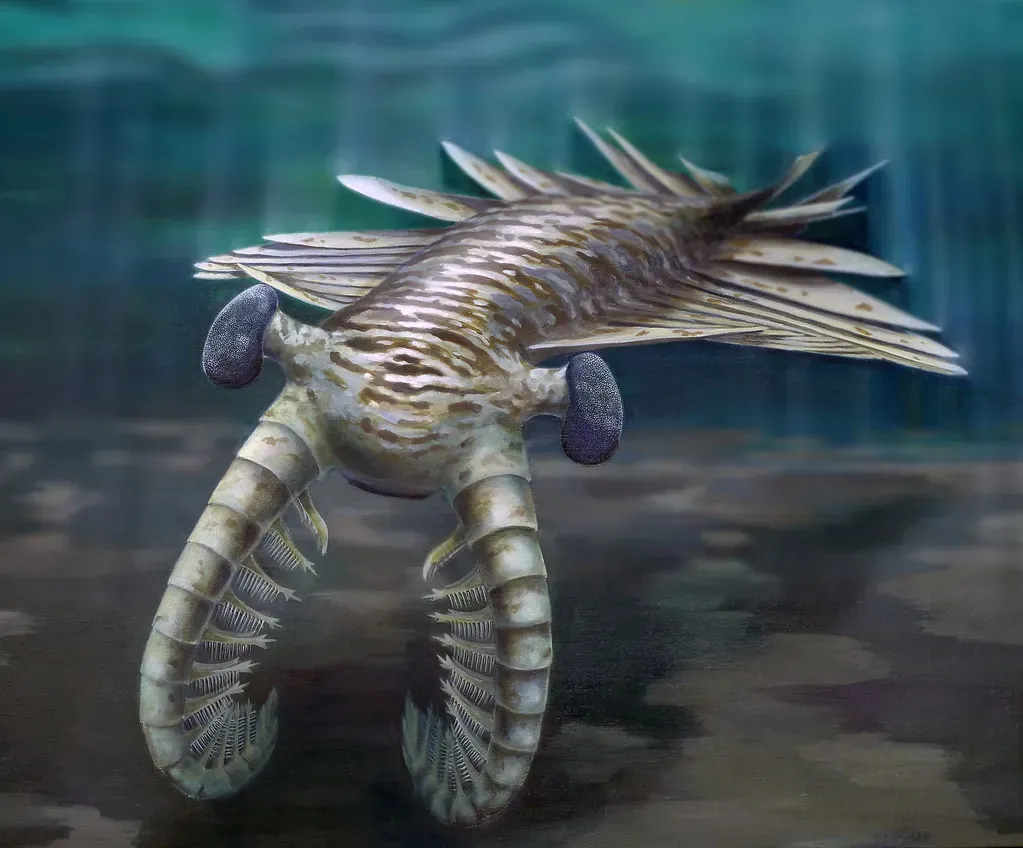
Most people assume the concept of an apex predator came along with the dinosaurs or perhaps the first sharks. Honestly, you’d be off by hundreds of millions of years. Anomalocaris was the great white shark of its day, cruising the shallow Cambrian seas in search of prey some 500 million years ago. Think about that for a second. Half a billion years ago, something was already sitting at the very top of the food chain.
Like other radiodonts, Anomalocaris had swimming flaps running along its body, large compound eyes, and a single pair of segmented frontal appendages, which it used to grasp prey. What’s surprising is how sophisticated its vision apparently was. Anomalocaris had some of the largest and most sophisticated compound eyes ever known, and by measuring the angles of the individual lenses, researchers estimate that the animal had very sharp sight. For a creature half a billion years old, that is genuinely mind-blowing. As the first top apex predator, Anomalocaris may have been responsible for an early evolutionary arms race, forcing other animals to develop hard shells for protection.
2. Dunkleosteus: The Armored Tank of the Devonian Seas
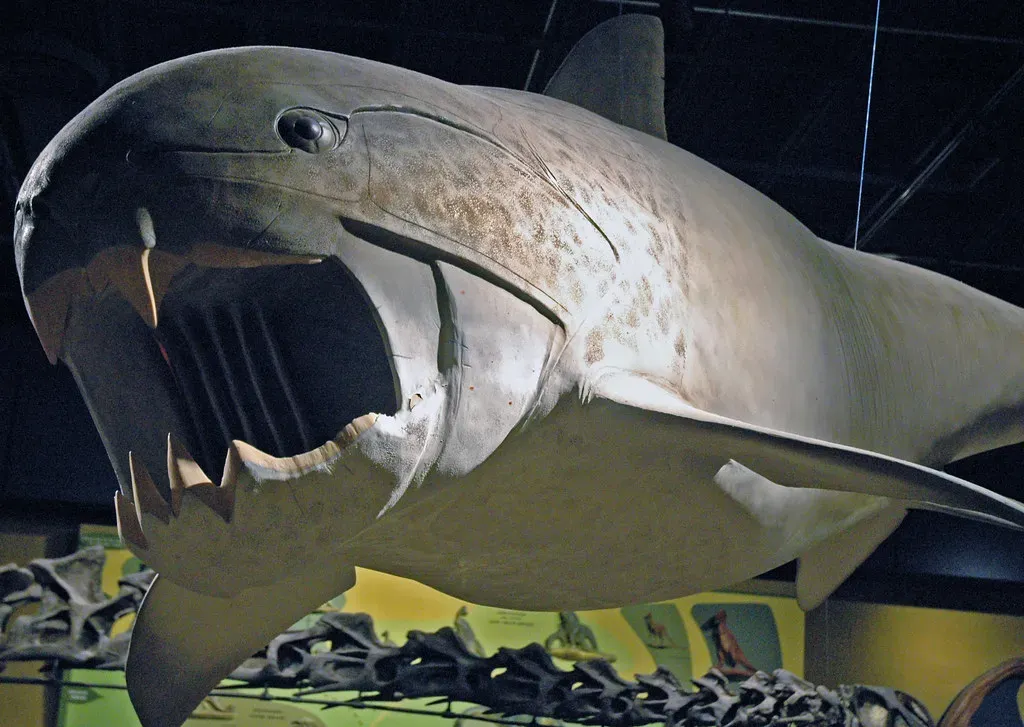
You want to talk about terrifying? Picture a fish the size of a school bus, wearing its own suit of armor, with jaws that don’t have teeth but instead use sharpened bone plates that self-sharpen every time the animal opens and closes its mouth. Dunkleosteus was one of the most fearsome predators of the prehistoric oceans, and unlike modern fish with sharp teeth, it had massive bony plates that acted like a built-in guillotine, slicing through flesh and bone with incredible force.
Dunkleosteus had no true teeth; instead, the skull’s bony plates extended into sharpened fangs protruding from the mouth, and these fangs scraped together, continuously sharpening each other as the fish opened and closed its jaws. As the fish grew, the jaws gradually lengthened while the fangs up front grew stronger. So the older it got, the more powerful its bite became. Dunkleosteus was also roughly 10 meters long from tooth to tail and covered in thick armor-like plating, making it one of the ocean’s first giant predators. Let’s be real, it was basically an underwater battering ram with a self-refining weapon system built right into its skull.
3. Megalodon: The Giant Shark Whose Myth Barely Captures the Reality
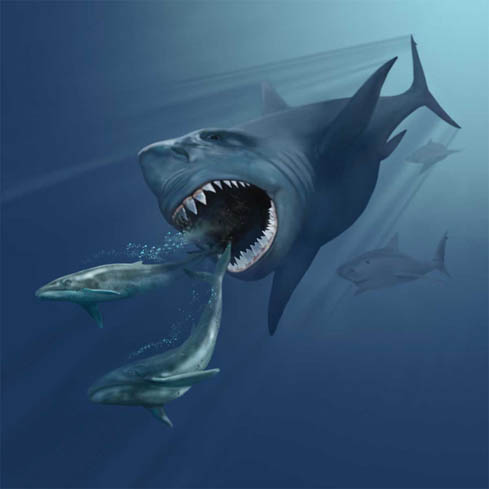
You’ve seen the movies. You’ve heard the theories about Megalodon lurking in the Mariana Trench. Thanks to several popular films and a wave of conspiratorial posts on social media, this extinct shark has become somewhat of a cultural icon, with fans claiming it still lives in the depths of the Mariana Trench. This is, of course, not true. In reality, Megalodon became extinct roughly 3.6 million years ago, during a time when our planet was plunged into a series of long ice ages.
Here’s the thing though. The real animal is far more extraordinary than any fiction. Megalodon chomped down on its prey with a force of between 10.8 and 18.2 tons, enough to crush the skull of a prehistoric whale as easily as a grape. Its hunting strategy was also more calculated than you might imagine. Whereas great whites dive straight toward their prey’s soft tissue, Megalodon’s teeth were suited to biting through tough cartilage, and there’s some evidence that it may have first sheared off its victim’s fins before lunging in for the final kill. Precise, patient, and utterly merciless.
4. Liopleurodon: The Jurassic Ambush Predator with a Monster Grin
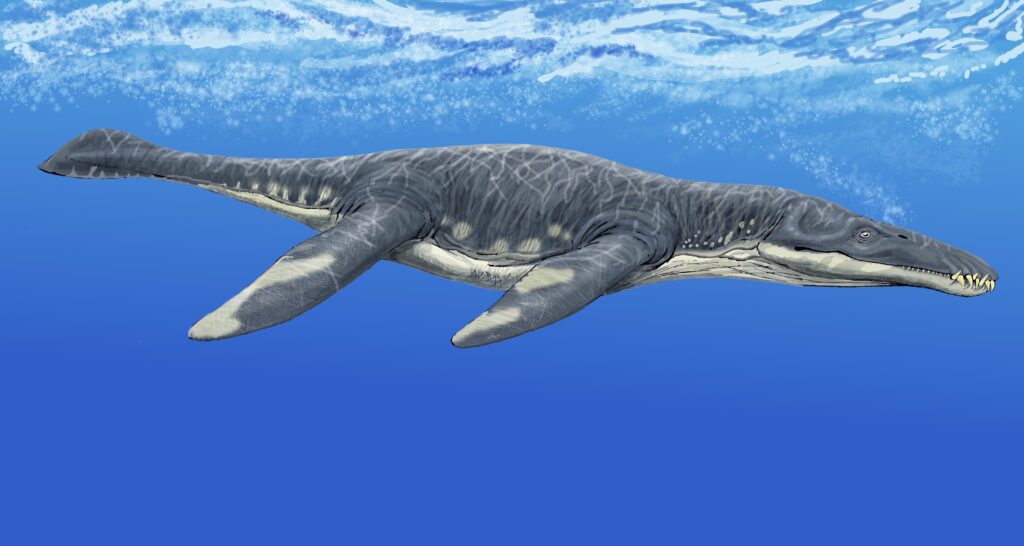
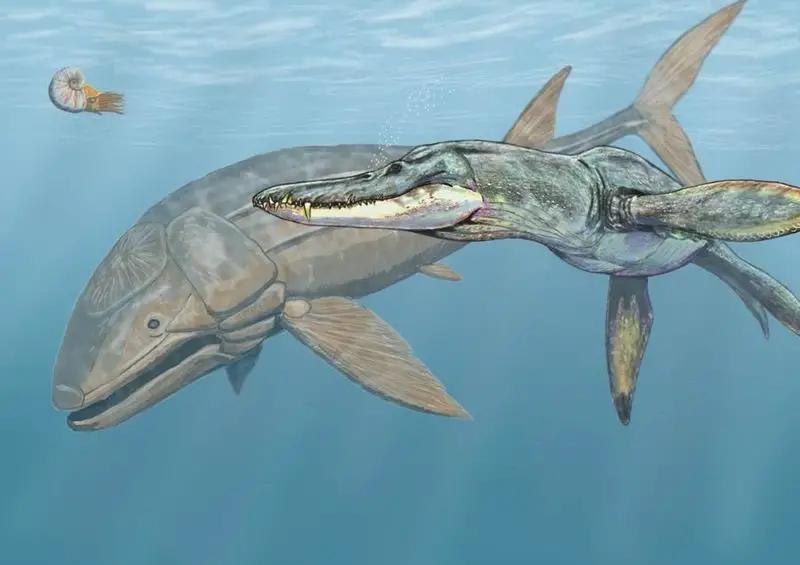
Liopleurodon lived in Western Europe from 166 to 155 million years ago, sharing its open ocean habitat with other marine reptiles such as ichthyosaurs and plesiosaurs. You might recognize the name from the early 2000s BBC series “Sea Monsters,” where it was portrayed as a truly colossal, 25-meter killing machine. The reality is a bit more nuanced, though no less impressive.
More recent studies of Liopleurodon have estimated its size at a more conservative 8 to 10 meters, similar to a large orca. Still, Liopleurodon had some of the largest jaws in the animal kingdom relative to its body size, with roughly 20 percent of its total length made up by its toothy grin. That is a jaw spanning nearly two meters on a body the size of a large orca. Some anatomical studies have found that Liopleurodon was likely a very fast and agile swimmer, built for ambushing its prey from below. Imagine something the size of a great white hitting you from underneath at full speed. That’s an encounter you don’t walk away from.
5. Mosasaurus and Tylosaurus: The Reign of the Sea Lizards
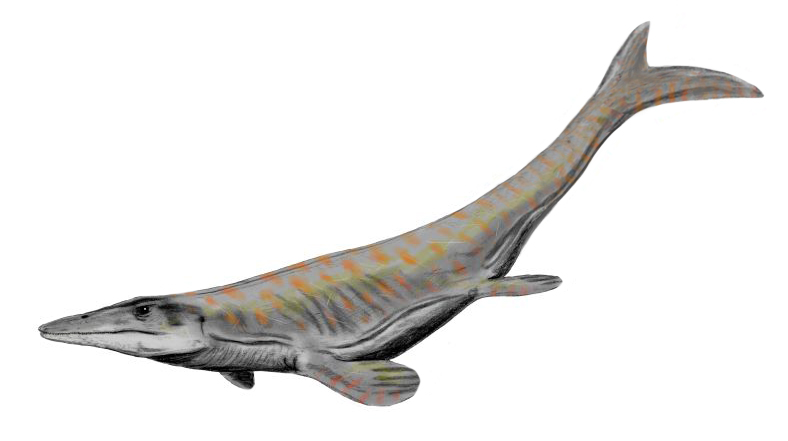
Mosasaurs may not be the strangest animals ever found, but they are certainly worthy of the name “sea monster.” Before they fell to the same fate as the nonavian dinosaurs, this group of marine reptiles roamed the world’s oceans, chowing down on almost anything that moved, including other mosasaurs. That last detail is worth pausing on. These creatures were cannibalistic, which tells you everything you need to know about how intense life in the Cretaceous sea must have been.
Tylosaurus serves as one of the most frightening examples of these mosasaurs, thanks to its incredible size and fiercely aggressive nature. The creature’s long, rounded snout was often used as a battering ram of sorts during battle, with Tylosaurus serving as an equal opportunity predator which fed upon birds, fish, and sharks alike. Stomach remains show signs of fish, sharks, smaller mosasaurs, plesiosaurs, and even some flightless birds. They lived during the Late Cretaceous in the seas that covered North America, where they sat firmly atop the marine food chain for several million years.
6. Ichthyotitan and the Ichthyosaurs: Dolphins of the Deep, But Deadlier
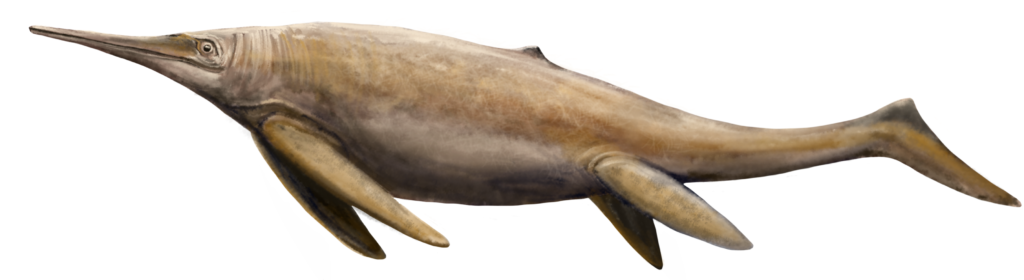
At first glance, you’d look at an ichthyosaur and think “dolphin.” Same streamlined shape, similar body proportions. Don’t let that fool you. Ichthyotitan belongs to a diverse group of marine reptiles known as ichthyosaurs. These long-snouted, air-breathing sea creatures looked a lot like dolphins, only larger. It’s thought that Ichthyotitan, the largest among them, were the apex predators of the Triassic roughly 205 million years ago and hunted a lot like orcas do today, using their six-foot-long jaws to subdue other smaller, yet equally ferocious marine reptiles.
Their diet included fish, squid, and other marine animals. Some species of ichthyosaurs had large eyes, which may have helped them in their deep-sea hunting. One detail that genuinely surprises people is the discovery of live birth in these animals. Some prehistoric sea animals gave birth to live young instead of laying eggs, and fossils of ichthyosaurs have been found with embryos inside them, showing that live birth existed in oceans over 200 million years ago. They were, in many ways, more advanced than their appearances suggested.
7. Pliosaurs and “Predator X”: The Hyper-Apex Killers
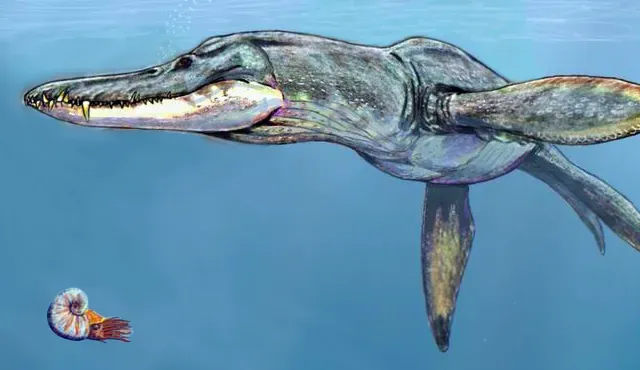
Here’s a term you don’t hear often: hyper-apex predator. It refers to a class of animal so dominant that it exists above what we typically consider the top of a food chain. In today’s oceans, food chains typically reach six levels, with animals such as great white sharks and orcas as apex predators. However, researchers discovered that there was a previously unseen seventh level that was filled with enormous marine reptiles.
The fascinatingly code-named Predator X is technically a pliosaur subspecies called Pliosaurus funkei, but its physical might and the initial mystery surrounding its discovery earn this terrifying marine hunter its own entry. Fossils of this 150-million-year-old creature were first discovered in 2006, and it was immediately clear that it was different from your average pliosaur, but it took until 2012 to figure out that the so-called Predator X was a whole previously undiscovered species. Some pliosaurs, such as Sachicasaurus and Monquirasaurus, could grow up to and beyond 10 meters long and are known as hyper-apex predators. A seventh trophic level. Think about that the next time you feel safe near any large body of water.
8. Helicoprion: The Spiral-Toothed Shark That Baffled Scientists for Decades
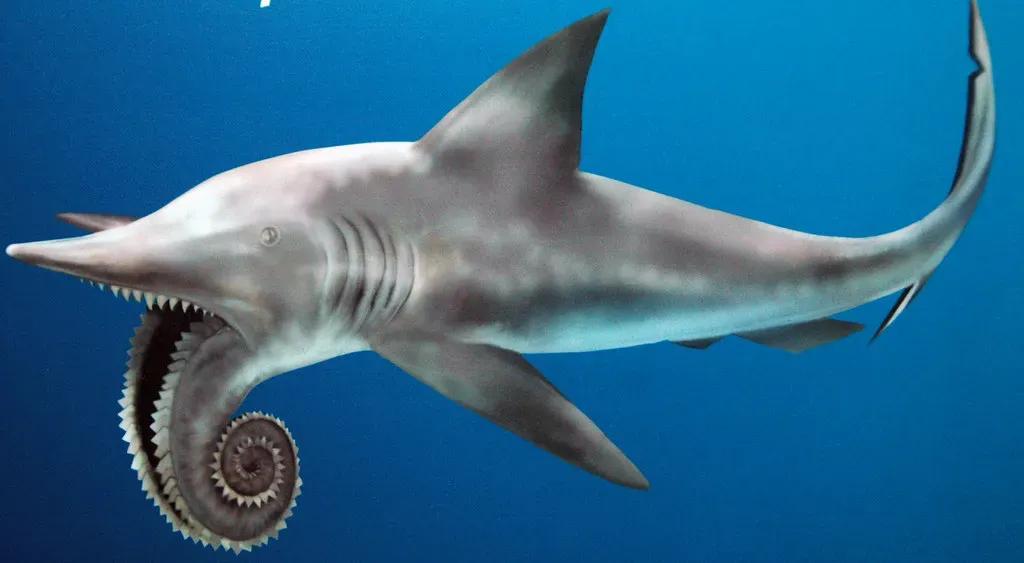
I think Helicoprion might be the most visually bizarre predator in this entire list. Imagine a shark with a circular buzzsaw of teeth in its mouth. Not teeth arranged in rows, but a spiral, like a nautilus shell made entirely of serrated blades. By the mid-20th century, this so-called “tooth whorl” was widely accepted as coming from the shark’s lower jaws, where it sat vertically like a buzzsaw, ready to deshell the hard-shelled ammonites and nautiloids it’s thought to have preyed on.
These tooth whorls make up the majority of Helicoprion fossils; in fact, most specimens are known solely from the strange teeth they’ve left behind. Helicoprion lived during the Permian, from 290 to 270 million years ago, and were truly cosmopolitan, inhabiting oceans across the world. This is evidenced by the fact that tooth whorls have been found everywhere from Western Australia to Norway. What’s strange is that for the longest time, scientists had no idea where the tooth whorl even sat in the body. Recent studies revealed that Helicoprion had a partly concealed tooth factory that began near the area where the upper and lower jaws meet, ran over the mouth, and then into the cartilage supported by the lower jaw. A mystery animal that kept scientists guessing for over a century.
9. Livyatan melvillei: The Prehistoric Sperm Whale That Competed With Megalodon
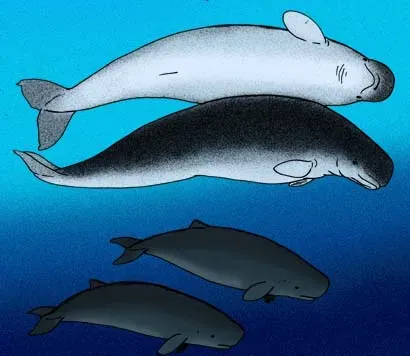
When most people learn that Megalodon was hunting the ancient seas, they naturally assume it was the undisputed top predator of its time. But there was another monster in those same waters that could arguably match it. Livyatan melvillei was a giant raptorial sperm whale and an apex predator of Miocene seas. Named after the biblical sea monster Leviathan and the novelist Herman Melville, it was one of the largest macroraptorial sperm whales and a dominant marine predator.
Ranging between 44 and 57 feet long, Livyatan was not only one of the biggest predators to ever live, it also had some of the largest sharp teeth of any animal. It gets even more unsettling when you consider what it was eating. Livyatan lived in the same oceans and ate the same food as the Megalodon, so this whale actually had to compete with the largest predatory shark ever. One hypothesis suggests competition with the modern sperm whale, which may have been more efficient at deep diving for squid. Another hypothesis implicates the decline in prey populations due to ocean cooling and changes in marine ecosystems. Most researchers favor a combination of ecological competition and climate-driven prey decline to explain Livyatan’s eventual extinction.
10. Sea Scorpions: The Forgotten Invertebrate Terrors of the Silurian
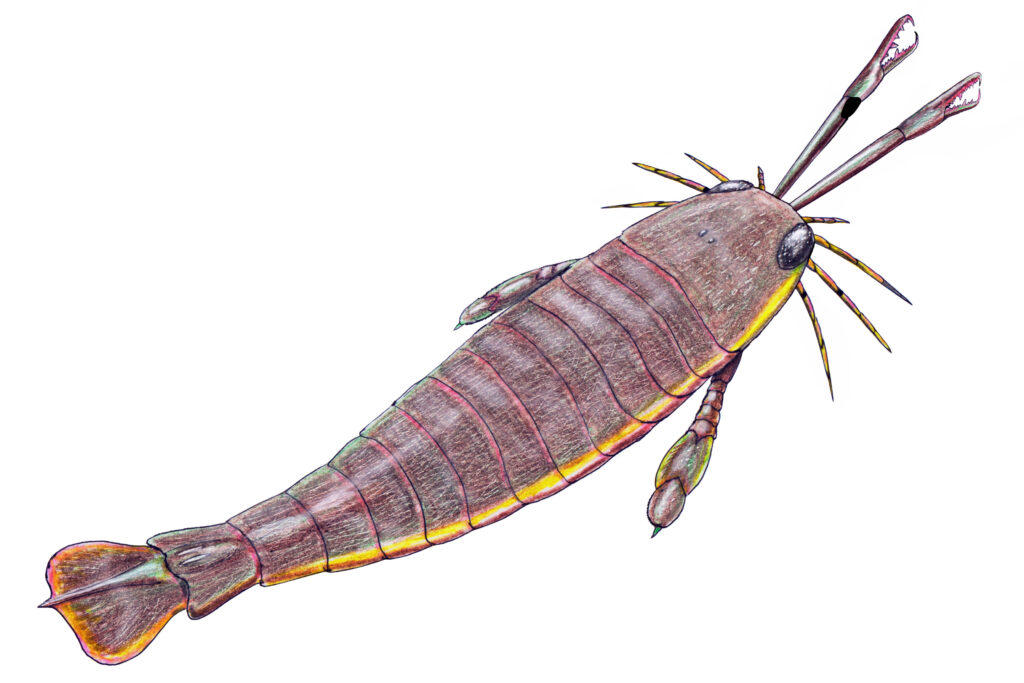
Everybody talks about reptiles and sharks when the conversation turns to prehistoric sea predators. Hardly anyone mentions the giant sea scorpions, and that feels like a serious omission. A scorpion without its poison stinger might not seem particularly terrifying until you find out that the animal in question is over nine feet long and is rapidly swimming toward you. Such is the terror known as the sea scorpion, the top oceanic predator of the Silurian period, roughly 443.8 to 419.2 million years ago.
Eurypterids are a type of extinct aquatic arthropod, informally referred to as “sea scorpions,” and Jaekelopterus was the king of them all. Clocking in at around seven and a half to eight and a half feet, Jaekelopterus is currently the largest arthropod that scientists have discovered. Living during the Devonian period, Jaekelopterus was believed to have been an apex predator of its day, and with its impressive size and formidable claws, it would have been a tough opponent to fight off. Sea scorpions, some of the largest arthropods to have ever lived, once held a prominent place in the ancient oceans, their presence influencing marine ecosystems profoundly. They swam through the seas for millions of years during the Paleozoic era, an epoch where diverse forms of life were emerging and evolving.
Conclusion: The Ancient Seas Were Never Safe
Taken together, these ten predators paint a picture of ancient oceans that were relentlessly, almost incomprehensibly dangerous. From the very first apex predator to spiral-toothed sharks and prehistoric sperm whales competing with the largest shark ever to exist, the seas of prehistory were a completely different world. The oceans we see today feel vast and powerful, but they are nothing compared to what existed millions of years ago. Prehistoric sea animals were not just bigger; they were stranger, faster, and often far more terrifying.
What’s perhaps most humbling is that science is still uncovering these stories. While this is an early step in understanding ancient marine ecosystems, scientists will be able to compare more ecosystems as more discoveries emerge and deepen knowledge of how ancient oceans influenced the modern ones we depend on today. Every new fossil is another chapter in a story that has been unfolding for half a billion years. Honestly, the deeper you look, the more extraordinary it gets.
Which of these ancient hunters surprised you the most? Drop your thoughts in the comments below.