
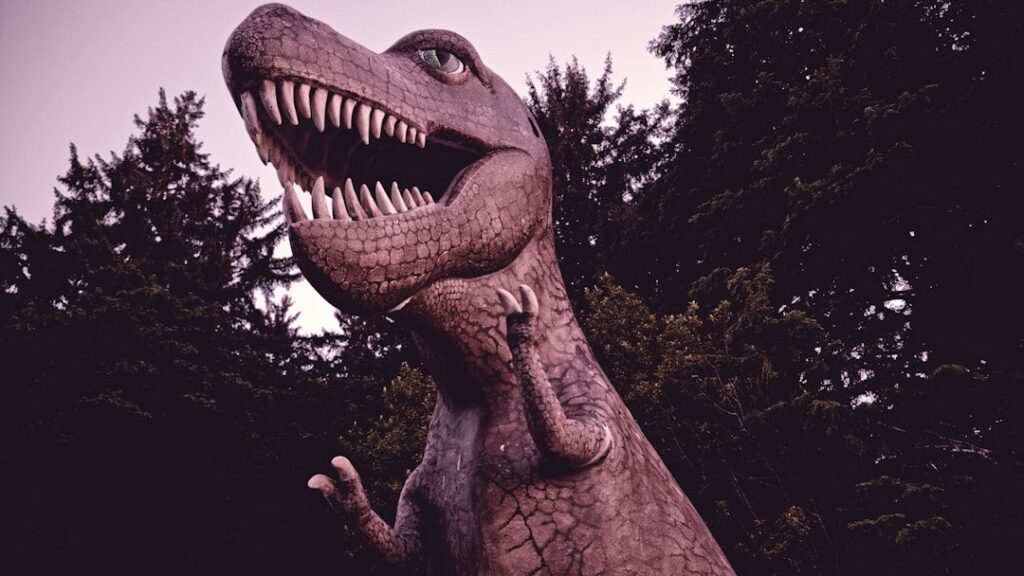
Dinosaurs have fascinated us for generations. From childhood bedroom posters to blockbuster movie franchises, these incredible creatures have held a permanent grip on the human imagination. The trouble is, a huge chunk of what most people think they know about dinosaurs is just plain wrong.
Hollywood, outdated textbooks, and decades of creative storytelling have layered myth upon myth onto these animals. Paleontologists have been quietly correcting the record for years, armed with fossil evidence, advanced imaging technology, and an ever-growing body of research. Some of what you’re about to read will surprise you. Some of it might even make you feel a little cheated. Let’s dive in.
Myth 1: All Dinosaurs Were Enormous
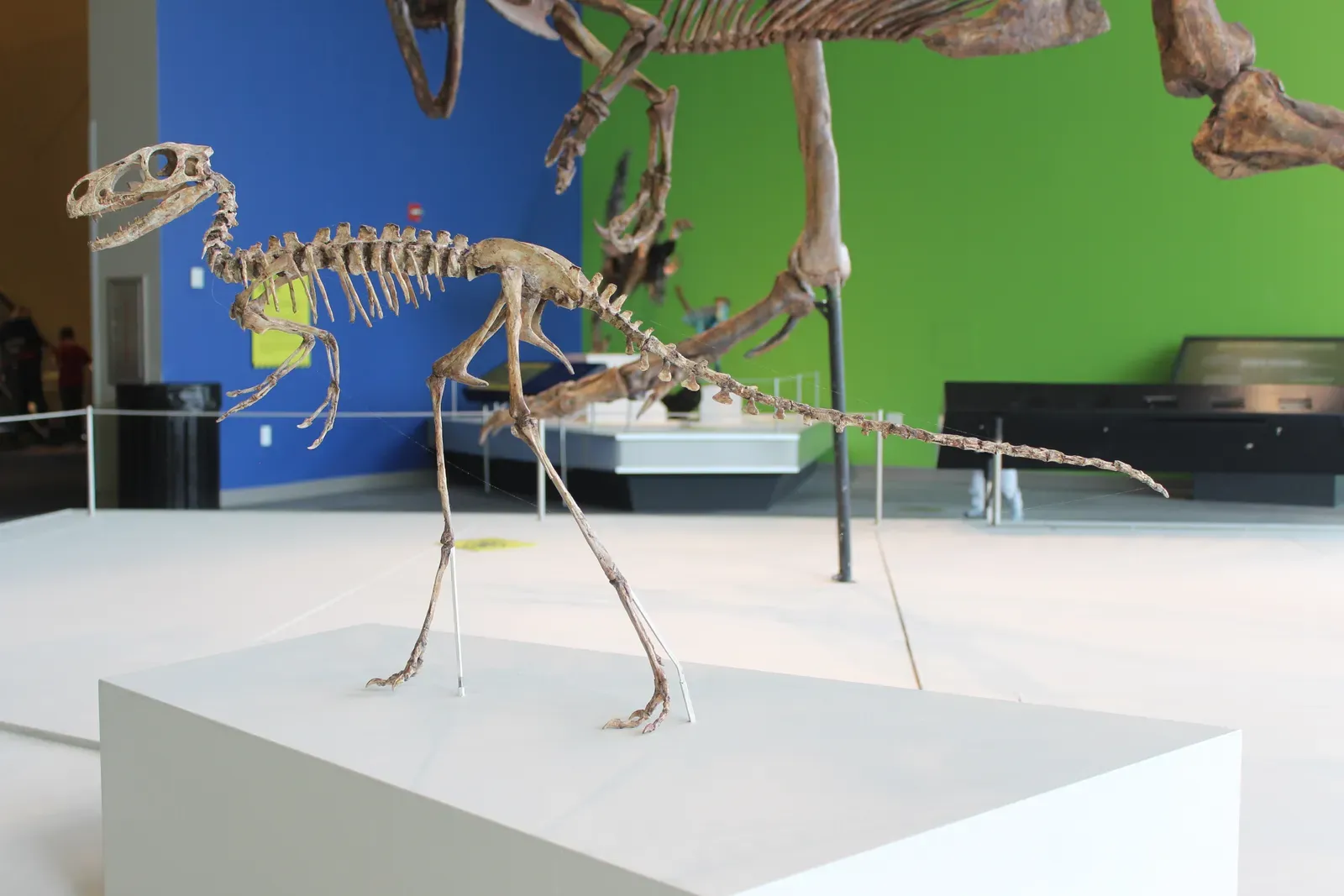
You might picture a dinosaur and immediately imagine something city-block-sized, thundering across the landscape. It’s an understandable mental image, shaped by decades of cinema. The name dinosaur does tend to evoke images of giants, and certainly many were very large. Tyrannosaurus rex was around 12 metres long and weighed more than five tonnes.
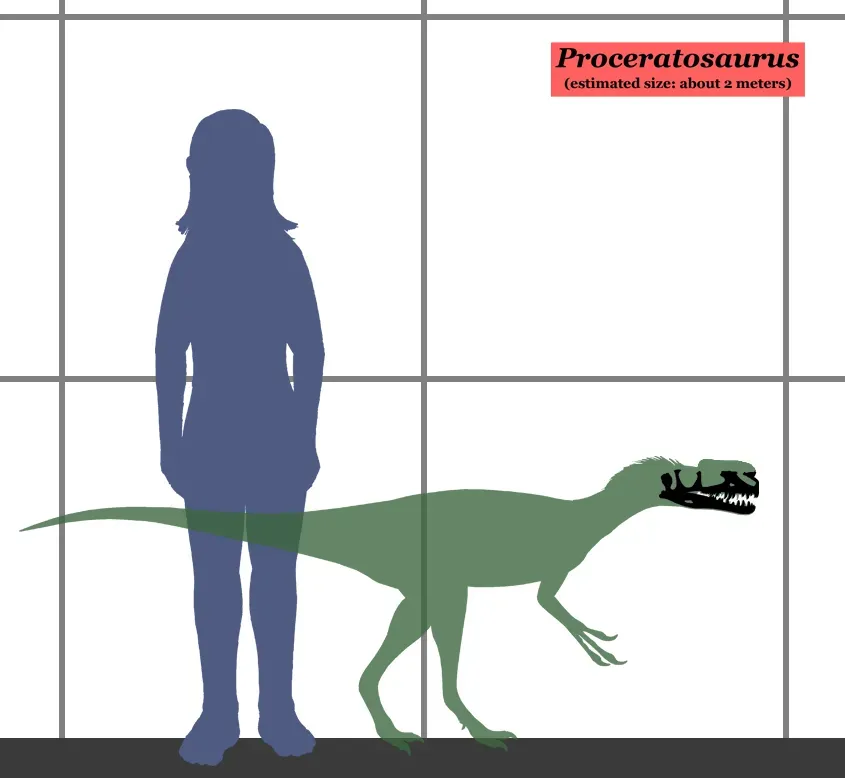
Here’s the thing, though. Not all dinosaurs were giants. The horned dinosaur Protoceratops was the size of a sheep. Velociraptor was the size of a golden retriever and had to be scaled up for Jurassic Park to make it more terrifying. Recent years have seen an explosion in the number of small species discovered, such as the cat-sized raptor Hesperonychus, the rabbit-sized plant-eater Tianyulong, and the quail-sized insect-eater Parvicursor. The smaller species were actually likely far more common than their towering cousins, just much harder to find in the fossil record.
Myth 2: T. rex Was the Biggest Predator That Ever Lived
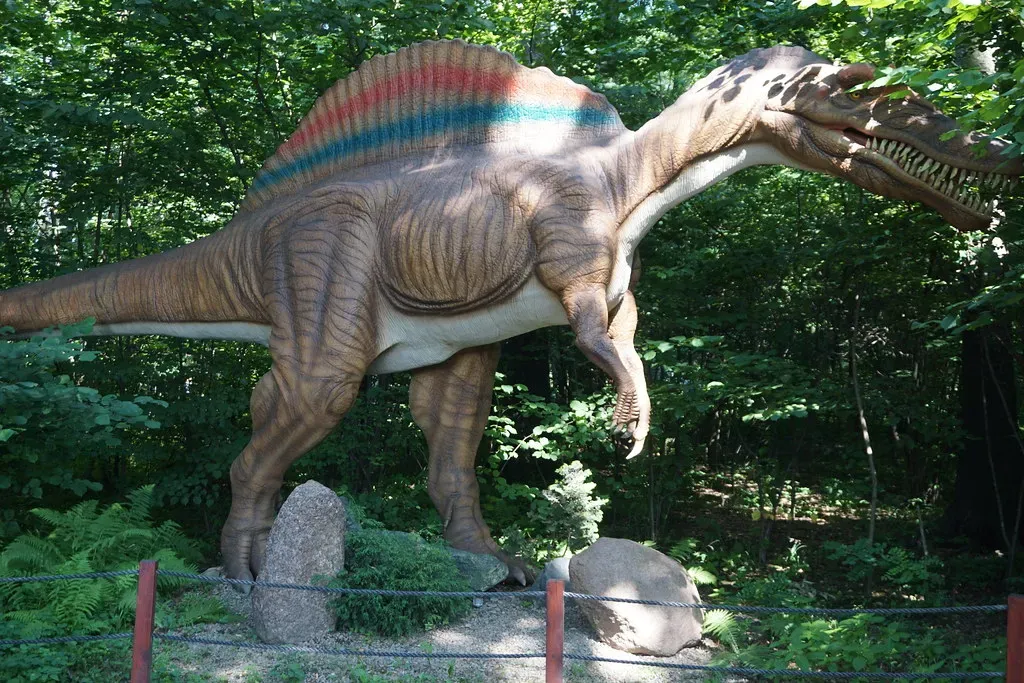
Few animals carry a more fearsome reputation than the Tyrannosaurus rex. Pop culture has placed it firmly at the top of the prehistoric food chain, and honestly, it’s hard not to be impressed by those jaws. The T. rex is often depicted as the largest and most fearsome predator to have ever walked the Earth. While it is undoubtedly one of the most famous and iconic dinosaurs, it was not the largest predatory dinosaur.
Recent discoveries have shown that other large theropods, such as Spinosaurus and Giganotosaurus, likely rivaled or even exceeded the T. rex in terms of size. These findings have highlighted the vast diversity and complexity of the dinosaur world, debunking the misconception that the T. rex was the uncontested king of prehistoric predators. Honestly, if you had to pick the most dramatic revision in popular dinosaur knowledge, this might be it.
Myth 3: Dinosaurs Were Scaly, Dull-Colored Reptiles
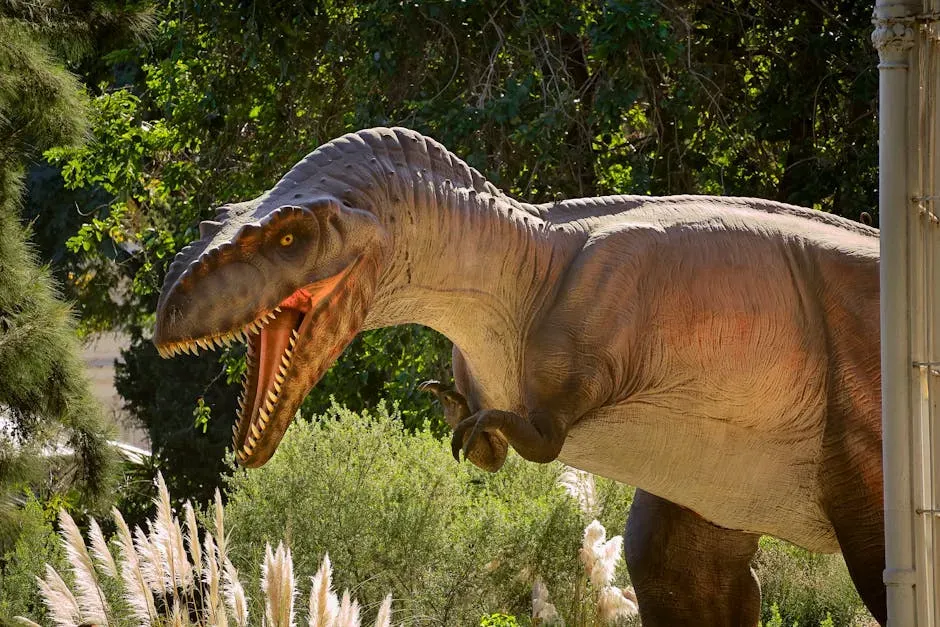
Think back to every museum illustration or movie you’ve seen. Dinosaurs were almost always portrayed in muted greens and browns, leathery skin baking under a Jurassic sun. It seemed logical at the time, given how closely related they appeared to reptiles. When dinosaurs were first discovered, it seemed obvious that because they were related to crocodiles and lizards, they must have been scaly. Many dinosaurs, including duckbills, horned dinosaurs, sauropods, and armoured dinosaurs, do preserve scale impressions.
However, the picture changed dramatically. Dinosaurs were actually quite colorful. Paleontologists can tell what colors some of them were because they’ve found really well-preserved fossilized feathers containing structures called melanosomes. These held pigments, and their different shapes and arrangements indicate what colors they were. For example, a small carnivorous dinosaur in northeastern China called Sinosauropteryx probably had a striped brown tail and a raccoon-like bandit mask. So much for boring lizard-grey.
Myth 4: Dinosaurs Had Scales, Not Feathers
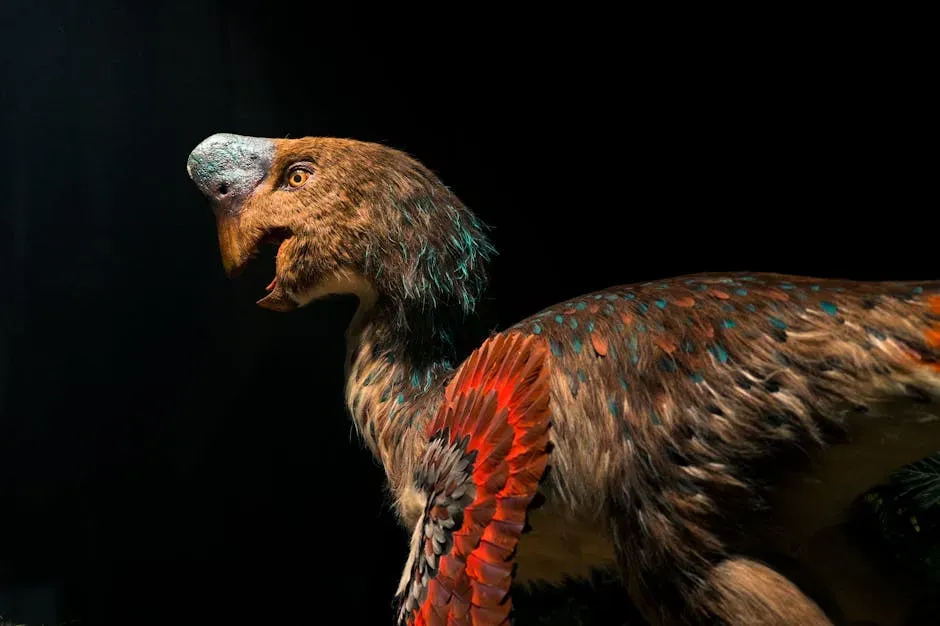
This one closely connects to the color myth, but it goes even deeper. For a long time, the very idea of feathered dinosaurs would have sounded like science fiction. In 1997, a small carnivorous dinosaur named Sinosauropteryx was found to be covered not with scales, but a soft, fuzzy down. That discovery sent shockwaves through paleontology.
Since then, feathers have been discovered on plant-eating ornithopods, fanged heterodontosaurs, and many families of carnivorous dinosaurs including Tyrannosauridae, meaning that T. rex was probably covered in feathers, not scales. In the past several decades, paleontologists around the world have uncovered dinosaur bones with feathers around them, representing species they didn’t realize were feathered before, including tyrannosaurs, the group of predatory dinosaurs that T. rex belonged to. Feathers weren’t a bird invention. They came much, much earlier.
Myth 5: Dinosaurs Dragged Their Tails Along the Ground
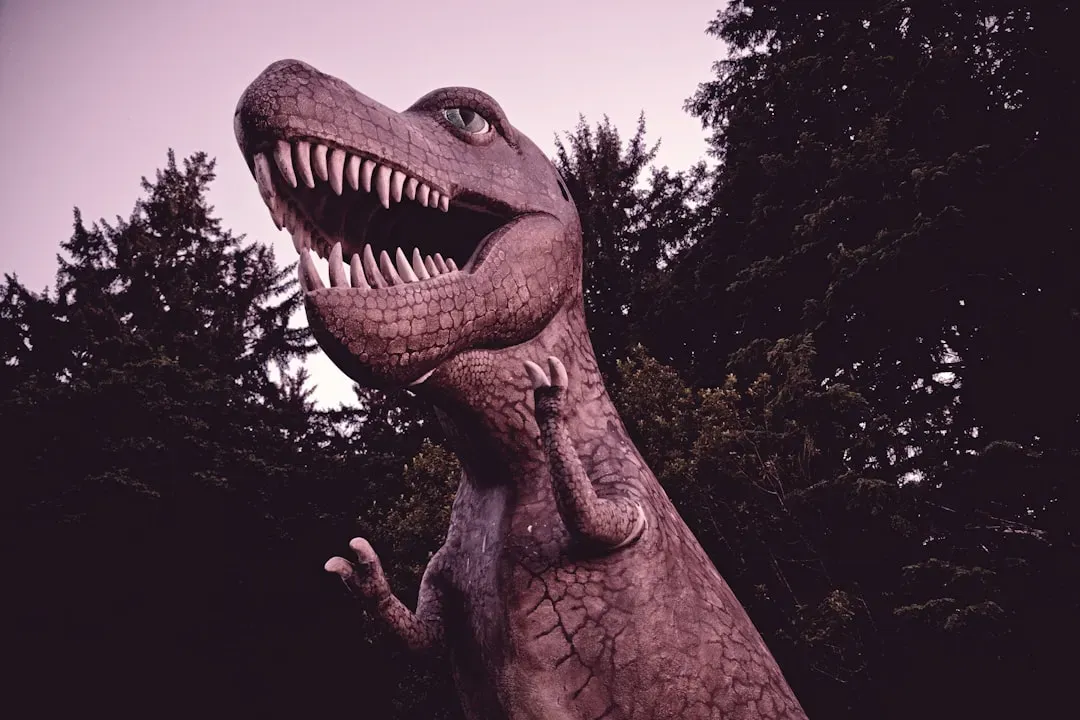
You’ve probably seen it in older illustrations and movies. Dinosaurs lumbering forward with their heavy tails scraping a groove into the prehistoric dirt, their bodies upright like a muscular letter “L.” It looked natural, even convincing. Museums originally built many T. rex skeleton models in an upright position with their tails on the ground, but researchers have known since the 1960s that they actually must have held their bodies horizontally, like a giant teeter-totter.
The correct posture is far more dynamic and honestly, more terrifying. Dinosaurs were generally fast, active animals that kept their tails off the ground at all times. Somehow, the message doesn’t seem to be getting through to the public. When a Cornell paleontologist asked students to draw a picture of a Tyrannosaurus, most drew it upright. Popular culture usually takes a long time to catch up to current scientific thinking. Think of it like an athlete mid-sprint, not a slow shuffle.
Myth 6: Pterosaurs and Plesiosaurs Were Dinosaurs
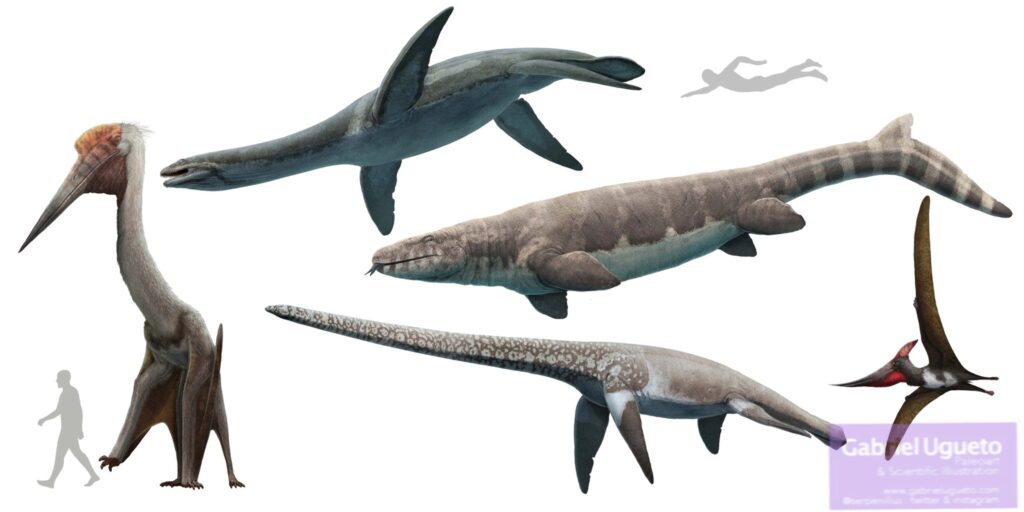
Let’s be real, this one has tripped up almost everyone at some point. Flying reptiles like Pteranodon? Dinosaur. The long-necked sea monsters like Plesiosaurus? Also dinosaur. That’s what cartoons, toy sets, and even some school books have implied for decades. A lot of people think of the pterosaur, like the iconic Pteranodon, as being a flying dinosaur. That’s what the pictures show. All dinosaurs were actually terrestrial creatures, with thousands of species living out their lives for millions and millions of years as land-dwellers.
Pterosaurs and plesiosaurs occupied their own distinct branches of the reptile family tree, entirely separate from dinosaurs. Dinosaurs are not lizards. Dinosaurs are their own category of animal, most closely related to birds and crocodiles. They come from a group of reptiles called Archosauromorphs. Lizards come from a distantly related reptile group called Lepidosauromorphs. Drawing those lines matters more than most people realize.
Myth 7: All Non-Avian Dinosaurs Were Wiped Out by the Asteroid
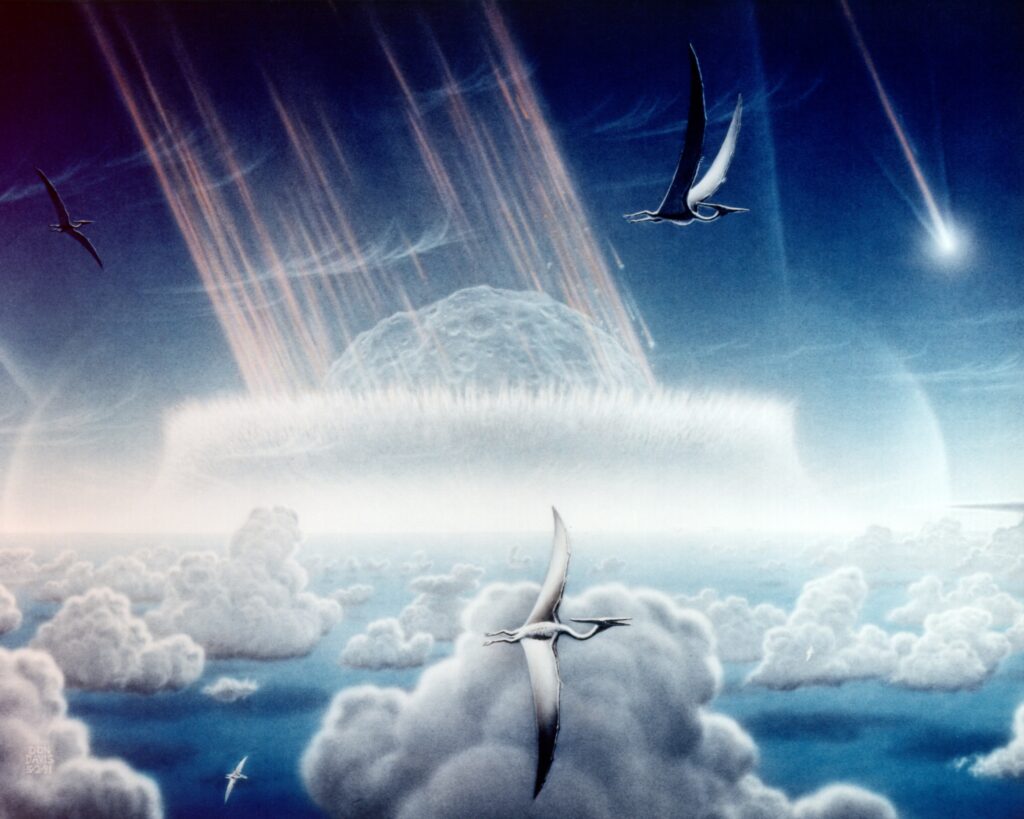
The dramatic story goes like this: asteroid hits Earth, dinosaurs die, curtain falls. It’s clean, it’s cinematic, and it is only partly true. There was definitely a mass extinction event 65 million years ago, probably related to a giant asteroid that smashed into Mexico’s Yucatan Peninsula, and it did spell the end for most dinosaur species. But not all.
If you think all dinosaurs were wiped out when a giant meteor hit the earth over 65 million years ago, you’re wrong. One huge family of dinosaurs survived the catastrophe at the end of the Cretaceous Period. The birds! Birds have a lineage that stretches all the way back to the Mesozoic Era. In fact, studies have revealed that Tyrannosaurus rex and birds are more closely related than either is to the alligator. Dinosaurs didn’t disappear. You can still watch them from your kitchen window.
Myth 8: Humans and Dinosaurs Coexisted
Blame the Flintstones, blame B-movies, blame ancient mythology. The idea that early humans once lived alongside dinosaurs has a surprisingly stubborn grip on popular culture. It makes for great storytelling, sure. Our earliest human ancestors evolved almost 60 million years after non-avian dinosaurs like Tyrannosaurus and Triceratops went extinct.
The fossil record is absolutely clear on this. Human remains and artifacts simply do not occur in the same rock layers. Some proponents of the myth have claimed some sites preserve human artifacts among dinosaur bones, but they routinely ignore or fail to produce enough detail to confirm those artifacts were buried with those bones. Think of it this way. If dinosaurs and humans existed at the same time, it would be the equivalent of you meeting someone who was alive before the continents had fully drifted apart. The timescales involved are almost incomprehensibly vast.
Myth 9: Stegosaurus Had a Second Brain in Its Tail
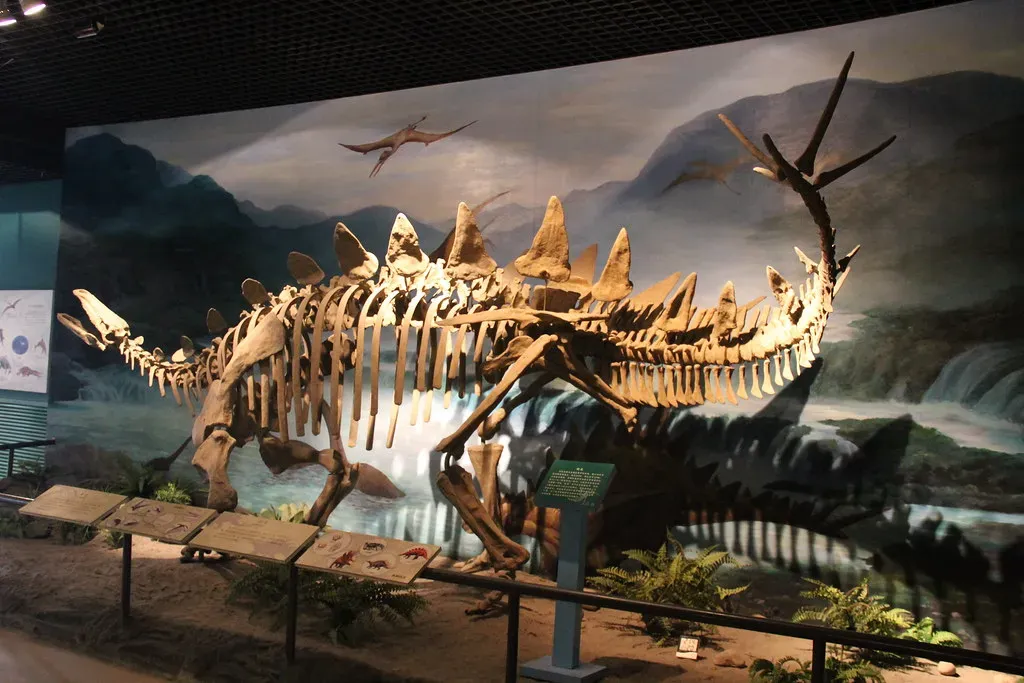
This one has a surprisingly long shelf life in popular science books and classroom trivia. The Stegosaurus, with its iconic back plates and spiked tail, was supposedly so poorly equipped in the brains department that it needed a backup neural center near its hips just to function. One myth that seems very hard to put to rest is the idea that Stegosaurus had such a small brain that it needed a second brain back near its legs to control the back half of its body. While this myth was disproven over a hundred years ago, it still finds its way into books, TV shows, and other misleading media.
The reality is far less dramatic, though still fascinating. The brain in its head worked just fine to control its entire body, and it definitely did not have or need a second brain. What it did have was a large ball of nerves that very early paleontologists mistook for a second brain. This nerve cluster is common in many other vertebrate animals, including other dinosaurs, and even humans. In other words, Stegosaurus wasn’t running on backup hardware. It was just built like most other animals.
Myth 10: The Brontosaurus Was a Real Dinosaur
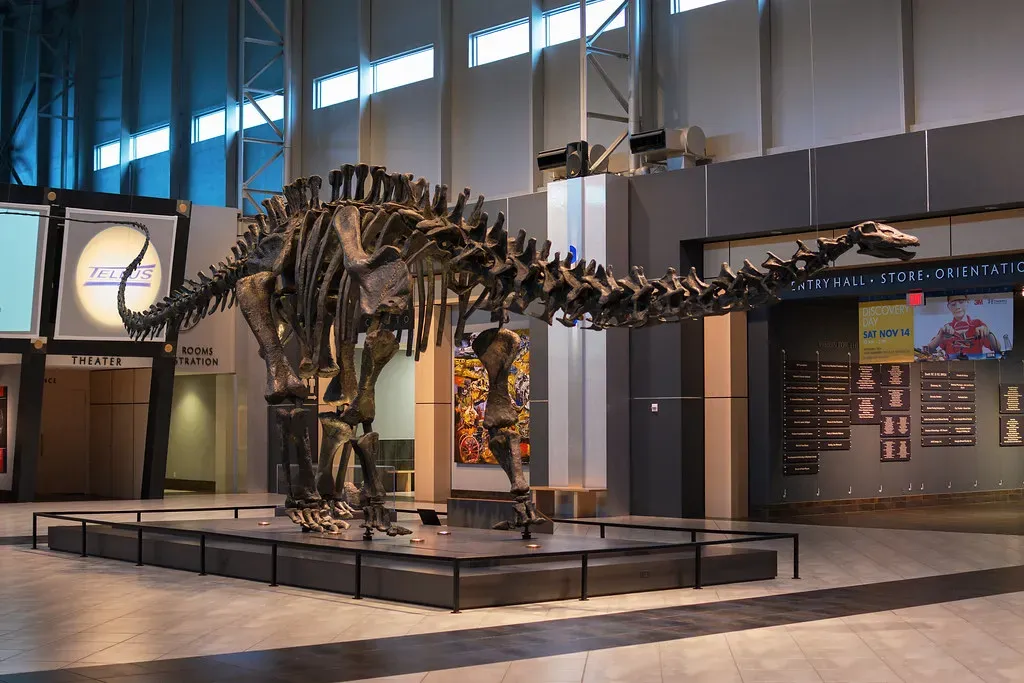
Generations of children grew up loving the Brontosaurus. It showed up on everything from cereal boxes to animated films. It felt as real and established as the T. rex or Triceratops. The Brontosaurus never actually existed, and was in fact an incorrectly identified dinosaur created by putting the body of an Apatosaurus together with the head of a Camarasaurus.
The mix-up happened during the late 1800s in what became known as the “Bone Wars,” a fierce rivalry between competing paleontologists who rushed fossil findings into print without careful verification. It is worth noting that more recent research has revived “Brontosaurus” as a potentially valid genus based on new skeletal analysis, though its standing remains debated. Researchers have identified more than 700 species of extinct dinosaurs, but that’s probably just a fraction. Fossils are being discovered at a rapid pace, with a new dinosaur species being identified every week, on average. The story of the Brontosaurus is a perfect reminder of how science is always willing to revise itself when better evidence arrives.
Conclusion: What You Think You Know May Already Be Outdated
Dinosaur science is one of the most rapidly evolving fields in all of natural history. What felt like settled fact twenty years ago is being rewritten almost monthly, from feathered tyrannosaurs to colorful sauropods to the birds outside your window carrying dinosaur DNA. In the past few decades, with the advance of imaging technology and the ability to share research across the globe, paleontologists have made leaps in their knowledge of prehistoric animals, changing the popular images we hold about what dinosaurs looked like and how they lived.
The deeper you dig into this field, the more humbling it becomes. These creatures dominated Earth for over 150 million years, a timescale that makes human civilization feel like a brief afternoon. The myths we’ve clung to say more about our storytelling instincts than about the animals themselves. Every debunked myth is replaced by something stranger, more complex, and far more fascinating.
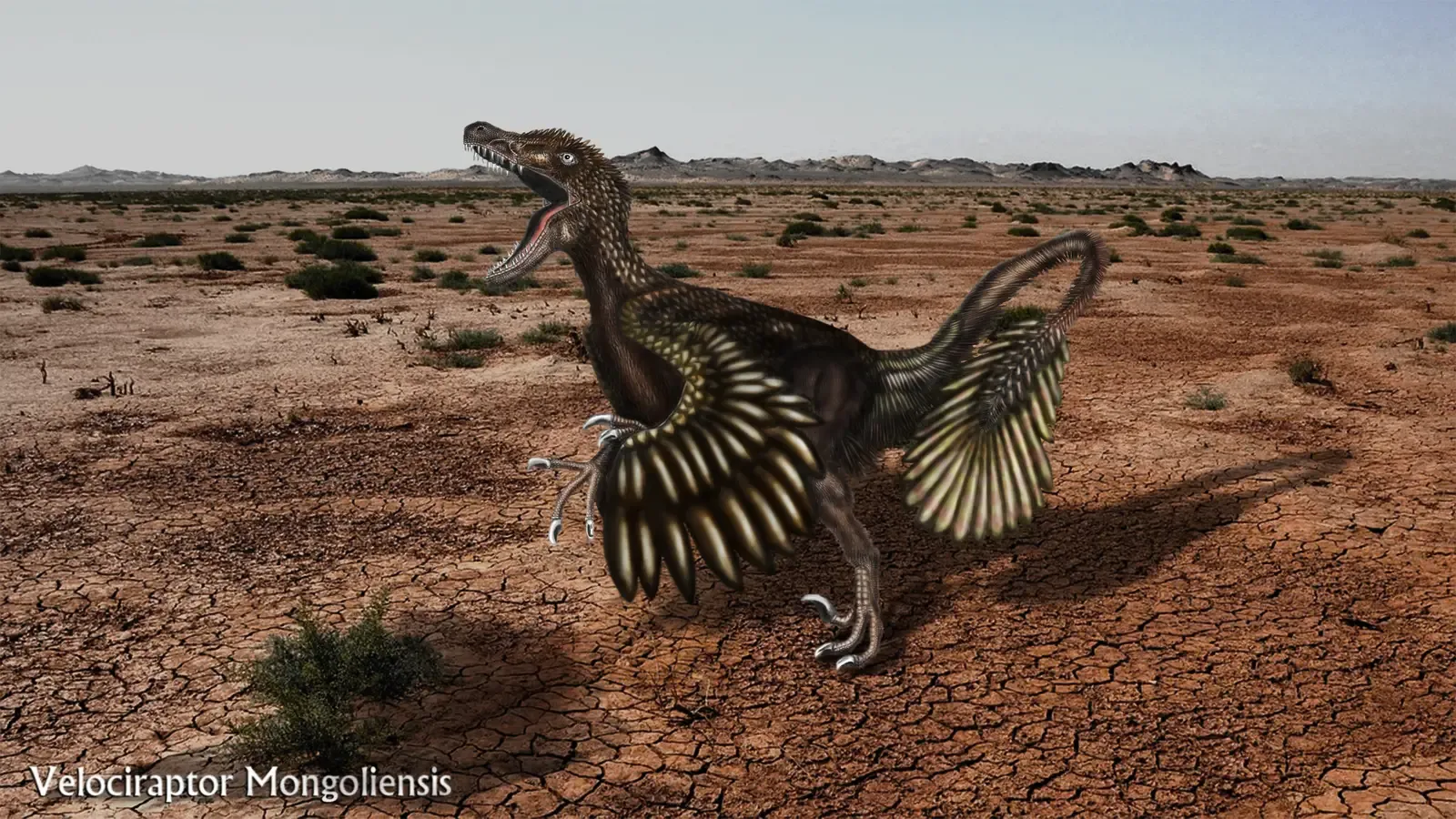
So the next time you see a Velociraptor in a movie, remember: that’s actually closer to a large, feathered bird. Were you picturing that before today? Probably not, and that’s exactly the point.