There is something almost haunting about imagining a creature the size of a modern African elephant lumbering across frozen tundra, navigating blizzards and permafrost, decade after decade, for hundreds of thousands of years. The woolly mammoth was not a fantasy. It was real, remarkably engineered by evolution, and far more complex than the shaggy cartoon image most of us carry around in our heads.
What made these animals so extraordinary was not just their size or their iconic tusks. It was the breathtaking collection of biological tricks, behavioral strategies, and genetic mutations that let them thrive in one of Earth’s most punishing environments. The story of how they adapted, survived, and ultimately vanished is one that still keeps scientists up at night. So let’s dive in.
Giants Built for the Cold: The Woolly Mammoth’s Physical Armor
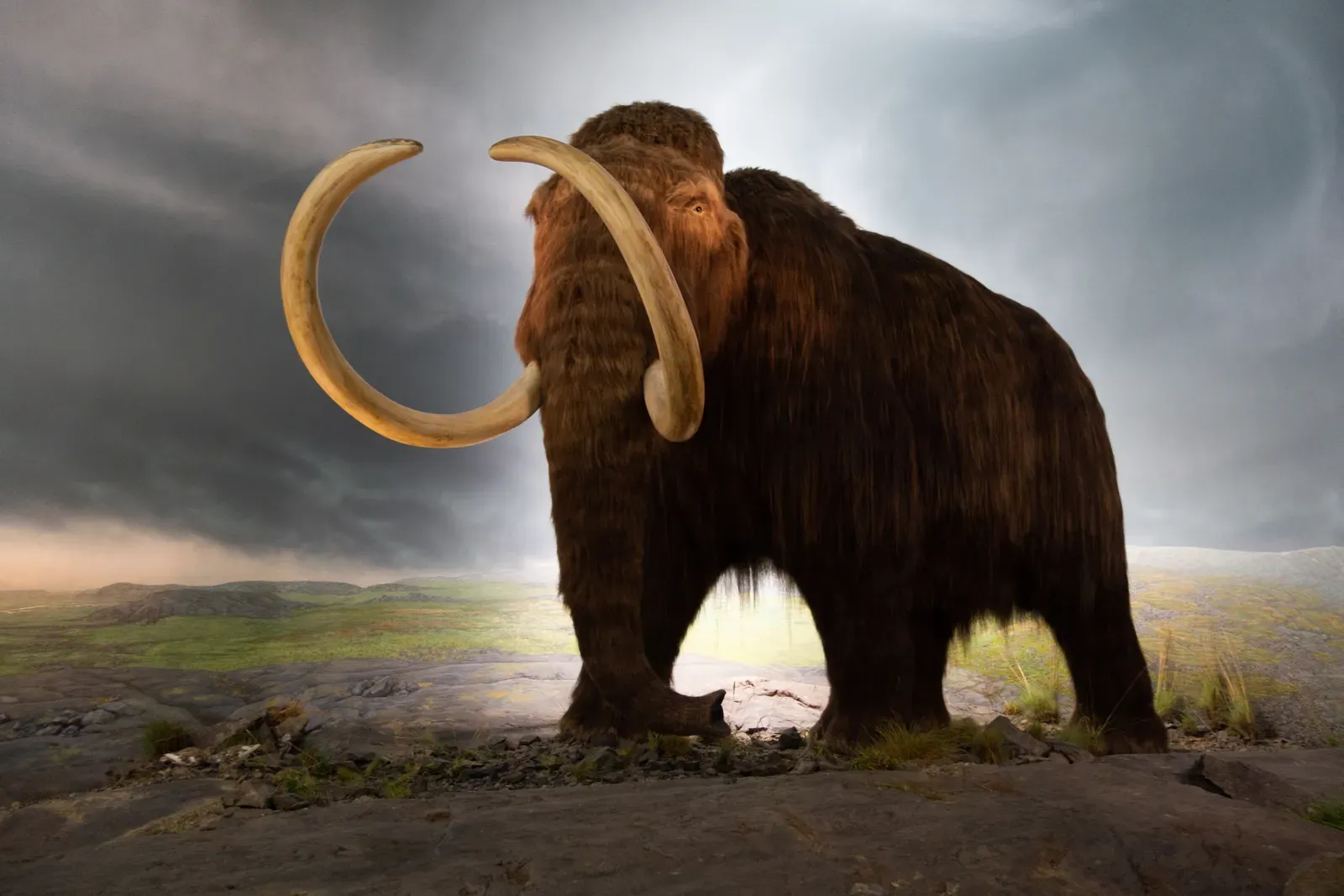
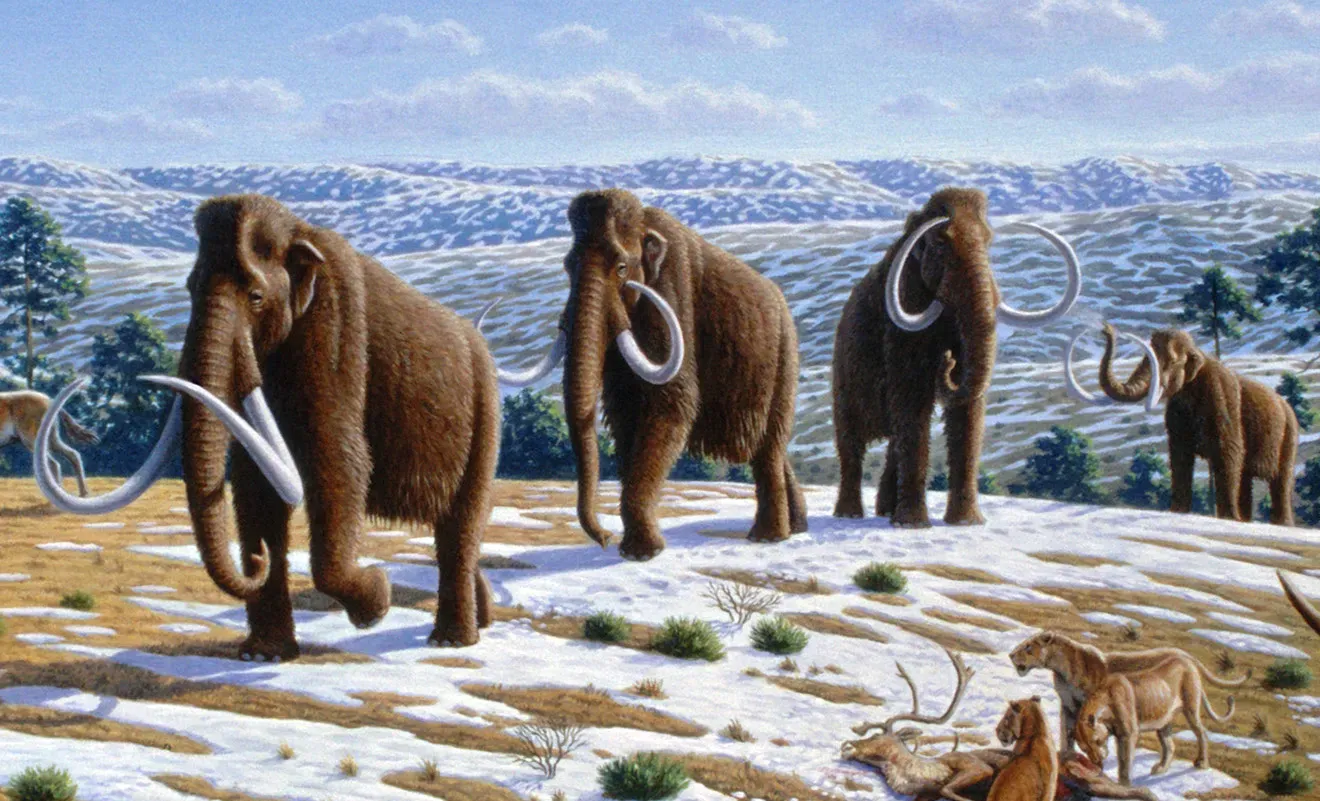
You might think surviving an Arctic winter is mostly about willpower. For the woolly mammoth, it was about engineering. Woolly mammoths evolved a suite of adaptations for arctic life, including small ears and tails to minimize heat loss, a thick layer of subcutaneous fat, long thick fur, and numerous sebaceous glands for insulation, as well as a large brown-fat deposit behind the neck that may have functioned as a heat source and fat reservoir during winter. Honestly, when you list it all out like that, it reads less like an animal and more like a survival system.
Woolly mammoths were covered in two layers of fur – the shaggy outer layer could be 20 inches long and helped them stay toasty in temperatures as low as minus 58 degrees Fahrenheit. Think about that for a second. Minus 58. That’s cold enough to freeze exposed skin in minutes, yet these animals foraged in it, raised young in it, and built entire civilizations of behavior around it. Woolly mammoths also had a lump on their back, which scientists think were fat stores that provided energy when food was scarce, sort of like a camel’s hump.
The woolly mammoth’s ears were small, which exposed a smaller amount of surface area and was likely an adaptation to the cold climates in the Northern Hemisphere. Compare that to modern African elephants, whose enormous ears act like giant radiators pumping heat away from the body. Mammoths had the opposite problem. Every design choice was aimed at one goal: keep the heat in.
The Secret in Their Blood: A Genetic Revolution
Here’s the thing that genuinely blows my mind. The mammoth’s cold-weather mastery was not just about fur and fat. It went all the way down to the molecular level. The haemoglobin of the woolly mammoth was adapted to the cold, with three mutations to improve oxygen delivery around the body and prevent freezing – a feature that may have helped the mammoths to live at high latitudes. That is essentially a rewrite of blood chemistry.
In examining the woolly mammoth’s genetic makeup, scientists discovered that a blood protein carrying oxygen from the lungs to the rest of the body has mutations in its DNA that make it different from that of its Asian elephant cousins. Scientists believe the mutation helped woolly mammoths survive freezing temperatures. The implications of this finding stretch far beyond paleontology. Researchers have even explored using this discovery as a blueprint for creating artificial blood products for modern medicine. Genes with mammoth-specific amino acid changes are enriched in functions related to circadian biology, skin and hair development and physiology, lipid metabolism, adipose development and physiology, and temperature sensation.
The Mammoth Steppe: A World You Would Not Recognize
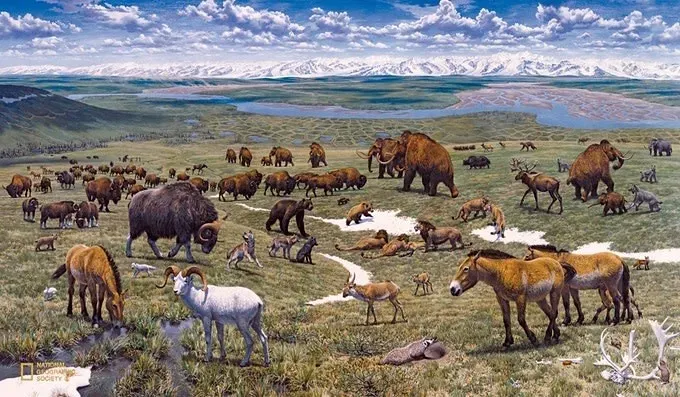
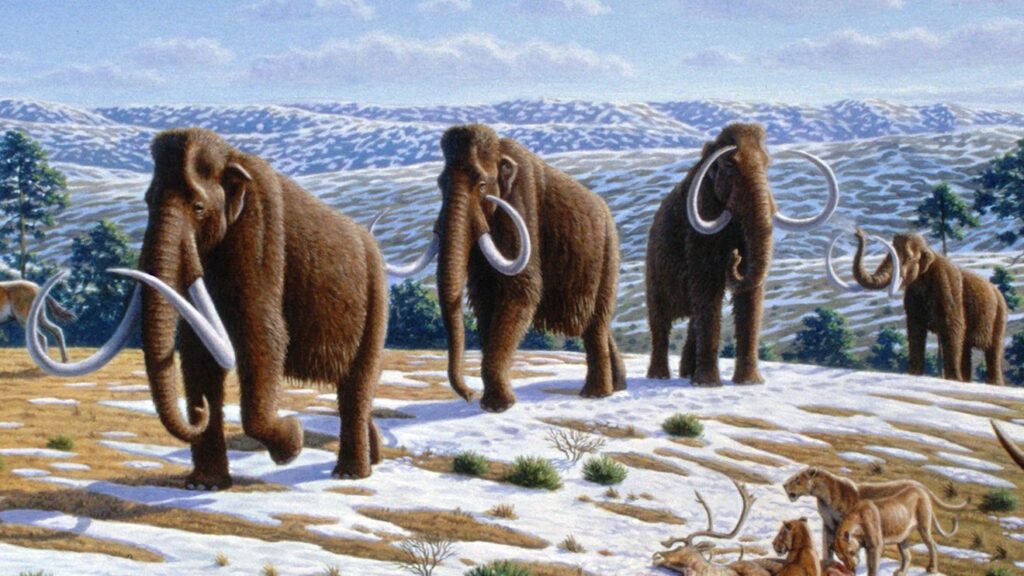
Most people picture the Ice Age as a bleak white wasteland, nothing but snow and silence. The reality was far more interesting. The habitat of the woolly mammoth, known as the “mammoth steppe” or “tundra steppe,” stretched across northern Asia, many parts of Europe, and the northern part of North America during the last ice age. It was similar to the grassy steppes of modern Russia, but the flora was more diverse, abundant, and grew faster. Think of it less like Antarctica and more like a vast, cold Serengeti.
This habitat was not dominated by ice and snow, as is popularly believed, since these regions are thought to have been high-pressure areas at the time. The mammoth steppe supported not just mammoths but also woolly rhinoceroses, wild horses, cave lions, and bison. Their primary habitat was an expansive, treeless grassland that covered parts of Russia, Canada, Alaska, and Scandinavia during the Ice Age, rich in grasses, shrubs, and mosses, which provided an abundant food source. It was a living, thriving ecosystem, not a frozen desert.
What They Ate and How They Ate It: The Mammoth Diet
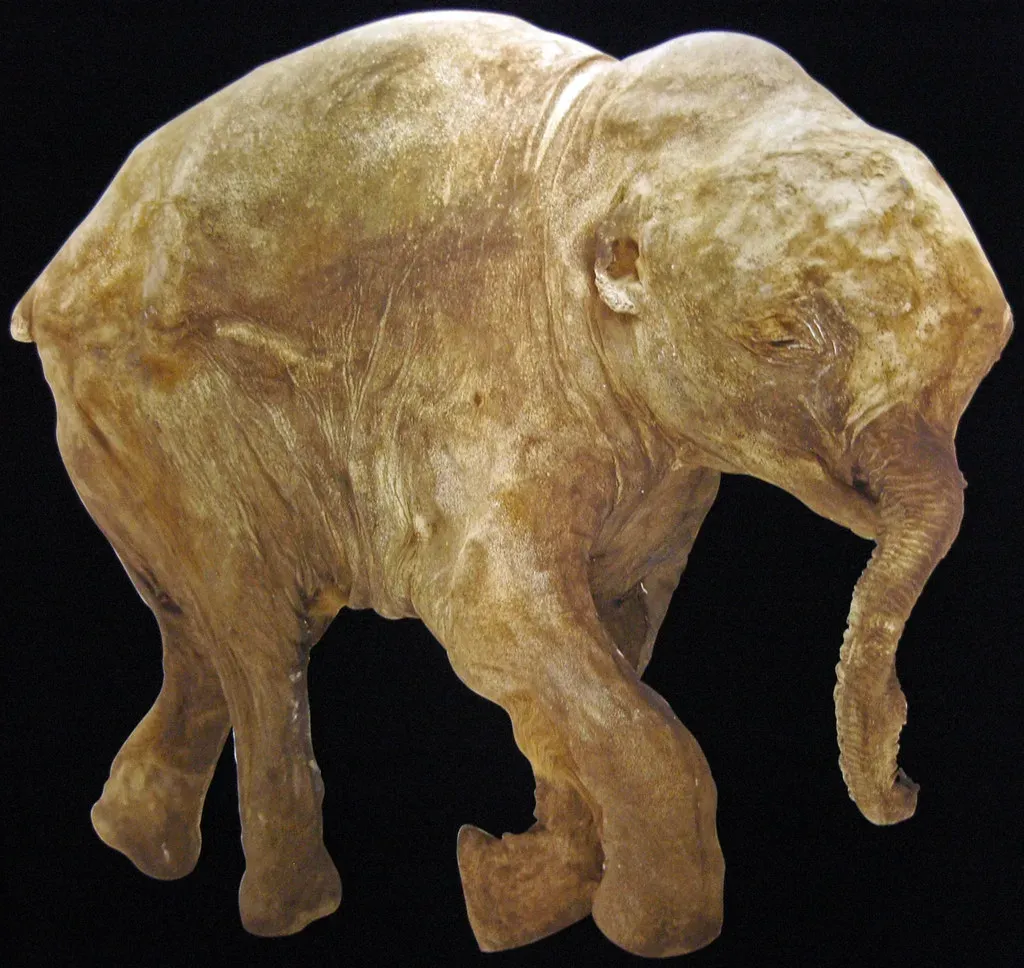
Woolly mammoths sustained themselves on plant food, such as forbs, grasses and sedges, which were supplemented with herbaceous plants, flowering plants, shrubs, mosses, and tree matter. That is a surprisingly varied menu for an animal living in one of the toughest climates on Earth. Scientists know this not from guesswork, but from actual preserved stomach contents and fossilized dung found frozen in permafrost. Let’s be real – that’s remarkable detective work.
An adult of 6 tonnes would need to eat 180 kilograms of food daily and may have foraged as long as 20 hours every day. Imagine spending roughly four-fifths of your waking life just eating. That’s the mammoth life. The two-fingered tip of the trunk was probably adapted for picking up the short plants of the last ice age by wrapping around them, which is a perfectly elegant solution to the challenge of grazing on squat, cold-weather vegetation while sporting a massive body standing over ten feet tall.
Mammoths used their tusks to sweep away snow and expose buried grasses, a foraging strategy suited to steppe-tundra winters. Those famous curved tusks were not just for fighting or display. They were shovels, snow plows, and leverage tools all at once. Their large, flat molars were specialized for grinding tough plant material, and those molars were replaced not once or twice but multiple times throughout a mammoth’s life.
Herd Life and Social Bonds: The Society Within the Ice
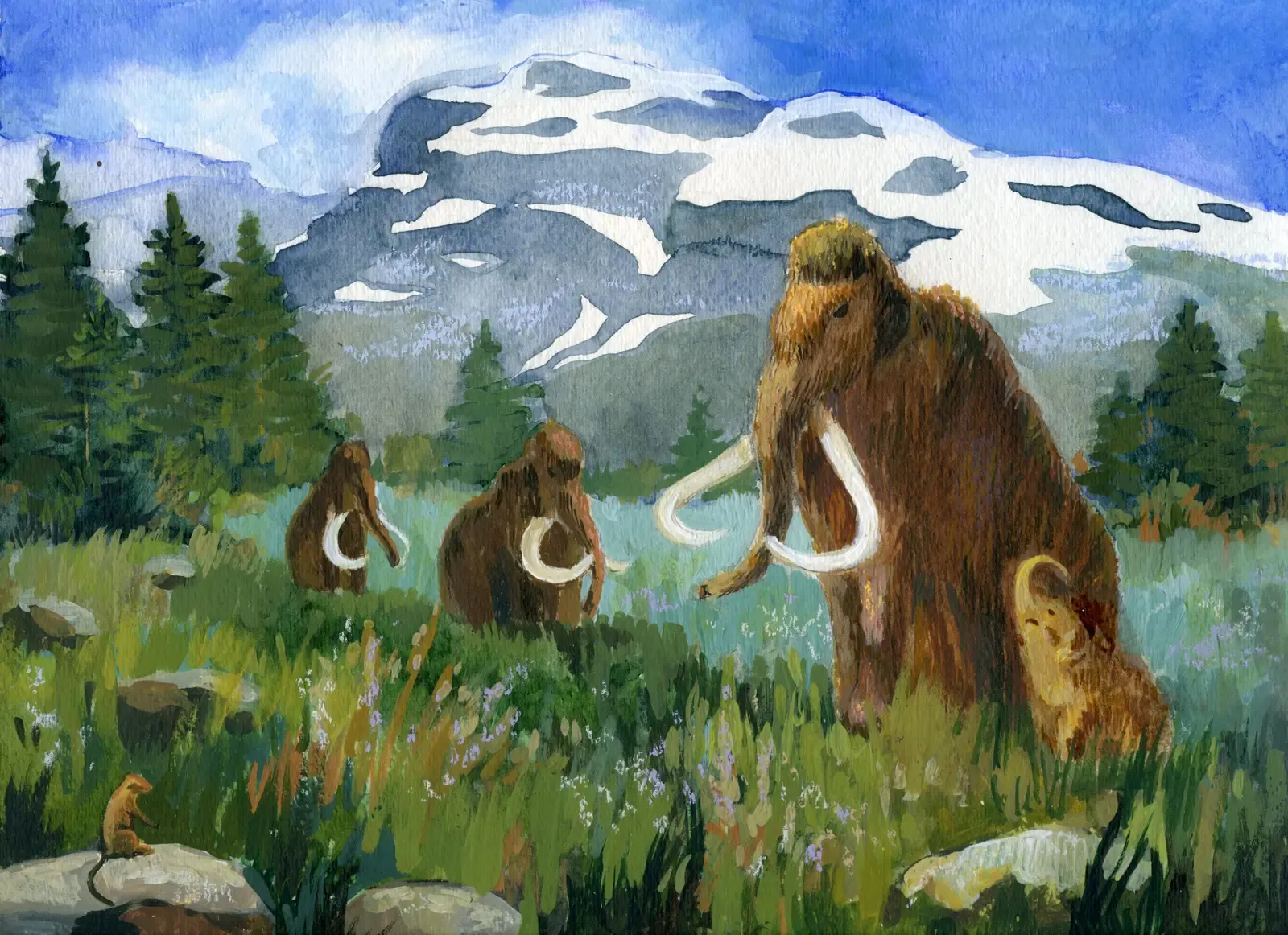
Like modern elephants, woolly mammoths were likely very social and lived in matriarchal family groups, as supported by fossil assemblages and cave paintings showing groups, implying that most of their other social behaviors were likely similar to those of modern elephants. The matriarch was essentially the living memory of the herd. She knew where the water was, which routes to take seasonally, and how to keep the group alive through brutal winters.
Their social structure was probably the same as that of living elephants, with females and juveniles residing in herds headed by a matriarch, whilst bulls lived solitary lives or formed loose groups after sexual maturity, with analysis of testosterone levels in tusks indicating that adult males experienced periods of musth like modern elephants, where they entered a state of heightened aggression. Think of it like a soap opera on the tundra. Drama, loyalty, power structures, and occasional explosive male rivalries. Mammoths acted protectively toward immature, elderly, and infirm herd members, which says a great deal about their emotional and social complexity.
Mammoths and Humans: A Complicated Coexistence
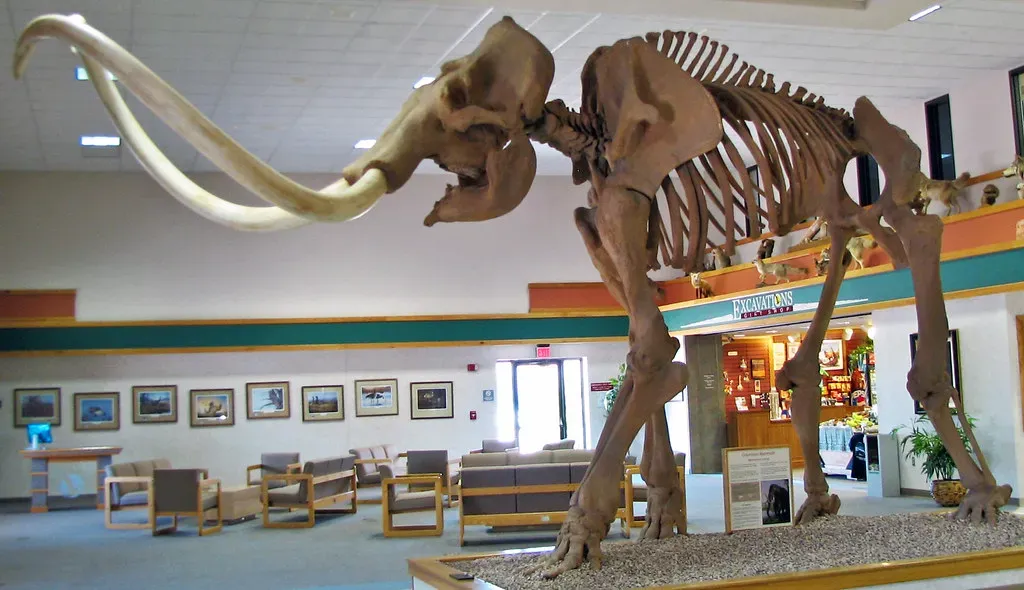
Modern humans coexisted with woolly mammoths during the Upper Palaeolithic period when humans entered Europe from Africa between 30,000 and 40,000 years ago. Before this, Neanderthals had coexisted with mammoths during the Middle Palaeolithic and already used mammoth bones for tool-making and building materials. So mammoths were intertwined with human history for an extraordinarily long stretch of time. These were not creatures glimpsed at a distance. They were neighbors.
Roughly 18,000 years ago, on a windswept bluff in what is now central Ukraine, Ice Age humans survived some of the harshest winters ever seen on Earth with the help of woolly mammoth bones. They built their shelters from mammoth remains. They carved art from mammoth ivory. Woolly mammoths were very important to ice age humans, and human survival may have depended on the mammoth in some areas. It’s a relationship that defies easy categorization. Dependency, predation, reverence – all of it woven together over thousands of years.
The Long Goodbye: How and Why They Disappeared
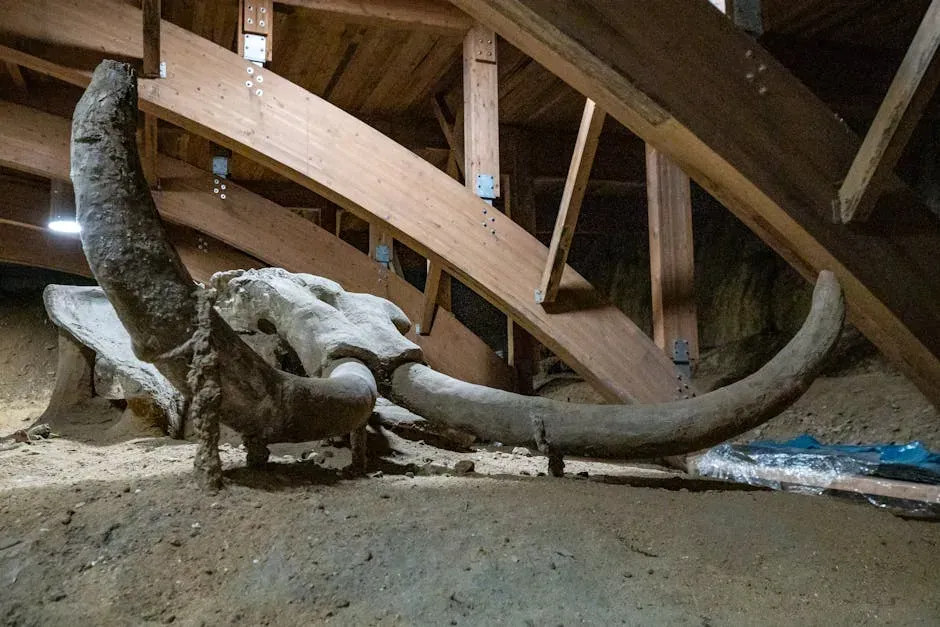
Rather than there being a single event or pressure that finished the woolly mammoth, their extinction came about through thousands of years of climate and environmental changes, human hunting, and ultimately the consequences of going through a genetic bottleneck. It’s hard to say for sure exactly which factor sealed their fate, and honestly, that ambiguity is part of what makes this story so haunting. There is no clean villain here.
A new paper uses climate models and fossil distribution to establish that the woolly mammoth went extinct primarily because of loss of habitat due to changes in temperature, while human hunting acted as the final straw. As the climate warmed, the vast mammoth steppe shrank. The lush cold grasslands that had fed these animals for millennia gave way to forests and wetlands that offered them nothing. Around 10,000 years ago, these giants began to disappear from the mainland, with the last known population surviving on Wrangel Island, off the coast of Siberia, until about 4,000 years ago.
Humans likely weren’t responsible for the Wrangel Island extinction, as they didn’t arrive on the island until 400 years later. But researchers suggest the creatures may have died in an unlucky incident – perhaps because of a novel virus or natural disaster, like an Arctic volcano eruption or a tundra fire. The final extinction of the last mammoths was, by all indications, swift. Normal mammoth fur had air-filled cores in each hair shaft that provided insulation. Losing that structure through genetic mutations would have compromised their ability to stay warm, suggesting that inbreeding had already begun to quietly dismantle the very adaptations that once made them invincible.
Conclusion: What the Last Giants Left Behind
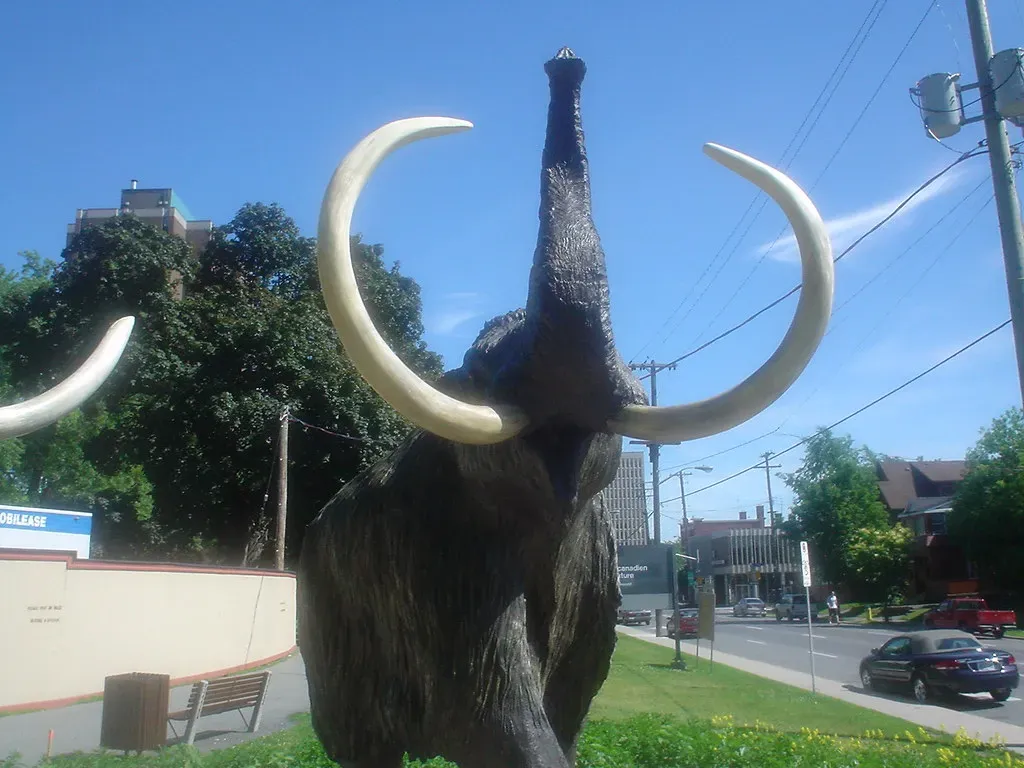
The woolly mammoth is not just a creature of the past. It is a mirror. Every layer of its story, from the cold-tuned blood chemistry to the matriarchal herds, from the twenty-hour foraging days to the final isolated survivors on a remote Arctic island, reflects something about what it takes to endure in a world that is always changing.
What strikes me most is that these animals did not simply tolerate the Ice Age. They mastered it. They rewired their own biology at the molecular level. They built complex societies. They survived for hundreds of thousands of years across three continents. Their downfall was not weakness. It was the perfect storm of a warming world, shrinking habitat, human pressure, and ultimately the cruel arithmetic of small, isolated populations.
In 2026, as we watch modern species face their own versions of rapidly shifting environments, the mammoth’s story carries an uncomfortable relevance. Adaptation has limits. Resilience has a ceiling. The question is not just what killed the mammoths. The better question is: what can their extraordinary life teach us about what it takes to survive? What do you think about it? Tell us in the comments.