
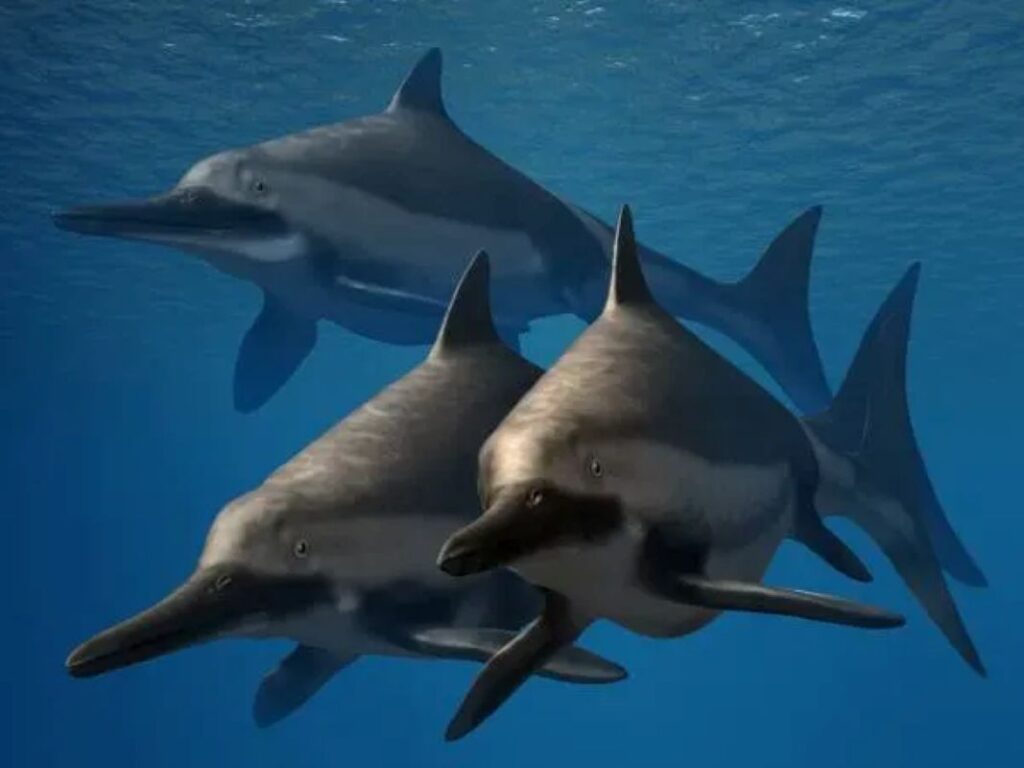
Imagine a predator that roamed the darkest, most crushing depths of the ancient ocean, moving in near-total silence, with eyes the size of footballs scanning the void for a flicker of prey. No, this isn’t science fiction. This was a real creature that ruled the Mesozoic seas for a staggering stretch of time. You’d be forgiven for thinking the story of the ichthyosaur was already fully written. Honestly, palaeontologists have been piecing together its secrets for over two centuries, and every decade seems to shatter what we thought we knew.
Yet the riddle keeps getting deeper, and more thrilling. Recent research has pulled back the curtain on hunting strategies so sophisticated they honestly rival those of the most elite modern ocean predators. If you’ve ever wondered what kind of intelligence and physical engineering it takes to chase prey in a lightless abyss, the ichthyosaur has some remarkable answers. Let’s dive in.
A Predator Born from the Land: Origins of a Deep-Sea Marvel
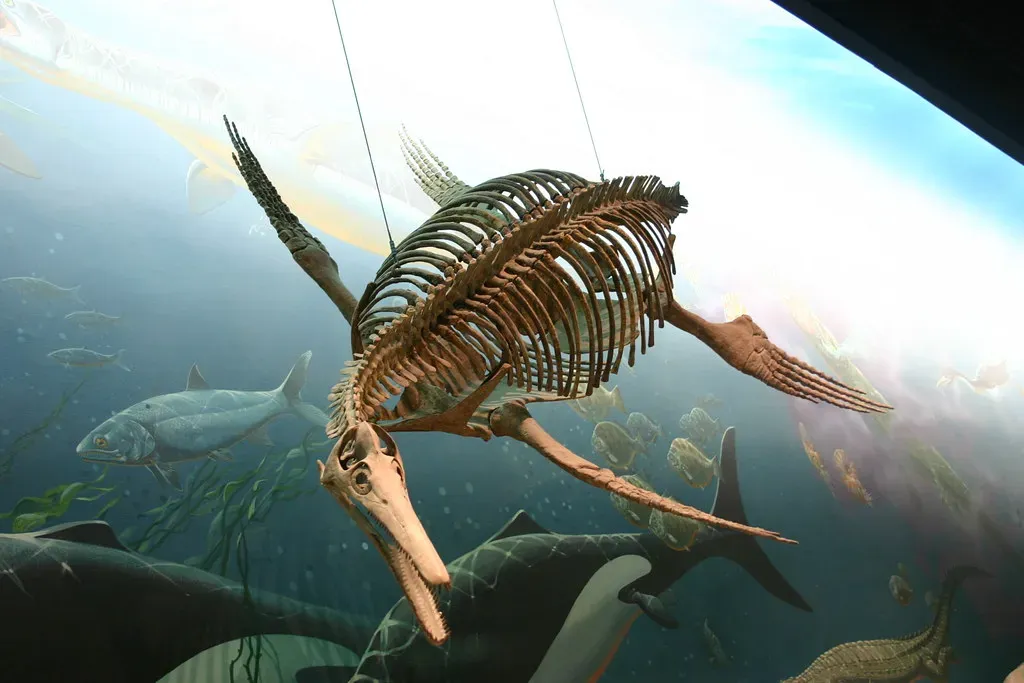
It sounds almost impossible, but the ancestors of ichthyosaurs once walked on land. During the Early Triassic epoch, ichthyosaurs and other ichthyosauromorphs evolved from a group of unidentified land reptiles that returned to the sea, in a development similar to how the mammalian land-dwelling ancestors of modern-day dolphins and whales returned to the sea millions of years later. Nature, it seems, had a blueprint it liked so much it used it twice. Think of it as evolution pressing the rewind button and then fast-forwarding to something spectacular.
A literal translation of ichthyosaur is “fish lizard,” yet ichthyosaurs were neither fish nor members of the lizard family; they were a group of highly successful marine reptiles who lived from the early Triassic period to the late Cretaceous period, around 248 million to 90 million years ago. Long before the age of whales and sharks, the oceans were ruled by a group of sleek, powerful marine reptiles known as ichthyosaurs. These “fish lizards” were the ultimate underwater predators of the Mesozoic Era, dominating the seas for over 150 million years. That’s a reign so long it makes human civilization look like a blink.
Eyes Like Footballs: The Visual Superpower Behind Deep-Sea Hunting
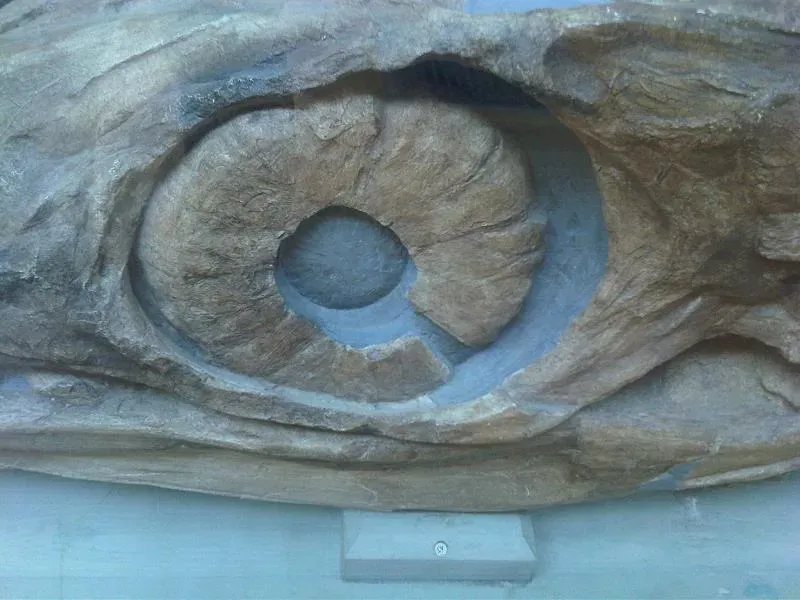
Here’s the thing that really stops you in your tracks. The eyes of Temnodontosaurus were enormous, up to about 10 inches across, and fossil measurements show that ichthyosaurs had the largest eyes of any vertebrate known. One analysis found a Temnodontosaurus eye ring with a diameter of 264 millimeters, bigger than a modern soccer ball, giving strong evidence that these reptiles were adapted to see in extremely low light. The work also suggests that such oversized eyes would have gathered light efficiently at depth, where sunlight quickly fades.
Ichthyosaurs had the largest relative eyeball size of any known vertebrate. The large eyeballs and the presence of symptoms consistent with Caisson disease (decompression sickness or “the bends,” a condition that affects divers) have led researchers to think that many post-Triassic ichthyosaurs could dive to depths of up to 600 metres. You use a pair of eyes roughly 2.5 centimetres wide to read this article right now. Picture eyes that are more than a hundred times larger in diameter, evolved for one purpose alone: to see prey in the absolute dark.
The Silent Swimmer: A Stealth Adaptation Never Seen Before
Uploaded by FunkMonk, CC BY-SA 2.0)
Perhaps the most jaw-dropping revelation to come out of recent research is just how quietly these animals moved. A new study has uncovered evidence that a giant marine reptile from the Early Jurassic period used stealth to hunt its prey in deep or dark waters, much like owls on land today. If you’ve ever watched an owl glide soundlessly through the night air, you’ll find this parallel genuinely eerie.
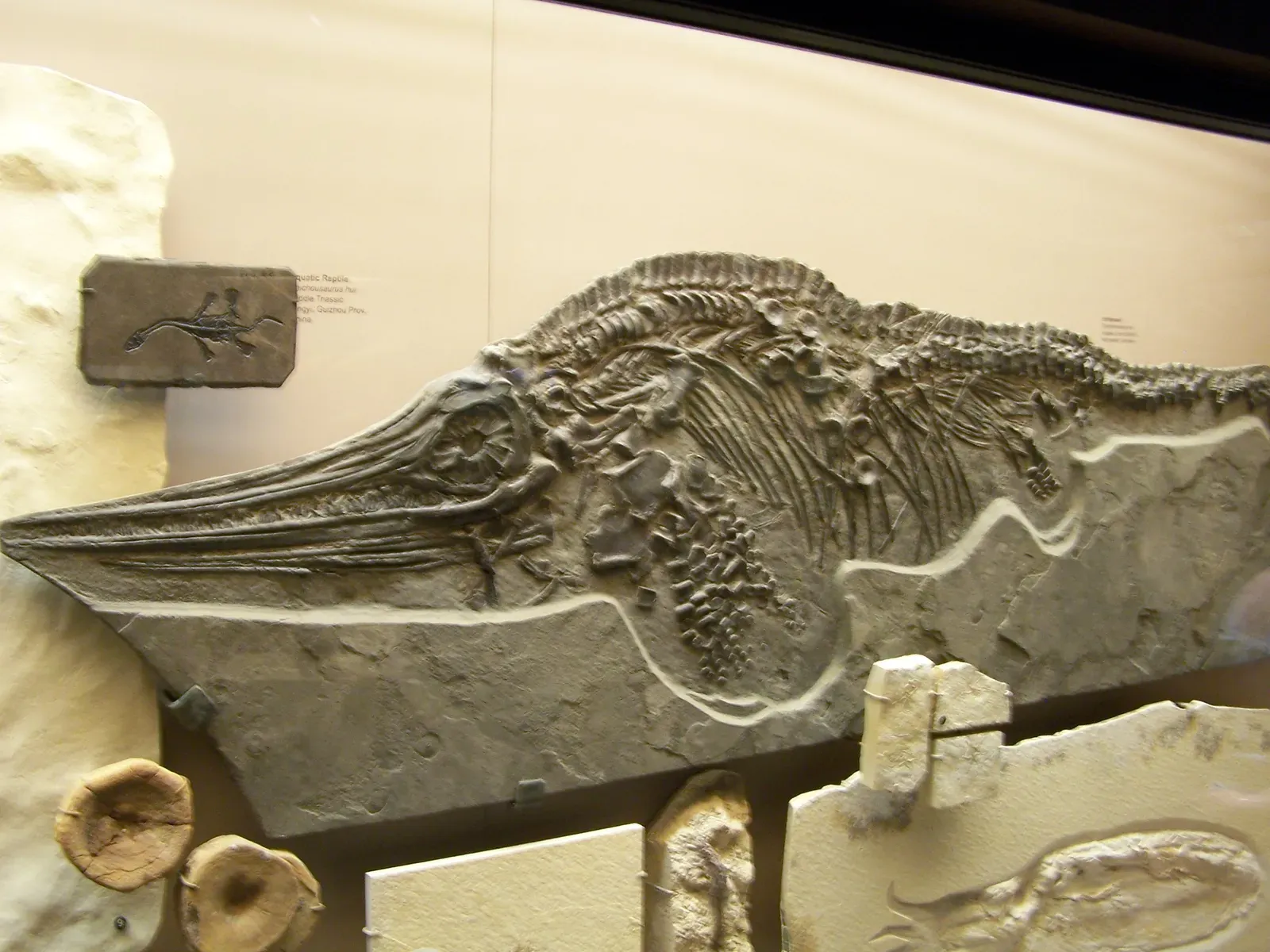
The research investigates a meter-long flipper from a Temnodontosaurus, a giant ichthyosaur, with uniquely preserved fossilised soft tissues. The findings reveal that the marine reptile, which exceeds 10m in length, was equipped with specialised fins that the scientists believe served to suppress the sound of its own movements when foraging in dimly lit environments about 183 million years ago, an evolutionary adaptation never previously seen in any aquatic creature, living or extinct. These adaptations have been revealed by an exceptionally preserved fossil of an ichthyosaur flipper uncovered in southern Germany. It still preserves much of its soft tissue, including structures similar to the winglets that help aeroplanes reduce drag, as well as serrated edges that helped to dissipate sound.
Warm-Blooded and Camouflaged: Secrets Hidden in the Skin
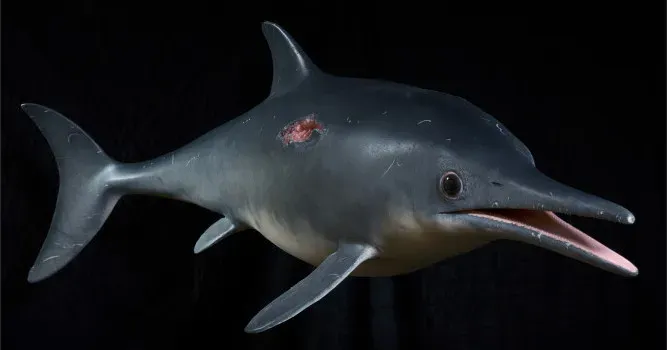
You might assume a marine reptile from the Mesozoic was cold-blooded and scaly, like a giant sea lizard. You’d be wrong on both counts. Molecular and microstructural analysis of a Stenopterygius ichthyosaur from the Jurassic, 180 million years ago, reveals that these animals were most likely warm-blooded, had insulating blubber and used their coloration as camouflage from predators. They would have been able to survive in the deep sea because all ichthyosaur species are thought to have been warm-blooded. An exceptionally well-preserved fossil from Germany also suggests that ichthyosaurs had blubber to help trap their body heat, similar to modern dolphins.
The preserved pigmentation on the skin suggests that Stenopterygius had countershading (light belly, dark back), a common camouflage strategy for modern marine predators. In addition to making the animal more difficult to see, countershading can help with thermoregulation. So when you picture an ichthyosaur cruising through the Jurassic sea, picture something looking remarkably like a dolphin, dark on top to blend in from above, pale underneath to vanish against lighter water from below. Predator and prey alike would have struggled to see it coming.
What Was on the Menu? Piecing Together the Prey
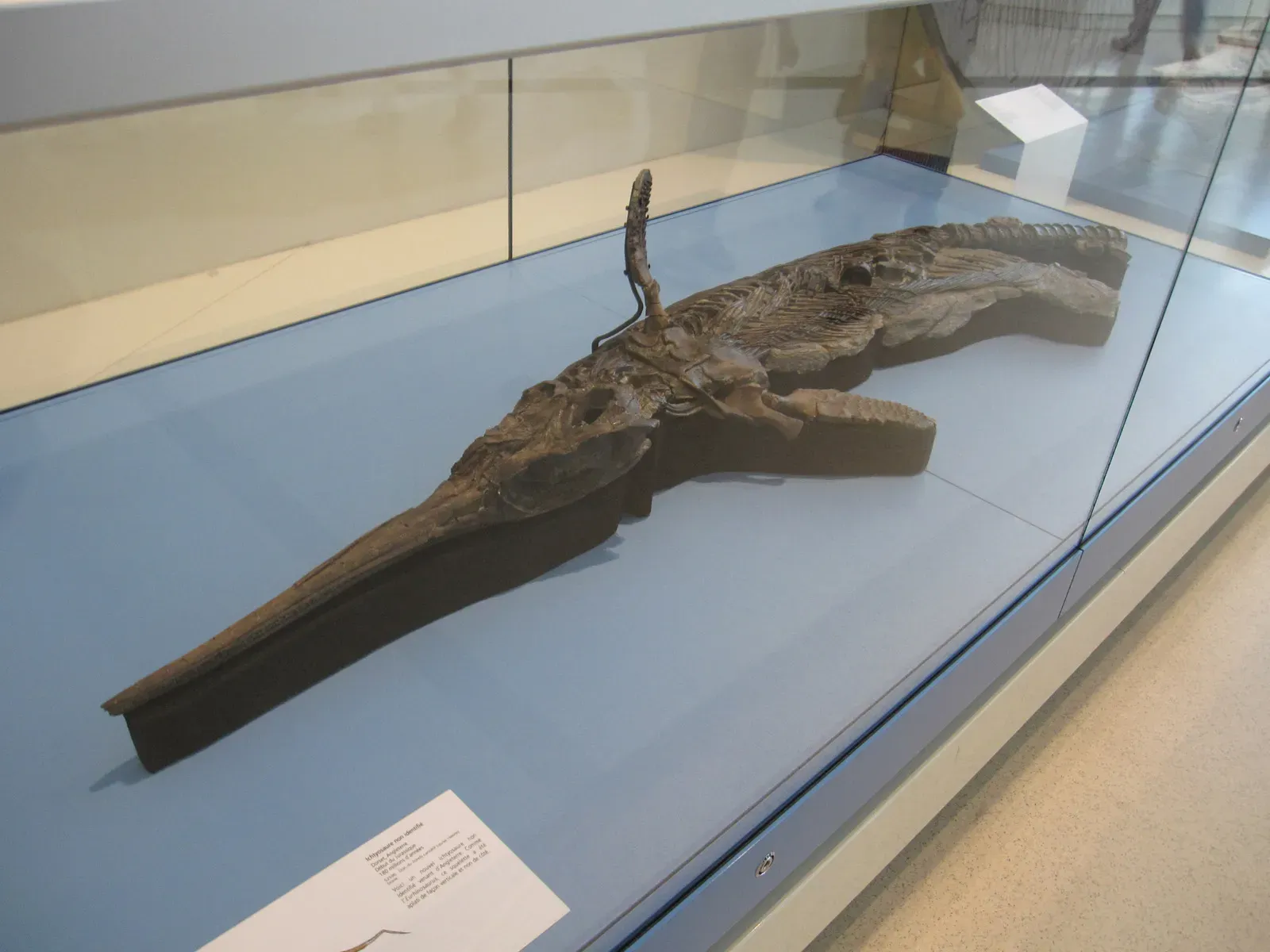
Uploaded by FunkMonk, CC BY-SA 2.0)
We know the diets of some ichthyosaurs from the stomach contents preserved in fossils. Since not every fossil comes with good stomach contents, our knowledge is limited to some fish-shaped ichthyosaurs. Even so, what has survived in those fossilised stomachs is remarkably revealing. The presence of belemnites, extinct squid-like animals with bullet-shaped internal shells, in fossilised stomach contents provides a vivid glimpse into their feeding habits. These cephalopods were abundant in Mesozoic seas and likely formed a major part of ichthyosaur diets. In some cases, palaeontologists have discovered bite marks on bones that suggest larger ichthyosaurs may have preyed upon smaller marine reptiles.
It’s hard to say for sure whether every species hunted the same way, and the science confirms they did not. Stenopterygius specialized in slow biting of hard prey and Hauffiopteryx specialized in fast, but weaker bites on fast-moving, but soft prey. So, these two ichthyosaurs shared out food, thick-scaled fishes and ammonites for one, fast fish and squid for the other. Think of it like two restaurants on the same street, one serving steak, the other sushi. Both thriving, both hunting the same ocean, but targeting entirely different meals. Ichthyosaurs employed various strategies to capture their prey, including ambush tactics and high-speed chases.
The Brain Behind the Hunt: Senses, Smarts, and Survival
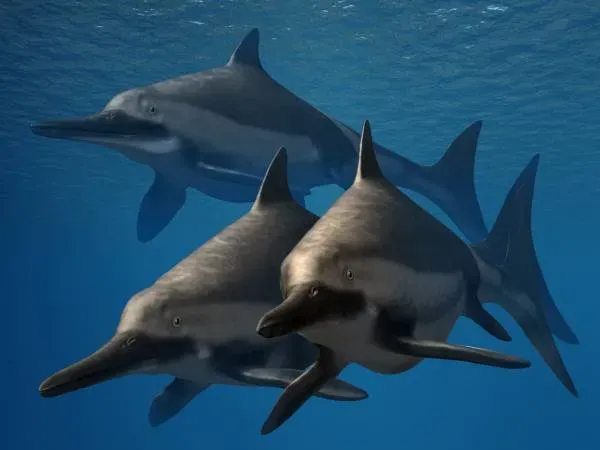
Let’s be real, a predator hunting in pitch-black depths needs more than giant eyes. Typical ichthyosaurs had very large eyes, protected within a bony ring, suggesting that they may have hunted at night or at great depths. Sight thus seems to have been one of the main senses employed while hunting. Hearing might have been poor, given the very robust form of the stapes. Grooves in the palate, however, suggest that smell might have been acute or even that electro-sensory organs might have been present. Electrosensory organs, if confirmed, would place them in astonishing company with modern sharks and rays.
This shows that ichthyosaurs were highly agile, fast-moving predators that used a combination of vision and smell to find prey at depth and in shallower waters. Some studies have found osteological adaptations to deep diving, such as a lightening of the skeleton in a variety of ichthyosaurs. A lighter skeleton, sharper senses, enormous light-gathering eyes, silent flippers, and warm-blooded endurance. You’re looking at a hunting machine millions of years in the making, refined by deep time into something genuinely extraordinary.
Conclusion: The Riddle That Keeps on Giving
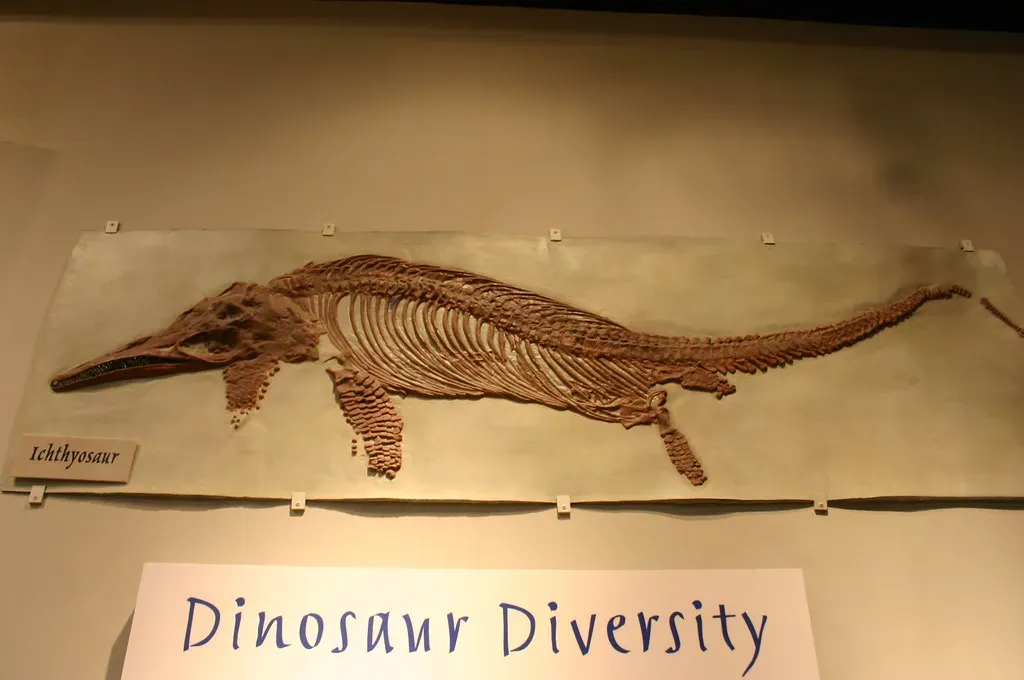
Every time palaeontologists think they’ve cracked the ichthyosaur wide open, another fossil surprises them. What started as the bones of a strange sea creature found on a cliff face in England over two centuries ago has grown into a portrait of one of nature’s most sophisticated deep-sea hunters, armed with silent flippers, whale-like skin, football-sized eyes, and a brain wired for the hunt. It’s a story that keeps getting more complex, more impressive, and more humbling the deeper you look.
The real wonder here is what all of this tells us about the power of evolution. The ichthyosaur had no engineering team. No years of research and development. Yet it arrived at solutions that modern aircraft designers and marine engineers are only now beginning to understand. It’s possible that similar structures might be found in other large ichthyosaurs, and could inspire engineers to produce quieter propellers and hydrofoils that reduce underwater noise pollution. A creature that vanished 90 million years ago may yet teach us how to quieten our own noisy oceans.
What surprises you most? That a reptile this sophisticated ever existed, or that we’re still only scratching the surface of what it could do? Tell us in the comments.