Camouflage is one of nature’s oldest survival tricks. Long before the first human soldier thought about blending into a forest, prehistoric creatures had already perfected the art of invisibility. Clever patterns of skin pigmentation helped many animals hide from predators in plain sight, and the same was true nearly 120 million years ago in the Cretaceous. We tend to imagine the prehistoric world as a place of raw, brute force – giant teeth, thunderous footsteps, nothing subtle about it. Honestly, that picture misses half the story.
The truth is far more fascinating. Like modern-day animals, ancient species’ hues helped them communicate, camouflage, and even regulate body temperature. From forest dinosaurs draped in shadow-defying countershading to ocean hunters that could dissolve into the seafloor, the prehistoric world was a masterclass in deception. Let’s dive in.
1. Psittacosaurus: The Forest-Dwelling Dinosaur That Wore a Disguise
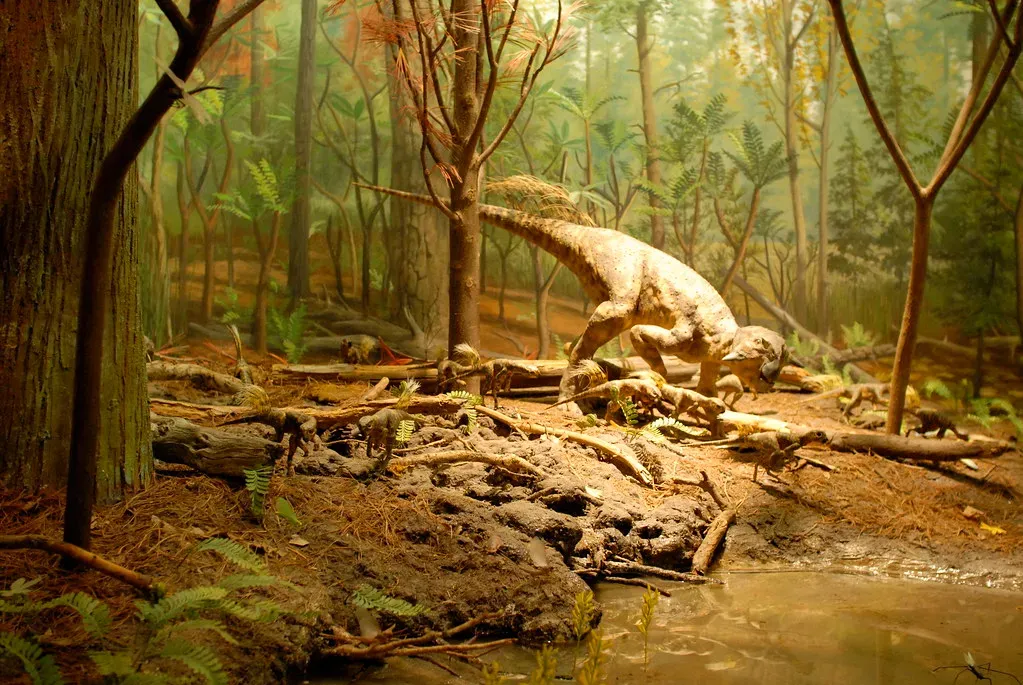
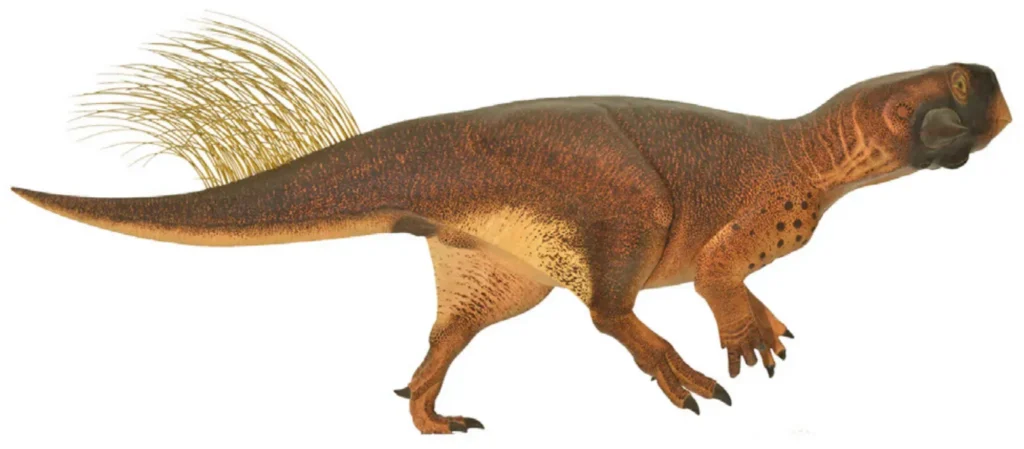
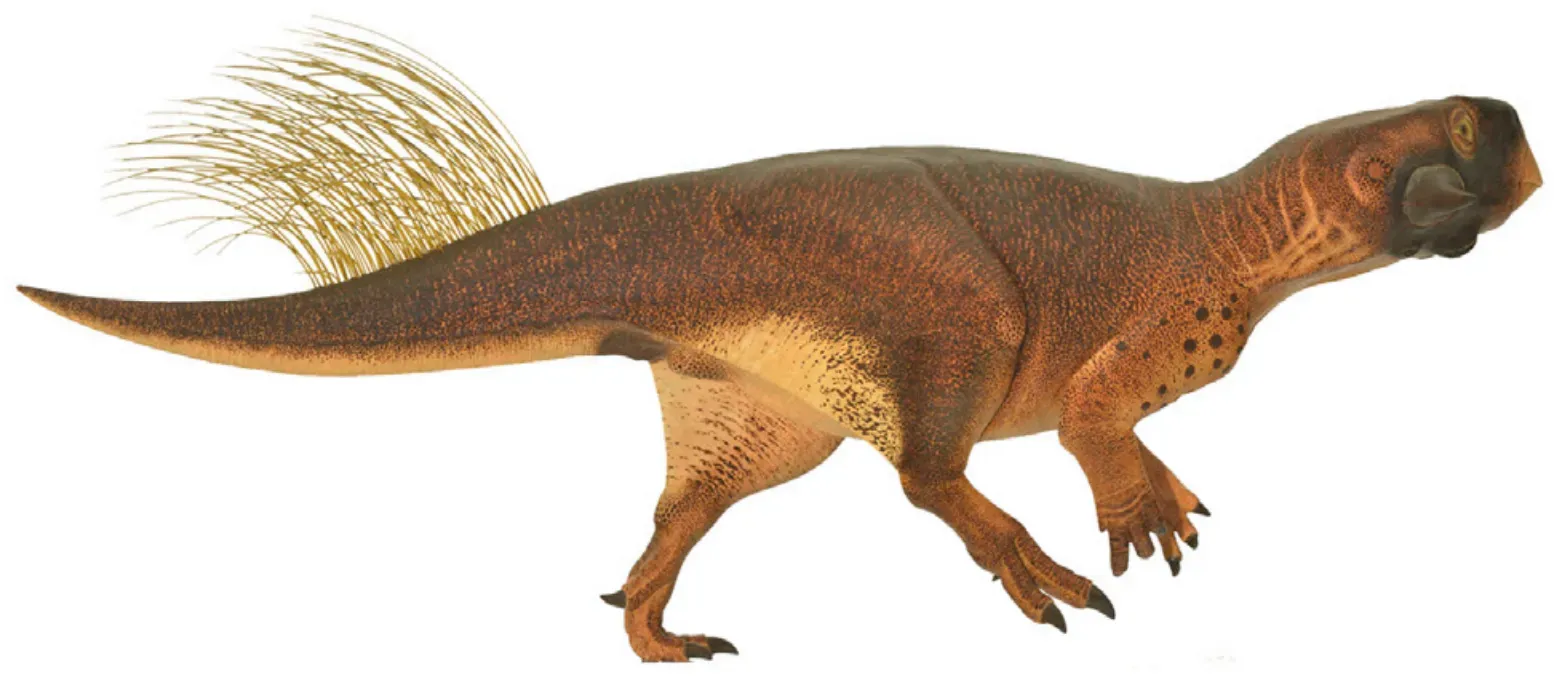
A beautifully preserved dinosaur fossil was the first to show direct evidence of countershading, a sophisticated type of camouflage. That dinosaur was Psittacosaurus, a small, horned plant-eater from the Early Cretaceous, and when you understand what scientists found, it changes everything about how you picture life in a dinosaur forest. You might think of this creature as small, unassuming, easily overlooked. And that, it turns out, was exactly the point.
The images from research models showed that Psittacosaurus’s coloring provided the best camouflage in diffuse light, a closed habitat, rather than full sun, meaning the reptile probably lived in dense forest rather than open savanna. Based on the dinosaur’s pigment patterns, it would have had a dark back that faded to a lighter belly, the type of coloring called countershading that shows up in animals from penguins to fish, which lightens parts of the body typically in shadow and darkens parts typically exposed to light. Think of it like this: imagine wearing a coat that automatically adjusts its shade based on the light above you. That is essentially what Psittacosaurus had evolved.
2. Sinosauropteryx: The Feathered Carnivore With a Bandit Mask
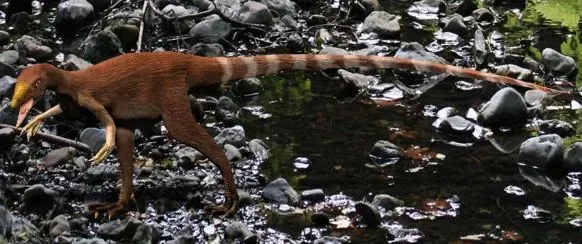
In 1996, a small, fluffy carnivore called Sinosauropteryx became the first dinosaur known to have had feathers, and in 2010 it entered the ranks of the first dinosaurs to have their color revealed, when analysis suggested it had a tail of ginger-and-white stripes. But the story kept getting better. Researchers later reconstructed the color pattern across its entire body, and what they found was surprisingly sophisticated. This little predator was not just colorful, it was strategically colorful.
By reconstructing the likely color patterning of Sinosauropteryx, researchers showed it had multiple types of camouflage which likely helped it to avoid being eaten in a world full of larger meat-eating dinosaurs, including relatives of the infamous Tyrannosaurus Rex, as well as potentially allowing it to sneak up more easily on its own prey. Findings revealed that Sinosauropteryx was countershaded, dark on top and light underneath, and it also sported a “bandit” mask on its face, resembling that of a raccoon. A raccoon-faced dinosaur. I know it sounds strange, but that dark face stripe likely helped reduce glare and hide its eyes from sharp-sighted prey.
3. Borealopelta: The Armored Tank That Still Needed to Hide
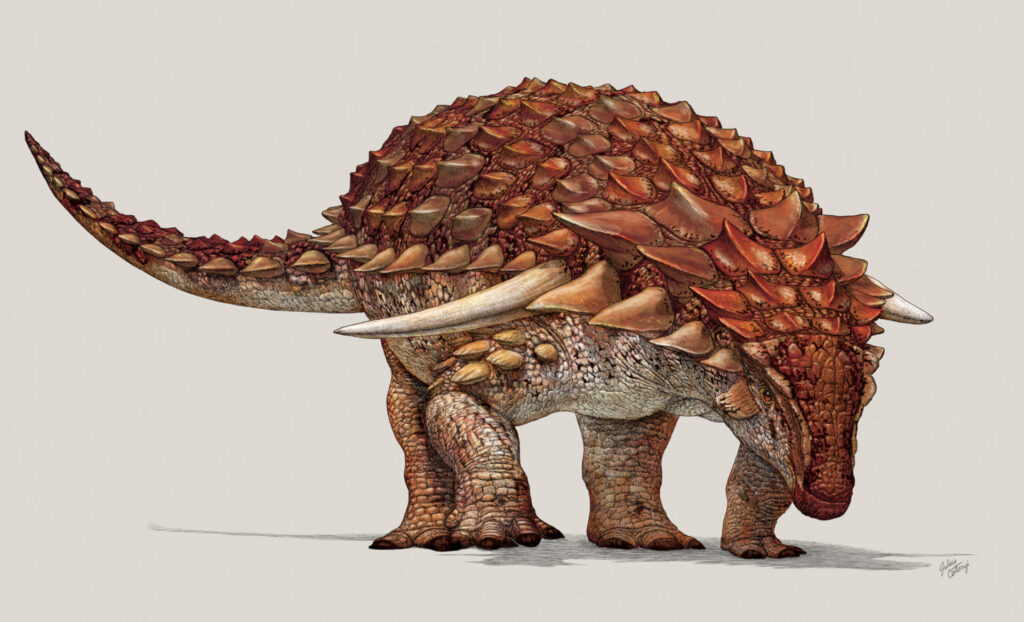
Here is something that should genuinely surprise you: imagine an animal the size of a small car, covered head to tail in bony armor plates and spike-like shoulder projections, and yet still needing to camouflage itself. That was the reality for Borealopelta. Borealopelta, meaning “northern shield,” is an extinct genus of herbivorous nodosaurid ankylosaur from the Lower Cretaceous of what is today Alberta, Canada, and it contains a single species named in 2017 from a remarkably well-preserved specimen known as the Suncor nodosaur, discovered at an oil sands mine.
Analysis of the fossilized skin of Borealopelta markmitchelli revealed that the ancient creature had a reddish-brown coloration and camouflage in the form of countershading, and that despite being the size of a tank, it was still hunted by carnivorous dinosaurs. The discovery that Borealopelta possessed camouflage coloration indicates that it was under threat of predation despite its large size, and that the armor on its back was primarily used for defensive rather than display purposes. Even the most heavily armored creature in its ecosystem was not safe enough to go without a disguise. That says everything about how terrifying the predators of the Cretaceous truly were.
4. Ancient Cephalopods: 500 Million Years of Vanishing Acts
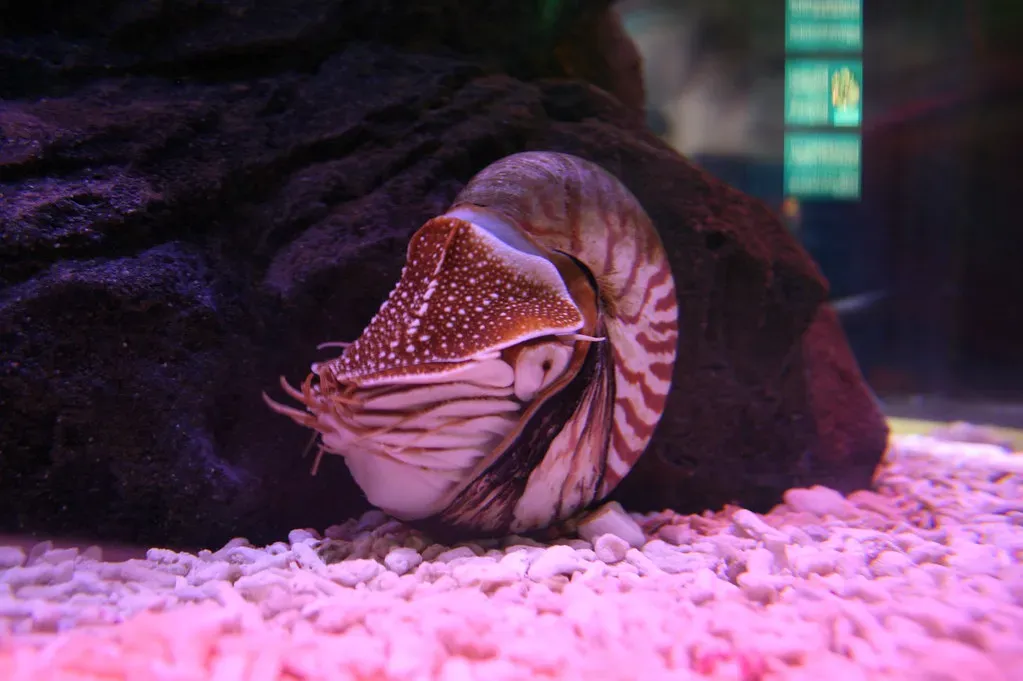
Cephalopods are the most intelligent, most mobile, and the largest of all mollusks, and these “brainy” invertebrates evolved suckered tentacles, camera-like eyes, color-changing skin, and complex learning behavior. Their ancient ancestors, emerging at the very dawn of complex animal life, were already experimenting with concealment in a way that laid the groundwork for the extraordinary camouflage artists we see in oceans today. Their lineage is staggering. Their evolutionary history spans an impressive 500 million years, and the abundant fossils they’ve left behind record repeated speciation and extinction events.
Many cephalopods have the ability to actively camouflage themselves by controlling crypsis through neural activity, and for example, the genome of the common cuttlefish includes 16 copies of the reflectin gene, which grants the organism remarkable control over coloration and iridescence. While not all cephalopods use active camouflage, ancient cephalopods may have inherited the reflectin gene horizontally from symbiotic bacteria, with divergence occurring through subsequent gene duplication or gene loss. In other words, the cuttlefish’s amazing color-shifting ability may trace back to an ancient bacterial gene swap that happened hundreds of millions of years ago. Evolution is, to put it mildly, wild.
5. Mosasaurs: Ocean Predators With a Dark Secret
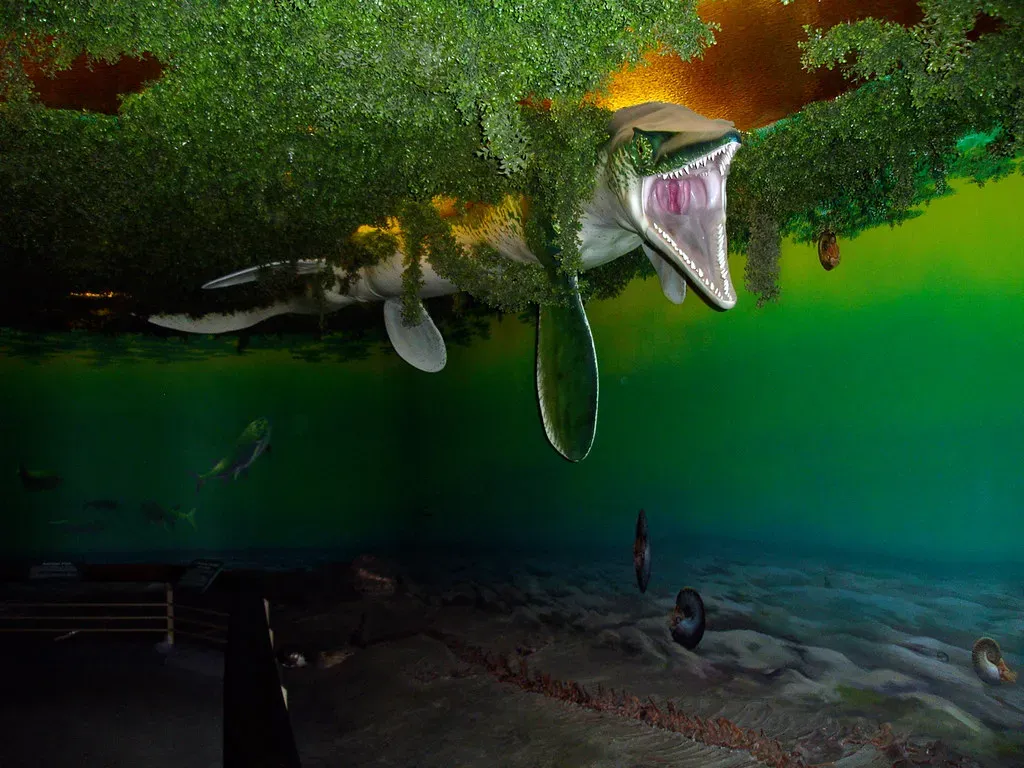
You might picture mosasaurs as the undisputed rulers of Cretaceous seas, brash, enormous, and utterly fearless. Camouflage is a soft-tissue feature that is rarely preserved in the fossil record, but rare fossilized skin samples from the Cretaceous period show that some marine reptiles were countershaded. That is a remarkable discovery, because it tells us that even these apex marine hunters were still invested in the art of invisibility. Perhaps for ambush. Perhaps for survival against one another.
By tracing the remains of pigments in fossils called melanosomes, scientists have begun to discover the clever shading that veiled ancient mosasaurs from predators, and the pigmentation patterns on those Cretaceous marine reptiles followed a pattern called countershading, in which the animal’s back is dark and the belly is lighter. In water, the pale belly blends in with sunlight falling from above, making the animal invisible to predators below, whereas the dark back hides the animal from shallow predators by helping it blend in with the darker depths. Think of it like a two-way mirror adapted to the sea itself. From below, the mosasaur disappeared into the sky-lit surface. From above, it dissolved into the dark depths.
6. Trilobites: The Ancient Seafloor Ghosts
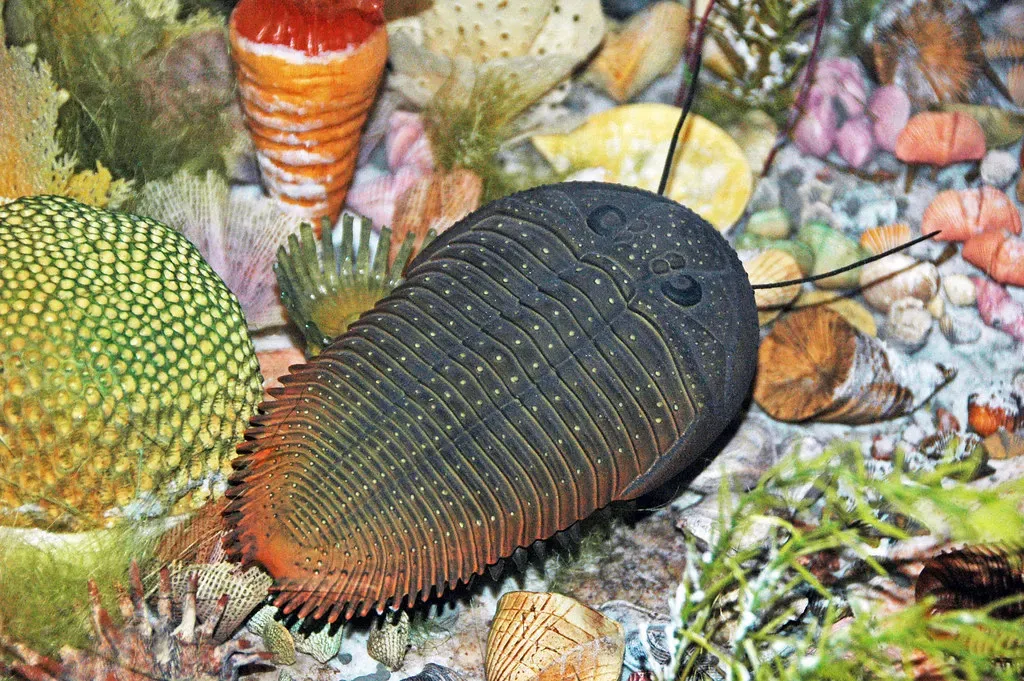
These extinct marine arthropods lived for an astonishing 270 million years, thriving from the early Cambrian Period until their final disappearance at the end of the Permian Period, and for comparison, dinosaurs existed for roughly 165 million years, meaning trilobites endured far longer than the age of dinosaurs. They were everywhere, diverse, and remarkably successful. Part of that success almost certainly came down to blending in. Over 20,000 described species of trilobites are known, and new species continue to be discovered.
The original coloration of trilobites is not preserved in most fossils because pigments break down during fossilization, but paleontologists can make informed inferences based on comparisons with modern arthropods, and most trilobites were likely colored in subdued tones such as browns, greens, grays, or mottled patterns that would have provided camouflage against the seafloor. Although the majority of trilobites were benthic, living on or just beneath the seafloor, their lifestyles were far from uniform, reflecting millions of years of adaptation to different marine environments, with many species living as epifaunal crawlers spending their lives moving across the surface of the sediment. Crawling slowly across an ancient ocean floor, mottled brown and grey, they would have been practically invisible to a casual glance from above.
7. Anomalocarids: Camouflage on the Cambrian Killing Floor
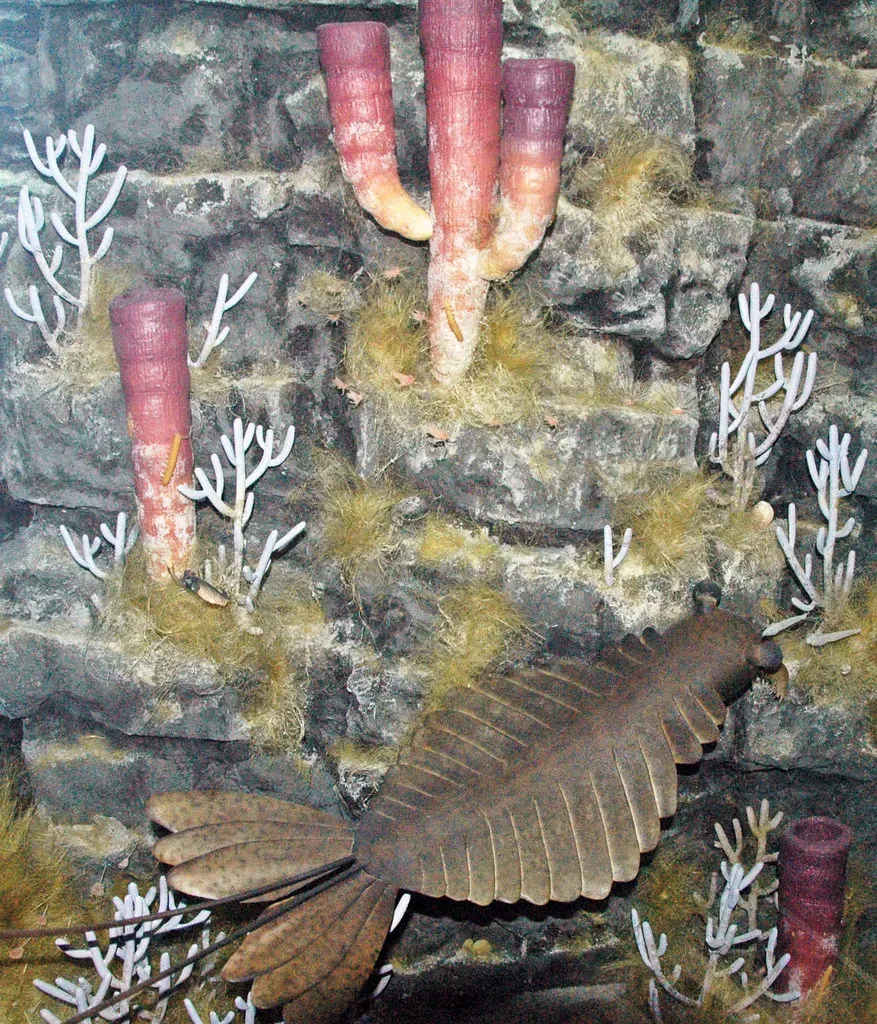
The largest and most fearsome-looking predators to roam the seas during the Cambrian were the anomalocarids, with the largest intact specimens discovered reaching up to 3 feet in length. These shrimplike giants dominated the world’s oceans during an era when most animals were barely the size of a fingernail. It’s hard to say for sure how they hunted, but the evidence strongly suggests stealth played a central role. Some species of anomalocarids used two curled appendages to capture their prey and reel it in to a circular ring of jagged teeth, and they would also use crushing jaws to tear through the protective armor of hard creatures like trilobites.
Many anomalocarid species likely possessed body patterning adapted to the murky, sediment-drifting Cambrian seafloor, helping them approach prey unseen. The Cambrian was a brutal proving ground, a time when the predator-prey arms race was just getting started and every edge mattered. It was British zoologist Sir Edward Poulton who first argued in 1890 that animal mimicry and concealment for camouflage were proof of natural selection. The anomalocarids were living that reality hundreds of millions of years before anyone put a name to it.
8. Ancient Octopus Relatives: Half a Billion Years of Skin Wizardry
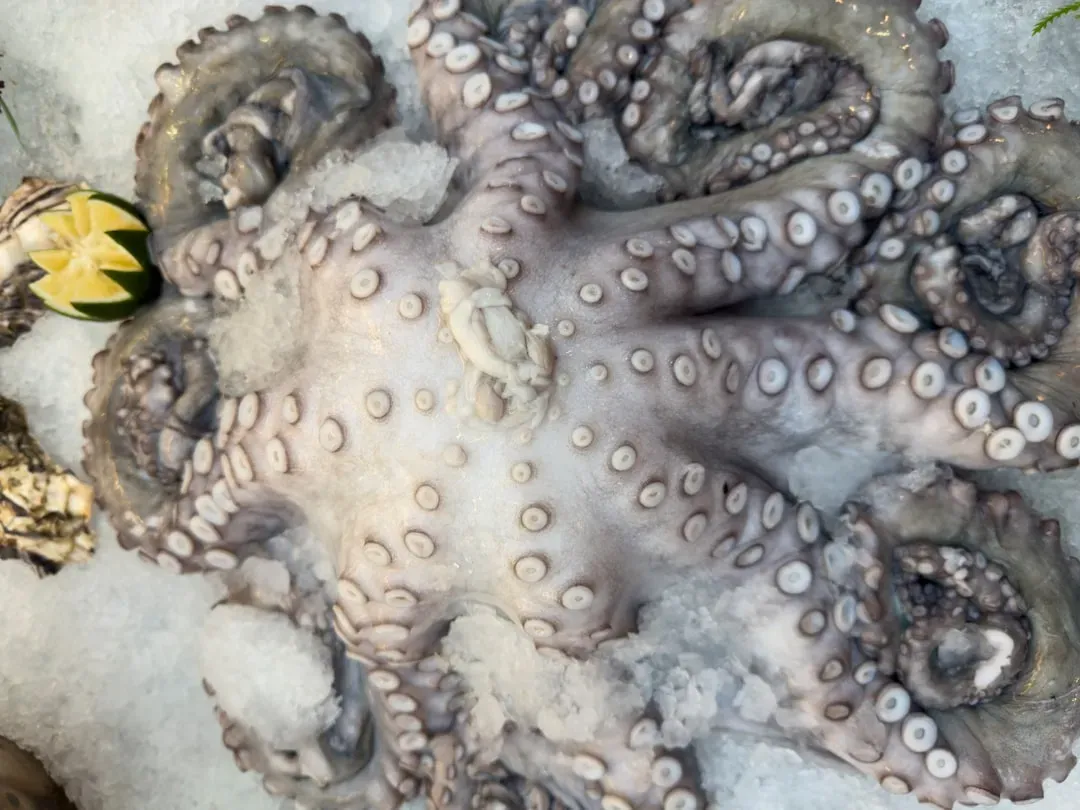
Until recently, the oldest cephalopod on record was a shelled creature known as Plectronoceras cambria, but new findings suggest that cephalopods emerged at the very beginning of the evolution of multicellular organisms during the Cambrian explosion. These earliest ancestors of modern octopuses and cuttlefish were already on an evolutionary path toward some of the most sophisticated camouflage systems ever developed by any organism on Earth. When camouflaging themselves, cephalopods use their chromatophores to change brightness and pattern according to the background they see, and their ability to match the specific color of a background may come from cells such as iridophores and leucophores that reflect light from the environment.
In ancient Greece, Aristotle himself commented on the color-changing abilities of cephalopods including the octopus, noting that it seeks its prey by changing its color to match the stones adjacent to it, and also does so when alarmed. The fact that philosophers were writing about this camouflage ability over two thousand years ago tells you just how striking it was to ancient observers. These creatures were performing real-time, neural-controlled invisibility long before modern science could explain how.
9. Ichthyosaurs: The Dolphins of the Deep That Played Dead in Plain Sight
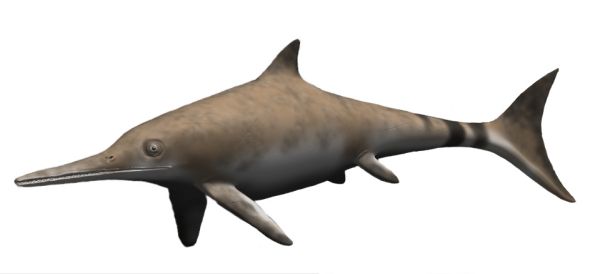
At first glance, an ichthyosaur looks much like a dolphin that lives today, but ichthyosaurs are not mammals, nor are they fish, they are reptiles. This dolphin-like convergence extended to their coloring too. Before large mammals, reptiles ruled the ocean, and during the Mesozoic, many of these large creatures were the top predators in the ocean food chain, with the most notable of these reptiles being the ichthyosaurs, plesiosaurs, mosasaurs, and sea turtles. Even among apex predators, concealment had value, whether for ambushing prey or avoiding competitors.
The majority of camouflage methods aim for crypsis, often through a general resemblance to the background or high-contrast disruptive coloration, and in the open ocean where there is no background, the principal methods of camouflage are transparency, silvering, and countershading. Ichthyosaurs, cruising open Mesozoic oceans, likely relied on countershading in the same way modern dolphins do, a dark back seen from above blending against the deeper ocean, a light belly disappearing into the sunlit surface when viewed from below. It is so elegant in its simplicity that evolution independently arrived at the same solution dozens of times across millions of years.
10. Hallucigenia: The Cambrian Oddity That Hid in Plain Sight
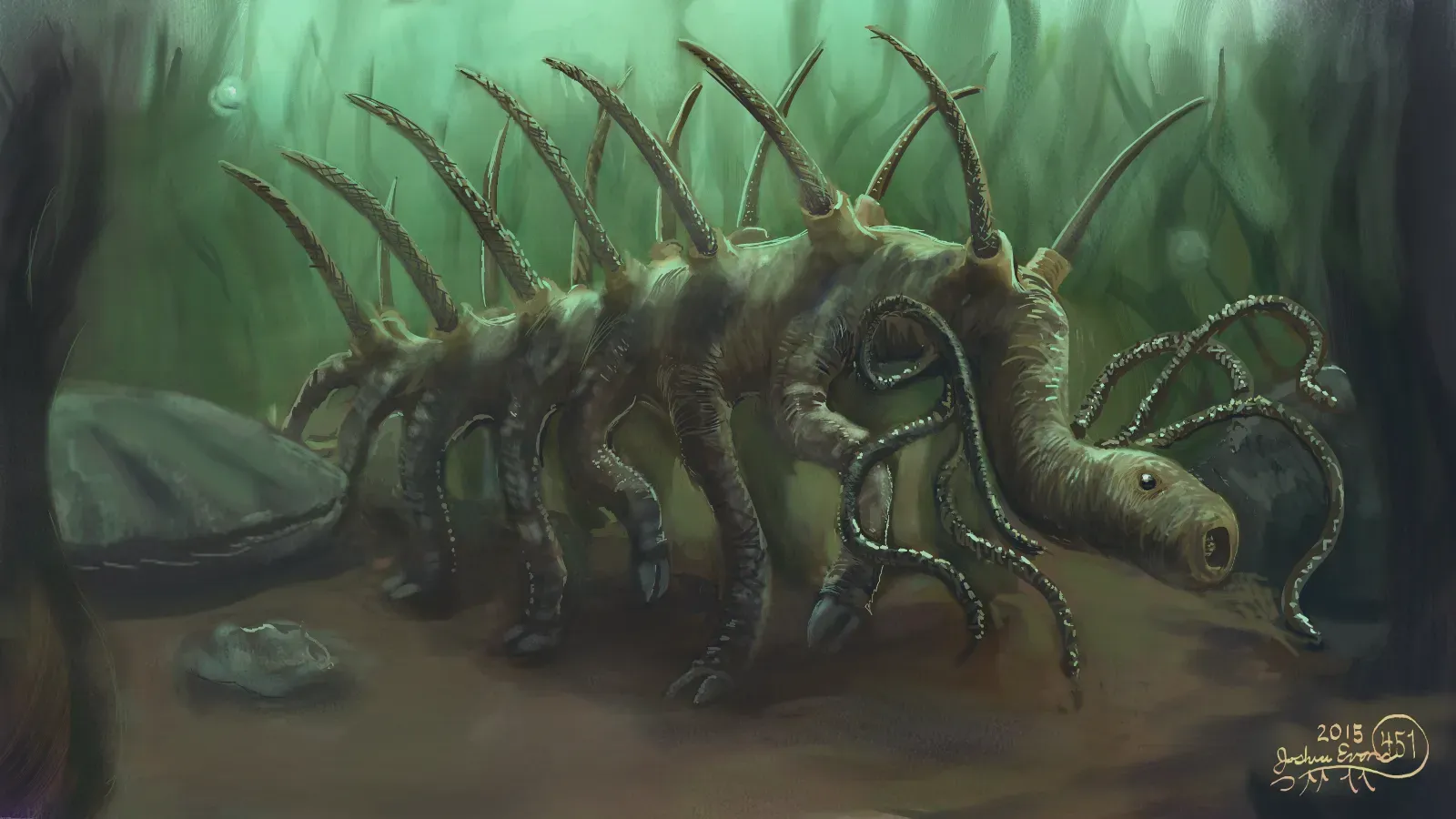
Few prehistoric creatures are as genuinely bizarre as Hallucigenia. Hallucigenia sparsa, a worm, is notable for the porcupine-like spikes that covered its back. Those spines were likely a form of defensive armoring, but their arrangement and texture may also have served as a type of disruptive camouflage, breaking up the outline of the body so that predators struggled to perceive it as a single, coherent target. This is a strategy nature has returned to countless times. Dazzle markings, which are high-contrast patterns that make the estimation of speed and trajectory difficult, represent yet another form of camouflage beyond simple background matching.
Camouflage is the use of any combination of materials, coloration, or illumination for concealment, either by making animals hard to see or by disguising them as something else, with examples including the leopard’s spotted coat and the leaf-mimic katydid’s wings, while a third approach called motion dazzle confuses the observer with a conspicuous pattern, making the object visible but harder to locate. Hallucigenia’s surreal body, covered in spines that seemed random and disorganized to any potential attacker, may have been nature’s very first experiment in exactly this kind of visual confusion. Strange, yes. But also, in hindsight, brilliant.
Conclusion
The prehistoric world was never just about who had the biggest claws or the sharpest teeth. It was also about who could disappear. Far from all being the lumbering prehistoric grey beasts of past children’s books, at least some dinosaurs showed sophisticated color patterns to hide from and confuse predators, just like today’s animals. From tiny Cambrian worms to one-tonne armored dinosaurs, the drive to become invisible ran as deep as the drive to survive itself.
Like modern-day animals, ancient species’ hues helped them communicate, camouflage, and even regulate body temperature, and every fossil that preserves a trace of pigment is essentially a message from deep time, telling us that the creatures who walked, swam, and crawled through those ancient worlds were far more complex, far more strategic, and far more visually sophisticated than we ever gave them credit for. This type of analysis reveals the potential of the emerging field of fossil coloration, and by reconstructing long-lost shades, paleontologists can detect and investigate ancient behaviors that have previously been hidden from view.
The prehistoric world is still giving up its secrets. Which of these ancient masters of disguise surprised you the most? Tell us in the comments below.