
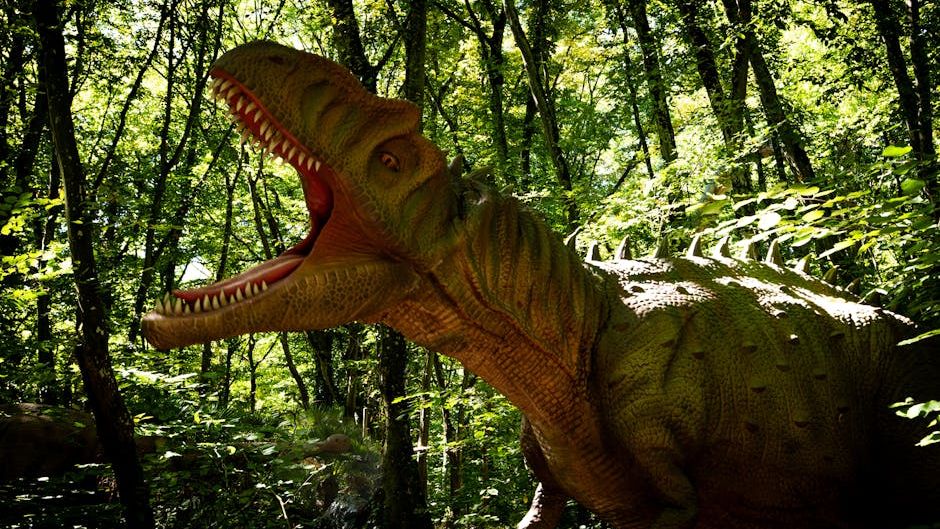
When most people picture a Cretaceous predator, their brain immediately conjures the image of that famous bipedal tyrant with the comically small arms. T-rex has dominated the cultural imagination for over a century, and honestly, it deserves much of that spotlight. Although theropods came in a range of sizes, it has been the discoveries of large carnivorous dinosaurs like Tyrannosaurus rex in the early 1900s that captured the minds and imaginations of the world, known for its crushing jaws and tiny arms, becoming one of the best-known extinct organisms of all time.
Here’s the thing though – T-rex was just one character in an extraordinarily complex prehistoric drama. Although iconic, T-rex was only one species of many large, meat-eating dinosaurs that dominated various ecosystems at different times over the roughly 130 million years of dinosaur reign. The Cretaceous was teeming with predators that were just as terrifying, just as fascinating, and in some cases even larger. So let’s take a closer look at nine of the most jaw-dropping hunters you’ve probably never heard enough about.
1. Carcharodontosaurus – Africa’s Shark-Toothed Nightmare
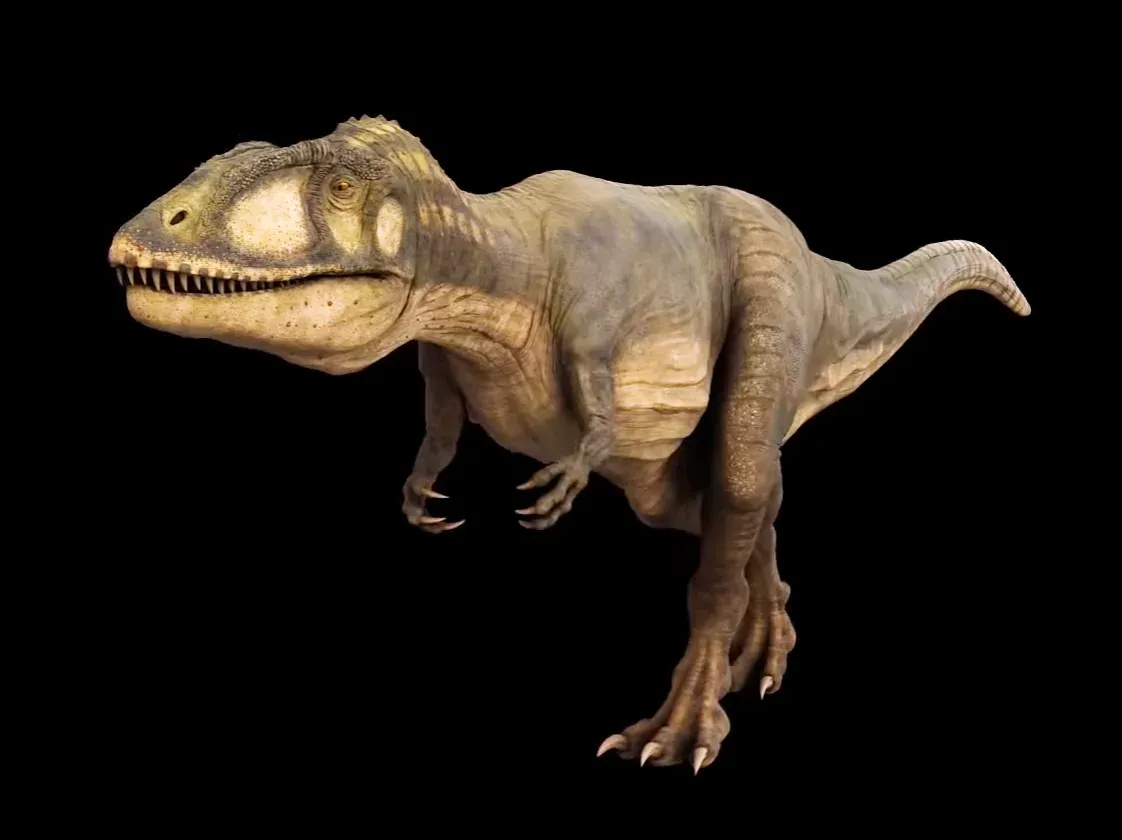
If you’ve never heard of Carcharodontosaurus, you’re not alone – and that’s a genuine shame, because this animal was a genuine monster. Of all theropods, Carcharodontosaurus may have been the largest and most formidable predator to stride across the Cretaceous world on two legs, ruling northern Africa between 100 and 93 million years ago during the mid-Cretaceous Period. Think of it as Africa’s answer to T-rex, except arguably bigger and with teeth that look more like something out of a great white shark’s mouth.
What truly set Carcharodontosaurus apart were its enormous, blade-like, serrated teeth, which reached lengths of up to eight inches, some of the largest slicing teeth of any theropod. These remarkable teeth inspired its name, Latin for “shark-toothed lizard,” referencing their uncanny similarity to the serrations of great white shark teeth. Interestingly, despite their overall size, Carcharodontosaurus had relatively weak jaws with a bite force estimated at around 3,000 pounds per square inch, quite low compared to Tyrannosaurus at 12,800 psi – but that didn’t make it any less deadly. It compensated by slicing, not crushing.
2. Giganotosaurus – The Giant Southern Lizard of Argentina
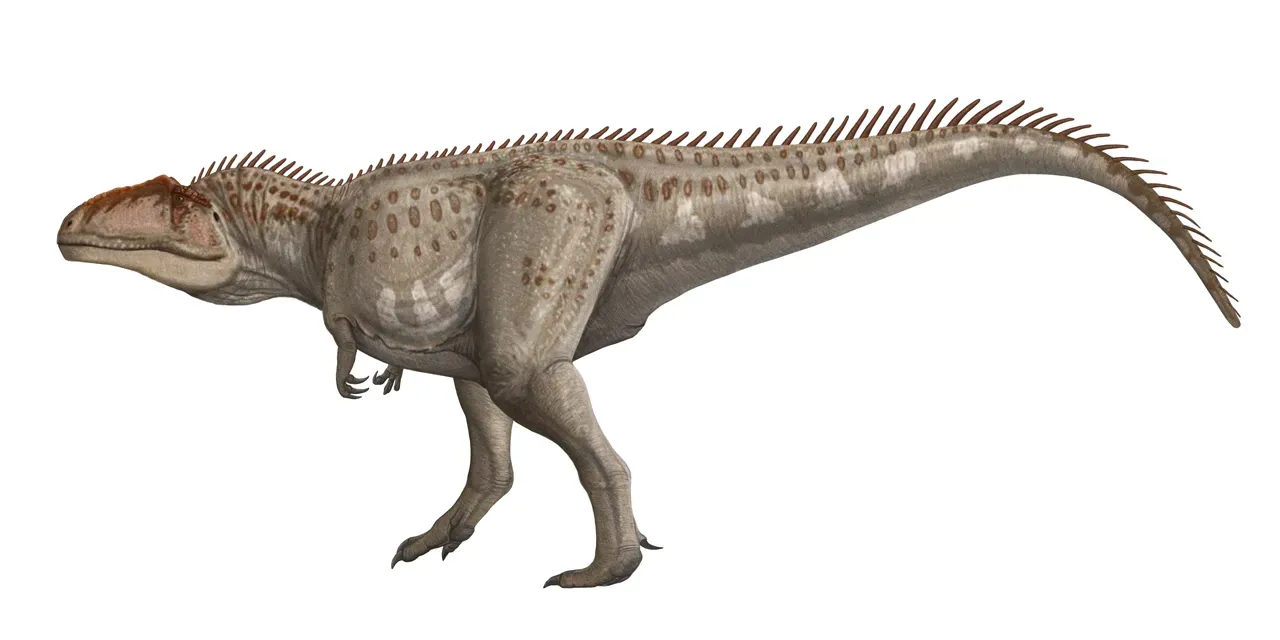
South America had its own terrifying apex predator long before T-rex ever set foot in the north. Giganotosaurus roamed the Earth around 98 million years ago during the Late Cretaceous period, equipped with powerful jaws and a robust body, making it a formidable hunter of large prey in its environment. Its name translates to “giant southern lizard,” and the name is anything but exaggeration. Giganotosaurus thrived in Late Cretaceous Argentina, reaching lengths over 40 feet and weighing up to around 13 tons.
When Giganotosaurus was alive, the most common herbivores found in South America were the titanosaur sauropods such as Argentinosaurus and Andesaurus, and while a single Giganotosaurus was capable of killing a young titanosaur or a large ornithopod, it would have taken many to bring down a fully grown adult sauropod. I think that detail alone is mind-blowing – imagine an ecosystem where the prey animals were so enormous that even one of the biggest predators on Earth struggled to bring one down alone. That’s not a food chain; that’s a full-on arms race.
3. Spinosaurus – The Sail-Backed Semi-Aquatic Colossus
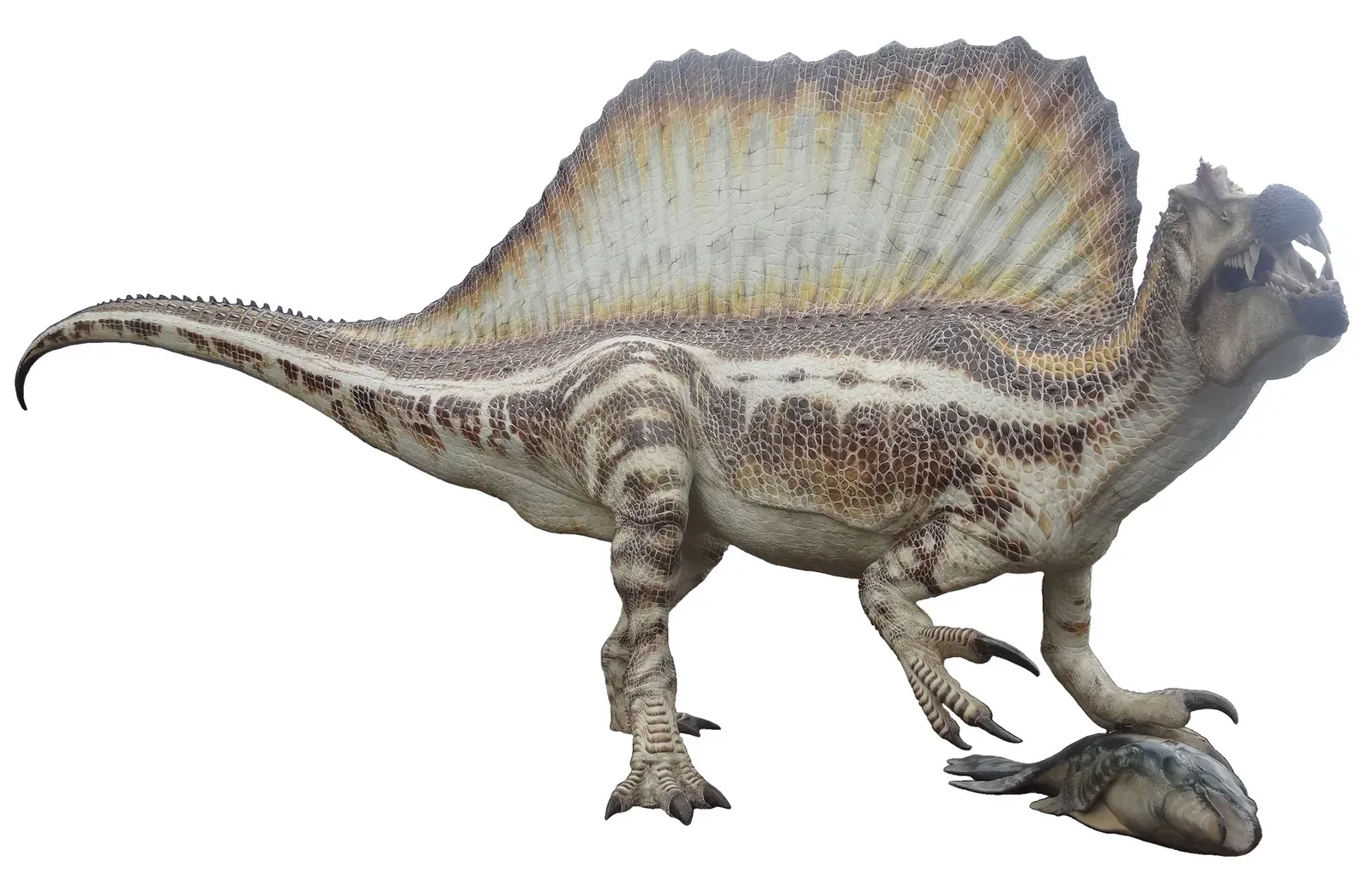
Spinosaurus is the one predator on this list that actually rivals T-rex in popular culture, yet most people still don’t fully appreciate just how bizarre and unique it truly was. Spinosaurus is among the largest known terrestrial carnivores, and a 2022 study suggests it could have reached 14 meters in length and around 7.4 metric tons in body mass. Its lifestyle was unlike almost any other large dinosaur. The skull of Spinosaurus was long, low, and narrow, similar to that of a modern crocodilian, bearing straight conical teeth with few to no serrations, and it would have had large, robust forelimbs bearing three-fingered hands.
The distinctive neural spines of Spinosaurus, which were long extensions of the vertebrae, grew to at least 1.65 meters tall and were likely to have had skin connecting them, forming a sail-like structure. As for what it actually ate, Spinosaurus was likely a generalized and opportunistic predator, possibly a Cretaceous equivalent of large grizzly bears, being biased toward fishing, though it undoubtedly scavenged and took many kinds of small or medium-sized prey. Nature’s original fisherman, except the size of a school bus.
4. Acrocanthosaurus – North America’s Pre-Tyrannosaur Terror
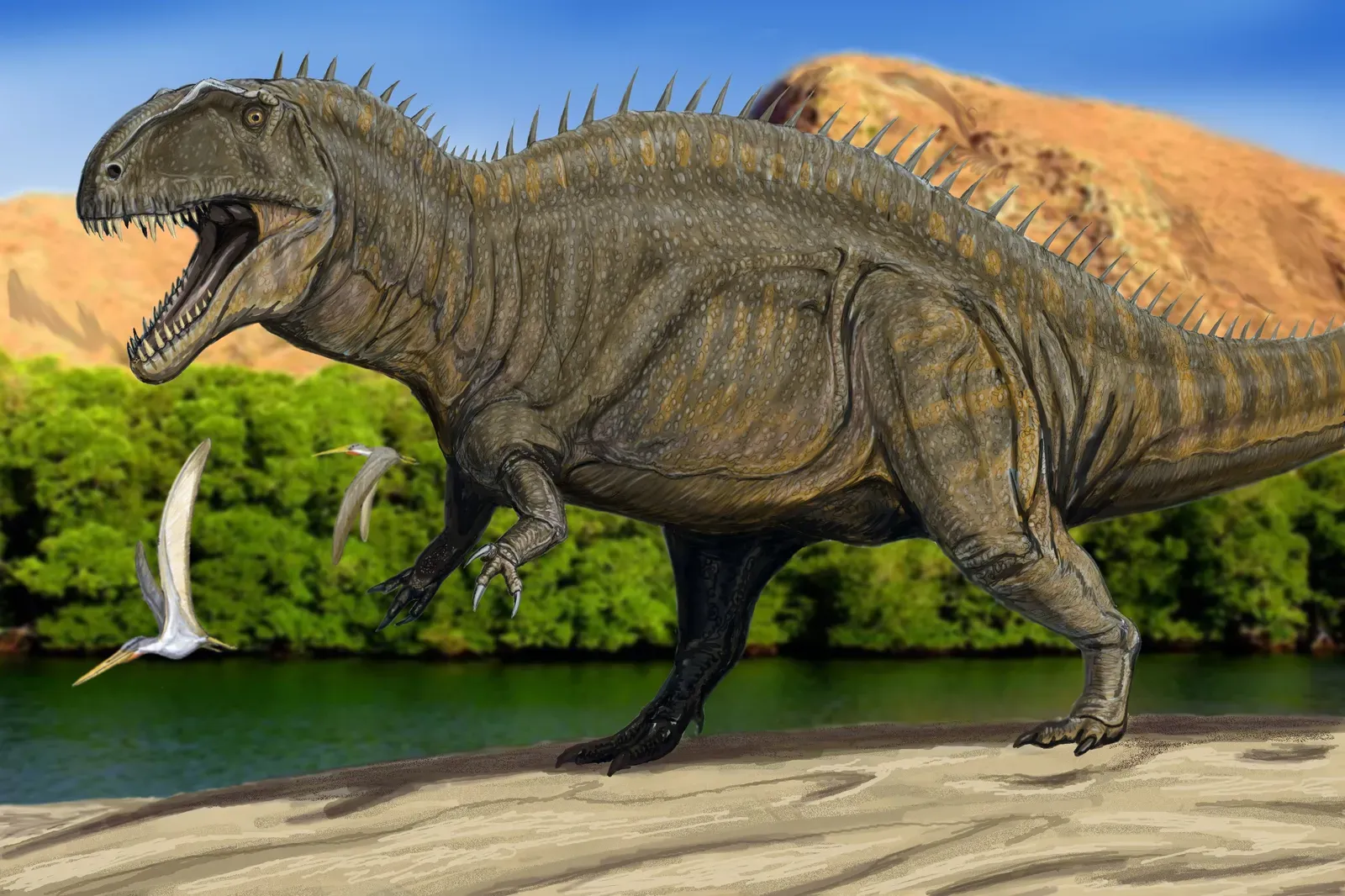
Long before T-rex showed up to claim the throne of North America, a different apex predator had already been running things for millions of years. Acrocanthosaurus lived during the early to mid-Cretaceous, yet it grew to a size comparable to the later Tyrannosaurus, and this large size suggests it was the apex predator of North America after Allosaurus and before the tyrannosaurs. It was, essentially, the interim king – and it held the position with great authority.
The most notable feature of Acrocanthosaurus was its row of tall neural spines, located on the vertebrae of the neck, back, hips, and upper tail, which could be more than 2.5 times the height of the vertebrae from which they extended. As a large predator, it is expected that Acrocanthosaurus had an extensive home range and lived in many different environments, with potential prey animals including sauropods like Astrodon or possibly even the enormous Sauroposeidon, as well as large ornithopods like Tenontosaurus. Honestly, a predator hunting something called Sauroposeidon – named after the Greek god of the sea – deserves far more attention than it gets.
5. Carnotaurus – The Horned Bull From Patagonia
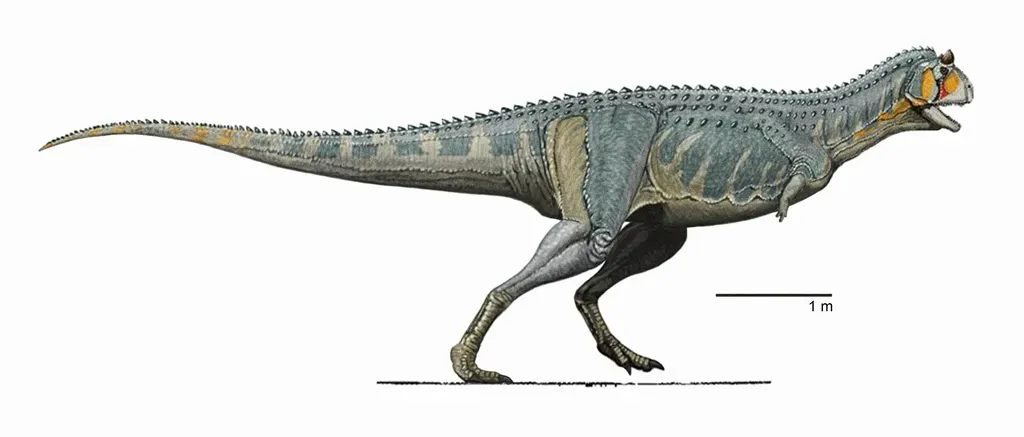
If Cretaceous predators had a contest for most unusual appearance, Carnotaurus would win by a landslide. Carnotaurus is a genus of theropod dinosaur that lived in South America during the Late Cretaceous period, between 69 and 66 million years ago, with the only species being Carnotaurus sastrei, known from a single well-preserved skeleton and one of the best-understood theropods from the Southern Hemisphere. What sets it apart visually? Two prominent horns jutting out above its eyes, a skull so short it almost looks like it got in a bad accident, and arms so small they make T-rex look well-equipped.
Carnotaurus achieved notoriety by having two stubby horns growing from the skull above its eyes, and it was a large abelisaur theropod – a group noted for having short but tall skulls and arms that are even more vestigial than those of the tyrannosaurs. Abelisaurids were the dominant predators in the Late Cretaceous of Gondwana, replacing the carcharodontosaurids and occupying the ecological niche filled by the tyrannosaurids in the northern continents. So while T-rex ruled the north, Carnotaurus was out there doing its own strange, horned, lightning-fast thing in the south.
6. Albertosaurus – T-Rex’s Smaller, Possibly Smarter Cousin
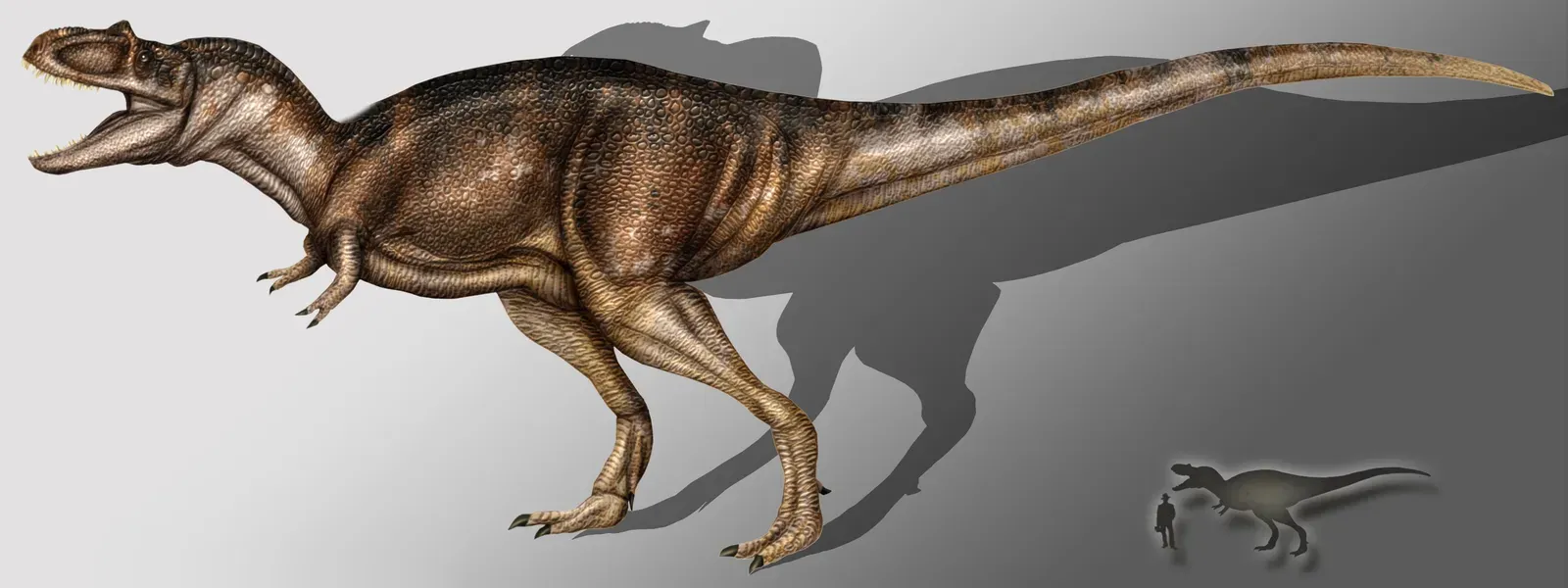
You might think of Albertosaurus as a “budget T-rex,” but that comparison does it a real disservice. Albertosaurus is a genus of large tyrannosaurid theropod dinosaur that lived in northwestern North America during the early to middle Maastrichtian age of the Late Cretaceous period, about 71 million years ago. It was lighter, faster, and potentially more social than its famous relative. As a tyrannosaurid, Albertosaurus was a bipedal predator with short arms, two-fingered hands, and a massive head with dozens of large, sharp teeth, a strong sense of smell, powerful binocular vision, and a bone-crushing bite force.
What makes Albertosaurus especially fascinating to paleontologists is what its fossils suggest about dinosaur social behavior. The Dry Island bonebed contains the remains of 26 Albertosaurus, the most individuals found in one locality of any large Cretaceous theropod. The group appears to be composed of one very old adult, eight adults between 17 and 23 years old, seven sub-adults, and six juveniles between the ages of 2 and 11 years old. Finding that many individuals together in one location strongly hints at group behavior – which, if true, would have made Albertosaurus a genuinely terrifying pack hunter.
7. Deinonychus – The Real Velociraptor Behind Jurassic Park
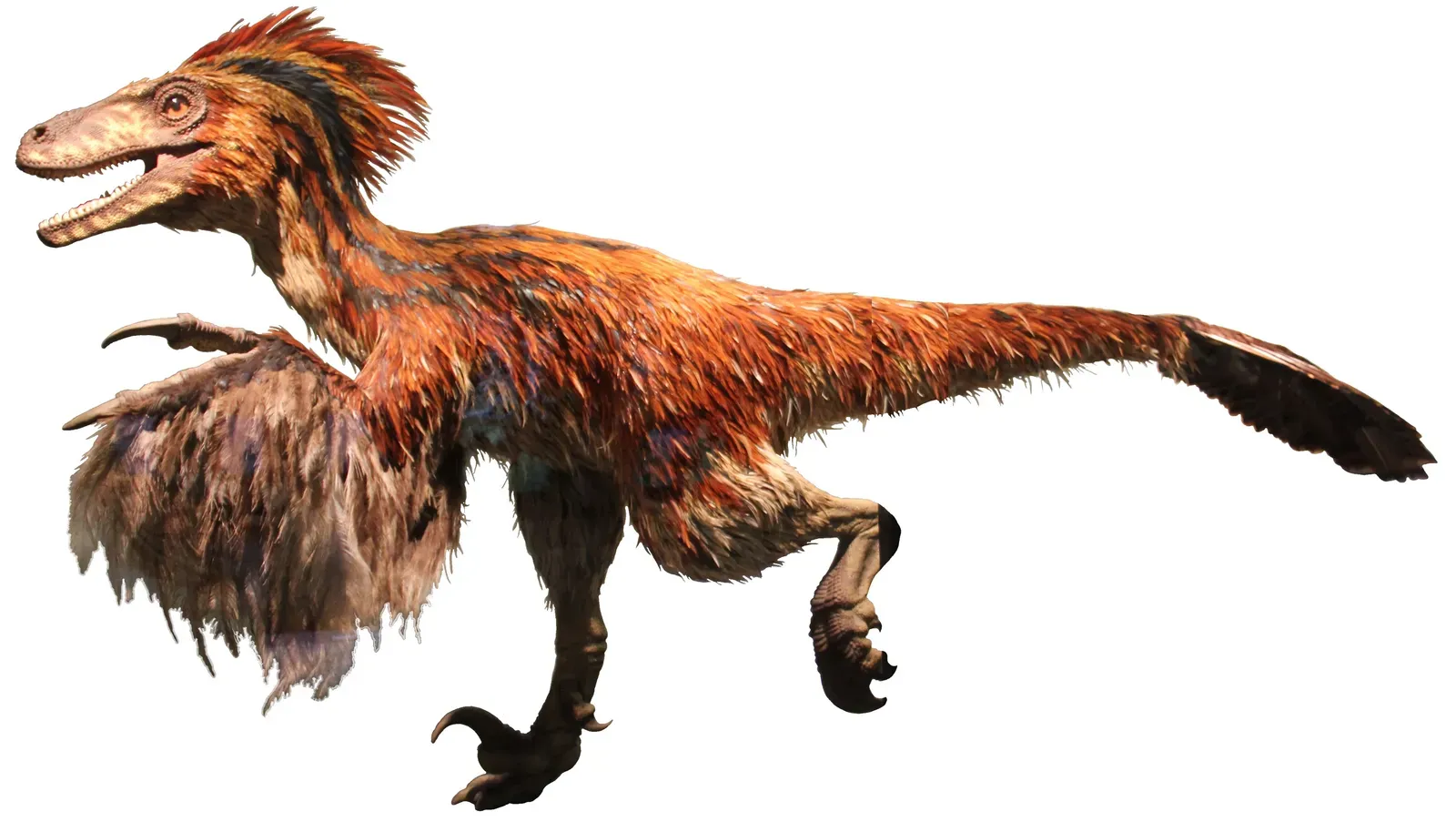
Here’s a fun fact most people miss: the raptors in Jurassic Park weren’t really Velociraptors. They were based almost entirely on Deinonychus. When people think “raptor” they usually think about how Velociraptor was depicted in the Jurassic Park movies, but what many still do not realise is that these raptors were actually based upon Deinonychus. This species could grow up to 3.4 meters in length and lived during the Early and Late Cretaceous Period, about 115 to 93.9 million years ago.
Discoveries of Deinonychus in close association with larger dinosaurs has led some paleontologists to theorize that its claws may have allowed it to hunt larger prey. One of the primary debates regarding the behavior of Deinonychus and other dromaeosaurs is whether or not they lived and hunted in packs, and when paleontologists discovered specimens of different ages in close association with fossils of herbivores, it opened a debate about possible cooperative hunting. It’s hard to say for sure whether pack hunting was real, but the idea adds a chilling dimension to an already formidable predator.
8. Deinosuchus – The Crocodile That Ate Dinosaurs
Most people think of crocodiles as survivors that got lucky. Deinosuchus, however, was something far beyond a mere survivor. Deinosuchus, the “terrible crocodile” in Greek, could reach more than 35 feet in length and weigh over five tons. Bite marks on bones leave no doubt that the immense reptile caught and ate dinosaurs. Let that sink in. This was a crocodilian that actively preyed on dinosaurs, not the other way around.
This beast was a true apex predator, with a skull that measured up to 1.5 meters in length and a body stretching over 12 meters long. Its teeth were massive, some measuring up to a foot in length, and it had a bite force that could easily crush the bones of its prey. It has been suggested that the presence of Deinosuchus may have been responsible for the lack of very large predatory theropods from the Late Cretaceous of Appalachia, with the giant crocodilian replacing such large theropods as the top predator of the coastal plains. Incredible – a crocodile so large it essentially displaced entire groups of dinosaur predators from an ecosystem.
9. Mosasaurus – The Ultimate Sea Monster of the Cretaceous Oceans
The Cretaceous wasn’t just dominated on land. The oceans had their own apex terror, and it was nothing short of spectacular. Mosasaurus, a dominant marine predator , used its powerful jaws and sharp teeth to catch and consume various marine animals, including fish, squid, and smaller marine reptiles. Its streamlined body and strong tail made it an efficient swimmer, capable of ambushing and pursuing prey. Think of it as a cross between a Komodo dragon and a great white shark, scaled up to the size of a school bus.
Mosasaurus lived during the Late Cretaceous period, around 83 to 66 million years ago, and was one of the largest of its genus, measuring nearly 18 meters long and weighing around 10 tons. It fed on such prey as seabirds, sharks, large fish, plesiosaurs, and even other mosasaurs. An animal that casually eats sharks and other sea monsters for lunch deserves a lot more attention. The oceans of the Cretaceous were not a place you’d want to go swimming – not even close.
Conclusion: The Cretaceous Was a World of Predators
The Cretaceous Period was not a world with one terrifying predator. It was a world crawling with them – on land, in the water, and arguably even in the skies above. T-rex was only one species of many large, meat-eating dinosaurs that dominated various ecosystems at different times during those roughly 130 million years. From Africa’s shark-toothed Carcharodontosaurus to the ocean’s devastating Mosasaurus, every corner of the Cretaceous world had its own ruler – its own engine of death uniquely adapted to its environment.
What’s genuinely humbling is how much of this story we’re still piecing together. New species are still being discovered, old assumptions are constantly being overturned, and each fossil that surfaces reshapes our understanding of this ancient world. The dinosaurs were far more diverse, more complex, and more fascinating than any single movie franchise can capture. T-rex may be the celebrity, but the rest of the Cretaceous predator lineup? Honestly, just as legendary. Which one surprised you most?