There is something almost supernatural about pulling a 70-million-year-old creature out of the earth. The bones are still there. The story is still waiting. North America, it turns out, has been hiding some of the most extraordinary prehistoric giants ever discovered, buried beneath badlands, ranches, river bluffs, and canyon walls from South Dakota to New Jersey.
You might think of Europe as the birthplace of dinosaur science, and honestly, for a while it was. It wasn’t until the mid-19th century that discoveries in North America gave people a clearer picture of what dinosaurs actually looked like. Once the continent opened up its geological secrets, everything changed. Let’s dive into eight jaw-dropping dinosaur skeletons found right here on North American soil, each one more remarkable than the last.
1. Hadrosaurus foulkii: The Duck-Bill That Started It All (New Jersey, 1858)
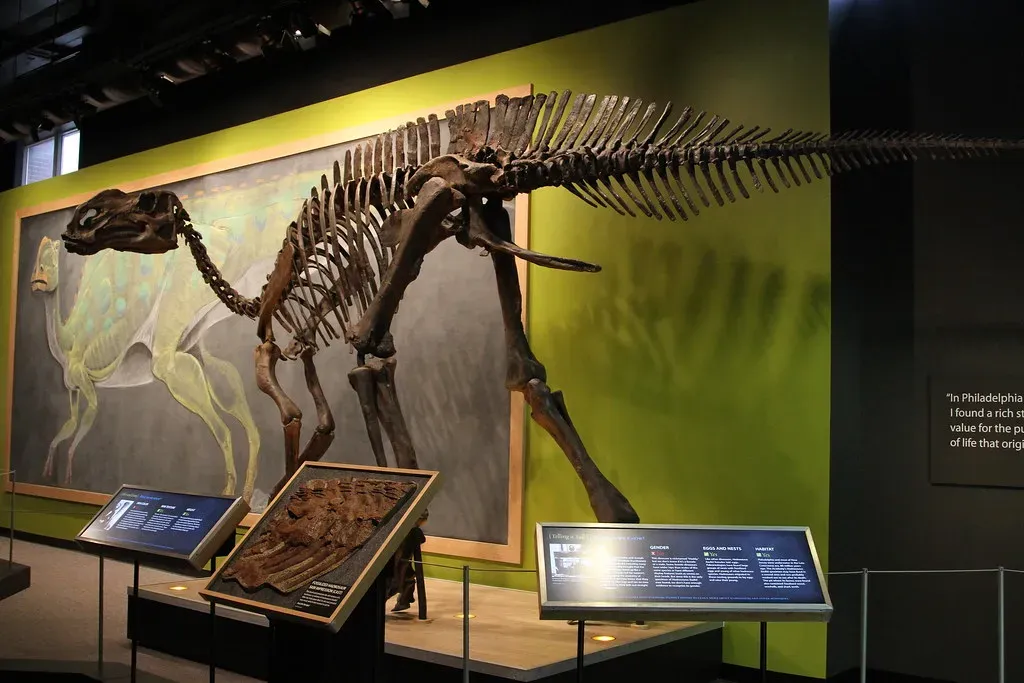
Here’s the thing about the very first chapter in North American dinosaur history – it didn’t happen in the dramatic badlands of Montana or the sun-scorched plains of Texas. It happened in New Jersey. Hadrosaurus foulkii was the first mostly complete dinosaur skeleton ever found in North America and marked a significant moment in the field of vertebrate paleontology in the late 1800s. That alone should tell you how long this story has been building.
Together, William Parker Foulke and Philadelphia anatomist Joseph Leidy retrieved a nearly complete dinosaur skeleton with only the skull missing. They measured the femur at an astonishing length of four feet and estimated that Hadrosaurus foulkii must have been at least 25 feet long. It was a creature of serious scale. Noting the orientation of the pelvis, Leidy believed this new specimen was bipedal with an upright posture, and this was revolutionary at the time as it changed the understanding of dinosaur appearance and posture entirely.
2. “Dippy” the Diplodocus: Carnegie’s Giant from Wyoming (1899)
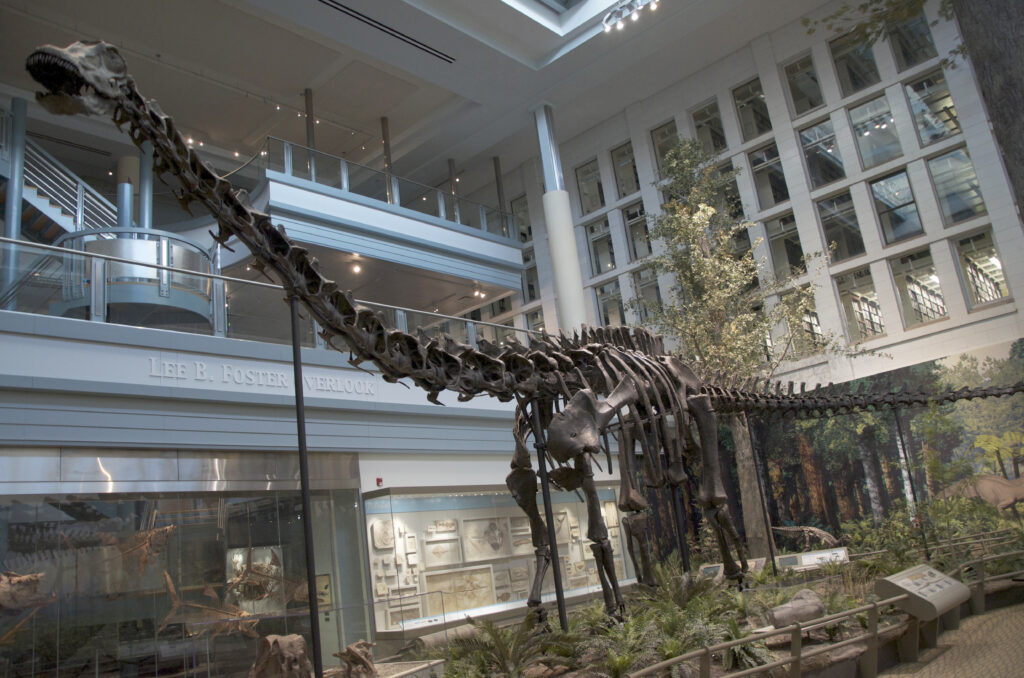
Honestly, it’s hard to overstate how iconic this discovery became. In 1899, a field expedition financed by industrialist Andrew Carnegie uncovered a mostly complete skeleton of Diplodocus in Wyoming. With pieces from other skeletons to fill in the missing bones, this specimen, “Dippy,” was used to make casts that Carnegie sent to a number of other countries for display, and it became an iconic dinosaur in Europe and the first dinosaur skeleton many people ever saw exhibited.
You have to picture what it meant in 1899 for a long-necked behemoth from the Wyoming plains to suddenly appear in museums around the world. The Late Jurassic Morrison Formation, found in several U.S. states including Colorado, Utah, Wyoming, Montana, New Mexico, Oklahoma, South Dakota, and Texas, is notable as being the most fertile single source of dinosaur fossils in the world. Wyoming’s rock layers had been holding this treasure for over 150 million years, waiting for the right expedition to come along.
3. The Bone Wars Bonanza: Allosaurus, Stegosaurus, and More (Colorado/Wyoming, 1870s–1890s)
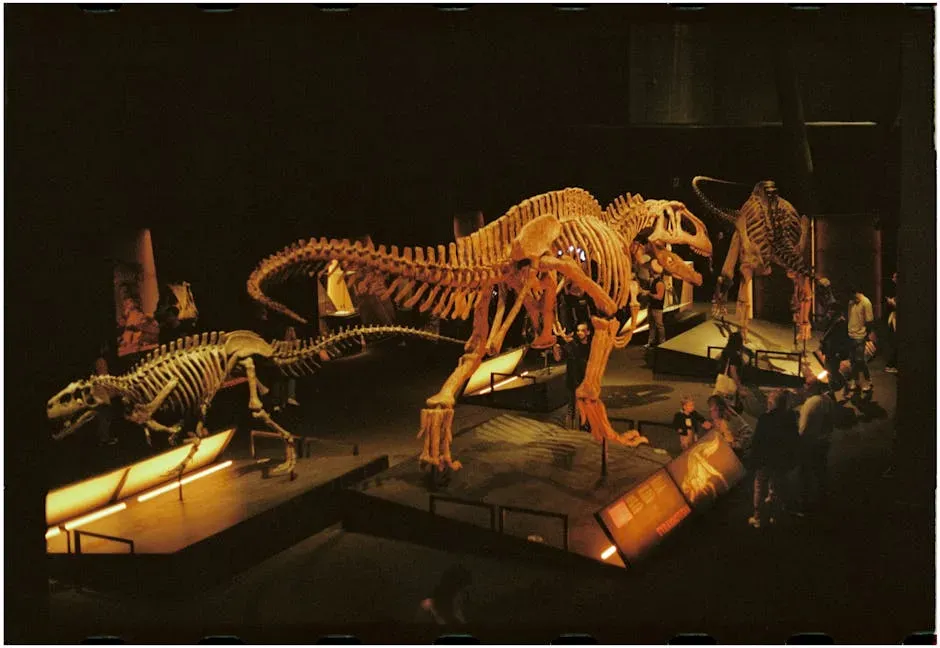
No list of North American dinosaur skeletons would be complete without talking about the wildest era in fossil history. What came out of the Bone Wars period was a significant increase in the knowledge of North American dinosaurs, including the discovery of many near-complete specimens. In total, the two rival scientists Cope and Marsh described 136 species of dinosaurs, including some famous names such as Stegosaurus, Triceratops, Allosaurus, Diplodocus, and Brontosaurus. Think about that number for a second. One hundred and thirty-six species.
The feud between Cope and Marsh became extremely bitter, with the pair using tactics such as spying, theft, and even the destruction of fossils to get ahead. The rivalry eventually soured their professional and scientific reputations, but not before they had well and truly left their mark in the history books. It’s sort of poetic, isn’t it? Some of science’s greatest discoveries came wrapped in one of its most embarrassing feuds. The skeletons they pulled from the American West changed everything we thought we knew about life on Earth.
4. Sue the T. rex: The Most Complete Tyrant Lizard Ever Found (South Dakota, 1990)
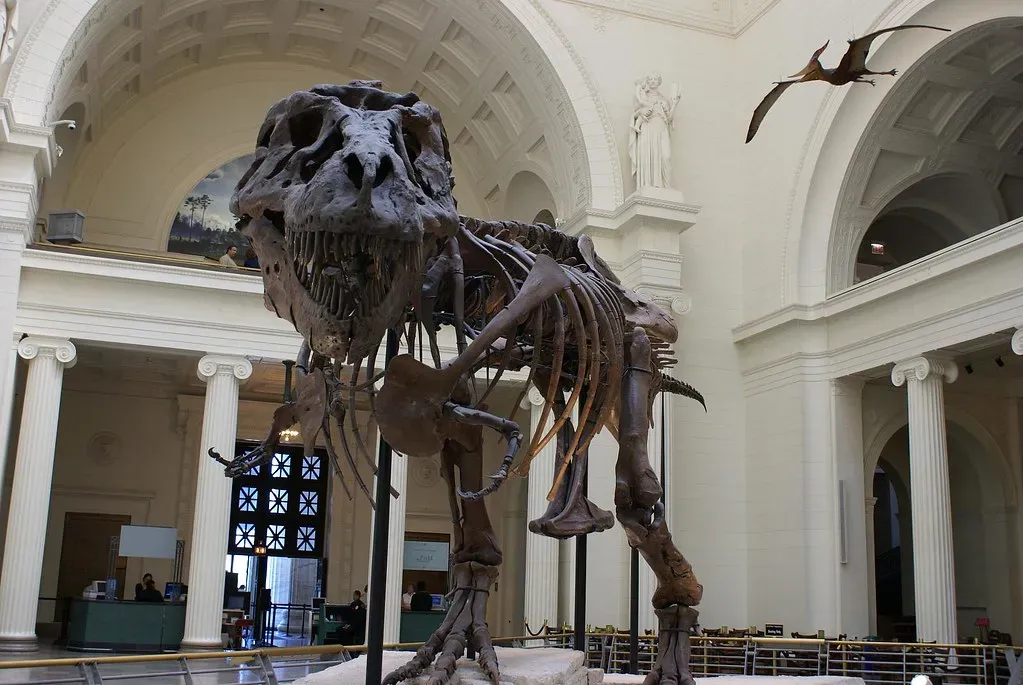
Few moments in fossil history are as cinematic as the day Sue Hendrickson walked along a cliff face in South Dakota while her team’s truck was being repaired. On August 12, 1990, while examining a cliff-side in South Dakota with a team from the Black Hills Institute, she discovered a Tyrannosaurus rex specimen that became the largest, most complete, and best preserved T. rex ever found. The truck breakdown, the solo walk, the bones jutting from the wall – it sounds like a movie scene, but it was absolutely real.
By bone volume, Sue is 90 percent complete, with 250 of the approximately 380 known bones in the T. rex skeleton, including rare ones such as the furcula, or wishbone, the stapes ear bone, and gastralia belly ribs. The legal drama that followed was almost as extraordinary as the discovery itself. After only about eight minutes at auction, Chicago’s Field Museum of Natural History, backed by McDonald’s Corporation, Walt Disney World Resorts, and the California State University system, emerged as the winner, purchasing Sue for $8,362,500. That price tag sent shockwaves through the paleontology world and changed fossil economics forever.
5. Maiasaura and the Egg Mountain Revelation (Montana, 1970s–1980s)
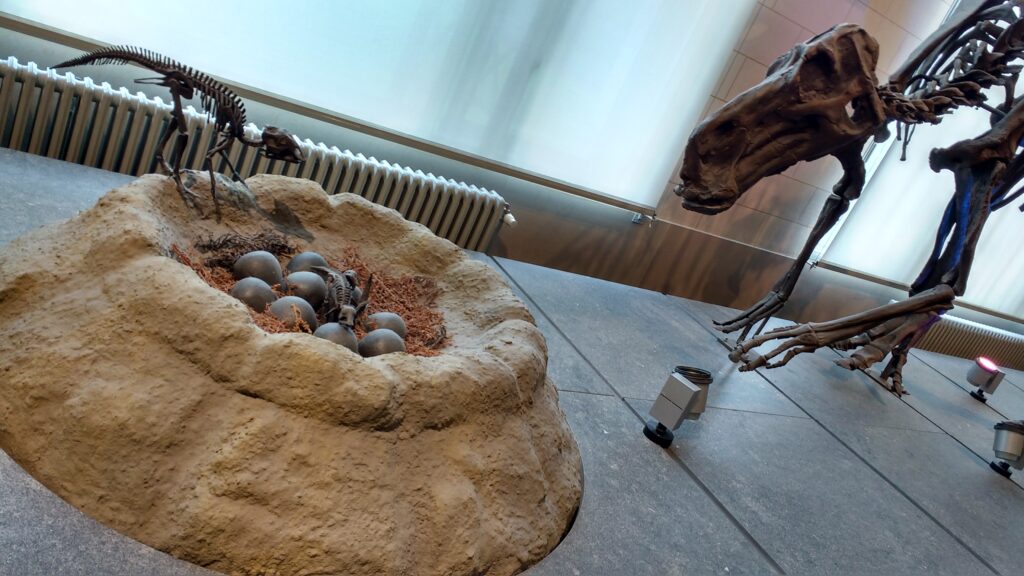
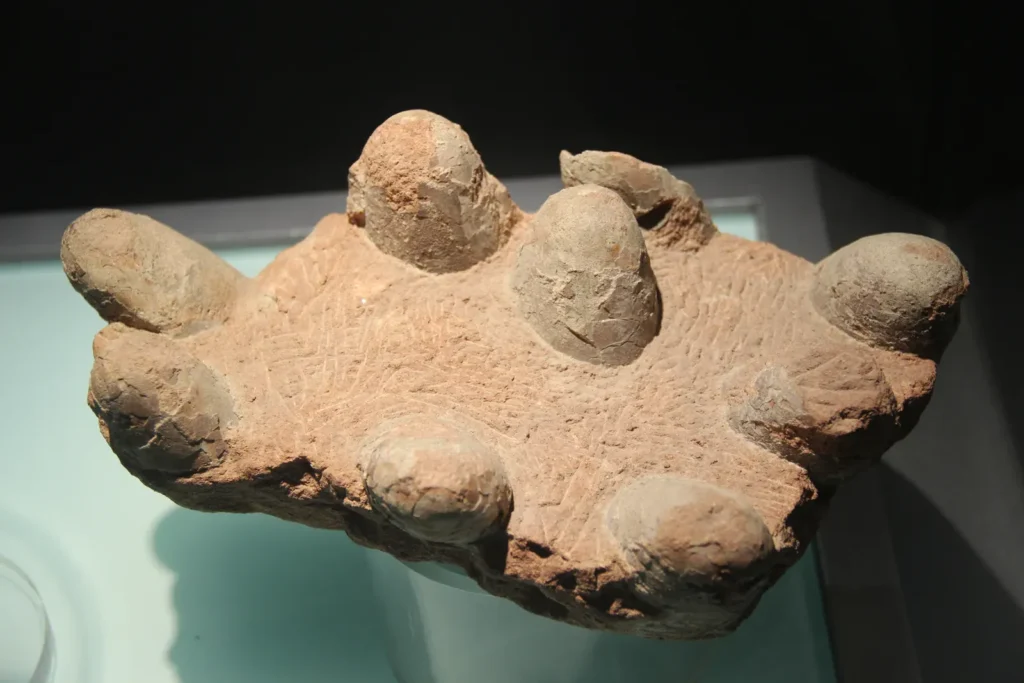
I think this one might be the most emotionally powerful discovery on this list, because it didn’t just reveal a new species. It completely rewrote what we believed dinosaurs were as animals. In Montana during the mid-1970s, Jack Horner and his research partner Bob Makela discovered a colonial nesting site of a new dinosaur genus which they named Maiasaura, or “Good Mother Lizard.” The name alone carries a weight that makes you feel something.
The site contained the first non-avian dinosaur eggs in the Western Hemisphere, the first dinosaur embryos, and settled questions of whether some dinosaurs were social, built nests, and cared for their young. The area where Horner and his mostly volunteer crews discovered the thousands of hadrosaur eggs became known as Egg Mountain, and all told, nearly 1,000 complete dinosaur skeletons were found there in the sage and scrub pine foothills of the Continental Divide. Nearly a thousand skeletons. One site. Montana had been sitting on one of science’s most breathtaking archives the entire time.
6. “Leonardo” the Dinosaur Mummy (Montana, 2001)
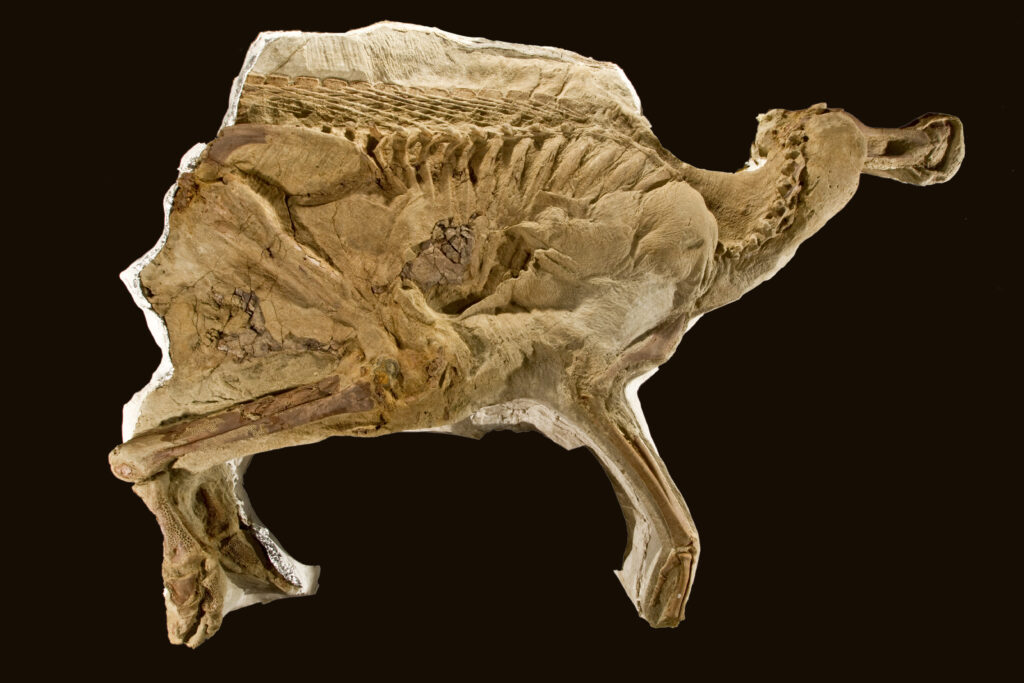
Most fossils are bones. Just bones. But every once in a great while, the earth gives back something so shockingly preserved that it stops scientists cold. “Leonardo,” the “mummy” Brachylophosaurus, found in 2001 near Malta, Montana, with the majority of its body covered in fossilized skin, is recognized by the Guinness Book of World Records as the best preserved dinosaur ever found. Fossilized skin. You read that right.
The 33-foot long Brachylophosaurus fossil is on display at Malta’s Phillips County Museum and Museum of the Rockies in Bozeman. What makes Leonardo so extraordinary is the sheer intimacy of it. You’re not just looking at a skeleton and imagining the animal – you’re seeing the actual texture of its exterior, the contours of its body as it was in life. It’s not like looking at bones. It’s like looking at the dinosaur itself. There is genuinely nothing else quite like it in the world of North American paleontology.
7. The Wankel T. rex: The Nation’s Predator (Montana, 1988)
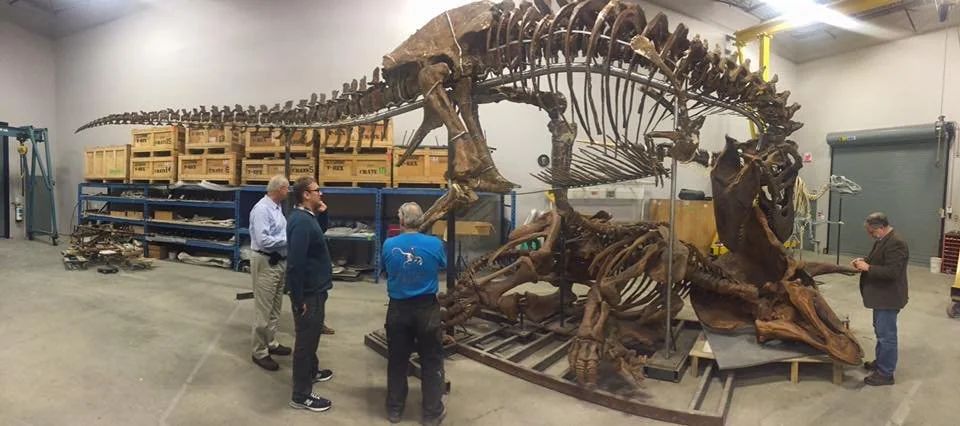
While Sue gets most of the T. rex headlines, there’s another remarkable specimen from Montana that deserves your full attention. In 2014, the fossil bones of the Wankel T. rex, discovered by Kathy Wankel in 1988, were sent to the Smithsonian’s National Museum of Natural History on a fifty-year loan. In its new pose devouring a Triceratops, the Wankel T. rex, renamed the Nation’s T. rex, is the centerpiece of the Smithsonian’s David H. Koch Hall of Fossils, a 31,000-square-foot dinosaur and fossil hall. It became a symbol, almost literally, of American natural heritage.
Montana has a remarkable reputation in paleontology circles, and it’s entirely earned. Almost all of the United States have produced at least one dinosaur fossil, although most finds come from a rectangular area from Montana and North Dakota south to Arizona and Texas. Montana sits squarely at the heart of that rectangle. The state’s geologic conditions, shaped by millions of years of sediment layering, created a kind of natural time capsule. Scientists examining Sue’s and similar T. rex skeletons have identified a number of debilitating ailments that likely plagued these dinosaurs, including gout, torn tendons, bone infections, broken ribs, and arthritis. These creatures were clearly not invincible – they were real, living, suffering animals.
8. Alamosaurus: The Last Giant of Big Bend (Texas)
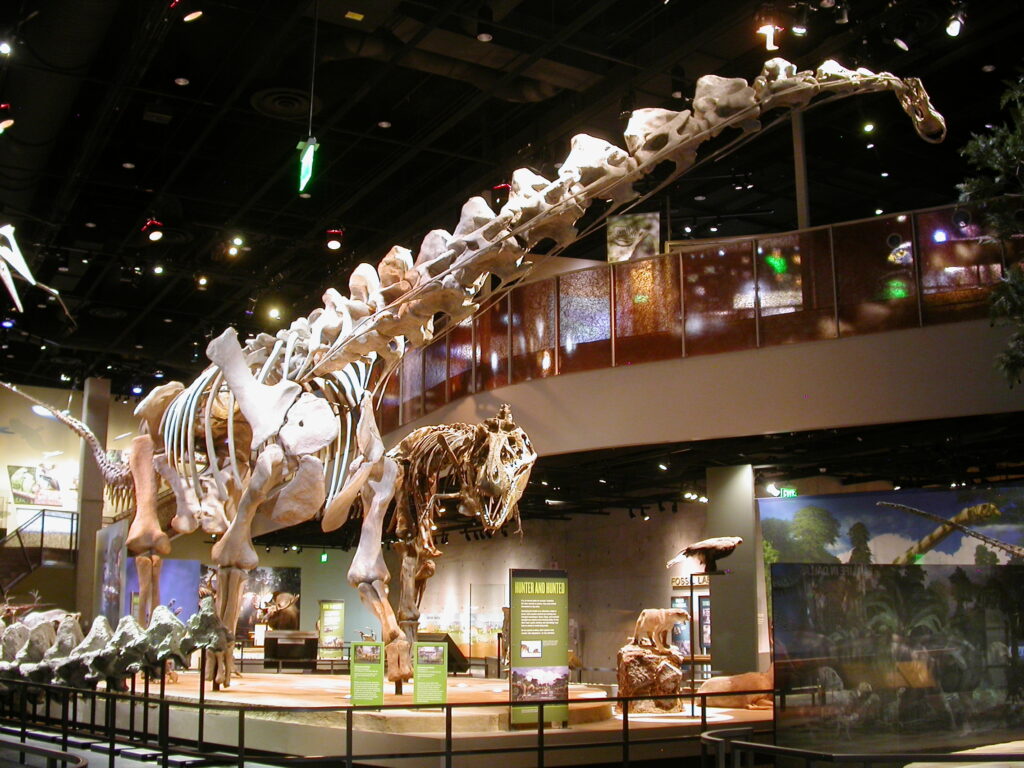
Here’s where things get truly colossal. North America’s record for sheer size may well belong to a titanosaur from the sweeping plains of Texas. What researchers uncovered was a large vertebra from Alamosaurus, a long-necked titanosaurian sauropod that lived in North America during the Late Cretaceous period, around 70 to 66 million years ago. The fossil holds exceptional importance because most Alamosaurus remains from the park are typically fragmentary and poorly preserved.
Alamosaurus is known as the largest land-dwelling animal to have lived in North America, with adults likely reaching up to 70 feet in length. Like other sauropods, it possessed an extremely long neck and a whip-like tail. Seventy feet. That’s longer than most city buses stacked end to end. The genus Alamosaurus sanjuanensis was first named after the Ojo Alamo Formation in New Mexico, where the initial fossils were found in 1922. While Alamosaurus fossils have also been discovered in Utah and Wyoming, Big Bend remains one of the richest sites for uncovering this species. The Texas badlands, it turns out, are still giving up the bones of giants.
Conclusion: The Ground Beneath Your Feet Still Holds Secrets
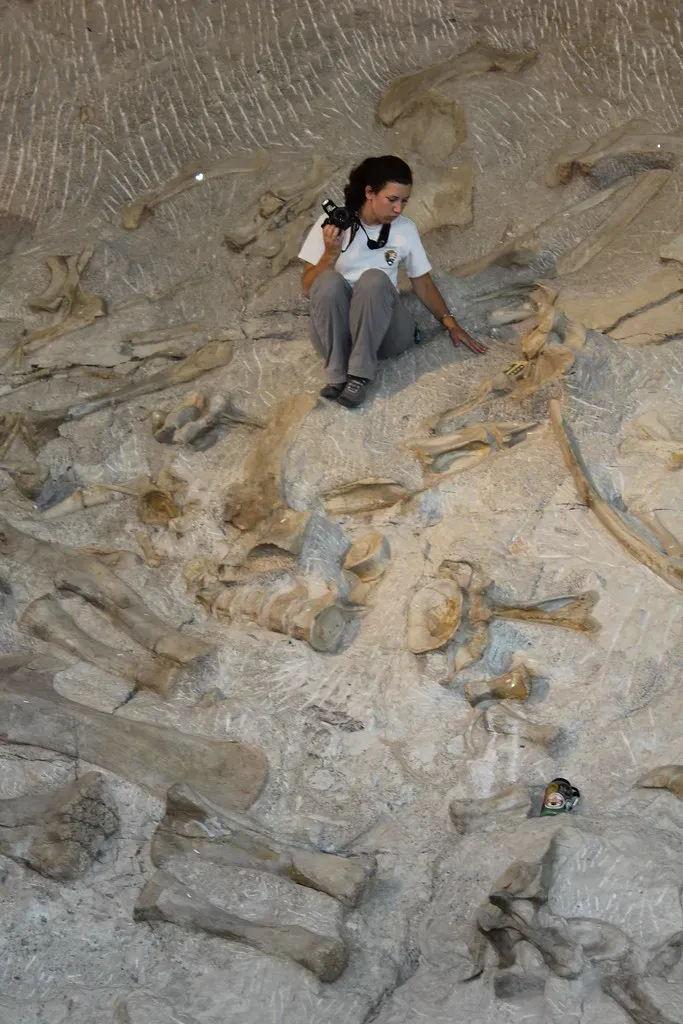
What strikes you, when you look at all eight of these discoveries together, is how random and human the process really is. A truck breaks down. A rancher digs a well. A fossil hunter takes a solo walk along a cliff. A child stumbles onto baby bones in a rock shop. North America’s greatest prehistoric treasures weren’t found by grand institutions alone. They were found by people who were simply paying attention.
The discoveries in the American West gave scientists, in many cases, the first examples of substantially complete dinosaur skeletons. They shifted science, rewrote textbooks, and reminded the world that the past is never entirely buried. The discovery of new fossils and the development of new techniques to study them have enabled scientists to delve into the fascinating lives of these ancient reptiles like never before. With modern scanning, DNA analysis, and geological exploration still accelerating, it’s genuinely exciting to wonder what’s still out there waiting beneath the soil.
The next incredible skeleton may already be peeking out of a cliffside somewhere in Montana, Texas, or New Jersey right now – waiting for someone to simply look up. What discovery do you think will shake the paleontology world next? Tell us in the comments.